Q & A with Mitchell Levin

red shirt

*note – Mitchell passed away in November 2021

Mitchell Levin was born in Detroit, Michigan. He received his BFA in Film from Columbia College, Chicago and his MFA in Dramatic Writing from New York University’s Tisch School of the Arts. He began his career as a Story Analyst at 20th Century Fox in Los Angeles, and as a development executive there worked with Arthur Miller on his screen adaptation of THE CRUCIBLE, which starred Daniel Day-Lewis.

Mitchell has worked, at one time or another, for every major Hollywood studio and has taught screenwriting at UCLA Extension. He recently left Steven Spielberg’s DreamWorks after 22 years as senior Story Analyst. There, he worked on films including GLADIATOR, ROAD TO PERDITION, THE RING, CATCH ME IF YOU CAN, THE HELP, BRIDGE OF SPIES, and more.

What’s the last thing you read/watched you considered to be exceptionally well-written?

It was a clip someone posted of a single scene from the TV show PEAKY BLINDERS, which I hadn’t watched but now will. So tense! Two male and one female gangster threatening a nun at an orphanage where a little girl had been abused. Masterfully written, performed and shot. Very still, but very edge of your seat, very heart in your mouth.

How’d you get your start in the industry?

While I was getting my MFA in Dramatic Writing at NYU back in the ‘80’s I did an internship as a reader for a producer named Martin Bregman, who made SERPICO and SCARFACE, among others. They hired me after the internship was over.

You were a Story Analyst at several major studios. What did that job entail and what were your responsibilities?

I started at 20th Century Fox when I moved out here. Not everyone knows this but the major studios are all signatory to the Story Analyst’s Union, which pays quite well, as opposed to freelance reader jobs. The union was very difficult to get into, even back then, and is virtually impossible now. I was then promoted to development executive and set up THE CRUCIBLE. I actually gave notes to Arthur Miller (he implemented all but two!) I told him, in our first meeting with then-president Roger Birnbaum, that we decided to set THE CRUCIBLE in space. Cute, huh?

After three years I realized being a corporate executive was not for me. I worked as a story analyst for every major studio at one time or another, but spent the past 22 years at DreamWorks. My job was to cover submissions, but also to help develop projects by doing in-depth notes from the time we acquired scripts or books to the time they either went into production or into turnaround.

When you’re reading a script, what about it indicates to you “this writer really gets it”?

Clear, coherent writing. Compelling premise and protagonist. Authentic sounding dialogue. Well-choreographed, not too-dense action if it’s an action piece. Clearly defined central conflict. An interesting world or a new spin on a familiar idea. And hopefully, a story behind the story, i.e., a bigger theme.

Follow-up – have you ever read a spec script that was an absolute, without-a-doubt “recommend”? If so, what were the reasons why?

The only script I remember giving a Recommend to was called THE ASSUMPTION OF THE VIRGIN, back around 2002. It wasn’t a spec, it was written by Anthony Minghella, based on a book set in the Renaissance. Sydney Pollack and Benicio del Toro were attached.

Readers shy away from Recommend because it sets off too many alarms. A Double Consider (for script and writer) is sufficient to let the exec know you’re excited. A Recommend is really sticking your neck out, and if the exec doesn’t agree with you, you worry you’ll be in trouble even if you’re told you won’t be.

Is recognizing good writing something you believe can be taught or learned?

To some extent, of course. Then again, it’s also subjective. One person’s cup of tea may be another person’s cup of swill.

What do you consider the components of a good script?

First of all, a great premise, but they are hard to come by. Beyond that, a compelling protagonist (who doesn’t have to be likable if he/she is fascinating), dialogue that pops, a clearly defined conflict, and always, escalating stakes and hopefully a sense of surprise.

What are some key rules/guidelines you think every writer should know?

– Know your logline. Often I get the sense a writer couldn’t tell me their logline if asked; not concisely, anyway. A one or two sentence synopsis of the story that tells me the inciting incident, who the protagonist is, who the antagonist is, what the central conflict is, what the stakes are, and gives me a sense of the possibilities within the story without giving away the ending.

– Leave plenty of white space on the page. Readers hate lots of dense black text. Don’t overwrite. That goes for dialogue and action.

– Don’t introduce too many characters at once that will be hard to keep track of.

– Don’t give character similar names (Jenny, Joanne, James)

– While the reader has to read and synopsize your entire script, the exec may not read past the logline on the coverage, or past the first 15 pages of your script. You have only that brief window to really engage him/her and let them know “what is” – who, what, where and why – and really grab them.

– Very important – Don’t be boring!!

Are they are any cliches or tropes you’re just tired of seeing?

I hate clichés always, and a trope isn’t necessarily a cliché. If by trope you mean a metaphor or archetype, they can always be done well or poorly, whether it’s “cross-cultural romance” or “reluctant hero”. Certain clichés bug me more than others, because they come up so frequently, like: “EMILY, 25, beautiful but doesn’t know it” or when the villain says to the hero “We’re not so different, you and I”. Or villains named DEVLIN because it sounds like DEVIL. Or when a character says “I just threw up in my mouth a little,” which makes me throw up in my mouth a little. It was funny the first time I heard it in a ‘90’s sitcom, but hasn’t been since. Likewise, the word “amazeballs,” which comes up a lot in comedy scripts, but I doubt anyone has ever actually said it in real life.

How can people find out more about you and the services you provide?

Mitchell passed away in November 2021. At the time of this printing, his website scripstrx25.com was still live.

Readers of this blog are more than familiar with my love/appreciation of pie. What’s your favorite kind?

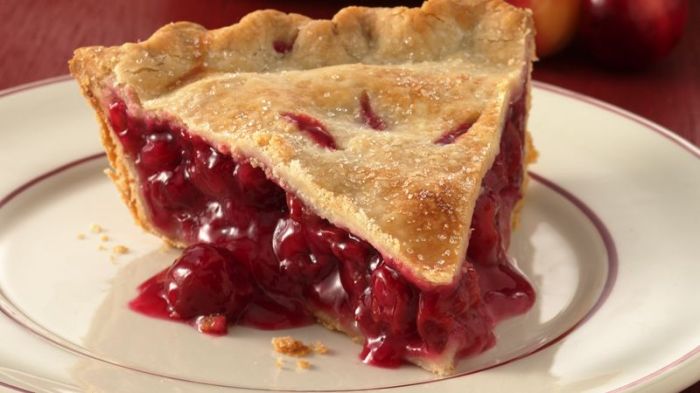
When I was a kid I wasn’t fond of birthday cake and always asked my mom to make me a cherry pie. My tastes are more sophisticated now. Unfortunately, I’ve since been diagnosed with Type 2 diabetes. This surprised me, as I don’t have a weight problem. When I asked my mom about it, she said, “Oh, yeah, I forgot to tell you.” It seems it runs through the whole family on her side, but it skipped her.
cherry pie 2

So the only pie I tend to eat these days is humble pie, usually on those occasions, and there have been many, when I embarrass myself in front of famous people.

Q & A with Terry McFadden

TERRY Cool

Terry McFadden came up through the ranks as a playwright having been produced
throughout the United States, the UK and Australia and winning several awards. From there he worked as a script consultant for ARD Television, Radio and Films and Eternity Pictures before starting off on his own. He has had the good fortune of giving studio notes to producers on scripts that got made such as THE GOOD GIRL, CONFESSIONS OF A DANGEROUS MIND and THE TRUTH ABOUT CHARLIE.

As the founder of Story Builders Script Doctor & Writing Services, he has covered, analyzed, given notes and consulted on hundreds of screenplays, TV pilots and story ideas and is dedicated to helping writers find and hone their own unique voice.

What’s the last thing you read or watched you thought was incredibly well-written?

JOKER. Without question. The absolute best script of 2019. From the very first page I loved the writing. Now, a lot of it is because I so identify with the charm and depth, the way it was done, the thematic and stylistic elements hit me right off. Not only was the lead character great and unique but he starts out as a very human but weird guy who has issues—issues that are clearly foreshadowed and then evolved. The story makes clear and piece by piece layers in not only his mental and delusional maladjustments but the idea that the way things turn out, as a result of his upbringing and belief systems and how he sees himself and world, is the only way it can end. This is developed wonderfully.

Screenwriters are taught to look at story, the characters and their arc, the twists, the spins, the reversals, the progressive development and surprises; a solid and rising structure with the catalyst plot points, midpoint, and the rest. All of that was there in JOKER but what kept me turning pages was the way it all weaved back in—supporting and commenting on what is already going on adding dimension. A real fresh slant on how he becomes not only his own hero but also the hero of those in need of such a person. The metaphors, the allegories, the songs, the running symbolic commentary—all snaking back and endorsing what is going on or will be, was both unpredictable, cool, necessary yet not seen coming in that way. Very well done.

How’d you get your start in the industry?

I started as a musician. Eight years old, I’m taking guitar lessons and my Dad tosses me onstage with “Tommy Schaefer’s Country/Polka Band at Jim Thorpe Memorial Park”. Music is a big part of everything I do. Writing is music. I came to formal writing at Penn State, penning funny essays about people and teachers. But it took off in Los Angeles in 1993 or so, when I began to write short scenes and monologues for the theatre. I became a member of Actors Art Theatre in Hollywood and remained there for four and a half years—this is where I really developed my style of writing.

Writing scenes progressed to ten-minute plays, short plays and one acts. The director and founder of the theatre was a real mentor to me and a great means of support. From there I studied at UCLA and AFI, did coverage and analysis for several production companies for a while, continued to write, act and produce plays and scripts. I then went out on my own as a script doctor.

Is recognizing good writing something you think can be taught or learned?

Absolutely – for both. The “craft”, to me, comes first. Learning about story, character development and structure–how to turn an idea into 110 pages of course, is the gig here. So in order for me to recognize it, I had to learn it. I had to discover what structure does, why and how–what makes great story points and all of the rest. When you are reading tons of scripts and attending workshops and seminars by a lot of the great teachers like I have, the recognition of good writing becomes second nature because you’re also seeing bad writing and discovering why.

Writers who want to grow and become better intuitively know they need some help. My job is to provide that while showing them their promise as well. Their promise is what we develop. Writers who are open to and then apply good notes will see right off how it betters the work—this is “being taught”.

What do you consider the components of a good script?

A memorable story, clear and fresh characters and building structure as I mentioned above, but for most of us, that’s a given. Good scripts need to be engaging and surprising too.

Stories that emotionally move you as well as make you feel that you are there. The mark of great writing is a piece that has the reader or audience invested and rooting, one way or the other – eliciting an emotional response. Even though readers may not identify with the situation they will identify with the emotional life of what the character is going through, the actions and the way the characters behave, and this is because of the human experience.

What I consider the most important component of all of this is that the writer tell the story in a fashion that only her or she could—their own unique voice. This is who they are and how they see the world that nobody else does. The first thing I look at when reviewing a script is the description and I ask myself, “is this textbook or is this from a perspective that I’ve never seen before?” A script that has a unique and personal voice to it is already leagues ahead as the writer understands not just story, but “their” story and how to get that across.

What are some of the most common screenwriting mistakes you see?

Lack of prep and what’s worse, thinking that you don’t need it. Okay, great ideas make great stories but only if the idea is turned into a script that encompasses the story and structural elements to evolve, build, grow, sustain and resolve in 110 pages.

Another mistake is writing “pot-boilers”, that is, trying to copy what is out there without having a believably sustaining basis for the human aspect. Without a strong and personal character take, motivation, true want and need, you’re writing purely externals. Externals don’t get it for me. I need to know why.

Another mistake is that Act Two putters out and the scenes begin to get episodic and meandering. Biggest one is protagonist trade-offs: The protagonist, because of lack of drive, stakes, want and need is passive so the action is progressed by secondary characters thus confusing the lines and creating tangential sub-plots that do not correspond with the concept or original goal of the protagonist. I am a big proponent of using an outline. Sure, you could waver from it, but, do so in the context of the story that you are now familiar with—this is true and correct inspiration. Write an outline or treatment and get notes on that first. You’ll save yourself not only time but ego deflation and bouts of self-doubt. All comes down to execution on the page.

What story tropes are you just tired of seeing?

I’d have to say voice-over as it’s so overused. If you’re going to use a narrator, and this goes for all devices and conventions, ask how is this still serving the story yet different, adding, and, could it only come from me? Is the narrator a character? Do they know the ending? Are they commenting in a way that goes against the cliché? Are they oblivious, dumb, judgmental? Are they an active character? Also, mentors who are older and have it somewhat together.

Photos on the wall or mantle showing who the characters were and what they did before we see them. I feel that exposition should be meted out when essential and in story forwarding form in crucial times and scene beats.

Lastly, villains that are too dark and mean. My take is that antagonists and villains are the protagonist in their own story; they’re just at cross-purposes with the hero. If you can show why antagonists do what they do and their reasoning, it’ll be more interesting. Watch the original FRANKENSTEIN bopping and stumbling all over the place, and tell me you don’t feel for him.

What are some key rules/guidelines every writer should know?

Write dialogue that differentiates the character as per who they are, their world, POV and experiences. Dialogue that only they could say.

Make sure it’s your world; your voice; your take—only you could have written this. The hook, the take, the scenario and the point of view could have only come from you. Not just overall conflict but inner scene conflict between the characters needs to be present evolving and resolved in some fashion, especially if they’re on the same side. Individual stakes and progressive character function is vital.

Do not have a character if he or she does not only have a role but also a function. How are they influencing the story and the hero? What happens to turn the story because of them?

Keep us guessing. Great scripts set up surprises, twists and reversals that catch readers off-guard yet make sense as per the foreshowing early on. There is no such thing as “out of the blue” (some comedies and farce exempt) even if you think it is. Everything that happens in Act Three is foreshadowed in some way and credible to this story.

Be open to changes; be open to collaboration; be open to notes that are going to improve the vision overall. Screenwriters are subjective and we need another pair of eyes that are not our own. We need to understand that getting sold, published and produced demands active collaboration. Get notes, shut up or drive a bus. Keep writing. This is a process and you learn as you go. Will you get better at it as you go? Probably. Will you evolve as a writer? Absolutely.

Have you ever read a spec script that was an absolute, without-a-doubt “recommend”? If so, what were the reasons why?

Yes. I reviewed a coming of age drama, a TV pilot, that looks at one night in the lives of several late-teen/early 20’s pizza delivery-service workers, concurrently and from all of their points of view. So different were the characters yet all dealing with their own private teen angst. Phenomenal use of subtext; great devices and conventions that were imaginative, unseen before yet fell right in line with the voice and concept.

This slice of life story very convincingly depicted the trials of young adults searching for love but settling for sex and left me with the feeling of hope and the promise of their journeys to come. Because this pilot opened up so many possibilities for all four of the leads, I felt it could go for many episodes and progress uniquely as well. Great writing.

How do you feel about screenwriting contests? Worth it or not?

Only if you do well. Screenwriting contests can help leverage a career but again, you need to have a good script that is recognized by the contest. Bigger question is how are you going to get your script out there? Contests are simply one road and not for all of us.

How can people find out more about you and the services you provide?

You can check out my website at www.storybuilderswrite.com. I’m also on Twitter at @Storybuilderz and on LinkedIn at  https://www.linkedin.com/in/storybuilders/

I also have a new e-book entitled, “That Sounds Like Me’ – ‘Implementing your Own Unique Voice into Act I of your Screenplay or TV Script’. The book takes a comprehensive approach to the usual refrains on getting your life and slant on the page. By delving into how the writer’s natural voice need influence all aspects of the process, it demonstrates how story tools such as Opening Image; Character Construction; Backstory and Exposition; Hooks; Allegories, Metaphors and Themes work together, complement each other, are part of the same world and why. Go to my website and sign in and I’ll send you the book for free, as a gift to you.

Readers of this blog are more than familiar with my love/appreciation of pie. What’s your favorite kind?

Ha! I’m going to bend the genre here and go with New York Cheesecake – graham cracker crust and bottom.

new_york_cheesecake

Q & A with Victoria Lucas of Lucas Script Consulting

VML headshot #1

Victoria Lucas has more than 20 years of experience as a development and production executive at both major studios and independent film companies. She began her career with Ron Howard at Imagine Entertainment, working on films including Clean and Sober, Backdraft, and Far and Away.

She later joined with Academy Award-nominated producer Rudy Cohen to develop and produce the acclaimed coming-of-age film The Island On Bird Street (winner of three Emmys and two awards at the Berlin International Film Festival). As Director of
Development, Production Executive and Associate Producer at Signature Entertainment and April Productions, Lucas helped develop projects as diverse as The Black Dahlia, The I Inside, and The Body.

Lucas currently works as an independent producer and runs a professional screenplay development service for producers, production companies and screenwriters. She is also the on-air host for Arizona Public Media’s Saturday night feature film program, Hollywood at Home, providing historical background and an insider’s look at the making of classic films.

What was the last thing you read/watched that you considered to be extremely well-written?

Parasite. I was highly impressed by that script, especially the way the writers managed to switch plot directions – and even genres – so seamlessly. In fact, I feel that films, television and streaming shows are in something of a “Golden Age of Writing” at the moment. For instance, look at two other recent films: Joker and Knives Out. I’m in awe of how Todd Phillips and Scott Silver managed to make us sympathetic to the characters in Joker (helped, of course, by Joaquin Phoenix’ amazing performance). And Rian Johnson did a masterful job of updating and reinvigorating old Agatha Christie tropes in Knives Out.

How’d you get your start in the industry?

To be honest, it all started at birth. My mother, father and two grandparents were in the industry, with both my dad and grandma being successful screenwriters. I grew up in a house where writing was an everyday job, and it was taken very, very seriously. Unfortunately, their talent didn’t rub off on me, but I discovered through reading my dad’s work – and hearing about the process it went through before reaching the screen – that my real interest lay in working with writers to develop their scripts. From there, my career began as a reader, followed a pretty straightforward trajectory: producer’s assistant, story editor, creative executive, director of development, then into production.

Is recognizing good writing something you think can be taught or learned?

I learned to recognize good writing through years of reading and discussion at home growing up. But if you’re asking whether good writing can itself be taught or learned, the answer is “Yes, I think it can.”

Screenwriting is both an art and a craft. You might be born with a talent for telling stories, but that’s only half the equation. Putting those stories onto paper in a way that will appeal to producers and audiences is the other half, and that’s the hard part. You need to hone your technique; or, put another way, to “develop your writing muscles.” Screenwriting classes, writers’ groups, how-to-books, blogs and podcasts – all can help. One of my favorite podcasts is Scriptnotes with John August and Craig Mazin.

But the bottom line is this: You have to sit in your chair and write. And write. And write some more. No matter how naturally talented you are, you must practice your craft. It’s no different than becoming a master painter, concert musician or sports star. The more you do it, the better you become.

In the end, though, every writer is different; each with their own technique. Some like to outline their story so they know exactly how it will unfold before they begin to write. Others prefer to let the characters “tell” them what’s going to happen. Some are naturals at structure; others write great dialogue. The challenge for a writer is to identify the elements of screenwriting that don’t come naturally, then work hard to improve them.

What do you consider the components of a good script?

A script is the blueprint for a movie, and the drawing begins with the concept. A great premise is like having an engine that drives the plot and the characters. If it is strong enough, it acts as the spine of the movie so that the structural elements – a compelling story, memorable characters, exciting action and all the rest – will fit together and support each other to produce a successful on-screen result. It’s not enough to create a literary masterpiece that’s envisioned entirely in the reader’s head; if the script lacks cinematic elements, it’s unlikely to get produced.

What are some of the most common screenwriting mistakes you see?

I know writers are tired of hearing about it – and many will simply ignore the  advice — but the way you present your screenplay is more important than you think. That means formatting to industry standards and doing more than a cursory spellcheck. Now, I can guarantee you that no producer ever passed on a great script because of a few spelling mistakes, but the script had to get to her in the first place. You need to realize that the first person to read your screenplay is likely to be a junior development person, an assistant or even an intern. Most of those people have a dozen or more scripts to plow through every week before the company staff meeting. If your script looks unprofessional with too many formatting errors, it’s far too easy for it to be put down.

A common mistake among emerging screenwriters is to overload a script with plot. Cramming in too many plots and subplots doesn’t allow you to develop the characters within the story. So, while a lot might happen, it’s hard to care about the people involved. Conversely, you don’t want a story where nothing seems to happen or change. Films are about conflict and drama. Always think, “What’s at stake?”

Passive lead characters are problematic. Hamlet may be indecisive but he’s not passive. In a similar vein, try not to fall onto the trap of creating supporting roles that are vivid and cinematic, while your hero is bland and uninteresting.

And please, please avoid using dialogue as exposition. I cringe every time a line starts with, “As you know…” or “Do you remember when we…?” That’s designed to give information or back story to the audience; it’s not something real characters would say to one another. Incidentally, when I was a young development exec, my friends and I used to compete for the best (read: worst) lines of expository dialogue. I won with “Tell me again why we’re going to Grandma’s.”

What story tropes are you just tired of seeing?

It’s disheartening to me to find spec scripts that are pale imitations of the hot new movie or television show that just came out. Even experienced writers often forget that by the time a film is released or debuts as a series, the studio pipeline is already filled with similar projects. Rather than chase after what seems to be commercial at the time, write a great story that you feel passionate about – one that may change the direction of what’s commercial, just as George Lucas (no relation) did with sci-fi in 1977.

What are some key rules/guidelines every writer should know?

Read scripts. As many as you can. Then read some more. You can easily find Academy Award winning screenplays online, but don’t limit yourself to the greats. Mediocre or bad scripts can teach you a great deal… even if it’s “what not to do.” One often-overlooked element in screenwriting is structure. The classic three-act structure is the norm in a majority of American films, but there’s nothing magical about it: more and more scripts are written in five acts. However, every script needs a structure just as a building needs a foundation.

There’s a truism in films: writing is rewriting. You may feel that you’ve finished your work after you write Fade Out. But really, you’re just beginning. Most of the films I was involved with averaged 9 drafts before production started – and that’s on top of however many drafts the writer did before submitting the script! Learn how to take notes. Films are collaborative and, unless you write, produce, direct, finance and star in your movie, you will be getting notes. You might not agree with or accept all of them, but do be open to outside ideas that can help your script. Writers groan (often quite rightly) about “development hell,” but the reality is that most scripts can be improved.

Have you ever read a spec script that was an absolute, without-a-doubt “recommend”? If so, what were the reasons why?

I’ve probably read over ten thousand scripts in my career, and I remember giving four straight-up recommends. That doesn’t mean I haven’t read dozens or even hundreds of superb scripts, but a development executive’s job is to find projects for her production company. If the company I work with produces mainly action films and I read an outstanding character drama… well, no matter how brilliant it is, it’s not a script I can recommend to the producers. Mind you, if the script is that good, I’ll for sure find out more about that writer and, at the very least, see if they might have something else I can take in to the producer.

How do you feel about screenwriting contests? Worth it or not?

Absolutely worth it! But be selective. There are too many contests out there that only want to take your entry fee. Do your homework and find the reputable ones. Nothing about the film business is easy, but placing well in the most prestigious contests can be a great calling card for a new writer, helping you get representation or even producers asking to read your screenplay. Some of the top contests use industry professionals as judges, especially for the finalists. This can be a big plus: If they read your script and find it’s a good fit for their company or agency, you’ll be hearing from them after the contest even if you don’t win.

How can people find out more about you and the services you provide?

My company is Lucas Script Consulting.  All the information you need is on the website, including a link to contact me.

Readers of this blog are more than familiar with my love/appreciation of pie. What’s your favorite kind?

Cherry. Ideally made with tart (sometimes called sour) cherries. Bliss!

cherry pie

Q & A with Jeff Buitenveld of ScriptArsenal

Jeff Photo

Jeff Buitenveld of ScriptArsenal is an independent producer and former development executive with over 15 years of experience on some of Hollywood’s biggest films. He is currently a producer on the upcoming thriller The Kimberlite Process. After graduating with an MFA from UCLA’s Producers Program, Jeff worked in various capacities on numerous productions for Tom Cruise and Paula Wagner including The Last Samurai, Mission Impossible 3, Jack Reacher, Valkyrie, Lions for Lambs starring Robert Redford and Meryl Streep, Ask the Dust starring Colin Farrell and Salma Hayek, Death Race starring Jason Statham, The Eye starring Jessica Alba, Suspect Zero starring Aaron Eckhart and Ben Kingsley and many more.

What’s the last thing you read or watched that you thought was incredibly well-written?

Spider-Man: Into the Spider-Verse was a blast. HBO’s Barry is a funny and oddly haunting series. I recently re-watched/re-read Hell or High Water, which is a deceptively simple, sad, and suspenseful story with rich, complicated characters. Netflix’s The Haunting of Hill House delivered the goods on scares and family dysfunction for me. Issa Rae (“Insecure,”) Jill Soloway (“Transparent,”) Amy Sherman-Palladino (“The Marvelous Mrs. Maisel,”) and Andrea Savage (“I’m Sorry,”) all have unique, exciting, and powerful voices.

How’d you get your start in the industry?

I didn’t know anyone in LA when I first moved here but developed a sci-fi project that was quickly optioned by an Academy Award-winning producer (and never made). During that time, I was also accepted into UCLA’s Producers Program where I took Meg Le Fauve’s (“Inside Out” “Captain Marvel”) Development class, which was instrumental to my growth and understanding of cinematic storytelling and how to work effectively with screenwriters. I started cold-calling various companies for internships and was lucky enough to land positions at both Artisan Entertainment and Mike Medavoy’s Phoenix Pictures. Back then, Artisan had a deal with Marvel and I was immediately thrown into pitch meetings with various notable writers/directors on properties like Thor, Hulk, The Punisher, Black Widow, and Iron Fist, etc. I was also taking pitches at Phoenix – it was an incredible learning experience. I eventually became an assistant briefly to a Hong Kong action director and then used those experiences to land a job with Tom Cruise and Paula Wagner once I graduated from UCLA.

Is recognizing good writing something you think can be taught or learned?

Though having an eye for quality material can be a natural instinct, it needs to be honed. I ultimately feel that recognizing good writing can be learned and taught.

What do you consider the components of a good script?

Generally speaking, a good script maintains a captivating concept, and a flawed but likeable hero with a concrete objective attached to grave stakes (whether intimate or epic). The hero’s emotional flaw is often rectified as a result of him/her achieving their practical goal (he/she should also be active, resourceful, and exhibit a range of change). It’s helpful if the hero’s goal is time-sensitive and somehow socially relevant. Lastly, if the script is a feature, it should adhere to a three-act structure.

What are some of the most common screenwriting mistakes you see?

Too much description, on-the-nose dialogue, flimsy structure, and the lack of a flawed hero with a concrete objective, attached to grave stakes.

What story tropes are you just tired of seeing?

I’m not at all opposed to writers using things like “one last job,” “a reluctant hero who can save the world,” “a family in peril,” or “a fish out of water,” etc. The familiar can be very accessible and., if used effectively, can lure a reader into the story. The trick, however, is to infuse that story with other unique and complex qualities so that it unfolds in fresh and unexpected ways. What can make your story different or set it apart? I always urge writers to challenge the reader’s expectations or preconceived notions as to what type of story they’re entering!

What are some key rules/guidelines every writer should know?

-Use Final Draft.

-Study the most notable screenwriting books and authors.

-Read every script you can get your hands on whether good, bad, or mediocre.

-Have conviction but be open to ideas – ultimately this is a collaborative industry.

-Don’t be afraid of genre and don’t be afraid to push the boundaries on the tenets of said genre (but know what those tenets are).

-Actively seek feedback and don’t be precious.

-Strive to be both clear and complex in your writing and understand the difference between the two.

-Don’t be a hater – watch all kinds of movies and TV shows, and be mindful of those that are both commercially and critically successful as well as those that aren’t.

-Read the trades to better understand the marketplace.

-Don’t chase trends – write from the heart.

Have you ever read a spec script that was an absolute, without-a-doubt “recommend”? If so, what were the reasons why?

“Recommends” are a rare breed. Those that do qualify show a master of the craft, are usually somewhat familiar but also somehow unique, tend to maintain complex characters, rich themes, and have an easily identifiable position in the marketplace (you can visualize the poster, trailer, audience, etc.) That being said, most of the scripts I’ve read, even from the most notable A-list writers in the industry, still needed some further development.

How do you feel about screenwriting contests? Worth it or not?

I think it can be incredibly important and worthwhile, particularly for young writers, to enter screenwriting contests. However, I would also encourage writers to do some homework on which ones are notable and relevant so as to not waste too much money and time.

How can people find out more about you and the services you provide?

Go to www.scriptarsenal.com and follow us on FaceBook and Twitter to get updates on upcoming sales and weekly helpful screenwriting tips.

Readers of this blog are more than familiar with my love/appreciation of pie. What’s your favorite kind?

Given my mid-section I generally try to stay away from sweets, but a few years ago, I had some homemade pecan pie (numerous pieces actually) for Thanksgiving and it was an absolutely transformative experience…a chemical portal to another dimension that somehow transcended the time-space continuum…okay, maybe I’m being a bit dramatic but damn, it was good!

pecan 2

Q & A with Christine Conradt

_T3X1129

With more than 70 produced credits, screenwriter/producer/director/author Christine Conradt received her Bachelor’s degree in Screenwriting from the esteemed University of Southern California’s School of Cinematic Arts and then worked briefly in development and as a reader before launching herself as a successful writer. Christine naturally gravitated to crime dramas and thrillers, and eventually went back to grad school to receive a master’s degree in Criminal Justice from Boston University.

Christine’s films have aired on Lifetime, LMN, Fox, Showtime, UPtv, Hallmark, and USA.  She is the writer behind some of Lifetime’s most successful franchises including the “at 17” series, which she turned into a three-book series, published by HarperCollins. She has directed four TV movies and is attached to direct two more this year.

Christine also acts as a script consultant. More information about her services, books, and bio can be found at ChristineConradt.com. She frequently posts tips for writers on her Facebook page.  She lives in Los Angeles with her husband and two rescued cats, and in her spare time, loves to travel.

What’s the last thing you read or watched that you thought was incredibly well-written?

Does a documentary count? Probably not, but I’ll mention it anyway because I found it to be very thought-provoking — Three Identical Strangers. It’s about triplets who were separated at birth and later found each other. I haven’t seen a lot of movies this past year because I’ve been so busy but I did think Bird Box was well done for an adaptation. Sometimes adaptations feel stilted, especially those that take place over a long period of time, but Bird Box didn’t feel that way to me. I found myself getting lost in the story which means it was well-written. One of my favorite movies was Vince Gallo’s first film– Buffalo ’66. The story is simple and the characters are really well-drawn. I can watch that movie over and over.

Were you always a writer, or was it something you eventually discovered you had a knack for?

I can honestly say it was what I was born to do. I love writing and telling stories. As soon as I could hold a pen, I was writing short stories. I won my first writing award– the Young Author’s Award– when I was in the third grade. I grew up in the Midwest in the late 80s/early 90s and at that time, there was no film industry there at all. No film schools, nothing. I didn’t know screenwriting existed as a career until I received a brochure from the University of Southern California my junior year of high school and it listed it as a major. If I’ve ever had an epiphany, it was in that moment. I knew that’s what I wanted to do. So I abandoned my plans to go to law school and applied to USC.

How’d you get your start in the industry?

After graduating with a BFA in Screenwriting from USC, I worked briefly in development but didn’t like it. I was constantly reading and giving notes on other people’s scripts and had to constantly sit with a jealousy that they were doing what I wanted to be doing. I did a rewrite on a USA movie, got fired off that, and didn’t get any more writing work for about four years. During that time, I was working at a YMCA as a lifeguard and fitness instructor and they promoted me to Director. Soon after, they promoted me to Senior Director. I was managing million dollars in budgets and supervising about 45 employees. The hours were long and I stopped writing for the most part.

One day, my Executive Director brought me into her office and told me they wanted to promote me to Executive Director of a branch in the neighboring city. The money they were offering was enticing but because of all the training I’d be sent to, they wanted me to give them a five-year commitment. I went home that night and realized I wasn’t living the life I was supposed to be living – I was supposed to be a writer. So the next day, I went back and told her that I couldn’t accept the job and I was giving my 30-day notice. I took out a loan to live on for six months and decided to spend every day of that period writing. If I couldn’t make it happen in six months, I’d go back and get another job at the YMCA, but at least I had given it a shot. Fortunately, during that time, I wrote two screenplays. Neither sold but both got me rewrite work, which turned into more rewrite work, and so on and so on.

At the end of the six months, I was on my way, but I wasn’t there yet. So I took a job as an editor for an international publishing company while I continued to intermittently do these rewrites. It was hard to go to script meetings because I had this day job. One day the producer asked me what it would take for me to give up my day job. He was annoyed that I could never come to meetings until 5pm. I told him I needed to make the same amount that the publishing company was paying me and he agreed to give me enough work to cover my lost income. That was the day I started to ‘make a living’ as writer. 

A large percentage of your credits are for TV movies. How much of a difference is there writing for TV (and TV movies) compared to features?

There’s a big difference between TV movies and feature films. First, the content can’t be as edgy as in a feature and it’s much more formulaic. Every network has a brand and when you write for that network, whatever you deliver has to fit within that scope, so in that way, it’s more difficult. You have to be creative and original despite all the limitations. The structure is also different. In TV movies, we use an eight or nine act structure (which basically fits into the traditional three act structure) but has three times as many cliffhangers. You have to end on a tension point before a commercial break to keep the audience from flipping the channel. In a theatrical feature, you have a captive audience so the story can unravel more slowly. Theatrical features also tend to be more high concept than TV movies. A lot of people think that a TV movie is just a movie that airs on television. There’s a lot more to it than that.

What do you consider the components of a good script?

Probably the same things that most people do. For me, characters are what define a story. Not plot. The best scripts are emotional, not cerebral. They make us think but more importantly, make us feel. The way to accomplish that is with well-defined characters who have plot goals and thematic goals and who choose to struggle for what they want rather than let life simply happen to them. Those are the characters, and consequently, the stories that stay with you long after you leave the theater or turn off the TV

What are some of the most common screenwriting mistakes you see?

Passive characters. The most annoying thing to hear when I ask a writer what her character wants is “He just wants to keep his life the way it is.” That’s not a goal. A character adverse to change isn’t fascinating. I also see a lot of redundancy in scripts. In a screenplay, real estate is precious. You have to write clearly, economically, and infuse that writing with style without being verbose. Over-explaining in both dialogue and action pulls the reader out of the story.

In addition to your TV work, you’ve also branched out into print with your “at 17” book series. How’d that come about, and how does it compare to writing for a visual medium?

The “at 17” series is a successful franchise on Lifetime Network. It was the brainchild of one of the producers I work with and I’ve been the primary writer behind those movies for about a decade now. In 2014, I pitched him the idea that we should turn those movies into a YA book series and he championed the idea. Neither of us knew much about the publishing industry so he handed it off to me to figure out. I took the script from ‘Missing at 17’ which had already aired and wrote it as a manuscript. I went to the Greater Los Angeles Writers Conference and pitched it to an agent there. He read the manuscript and loved it. He ended up partnering with another agent in NYC and they secured a three-book deal with HarperCollins. Harper wanted each book to come out one month apart in the summer and for the last book to align with the premiere of the Lifetime movie with the same title. So in May, June, and July of 2018, ‘Missing at 17,’ ‘Pregnant at 17,’ and ‘Murdered at 17’ were released.

For me, writing prose is much harder than writing a screenplay. Even though I started out writing prose, I hadn’t done it in years. When you’re writing a screenplay, you have to ‘show’ instead of ‘tell.’ That means you can’t write what the characters are thinking or feeling or pondering. In a novel, that’s mostly what you do. So I had to retrain myself to move in and out of the characters’ thoughts instead of just giving them actions and I had to switch from the omniscient perspective of a screenplay to first person. The books follow multiple characters in first person so that was fun to write. Picking up where one character leaves off and continuing the story with a different character. But it was definitely a challenge.

Follow-up – when can we expect to see the publication of Zombie at 17?

Ha! The movie Zombie at 17 premiered on Halloween weekend in 2018 and was a fun take on the “at 17” series. It’s about a girl who, after getting bit by a cat, contracts the zombie virus. As she teams up with an alienated guy in her high school who has an obsession with zombies to figure out how to stop the progression of the disease, she witnesses a semi-confession to a murder by one of her boyfriend’s friends. When her boyfriend refuses to rat out his friend, she involves herself in the investigation while trying to hide her zombie symptoms from the rest of the world. I don’t know if it will ever become a book because it’s a bit off-genre, but I think it would make a great one.

What are some key rules/guidelines every writer should know?

1. Give your characters goals

2. Create obstacles for your characters. Achieving their goals shouldn’t be easy.

3. Don’t obsess on formatting. Focus on writing a good story. 

4. Read scripts. Lots of scripts. Not just books on how to write screenplays.

5. Subplots (or B-stories) need to have some effect on the A-story. If you can cut out the subplot and nothing changes in the A story, you failed.

6. Don’t judge your characters. Every person feels justified in their actions. Your characters are the same way. To write them, you must believe they’re justified as well, even when they do really bad things.

7. Write every day. Even if it’s only for a half hour. And even if you have writer’s block. Professional writers write every day. Train yourself to do the same and pretty soon, you’ll stop having writer’s block and you’ll be surprised at how easily the writing comes.

What kind of impact or influence has your experience as a writer had on your work as a director or producer?

Some directors come up as cinematographers, some as actors. Coming up as a former writer, I think I pay more attention to how the visuals support the content of the story. I hate stylistic shots for the sake of being stylistic. The best shots are the ones that you don’t even realize are shots– because you’re so wrapped up in the visual storytelling. I think as a writer, I’m good at letting the moments that need to breathe, breathe. Story is always first. There are lots of visual ways to tell a story. As a director, it’s your job to choose the best one.

You’ve also spoken at a lot of conference and workshops about screenwriting. Are there any particular points or lessons you make sure to include as part of those?

One thing I mention at every conference is not to compare your journey as a writer to anyone else’s. Everyone always wants to know how professional writers broke into the industry, yet they can’t emulate it even if they know. It’s not like becoming a doctor where you go to med school and do your residency and become a doctor. There are infinite ways to become successful as a writer. And it depends on your goal. If your goal is to simply make a living writing, you’ll make different choices than if your goal is to sell a TV pilot and become a showrunner. Be laser-focused on your goal, but also be flexible enough to take advantage of opportunities even if you aren’t sure how they’re going to get you there. Sometimes those opportunities turn out to be much better than anything you had planned.

How can people find out more about you and the services you provide?

People can contact me directly through the contact page at christineconradt.com. I’m available to speak and give workshops, and I offer screenplay consulting services as well which are outlined on my website. They can also follow me on Twitter at @CConradt or like my page on Facebook.  I post a lot of contests and other opportunities and tips for screenwriters on my FB page.

Readers of this blog are more than familiar with my love/appreciation of pie. What’s your favorite kind?

It’s a dead heat between blueberry and sour cream raisin.

blueberry pie

sour cream raisin pie