Victoria Lucas has more than 20 years of experience as a development and production executive at both major studios and independent film companies. She began her career with Ron Howard at Imagine Entertainment, working on films including Clean and Sober, Backdraft, and Far and Away.
She later joined with Academy Award-nominated producer Rudy Cohen to develop and produce the acclaimed coming-of-age film The Island On Bird Street (winner of three Emmys and two awards at the Berlin International Film Festival). As Director of
Development, Production Executive and Associate Producer at Signature Entertainment and April Productions, Lucas helped develop projects as diverse as The Black Dahlia, The I Inside, and The Body.
Lucas currently works as an independent producer and runs a professional screenplay development service for producers, production companies and screenwriters. She is also the on-air host for Arizona Public Media’s Saturday night feature film program, Hollywood at Home, providing historical background and an insider’s look at the making of classic films.
What was the last thing you read/watched that you considered to be extremely well-written?
Parasite. I was highly impressed by that script, especially the way the writers managed to switch plot directions – and even genres – so seamlessly. In fact, I feel that films, television and streaming shows are in something of a “Golden Age of Writing” at the moment. For instance, look at two other recent films: Joker and Knives Out. I’m in awe of how Todd Phillips and Scott Silver managed to make us sympathetic to the characters in Joker (helped, of course, by Joaquin Phoenix’ amazing performance). And Rian Johnson did a masterful job of updating and reinvigorating old Agatha Christie tropes in Knives Out.
How’d you get your start in the industry?
To be honest, it all started at birth. My mother, father and two grandparents were in the industry, with both my dad and grandma being successful screenwriters. I grew up in a house where writing was an everyday job, and it was taken very, very seriously. Unfortunately, their talent didn’t rub off on me, but I discovered through reading my dad’s work – and hearing about the process it went through before reaching the screen – that my real interest lay in working with writers to develop their scripts. From there, my career began as a reader, followed a pretty straightforward trajectory: producer’s assistant, story editor, creative executive, director of development, then into production.
Is recognizing good writing something you think can be taught or learned?
I learned to recognize good writing through years of reading and discussion at home growing up. But if you’re asking whether good writing can itself be taught or learned, the answer is “Yes, I think it can.”
Screenwriting is both an art and a craft. You might be born with a talent for telling stories, but that’s only half the equation. Putting those stories onto paper in a way that will appeal to producers and audiences is the other half, and that’s the hard part. You need to hone your technique; or, put another way, to “develop your writing muscles.” Screenwriting classes, writers’ groups, how-to-books, blogs and podcasts – all can help. One of my favorite podcasts is Scriptnotes with John August and Craig Mazin.
But the bottom line is this: You have to sit in your chair and write. And write. And write some more. No matter how naturally talented you are, you must practice your craft. It’s no different than becoming a master painter, concert musician or sports star. The more you do it, the better you become.
In the end, though, every writer is different; each with their own technique. Some like to outline their story so they know exactly how it will unfold before they begin to write. Others prefer to let the characters “tell” them what’s going to happen. Some are naturals at structure; others write great dialogue. The challenge for a writer is to identify the elements of screenwriting that don’t come naturally, then work hard to improve them.
What do you consider the components of a good script?
A script is the blueprint for a movie, and the drawing begins with the concept. A great premise is like having an engine that drives the plot and the characters. If it is strong enough, it acts as the spine of the movie so that the structural elements – a compelling story, memorable characters, exciting action and all the rest – will fit together and support each other to produce a successful on-screen result. It’s not enough to create a literary masterpiece that’s envisioned entirely in the reader’s head; if the script lacks cinematic elements, it’s unlikely to get produced.
What are some of the most common screenwriting mistakes you see?
I know writers are tired of hearing about it – and many will simply ignore the advice — but the way you present your screenplay is more important than you think. That means formatting to industry standards and doing more than a cursory spellcheck. Now, I can guarantee you that no producer ever passed on a great script because of a few spelling mistakes, but the script had to get to her in the first place. You need to realize that the first person to read your screenplay is likely to be a junior development person, an assistant or even an intern. Most of those people have a dozen or more scripts to plow through every week before the company staff meeting. If your script looks unprofessional with too many formatting errors, it’s far too easy for it to be put down.
A common mistake among emerging screenwriters is to overload a script with plot. Cramming in too many plots and subplots doesn’t allow you to develop the characters within the story. So, while a lot might happen, it’s hard to care about the people involved. Conversely, you don’t want a story where nothing seems to happen or change. Films are about conflict and drama. Always think, “What’s at stake?”
Passive lead characters are problematic. Hamlet may be indecisive but he’s not passive. In a similar vein, try not to fall onto the trap of creating supporting roles that are vivid and cinematic, while your hero is bland and uninteresting.
And please, please avoid using dialogue as exposition. I cringe every time a line starts with, “As you know…” or “Do you remember when we…?” That’s designed to give information or back story to the audience; it’s not something real characters would say to one another. Incidentally, when I was a young development exec, my friends and I used to compete for the best (read: worst) lines of expository dialogue. I won with “Tell me again why we’re going to Grandma’s.”
What story tropes are you just tired of seeing?
It’s disheartening to me to find spec scripts that are pale imitations of the hot new movie or television show that just came out. Even experienced writers often forget that by the time a film is released or debuts as a series, the studio pipeline is already filled with similar projects. Rather than chase after what seems to be commercial at the time, write a great story that you feel passionate about – one that may change the direction of what’s commercial, just as George Lucas (no relation) did with sci-fi in 1977.
What are some key rules/guidelines every writer should know?
Read scripts. As many as you can. Then read some more. You can easily find Academy Award winning screenplays online, but don’t limit yourself to the greats. Mediocre or bad scripts can teach you a great deal… even if it’s “what not to do.” One often-overlooked element in screenwriting is structure. The classic three-act structure is the norm in a majority of American films, but there’s nothing magical about it: more and more scripts are written in five acts. However, every script needs a structure just as a building needs a foundation.
There’s a truism in films: writing is rewriting. You may feel that you’ve finished your work after you write Fade Out. But really, you’re just beginning. Most of the films I was involved with averaged 9 drafts before production started – and that’s on top of however many drafts the writer did before submitting the script! Learn how to take notes. Films are collaborative and, unless you write, produce, direct, finance and star in your movie, you will be getting notes. You might not agree with or accept all of them, but do be open to outside ideas that can help your script. Writers groan (often quite rightly) about “development hell,” but the reality is that most scripts can be improved.
Have you ever read a spec script that was an absolute, without-a-doubt “recommend”? If so, what were the reasons why?
I’ve probably read over ten thousand scripts in my career, and I remember giving four straight-up recommends. That doesn’t mean I haven’t read dozens or even hundreds of superb scripts, but a development executive’s job is to find projects for her production company. If the company I work with produces mainly action films and I read an outstanding character drama… well, no matter how brilliant it is, it’s not a script I can recommend to the producers. Mind you, if the script is that good, I’ll for sure find out more about that writer and, at the very least, see if they might have something else I can take in to the producer.
How do you feel about screenwriting contests? Worth it or not?
Absolutely worth it! But be selective. There are too many contests out there that only want to take your entry fee. Do your homework and find the reputable ones. Nothing about the film business is easy, but placing well in the most prestigious contests can be a great calling card for a new writer, helping you get representation or even producers asking to read your screenplay. Some of the top contests use industry professionals as judges, especially for the finalists. This can be a big plus: If they read your script and find it’s a good fit for their company or agency, you’ll be hearing from them after the contest even if you don’t win.
How can people find out more about you and the services you provide?
My company is Lucas Script Consulting. All the information you need is on the website, including a link to contact me.
Readers of this blog are more than familiar with my love/appreciation of pie. What’s your favorite kind?
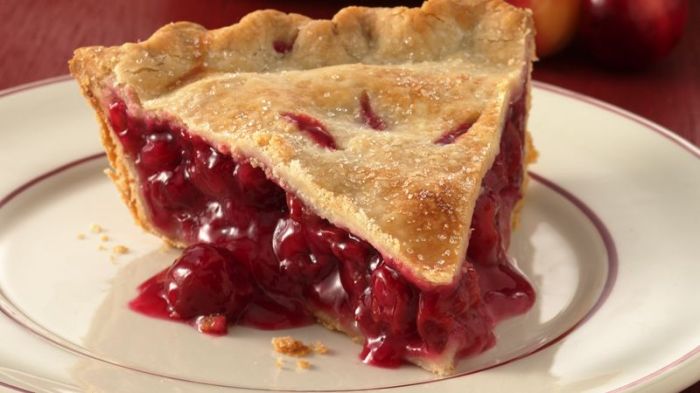
Cherry. Ideally made with tart (sometimes called sour) cherries. Bliss!