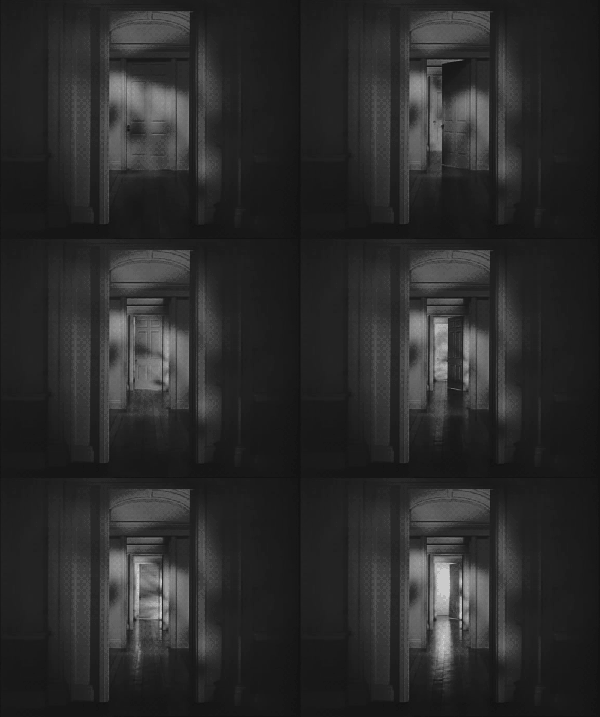
Don’t open that door!

doors

Another busy week around Maximum Z HQ, with a significant part of it involving waiting to hear about the potential future of some of my projects.*

I hate the waiting. It opens the door to allow fear and anxiety to stroll on in.

A friend who’s a director put it very succinctly: It’s all about control. A lot of that stuff is out of your hands now, which makes you nervous about the outcome. You have to redirect your attention to anything and everything for which you can take charge, and do something with it. The sooner the better.

How absolutely true, and it was exactly the reminder I needed.

In my case, that comes down to the work and all things related. It’s easy to forget how many things with which I’m involved. My own stuff (which is a growing category unto itself), giving notes, networking, sending out queries, just to name a few.

Sure, it would be great for everybody to respond quickly, preferably with news of a positive nature, but it doesn’t work that way. These things are known to drag out for excruciatingly long periods of time, and me fretting over it is the last thing I need.

I wouldn’t even be surprised if I get an email in a few months about one of these that I’ll probably have totally forgotten. It’s happened before.

Keeping busy really does help you stay focused and keep the negatives at bay. It might not be easy, but do what you can to slam that door shut, lock it and throw away they key.


*heard back from a producer soon after posting this. They passed on my script, which sucks, but will now re-double my efforts with the other projects.
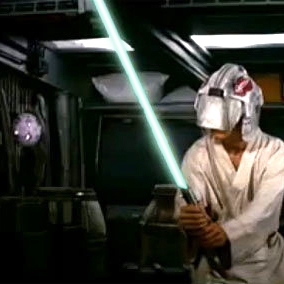

 

The unscientific term would be “gut reaction”

trust your feelings
Learn to trust your feelings. Even with the blast shield down.

I’ve had the experience of working with some writing, both my own and other people’s, that required a second opinion. For some of them, I was the second opinion, while the others involved my work being reviewed.

An experienced professional asked me to take a look at another writer’s script, accompanied with their excitement and enthusiasm about it. Upon reading it, I found it severely lacking in a lot of screenwriting fundamentals (bad structure, shoddy character development, etc.), and said so as part of my notes of what was needed to improve.

I like to read a script twice before giving notes on it, and it took a lot of effort to get through each one – especially the second time. That whole time I was wondering “Where is this enthusiasm coming from?” This person knows what a good script looks like, and this one, to me, didn’t meet any of the necessary criteria. And if they felt this way about this script, could I trust their judgment on others?

Last week I’d been given the offer to have my query letter reviewed. I put it together with the elements I considered vital: quick one-sentence pitch, logline, reputable contest results. As fast a read as possible.

The response read like something churned out by a machine. Their recommendation was to follow “their blueprint”, which involved a lot of fill-in-the-blanks, how it’s similar to successful films (the more recent, the better!), telling the story from only the main character’s point of view, and concluding with “why I think this will be a hit” OR the underlying theme. The end result is several big unappealing blocks of text.

All of this felt totally and absolutely wrong. If I were the intended recipient, I might start reading, but would most likely lost interest very quickly and be very hard-pressed to want to continue, let alone finish it.

(With no intention of ever actually using a letter written following their guidelines,  I put one together and submitted it for review, just to see what they would say. Their follow-up comments reinforced my doubts, but that is a topic for another day.)

As you probably guessed, I’ll be sticking with my original format.

The takeaway from both of these experiences is that a writer must not only develop their writing and storytelling skills, but also the ability to trust their instincts. Know what works, not only for you, but in an overall sense.

Don’t always assume the other person is in the right. Sometimes they’re not.

Everybody will have an opinion about something. You might agree wholeheartedly or think the other person has no idea what they’re talking about. It takes time to learn how to determine which is which. You will make mistakes and bad choices along the way, but make the effort to learn from them so you don’t do it again.

Like with writing itself, the more you work at it, the better at it you’ll become.


A multi-pronged approach

freeway
Lots of different ways to go, as long as you know where you’re going

Had another great lunchtime chat with a fellow writer yesterday. Among the many topics of conversation: the necessity of how a writer trying to break in must work towards achieving success from as many angles as they can.

Got a good script? How many others have you got that are ready to go? How many are you currently developing so as to increase that number? Are you sticking with one genre or trying several?

Are you actively seeking writing projects? There are a lot of smaller, not-as-prestigious projects out there in need of writers. You may not get a big paycheck, but you’ll gain experience (and maybe an onscreen credit). It could also help educate you about what goes on during production.

Think your script is good enough for one of the high-profile contests? What’s more important to you – the prize money, the prestige of winning (or at least placing), or how this could help get your career going?

Are you connecting with other writers? As introverted as a lot of writers are, social contact is a necessary factor of doing it professionally. It’s one thing to communicate electronically, so make a point of going to a social event in your area (you could even go so far as to arrange one!), or attend a conference where you actually talk to people. This will also come in handy when you reach that next level and start taking meetings.

You’ve done everything you can with this current script and are ready to start looking for representation. How much research have you done into who would be the most receptive to it? Does your script seem like a good match for them? Have you worked on that query letter to the point that it would be impossible for them to not want to read your script?

Naturally, these questions and situations are just the tip of the proverbial iceberg. Everybody’s path is going to be different from yours, but there will be similarities. Fortunately, you have time and a wide array of resources at your disposal to start preparing in your own way for all of them.

Good luck, and get to it.

Make something happen

organizational chart
Time to get organized!

Lots of resolutions and goals being bandied about today, but that’s just the first step.

All the things you want to accomplish this year as a screenwriter. What are you doing to make them a reality?

It’s going to take a lot of work. It’ll be frustrating at times, but isn’t this something you’re willing to put yourself through hell for in order to see happen?

Give yourself some goals, but be realistic.

Write. Edit. Rewrite. Polish.

Watch. Analyze.

Read. Study. Learn. Hone.

Network. Connect. Share. Support.

Enter contests. Attend conferences. Pitch.

Research. Query. Reconnect.

Keep trying.

Don’t give up.

Enjoy yourself.

Make 2016 the year you make something happen for you.

Now go get started.


Looking back (and a peek ahead)

sleeping
Me around 10:30 on New Year’s Eve

As the end of the year gets closer, one can’t help but be a little reflective of how the past 12 months have gone, and in this context, it’s all about the screenwriting and its related subjects.

-My western. A labor of love finally put to bed once and for all. This script has gone through A LOT of changes, and both I and it could not have gotten to this point without the sage feedback received from many of my trusted colleagues.

-Other scripts. Over the course of this year, I completed a first draft and two outlines (with a third in its final stages), all for separate scripts. I may not be as productive as I’d like, but think this is still pretty good. I’m hoping that at least two of these will be completed scripts by this time next year.

-Establishing a career. I’ve always said that each draft of every script gets me a little closer to accomplishing that dream of being a working writer. 2015 saw some strong progress on that front. My writing’s getting better, I discovered I’m pretty good at pitching, and found out the hard way what should and shouldn’t go into a query letter. It’s an ongoing learning process, but I’m getting there. Hopes are high of moving to the next level or two in 2016.

-Networking. The number of writers I’ve connected and interacted with has definitely grown by leaps and bounds. Some have been in person, while most have been via social media, but the benefits have been tremendous all around. From exchanging script notes to being a sounding board for ideas to plain old moral support, you couldn’t ask for a more helpful bunch of folks. Hopefully they got as much out of it as I did. Highly recommended.

-Running. After involuntarily taking a year off, I got back into the habit of going for runs and took part in four half-marathons this year. Didn’t set any new records, but stayed within my realm of expectatins. Really glad I did them and already looking forward to the ones next year. How does this relate to screenwriting? Well, apart from the standard quote of “It’s not a sprint, it’s a marathon (or half-marathon, in my case)”, it’s about determination, endurance, perseverance, and setting a goal and working towards achieving it. All necessary elements involved in writing a script.

-The blog. This year saw the wrap-up of my series of interviews with scripts readers and consultants. I still keep in touch with a lot of them, and happy to say that a lot of those posts continue to get hits. Thanks to all of you for that. In the meantime, no big changes planned for what you read around here, but I’ve got a few ideas.

Thanks for reading, happy new year, and may we all get some kickass writing done in 2016.