One goal, lots of strategies

to do list
Step 1 – plan. Step 2 – execute. Step 3 – repeat Step 1.

Last time the subject was how we did, writing-wise, during 2017. Today, it goes beyond simply what you’re hoping to accomplish to “So what are you doing about it?”

Just a few days into the new year, and how much writing have you done? Are you adhering to the guidelines you set up for yourself? Making the most out of the time you have available? Are you saying to yourself “No more Youtube! No more (insert preferred form of social media here)! I got me some writing to do!”, followed by actually turning off that unwanted source of input and applying proverbial pen to digital paper?

Jeez, I sure hope so.

Repeat the process on as close to a daily basis as you can get, and you might be pleasantly surprised at the results. You might have more time to work with during the day than you realize, so why not make the most of it?

Long-term goals are all fine and dandy, but continuously crossing the finish line for smaller (and some might say more realistic) ones can also yield some solid results. It’s one thing to say “I’m going to write four scripts this year!” and another to say “I’m going to write three pages today!”, and you’d have to admit the second one is just a little bit more achievable.

Additionally, if you stick to that schedule and maintain the same kind of daily output, you could potentially hit at least some of your long-term goals a little sooner. Write three to four pages a day every day, and within a matter of weeks (or maybe a little more than a month), you’re the proud parent of a completed draft. Sure, it might need a lot of work, but the important thing to remember here is : YOU DID IT.

As 2017 wound down, I knew what I wanted to happen for me, writing and career-wise, in 2018. Now that we’re almost a whole week in, I’ve been making an effort to try and get something done on both fronts every day.

For the writing, it’s anything and everything, running the gamut between outlining, rewriting, editing, proofreading, or even just jotting down an idea for a scene in the under-construction outline for a story I haven’t looked at since April. Working with some very quality notes for two scripts, I’m actually ahead of schedule with rewriting one, and gearing up to dive into the second when that’s done.

For the career, it’s about finding more avenues to get myself and my scripts out there. I’m not just pitching stories; I’m pitching a storyteller as a potentially invaluable resource. There will be plenty of “no”s along the way, but all it takes is that one “yes”, right?

And once again, let’s tout the benefits of networking; making and maintaining your connections. You never know which one could lead to something.

While I’m still doing some of the things I’ve always done, there was also that feeling that new and different approaches were necessary. So as I work my way through all the assorted processes involved with writing scripts, I’m also navigating the awkward transitional phase of a few readjustments.

No matter what, the end goal remains the same. As always, fingers remain firmly crossed that this is the year it happens.

Looking back, glimpsing ahead, and a minor adjustment

new year's eve
Just one more glass of champagne, then it’s back to work. Promise.

As 2017 wraps up, it’s only natural to engage in a little self-evaluation.

How many of your writing goals were you able to check off this year? Most of them? Some? A small-but-decent fraction? Hopefully you don’t need to mark the box labeled “None”.

One of mine was to complete at least three scripts. I managed two drafts, a revised outline, and one and a half rewrite/polishes (one still a WIP). Pretty solid results. A very hearty thanks to everybody who devoted the time and effort to give me notes. I hope my notes for yours were just as helpful.

Using those notes and the results of a few conversations, I think I’ve been able to up the quality of my writing a few notches. It still has a few levels to go, but it definitely seems better than it was. The next round of drafts should be really interesting,  both in terms of working on them and how the end results turn out.

I wanted to read more scripts, which actually happened, but not entirely in the way I expected. I didn’t do as much reading of scripts for the purpose of entertainment or gleaning some helpful guidance because I ended up reading over 100 scripts for several contests. Don’t know if I’ll do it again, but still glad I did it.

On the gaining representation front, lots of query emails were sent. Maybe one response out of ten expressed interest in reading the script, with each ending with a “thanks but no thanks” or “just not what I’m looking for”. A bit disappointing, but not totally unexpected. Along the way, I also worked on being more strategic about the process, researching potential recipients and re-drafting the query to (in theory) really sell the concept of the script.

And what would an ambitious screenwriter’s year be without contests? My western made it to the seminfinals of a few smaller contests and the top 20 percent for the Nicholl (not too shabby), but once again whiffed it for PAGE. I’ve become somewhat disillusioned regarding contests, so will most likely really cut back on them. Maybe just stick to the big three.

There was the most pleasant experience of going to Los Angeles to attend a table read for one of my scripts. I like the idea of doing one or two of them locally, so looking into that for 2018.

I hosted two screenwriting networking events, which connected me with some very talented writers from right here in the Bay Area. Definitely plan on doing that again at least once this year. Highly recommended, especially if you’re not in Los Angeles and want to expand your own personal network.

On the half-marathon front, I ran five races this year – the most ever in one year for me. Still averaging about two hours, which isn’t bad – for me, but the quest for 1:55 continues. Already signed up for three next year, with maybe one or two more expected to be added into the mix. Like with screenwriting, improvement takes time, effort and dedication. A good pair of socks and strong knees also come in handy, and that applies to both.

Finally, this blog. As always, a great experience doing what I can to offer advice to help other writers, recounting my experiences and the lessons I got out of it, and presenting some interviews with some truly interesting and amazing creative folks. I am truly grateful to everybody who’s stopped by to take a look, like a post and make a comment.

But it’s also been exhausting. Producing posts twice a week on top of dedicating time to write and make a career out of it has simply gotten to be too much. I still enjoy doing the blog, but want to refocus my energies. So as of January 1st, I’ll be reducing my weekly output to Fridays only, and sometimes even that might be iffy. It’ll most likely be on a week-by-week basis.

I hope you had a most productive 2017 and wish you all the best for an even better 2018.

See you in seven.

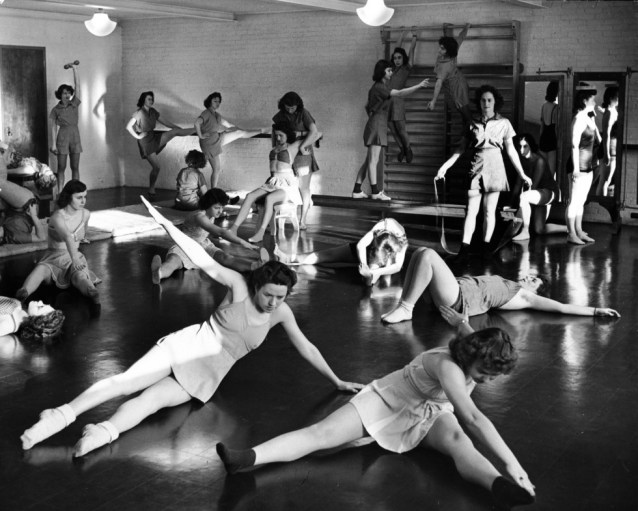
Work those writing muscles!

00748604.JPG
Feel the burn! C’mon! Just one more page!

Earlier this month, I hosted a networking event for screenwriters from the Bay Area and throughout northern California. It was fun and I got to make some new connections as well as reconnect with some already-established ones.

(Can’t recommend this sort of thing enough. Getting to know other writers in your area helps all involved.)

Part of the event involved introducing ourselves and offering up a little background info, including our individual screenwriting- or film-based experience (there were a few writer-directors) and a thumbnail description of our current works-in-progress.

When it was my turn, I mentioned the blog and how I was dividing my time between a few rewrites. At that point, one of the attendees raised his hand.

“A few rewrites? Like, all at the same time?”

I clarified that I’d work on one script for a few days, or at least until I thought I made some significant progress, take a day off, then dive into another one.

“But don’t you find it kind of difficult to stay focused?” He also added that he was relatively new to screenwriting, so the concept of working on a script and then suddenly shifting gears into one that’s totally different was a little mind-blowing.

I explained it this way:

I’ve been doing this a while, and all of these scripts are at least third, fourth, or higher drafts. I’ve gotten to know the stories and characters for each one pretty well, so I can jump right in, fully aware of what each rewrite requires. It might take a while (along with several more rewrites) to finally get there, but I’ve found that always working on something has really helped make the whole process easier.

It really is like exercising. It’s kind of tough and challenging when you’re starting out, and takes time to learn how to do it properly. Then you figure out a pace and/or system that works best for you (with everybody having their own methods and routine). You will indeed discover that the more you do it, the easier it gets.

I try to write every day, even if I only have 30 minutes to spare. You might think such a short amount of time isn’t worth the effort, but I’d disagree. Better to spend a little time writing than no time at all. Friend-of-the-blog Pilar Alessandra even wrote a book to help you do just that. (totally unsolicited plug. It came to mind while I was writing this.)

If you go into a writing session with an idea of what you want to accomplish, it’s a great use of your time. And if you sit down, not entirely sure what to do, you’re still giving yourself the opportunity to focus, which is always good.

That’s really what it all comes down to: Want to be a better writer? Find the time to write.

And reading helps a bit too.

I’m here, but need to be up there

mountain climber
Onward and upward! (snappy hat optional)

I’ve been writing screenplays for quite a number of years, but only in the past, say five to six have I shown some significant improvement.

More than a few readers who’ve read my last three scripts have commented that each one displays a step up in quality a compared to its predecessor. Which is very nice to hear.

Feeling pretty confident in my skills and material, I submitted some of them to a few of the high-profile contests (or at least the ones that really matter). The results were less than encouraging. Don’t get me wrong. Top 15 percent in the Nicholl is nice, but it’s still falling short of expectations.

You can have the most incredible script you’ve ever written, enter it in a contest, and chances are it might still go nowhere. Contests are just one way in.

But I digress.

I figured there was nothing more that could be done with the scripts, so I might as well file them away and move on, using them for occasional query letters.

However.

While my scripts may not be similar to those that win contests (can you imagine me writing a coming-of-age story set in 70s Reno?), they’re still fun, entertaining reads, and my passion and enthusiasm for them continue to burn strong and bright.

Like with my writing skills, they’re good, but can still be better.

That’s why I’ve decided to do what I can to make that actually happen. I’ve already gotten several sets of notes on some of my scripts, and most mention the same issues, along with some potential fixes.

As always, I have the luxury of picking and choosing which suggestions to implement, and I sincerely hope the end result is a collection of scripts of decidedly higher quality.

It’s been quite an effort for me to get my writing to get to the level it is now, and spending a little more time on trying to make it better will be definitely worth the effort.

A rather introspective Q&A with Lauren Sapala

Lauren-Pic-2
Lauren Sapala is the author of Between the Shadow and Lo, an autobiographical novel based on her experiences as an alcoholic. She is also the author of The INFJ Writer, a writing guide made specifically for sensitive intuitive writers. She currently lives in San Francisco.

What’s the last thing you read/watched that you thought was incredibly well-written?

The best book I’ve read this year is Haruki Murakami’s 1Q84. I was absolutely mesmerized and couldn’t put it down. The blend of fantasy with serious fiction was just enthralling.

Tell us a little about your writing background.

I’ve been writing seriously for over a decade and started my blog for writers in 2013. Shortly after I started the blog I went into business as a writing coach and I quickly noticed a pattern with my new clients. Nearly all of them were intuitive, introverted personality types. Using the insights I gained from working with my clients I wrote a book called The INFJ Writer, which came out in 2016. This year I released my addiction memoir, Between the Shadow and Lo. So, I currently juggle a few different writing responsibilities—I still write regularly for my blog, I work on my own books, and then I help my clients with their manuscripts.

Is recognizing good writing something you think can be taught or learned?

Wow, this is a tricky question and I have heavily biased opinions on it. I have a degree in English Literature, and I would say that it’s actually been one of the biggest obstacles in my own writing journey. Studying literature at the university level put me in an environment with a lot of “experts” who felt they definitely knew how to “recognize good writing.” But from my observations, this basically came down to the writers who have won awards, been canonized in some way, or who everyone has agreed is a “master.”

When I was a kid growing up in the 80s, for example, Stephen King was dismissed by a lot of people who liked good literature. Even when I was working in a bookstore in the early 2000s, a lot of the booksellers looked down on his books. Today, he’s been recognized as a “master” and so now it’s a different story. So, no, I don’t think “recognizing good writing” is something that can be taught. I think you have to learn how to read everything with an open mind and trust your own judgement. If you like something, you like something and that’s that,

Your book is called THE INFJ Writer. What does INFJ mean, and how does it apply to writers?

INFJ is one of the 16 different personality types in the Myers-Briggs Typology personality system. The letters stand for Introverted (I) Intuitive (N) Feeling (F) Judging (J). Another way of putting it is that INFJs are introverts who interpret the world through their intuition and use emotion to make the majority of their value judgements. INFJs are about 1% of the population, but from my observations they make up a much larger percentage of the writers out there.

What inspired you to write it?

It was a combination of different factors. I struggled for many years to write anything. I wanted to write more than anything else, but I did horribly in the creative writing classes I took in college. The whole “critique circle” thing didn’t work for me at all. I also couldn’t write in a linear fashion or use any sort of an outline. I had a lot of shame around these issues for years. It wasn’t until I painstakingly stitched together my first novel that I realized I wrote in a radically different way from the norm. When I started talking about these issues on my blog I got a huge response, and then, as I mentioned, I started taking on clients as a writing coach. Almost all of these people had found me through one article or another that I wrote on being an INFJ writer. I saw immediately that we all had the same problems. I knew then that I needed to write a book about this.

Some writers feel their talent and/or creativity might not be strong enough. How would you approach that?

A lot of people say creativity is a muscle, and I do agree with that to a certain extent, but for me, personally, it’s more like a portal. The more you open yourself up, open your heart and let things just show up in your mind without judgment, the more the portal widens and lets more cool things come through. If an idea pops in your head and you instantly go into rational mode and start judging it, or try to analyze how it will work as a plot or how readers will respond to it, you’ve pretty much set yourself up to kill the idea right there. If you’re habitually in judgement mode (toward yourself or others) you’re just not going to get very far with strengthening your creativity.

Is there a “proper mindset” to being a writer?

I don’t know if there’s a “proper mindset” but I would say there is a “helpful mindset” and that would be: Just Chill Out. Almost every single blockage or obstacle I work with my clients on can be traced back to the root of anxiety. Almost every writer is anxious that they’re not talented, they’re not doing it right, everyone else is doing it better, they’re not published yet, their novel doesn’t look like it’s supposed to, etc. If you’re serious about being a writer, you have to chill out on all this stuff. You’ll have good days and bad days and nothing is the end of the world. You’ll write stuff and be convinced it’s the work of a genius and look back a few years later and hate it. You’ll write stuff that you don’t think is very good and then other people will love it. You just have to hang in there and lighten up most of the time.

Are there some basic guidelines you suggest for writers, for both what they write and how (scheduling, timing, etc)?

Honestly, I think our culture is way too obsessed with rules. This also comes back to being in judgment mode. We live in a culture where people judge themselves and others relentlessly. We are so used to our media constantly bombarding us with what other people are doing wrong or how they’re being stupid, and we’re endlessly encouraged to make judgments about those people and their actions. Most people devote probably about 60-70% of their mind power to self-judgment—so when we see the blog post that reads “5 essential rules for successful writers” we eat it up. However, it’s not nourishing. It might feel familiar, because it’s got that judgment energy attached to it, but it’s actually not helpful.

I think most creative people flourish with NO guidelines in place. Write what you want to write. If you haven’t written anything in two weeks, whatever. Try writing something right now. If you’re not feeling it, then you’re not feeling it. I know this runs counter to the standard writing advice out there that “writing is work” and you have to “sit your butt in the chair and get it done,” and yes, I do understand that sometimes you just have to make it happen for yourself, but it shouldn’t be a constant swimming upstream battle either.

You recently released your autobiographical novel Between the Shadow and Lo. Can you talk a little bit about that and how it came about?

Between the Shadow and Lo is an addiction memoir (in the guise of a fictional novel) all about my alcoholic years in Seattle. I’ve been sober for 12 years now, but when I was drinking I was pretty much a lunatic. Between the Shadow and Lo is the story of how I felt like I had a split personality during that time. “Lo” was my other, sociopathic half and she only came out when I was too drunk to fight her off.

The book is very dark, and very gritty. It’s also one of the few transgressive fiction novels you’ll find out there written by a woman. Jean Genet and Charles Bukowski are two of my favorite writers and they were huge influences in terms of the style of that book.

How can people can get in touch with you to find out more about the services you provide?

They can email me at writecitysf@gmail.com. I get a lot of emails so sometimes it takes me a day or two to respond, but I do respond to every email I receive.

Readers of this blog are more than familiar with my love/appreciation of pie. What’s your favorite kind?

Does vegetarian Shepherd’s Pie count? I don’t eat a lot of sweet things, but I love vegetables.