A most illustrative Q&A with Emma T. Capps

new hair icon maybe

Being a lifelong reader of comic books, it was inevitable I would discover and subsequently enjoy a wide variety of webcomics. Variety is actually one of the key words in play here. There are so many to choose from, along with so much talent on display from the creators.

Like with screenplays, webcomics are great examples of storytelling – just in a different medium. It takes a lot of work to create and maintain a quality webcomic.

I first met Emma Capps a couple of years ago at the Alternative Press Expo in San Francisco; she was 15 years old and already an accomplished cartoonist. She’s experienced a lot since then, both professionally and personally, and despite some tough setbacks, still maintains an incredibly positive and upbeat attitude.

“Emma T. Capps started her first webcomic at age 14, and has exhibited her work all over the country and done special installments for publications like Dark Horse Presents. She also teaches cartooning workshops at 826 Valencia in San Francisco, and has more than doubled the percentage of female students in her classes! In her spare time, she likes chatting in Spanish, learning new crafts, and being politically active through volunteer work. Most of all, she really hates talking about herself in the third person.”

What’s the last thing you read/watched that you thought was incredibly well-written?

Hmm, this is honestly a bit of a tough one to answer because I am constantly reading. I just finished George Saunders’ Lincoln in the Bardo, which to my mind deserves all the accolades it’s recently gotten. (Michiko Kakutani, recently departed bastion of the New York Times book review, never steers me astray). Bardo is a bit of a tricky book to classify, as it skillfully combines various genres in a way that makes it difficult to define. I cried much more than I expected for a book where the premise is that all the characters are dead.

I think what I recently had the most fun reading was Scott Hawkins’ The Library at Mount Char, a novel that to me has flown quite undeservedly under the radar. It’s a really fresh voice in fantasy that begs multiple readings just because it is so skillfully plotted and imagined. There are scenes of violence and horror – many – but I’ve still been recommending it all around and it’s become one of my favorite books. It begs a sequel, or a companion novel set within the same universe, but as of yet Hawkins hasn’t expressed his immediate plans to write one (Library is remarkably, his debut).

In terms of things I’ve watched, I don’t watch a large amount of TV – mostly period dramas, like Downton Abbey, Call the Midwife and pretty much everything on Masterpiece Classic – but a movie that has one of the most excellent scripts, to me, is Tarsem’s The Fall. This might be a little bit of a cop-out because there were definitely unscripted scenes between the young actress and Lee Pace, but the entire conceit of the movie is amazing – and the costumes by Eiko Ishioka are understandably incredible. It’s a historical movie, sure, but at its core it’s a movie about the power of stories and how they bind us all together.

How’d you get into creating your own comics?

This is also unfortunately a slightly strange answer. It’s not so cut-and-dry! I always knew I loved writing and drawing, and I had several short stories I published in Stone Soup Magazine along with illustrations I did. But I never really synthesized the two, mostly because I considered my writing to be better developed than my art skills were at that point. But I took a short art course, and I realized I actually could capture my ideas visually just as I had imagined them.

In Fall 2010, I drew a short autobiographical comic called Jam Days and submitted it to a competition – and, somehow, managed to work that into my final “recital” project for 8th grade. But I finished Jam far before the overall project’s deadline! So, I re-discovered Chapel, a character I had created a while ago and had turned into a line of greeting cards I made for my parents. I’ve always had a fascination with newspaper dailies, which are sadly dying out, and I thought it would be a great challenge to try and re-create that sort of schedule.

So I set out to draw one Chapel comic every single day for 30 days. I put them online in installments – that’s what became “Season One” of The Chapel Chronicles – and by the time I’d finished posting them, I realized they had really struck a chord. People were commenting! People I didn’t even know in real life! So why not continue? I lightened my load a little bit, though, to one comic per week instead of per day. I kept to that schedule throughout all four years of high school (including summer break!)

What are some of your favorite comics and webcomics?

My favorite comics hew much more to the print side than the webcomic side, although some of them were definitely webcomics that later become print collections! My favorite print volumes are Mazzucchelli’s Asterios Polyp, Kerascoet’s Beautiful Darkness, DeForge’s Ant Colony, Tamaki’s SuperMutant Magic Academy (previously serialized online, but I strongly recommend the printed version). In terms of series, I really enjoy Oda’s One Piece – I use it as an example of differing panel structures in the comics classes I teach. In a parallel universe where I actually have my life together, I’d also keep up regularly with Witchy, Paranatural, Saint for Rent, and Hark! A Vagrant. I’m 99.99999% sure there are more that I’m forgetting to list.

In our pre-interview, you’d mentioned plotting out the story for your latest project. How did you come up with the idea for it, and how did you develop it?

In contrast to Chapel, this story, The League of Fonts, is much older in terms of its sheer gestation period. I actually had the idea for it before I even started doing Chapel! If I remember correctly, I was having lunch with my grandma and had the idea – but I had no paper, so I went to a stationary store next door and bought a small notebook to jot down my thoughts! I still have the notebook, somewhere.

The structure of the story was far different back then, but the central conceit of the characters and fonts was the same. It has evolved through various iterations and plot changes, though, especially as I learned things that could make certain aspects more realistic and others less so for the purpose of satire. I think my greatest breakthrough was a few years ago, when I realized it was a highly visual story and would be better served as a graphic novel instead of a prose story. So I converted it to a script, and continued work in that format. I have the entire story scripted now, on Scrivener, which for me is the ideal process: that way, when I’m actually drawing, I can put all my attention on the visual aspect knowing that I’ve already got the overall flow of the storyline planned out. If I hadn’t done that writing beforehand, it would be a mess, since it’s a highly detailed plot and relies on continuity to really work.

Going through the archives of The Chapel Chronicles, some of the earlier strips are of the one-and-done format, followed by a gradual transition into longer storylines. Was this intentional or more of a natural progression (i.e. the more you wrote, the more ideas you got)?

As I mentioned previously, I didn’t really have a set “game plan” for how I would start Chapel – and, honestly, I never intended it to become something longer. My first 30-comics-in-30-days was a personal challenge, but I found I enjoyed it much more than I had anticipated. There’s still narrative and continuity in those early comics; some of the board game strips, for example, might not make quite as much sense without context, nor would the storyline of Chapel acquiring her pet hedgehog, Rupert. Once I decided I was going to make more Chapel, I immediately knew there would be longer storylines. My favorite newspaper comics do just that: there are longer storylines, but each can still be enjoyable as a stand-alone strip.

You’re definitely a very creative person. Is being a professional artist/cartoonist the ultimate goal, or just one of many?

I honestly don’t know! YES, being a professional cartoonist is a life dream of mine – but is it the only, ultimate goal? Most likely not.

When it comes to stand-alone visual art, I doubt it. This goes against all accepted artist etiquette, but I almost never sketch. If I do, it’s to plan out aspects of a narrative world I’m creating. I don’t mind that, though! I have little-to-no interest in being solely a visual artist, as I honestly don’t think that’s my strong suit.

When I was younger I wanted to be a novelist, and I still might revisit that – comics, to me, are just a way of telling stories that have a strong visual component and couldn’t be fully expressed with just prose. I read books all the time (to the point where I’ve had to ban myself from reading the New York Times book review, since it’s the equivalent of window-shopping for me) and I feel, often, the narrative/written side of graphic novels is treated as less important than the strength of the artwork. Really, the opposite is true. The most successful contemporary comics don’t, in a strict sense, have technical artistic proficiency. The reason they’re so popular is because the story or writing has something that is engaging. XKCD, for example, pulls no punches: it’s all stick figures, but it’s so wildly popular because it resonates with people through the strength of the writing.

When I was a lot younger, I wanted to be a paleontologist, but now I’m not sure I’d be a very good one. Math and science aren’t really my strong suits – they could be, if I was passionate about them enough to study them on my own – so that likely wouldn’t work out. In my spare time, beyond reading, I like to design and sew/knit my own clothes. But as of yet, I have no intention of ever doing that professionally. That way, nobody can see my lazy seam-work on the interior of the garment! I mostly taught myself, so I don’t do anything the way it’s “supposed” to be done. If it fits, then I’m happy, and I don’t have to go clothes shopping ever again!

You’ve taught cartooning workshops at a non-profit writing center. How did that come about, and what sort of things do you talk about?

Coinciding with my initial work on The Chapel Chronicles, I decided I would bundle up the first “season” into a small book and sell it at my school’s craft/project fair! I also went to a convention (my first one ever!) in New York and exhibited there as well, which was terrifying, exhausting, and exhilarating all at once. I had planned from the beginning to donate all my profits to 826 Valencia, a nonprofit in San Francisco, as one of the teachers who first sparked my interest in creating comics used to teach there. They were a bit surprised at a 14-year-old donating money, I think, and invited me to come teach a comic class myself! I was unimaginably nervous, but I wanted to knock it out of the park, so I prepared worksheets on the process, a detailed time breakdown for the class, and specific PowerPoint presentations on what I’d be trying to teach. I really wanted to show them that I wasn’t doing this just as a lark (or, in any way, a “volunteer experience” to look good on school applications). I was serious!

My first workshop was a disaster: only one student showed up. 826 contacted me to apologize, and asked if I’d like to teach another class. I didn’t, but I said yes regardless. I started to teach regularly, and began theming my workshops so students could have some framework around which to create their ideas. Mostly, I focused on teaching kids various steps of planning a comic, and then some conventional tools that make cartooning easier – but my focus was never about imposing some specific way of doing something, as I’d experienced that in art classes at my school and bristled at it. I would explain to them why we would be doing a certain step, and why I felt it was helpful. I’d then go around to each student individually, and if they had a reason they’d like to do something against the grain, I would encourage them to go for it! I really wanted to let their individual voices shine. I even had a few “repeat offenders” who attended multiple classes and tried to squeak in before registration filled up, as it did often!

I love teaching, and I haven’t gotten to do so in a while due to extenuating circumstances, which leads me to…

You also mentioned having to take a break from writing and drawing due to some health issues. Can you elaborate on that, and how are you feeling these days?

I would be more than happy to discuss it! To be honest, I’m never quite sure how to bring up the details – I’ve essentially disappeared for the greater part of two years, both to focus on my treatment and to figure out a way to broach the subject. I’m always cognizant that the Chapel audience skews younger, and I never want to write something that might scare them. I haven’t updated in quite a while because while I’m on the road to recovery, it’s never 100% guaranteed, and I feel that proclaiming “I’m cured!” would be jinxing it.

Essentially, I went to college in New York City in Fall 2015. Less than a week in, I caught a cold from my roommate and I didn’t get better. I missed several days of class, spent most days sleeping, and barely had enough energy to get something to eat. I went to go spend the afternoon with a family friend, and I was so tired she booked me an emergency appointment with her son’s pediatrician. He sent me in for tests at the hospital, and I woke up in the ICU around three weeks later.

At the time, I had a diagnosis of generic pulmonary failure – but it wasn’t correct. In order to breathe, they’d given me a tracheostomy. I’d also been tube-fed, so I had lost so much weight that at first I couldn’t walk at all. Initially, I wasn’t very upset, most likely due to the massive medications I was on that kept me fairly sedated at all times. But I learned I had to go back home to San Francisco and that made me devastated. At home, I started seeing a pulmonologist, got steroid prescriptions, and was allowed to let my trach hole close up. I worked really hard! I still never really had a cut-and-dry diagnosis, but I was on strong daily medications and they seemed to be working. So in fall 2016, I went back to school in New York again.

This time, I lasted longer. I stayed for about a month or so. But things started to fracture: I got three colds; I wasn’t thinking clearly; I couldn’t do school assignments that, rationally, I knew were easy. Eventually I decided I needed to come home. I felt it was my fault, like I wasn’t trying hard enough.

One day, I got a severe headache and vomiting. We went to the emergency room, and they quickly took me in an ambulance to UCSF Hospital. I had severe inflammation in my brain, to the point the doctors were shocked I was even walking. I got discharged around…Christmas, I think? But a few weeks later, the entire left side of my body began to feel numb and tingly, so we went to the hospital as a precaution. They diagnosed me with some sort of brain condition, and put me on a treatment of regular IV drips. But that, too, was incorrect.

One doctor thought: “You know, this isn’t adding up.” So she surveyed my entire case and realized the inflammation in my lungs was the same thing now clouding my brain. On a hunch, she did a simple blood test and discovered I have an extraordinarily rare genetic disorder: hemophagocytic lymphohistiocytosis (HLH), which more often than not goes undiagnosed because it’s so uncommon and has a high mortality rate. For this, there is only one treatment: chemotherapy and a bone marrow transplant. So that’s what I had, and I’m on the road to recovery now! I wouldn’t say I feel 100% back to normal, but at least my brain is working well enough now that I can read novels again and process the information.

Anyway, it’s not a very nice story to tell, which is why I haven’t really told it in any Chapel-specific circles. But if anything can come out of my discussing it, I’d hope that it would raise awareness so more doctors might think to test for HLH and other rare hematologic disorders. Many doctors have never seen a case of it in their entire careers!

What’s next for Emma T. Capps?

A functional immune system.

How can people find out more about your work?

They can read the entirety of The Chapel Chronicles online at www.chapelchronicles.com! It’s all there, except for some work I’ve done for Dark Horse Presents, as I don’t own the copyright to those. And the latest for League of Fonts is up on www.leagueoffonts.com – although that’s on indefinite hiatus due to the aforementioned health issues, which I feel horrifically guilty about. Beyond that, I have a Facebook page for The Chapel Chronicles, and I’m on Twitter –  @EmmaTCapps. On Facebook I’ve been largely inactive, as I know some younger kids do follow me there, and I’ve yet to think of a PG-rated way of describing brain surgery. I update my Twitter account slightly more frequently. Previously, I posted solely about my artwork, but lately it’s been about my health, books, and taking nice baths (verdict: acceptable for all ages. Don’t ever feel like you’re too old for a bubble bath. Trust me).

Readers of this blog are more than familiar with my love/appreciation of pie. What’s your favorite kind?

That’s a tough one, because there are two things I am excellent at baking: pie and chocolate cake, in that order. I haven’t specified the pie flavor because I have a good crust recipe and I can usually make them come out equally well. I will say I’m not a big fan of pumpkin pie, so I’d have to say my favorites are probably in the berry territory (berritory?) – I just made a blackberry one, in a desperate culinary plea to woo my new neighbors’ affections, so right now that’s where I’m leaning. My mom prefers peach, though, so I make those more frequently. Yikes, now I’m hungry…!

*Author’s suggestion – Emma’s books would make for some great and pleasantly original gifts, holidays or otherwise, for any young readers on your list. Just click here.
A very hands-on Q&A with Geoffrey Calhoun

7D25AB88A8B448A9ABA793263FCBF2F3

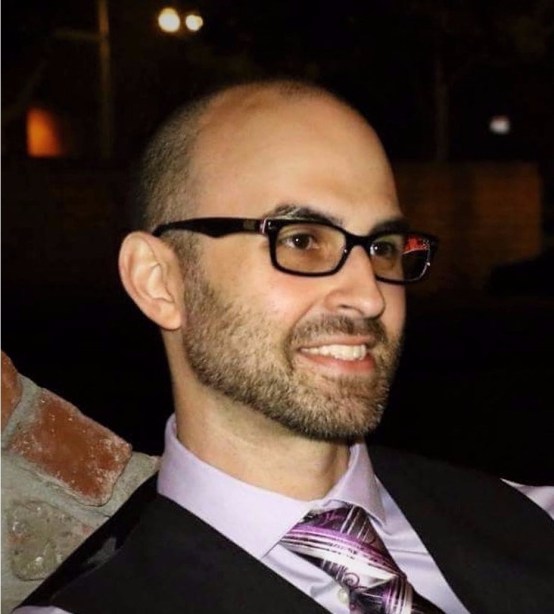
Geoffrey D. Calhoun of wefixyourscript.com is listed as a Top 100 Indie Writer in the World. He has optioned several screenplays and has worked as a writer on two features coming out in 2017: The Little Girl and Studio 5. His multi-award-winning thriller Pink Bunny is scheduled for a 2018 release. Geoffrey has won multiple screenwriting awards and has worked as a producer, an assistant director, and director on indie film productions. He has been sought out by studios as a script consultant and a re-writer for various stages of development and production.

1. What’s the last thing you read/watched that you thought was incredibly well-written?

The last thing I watched I couldn’t stop thinking about was Arrival. I loved this film. It had depth and really explored her character. I loved how they played around with the structure of the film in creative ways that really built up to a climax. It was fantastic. I could see how Eric Heisserer did over 100 drafts to make that story perfect.

2. How’d you get your start reading scripts?

I actually began writing on a bet. A friend of mine was an editor for a local kids show. He wanted to push himself to write a script so he challenged me to see who could write better. Personally, I wasn’t interested because I have dyslexia. I agreed to do it, and ended up really enjoying the process. Since then it became more than a passion, almost like a volition. I wanted to be the best screenwriter I could possible be, so I started studying and learning from the greats such as Syd Field, Robert McKee, Viki King and reading screenplays by modern legends as well like David Goyer, Jonathan Nolan, and Christopher McQuarrie.

3. Is recognizing good writing something you think can be taught or learned?

I think it can be learned. It comes with time. The average movie attendee can recognize a bad film. Now, some people prefer bad films, but that’s a whole different form of self- torture (wink). I like this question. It reminds me of the debate about raw talent vs. learned skill. Some teachers out there believe if you don’t have a modicum of innate talent with writing, then you’ll never be a good writer. I completely disagree with this. Their defense is that this is an art, and thus you must have a certain amount of “taste” in order to know the difference between what’s good and bad. I think what we do is more than an art. It’s a craft; a learned skill plain and simple. Something that can be mastered with just two things, time and practice. That’s all you need. We are craftsmen, like the blacksmiths of old. At first creating something small and simple like a horseshoe, then with time we master our skill and create compelling stories and works of art like the ornate armors of old.

4. What are the components of a good script?

It all starts with having something to say in your script. What are we trying to pass off to the audience? What do we want to tell them about life? Something that will open their eyes and help them see things from a new perspective? Or something that will reassure them and speak to the struggles they are going through? When we have a theme like this and we pair it with a sympathetic character, then we create a compelling story that’s unforgettable and emotionally moving. Take Arrival. It’s about a woman’s struggle with loss. That’s something that speaks to everyone, which is why it resonated so well with people.

5. What are some of the most common mistakes you see?

Wow, that’s a tough one. I see mistakes of all kinds from new screenwriters to professionals. One mistake I often see is having underdeveloped characters. They’re superficial and are around just to be a face. Sometimes they’re even described as pretty or handsome, which reinforces this. When I get hired for a rewrite, the first thing I do is take the characters and layer in depth to make them more human and sympathetic; give them reasons to do what they’re doing and why they make the choices they do. I create depth by adding to them traits that we all suffer from but never talk about such as secretly insecure, lonely, or lost, etc.

6. What story tropes are you just tired of seeing?

This is more a genre thing for me but I’m sick of the false ending in horror films. Here we spend at least 90 minutes emotionally involved with a character. If it’s a good one – Dawn of the Dead is a good example – then you’ll have me on my seat the entire film. Then at the end, the lucky few characters that have survived finally make it…until there’s a surprise jump scare right before the credits roll and we discover the characters we’d been rooting for this whole time never make it. I’m so frustrated by this. For me it feels like a waste of my time to discover they all die because of a dirty trope in the end.

7. What are the 3 most important rules every writer should know?

1) STEAL: Steal everything from everyone. Writers are the best thieves in the world. I’m not saying plagiarize, but when you find a technique or scene that really works for you, break it down and make it your own so you can add it to your toolbox.

2) STUDY: This goes with stealing. Learn from the masters. Writers like John August have a blog that you should be following. Don’t stop there. Learn from the masters that taught the master such as Aristotle. If you pay attention, all the great screenwriters will quote Aristotle. There’s a reason for that.

3) IGNORE THE BS: There’s a lot of flack out there towards aspiring screenwriters. I recently read an article where a Hollywood writer was bragging about telling screenwriters they’ll never make it. He tells them they should just give up because they aren’t talented. It’s BS. You can make it, but it takes time. A long time. If a dyslexic from Detroit can make it, then you can too. One of the reasons I founded wefixyourscript.com was exactly for that purpose: to give screenwriters that extra helping hand to not just  improve upon their screenplays, but to help them become better screenwriters. That’s why we include the one-on-one consultation.

8. Have you ever read a script that was an absolute, without-a-doubt “recommend”? If so, could you give the logline?

Definitely. In fact, I just did some coverage on a dramatic short that had a fantastic concept. I helped them tweak it, but only a little. I guarantee it won’t have a dry eye in the audience when it films. Unfortunately, that’s all I can say about it.

9. How do you feel about screenwriting contests? Worth it or not?

I think they’re great, and I strongly recommend contests in festivals. That’s where you can really make headway as a writer. You need to network and make connections to build up your reputation. You can meet other writers, producers, and directors that will eventually land you in a spot where you’ll be getting work. When you go to these fests you want to be the life of the party. Have fun. Get yourself out there. And make sure you’re handing out business cards. It will get you work.

10. How can people can get in touch with you to find out more about the services you provide?

They can contact us at info@wefixyourscript.com. They can also sign up for a free 15-minute consultation on our website. With our consultation, we offer ways to help your work or answer any questions about us or the industry in general. We’ve had some great feedback on this service.

11. Readers of this blog are more than familiar with my love/appreciation of pie. What’s your favorite kind?

I’ve got to go with mom’s pumpkin pie. There is one caveat though: it must be smothered with a big dollop of whipped cream.

A scary good Q&A with Jimmy George

JImmy George

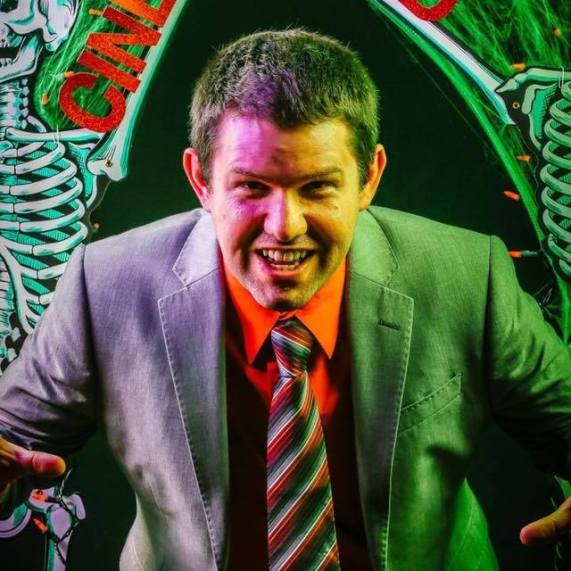
Jimmy George, aka Script Butcher, has been writing and producing films for over a decade. Along with optioning several screenplays, Jimmy has lent his name as co-writer/co-producer to six award winning feature-length films, garnering rave reviews, and boasting international distribution.

He has a talent for engineering fun and innovative productions on shoe-string budgets with few of the modern technological marvels used in major Hollywood blockbusters. Each of his films have been praised for circumventing their meager budgets, standing out through memorable storytelling.

Jimmy co-wrote and co-produced WNUF Halloween Special (2013), which won numerous festival awards, alongside national press from The New York Times, VICE, MTV, Birth.Movies.DeathFandango, and Red Letter Media, and is currently available on the AMC Networks’ streaming service, Shudder.

After tearing up the festival circuit, his most recent film, Call Girl of Cthulhu generated enormous buzz in the horror industry. Harry Knowles of Aintiticoolnews declared it “fun, better than it should be and quite splattacular.”.

Jimmy’s current project (and his seventh feature), What Happens Next Will Scare You, will be released next year.

In addition to writing and producing, Jimmy has a passion for helping creators succeed. As the Script Butcher, he consults with screenwriters, empowering them with the necessary tools to sharpen their scripts into dynamic stories that slice through the competition.

What’s the last thing you read/watched that you thought was incredibly well-written?

The pilot episode for GLOW. The world-building is excellent. It takes you into a sub-culture that’s mysterious and relatively unknown. The characters are memorable and entertaining. We meet the lead character at her lowest point. It leaves us with so much promise for what could take place during the series. Does everything a pilot should do and more.

How’d you get your start reading scripts?

There are many screenwriting gurus out there. I am not one of them. I’m just a guy who’s written a ton of screenplays, produced a half-dozen movies of my own, and learned a lot along the way.

Over the last ten years of making movies, I’ve become the go-to script doctor for a lot of friends and colleagues. I’ve been doing this for free for a decade and it became clear a few years ago that this was my purpose. So I decided to start this service and try to make a living doing what I love.

Telling stories is what I was put on this Earth to do. Helping others fine tune their stories is a close second. I’ve been in your shoes. I know the blood, sweat, and tears it takes to complete a screenplay. This isn’t a job for me. It’s my passion. It’s what I live for.

Where does the moniker “Script Butcher” come from?

Whenever someone would ask for notes, I always delivered their script covered with red ink. The pages looked bloody. I once joked with a friend that I was their “script butcher” and it just stuck. To this day, every time I finish a set of notes my hands are covered with red ink splatters. I have a background in horror so a lot of people assume those are the only scripts I work with, but I provide the same exhaustive notes for all genres. I’d say 75% of my clients don’t write horror.

Is recognizing good writing something you think can be taught or learned?

Writing well and recognizing good writing are skills that go hand in hand. Both can be taught and learned. For me, recognizing good writing as compared to bad has come from reading thousands of scripts at all levels of the talent spectrum. Having my own scripts brought to life on a frequent basis, sitting in theaters watching what works and doesn’t has also taught me invaluable lessons most script doctors haven’t had the opportunity to learn or pass along.

Studying the work of pros is a must too, but a lot of scripts available to the public are shooting drafts which are different from spec scripts and teach new writers bad lessons. So much can be learned from script consultants as well. I wouldn’t be where I am today without the mentoring advice and guidance I received from my own trusted script doctors.

I didn’t go to film school. The notes I received from these professionals over the course of a decade and a half, became my film school. By failing time and again, by continuing to experiment with the form and seeking constant feedback, I learned the craft. I never stopped trying to get better. Growing thick skin and learning how to use feedback to improve your stories is an important skill set for a writer.

Sending my scripts for notes became a crucial part of the writing process and continues to be.

What are the components of a good script?

A good script should have an original, marketable concept.

With flawed relatable characters who are actively seeking something they care deeply about, that we can emotionally connect with and root for, and that deals with the most important events of these character’s lives.

It should present a visual goal for the character or characters to achieve which form the central story question, and present primal, relatable stakes for what will happen if they fail to achieve those visual goals with formidable forces of antagonism that cause never-ending complications, standing in the way of the character’s achieving their goals.

It’s properly formatted on the page, relies on visuals instead of dialogue to tell the story, with plausible surprises and reversals of expectation at every turn.

And it builds to an emotionally satisfying climax that answers the central story question of whether our characters will achieve their visual goal in a positive or negative manner.

Other elements such as a quick pace, character arcs, thematic resonance, and memorable dialogue are a bonus, but not absolutely necessary for a script to do its job.

(Some of this is inspired by Terry Rossio’s 60 Question Checklist, which every screenwriter should read here.)

What are some of the most common mistakes you see?

1) FAILURE TO DELIVER ON THE PROMISE OF THE PREMISE

A story is a promise. Imagine Mrs. Doubtfire if the story followed Robin Williams working as an accountant instead of following the trials and tribulations of trying to reconnect with his wife and kids while dressed as an old woman.

The audience is waiting for you to deliver on the promise of your concept. If your script is about killer beer, you better have a beer pong massacre scene.

2) TONAL IMBALANCE

If you’re writing Schindler’s List, there’s no room for campy comedy. Vice versa.

Even if you’re mixing genres, keep your characters’ reactions to the events around them and the events themselves consistent in tone.

3) LACK OF CLARITY EMOTIONAL OR OTHERWISE

Clarity of what a character is feeling in reaction to a situation or what is being conveyed in general is a common issue I encounter with client scripts. Because the story is alive in your head, it’s difficult to tell what is and isn’t conveyed on the page. It’s all crystal clear for the writer, but often muddled on the page.

There are many more common mistakes, but these are the big ones.

What story tropes are you just tired of seeing?

UNDESERVED CELEBRITY STATUS – I see so many scripts that give their characters a level of celebrity status that’s unbelievable simply for the sake of telling the media-frenzied story they’re trying to tell. The paparazzi and press are very specific about the types of people they will follow. Make sure your characters are worthy of the celebrity status you’re giving them in your story.

USING NEWSPAPER HEADLINES AS EXPOSITION – Many of my clients rely on one newspaper headline after another to show the passage of time and relay important exposition. Media has changed. This is an antiquated story device that no longer holds weight with the audience.

What are the 3 most important rules every writer should know?

1) REVERSE EXPECTATION at every turn in a way that feels organic to the story and not calculated or contrived.

2) FIND THE CLICHE AND THROW IT AWAY. If we’ve seen it or heard it before, find another way to show it or say it that’s premise-specific. This will ensure your story always feels fresh and unique. Premise specificity is the key to storytelling freshness.

3) MAKE IT VISUAL. If dialogue comes last instead of first when you’re crafting scenes, it will ensure your story is cinematic and not better suited for the stage.

Have you ever read a script that was an absolute, without-a-doubt “recommend”? If so, could you give the logline?

I have once, it’s called BaSatai by my longtime client Suzan Battah. She’s in the process of turning it into a graphic novel. You can find out more here. https://www.patreon.com/suzanbattah

How do you feel about screenwriting contests? Worth it or not?

Not worth it. Writers put so much time, emphasis, and worst of all, money into contests. In my opinion they’d be better off spending that time improving their craft and spending their money on attending networking events and writing workshops.

While I understand the allure of getting a festival or contest win to stand out from the crowd of writers trying to break in, a contest win can be detrimental to a writer’s sense of skill level and give them a false sense of completion with their scripts.

I’ve worked with dozens of screenplays that were “award-winning” with multiple festival monikers to their name, that I don’t feel would get a RECOMMEND from a single studio reader.

Writers are paying money to contests, being assured their scripts are good enough, when they aren’t ready yet. There’s nothing more detrimental to your career than trying to shop around a script that isn’t ready.

How can people get in touch with you to find out more about the services you provide?

My website has all the details you’ll need at www.scriptbutcher.com/services

You can also find me on Twitter at www.twitter.com/scriptbutcher

Instagram at www.instagram.com/_jimmygeorge

And Facebook at www.facebook.com/scriptbutcher

Readers of this blog are more than familiar with my love/appreciation of pie. What’s your favorite kind?

Offbeat answer here. My wife and I were passing through Intercourse, Pennsylvania, otherwise known as Amish country. There was a gift shop that sold Shoofly Pie with cartoonish construction paper flies advertising how fresh it was. We bought a slice. Needless to say, it was so delicious we left with two whole pies.

The guides behind the guide to being truly Epic!

james & ann
Mssrs Moorer (l) and Kimbrough (r)

Writers James Moorer and Ann Kimbrough have teamed up to promote the Be Epic Journal, a guide to helping you set up goals and figure out what steps you need to take to achieve them.

Tell us a little about your writing backgrounds. How’d you get started? Apart from the Be Epic Journal, what else are you currently working on?

James Moorer (JM): I am a multi-optioned screenwriter and published author with several properties in various stages of development. I’ve been hired for numerous writing assignments since 2009 for a number of production companies. I got started writing for the screen while producing music for fitness competitors and bodybuilders under my company Jamesong Music, back in Ohio. I’ve always wanted to be a writer since I first read a Truman Capote story in Esquire magazine. Currently, I have two other novels in development as well as my two shorts I’m producing and a feature film which will be my directorial debut.

Ann Kimbrough (AK): I’m a working screenwriter, with my first paid gig in 2012. I currently have three films in different stages of development and do rewrite assignments on the side. As anyone on the screenwriting path knows, we have little control over the production side. I wanted to take on more control in some aspect of my writing, so between writing assignments I branched into books. First, I turned one of my spec scripts into a romantic suspense novel that was published with Short On Time Books, “Scarlet Revenge” under pen name Ann McGinnis. That gave me the publishing bug and I started to publish my own books. The first journal I did — “The 100 Script Challenge” — was to create a book I wanted but could not find. (It’s about reading 100 scripts, keeping your notes in the journal and having all you learned from reading the scripts handy to review.) Then I made “The Idea Journal for Screenwriters.” It’s another journal I wanted as a screenwriter. I don’t know about you, but I write little notes everywhere with story ideas. The journal keeps me from losing them by having them all in the book. I can then look over my notes, connect them with other little ideas and build them into high concepts. (It’s also full of idea building tips.) From there, I teamed with other creative friends like James Moorer to create fun and useful journals — like “The Be Epic Journal.” Presently, I have eight journals published.

What does it mean to “Be Epic”?

JM: To Be epic, to me, is to step into your TRUE SELF, completely and confidently aware of your God-given ability to become your greatest self, realizing that this is not a happenstance, but how you and you alone were given a specific gift to help move the world toward being a more incredible place, and to inspire others to do the same.

AK: Being Epic is being the best you. It’s cutting out anything that’s holding you back from your dreams and shining! The best part of the whole Be Epic movement that James started is how focusing on our dreams and making our life better eventually leads to making someone else’s life better. But it has to start within you.

What was the inspiration for the Be Epic Journal?

JM: For me, it has always been a way of combating the negativity, fear and doubt in my own life. When I began to realize that I had fallen into a self-fulfilling spiral, I recognized it was my own words and beliefs about myself that lead me there. But it would also take changing my beliefs and speaking to what I wanted to be was how I truly came to discover who I was inside. That lead me to understand this was bigger than one person. This truth was universal.

AK: James is the spark! I have enjoyed his Facebook posts about Being Epic for a long time. They really lifted me up, but then he didn’t post as many. I asked him about it and pretty much told him to get back to posting. (I’m certain I wasn’t the only one.) I also said it would make a great journal! Luckily, James agreed.

How does the Be Epic Journal work? What should a writer who uses it expect?

JM: The Journal works like a PLAYBOOK, helping the writer recognize and engage in daily practices that they can build upon in creating a confident approach not only to their work, but to their life overall. They set a single targeted goal and the steps by which they will accomplish them. The beautiful part is that there are no right or wrongs as everyone is unique, but the daily diligence leads them to greater performance, greater awareness of their own ability and destroying the doubts and fears before they take root. The reason it works is because these are steps that THEY THEMSELVES have created, so these steps have greater meaning to each writer, deeper significance, and opens their thinking to being even more creative.

AK: The Be Epic Journal is a 3-week process, and a writer should expect to pick a goal that can be accomplished in three weeks. So, it’s not about curing cancer. It’s about engaging in a goal you’ve probably had hanging around for awhile. For a writer that could be completing a book or screenplay. The 3-week process helps anyone breakdown their goal into three steps and work on one step each week, plus taking time to evaluate what’s working and what isn’t. It can be done around your normal schedule. It’s full of motivation from James and is very much a workbook to reach a specific goal. It’s set up to do one goal and then move onto another. The journal also includes a free 16-page download code for more instructions and goal setting tips. Soon — we will have a Kindle book that will be a great companion piece to the journal.

Is the Be Epic Journal specifically for writers, or can anybody use it?

JM: We created this journal for everyone. Writers are a community Ann and I are very familiar with, but the same lessons learned here can be applied to any aspect of life, any career, anyone who desires to embrace their most powerful self. The Journal is also meant to be a stepping stone; the first step in anyone’s Epic Journey.

AK: Anyone can use it. We are currently running a test group on Facebook for the journal, and while all of our participants are writers, half of them did not pick writer kind of goals. One person is cutting out sugar — yikes! But she’s doing it! Others are working on completing half-finished writing projects.

How can somebody get their hands on a Be Epic Journal?

JM: Amazon is our friend!!! They can order the journal here. We also have a 16 page pdf to give people an idea of what the program looks like for free.

AK: Thanks for asking! It’s on Amazon and if they’d like to know more about the whole process they can get the free 16-page download now. It also puts them on our email list, but we promise to only send out useful stuff — like when the Kindle is released and motivational infographics. The link to the 16-page download is

Readers of the blog are more than familiar with my love/appreciation of pie. What’s your favorite kind?

JM: Given my choice, I fancy a Peach Cobbler. But as you know, my love for pancakes has me searching for that perfect union of Cobbler and Pancakes. Just never ask me to choose between the two.

AK: My favorite pie is apple. But it has to be the one I make, which is from Trisha Yearwood’s recipe. Google it. You make it in a cast iron frying pan in your oven and it’s worth every calorie! Yum. Dang. Now, I’ve got to go make one.

A contrast in opinion(s)

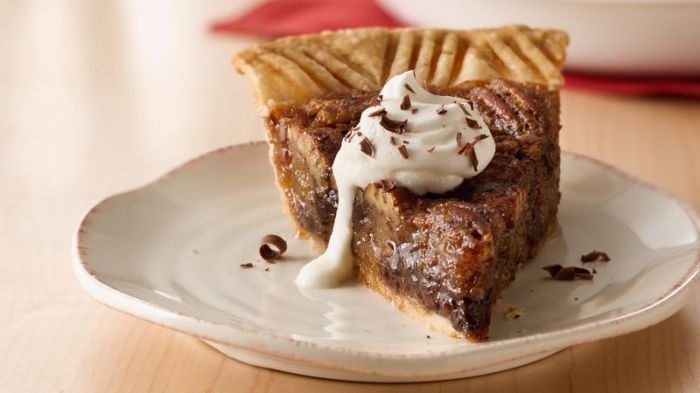
pecan & cream
One thing we can all agree on: pie is wonderful. Anybody who believes otherwise is just wrong.

During my recent sojourn to Los Angeles, I filled up a lot of my schedule with in-person meetings with several folks with whom I’ve only interacted via social media or the telephone.

To those I’d contacted but we couldn’t make happen – maybe next time.

But back to the matter at hand. Every one of those meetings generated some thorough conversations about working within, or at least working on breaking into, the industry. Some were more experienced than others, but everybody had a lot of interesting things to contribute.

Plus, they were all well aware of my goal/ambition to be a working writer, so suggestions and advice were plentiful and happily offered, and I was more than happy to receive them.

And that’s also where things got…interesting. As you’d expect, there was a wide variety of information offered. One person would suggest something, another would suggest something different, and more than once did these two suggestions totally contradict another.

Someone says “THIS is what you need to do,” while another says “Whatever you do, DON’T do THIS.”

What’s an aspiring creative-type person to do?

One of my meetings was with a semi-retired industry veteran. I’d received some advice the day before, and was a bit hesitant, or maybe call it skeptical, to accept it. Seeing as how the person I was meeting with was pretty savvy, I asked what they thought about it. They had that “Huh?” look. “I’ve never heard of that before,” was their response, followed by some rational explaining why they respectfully disagreed.

It’s been my experience that everybody has an opinion about what works and what doesn’t work, but that’s also based on how it applied to them. Circumstances and conditions will always be different in every situation for each individual. What worked for somebody else may totally backfire for you. Figure out what you think works best for you.

And be forewarned – sometimes you might choose wrong. It happens to everybody. Use it a learning opportunity to help ensure it doesn’t happen again. In theory, you’ll only make that kind of mistake once.

I was very fortunate to be able to meet with so many knowledgeable people, which now enables me to more or less cherry-pick from the suggestions and advice I think are the most appropriate and applicable.

Hopefully, they’ll yield the desired results. I’ll let you know how it goes.