More work now, better results later

lalanne

It can be safely said the extensive overhaul of the outline for my pulpy sci-fi adventure story is just about wrapped up. Still have a lingering handful of small details in need of fleshing out, but I’m eagerly anticipating jumping into cranking out pages in the very near future.

Figuring all of this out – including several attempts on the beginning, and then working out the development of events over the course of the first act and the first half of the second act- took a lot longer than I expected, and definitely longer than I wanted. There were many times all I could think was “am I EVER going to figure this out?”.

A lot of writers feel that way while working on a project. We’re an impatient lot, and the ongoing struggle to find solutions doesn’t help. We want it already written. But learning how to do so effectively is necessary. How else will we improve?

It’s probably a safe bet to say that my development skills are stronger than they were – even compared to a couple of years ago, or else this overhaul wouldn’t be where it is now. Every story problem would require a lot of thought and mulling-over, and maybe I’d come up with a slapdash, roughshod placeholder of a solution – just to be able to move on.

A bad and counterproductive idea.

I like to put together stories with a lot of moving parts, and each one requires the same amount of attention in order to make the whole thing a smooth-running machine. If that means taking a little more time to do so, then so be it. I’d much rather make sure as I go along that everything works and connects the way it’s supposed to than have it come to a screeching halt because of something I overlooked or forgot about, or even worse, felt was “good enough for now”.

An added bonus to all the work on developing this story in the outlining phase is that since I’ve already written down what’s supposed to transpire in each scene, including the purpose and the conflict, it’ll make it easier (and in theory, a faster process) to transfer all of that to the actual pages.

Once I do start on pages, I can only hope to see a slight increase in my daily output. After having gone through the outline a few times, editing and tweaking as I go, I’m getting a stronger feel of flow for the story, seeing ways to incorporate more development for the characters, and just an overall sense of “I like the previous draft, but this one feels so much closer to what I set out to do”.

And I most definitely would not have gotten to this point if I hadn’t put in the time and effort to make sure every single part of it did exactly what I needed it to.

Q & A with Jim Mercurio

img_7574_edited_paul-option-e1548902704525.png

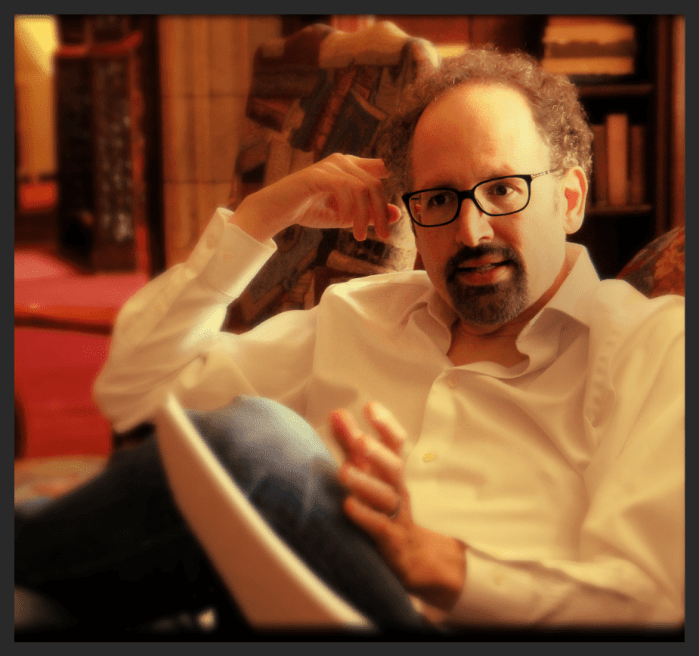
Jim Mercurio is a writer, author, screenwriter, and filmmaker. His book The Craft of Scene Writing is the first-ever screenwriting book that focuses solely on scenes. He has directed and produced five feature films, and helped countless writers as a teacher, story analyst, and script doctor. He directed more than 40 DVDs on screenwriting, including his own 6-disc set, Complete Screenwriting. One of the country’s top story consultants, Jim works with Oscar-nominated and A-List writers as well as beginners.

Editor’s note 1 – a q&a with Jim was featured in a series of interviews with script consultants that ran on this blog between 2014 and 2015.

Editor’s note 2 – full disclosure: Jim played the role of adviser/sounding board for the rewrite of my dramedy spec.

What was the inspiration/motivation for this book?

I was prepping my webinar on February 7th for The Writers Store on Personal Voice, (FYI – Feb 1 is the last day to save $20 on registering) and I stumbled upon the idea that a writer must figure out what is special about what he does and then focus on that. I feel like it is the same way with me and the book.

I have always focused on the nitty-gritty of craft. Probably because I worked so hard trying to figure it out for myself as a writer. When I directed the 40ish DVDs in the Expo Series, I did my own class concentrating only on theme.

Years ago, I happened to be prepping for a feature I was directing. In a week, I saw the same scene performed more than 200 times by a hundred different actresses. I was trying to figure out what I could do that hadn’t been done before as far as a screenwriting book. My experience as a filmmaker has always informed my approach to understanding and teaching screenwriting. I’m not sure why it didn’t come to me sooner. I had an “A-ha!” or better yet a “Duh!” moment — SCENE WRITING!

There are a lot of screenwriting books out there. What makes this one unique?

The obvious distinction is that it focuses solely on scene writing… the first screenwriting book to do so.

I was fortunate enough to have story gurus Richard Walter and Michael Hauge review the book. Something Michael said really touched me. He said that there were a lot of ideas in the book he hadn’t even thought of. I wanted to cover new ideas or at least some seldom taught concepts in a novel way.

Having been in the screenwriting education niche writing for Creative Screenwriting, directing, creating 50 hours of educational DVDs and working as a consultant, I know what’s out there. I believe this book will carry the torch and be among the next go-to books for all screenwriters entering the field.

As I mentioned, my filmmaking experience and the fact that I am actively writing screenplays and making projects impacts my perspective. I try to be very specific in my examples. For a given topic, I may start with theory but I always try to end with concrete principles and tools that you can apply to your writing on the spot.

Some books are geared more towards covering the screenwriting basics, while others “go beyond (or way beyond) the basics”. Is this a book that both new and experienced writers could use?

I feel very strongly that this book will appeal to writers across a wide spectrum of skill levels. A friend of mine said I teach the last hundred pages of “the screenwriting book” more than I do the first hundred. So, if anything, I would be more concerned about whether this would serve beginners.

I even asked my editor if it did and she gave me a great response. But then out of the blue, the universe gave me a better answer. My 23-year-old stepson who is a computer engineer texted me. He said he was halfway through the book and said “It’s very accessible… nothing’s confusing.”

The only research I did while writing this book was to watch movies and think about them. Each chapter is like a stand-alone piece on topics such as exposition, concept, theme, and rewriting. I tried to begin with my, at least somewhat, original and basic take on a topic to ease the reader in and to orient them. A new writer can jump right in.

More advanced writers might recognize my approach as somewhat novel. I then try to go as deep as I can with the material, so that even professional writers might benefit. A writer who read the book said that 70-80% of it was stuff he had never heard before. He might be overstating it, but I’m proud that the book feels that way. I wanted to offer new insight into the nitty-gritty challenge of craft.

Even though the book’s title is THE CRAFT OF SCENE WRITING, what else does it cover besides writing scenes?

At its essence, scene writing is storytelling and the same principles apply. You are poring over characters, characterization, idiosyncrasies of the world, setups – to create reversals. You’ve heard of turning points, right? Writers have to turn a story. They also have to learn how to turn a scene. Or a line of dialogue.

However, I wanted this to complement all of the other screenwriting books that cover story structure. I am looking at screenplays at the molecular level. In the final section of the book, I cover rewriting in a parallel way to how I discuss scene structure. And then I explore how to discover and use your personal voice in your screenplays.

One of the phrases you really emphasized during the process with my script was “write to concept.” Can you elaborate on what you mean by that?

Whew, no softballs here. Making me earn my pie.

There are 7500 words in my chapter on concept, which have been through the wringer with my 18 copyeditors, but I will try to summarize with insightful pithiness.

Like I mentioned, as a writer you should use what’s special about yourself and your writing. Writing to concept means that you are using what’s special about your story as the main inspiration for its surprises. For fun, consider a 3-D horror movie where an axe flies across the screen left to right. Do you see how on some level that’s just wrong? It should be flying toward the camera. Otherwise, it’s ignoring the most prominent element of its medium.

Of course, I’m not that rigid, but writers have to narrow down the handful of elements that are essential to their concept because not only do their surprises spin out of them, but, for the most part, they spin out only from them. I don’t know if I can teach that here. Hopefully, I can intrigue you to go to the source.

Writing to concept allows you to find a unique way to express what otherwise might be a familiar story beat. Based on their concept, the moments will look very different. In Memento, Natalie hurts Leonard by hiding pencils. In Her, Samantha, an operating system, hurts her lover by telling him she’s in love with 641 other people.

Another of your favorite phrases during the writing process was “go deeper.” What should that mean to a writer?

It refers to a missed opportunity to get at more emotion with a character or to complicate a relationship, which would hopefully do the same. While we were working on your script, there’s a scene I pointed out featuring a moment where you were on the verge of discovering a powerful and transcendent moment, but then it was all over too soon. Sometimes writers hit a beat (in the broader sense), and maybe they are worried about a looming expansive page count or don’t appreciate what they have stumbled upon, so they move on too quickly. They might be better off — pick your metaphor — milking or massaging a moment for a bit longer and letting it play out.

Take a look at the long and emotional monologue in Good Will Hunting where Will’s best friend Chuckie tells him that he should “cash the winning lottery ticket” and get out of town to find a better life. He even tells him that the best part of the day is in the morning when he comes to pick him up, he has a moment of hope that Will has left — without even leaving a note. Imagine, if we cut that down to a sentence: “I will miss you but you gotta get the hell out of here.” We lose Chuckie’s voice, the suspense of it, the emotional heft and importance. It goes from a set-piece scene to a bland, merely functional one.

In addition to the book, Jim also provides a script consulting service. How can people get in touch to find out more?

Easy. Go to my site at www.jamespmercurio.com. I discuss why coaching is my preferred mode of working with writers. You can check out my DVD set and sign up for my free e-newsletter Craft & Career, which will also let you stay informed about classes and workshops I’m offering later in the year.

Last time around, you said your favorite kind of pie was the metaphoric “gross points from my last film”. Still the same today, or something different?

A pie in the hand is worth two gross points in a bush. Or 20 for that matter. So, hand me some Dutch Apple, please.

dutchapplepie

Let the simmering commence!

kitchen
Not the current focus of my attention, but always lurking about somewhere in my noggin

Well, here’s the good news: the first draft of the horror-comedy spec is done. Clocking in at a somewhat respectable 89 pages. Not too shabby, but I honestly expected it would be closer to 95.

Which, combined with the notion that there really isn’t any bad news in this scenario, which is nice, leads me to the whole point of today’s post.

Time for a little post-game analysis and strategizing.

Am I thrilled that I got this draft done in something like 4-5 weeks? Most definitely. I wanted to be able to say I typed FADE OUT by the end of the calendar year, and I did exactly that.

Am I happy with how it turned out? Mostly, but more on that in a minute.

Even after my “thorough” plotting and planning of the outline, the script simply isn’t where I want it to be. For now. After all, this WAS a first draft, which will usually be vastly different from each and every one that follows.

I imagine that mindset also applies here.

Even as the pages were being churned out, I kept realizing there were story elements and developments I’d wanted to include, but they’d inadvertently fallen by the wayside. My “thoroughness” had only gone so far.

But there’s hope for me yet. I devised a handy-dandy set of guidelines and questions to use for each scene, so all the things I’d missed this time around won’t suffer the same fate in draft number two.

My younger self would do a fast 180 and dive right back into the rewrite. Current self? Not so much.

Instead, I’m opting to put this draft into the proverbial desk drawer and just let it sit there for a few weeks. The next time I give it a good look-see will probably be in early January.

Full disclosure – some new ideas and fixes for this script came to be while it was being written, but trying to incorporate them would have complicated things more than I wanted, so I simply created a list and kept adding to it when applicable. No doubt it will be extremely helpful when the rewrite begins.

There’s also a strong suspicion that all those changes will result in the next draft being closer to the more-desired 95-100-page range.

In the meantime, I’ve got quite a bit of a backlog of material to work through, ranging from working on some of my other scripts to reading and giving notes. The hope is to shrink that backlog to the point of non-existence, or at least mighty darned close to it, by the time 2019 rolls around, thereby enabling me to jump right into this rewrite.

Exciting times are just ahead, chums. And coming up fast.

Taking it scene by scene

dufresne
Fortunately, I don’t expect this to take 17 years

The daily churning-out of pages for the first draft of the horror-comedy continues – still in Act One as of this writing – and now that November is underway, if I can maintain my current output of approximately 3 pages a day, there’s no reason the typing-out of FADE OUT couldn’t happen by mid-to-late December.

I’d probably be a little further along if it weren’t for my ongoing desire to keep going back and editing/revising what I’ve already written, which is a lot more tempting than you’d expect. But doing what I can to just write a scene and move on to the next one. Once again, the more you do it, the easier it gets.

And since this is supposed to be a horror-comedy, I’ve also gotten into the habit of trying to make sure each scene features some element of each genre – something scary and something funny. Trying being the key word here. This is a much bigger challenge, but again, doing what I can. Also helping – recent touch-up work on my two other comedies.

With one of the definitive screenwriting mantras being “it’s a marathon, not a sprint”, I don’t have any problems with taking an evenly paced and semi-methodical approach. There are some writers who can sit and crank out a draft in record time, but I’m not one of them. I lean towards the “hope I can hit my page goal today” camp.

But most importantly, I’m just trying to not stress about it and enjoy the whole process. It’s a fun story, and I like the concept, so why not make it a positive experience rather than fret and obsess? That way, it seems a lot less like work and more like “here I am having a blast being a writer and stuff”.

Because I’ll take that mindset any day.

I know the rules, and do not hesitate to break them

breaking free
Took a while to be able to do it, but well worth the effort

Used to be that when I would outline a story, I’d try to be as spot-on about hitting industry-recommended page numbers as I could.

Statement of theme on page 3, inciting incident on page 10, etc., etc. That’s how I learned it, so that’s how it must be.

These days? Not so much.

I don’t go crazy, you understand. No scenes lasting 10 pages or anything of that nature.  More like “this happens…around here-ish”.

When I first gave it a try, my immediate thought was “Is that going to be a problem?” It had become so ingrained into my process that this was how it was supposed to be, and any deviation from that was wrong.

Then my writer’s sense of craft kicked in with a hearty “Nope. Have at it, kid”.

As far as I know, the screenwriting police (is there such a thing?) aren’t going to shut me down because something doesn’t happen where THE RULES say it should. I’d rather focus on telling an engaging story with an intelligent plot and well-developed characters than worry about this kind of pettiness.

And honestly? It’s incredibly liberating.

I’m much more interested in telling the story in a way I deem appropriate, rather than drastically cutting something or even cutting it altogether just to make sure the beats happen on the designated pages.

So if my opening sequence runs a page or three longer, so be it. Does it work against me? I don’t think so. My writing usually moves at a good pace, so if something happens a little sooner or later than you expect, and if I’ve done my job in really grabbing your attention, chances are you probably won’t even notice it.

Unless you’re a real stickler for that sort of thing. Most of the writers who read my stuff aren’t; they’re more interested in reading a good script.

-Through September 30th (that’s this Sunday!), the fine folks at LiveRead/LA are offering the discount code MAXZ15 for 15 percent off their script services and the fee for their contest where your script could  be one of two read live by professional actors in Los Angeles in October. Following the read (30 pages max), feedback will be provided, including from veteran production exec & producer Debbie Liebling – Comedy Central, Fox, now working with Sam Raimi. Writers from everywhere are encouraged to submit. The event will be livestreamed, so if your script is chosen and you can’t attend, feedback will be provided live via Skype.

-Filmmaker Scott Kawczynski is running a crowdfunding project for his animated film Light Work. It’s a pre-sale, so even for $1, you can watch the film. Donate if you can!