A refresher course we can all use

Okay, class. Who needs more time to work on their script?

I’ve had a lot of goings-on with loglines over the past couple of days, which prompted me to re-post this gem from a little over 2 years ago.

Enjoy.

“Scenario:  You’re at a social function, engaged in idle chit-chat. The topic of you being a screenwriter comes up.

“What’s your story about?” they will undoubtedly ask.

The chance you’ve been waiting for!  What do you say?

You want to pique their curiosity, and not bore them.

In the simplest of terms:  provide a quick summary of the main characters(s) and what happens in the main storyline.

Avoid too much information, non-essential characters, intricate subplots, how it’s a metaphor for this totally different other thing, or generic phrases like “and learns about themselves” or “stumbles into a world she wasn’t prepared for” or the ever-dreaded “wackiness ensues.”

What are the components of an effective logline? Just the following:

1. A protagonist with a flaw.

2. An antagonist with a goal.

3. The situation that pits them against each other

4. What’s at stake/what happens if the protagonist fails?

That’s pretty much it. Keep it simple. Nothing too specific or generic.

Make sure you emphasize the genre. If it’s a comedy, play up the comedic angle. A thriller, go for the suspense. That sort of thing.

And most importantly, make it sound interesting. This is your best chance to grab their attention, so make the most of it (and make sure the script is just as good).”

-3rd half-marathon of the year this weekend. Training’s been more sporadic than I would have liked, so hoping to break 1:55, but will settle for under 2 hours.

I’d wager this is you/me/us

The thrills and glamor of writing a screenplay
The thrills and glamour of writing a screenplay

Wouldn’t it be great if every single time you sat down to write, you produced something just flat-out jaw-droppingly incredible?

It would also be great if you could eat an entire pie by yourself and not get sick, but that ain’t gonna happen either.

You work hard and do the best you can, and that’s all you should ask and expect of yourself.

You know what you’re capable of. You set goals, and make the effort to accomplish them. You push yourself to keep getting better.

You might hit the target on the first try, or it might stretch into double-digit territory. Every victory moves you forward.

What separates you from someone who “has been thinking about writing a screenplay?” You are ACTUALLY DOING IT, and even though you know firsthand what a frustratingly aggravating and slow-as-molasses-in-January process it is, you soldier on.

Just finished a draft? You both dread and look forward to the inevitable rewrite.

You do not suffer writer’s block gladly. In fact, you challenge it. With a vengeance.

Faced with a seemingly insurmountable obstacle, you think your way through/around it to a solution. You practically thrive on your ability to keep going, despite how high the odds are stacked against you or when it feels hopeless.

You want this so bad it actually does hurt.

That spark of creativity burns blindingly bright inside you, and you fan the flames as often as possible.

You write because you can’t imagine doing anything else. Coming up with ideas, stories, scenarios and characters brings you a special satisfaction that only a select few can relate to.

A lot of us go into this with dreams of making a career of this. Some will succeed, many won’t, but we don’t let that deter us.

We all have a rocky road ahead, so make sure you keep doing whatever you have to in order to stay on it. The final destination is well worth it.

Happy travels, chums.

A moment of evaluation and introspective

Certainly a lot of things to...ponder
Certainly a lot of things to…ponder

Whoo! What a week this has been. Lots of goings-on on several fronts. Big picture stuff first.

-The semifinalists were announced earlier this week for this year’s Nicholl. 149 in total, out of somewhere in the neighborhood of 7,500 initial entries. Turns out I know at least 7 of those writers on a somewhat personal level, whether it be through social media or from actual physical contact.

I am equal parts thrilled for and jealous of all of them, but also made sure to send each a note of congratulations. They definitely earned it. And several of them have made it to this point before, and probably will do so again in the future, so that means the rest of us have to really step up our game.

Watching this as a non-participant definitely puts things in perspective. I didn’t enter any contests this year, so I can’t even begin to speculate how my script might have fared. It’s been a major effort to work on improving it to the point that I like to think it’s good, possibly even really good (he said, trying not to sound totally biased), but how would it do in a contest, especially one of this magnitude? There are no delusions of grandeur, but who doesn’t daydream about grabbing the top prize? Jittery nerves and lofty ambitions all at the same time. Only way to find out is enter it next year and hope for the best.

-Operation ManagerQuest continues. Fingers firmly crossed that all the research, fact-checking and list-assembling will result in something positive. Thanks to everybody who’s offered their good wishes and support.

Although this time is all about the western, I put together and sent out a handful of queries for the fantasy-adventure. Since those were sent to places that might be more interested in that kind of thing, each letter was customized for its designated recipient. Queries about the western will go out next week.

-As things continue to wrap up for the western, focus is shifting to what’s quickly evolving into a total rewrite of the outline of the mystery-comedy. Not gonna lie. This is the one that grabs people’s interest and attention, so we’ll see what I can do with it.

While the overall plot and concept remain the same, several new ideas, angles and approaches are being developed that I sincerely hope will make it better.

Not a bad week. Hope it was equally, if not more productive for you.

Ask a Million-Dollar* Script Consultant!

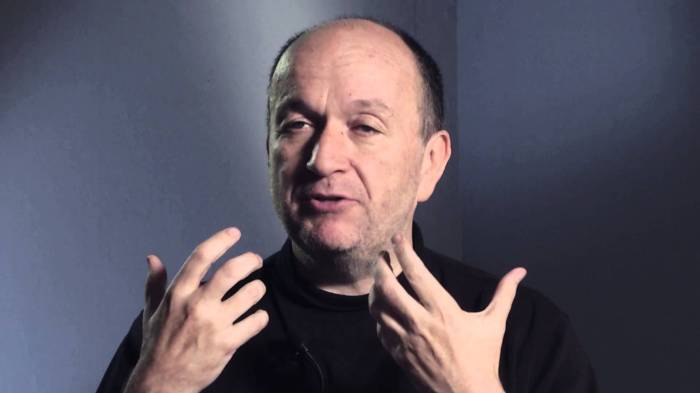
chris soth

*this number represents the estimated value of Mr. Soth’s advice, rather than the actual cost.

The latest in a series of interviews with script readers and consultants who would be worth your while to work with if you want to get your script in shape. Today’s spotlight is on writer-producer-script advisor Chris Soth of ScreenplayMentor.com.

Writer/Director-Producer Chris Soth has authored over 40 screenplays and is a frequent speaker on the topics of story structure and independent filmmaking, teaching screenwriters around the world how to write great screenplays AND pitch them for success. Chris is the writer of Firestorm, released by 20th Century Fox, and the independent hit Outrage: Born in Terror. He is currently developing a slate of independent films, the first of which, Don’t Fall Asleep, has just received distribution. His directorial debut SafeWord is presently in post-production. Chris has taught at USC and UCLA, and currently guides screenwriters from concept to FADE OUT using the “Mini-Movie Method” in his mentorship program at ScreenplayMentor.com. His ebook “Million-Dollar Screenwriting: The Mini-Movie Method” and DVD “SOLD! How I Set Up Three Pitches in Hollywood,” among other great screenwriting resources, are available at ScreenplayMentor.com.

1. What’s the last thing you read/watched that you thought was incredibly well-written?

Sustaining a story for an hour or more with brilliant writing at every turn is so difficult I find myself attracted to the short form, even w/my own writing these days. That, said, we ARE in a Golden Age of Television now, with some creators getting to not only decide a story that will take five or more years to tell and lay it out beforehand — occasionally with guarantees that all the episodes will air — and not only control a very complex and novelistic story, BUT also control the rate at which it’s consumed. No artist has ever had that before, even novelists…Tolstoy could be sure reading War and Peace would take you while, but not throttle your reading speed to piecemeal over 5-8 years, the way Weiner or Gilligan have. I really appreciated how all the Mad Men were…going mad. How all of them were continually pitching a product, themselves, and none more than Dick Whitman, whose greatest pitch was Don Draper…and living in that gap between the presentation of your self and the reality, or worse, what you FEAR you are…is the madness. I think if you’re in show business, you get that. So, as I said above, hard to sustain for an hour, let alone all those years, but some amazing brilliance every single episode.

Here’s one favorite in the episode from the penultimate (full) season, where all of Sterling Cooper’s taken acid and a Hippie Flower Child puts a stethoscope to Don’s chest to listen to his heart.

HIPPIE FLOWER CHILD
Let me listen to your heart…(re: stethoscope)…it’s broken.

DON
(re: his heart) You can HEAR that…?

How long has that double entendre been staring us in the face, and how GOOD are these writers to keep giving us insight into their brilliant central character even that late in the game? He’s broken-hearted. He hides it. He always will be. A tiny thing, but the last time I remember really thinking “Wow, good writing!”.

2. How’d you get your start reading scripts?

My first idea was to teach a seminar in my own screenwriting structure technique, “The-Mini-Movie Method”. I did that, and also offer the resulting videos and audio course. I found a real thirst after that for hands-on expert consulting developing screenplays with expert advice on this method. I don’t really do a classic “reading”, or that’s rare anyway. I consult and help writers build scripts, usually from FADE IN. I will work with clients thru my website ScreenplayMentor.com with works-in-progress. My usual procedure, whether starting fresh, or jumping in partway, is to outline a vision for the next draft and mentor and guide it, page by page (Mini-Movie by Mini-Movie) until Fade Out…then I’ll read the resulting, and much stronger, screenplay thereafter. I started my side business after some success as a writer myself, because I really like to work everyday, but like different work and different stories and continually changing ideas. Also, the steady work and income that my consulting provides lets a guy with a daughter in college sleep at night even between studio writing assignments.

3. Is recognizing good writing something you think can be taught or learned?

I absolutely think so. There are certainly rules, best practices, etc. Some so oft-repeated they become cliches: “Show, don’t tell”, etc. But developing an aesthetic for what good writing and what good storytelling is, should be vital to each and every writer. We all want to make THE BEST MOVIE EVER, right? Well, if we have no yardstick for measuring quality, how will we do that?

4. What are the components of a good script?

The list goes on and on. Most important and first: TENSION. A hope and fear for a viewer/read to root for and root against. So I’ll use this as another opportunity to say it: TENSION, specifically TENSION REDUCTION is the source of ALL pleasure we take in drama and in story. A good story will continually build tension, every beat, every scene, every sequence and release that tension in an explosive and gratifying climax…make sure YOURS does. I’ll leave it there.

5. What are some of the most common mistakes you see?

The lack of tension, of course. Unnecessary scenes, which I define above as scenes that don’t build or add to tension. It seems common to the point of epidemic that first acts run 45 pages in early drafts, and writers are often still setting up dominos as they break into the third act…dominoes that should have been set up WELL before, often in act one and should be falling with dramatic cataclysm and knocking over BIGGER dominoes now… A lacking “narrative drive” that makes each story event seem, in retrospect, inevitable, not arbitrary. It seems like many early drafts are written just to fill pages, but there IS a perfect twist for the end, the midpoint, the first act, that is dictated by the concept or idea…

6. What story tropes are you just tired of seeing?

References to other movies or TV shows. You have to be very clever and original to do this well, and it fails most of the time, Quentin Tarantino aside, and even HE blows it a lot of the time.

7. What are the 3 most important rules every writer should know?

-TENSION = Hope versus Fear  (T = H v. F is the E = MC squared of story) After that, I’ve never thought what might come second, let alone third, but I’ll put a few down here.

-Don’t get it write, get it written. The worst thing you write is better than the best thing you didn’t.

-Craft character to story and story to character by asking, over and over: Who’s THE WORST person for these events to happen to, and What’s THE WORST thing that could happen to THIS person?

8. Have you ever read a script that was an absolute, without-a-doubt “recommend”? If so, could you give the logline?

I don’t do a classic read, nor grade on that studio scale, nor should I probably divulge the scripts of my clients here, but MANY come to mind. I read a screenplay every day my first year at USC and the ones that really stood out are THE PRINCESS BRIDE and FIELD OF DREAMS. Both made me cry more than the movies made from them had, the first because it does actually exceed the movie in the sheer beauty of the writing, I like the movie fine, tho’ I’m not in the cult, but the SCRIPT…oh, that script…the second perhaps more for memories of seeing the movie itself.

9. How do you feel about screenwriting contests? Worth it or not?

I never had any luck with them. But I think they’re a real tool for getting your work read and getting exposure these days.

10. How can people get in touch with you to find out more about the services you provide?

Everyone’s welcome to contact me at chrissoth@aol.com, chrissoth@gmail.com or look at ScreenplayMentor.com

11. Readers of this blog are more than familiar with my love/appreciation of pie. What’s your favorite kind?

Easiest question. My mom’s chocolate chess pie. I grew up eating this at Thanksgiving instead of pumpkin pie and had to learn to make it myself when I struck out on my own. I’ll have it all through the holidays and Mom still makes it for us when we come home. I’ve only found one restaurant that serves it, but just developed a lead on another in Los Angeles, so stay tuned…

Ask a Significantly Astute Script Consultant!

Laurie Ashbourne

The latest in a series of interviews with script readers and consultants who would be worth your while to work with if you want to get your script in shape. Today’s spotlight is on writer-producer-consultant Laurie Ashbourne.

After seeing Who Framed Roger Rabbit in an old theater in Philly, Laurie knew that she had to be a part of that process.  Within 6 months she was in Disney Feature Animation‘s new studio in Florida working on a Roger Rabbit short and The Little Mermaid, and stayed on through the production of Lilo and Stitch. Leaving that cocoon to create and own her work, she quickly segued to live action and documentaries as a writer, producer and script supervisor.

With four features she wrote as work-for-hires in production, a dozen ghost- writing films and pilots in development, an independent animated feature in pre- production, an original story she wrote (10-31) was recently announced on the fast-track to production with acclaimed producers Eli Roth and Roger Birnbaum and a bio-pic she wrote is in early stages with Bohemia Group Originals.

Laurie is also longstanding story analyst for the likes of Amazon Studios Feature Films and Austin Film Festival.
In addition, she oversees several projects in development via her company, LA Story Studio. Her documentary work continues as well, as a producer for iconic director Robert Greenwald’s Brave New Films banner where she just co-
produced, SUPPRESSED – the fight to vote (2020), and RACIALLY CHARGED (2021), featuring two-time Oscar winner, Mahershala Ali.

1. What’s the last thing you read/watched that you thought was incredibly well-written?

I recently read a screenplay for a competition that was amazing. It was so well-paced and had such a perfect economy of words, twists and great characters – I wish I could share it with you, but I have no doubt that sooner than later everyone will have a chance to see it on screen.

For watching, the film LITTLE BOY. About 4 years ago the casting director asked my son to read for the part, so I was sent the script. It was such an emotional story that read really well, even though it broke some traditional pet peeves of mine, I completely overlooked them because I was so engrossed in the story. My son ended up sending in a video read because I was on a job in Virginia AND he had just lost his 2 front teeth so we knew the read wouldn’t go over at its best. Regardless, we went to see it (and I have to say the boy they had for the lead did a great job). I immediately could see where they had to change some things but it mostly stayed true to the script. I enjoyed the film and it was completely emotional, but I could definitely see how it read better than it played.

2. How’d you get your start reading scripts?

My first job in the industry was with Walt Disney Feature Animation, and as a department head I was in on a project from development through to final reels. But I didn’t start reading them professionally until I left the company to work in independent film, over ten years ago.

3. Is recognizing good writing something you think can be taught or learned?

The tenements of the craft can be taught easily but if a sense of story isn’t there then those ‘guidelines’ become hard and fast rules that can overlook a good story and what it needs to be brought up to industry standards. Learning story is possible, but it’s not for everyone, those that it is for can’t let it go. I’ll use my son as an example again. He will watch a movie until he knows it by heart and then pick apart the structure and characters, all by his own will. He said to me the other day, “When a movie does well, they automatically make a number two, and they do it quickly, and when that doesn’t do well they spend more time working out number three. Number twos always stink.” He’s 10, so I think it’s safe to say that a sense of story is ingrained in his psyche with no teaching other than immersing himself in something he enjoys.

4. What are the components of a good script?

Characters with an emotional want that comes across as genuine – in this case it’s the difference between a homeless person holding up a sign that says “will work for food” and one that holds up a sign that says “hungry, broke please give”. The audience is much more likely to attach themselves to a character who is willing to do what it takes to survive – the character that is willing to work for his food.

Craft contains a lot of things that get a bad name as hard and fast rules, and it’s true that if you are trying to break in you have to look like you are willing to adhere to industry standards, truth is your craft demonstrates mastery of cinematic story SOME formatting issues can be overlooked. So at the top of the mastery of cinematic language is, giving the actors something interesting to do that advances the plot and peels back the layers of their character. This does not mean writing verbose prose; that is not cinematic. Cinematic is thinking like a director in your mind, but conveying that action in words that do not include camera direction.

5. What are some of the most common mistakes you see?

-Misuse and abuse of parentheticals and exclamation points

-Typos and poor formatting

-A misunderstanding of scene headings in content and purpose

-A great idea poorly executed, usually in character and pacing

-A poor balance of dialogue and action (which is usually because of way too much dialogue)

6. What story tropes are you just tired of seeing?

It seems to be cyclical; every year there is more of one than another, so I guess that falls into chasing trends. Right now, there seems to be a lot of smaller character pieces, which is good for independent film, but with specs that are trying to break in (rather than going out and producing the indie on your own), it’s really difficult to get behind a moody character wandering the town or country instead of facing an uncomfortable truth. So it goes back to the homeless analogy – why do I care about this person, and please make it interesting without a having a diary in voiceover.

I admit it’s a bit of a catch-22, it’s also very difficult for an unknown to break in with a tentpole, but there is a happy medium where there are just enough elements to give the audience and producers something worth the investment of time and money.

7. What are the 3 most important rules every writer should know?

-Your material will not resonate with everyone, but if it’s not resonating with anyone, it’s time to analyze those notes you thought were shit.

-Write because you have to get a story out of your system, not because you want to strike it rich or win a contest.

-Let the audience (or reader) get to know your character through the action we see them take on screen, not via a laundry list of their traits.

8. Have you ever read a script that was an absolute, without-a-doubt “recommend”? If so, could you give the logline?

Sure. I’ve had the pleasurable honor to move a lot of scripts forward and nothing makes me happier than to see writers I worked with or read be working in the industry. Frankly, most scripts that come to me don’t have a logline, and I craft one for the coverage – most contest scripts don’t come with loglines. Loglines when done well are a craft unto themselves and contests are won on these concepts, but a great logline does not make a great script. This goes back to one of my top three: Most great ideas fall short on execution and again, I really think that comes down to sense of story. I personally write a logline before (during and after) I write a script. Writing it out at the start helps shape your outline. But just as the outline will change as you write, the logline should too, by becoming tighter.

I recently read a logline on LA Screenwriter called The Muffin Men – it was really brilliant. But who knows if the script is?

9. How do you feel about screenwriting contests? Worth it or not?

Yes, but do your homework. There are more scams than legitimate career changers. It’s worth it to get your script in top-level shape and submit to the top-tier contests (which there are less than 10) the odds are tougher due to the number of submissions but if you seriously want to advance your career, there’s no use in wasting money on the Podunk USA’s screenplay competition.

10. How can people get in touch with you to find out more about the services you provide?

My company at LA Story Studio, my blog 1st 10 pages, or via Stage 32 – https://www.stage32.com/LAstory.

11. Readers of this blog are more than familiar with my love/appreciation of pie. What’s your favorite kind?

I’m not much for desserts, but I like apple if it’s fresh and not overly gooey, or key lime. When I was a kid I was all about Tastykake cherry pie.