Ask a True Veteran Script Consultant!

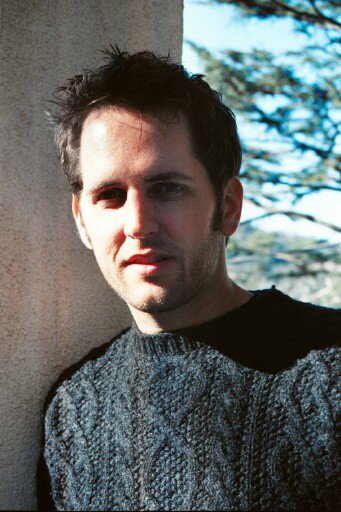
John Lovett

The latest in a series of interviews with script readers and consultants who would be worth your while to work with if you want to get your script in shape. Today’s spotlight is on John Lovett.

After leaving the military in 1992, John went to work as an associate producer for a small production company that produced movies for Cinemax. In 1996, he started The Hollywood Military Advisor and L & M Productions to provide military technical advice to the motion picture industry and produce military documentaries. THMA contributed to numerous military movies and documentaries including BAND OF BROTHERS, PEARL HARBOR, and several military video games.  Now based in the Pacific Northwest, John teaches screenwriting and creativity at a local college, works with emerging and veteran screenwriters as a career coach, and is heavily involved in the local film making community.  John is also the screenwriter behind two produced films: CATHY MORGAN, a science fiction drama, and TWO WEEKS, a tween comedy.

1. What’s the last thing you read/watched that you thought was incredibly well-written?

Akiva Goldman’s ‘Winter’s Tale’, from the book by Mark Helprin. Regardless of the changes from the book, the movie read and played well. The quality of Goldman’s writing came through in how the actors executed against a fantasy/reality setting.

2. How’d you get your start reading scripts?

I worked for a small production company starting in the early 1990’s and had to learn all the aspects of movie production from lighting to camera work, which included being able to read and evaluate scripts for the producer/owner. Also, I took a script reading class from Pilar Allesandra and independently read for various studios for many years.

3. Is recognizing good writing something you think can be taught or learned?

Yes, but with a caveat that while the characteristics of good writing can be taught and instilled, the skills of recognizing good writing are learned by reading, reading, and reading more. In addition, mentoring by experienced readers and writers helps considerably.

4. What are the components of a good script?

Besides following the rules regarding script appearance; structure, structure, and structure.

5. What are some of the most common mistakes you see?

Mechanically, the most common mistakes are misspellings, word misuse, and grammar errors. And yes, all of that is important to good writing.

Artistically, the most common mistakes are not having a consistent through-line, long-winded exposition, and on-the-nose dialogue.

6. What story tropes are you just tired of seeing?

I look for the heart of a story. If the story is well written, I can look through the genre or internal tropes. To that end, I have seen some B-films that went DTV or direct to Netflix that told effective and emotionally engaging stories whilst the core genre or trope had been significantly overdone. Were I to pick one trope, it would be the ex-GI who witnesses some evil deed and becomes a ‘super soldier’ who knows how to handle every weapon and every karate move.

7. What are the 3 most important rules every writer should know?

-If you are writing, stay off the ‘Angry Birds’ and Facecrack.

-Develop business and writing goals and stick to them. As you write and continue to improve your writing, you will modify and update your goals, but at least have a starting point.

-A writer should also know what life is about. Copying over tired ‘Transformer’ or ‘Twilight’ scripts is not going to lead you to new writing truths. Living a life is. Get out from behind the computer and join the Peace Corps or the Army, travel, get a job scraping boats in Florida. Do something, anything, that is not directly writing but is a life experience.

8. Have you ever read a script that was an absolute, without-a-doubt “recommend”? If so, could you give the logline?

While I was a reader for a small production company specializing in DTV material, I wrote a “recommend” for ‘Dark Secrets’ written by S. Tymon. The logline was “An aspiring young reporter becomes involved with the subject of her investigation; a millionaire businessman who runs an underground SM club and is rumored to be involved in the murder of a fashion model.” For the intended audience, the movie turned out okay.

9. How do you feel about screenwriting contests? Worth it or not?

I don’t participate in screenwriting contests. I figure if you’re going to be a writer, then write and sell your work. Contests are great and you get lots of compliments, mostly. The truth of the matter is that we’re writers because we love to write, but we still need to pay the mortgage, buy diapers, and put food on the table. So, write your material well enough to sell, and not win contests.

10. How can people get in touch with you to find out more about the services you provide?

My email address is twoscriptguys@gmail.com. My site is www.twoscriptguys.com. My Facebook page is Screenwriter John Lovett.

11. Readers of this blog are more than familiar with my love/appreciation of pie. What’s your favorite kind?

Shepherd’s.

Ask an In-the-Director’s-Chair Script Consultant!

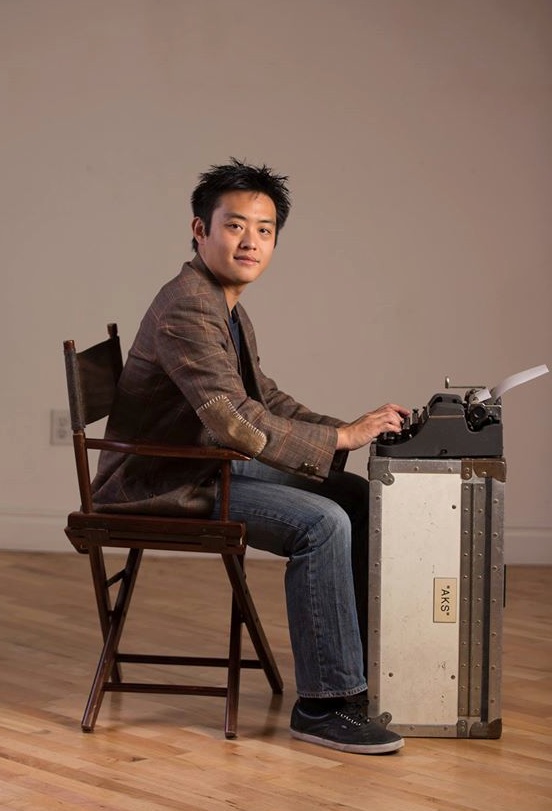
Jeff Richards

The latest in a series of interviews with script readers and consultants who would be worth your while to work with if you want to get your script in shape. Today’s spotlight is on writer-producer-filmmaker Jeff Richards.

Jeff Richards is a story consultant, filmmaker, and writer with over twenty projects either optioned, produced, or sold. His clients range from award-winning novelists to creative writing professors to screenwriters working for major studios. His own writing includes feature films, TV series, graphic novels, and short stories, as well as writing for children’s animation and computer games. His background includes information technology, a decade as an opera singer, and he is an honorary member of the Takaya Wolf Clan of the Tsleil-Waututh First Nation.

1. What’s the last thing you read/watched that you thought was incredibly well-written?

The Karla trilogy by John Le Carré, and if you ever need a lesson that character is king, look to those. The books are often very low on action; they largely consist of dialogue (most of which is people recounting events, as you’d expect in a book about counter-intelligence) and the characters are so magnificent you don’t care that you’ve just spent hundreds of pages essentially listening to people talk. The protagonist for two of the books, Smiley, often isn’t even doing the talking; he’s merely listening. Yet it works.

As for watching, I’ve been re-watching Doctor Who, and “Blink” is possibly the best hour of television I’ve ever seen. Stunningly imaginative and original, incredibly atmospheric, and one of the very best examples of burying exposition I have ever seen in any medium. If I write something that good, I’ll die happy.

2. How’d you get your start reading scripts?

I spent several years as an independent filmmaker and although I did write most of the projects we were developing, I’d occasionally work with an outside writer and help them. That made me realize that I could apply what I’d learned as a writer to helping others with their scripts.

3. Is recognizing good writing something you think can be taught or learned?

Absolutely. The love of words is probably pretty difficult to instill in an adult, but if someone is already interested in it, then it is definitely possible to learn to recognize good writing. The secret is to read widely and actively, both good and bad material; once you’ve read and analyzed enough writing, and worked out why it works or doesn’t, you start to see the patterns very clearly, particularly in screenplays. Objectivity about our own writing? That’s trickier…

4. What are the components of a good script?

What’s most important, and what I don’t see enough of, is a unity of character, plot, and theme. People talk about “character-driven scripts” or “plot-driven scripts” when, in reality, they should driven by the same engine.

As for the rest, it’s about what you’d expect; an active protagonist, strong pacing, dialogue with subtext, an original concept, rising stakes, good conflict, a surprising but inevitable ending… all that sort of thing. However, the only absolute must-have is that it is interesting. For every other must-have you’ll see on a checklist, you can usually think of a great script that didn’t have it. Passive protagonists are death… unless you are talking about The Graduate. Or Being There. But these are scripts by master writers; you need to be very sure why you are going against the grain, and how it makes your story better. (And, as you can tell by the age of the examples, rule breaking isn’t that popular anymore in Hollywood.)

5. What are some of the most common mistakes you see?

Going back to the previous point, a disconnect between character, plot, and theme is common. This usually causes protagonists with unclear goals and flat second acts. However, the most common thing I see is on-the-nose dialogue. Characters who say exactly what they feel and think, or who sum up the central conflict in a speech. If you ever read “You know what your problem is?”, then that’s probably a bad sign.

6. What story tropes are you just tired of seeing?

I think I’m almost unique in that my answer is “none”. Every trope is ready for a great script to make it fresh. Amnesia is the most tired device in writing, yet The Bourne Identity comes along and is fantastic. There’s always room for a great script.

The thing that tires me isn’t story tropes, but clichéd dialogue. Don’t have lines from other movies in your movie. Be original.

7. What are the 3 most important rules every writer should know?

-Read widely; lessons are everywhere, and most of them are outside your genre and format. So if you’re a sci-fi feature film writer, read historical fiction. Read detective comics, manga, sitcom scripts. Expand your brain.

-Writing is rewriting; every first draft is a huge bundle of problems waiting to be solved. So solve it. And not by editing, but by rewriting. Changing words in action or dialogue is just editing. Changing characters, plot points, deleting or adding scenes, that’s rewriting. Do multiple passes, focusing on a different thing each time. One pass (or several, more often) for plot, one for each major character’s dialogue, one for action lines… if you’re building a shelf, you don’t sand and paint at the same time.

-Don’t get hung up on systems. Read how-to books, sure, but pick and choose your advice. Being a slave to a particular checklist is usually indicative of poor writing. If I can tell that you’ve read Save the Cat by reading your draft, then there’s probably too much Snyder and not enough you in your script.

8. Have you ever read a script that was an absolute, without-a-doubt “recommend”? If so, could you give the logline?

Unfortunately, I can’t share loglines due to confidentiality. But for me, “recommend” can’t focus too much on the logline. Concept is important, sure, but the writing is what matters, what makes it a “recommend”. I’ve had writers with straightforward concepts come to me and, after we hone the execution, they get jobs at major studios or get 10 on The Black List. That doesn’t come from the logline, but the execution, how they wrote (and, as per rule 2 up there, rewrote!) Chinatown’s logline doesn’t set the world afire, yet it is generally regarded as one of the great scripts. So a logline wouldn’t really illuminate why I feel a particular script is great. Loglines only show whether something is the type of script an exec should read (e.g. it’s high concept sci-fi and that’s what they’re looking for). The logline gets you the look; the writing gets you the job.

9. How do you feel about screenwriting contests? Worth it or not?

I personally don’t do them very often. I have in the past and placed well, but I never found the contest actually led to a job; what worked for me was my personal networking. However, every path is different and obviously you hear success stories. What is important is that you put in the time, both into the writing (mostly) and into building your career, whether that’s contests, pitchfests, networking… Whatever seems to be working for you, do that. If nothing’s working (and the writing is genuinely where it needs to be!), then change things up.

10. How can people get in touch with you to find out more about the services you provide?

Jeff is no longer actively seeking clients, but is still open to receiving requests via his website at strangeborders.com. He also suggests connecting with him on Twitter.

11. Readers of this blog are more than familiar with my love/appreciation of pie. What’s your favorite kind?

Pumpkin, no question. With fresh whipped cream. A great pumpkin pie will turn me into the seven-year old kid who eats so much he feels sick. It is inevitable.

I probably need help.

Ask a Multi-Award-Winning Script Consultant!

Erik Bork

The latest in a series of interviews with script readers and consultants who would be worth your while to work with if you want to get your script in shape. Today’s spotlight is on Erik Bork, who also runs the website Flying Wrestler.

Erik Bork is best known for his work as a writer-producer on the HBO miniseries Band of Brothers and From the Earth to the Moon – for which he won two Emmy and two Golden Globe Awards. He’s also worked on the writing staff of two primetime dramas, sold multiple original series pitches, and written pilots and features for such companies as Universal, Sony, NBC, Fox, Imagine, Original Film and The Playtone Company. He teaches screenwriting for UCLA Extension and National University’s MFA Program, and has been called one of the Top 10 Most Influential Screenwriting Bloggers.

His book The Idea: The Seven Elements of a Viable Story for Screen, Stage or Fiction is now available.

1. What’s the last thing you read/watched that you thought was incredibly well-written?

I’m continually impressed with how DOWNTON ABBEY tells interesting, emotional, heartfelt stories that are grounded in the realities of its setting, for the various kinds of people who populate it. I’ve been re-watching the first three seasons lately – and think it’s great model for what makes characters and stories compelling, and easy to invest in.

2. How’d you get your start reading scripts?

I’d been a professional screenwriter for about a decade and was being asked to speak to writers groups, teach classes, and give feedback on scripts.

3. Is recognizing good writing something you think can be taught or learned?

Absolutely!

4. What are the components of a good script?

An intriguing and original concept about a compelling and high stakes problem for a character most people can relate to (either the character, and/or the problem) – which focuses on that character as they actively try to solve it, which is complicated and difficult for them, and entertaining for us to watch. I think working with the ten genres in the SAVE THE CAT books are a great tool for working on achieving this.

5. What are some of the most common mistakes you see?

Writers jump to script too quickly, without really developing a concept that has the ingredients necessary to have a chance at success. Stories often don’t have a main character that readers understand and have reason to care enough about, and sometimes it’s not told subjectively through that one person’s point-of-view. The main story problem is often not high stakes enough to the main character’s external life situation (as opposed to their internal life of thoughts, emotions and attitudes). It might not be an active enough challenge where they are pushing the story forward, or a problem that is big enough and hard enough, with enough twists and turns to it. Ultimately, it comes down to achieving the audience’s strong caring, and holding onto that – which is not easy to do.

6. What story tropes are you just tired of seeing?

I get tired of violent adventure stories with life-and-death stakes and a simplistic good vs. evil approach. It’s easiest to grab an audience with that, but it tends to leave me cold – especially when it’s just about visual spectacle, as opposed to realistic characters going through something relatable.

7. What are the three most important rules every writer should know?

-Basic story concept is the most important thing, and hardest to get right.

-The audience must emotionally become one with your main character, which isn’t easy to achieve.

-It’s hard and rare to write something that REALLY works, even for professionals – so stay open to feedback, lots of rewriting, and a long-term process that requires a lot of persistence and ongoing belief.

8. Have you ever read a script that was an absolute, without-a-doubt “recommend”? If so, could you give the logline?

I don’t really provide coverage-style “recommend”/”consider”/”pass” ratings, and don’t exactly think in those terms. I’m more about helping the writer better their craft and project(s), and never look for or expect a script that comes to me to be something they could instantly do something with in the marketplace.

9. How do you feel about screenwriting contests? Worth it or not?

They’re in no way a panacea or golden ticket, and most of them probably won’t do much to advance one’s career – unless you finish really highly in one of the top contests. But it can be a good way to see how you’re doing, and get quality feedback, if you find the price reasonable.

10. How can people can get in touch with you to find out more about the services you provide?

You’ll find my script consulting page on my “Flying Wrestler” blog. You can also e-mail me directly at erik@flyingwrestler.com.

11. Readers of this blog are more than familiar with my love/appreciation of pie. What’s your favorite kind?

Cherry, hands down.

Scriptshadow Success Stories – part 2

image courtesy of Springfield Punx
image via Springfield Punx (http://springfieldpunx.blogspot.com)
As one of the multitude of screenwriters working on establishing a career doing exactly that, I’m always exploring different potential avenues to get that first break.

In recent years, the website Scriptshadow (and its moderator Carson Reeves) has offered writers the chance to submit their script for review and feedback. While most are sent back to their keyboards with suggestions of potential fixes for the next draft, once in a while a script garners approval, hopefully leading to continuing success for the writer.

Today’s spotlight is an interview with two of four writers who fall into the latter category: Matthew Ballen, whose script placed in the site’s recent Top 10 Amateur Scripts EVER, and Louise Ransil, whose script was a semifinalist in the 2013 Tracking Board Launchpad competition and was recently profiled in the LA Times (see below).

1. What’s the title and logline of your script?

Matthew Ballen (MB): FATTIESWhen a lonely masochistic chubby chaser is abducted by two fat lesbian serial killers, it’s the best thing that ever happened to him.

Louise Ransil (LR): MARLOWEBased on a True Story:  African American P.I. Sam Marlowe shows novice writer Raymond Chandler the realities of detective work, juggling gangsters, corrupt politicians and movie star Jean Harlow to find out who’s burning farms along the Arroyo Seco Canyon.

2. What did Carson think of it?

MB: Carson said he couldn’t put FATTIES down and that it was really memorable. I made a lot of unusual choices, and I think this clicked with Carson because he sees a lot of scripts that in his opinion play it too safe.

LR: Carson’s reaction was mixed. He was completely honest, saying the noir genre wasn’t in his wheelhouse. He seemed to enjoy the dialogue and elements of style, but was put off by the dense and complicated plotting. He suggested I streamline the plot.

3. Did you find any of the reader comments useful?

MB: Carson thinks FATTIES may be one of the most polarizing projects he’s had on the site. My favorite reader was probably the guy who said “It’s stuff like this that makes me question the fate of Western Civilization.” I found that strangely flattering. Fortunately, a lot of readers liked it though.

LR: Reader reaction was fairly positive. Carson has a very knowledgeable reader base.  Some commented on how the script’s style and structure fit classic noir. There was discussion on whether the genre was relevant to current audiences. I found the comments useful, and overall reactions reflected those I’ve gotten elsewhere.

4. What’s happened with the script since it appeared on Scriptshadow?

MB: The review couldn’t have come at a better time. I was up for my first major re-writing assignment, and the producer and director who hired me each saw the SS review on their own. I should clarify that I already had a relationship with these people, but I didn’t have any produced credits and they were taking a big chance on me. My Scriptshadow attention made everything feel a little safer for them.

I’ve since done a deep polish on FATTIES, and it’s attracted some nice attention from a couple of producers, but nothing concrete yet. I’ll probably wind up directing it myself when my writing gigs slow down, but I’m still interested in finding a home for it if something cool comes up.

LR: Since my script appeared in Scriptshadow, it was featured in a Front Page L.A. Times article. This created some buzz for it, so I’m now shopping it around.

5. What’s going on with your writing career now?

MB: I’m currently writing a screenplay adaptation for veteran Academy Award-winning producer Arthur Cohn. The project’s a complex period drama, almost the polar opposite of FATTIES, though I think unexpected humor and a certain humanity to the characters might be the bridge between them.

LR: I’m working on other scripts now.

6. How can somebody get in touch with you to inquire about this or other scripts of yours?

MB: If anyone wants to reach me about my projects, rewriting, script doctoring, or watching their pets when they’re away, I can be reached at ballen.matthew@gmail.com.

LR: *editor’s note – Louise has opted to not include her contact information.

7. Is submitting a script to Scriptshadow something you would recommend?

MB: Absolutely! I think Amateur Friday is one of the best ways to get attention and feedback on an amateur script.

LR: I definitely recommend Scriptshadow. It’s good exposure and a balanced critique.

8. Readers of this blog are more than familiar with my love/appreciation of pie. What’s your favorite kind?

MB: Fresh strawberry pie from a farmer’s market in June. Oh, and every other kind of pie.

LR: Pecan.

Ask a Fount-of-Knowledge Script Consultant!

Matt Lazarus

*note – Matt passed away in July 2020

The latest in a series of interviews with script readers and consultants who would be worth your while to work with if you want to get your script in shape. Today’s spotlight is on Matt Lazarus of The Story Coach.

Matt Lazarus has worked in the industry since 2003. He started in development with jobs at Untitled Entertainment, CAA, and Platinum Studios (Cowboys and Aliens). He joined the WGA in 2007 by selling a horror script to RKO, and he sold a movie to Cartoon Network in 2011. Matt’s story coaching was designed to be affordable, regular, and useful, and he excels at breaking advanced concepts into simpler processes and exercises.

1. What’s the last thing you read/watched that you thought was incredibly well-written?

SHORT TERM 12, a thoughtful, sad drama about a foster home for displaced youth and the human condition. I saw the trailer and it hooked me. The world, performances and characters are all on point. It’s a great example of a drama, and of wringing the most entertainment and potential out of a simple concept.

2. How’d you get your start reading scripts?

I moved to Los Angeles in 2003, and I got my first assistant job after working really hard at an unpaid internship. I wanted to be a writer, and I talked about it way too much. Anyway, I got good at reading scripts and it always provided me an entry to meeting lit agents and executives who wanted to ask follow up questions on material. I’ve been a freelance reader for some studios for years, and there was a time I was even unironically working on a book on how to cover (most of it made it onto my blog). I’ve been a sporadically working WGA writer since 2007, but the financial security of coverage has always given me something to fall back on.

3. Is recognizing good writing something you think can be taught or learned?

Good writing is hard to define. You want it to be accessible: a mediocre scifi appeals to scifi fans, a great one appeals to everyone. You want it to be engaging: no one goes to the movies to not be affected. You want it to help your career. It’s great to sell a script, but if a script doesn’t sell but gets me in a room with someone who can hire me for my next job, I’ll take it.

Anything can be learned. Not everyone who studies piano will become Glen Gould, but they will get somewhat better at piano. I was pretty cineliterate when I moved to LA, and my years in the development trenches helped me marry my base of knowledge to a working understanding of how the industry works and what the powers that be tend to look for.

4. What are the components of a good script?

“Good” is a hard term to define, a semantic minefield. The components of a good script are the same as the bad ones: they both have the same main four (character names, dialogue, sluglines,descriptions), they both take up the same amount of space.

The difference is harder to measure. We see a thousand faces a day, but only a few make us stop and say wow. We hear new songs on the radio every day, few of them will become our favorite. Most would agree that a good writer can do more in the same space than a bad writer, but the ways in which they are better will always and should always be argued over.

5. What are some of the most common mistakes you see?

The most common is writing a script without a premise. I use something called the premise test. It breaks things down to what’s simple. It’s not the only way to look at scripts, but it’s as good as any, better than most:

“An <ADJECTIVE> <ARCHETYPE> must <GOAL> or else <STAKES>. He does this by <DOING> and (optionally) learns <THEME>.

This seems simple, but the doing is the real meat of the movie. If a naive accountant must raise 100k or his daughter dies, different doings give you very different movies (for example, he could win a surf contest, kill a vampire lord, or invent a time machine and go back to 1979). If you can’t explain what’s interesting about your script in 50 words, you’re unlikely to improve things by writing out 100 boring pages.

Writing is a lot like being a chef. Both are creative forms that have structural limits and immense room for interpretation. Tastes are subjective, but a good chef can anticipate the audience and when he serves something he should have a rough sense of why the average patron might find it delicious.

Most writers write without a real sense of the audience. We’re writing to entertain, to deliver a satisfying emotional experience to the audience. If a writer isn’t writing with a sense of empathy for the audience, the end result is likely to be disappointing.

6. What story tropes are you just tired of seeing?

-Scripts about Hollywood power brokers written by people who haven’t met Hollywood power brokers.

-TV pilots that spend their entire length explaining how we got to the premise without every showing what’s fun or interesting about the premise (see #5). There won’t be a second episode. What are you saving it for?

-Comedies that aren’t funny. I recommend taking an improv class and reading the UCB Handbook.

7. What are the 3 most important rules every writer should know?

The word “rules” needs to die. It always starts a fight. People have an unending appettite for hearing that they can write, but any suggestion of how one might approach writing is generally taken as a suggestion of how one ought to write, and then an unproductive argument ensues. Here are three general principals:

-Entertain. You should know exactly what feeling you want to create in your audience.

-Use unity. Once you’ve set up your script, you want everything to feel connected, organic, and like a ramification of what’s come before. Bad scripts keep inventing random stuff throughout the second act, and it leads to a script that feels arbitrary.

-Be specific. A lot of writers will write in variables, keeping things loose (my character is either an architect or a deli owner… I haven’t decided which) because they think it will prevent them from getting lost or stuck in the later stages. This never works. Imagination thrives on immediacy and specifics. It’s better to commit to an idea and follow it to its conclusion. Even if you went in a wrong direction, the specifics you generate add value to your story. If you keep things vague, you’re building on sand and it’s hard to move the story forward when things exist in a vacuum.

8. Have you ever read a script that was an absolute, without-a-doubt “recommend”? If so, could you give the logline?

In 2003 I read a really funny script called Underdogs. I couldn’t stop reading it or quoting the dialogue. It ended up turning into DODGEBALL starring Vince Vaughan. The movie is really funny, the script is funnier.

9. How do you feel about screenwriting contests? Worth it or not?

It depends on the contest. When I was at big companies, execs would usually read the top Nicholl scripts out of a morbid curiosity, but other big script contests (Scriptapalooza comes to mind) would try to get executives to read their top three, and the execs were lukewarm. For instance, a lot of people are selling off the Black List right now. It’s useful now, but might not be in three years.

10. How can people get in touch with you to find out more about the services you provide?

Matt passed away in July 2020, and his site thestorycoach.net has since been taken down.

11. Readers of this blog are more than familiar with my love/appreciation of pie. What’s your favorite kind?

Humble pie. If you’re serious about writing, you’ll be served it more times can be counted. Alternately, strawberry rhubarb. I’m from Vermont, and it reminds me of a childhood garden.