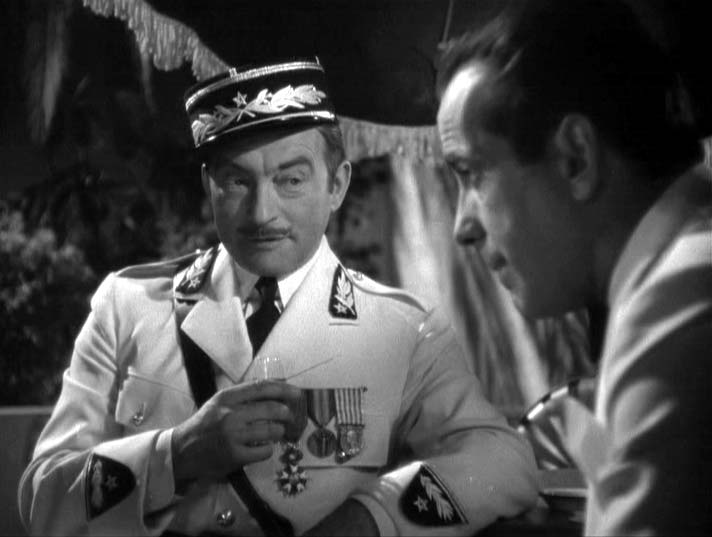
Like coming to Casablanca for the waters, I was misinformed

You and I are kindred spirits, Mr. Blaine
Kindred spirits you and I, Mr. Blaine

I really, really, REALLY do not like making mistakes, especially when it comes to things related/connected to screenwriting, and even more so when it comes to trying to get a career going.

This time around, it’s regarding query letters. Even though a majority are now done via email, for the sake of the discussion, they’ll still be referred to as ‘letters’.

Query letters are a tricky beast. Getting them just right takes an inordinate amount of effort. Some might even say just as much as goes into your script.

I actually don’t mind researching appropriate recipients, or spending the time crafting the letter (which also includes getting feedback on it from those who know more about it than I – a hearty thanks to those who’ve offered their invaluable insight & suggestions!).

What really gets my goat is when I learn, usually after the fact, that I’ve done something that can only be classified as straight-up stupid, or at least counterproductive.

And it all stems from one small, seemingly insignificant thing: what goes in the subject line.

Turns out – not so insignificant. The subject line is your one shot to grab their interest and get them to keep reading. But what should it be? There are several schools of thought about this, but more on that in a second.

I couldn’t tell you where I read it, but the advice (from an “expert”, mind you) I’d heard recommended listing the title, followed by the word ‘query’.

Wrong. Wrong! WRONG!

Apparently including the ‘q’-word is just one big kiss of death. It screams out “Amateur!” and pretty much guarantees your email will probably be deleted without even being read.

So don’t do it! Avoid at all costs!

What should you use? As stated above, several options.

-Just the title

-Title and genre

-A noteworthy contest award (e.g. “2015 Nicholl semifinalist”)

-The hook of your story. Keep it brief!

-“THIS meets THAT” (Opinions are mixed on this. Some writers have said they use it, but a few consultants say not to.)

-Referred by _____

The floor is open to other suggestions.

As for me, lesson learned as I gear up to re-send all those emails in the coming weeks. A weighty project, but whatever it takes. I’m leaning towards just the title or the hook.

The end is nigh. Near. Comin’ up fast.

An apt metaphor if ever there was one (unless you're a manager, agent or producer, in which case we can talk about it)
An apt metaphor if ever there was one (unless you’re a manager, agent or producer, in which case we can talk about it)

A self-imposed deadline is fast approaching.

At the end of this week, all operations on my western will stop. The time between now and then involves one last edit/read-through to really tighten it up, but when I close the file in a couple of days, that’s it.

Mostly because I’ve been working on it for so long, and toiled through several major rewrites, that I’m simply feeling burned out on it. Plus at this point, it really feels like doing any more extensive work on it would probably have the opposite, negative effect and do more harm than good. And I like this script too much to have that happen.

As it reads now, it’s a pretty solid example of my writing style. Even if it only ends up being a calling card that results in some assignment work, that’s perfectly fine with me.

Is it perfect? Of course not. Is it above average? So I’ve been told; excessively so, according to more than a few people not related to me. Is it a rousing tale of thrills and adventure that puts a new spin on an old genre? You’re darn tootin’.

I couldn’t have gotten to this point without all the helpful comments and support of some very talented writers and consultants. All of it has helped me make the script as good as I think it can be. For now. I also like the idea of coming back to it in a few months to get it ready for next year’s Nicholl or PAGE.

But the time has come to bring down the curtain once and for all. It has been an amazing experience that I honestly believe has made me a better writer and definitely upped the quality of what I write. As one of my reliable note-givers said to me, “As good as your writing is on this one, your next one is going to be even better.”

I sure hope so.

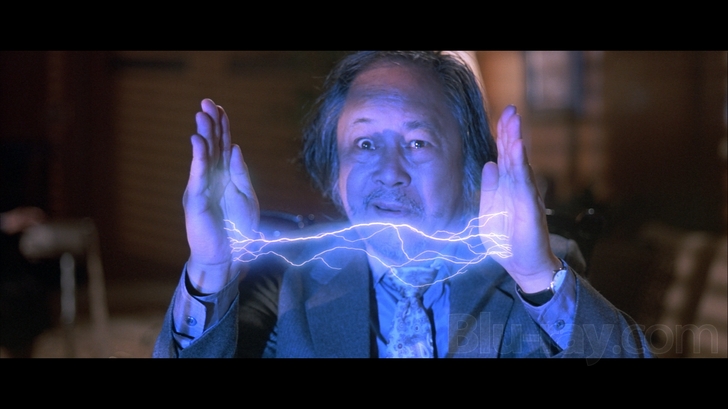
Don’t let this cool, calm & collected exterior fool you…

...because this is what's inside
…because this is how I’m feeling on the inside.

The hunt for representation is underway. Again.

But this round feels quite different.

Maybe this is the experience talking, but my best guess would be that it’s from taking my time and reminding myself there’s absolutely no need to rush through it. These folks aren’t going anywhere, so taking a few more days to properly prepare won’t make much of a difference.

But it is making a huge difference for me.

I’ve got two exceptionally long lists of names and emails, but each is several years old, which requires some admittedly exhausting investigating through multiple levels of IMDBPro into how accurate and up-to-date the information is. Don’t have a subscription to it? You should.

Time, determination, patience and persistence are the four essentials in this scenario.

A lot of time has been spent tracking down where some of those names have ended up. While most are still at the same organization, a good many have moved on. Some to new places, some who’ve gone out on their own, and, from what I can gather, some have totally abandoned ship (including one guy who fell into the deep end of the cliche pool and now sells real estate).

My favorite one so far has been the manager who passed away several years ago, yet is still listed. Just their name and nothing else. I’ve no doubt that at this very moment, somewhere out there, a query email is working its way to them.

The last couple of times I sent out a massive wave of queries, it was in a very rushed and impatient way. “This has to go out NOW!” After finding an email address, I’d immediately cut-and-paste the body of the letter and hit ‘send’. Nothing else. I’d estimate about 75% of them went through, while the remaining 25% came back as ‘undeliverable’ or “address not found”. Those would be immediately dismissed. Over the next few days and weeks, maybe a few responses would trickle in; say 1 for every 10-15 sent. Not the best of returns.

But again, this time it’s different as I’m trying to be been much, much more thorough. Do they even accept queries? What sort of material do they specialize in? Sending to someone who specializes in horror would be a waste of time for both of us. When was their last project? Have I heard of any of their projects? How many clients do they have? What are some of their clients known for? (One place lists Rod Serling(!) as their top client. Interpret that however you want.) They still use Hotmail? Is that even still a thing?

So while I spend part of my time developing a workable list of query letter recipients, I’m also focusing on assembling the actual letter that will be sent. Type ‘screenwriting query letter’ in any reputable search engine, and you get page upon page of links to articles, columns, blogposts and so on. There are countless opinions about what should and should not be in there. Pay attention to those. I tend to favor short and to the point, but effective enough that it gets you noticed and hopefully piques their interest.

It’s pretty likely I’ll crank out a few drafts of this as well before finding one that I think works best.

Like writing the script itself, it ain’t easy. None of this is. But it’s what I have to do in order to make things happen and move ’em forward.

(And if anybody knows a manager they’d recommend or think might be interested in taking a look at my stuff, feel free to point them in this direction. Much obliged.)

Ask a Decidedly Ingenious Script Consultant!

Ryan Dixon

The final installment in a series of interviews with script readers and consultants who would be worth your while to work with if you want to get your script in shape. Today’s spotlight is on Ryan Dixon.

Ryan Dixon is a writer, producer and the founder of Tartan Valley Ventures,  a Los Angeles-based creative development consulting firm that works with writers, producers and financiers. As a screenwriter, Dixon has written projects for studios including Disney, Amazon, Universal and WWE Films. Dixon has also worked in film/TV creative development at such companies as Paramount, MGM/UA, IMAX,  Good in a Room, The New York Times and Tribune Media.

1. What’s the last thing you read/watched that you thought was incredibly well-written?

EX MACHINA’s screenplay was masterful. It reminded me of a sci-fi version of those great meta-thriller plays of the 1970s, like DEATHTRAP and SLEUTH. P.T. Anderson did an extraordinary job with INHERENT VICE. His adaptation added a layer of depth and Los Angeles historicity that was missing in Pynchon’s fun, but flawed and rather juvenile novel.

2. How’d you get your start reading scripts?

As a movie-obsessed child, I used to buy shooting scripts at the late and belated Suncoast: The Movie Store. In college at Carnegie Mellon’s School of Drama, reading scripts was part of the curriculum. My first job in Hollywood was interning for Tom Cruise’s former company CW Productions, so from that point on, I’ve been reading and covering scripts professionally in one form or another.

3. Is recognizing good writing something you think can be taught or learned?

I think it’s a matter of taste. Of course, one must have a certain degree of training and skill in order to fully recognize and appreciate any craft. A classically trained musician or a fine arts scholar is better able to pinpoint the minutiae of Beethoven or Picasso. At the same time, taste is a separate sort of knowledge and instinct. A layman can find beauty if they’re a person who can digest and appreciates art for art’s sake. Nickelback’s members are studied musicians, Lisa Frank is a trained artist, and both are wildly successful in their fields. Study can hone and illuminate the elements of a craft but that can only take you so far.

4. What are the components of a good script?

The basic elements (structure, character, theme) must be superiorly executed. Next, there should be something special in the piece. Even if it’s basic genre fare, the script should include elements that make the reader sit up and say, “Wow! I haven’t seen that before.”

5. What are some of the most common mistakes you see?

From young writers it’s always basic mistakes: mechanics, too much dialogue and/or scene direction. Sadly, these mistakes are also the easiest to avoid. What they reveal is that that writer hasn’t bothered to learn the fundamentals. This is fascinating because I can’t think of any other vocation where a similar incident would occur. If one were serious about learning to cook, a cookbook would be the first purchase. If you wanted to scuba dive, you’d take lessons before jumping head first into the ocean. While all the fundamentals are usually outstanding in the work of veteran writers, there is often a lack of courage and conviction in terms of content, as if they’re afraid to try something different for fear of being tossed out of another development meeting. If you are going to make the huge time commitment needed to write a spec script, swing for the fences. The creative dilution process can come later, once the script’s been optioned.

6. What story tropes are you just tired of seeing?

One is when characters (particularly female characters) are described solely on their looks. It tells you nothing about who a character is and often times a bit too much about the writer’s psyche.

Another is the oversaturation of beautiful people playing everyday characters. Even if you look at a movie from as recently as the 90’s, a man could be a regular guy with full chest and back hair and a woman could do a nude scene with a soft, everyday body. In contemporary films, everyone is sculpted, plucked and dyed to perfection. In this renewed Golden Age of Television, character actors are able to once again shine and it really strengthens the storylines and characters (Breaking Bad and Mad Men are obvious examples).

My wife is a screenwriter as well (and very opinionated to boot), so for better or worse, this is a constant discussion and analysis in our household. A big one for her is that men can have high-risk jobs and a strong drive, but if it’s a woman is in the same position, she needs a tragedy or a backstory. GRAVITY most recently did this—George Clooney is an astronaut because of his skill but Sandra Bullock is an astronaut because her kid died.

7. What are the 3 most important rules every writer should know?

-The believability of characters is often more dependent upon the execution of other elements in the script (e.g., plot, theme, dialogue) than anything else. A trap writers (myself included) often fall into is to confuse “believable” with “realistic.” Thus the ever-present tendency to write characters who are mill workers, teachers, office drones, etc. While there’s nothing wrong with this if that’s what your script dictates, it’s also important to remember that some of the most believable characters in cinematic history were also some of the most unrealistic: E.T., Yoda, Kermit the Frog, Mickey Mouse, Bugs Bunny, etc. They’re believable not because you could see them walking down the street, but because the creators of those characters did an amazing job of creating the world in which they existed.

-Master the art of writing a “skimmable” script. We all dream of studio execs, producers, agents, etc sitting down in a quiet space and focusing fully on our script, but the truth is that they are often read in a rush during limited time frames. This is why it’s important to craft your script in a way that a decision maker can easily understand it if they are forced to skim it. You want your script to FEEL like a movie. That means, a reader should be able to zip through it in about 90 minutes. If a first time reader can’t do that, they won’t be able to envision you script as a movie no matter its other strengths.

-This is stolen but golden: “Amateurs sit and wait for inspiration, the rest of us just get up and go to work.” (Stephen King, a favorite author, from ON WRITING). Lightning doesn’t just strike and no one will just hand you anything in Hollywood. Nothing comes easy in writing and you have to work yourself to the bone to get success. I track my time using my iPhone timer and a writer’s log. I make sure to always get in 6 to 8 hours of writing a day. If I’m blocked, I take a brainstorming walk. I’m not perfect. I can procrastinate with the best of them and it took a few years to build to that point. But like any exercise, it works if you keep working at it and pushing yourself.

8. Have you ever read a script that was an absolute, without-a-doubt “recommend”? If so, could you give the logline?

Elizabethtown by Cameron Crowe. I read the script while it was in development and was never so moved or in awe of a piece of screenwriting. In the end however, the final lesson I gained from the experience was that great scripts don’t always make great movies. For whatever reason, the alchemy needed to successfully transform material from page to screen failed. This specific incident was doubly disappointing since the writer directed the piece himself and has shown time and again that he’s an immensely talented director.

9. How do you feel about screenwriting contests? Worth it or not?

There are only a handful of contests that will have an impact on your career if you are a top finisher. I’m hesitant to state that all the others aren’t worth it if only because placing high can be a great confidence boost to any young writer (if they have the money to spend). But if you are cash-strapped, go for the big guns and ignore the others.

10. How can people get in touch with you to find out more about the services you provide?

Go to my website for Tartan Valley Creative Ventures.

11. Readers of this blog are more than familiar with my love/appreciation of pie. What’s your favorite kind?

Boston Cream. As a writer and eater, I like synergy and mixing genres. There’s no pie that does this better.
Toothbrush. Clean skivvies. Business cards. Let’s go!

Opting to leave my emotional baggage at home

Kind of busy getting ready to head out to the Great American Pitch Fest, so another shorty today.

(Still accepting suggestions about where one might find quality pie in beautiful downtown Burbank.)

-Didn’t get much writing done this week due to our shaggy dog getting a mess of foxtails stuck in her toes, including one so far in it required a trip to the emergency pet clinic. She’s better now.

-More great notes received for the western. Thanks to all who’ve contributed. It’s especially nice when those who’ve read the previous drafts have high praise about how much of an improvement the latest one is.

Hopefully the next draft will continue that trend.

-The revamping of the comedy outline continues, including tightening the whole thing up. I must have cut at least 10 scenes/pages, so shooting for a total of somewhere in the mid-to-upper 90s. As it should be.

-Yet another “pass” on the fantasy-adventure pitch, so taking a break from those for the time being. The most frustrating part is the oddly-phrased way some of them say no. I’d rather they just said “Sounds intriguing, but it’s not for us.”

Too bad there’s no translator app for that.

-Reader participation time! In the comments below, please give the title, genre and logline of the second script you ever wrote.

I’ll go first.

WOK & ROLL. Comedy. An overly-ambitious Caucasian chef in a struggling family-run Chinese restaurant takes on a sleazy rival determined to shut it down.

Who’s next?