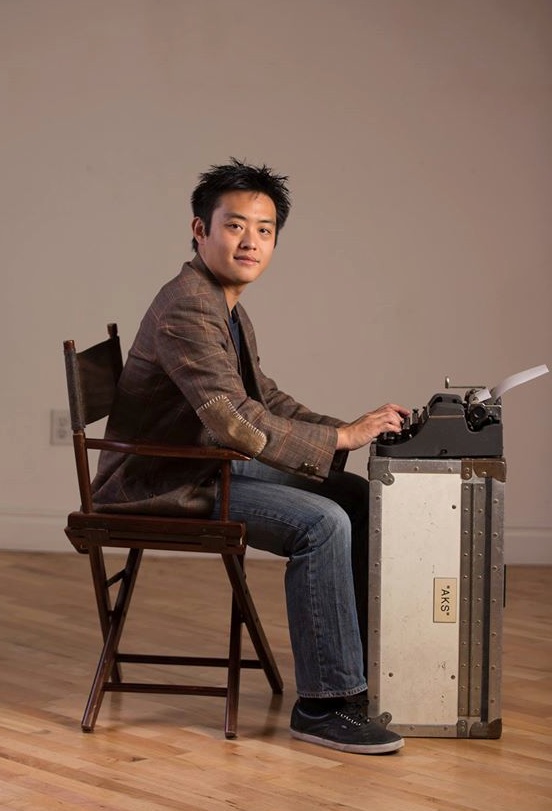
Ask an Out-of-this-world Script Consultant!

Brian O'Malley

The latest in a series of interviews with script readers and consultants who would be worth your while to work with if you want to get your script in shape. Today’s spotlight is on Brian O’Malley of Screenplay Readers.

Brian O’Malley (Not an actual astronaut. Yet.) has written, produced, and directed five feature films and countless shorts and music videos, and is a founding partner of Sundance favorite, Brooklyn Reptyle Films and The Double Aught Brewing Concern Film Company. He started his film career reading and covering scripts for legendary B-movie maverick Roger Corman (Little Shop of Horrors, Death Race 2000, Rock and Roll High School), and in 1999 assembled a team of script development experts to launch SCREENPLAY READERS.

1. What’s the last thing you read/watched that you thought was incredibly well-written?

Well-written: Whiplash, Birdman, Raiders of the Lost Ark. Incredibly well-written: Red Harvest by Dashiell Hammett, Pink Floyd’s Dark Side of the Moon, and the In-N-Out Burger menu. All three of these are simple, yet emotionally engaging and easy to understand.

2. How’d you get your start reading scripts?

I interned for Media Artists Group in 1994 and answered phones and provided script coverage, and in 1997 started doing script coverage for Roger Corman (Little Shop of Horrors, Death Race 2000) and Frances Doel at Concord-New Horizons.

3. Is recognizing good writing something you think can be taught or learned?

Recognizing good writing: easy to learn. Good writing: years of hard work and self-immolation.

4. What are the components of a good script?

A “good” script pushes the art of screenwriting forward, allows me to revel in a unique voice, and surprises me, categorically. A “good enough” script is one that you can read without throwing it or your laptop across the room.

5. What are some of the most common mistakes you see?

-Quitting.

-Not writing enough.

-Comparing yourself to the other horses in the race.

-Joining nearly any Satanic coven.

6. What story tropes are you just tired of seeing?

I don’t get tired of tropes. Spaying and neutering them is what I do for a living.

7. What are the 3 most important rules every writer should know?

Every line on every page of your screenplay must emotionally move or engage human beings enough to fork over their hard-earned money for a ticket.

There’s no 2 or 3.

8. Have you ever read a script that was an absolute, without-a-doubt “recommend”? If so, could you give the logline?

No rating I’ve ever given, good or bad, and no script I’ve ever written, and no film I’ve ever made, has ever come without doubts. That being said, here’s a logline: “A doctor crashes on a desert island and has to operate on himself. With coconuts.”

9. How do you feel about screenwriting contests? Worth it or not?

I used to feel contests were okay, but I’ve done a ton of research on a slew of script contests, and have interviewed scores of contest owners and contestants and producers. My takeaway now is that nearly all script contests are just massive money pits for aspiring screenwriters.
Nicholl, Page, Austin — these three might prick up a producer’s ears a little, but most producers and filmmakers I’ve surveyed on this subject said the same thing over and over:
1) Don’t spend money on script contests unless it’s Nicholl, Page, or Austin, and 2) Don’t list any other contests (or how you placed in them) on your resume because producers don’t care about any contests except maybe those three, and know how scammy most script contests are.

10. How can people get in touch with you to find out more about the services you provide?

Screenplayreaders.com

11. Readers of this blog are more than familiar with my love/appreciation of pie. What’s your favorite kind?

Every second spent eating pie is a second that could be spent writing screenplays.

Ask a Proficiently Perceptive Script Consultant!

Sidney Stephens

The latest in a series of interviews with script readers and consultants who would be worth your while to work with if you want to get your script in shape. Today’s spotlight is on Sidney Stephens of Sidney Scripts Consulting.

1. What’s the last thing you read/watched that you thought was incredibly well-written?

One of my favorite things is when a novel is adapted to the big screen. That’s when the writer in me really comes out to play. I’ll first read the book, then the screenplay, and eventually I’ll get around to seeing the film. I did this about a year ago with the hit TV series “Under the Dome” by Stephen King (only read the pilot script, however), and I also did this with “Gone Girl” by Gillian Flynn. It’s very interesting to see how the story changes from one medium to the next. I enjoyed both of these the most of my recent reads.

2. How’d you get your start reading scripts?

While getting my Master’s degree in Creative Writing years ago, I read numerous scripts, mostly for my classmates, friends and co-writers, and mostly as a pay-it-forward kind of thing. Over a year ago, a friend of mine asked if I would like to start up a script consulting business together. I’d done so much ‘freelance’ work that it made sense. Three months later, my friend backed out of the whole thing. I, on the other hand, rarely back out of anything. So here I am, sole owner of Sidney Scripts Consulting.

3. Is recognizing good writing something you think can be taught or learned?

Absolutely. Part of learning to write a good screenplay is learning to recognize what that means. And there’s no better way to do that than to read tons of screenplays. Breaking them down into what makes them good and what makes them great. The real trick to recognizing a good screenplay is not finding one that reads smoothly and is error free, its finding one that reads smoothly, is error free, and will translate all its intended emotion to the screen in a way that will captivate its targeted audience.

4. What are the components of a good script?

Believable characters and natural dialogue are two very important components of any decent script. Good characters are what draw the audience into the situation; they are what the audience relates to. If they aren’t believable or their dialogue isn’t natural or strong, it will leave the audience asking themselves why they even care to finish the script/film. Yes, settings are awesome and a twisty plot is always a great way to ramp up a screenplay, but without relatable, believable characters, its not enough to make a good script great.

5. What are some of the most common mistakes you see?

Some writers, mostly new writers, try to dictate every inch of how the story will play out on film. With tons of camera angles, actor cues, and scene transitions it is hard to stay in the story. It’s important for the writer to know their part of the process and to do just that. Let the actors do their jobs, allow the directors and cameramen do their job, and just stick to writing a great story. Always remember to show, not tell.

6. What story tropes are you just tired of seeing?

End of the world stories are really starting to wear me out. I think I’ve read every possible way the earth could end, blow up, shatter, freeze, burn, etc. and yet, the surrounding stories are all the same. Man saves family only to stay behind and sacrifice himself for the future of the world. The entire movie is watching them attempt to stop the inevitable only to fail miserably. Until finally, at the last possible moment, the guy saves the planet and is reunited once again with his loved ones. Yawn.

7. What are the 3 most important rules every writer should know?

  • Writing is rewriting. No matter how great you think your draft is, it needs a rewrite. Deal with it.
  • Have a target audience and know exactly what it takes to reach them.
  • Write what you know.

8. Have you ever read a script that was an absolute, without-a-doubt “recommend”? If so, could you give the logline?

I’ve definitely read some worthy scripts in my days as a consultant. However, it is only after working closely with the writer on rewrites and such and knowing what producers were looking for at that particular time. I think finding any script that is “without a doubt” anything is a rare find that all consultants want that next script on their desk to be.

9. How do you feel about screenwriting contests? Worth it or not?

Screenwriting contests are a great way to get your screenplay read and possibly receive some fairly descent feedback. However, using these contests to “break into the business” or as a way of earning thousands on their scripts, they better be something spectacular. The reality is, hundreds of thousands of writers enter screenwriting competitions every year, and only a handful make it past the volunteer readers in the initial read. Can it be your screenplay? Of course. It is worth it? Well, that depends on the writer.

10. How can people get in touch with you to find out more about the services you provide?

My website: www.SidneyScriptsConsulting.com

My Facebook page: https://www.facebook.com/sidney.stephens.9465

Email me with any questions: SidneyScriptsConsulting@gmail.com

11. Readers of this blog are more than familiar with my love/appreciation of pie. What’s your favorite kind?

Sorry, I’m a brownie girl!*

(*Editor’s note: The blasphemy of this statement will not be held against Ms. Stephens.)

Ask a Fount-of-Knowledge Script Consultant!

Matt Lazarus

*note – Matt passed away in July 2020

The latest in a series of interviews with script readers and consultants who would be worth your while to work with if you want to get your script in shape. Today’s spotlight is on Matt Lazarus of The Story Coach.

Matt Lazarus has worked in the industry since 2003. He started in development with jobs at Untitled Entertainment, CAA, and Platinum Studios (Cowboys and Aliens). He joined the WGA in 2007 by selling a horror script to RKO, and he sold a movie to Cartoon Network in 2011. Matt’s story coaching was designed to be affordable, regular, and useful, and he excels at breaking advanced concepts into simpler processes and exercises.

1. What’s the last thing you read/watched that you thought was incredibly well-written?

SHORT TERM 12, a thoughtful, sad drama about a foster home for displaced youth and the human condition. I saw the trailer and it hooked me. The world, performances and characters are all on point. It’s a great example of a drama, and of wringing the most entertainment and potential out of a simple concept.

2. How’d you get your start reading scripts?

I moved to Los Angeles in 2003, and I got my first assistant job after working really hard at an unpaid internship. I wanted to be a writer, and I talked about it way too much. Anyway, I got good at reading scripts and it always provided me an entry to meeting lit agents and executives who wanted to ask follow up questions on material. I’ve been a freelance reader for some studios for years, and there was a time I was even unironically working on a book on how to cover (most of it made it onto my blog). I’ve been a sporadically working WGA writer since 2007, but the financial security of coverage has always given me something to fall back on.

3. Is recognizing good writing something you think can be taught or learned?

Good writing is hard to define. You want it to be accessible: a mediocre scifi appeals to scifi fans, a great one appeals to everyone. You want it to be engaging: no one goes to the movies to not be affected. You want it to help your career. It’s great to sell a script, but if a script doesn’t sell but gets me in a room with someone who can hire me for my next job, I’ll take it.

Anything can be learned. Not everyone who studies piano will become Glen Gould, but they will get somewhat better at piano. I was pretty cineliterate when I moved to LA, and my years in the development trenches helped me marry my base of knowledge to a working understanding of how the industry works and what the powers that be tend to look for.

4. What are the components of a good script?

“Good” is a hard term to define, a semantic minefield. The components of a good script are the same as the bad ones: they both have the same main four (character names, dialogue, sluglines,descriptions), they both take up the same amount of space.

The difference is harder to measure. We see a thousand faces a day, but only a few make us stop and say wow. We hear new songs on the radio every day, few of them will become our favorite. Most would agree that a good writer can do more in the same space than a bad writer, but the ways in which they are better will always and should always be argued over.

5. What are some of the most common mistakes you see?

The most common is writing a script without a premise. I use something called the premise test. It breaks things down to what’s simple. It’s not the only way to look at scripts, but it’s as good as any, better than most:

“An <ADJECTIVE> <ARCHETYPE> must <GOAL> or else <STAKES>. He does this by <DOING> and (optionally) learns <THEME>.

This seems simple, but the doing is the real meat of the movie. If a naive accountant must raise 100k or his daughter dies, different doings give you very different movies (for example, he could win a surf contest, kill a vampire lord, or invent a time machine and go back to 1979). If you can’t explain what’s interesting about your script in 50 words, you’re unlikely to improve things by writing out 100 boring pages.

Writing is a lot like being a chef. Both are creative forms that have structural limits and immense room for interpretation. Tastes are subjective, but a good chef can anticipate the audience and when he serves something he should have a rough sense of why the average patron might find it delicious.

Most writers write without a real sense of the audience. We’re writing to entertain, to deliver a satisfying emotional experience to the audience. If a writer isn’t writing with a sense of empathy for the audience, the end result is likely to be disappointing.

6. What story tropes are you just tired of seeing?

-Scripts about Hollywood power brokers written by people who haven’t met Hollywood power brokers.

-TV pilots that spend their entire length explaining how we got to the premise without every showing what’s fun or interesting about the premise (see #5). There won’t be a second episode. What are you saving it for?

-Comedies that aren’t funny. I recommend taking an improv class and reading the UCB Handbook.

7. What are the 3 most important rules every writer should know?

The word “rules” needs to die. It always starts a fight. People have an unending appettite for hearing that they can write, but any suggestion of how one might approach writing is generally taken as a suggestion of how one ought to write, and then an unproductive argument ensues. Here are three general principals:

-Entertain. You should know exactly what feeling you want to create in your audience.

-Use unity. Once you’ve set up your script, you want everything to feel connected, organic, and like a ramification of what’s come before. Bad scripts keep inventing random stuff throughout the second act, and it leads to a script that feels arbitrary.

-Be specific. A lot of writers will write in variables, keeping things loose (my character is either an architect or a deli owner… I haven’t decided which) because they think it will prevent them from getting lost or stuck in the later stages. This never works. Imagination thrives on immediacy and specifics. It’s better to commit to an idea and follow it to its conclusion. Even if you went in a wrong direction, the specifics you generate add value to your story. If you keep things vague, you’re building on sand and it’s hard to move the story forward when things exist in a vacuum.

8. Have you ever read a script that was an absolute, without-a-doubt “recommend”? If so, could you give the logline?

In 2003 I read a really funny script called Underdogs. I couldn’t stop reading it or quoting the dialogue. It ended up turning into DODGEBALL starring Vince Vaughan. The movie is really funny, the script is funnier.

9. How do you feel about screenwriting contests? Worth it or not?

It depends on the contest. When I was at big companies, execs would usually read the top Nicholl scripts out of a morbid curiosity, but other big script contests (Scriptapalooza comes to mind) would try to get executives to read their top three, and the execs were lukewarm. For instance, a lot of people are selling off the Black List right now. It’s useful now, but might not be in three years.

10. How can people get in touch with you to find out more about the services you provide?

Matt passed away in July 2020, and his site thestorycoach.net has since been taken down.

11. Readers of this blog are more than familiar with my love/appreciation of pie. What’s your favorite kind?

Humble pie. If you’re serious about writing, you’ll be served it more times can be counted. Alternately, strawberry rhubarb. I’m from Vermont, and it reminds me of a childhood garden.

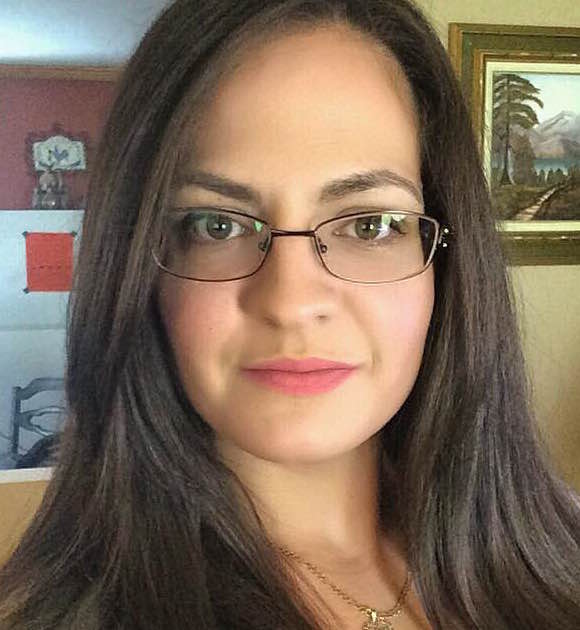
Ask an Inspiring-the-Aspiring Script Consultant!

Amanda Pendolino copy

The latest in a series of interviews with script readers and consultants who would be worth your while to work with if you want to get your script in shape. Today’s spotlight is on Amanda Pendolino.

1. What’s the last thing you read/watched that you thought was incredibly well-written?

I really liked THE SKELETON TWINS. It blended comedy and drama in a way that I think is very hard to do. It also got its plot moving in the very first scene, and brought out the humanity in characters who make terrible mistakes.

2. How’d you get your start reading scripts?

I first learned to write coverage while interning at a production company. Then I did more coverage when I worked as an assistant at an agency. After I left the agency, a former coworker of mine had moved onto a production company and hired me as a freelance reader. All my other reading jobs also came about through friends/contacts.

3. Is recognizing good writing something you think can be taught or learned?

Hmm, that’s hard. Your own personal taste isn’t really something that can be taught, but yes, I do think you can learn what it is that producers and studios are looking for.

4. What are the components of a good script?

A compelling concept and visual world, well-developed characters, an interesting plot with conflict and movement, authentic dialogue.

5. What are some of the most common mistakes you see?

Many writers don’t take enough time to develop their concepts. Is your idea enough to sustain a MOVIE or entire SERIES? Is it fresh and original and interesting – and is your concept clearly established? Other mistakes include boring characters (you need to be writing ROLES that can attract top actors) and plots that unfold without any twists or turns. New writers also sometimes write prose that fails to create mood/atmosphere/tone. Every moment of your script is an opportunity to show off your specific voice and writing ability.

6. What story tropes are you just tired of seeing?

Women who are sex objects; women who are too perfect/idealized; one woman in a script with twenty guys.

7. What are the 3 most important rules every writer should know?

-Writing is rewriting. Don’t send a script out until it’s ready.

-Read scripts and watch TV/movies voraciously.

-One single script probably won’t launch your career. Sometimes the best thing to do is move on and write a new script.

8. Have you ever read a script that was an absolute, without-a-doubt “recommend”? If so, could you give the logline?

I recommended the script IMOGENE by Michelle Morgan, which became the movie GIRL MOST LIKELY. The logline I wrote for it was “After getting dumped and losing her job, a desperate young woman gets banished to New Jersey. After she discovers that her father is still alive, she sets out to find him, hoping that he’s the impressive parent she’s always been looking for.”

9. How do you feel about screenwriting contests? Worth it or not?

Certain ones are reputable, like the Nicholl Fellowship – but in most cases, the people who win contests don’t really get anything as a result. Many people who run screenwriting contests don’t actually put you in touch with anyone, and most producers/agents/etc aren’t going to be impressed that you won some random contest. “Anybody can win a contest,” my old agency boss used to say. Go ahead and enter a contest if you can see actual evidence of previous winners launching careers, but don’t hinge all your career success on winning a contest. It would be a mistake to think that entering a contest is the only thing you need to do to get your work out there.

10. How can people get in touch with you to find out more about the services you provide?

You can check out my website at amandapendolino.com or email me at aspiringwriterblog@gmail.com.

11. Readers of this blog are more than familiar with my love/appreciation of pie. What’s your favorite kind?

I also love and appreciate pie! I’m going to have to go with classic apple pie – with vanilla ice cream on top, of course.

Rewriting with a capital “Re”

How it all starts. Again.

The original plan was to have a first draft of the low-budget comedy done by year’s end.

But just as I started (2 whole pages written!), a few more sets of notes came in for the western, which were added to the rest accumulated throughout the year.

I’ve written here before about how this script did not get the results I was hoping for. If I didn’t do something about it, that wouldn’t change.

As much as I love this script, the plain and simple truth is that it’s weak as it reads now. In the words of one of my note-givers, “it’s good, but has the potential to be a lot better.”

Among the comments in the collected aforementioned notes were several “What if…?” and “How about…?” questions. The general consensus was that parts of the story needed further development, and these suggestions might be worth considering in order to make that happen.

It was drastic measure time, which also meant making some really big decisions. Do I keep plugging away on the comedy just to get it out of the way? Do I attempt a major overhaul of the western’s story? And if I did that, how much of it would actually change?

There was no getting around it. It had to be different. Time for a new approach and new ideas.

So I’m rewriting it. In the truest sense of the word.

The concept is still the same, but the execution is what will be different.

Talk about daunting. Taking something you’ve practically obsessed over, jettisoning a sizable portion of it and starting anew. There are few things as intimidating as that blinking cursor at the top of a blank screen. It just sits there, taunting you, as if it were saying “Go ahead. Show me what you got.”

But here’s the silver lining: rather than abandon everything from every previous draft, I can pick and choose from of all of that material, which is now available for reworking, reshaping, re-whatevering.

Even more of a bonus: looking over all those notes on the western made me think something similar was in order for the mystery-comedy. So I’m working on a major rewrite of that too. I don’t know how I’ll proportion my time and focus between the two, but confidence, hope and ambition are all at significantly high levels as a result.

-And now, time for an IMPORTANT ANNOUNCEMENT!

Since the rewrites will be keeping me busy over the next two weeks, this will be the last me-centric post of the year.

But don’t despair. Starting this Monday, and continuing EVERY WEEKDAY through January 2, a new post will be available for your reading enjoyment.

That’s right. Ten whole days of quality material to keep you company through the holiday season.

I think you’ll like ’em.