Ask a Skilled-in-the-Art-of-Deduction Script Consultant!

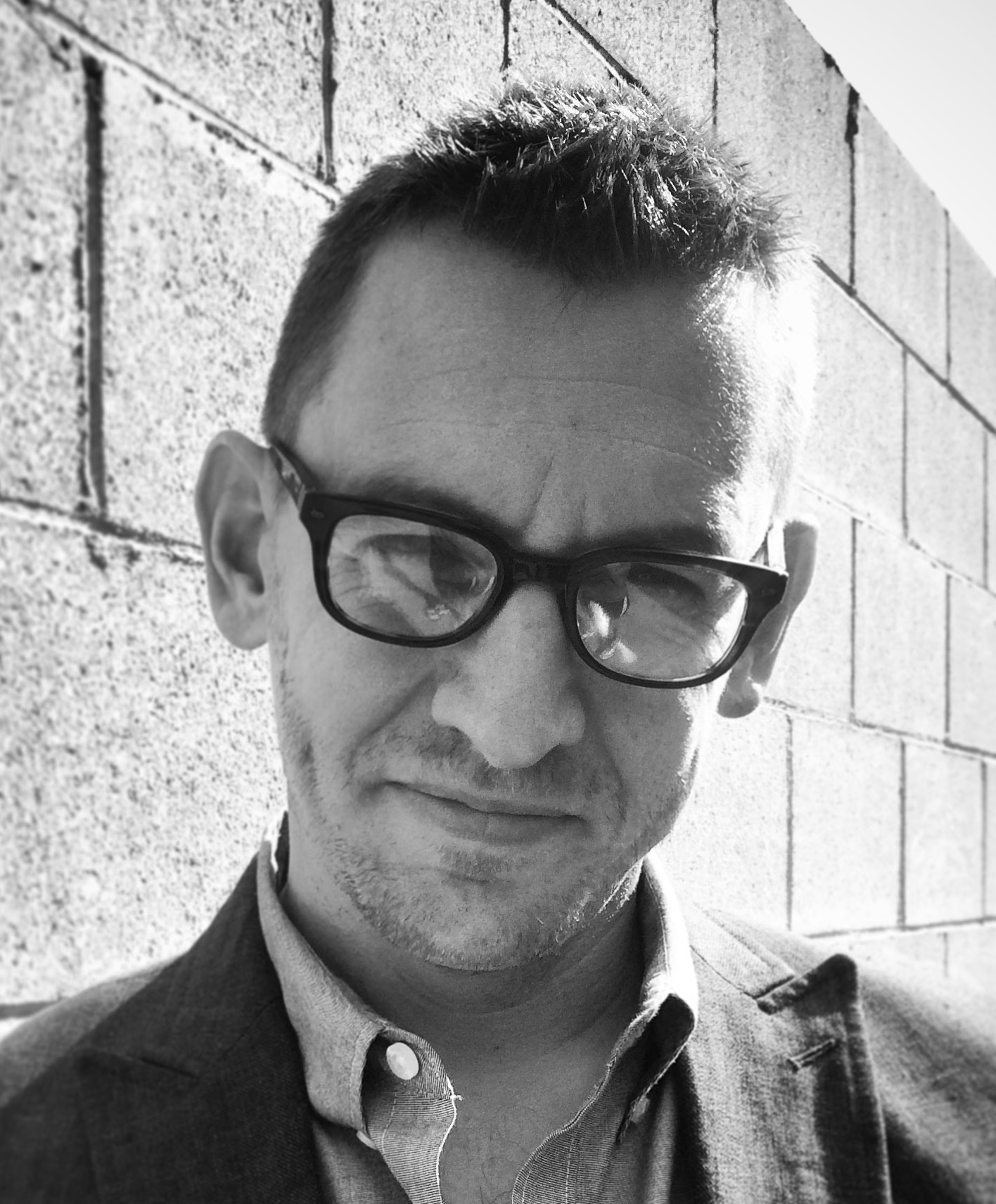
Staton Rabin

The latest in a series of interviews with script readers and consultants who would be worth your while to work with if you want to get your script in shape. Today’s spotlight is on Staton Rabin of Jump Cut Script Analysis.

Staton Rabin is a screenplay analyst, script marketing consultant, and “pitch coach” for screenwriters at all levels of experience (www.statonrabin.com and www.screenplaymuse.com). A Senior Writer for Scriptmag.com, she’s been a freelance reader for Warner Bros. Pictures, the William Morris Agency, and New Line Cinema, and was a frequent guest lecturer for screenwriting classes at NYU. She’s a reader for the annual Big Break Screenwriting Contest. Staton is also an award-winning, optioned screenwriter and writes YA historical novels for Simon & Schuster (BETSY AND THE EMPEROR, etc.). She evaluates screenplays and books in all genres and can be reached at staton@statonrabin.com

Staton’s screenwriter clients include at least two whose scripts were produced as films, and a number who have won or done well in screenwriting contests.

1. What’s the last thing you read/watched that you thought was incredibly well-written?

Sherlock” from BBC-TV. I confess that recently I wolfed down the entire series in about two days, catching up on all the past episodes of this great show. Clever, witty, poignant when it should be, and visually inventive. As a huge fan of the original Conan Doyle stories (and of Basil Rathbone as Holmes in the old movies and radio shows), I assumed I’d hate any “update” of them, and that no modern version could possibly compare to Rathbone’s. But “Sherlock” is hugely respectful of the original stories, yet finds incredibly smart ways to update them. My January 2015 posting for my monthly blog at scriptmag.com is about what screenwriters can learn from watching it. I am much more of a film person in general than a TV fan– and as a script analyst, my expertise is really in evaluating spec scripts, books, and movie concepts, rather than series television. But I have to admit: some of the best work today is being done for TV, and “Sherlock” is a prime example of that.

2. How’d you get your start reading scripts?

I read many screenplays before I became a script analyst for a living. After graduating from NYU film school, I hunted for a job as a freelance reader for quite a while. In those days, there were a lot of film studio offices in New York but at the time there wasn’t much in the way of “job placement” available to film school graduates (NYU has a great Career Development office now). But one day, when I was still unemployed, I bumped into an old film school classmate on the street. He was working as a freelance reader for Warner Bros. Pictures at the time. He took me upstairs to meet his boss, and in about ten minutes I had my first job. I’ve been a script analyst for over 30 years now, and have worked for many film studios, agents, and writers, so I figure maybe it wasn’t just having “connections” that’s allowed me to stay in this business so long!

3. Is recognizing good writing something you think can be taught or learned?

On some intuitive level, all film audiences have the ability to recognize good writing when they see it. There’s a lot of wisdom in what “the average person” has to say about any movie, in terms of what they generally liked or disliked about it. Audiences also intuitively understand whether a story works from a structural standpoint, especially when seeing movies. But, at the risk of sounding elitist, I don’t think everyone has the capacity to read a screenplay or book, or see a movie, and be able to identify and articulate exactly where the problems are in the material, why, and precisely how to fix them. Certainly, a professional script analyst can get better at the job simply by evaluating thousands of movies and screenplays during the course of a career and helping writers to improve their work. I know that over the years I’ve gotten much faster at “taking the watch apart” and spotting problems in a concept or story– and can do this quickly and accurately even when I’m just hearing a brief pitch instead of reading the script. I also advise them on possible solutions to those problems. So while I think that the ability to recognize good writing– or a good story– is universal, the ability to analyze what makes the watch tick (or “clunk”), and know how to take it apart and fix it, I believe is mostly inborn.

To be a script analyst, one has to have a certain kind of analytical mind– the ability to enjoy the material as entertainment, and at the same time look at it as a mechanical device that may or may not be in need of repair, and know how to find where the problem is and what the right tools are to fix it. And perhaps this analytical, detective-like, detail-oriented, problem-solving approach I take to looking at stories explains why I wanted to grow up to be Sherlock Holmes– and ended up being a script analyst!

One’s innate abilities to analyze a story can certainly be honed and improved through education and experience, but one can only build on what one was born with. You raise an interesting question, because more often I am asked whether writers are born or “made”. And to that question I’d give pretty much the same answer: Education and experience can enhance one’s talents, but talent can’t be taught.

4. What are the components of a good script?

More important than the components– which vary– is how a great script makes a professional reader feel. It’s a writer’s job to make the audience (or reader) feel what he wants them to feel. I think the first job of a script analyst is to look at a script as entertainment and be an audience. Which means that if it’s a great script, with all the right components for that particular story and genre, I will simply enjoy it just as anyone else would, and nothing important goes awry from a writing standpoint that will remind me that I’m a script analyst doing a job. The story will be clear and compelling, with high stakes for the hero. I’ll like the hero, despite his human flaws (and partly because of them). I’ll be rooting for the hero to succeed in his goal but fearful that he will fail, as the story holds me in suspense. I’ll feel strong emotions and identify with the hero. And if I feel all these things, all the way through, I’ll be excited about telling the writer about my findings. If I’m reading the script for a contest or a movie producer, I’ll be excited about handing a report to my boss giving it a “recommend”.

But if a script isn’t working, I will notice this and stop to make mental and actual notes of any problems along the way. If it’s a great script (which is very rare), I’ll note the little problems but will be inclined to “forgive” them, and start rooting for the screenplay– just as audiences root for the hero when watching a movie.

A screenplay should feel like the experience of watching a great movie. In terms of what the components of a great script are, screenplay gurus talk about all the different factors that go into it. And these days, every aspiring screenwriter is already familiar with them. Of course they involve three-act structure, and everything else you’ve read about. So instead of re-stating the obvious, I would tell screenwriters to learn what a workable movie concept is (not necessarily the same as a “logline”, though people often use them interchangeably), to practice by coming up with the concepts for classic films of the past, and to make sure you don’t even think about starting to write your script until you’re certain the concept is working as blueprint for a great movie that can sustain the story conflict for 2 hours. You should spend 80% of your time planning a script, and only about 20% writing it. If you have to rewrite the same script over and over again, something is not working, and it probably goes back to the concept. One should stop the madness and get outside professional advice.

Keeping the plot very simple can help when writing any screenplay—and generally makes for better scripts. Especially if you haven’t broken in yet, don’t try to write a really tricky, complicated plot like “Memento”. Keep your story and your main character’s goal, motive, and conflict very simple, and your characters rich and complex. Make sure your hero has a tangible, external goal (and internal and external obstacles to achieving it) right from the start. Also, read lots and lots of screenplays from financially and critically successful, produced films.

5. What are some of the most common mistakes you see?

The most common problems include a lack of clarity in what’s going on in the story, and withholding too much information from the film audience for much too long. I think many aspiring screenwriters assume that being “subtle” is desirable, and that they should hold back as much information as possible from the audience, and reveal or surprise them with it later. But actually, nothing could be further from the truth. The goal of a screenplay is to get the crucial information out as quickly, clearly, and efficiently as possible, not to be “mysterious”. Audiences should be in doubt (till near the end of the story) about the outcome for the hero, not be kept in the dark about the basic facts of what’s going on in the plot. Even in a murder mystery, there should be one big mystery at a time, not ten. Clarity is the screenwriter’s first mission. Don’t be subtle, fuzzy, or secretive when it comes to what the audience knows. “Surprise endings” are way overrated and few aspiring writers do them correctly anyway.

A lot of writers don’t understand that film is a visual medium, and how to present exposition in the language of movies. The script is often way too subtle in the way information is transmitted to the audience, and we are too often required to read the characters’ minds and “guess” what they’re thinking about. For example, the film audience is probably not going to notice signs or pictures on the wall, or how “neat” an apartment looks (many writers do this to communicate that the apartment’s owner has OCD, or the like). If a character is simply staring into space, we may not know what he’s thinking. Unless a character is actually doing something or interacting with objects in a meaningful way, the audience will not notice anything in a movie. They are not paying attention to the setting or what’s hanging on the wall (unless it’s someone’s head!), nor should the writer rely on the setting to do exposition.

In terms of visual information, only significant plot-advancing, character-illuminating action should be in a movie. Sipping coffee is not action– unless one character spits coffee in the other’s face. Eating “a hearty breakfast” is not action. And if any character in a movie MUST use a cell phone, computer, or other electronic device, the writer is going to have to find a way to make this visual and interesting (“Sherlock” does this very well).

Another problem I see in a lot in scripts lately is the misuse of dreams, flashbacks, and visions as a means of conveying exposition. Avoid them.

6. What story tropes are you just tired of seeing?

There’s no cliché so tired that it can’t be turned into something fresh and new in the right hands. Actually, screenwriters don’t rely nearly enough on tried-and-true dramatic formulas and techniques. You’re not going to come up with an original plot, so don’t even try. Following the proper dramatic twists and turns for your genre is exactly what you should be doing– with some new and original twists on what works. Writers should never make the mistake of thinking that following a formula is the same as formulaic or sloppy, ham-handed writing. Your goal should be to take a familiar and conventional story structure and give it a few new twists and surprises, and great characters of real depth and complexity.

All that said, you can’t go wrong if you avoid the following clichés:

-Blatant references to other movies or famous songs in your own screenplays.

-Flashbacks, dreams, and visions (as stated above).

-Giving characters a disability of some sort as a substitute for finding something unique and quirky about them derived from the pure skill of your writing.

-Trying to show us a character is afraid by indicating in your script that he is peeing in his pants.

-Any script about a writer. If you write about an author whose goal is to pen the Great American Novel or write an Oscar-winning screenplay and strike it rich, it is very difficult to make an audience care about goals like these and the nature of his profession provides few obvious opportunities for visual action unless he’s a reporter in a war zone. For most stories about writers, we are going to have to absolutely love your main character, and know what success means to him beyond the obvious, in order to care about his struggles. And, yes, I saw “Adaptation”, and it was okay.

7. What are the 3 most important rules every writer should know?

-Work harder than anyone else, and work smart.

-Plan your concept and your story before you write your script. Don’t go ahead till you are certain it’s going to work.

-Follow the rules, but know when to break them, keep the plot simple, and write with passion. Be yourself. Don’t try to write “that junk” or “that great movie”. Write something emotionally honest that comes from your gut (even if it’s a comedy). There is no “magic formula” for writing a great script. Each one is unique.

8. Have you ever read a script that was an absolute, without-a-doubt “recommend”? If so, could you give the logline?

I could tell you, but then I’d have to kill you (great example of a cliché never to use in any script!). Kidding aside, it is hardly ever the concept or the logline that makes a great script. A logline (or concept) should and in fact must be dramatically viable: a properly structured formulation that has all the elements of drama (a main character with an urgent and compelling external goal, the character’s action in pursuit of that goal, and the main conflict or obstacle to achieving that goal) and that can sustain the conflict over a two-hour movie. And although it’s great if you have a slam-dunk “high concept” idea, and ideally your concept should have an element of originality, the execution is far more important. You need a reasonably fresh and interesting idea that works as drama or comedy over the course of a 2-hour movie. It does not have to be “really catchy” (though of course that helps), it just has to be interesting enough and workable. Your script, however, has to be truly great, not just “good”.

9. How do you feel about screenwriting contests? Worth it or not?

It depends on the writer’s goals and which contest. These days, there are only a handful of contests for which having been a winner or finalist is really going to impress a film producer. So if that’s your goal, enter Nicholl, Big Break, Austin, Sundance, or one of the other top, prestigious screenwriting contests. If your goal is to get the attention of the industry, then seek out contests that give you “access” and very major publicity in the trades as the prize, instead of ones that only offer money. Of course, many screenwriting contests have entry fees, and this can add up for many writers who have low incomes. So choose your contests wisely.

10. How can people get in touch with you to find out more about the services you provide?

Ah, my favorite question! They can write to me at Cutebunion@aol.com. They can also find some information about my services at my website. I read and evaluate screenplays and books, but also advise writers as a consultant at any stage of their process, from concept to finished script. I can provide advice on pitching and marketing their material, what to put in a query letter, and can suggest some creative and smart ways to approach the process of trying to get a particular movie star “attached” for the lead role—without being a stalker!

I also have a monthly screenwriting column, “Breaking In“, for Script Magazine, which consists of “how to” articles about the craft of screenwriting (mostly for those who already know the basics), and the business of marketing a script.

11. Readers of this blog are more than familiar with my love/appreciation of pie. What’s your favorite kind?

Oops. Spoke too soon. This is my favorite question. Depends on the season. Pumpkin in the fall, key lime and banana cream at other times.

Ask an Up-through-the-ranks Script Consultant!

Bill Pace

The latest in a series of interviews with script readers and consultants who would be worth your while to work with if you want to get your script in shape. Today’s spotlight is on William Pace.

William Pace received a Masters of Fine Arts in Film Production from New York University’s acclaimed Graduate Film & TV program where he wrote and directed “Echo Canyon,” an award-winning short film that was televised nationally on the USA Network.

His script CHARMING BILLY was a finalist for the Sundance Institute’s prestigious Screenwriting Lab. William also directed the award-winning feature film of the script, which premiered at the AFI/Los Angeles International Film Festival, whereupon a lead VARIETY review proclaimed his “notable cinematic and storytelling craft.” CHARMING BILLY was then distributed by a division of Miramax and broadcast on the Independent Film Channel.

William teaches filmmaking and screenwriting at The New School in New York City, where he serves as its Screenwriting Certificate Director. He is also a screenplay consultant who’s worked with such authors as Douglas Blackmon in adapting his Pulitzer Prize-winning book SLAVERY BY ANOTHER NAME, and many others whose scripts have gone on to success, from making the influential Black List, winning competitions at Slamdance, obtaining mangers & agents and being produced & distributed.

William’s current position is Faculty Associate of Digital Media Production at Seton Hall University.

And — believe it or not — he’s actually listed in Warren Allen Smith‘s book CELEBRITIES IN HELL.

1. What’s the last thing you read/watched that you thought was incredibly well-written?

There are a lot of good movies that are out right now, but I’m going to go to left field and say THE GOOD WIFE.

It’s TV, and not even one of the “hot” shows that’s popular to tout, but this is a damn well-written show with rich characters who the writers aren’t afraid to have do the wrong thing, and sometimes for the wrong reasons. The journey Julianna Margulies’s character has gone on is almost as transformative as Walter White’s in BREAKING BAD. Different arena, different stakes, but almost every bit as cynical and sometimes almost as dark.

That’s what leaps out at me first thing, but to include a film…

BIRDMAN. But it’s really hard to separate the filming of that movie from its script, as they are seamlessly enmeshed and were designed that way from the start – even though it’s supposed to look like there are no cuts in the film, the editors were actually brought in before shooting begin to help design where the cuts could most effectively be digitally “erased”. That kind of “writing” and planning, along with the audaciousness of the film’s story & thematic concepts, really spoke to me as something on a higher level.

2. How’d you get your start reading scripts?

When I was a film student at NYU’s Grad program (during the — cough-cough — Paleolithic period), the only scripts around to read were hardcopies, and you had to either know someone in the business to get a hold of one or buy one of the badly Xeroxed copies from the guy in Union Square selling them from his folding card table. It wasn’t until I started teaching and the internet came into wide existence that I began to really read a lot of scripts. Once I could download them, I started devouring them. I especially loved reading early drafts of produced scripts because you could see more of the process that went into crafting the final film by noticing what had changed from its initial drafts. I mean, how else would you know that the scene in INDIANA JONES & THE KINGDOM OF THE CRYSTAL SKULL (ugh) where Indy seals himself in a refrigerator to escape a nuclear blast was originally the concept for how Marty McFly traveled in time!?

3. Is recognizing good writing something you think can be taught or learned?

Absolutely it can be taught. And teaching how to recognize good writing is a hell of a lot easier than teaching how to write “good”.

4. What are the components of a good script?

Oh man… how many pages can I go on here? Okay, I’ll try to be a good screenwriter and shorten it into a condensed version: As much as we teachers and analysts can go on about strong characters, good technique, use of genre, theme, etc. – and they are really, really important — I think that if you have a bad story idea, the rest doesn’t matter.

Not one… little… bit.

Now, what makes a good story? For that I would need lots of writing room to expound upon, but for now let me say that I’ve become a big believer in the logline, the one sentence “pitch” for your script – if you can’t create a compelling logline about your script’s story idea, then nothing else is really going to matter. If you can’t, people might read the script and you say, “Oh, I really like the protagonist,” or its imagery or nuance or its tone/mood/feel, blah-blah-blah…” But they won’t spend money and buy it if the story isn’t there.

I’m not saying you have to write what used to be call high-concept scripts – even if you’re writing a kitchen sink kind of realistic drama, the story should still have sufficient and clear conflict and stakes and that can create an interesting logline.

Once you have the story, then everything has to be in the right balance and proportion and wrap up with a resonating theme to be a really good script. But start with a compelling good story and we can work on all of the rest.

5. What are some of the most common mistakes you see?

• The “I’ve seen other movies get away with this kind of crap so I can too” kind of approach. To stand out in a highly competitive field, your script needs to be better than what you see in the movies. It needs to be fresh and cliché-free.

• Protagonists who are not active, whose goals and actions do not make the story happen. Instead, the story happens to them, not because of them, which significantly lowers our interest in both them and what happens to them.

• “It’s just a script, so the writing don’t have to be good.” Just because it’s going to be a movie does not free you from the work of knowing your writing craft and presenting a grammatically correct and enticing read.

6. What story tropes are you just tired of seeing?

Hmmm… can I put superhero stories here? Growing up I loved comic books and I still enjoy a great superhero movie now and then, but really, do we need the entire Marvel universe brought to life and each one getting its own movie? And zombies. Getting tired of them. Love THE WALKING DEAD to death (although it constantly breaks my heart) and I thought that both ZOMBIELAND and WARM BODIES were fun takes on the genre, but enough now. Let TWD ride it for as long as that show works, but that should be it. But those are genres more than tropes. When I think of tropes, I think of clichés, and any screenwriter using a tired old cliché is just shooting themself in the foot. If you feel you simply can’t avoid one, then you have to put a fresh, unique spin on it. SCREAM still stands as one of the best scripts ever to take clichés and use them while at the same time standing them on their head. Great, smart writing.

7. What are the 3 most important rules every writer should know?

Instead of rules, I’ll state qualities: Passion, Dedication & Persistence.

You need all three or you can forget it. If you’re in screenwriting just so you can “cash in on all that big money,” you’re doomed for the start. Most writers never see anything happen with their first half-dozen — and often even more — screenplays. If you can’t look at that fact and honestly say, “I can deal with that,” then you will fail. It takes time to get better at your craft, develop your writing voice and find avenues to get your work seen and appreciated.

“What about talent?,” you ask. Yes, that is required, but too many writers value talent above the three qualities I stated because they want to believe that if they have true talent they’ll write something so great they can skip all the hard work it takes to succeed. If you think that, then you might as well play the PowerBall — your odds might even be better.

8. Have you ever read a script that was an absolute, without-a-doubt “recommend”? If so, could you give the logline?

I’ve read a couple, but the one I’m happiest about was JUG FACE, written by Chad Kinkle, an alumnus of The New School (where I teach). Before JUG FACE, Chad had written several very good, interesting and highly intriguing scripts, but with this one everything just came together in that special way that makes the story, characters and words leap off the page. And it wasn’t just me that that thought so, as he not only won the Grand Prize at Slamdance’s Screenwriting Contest, he was able to parlay that into getting the film produced with him directing it. It came out in 2013 and was named by many critics as one of the best indie horror films of the year.

Now, the logline – but first, you have to understand that it is a horror film and a particularly disturbing one at that… which should be quickly evident: “A young woman, pregnant with her brother’s child, fights to not be sacrificed by her clan to the entity they worship lurking within in a backwoods pit.” Yeah… I warned you. But despite such a potentially off-putting premise, the writing was so strong that it won several awards and got made.

9. How do you feel about screenwriting contests? Worth it or not?

Absolutely worth it, as Chad’s story directly above should make abundantly clear. And even if you don’t win the grand prize and get to make your film, if you place well in a contest you get to use that as a calling card to help bring attention to your work. Another student of mine made the Black List and had her script sold, moved to LA, now has an agent and a manager, and is working in the industry.

10. How can people can get in touch with you to find out more about the services you provide?

Because of my position at Seton Hall University, I don’t have as much time for consulting – especially during the school year. Writers are still welcome to contact me during the summer at bill@wmrpace.com.

11. Readers of this blog are more than familiar with my love/appreciation of pie. What’s your favorite kind?

My lifetime favorite is pumpkin pie. I don’t care what time of year it is – it can be stifling hot in the dead of summer, and I will still want a slice of pumpkin pie. The vanilla bean ice cream melting on top will help deal with the heat. And to be even more specific, I have to admit that both my wife and I have developed an incredible love for Whole Foods’ pumpkin pies. There’s something about the combo of spices and the “heft” of their pie’s consistency that I have not found anywhere else. I know it is probably heretical to proclaim a love for a store-made pie, but forbidden loves are often the strongest.

Ask an In-the-Director’s-Chair Script Consultant!

Jeff Richards

The latest in a series of interviews with script readers and consultants who would be worth your while to work with if you want to get your script in shape. Today’s spotlight is on writer-producer-filmmaker Jeff Richards.

Jeff Richards is a story consultant, filmmaker, and writer with over twenty projects either optioned, produced, or sold. His clients range from award-winning novelists to creative writing professors to screenwriters working for major studios. His own writing includes feature films, TV series, graphic novels, and short stories, as well as writing for children’s animation and computer games. His background includes information technology, a decade as an opera singer, and he is an honorary member of the Takaya Wolf Clan of the Tsleil-Waututh First Nation.

1. What’s the last thing you read/watched that you thought was incredibly well-written?

The Karla trilogy by John Le Carré, and if you ever need a lesson that character is king, look to those. The books are often very low on action; they largely consist of dialogue (most of which is people recounting events, as you’d expect in a book about counter-intelligence) and the characters are so magnificent you don’t care that you’ve just spent hundreds of pages essentially listening to people talk. The protagonist for two of the books, Smiley, often isn’t even doing the talking; he’s merely listening. Yet it works.

As for watching, I’ve been re-watching Doctor Who, and “Blink” is possibly the best hour of television I’ve ever seen. Stunningly imaginative and original, incredibly atmospheric, and one of the very best examples of burying exposition I have ever seen in any medium. If I write something that good, I’ll die happy.

2. How’d you get your start reading scripts?

I spent several years as an independent filmmaker and although I did write most of the projects we were developing, I’d occasionally work with an outside writer and help them. That made me realize that I could apply what I’d learned as a writer to helping others with their scripts.

3. Is recognizing good writing something you think can be taught or learned?

Absolutely. The love of words is probably pretty difficult to instill in an adult, but if someone is already interested in it, then it is definitely possible to learn to recognize good writing. The secret is to read widely and actively, both good and bad material; once you’ve read and analyzed enough writing, and worked out why it works or doesn’t, you start to see the patterns very clearly, particularly in screenplays. Objectivity about our own writing? That’s trickier…

4. What are the components of a good script?

What’s most important, and what I don’t see enough of, is a unity of character, plot, and theme. People talk about “character-driven scripts” or “plot-driven scripts” when, in reality, they should driven by the same engine.

As for the rest, it’s about what you’d expect; an active protagonist, strong pacing, dialogue with subtext, an original concept, rising stakes, good conflict, a surprising but inevitable ending… all that sort of thing. However, the only absolute must-have is that it is interesting. For every other must-have you’ll see on a checklist, you can usually think of a great script that didn’t have it. Passive protagonists are death… unless you are talking about The Graduate. Or Being There. But these are scripts by master writers; you need to be very sure why you are going against the grain, and how it makes your story better. (And, as you can tell by the age of the examples, rule breaking isn’t that popular anymore in Hollywood.)

5. What are some of the most common mistakes you see?

Going back to the previous point, a disconnect between character, plot, and theme is common. This usually causes protagonists with unclear goals and flat second acts. However, the most common thing I see is on-the-nose dialogue. Characters who say exactly what they feel and think, or who sum up the central conflict in a speech. If you ever read “You know what your problem is?”, then that’s probably a bad sign.

6. What story tropes are you just tired of seeing?

I think I’m almost unique in that my answer is “none”. Every trope is ready for a great script to make it fresh. Amnesia is the most tired device in writing, yet The Bourne Identity comes along and is fantastic. There’s always room for a great script.

The thing that tires me isn’t story tropes, but clichéd dialogue. Don’t have lines from other movies in your movie. Be original.

7. What are the 3 most important rules every writer should know?

-Read widely; lessons are everywhere, and most of them are outside your genre and format. So if you’re a sci-fi feature film writer, read historical fiction. Read detective comics, manga, sitcom scripts. Expand your brain.

-Writing is rewriting; every first draft is a huge bundle of problems waiting to be solved. So solve it. And not by editing, but by rewriting. Changing words in action or dialogue is just editing. Changing characters, plot points, deleting or adding scenes, that’s rewriting. Do multiple passes, focusing on a different thing each time. One pass (or several, more often) for plot, one for each major character’s dialogue, one for action lines… if you’re building a shelf, you don’t sand and paint at the same time.

-Don’t get hung up on systems. Read how-to books, sure, but pick and choose your advice. Being a slave to a particular checklist is usually indicative of poor writing. If I can tell that you’ve read Save the Cat by reading your draft, then there’s probably too much Snyder and not enough you in your script.

8. Have you ever read a script that was an absolute, without-a-doubt “recommend”? If so, could you give the logline?

Unfortunately, I can’t share loglines due to confidentiality. But for me, “recommend” can’t focus too much on the logline. Concept is important, sure, but the writing is what matters, what makes it a “recommend”. I’ve had writers with straightforward concepts come to me and, after we hone the execution, they get jobs at major studios or get 10 on The Black List. That doesn’t come from the logline, but the execution, how they wrote (and, as per rule 2 up there, rewrote!) Chinatown’s logline doesn’t set the world afire, yet it is generally regarded as one of the great scripts. So a logline wouldn’t really illuminate why I feel a particular script is great. Loglines only show whether something is the type of script an exec should read (e.g. it’s high concept sci-fi and that’s what they’re looking for). The logline gets you the look; the writing gets you the job.

9. How do you feel about screenwriting contests? Worth it or not?

I personally don’t do them very often. I have in the past and placed well, but I never found the contest actually led to a job; what worked for me was my personal networking. However, every path is different and obviously you hear success stories. What is important is that you put in the time, both into the writing (mostly) and into building your career, whether that’s contests, pitchfests, networking… Whatever seems to be working for you, do that. If nothing’s working (and the writing is genuinely where it needs to be!), then change things up.

10. How can people get in touch with you to find out more about the services you provide?

Jeff is no longer actively seeking clients, but is still open to receiving requests via his website at strangeborders.com. He also suggests connecting with him on Twitter.

11. Readers of this blog are more than familiar with my love/appreciation of pie. What’s your favorite kind?

Pumpkin, no question. With fresh whipped cream. A great pumpkin pie will turn me into the seven-year old kid who eats so much he feels sick. It is inevitable.

I probably need help.

Ask a True Renaissance Script Consultant!*

Julie Gray

*Renaissance as in “those possessing many talents or areas of knowledge”, not the cultural and intellectual movement between the 14th and 17th centuries.

The latest in a series of interviews with script readers and consultants who would be worth your while to work with if you want to get your script in shape. Today’s spotlight is on Julie Gray. I had the good fortune to interview Julie a few years ago just before she relocated to the other side of the planet.

Bonus question: So much has changed for you since I saw you last – you moved abroad and now live in Tel Aviv, Israel. What’s that been like, and what are you up to?

After ten years in Hollywood, it was time for a change. Tel Aviv is an incredibly vibrant city and there is SO much going on in the art scene here, it’s really exciting.

I work with screenwriters and novelists from New York, LA, the UK and Australia and increasingly, filmmakers here. I just interviewed the writer/directors of the Israeli film Big Bad Wolves, which Quentin Tarantino called the best film of 2013. The interview will be in Script Magazine this fall. I go to London every year and teach at the London Screenwriter’s Festival, which is really fun, and I have been volunteering with Amnesty International in Tel Aviv, working with Sudanese refugees on story telling. I founded the Tel Aviv Writer’s Salon in 2013, a group that meets weekly and writes flash fiction. During the war this past summer, I was asked to do a writing workshop for US embassy employees, to write about the trauma of what we all went through and will be doing writing workshops for victims of terror and war here in Israel for an Israeli non-profit later this fall. So I keep pretty busy!

1. What’s the last thing you read/watched that you thought was incredibly well-written?

I read an hour-long drama pilot by a client of mine and I just went insane, it was SO clever and unique. I can’t talk about the premise because it’s so unique and because I got so excited about it that I sent it to several producer friends of mine in Hollywood and the writer has a bunch of meetings coming up! I was so glad to help him and so impressed by his talent!

This summer, I watched a lot of movies but two really stood out – The Dallas Buyer’s Club and The Grand Budapest Hotel. I also watched McConaughey in True Detective; he’s really hitting his stride at this point in his life; it’s a joy to watch him. I’ve been a Wes Anderson fan since day one and so GBH just had me floored. Every single shot, every single moment is so stylized. It reminded me a bit of one of my favorite books, The Hotel New Hampshire.

I went on a real reading bender in the past few months and read A Confederacy of Dunces, All Quiet on the Western Front, Things Fall Apart and Revolutionary Road by Richard Yates. I’d seen the film but the book was better (as is so often said – Wow.) I am also an inveterate reader of The New Yorker and The Atlantic – a real addict of both.

2. How’d you get your start reading scripts?

I was writing scripts, of course, and attending the Writer’s Boot Camp in Santa Monica – I’d won the 2 year professional program through a screenwriting competition and there, at that program I heard about these “readers” and that you could become one. So I did. I was, as it turned out, really good at it and it wasn’t long before I was reading for some really big deal production companies in LA – Bedford Falls, Red Wagon at Sony, Walden Media – it was a great experience! I met a lot of great producers and agents and read scripts all day every day for a long time. It helped sharpen my own sense of what is original – or not – and what really good writing looks like. That kind of repetition ingrains a lot in you about which scripts have a chance in Hollywood and which do not. Lessons I will never forget.

3. Is recognizing good writing something you think can be taught or learned?

I don’t believe I’ve heard that question before! Well, the answer is complex. In order to recognize good writing, you have to READ good writing a lot. I was a freakishly good reader because I am a freakishly well-read person in the first place – and also a movie nut – so my frame of reference is pretty refined. But the question, for a Hollywood reader, is not whether YOU think it’s good writing, the question is whether the producer or agent will think so. And primarily, whether the script is unique and marketable. You learn what is expected in a rather mathematical way, and you rate those things, one by one. Being a good reader is about knowing what the particular company you are working for is looking for, specifically, what the general rules are in coverage, and then how to write up a great summary about what is good or bad in a script. And doing that very, very quickly, over and over again.

Being a good reader happens through experience. Much more of the skill lies in the ability of the reader to communicate as thoroughly and as objectively as possible what is and is not working. You might read a script of a genre you hate – it doesn’t matter what you like, it matters whether this script is written well for that genre. So – you have to know that genre. That’s why, to be a reader, you really have to know your movies, otherwise you’ll say something is unique and original when it was already done in 1947, and then another take on that premise was done again in 1976. If you don’t know that you will get fired very, very quickly. It’s a bit merciless. Readers really have their feet to the fire. It’s the belly of the beast.

But to answer your question, which is really, “what is good writing” – a good screenwriter is one who takes you on such a ride that you forget you are turning the pages. Every character seems real, every action line is cinematic, every plot twist is totally organic – it’s having a way with words that seems effortless. Can this be taught? I think that writers can be taught how to write but that GREAT writers are born that way, to be honest with you.

4. What are the components of a good script?

GREAT CHARACTERS, GREAT CHARACTERS, GREAT CHARACTERS. Oh – and a unique premise. If you have great characters and a unique premise, your structure will fall into place. You have to understand structure, but it won’t work unless the character arc really flows with the structure – informs it. Structure should not be obvious, it should just feel right.

5. What are some of the most common mistakes you see?

Unoriginal ideas. Writers who don’t test their ideas and look and compare and see who else has done this idea – if anyone. In my book, Just Effing Entertain Me: A Screenwriter’s Atlas, I go into great detail about idea testing. It’s crucial. It’s everything. Other common mistakes are things like typos, poor format, clunky action and sluglines. But if I had to point out THE worst mistake you could make and the most common one – being unoriginal wins by a landslide.

6. What story tropes are you just tired of seeing?

1) Any deus ex machina – something that just magically happens and changes the direction of the story. This is very easy for new writers to do but as you get more experienced, you’ll see why this is a big no-no, not only from a Hollywood perspective, but from a creative perspective as well. Creatively, it’s cheating, It’s taking the easy way out instead of letting the possibilities of the story play themselves out.

2) The person who’s had a big accident or someone they love died and now they are this tragic figure that nobody can reach. Oh man. I’m so tired of that one. It’s not that grief doesn’t have a huge impact – I know – I’ve experienced it – but writers often broach grief like it’s a kind of slam dunk, simple emotion – and it’s really not. Watch Ordinary People if you want to explore grief.

3) In a horror script, the character that goes to the door or UP INTO the attic when they hear a strange sound. They go TO the danger – it’s laughable. Scream really sent that up well – what a seminal film. But writers have to remember that we readers have seen and read every script, so surprise us. Not easy, you say? No. It’s not. If it were easy…

7. What are the 3 most important rules every writer should know?

1. Don’t write for the money – you’ll never write from the heart.

2. Watch movies – all kinds – all the time. Know your Hollywood history, understand genres and which movies were seminal and why.

3. Don’t be afraid to write badly! Writing is writing, but real writing is REWRITING.

8. Have you ever read a script that was an absolute, without-a-doubt “recommend”? If so, could you give the logline?

A very few times. Most recently, the client I referred to at the beginning of this interview. Unfortunately I cannot divulge the logline, but it was a mixture of a VERY popular cable show and a Bradley Cooper drama. I’m sorry I can’t share it. I read an unproduced film by the amazing writer Ben Queen, called Slanted and Enchanted and I lost it – I flipped out, it was so good. Ben and I became friends. American Beauty made me cry really hard – but it was already in production. Lucky for me, my best friend was the property master of the film so I got to visit the set and later on, Alan Ball and I had offices near each other while he was doing True Blood and I got to hang out with him and it was amazing.

9. How do you feel about screenwriting contests? Worth it or not?

I ran a screenwriting competition for six years so naturally I think there is worth in them. But the biggest worth is not so much the cash prizes, etc. but the validation you receive. Sometimes just quarter-finaling in a competition is enough of a good feeling to keep you going, and that can be so important in this pursuit! That said, look, be realistic and know that there are millions of competitions mushrooming all over the place and that you have a budget as a writer. So enter only a few every year – the biggies only – and then spend your money seeing movies, buying a how-to book or two, maybe go to a seminar to meet other writers. The ONLY thing that really matters is your writing, so make sure not to get sucked into lottery-like thinking, that if you buy SIX books on screenwriting or go to EVERY screenwriting event, or enter EVERY competition, that somehow this will magically do something for you. Ass in chair. That’s it. But entering a select handful each year can be fun, it can force you to meet deadlines, and it might get you the validation that you need in order to keep writing. The competitions that I consider really worth entering are: Final Draft Big Break, Blue Cat, Page International, the Nicholl (although it is VERY competitive, so know that…), Slamdance and Scriptapalooza. I may have overlooked some, but those are competitions I am very familiar with and know the people who organize them, so I can recommend them heartily.

10. How can people can get in touch with you to find out more about the services you provide?

They can go to my website at juliegrayediting.com or email me at hello@juliegray.info.

11. Readers of this blog are more than familiar with my love/appreciation of pie. What’s your favorite kind?

Coconut Cream – preferably at the House of Pies on Vermont in Silverlake. So many memories there.

Ask an Extraordinarily Insightful Script Consultant!

Andrew Hilton

The latest in a series of interviews with script readers and consultants who would be worth your while to work with if you want to get your script in shape. Today’s spotlight is on Andrew Hilton, aka the Screenplay Mechanic.

Andrew Hilton grew up in the U.K. and studied film in England and New York, before working in motion picture development at almost every major studio. Having read more than 13,000 scripts, he is one of the most highly-regarded independent screenplay analysts in the film industry.

Andrew’s first produced credit as a screenwriter was the psychological thriller FATAL TRUST.  He also rewrote and Co-Produced the indie thriller BRAKE, and served as a Co-Executive Producer on the feature documentary WHY WE RIDE.  Andrew also has several feature projects in active development, including his own big-budget action picture BULLET RUN and the Dickens-inspired action thriller THE GUNS OF CHRISTMAS PAST.

What’s the last thing you read/watched that you thought was incredibly well-written?

While I’m more of a feature guy, I love that NEWSROOM is back on TV. At least in terms of dialogue, there are very few screenwriters on Aaron Sorkin’s level. He has the ability to craft dialogue exchanges that are as mesmerizing as any action sequence. Some criticize the heightened reality of his rapid-fire, snappy dialogue, arguing that it’s contrived and inauthentic. Personally, I’m going to savor every episode of this final season.

How’d you get your start reading scripts?

I attended film school in the UK and New York, then finished my final year of university in Los Angeles so I could start interning at the studios. My first gig was working for a producer at Universal and I spent six months reading scripts for him. I then moved to Warner Bros. and worked in the story department of one of my favorite producers, Joel Silver (DIE HARD, LETHAL WEAPON, etc.). After six months there, I landed my first paying job at Paramount, as a Story Editor for Mario Kassar (FIRST BLOOD, TERMINATOR, etc.). It was there I began teaching others to write coverage and really honed my story skills.

Is recognizing good writing something you think can be taught or learned?

The ability to recognize good writing can be learned, but recognizing a good movie is a skill far fewer people possess because it’s partly instinctual. Consequently, there are many agents, producers and actors in the industry who struggle to recognize a good script. That’s one of multiple reasons why so many sub-par projects get off the ground. Often, producers and studio execs are throwing stories against the wall (or into theaters) to see what sticks. On the flipside, there are people in the industry – from readers to top producers – who consistently find that diamond in the rough. 

What are the components of a good script?

It really all comes down to two things: Can this story entertain an audience for a couple of hours? Is that audience going to be big enough to turn a profit? It’s that Goldilocks balance of art and business, and reconciling that reality is one of the first goals every new writer should work towards. You could argue that there are good scripts which won’t be profitable at the box office, but who is that script “good” for? It might make a solid writing sample, but a genuinely good script is one that’s well-written and will make some serious coin in the marketplace once it’s produced.

So what specific components in a script will ensure the audience is entertained? An interesting protagonist is essential. We don’t necessarily have to like the hero, but it’s crucial we find them interesting. Ideally, the screenplay will also feature compelling conflict, engrossing dialogue, and a brisk pace which holds our attention. The end game is to ensure the audience leaves the cinema feeling completely satisfied. Nobody likes leaving a restaurant hungry, and nobody enjoys leaving the multiplex feeling as if they just wasted $15 on a crappy film.

What are some of the most common mistakes you see?

Overwriting the narrative to the point where clarity suffers is very common. Screenwriting is somewhat unique in that one of the best traits a scribe can have is efficiency of language. Don’t use twenty words to describe something when ten will do. Don’t try and impress anyone with your vocabulary or your grasp of metaphors and similes. Just write the most compelling and vivid movie using the fewest words.

What story tropes are you just tired of seeing?

Anything post-apocalyptic is becoming tiresome. MAD MAX was released in 1979 and the spec marketplace is still saturated with clones.

Ditto for “man on the run” stories. Whether the hero is in possession of a flash-drive, witnessed a crime, or underwent some kind of experiment, these screenplays always follow the same structure and climax. There’s often a foot chase in a subway and the protagonist almost always ends up sleeping with the love interest in a hotel. I read one or two of these most weeks.

I’m happy to read big expensive sci-fi epics, but 99.99% of the time the author needs to realize they’re writing it for themselves because it’s not going anywhere. If nobody in this town knows you and the story isn’t based on an existing IP, where’s the $200m budget going to come from?

Another common formula is the comedy about the dishonest hero. Often, these are romantic comedies which feature the protagonist misleading or lying to the love interest. The charade has to be maintained throughout Act II, at which point the love interest learns the truth and shuns the hero, leading to a climatic reconciliation (often a race to an airport).

All that said, if you have a unique conceptual twist, or craft one of these stories in a genuinely fresh and commercial way, there are still plenty of potential buyers out there. Clichés often become clichés because they work repeatedly. It’s also worth pointing out that this is where an experienced story analyst can be most useful. Some people rail against spending money on coverage, but I’ve read well over 7000 screenplays so I might be able to tell you how often I’ve seen a specific idea before and can give you suggestions on how to make your work differ from past fare.

What are the 3 most important rules every writer should know?

Not “rules” per se, but…

Know your audience.

Don’t bore anyone.

Always remember a complete stranger will eventually have to write a huge check to make your story come to life. They’ll want that money back.

Have you ever read a script that was an absolute, without-a-doubt “recommend”? If so, could you give the logline?

I used to read approximately 70% of major theatrical releases when they were still at the script stage, either for production companies or foreign distributors. Hence, I’ve done coverage on everything from THE SIXTH SENSE to THE LORD OF THE RINGS. Many of my clients have written great projects too, most recently Jesse Chatham with LAND and Bao Tran with THE PAPER TIGERS.

How do you feel about screenwriting contests? Worth it or not?

Some are worthwhile, e.g. the Nicholl, but most are akin to entering the lottery. If you’ve written a genuinely brilliant piece of work, it may still go unnoticed because most contest judges are inexperienced and all of them are underpaid. However, there are enough lightning strikes to keep the contest industry alive, and if a writer can afford it I see no harm in rolling the dice. More often than not, it’s akin to a farm program where a small-time manager or agent may discover you. If you’re considering the contest world, target the established ones which have a good reputation.

How can people get in touch with you to find out more about the services you provide?

My website www.screenplaymechanic.com, my Mechanic Facebook page, or simply email me at screenplaymechanic@gmail.com.

Readers of this blog are more than familiar with my love/appreciation of pie. What’s your favorite kind?

I’m going savory on this one. Steak and ale (with a pint, of course).