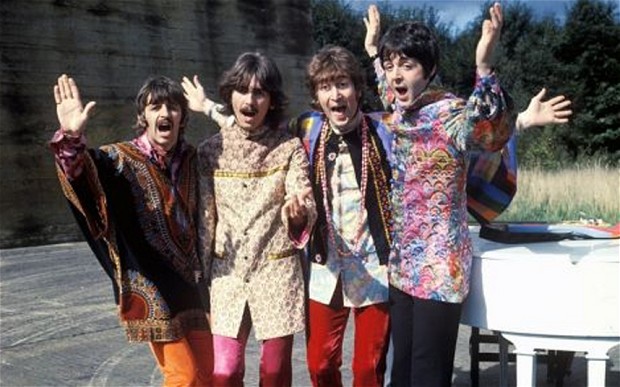
Roll up for the My Writing Process Tour!

Sorry, no walruses involved
Step right this way! Sorry, no walruses involved

I’ve been invited to take part in The My Writing Process Tour, which is kind of a blog/chain letter thing. One blogger asks another to take part and answer some insightful questions, then link to writers/bloggers we’d recommend.

I was nominated by Henry Sheppard, aka Adelaide Screenwriter, from the Australian metropolis of Adelaide. He’s always offering up some fantastic material, including articles, interviews and shorts. Definitely worth checking out.

As for me…

1. What am I working on?

Three items currently hold my attention: revamping the outline of a pulpy adventure spec, the rewrite/polish of a Christmas-themed mystery-comedy and resuming the hunt for representation.

2. How does my work differ from all others of its genre?

Even though I’ve written in several genres, the one thing I always try to convey is a sense of fun and excitement. It takes a lot more effort than people realize to really engage a reader that way.

I want you to enjoy the story beyond just “this is good writing” and more like that amusement park thrill ride you rush to get back in line for as soon you get off.

3. Why do I write what I do?

My formative years were the late 70s/early 80s, so I had the benefit of being heavily influenced by the likes of STAR WARS, RAIDERS OF THE LOST ARK and BACK TO THE FUTURE. To me, those are textbook examples of what smart storytelling should be, and it’s what I strive for in my own work.

I’ve stated before about being a fan of the genres I write, so not only am I trying to write something I’d want to see, but I try to create something I haven’t seen before.

4. How does your writing process work?

It all starts with an idea. Is there a story behind it? If so, what happens over the course of that story? How could I tell it in an original way?

Once I have a general idea about that story, including knowing how it starts and ends, I set up the plot points (statement of theme on page 3, inciting incident on page 10, etc), then fill in the gaps between them.

If it’s a genre-specific film, I try to incorporate elements that are part of that genre while trying to avoid tropes, or at least approach them from a different perspective.

I do a majority of my work in developing the outline, and it makes a huge difference. It gives me a better overview of the whole thing so it’s easier to keep track of character development, storylines, subplots, setups and payoffs. I won’t even consider starting on pages until I think the outline is solid.

Because of my schedule, I write when I can. When it comes to pages, I try to produce at least 3 a day. Sometimes it’s more. It’s gets easier the more you do it. They add up fast, and before you know it, you’ve got a completed draft to go back, edit and rewrite.

I’m also extremely fortunate to have several friends and trusted colleagues I can turn to for feedback. They pull no punches in telling me if something doesn’t work.

Lastly, I’ll rewrite and polish the script until I think it’s good to go.

Over there on your right is a list of blogs I think make for some excellent reading and advice. I’ve added three definitely worth checking out:

The Single Screenwriter by Christie LeBlanc

Writer of Fine Things by Evan Porter

The Screenwriting Process from James (don’t know his last name) in the UK

Bonus! If you’re looking for some reasonably-priced professional analysis for your script, you might want to consider:

-Doug Davidson’s Four Star Feedback. Doug is the only writer to win a Nicholl Fellowship with an animation script (2004), but he happily covers all genres.

-Andrew Hilton aka the Screenplay Mechanic. His services have garnered extremely high praise on the Done Deal Pro forums.

Thanks for reading!

Go ahead. Try to stop reading.

pageturner
Absolutely nothing is going to divert my attention from this.

As a screenwriter working on making it as a professional, that’s been the underlying message for every one of my scripts.

I strive to create stories so involving, compelling and entertaining that each one immediately sucks you in and grabs your attention to the point where you have no desire whatsoever to stop reading.

You need to find out what happens next.

This is what I want when I read somebody else’s script, and it’s definitely what I aim for when I write mine.

Throughout the entire process of putting a story together, from the first spark of an idea to finishing the so-many-I’ve-lost-count rewrite, it’s a goal we’re consistently seeking to reach.

Being as objective as possible, take a look at your latest draft. How does it make you feel? Do the pages zoom by, move at a snail’s pace or just kind of plod along?

Does reading it excite you? Make you want to keep going? Can you easily visualize what’s happening?

Do the characters seem so developed that you actually care about what happens to them?

Always be challenging yourself as a writer. “Is this the best it can be?” “How can this be better?” “Would I pay to see this?”

You want your script to be irresistible, so do what it takes and put in the effort to make it that way.

Anybody can tell a story, but only the truly dedicated are willing to devote the time to learn how to tell it in the most effective way possible.

Know the route you need to take

There's something to be said for taking the scenic route
Which way now?

After having reached the midpoint of the pulpy adventure spec outline, I’d been struggling with getting to the next plot point.

Not helping was the almost total jettisoning of material from the previous draft. The story had since changed in a drastic way, so there was nothing to salvage.

While I knew where the story had to go, I couldn’t figure out how to get there.

The midpoint sequence ended the way it had to – hero fully committed to achieving his goal, but now on several levels, and the antagonist getting closer to achieving his.

But what happens next?

Exploring several options, something finally clicked and I remembered a very simple rule we all tend to sometimes forget:

It’s not what could happen, it’s what has to happen.

THIS is what the characters need to do to move things forward (with your protagonist being the primary mover), and the more challenging we can make their journey, the better.

There are plenty of options of how things can play out in your story, but it will take some effort (and a lot of rewriting) to find the one that it needs.

Put ’em through the wringer

Work on your script AND a load of laundry at the same time!

As work on the pulpy adventure spec plods forward, one of the key components of a solid script is constantly reminding me to use it to its fullest potential.

Conflict.  Without it, you won’t have much of a story.

While each scene should be advancing the plot, theme and character development, there also needs to be some kind of conflict.

You know that analogy about structure that involves your character getting stuck up a tree and having rocks hurled at them? Being stuck and the rocks would be the conflict.

(I can just imagine the studio note – “I love it! But does it have to be rocks? And how about a bush instead of a tree?” But I digress.)

Characters need to keep encountering obstacles that prevent them from achieving their goal.  Your job is to make those obstacles tough for them.

Here’s where things get interesting and how to make your script stand out from the rest – those obstacles can be in the form of just about anything.

Conflict doesn’t mean there should be a major argument or a slam-bang, knockdown punch-fest; more like the confluence of two opposing ideals with some degree of intensity.

Say you’ve got a character who absolutely needs to be somewhere at a certain time. It’s up to you to think of different ways to make their journey anything but easy. Lost keys, flat tire, car won’t start, traffic jam, and so on.

As the story progresses, so should the levels of conflict. Start off on a small scale, and then build so things just keeping getting worse. This can also be combined with raising the stakes so the reader/audience can’t help but wonder “How are they going to get out of this one?”

Something else to consider: try to make the conflict organic. Don’t have something happen because the story needs it to; make it feel like it belongs. Going back to the earlier example of the character trying to get somewhere – it makes more sense they would get pulled over for speeding, rather than, say, abducted by aliens or attacked by zombies (unless that’s part of the story).

Simply put, you have to put your characters through hell before they can get what they’ve been trying to get the whole time. If you’ve done a good job in making us want to root for them, the more we’re going to want to see them succeed.

Greetings from No Man’s Land!

Lost? Of course not. Just recalculating my position.

It took some doing, but I finally managed to get to the midpoint of the rewrite of the monster spec outline.

As is required for this particular plot point, my hero is now firmly committed to achieving his goal, plus not one, but two new conflicts thrown into the mix to make it that much harder for him.

There’s still a little setup-payoff work that needs to be applied to some earlier scenes, but I really like how it’s coming along.

But for now, my attention shifts forward – further into the vast wasteland that is the rest of Act Two.

To some, a staggering task of herculean proportions.  For me – not too much.

Well, maybe a little.

Act Two can be incredibly intimidating. Your script can have a killer opening and fantastic ending, but if what happens between them isn’t as good, if not better, than you’re in trouble.

What takes place in those 50-60 pages can really make or break your story. A reader or audience wants to see things happen as the characters grow (or at least change).

With such a vast canvas to work with, you might lose track of a lot of elements – supporting characters, subplots, etc. I remember reading a script that introduced what I thought was going to be an interesting subplot, but after that initial appearance, it never showed up again. It’s possible the writer just forgot about it, or maybe didn’t know how to develop it.

Take your time to plan things out. Yes, we all want to get done faster, but in this case, that’s the worst thing you could do.

Let’s assume you’ve got your plot points in place, so now it’s a matter of connecting them.  What has to happen in each scene to move things ahead to the next one?

Remember: each scene, no matter how big or small, should advance the plot, theme and character, as well as contain some kind of conflict.

It’s easy to get lost in all the details. Maybe there’s too much focus on this part, and not enough on that one. Again, take your time to figure it out.  Besides, you’ll be able to make the necessary fixes in the next batch of rewrites.

It’s okay if you don’t have all the answers right now, but there are lot of details you’re going to need to fill in as you move forward. And always keep asking “Is this the best way to have this happen?”

The journey through Act Two can definitely be a challenge, but it can be a little less daunting if you go into it prepared and knowing where you want to go.