Why so hostile?

Angry voice!
Angry voice!

I’ve been making an effort over the past few weeks to build my network of writing acquaintances, which has involved connecting on assorted social media networks.

Several of these include groups of like-minded people that offer up the opportunity to ask questions, get feedback, etc.

One of them was about loglines.

Feeling fairly confident but open to suggestions about the one for my western, I typed it in, hoping somebody might have some helpful comments.

Within minutes, the response came in: “…or? What’s at stake? What are the consequences?”

Hmm. Well, her train’s been stolen, which…puts her livelihood at stake?  And it’s going to be used in a major heist, so the consequences are…widespread? I’ve always hated this part. Maybe I’m not giving enough information?

I wrote back: “open to suggestions.”

Past experience with logline feedback via online forums, while occasionally frustrating, has sometimes yielded positive results.

Sometimes.

A few minutes later: “I’m a producer and script consultant, not a psychic. If I knew what the story was about, knew the protagonist’s motives, knew what the antagonist was doing and why, and knew what was at stake and the consequences of certain actions, I would make a suggestion. However, with so little on offer, there’s little I can do other repeat what I’ve already said.

I’m not arguing anything after the word ‘psychic’. It’s not easy to get all of that across in a logline. It’s much harder than most writers realize.

(Side note – I love it when somebody backs up their comments with the proclamation of their qualifications. As expected, a quick internet search of this person’s “producer and script consultant” credentials yielded both jack and squat. It took a lot of effort to not ask them for more details.)

Desperately seeking resolution, I offered: “Would you be willing to take a look at the 1-page synopsis to get a better understanding of the story?

Soon afterward: “based on your logline, no”

And that was that.

While I didn’t have a problem with the actual advice, there just seemed to be this overall tone of angry condescension in their text. “Grr! I know what I’m talking about! My advice is infallible and you’re an idiot if you don’t listen to me! Grr! Argh!” Maybe I was just reading too much into it?

Honestly, it kind of nagged at me for the rest of the day. I always thought the point of these groups was to help each other. Sure, sometimes people just don’t get it, but I’m more likely to appreciate your comments if you seem willing/interested in actually helping me.

Later in the day, somebody with no connection to me whatsoever called this person out for being unnecessarily cruel (a bit harsh, but I understood where they were coming from). I made a point of staying totally out of what soon became a snippy back-and-forth of “I’m right, you’re wrong”.

So much for taking part in that group again.

Still seeking some kind of help, I tried again on a different forum, but approached it from a different angle.

I listed the logline plus some key story details that might help, adding how I was seeking some bolstering in terms of including stakes and consequences. (The original responder may have come across as an asshole, but I didn’t think their advice was wrong.)

There was a significant difference in the responses. A lot were not only helpful, but practical and encouraging, including this gem – “I love this logline. If I were a producer I’d want to read it. Hell, I still want to read it, just because it sounds like fun.”

I felt a little better, had what I felt was a stronger logline, and a few requests to read the script. Nice.

As part of that aforementioned back-and-forth, my original responder said they were just preparing new writers for the kinds of responses they should expect from the industry if they submit “subpar material”.

While I can understand that kind of thinking, it seems that people are more likely to heed your advice or suggestions if you actually come across as helpful, rather than sound like we’re wasting your time and the last thing you want to deal with right now.

But then again, I’m just a nice guy to begin with, so what do I know?
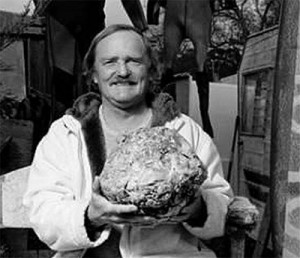
Building up to what it all comes down to

What he's holding represents what's at stake. Think about it.
What he’s holding represents what’s at stake. Hint: It’s not a rock

Time now for a very, very important question every writer needs to face:

Do you know how your story ends?

You come up with an idea, then proceeded to develop, shape, and organize all the stuff that happens in the middle, which eventually has led us to the where we find ourselves now: the big payoff. What the whole thing’s been about.

Everything your characters have been doing have been leading up to this. In theory, your first two acts have been about the protagonist’s world undergoing some drastic changes, how they dealt with it and now it looks like the bad guy’s going to win.

Which brings us to the grand finale that is Act Three, where our hero must somehow find a way to overcome these seemingly insurmountable odds, defeat the antagonist and hopefully come out of the experience a different person than the one they were way back when we first met them.

That being said, there’s still more to it.

-Your protagonist has a physical goal (what they want) and an emotional one (what they need). They can achieve both, just one or neither. Which applies to yours, and have you effectively steered the action to ensure that result? Can we see the changes they’ve undergone?

-Working with a subplot or three? If they haven’t wrapped up by now, better make sure to do it soon. Do you really want the reader to wonder “Hey! What happened to the part about ____?”

-Even a supporting character needs an arc to complete. Have you given each of them enough attention throughout the story to make this happen, and does their story wrap up in a convincingly believable way?

One of the most valuable lessons I’ve learned about putting a story together is that the central question (“Will the hero achieve their goal?”) is raised with the inciting incident around page 10, and each subsequent plot point raises it again, albeit with the stakes a little higher each time.

What happens in Act Three is where you show us how the central question is answered.

-And now, the much-heralded return of Movie of the Moment! This time, a way overdue look at GODZILLA (2014).

Wow. Everything PACIFIC RIM should have been. Instead of non-stop giant monster action, we get only glimpses as the focus is directed at the human aspect of the story. A much more effective approach.

While it’s not hard to suspend disbelief when it comes to a movie about giant monsters rampaging/duking it out in the downtown area of the city where I live, perhaps the most amazing piece of cinematic fiction (as observed by both K and myself) was in the background of one scene where a garage sign read “All-day parking $15”.

Now that’s make-believe.

Know the route you need to take

There's something to be said for taking the scenic route
Which way now?

After having reached the midpoint of the pulpy adventure spec outline, I’d been struggling with getting to the next plot point.

Not helping was the almost total jettisoning of material from the previous draft. The story had since changed in a drastic way, so there was nothing to salvage.

While I knew where the story had to go, I couldn’t figure out how to get there.

The midpoint sequence ended the way it had to – hero fully committed to achieving his goal, but now on several levels, and the antagonist getting closer to achieving his.

But what happens next?

Exploring several options, something finally clicked and I remembered a very simple rule we all tend to sometimes forget:

It’s not what could happen, it’s what has to happen.

THIS is what the characters need to do to move things forward (with your protagonist being the primary mover), and the more challenging we can make their journey, the better.

There are plenty of options of how things can play out in your story, but it will take some effort (and a lot of rewriting) to find the one that it needs.

A one-man demolition & construction crew

Tear it down, then rebuild
Stuck in a vicious cycle of build, knock down, rebuild (repeat as necessary)

Due to circumstances beyond my control, actual work on revamping of the monster spec outline was practically nonexistent this week, but I’m hoping to get back into the swing of things soon.

In the meantime, there’s been a lot of thought about the next steps in terms of developing the story.

Since so many of the details have changed since the previous version, a lot of material was cut. I really hated to see it go, but it had to be done. As always, some of it may return in a modified form.

This, of course, left significant gaps in the story to be filled. Challenging, thrilling and maybe a little intimidating, all at once.

Working in my favor is knowing what the major plot points are. They’re in place, so the focus now is how to connect them in the most effective ways I can come up with.

Just putting a few empty lines between the plot points (each one represented by a dash) actually helps with getting from one to the next. Here’s Point A, so what needs to happen to get to Point B?

Simple, yet productive. Sometimes.

This also enables me to see how the various plotlines play out (protagonist, antagonist, various subplots), how they all connect and when would be the best time to show the latest developments, all while constantly striving to keep it all fun, interesting and exciting.

As always, fingers firmly crossed for progress in the coming days.

This, rather than that


It's going to take a while to find the right path
It’s going to take a while to find the right path

The past several days have been all about revamping the story/outline of the monster spec. The percentage of what’s being eliminated from previous versions continues to grow on a daily basis.

A lot of what’s left still needs to be fixed, or at least changed. As much as I love the original ideas, they just weren’t working.

Part of the problem was my stubbornness to consider alternatives, and the frustration over trying to force the creativeness wasn’t helping either.

As has happened before, I had to ignore what I wanted, and concentrate on what worked for the story.  This had to be slow, calculated and meticulous, but I had one slight advantage this time around.

Remember that whole ‘previous draft’ thing? Turns out a lot of the contents are becoming just what I need by applying “What if…?” or “How about…?”

(Yet another example of why you should hold onto your previous drafts – they’re a treasure trove of of potential material)

These questions are proving to be more than adequate in creating foundations for developing new material. By taking a slightly different approach, new and previously unconsidered alternatives are making themselves known.

It has definitely yielded some positive results, including a drastic reconfiguring of the antagonist – originally conceived one way, but after finally accepting that changes were necessary and much tinkering, now fits into the story a lot better, and also provides for stronger conflict with the protagonist.

Don’t be afraid to consider new ways or different approaches to what you already have. While you may think it’s perfect the way it is, chances are it could probably use some reworking.