Not just the villain, but a key part of the whole story
So you’ve got your protagonist’s story planned all the way through. Beginning to end. You know what they want and what they need. That character arc is firmly in place.
What about your antagonist?
Have you put as much effort into developing their story? Do you explain why they’re doing this? What do they seek to gain from their actions?
A lot of the time, the bad guy is the more interesting character, so why wouldn’t you make just as much of an effort on fleshing them out?
The character we identify as the villain should see themselves as the hero of their story, with your protagonist the one standing in their way of achieving their goal.
Maybe there’s a previously-existing connection between the two, which can be gradually revealed as the story progresses.
How often has a writer explained the “why” behind the antagonist with a casual “Because they’re bad”? Readers and audiences want a little more depth than that.
This isn’t saying you need to come up with an extensive backstory about their past and what led them down this path. A few lines of dialogue can be just the thing to provide the reason why they’re doing this.
You’ve already spent a lot of time developing your hero’s journey. It only makes sense to do the same for the villain.
A slightly altered holiday work schedule has resulted in more hours on the air, which is always nice, but less time cranking out pages, which isn’t.
So I make the most of the handful of minutes between reports with the always-reliable working on an outline. This time – the monster script.
Despite knowing the general playing-out of the story, there was something that wasn’t clicking. Most of the items on my mental checklist had been checked off.
Most. Not all. What was missing?
It took the constant back-and-forth between the opening sequences of the two previous outlines to make me realize what it was: I’d never fully established what happened before the story started.
Not knowing how everything came about was preventing me from moving forward. I had to create this world before I could write about it.
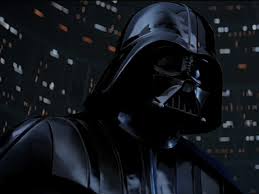
Think of the opening crawl in STAR WARS (“It is a period of civil war. Rebel spaceships, etc. etc…”). It establishes what we need to know. Without it, we’d be too busy trying to figure things out.
Using that as an example, I worked out my own version of the opening crawl. It won’t be in the actual script, but it’s a pretty solid foundation for setting things up – a better realization of how this world works, what the antagonist wants and how that can be accomplished, the challenges the protagonist faces, just to name a few.
The work on this is far from being over, but developing this really helped. Some important blanks have been filled in and I’ve got a firmer grasp of how the story works.
Time now to start the latest version of the outline and see how it goes.
-Regarding the recent release of this year’s Black List. There appear to be a handful that sound pretty good, but the rest don’t really do much for me.
No doubt they’re all extremely well-written (why else would they be on the list?), but a majority don’t have that “Read me!” vibe. It probably doesn’t help that the writers are not the ones providing the loglines. I suspect that would make quite a difference.
Hard choices. That’s what it comes down to for your protagonist.
Someone in my old writing group put it very succinctly: each scene should force the protagonist so they have no choice but to go with the option that makes things harder for them.
If things were easy for your protagonist and everything went right for them, it wouldn’t be much of a story, would it? We’d be bored silly.
It all stems from the necessary key word: conflict. Something must be opposing them reaching their goal.
This doesn’t mean it’s someone or something physically blocking them, although that is one option. It could be something out of nature, like a great white shark, a hurricane or a killer virus, or something from the grand scheme of the universe, like time, fear or silence.
One of the great things about conflict is there are countless ways to present it. It comes in all forms, but it really boils down to something in the scene (as well as the overall story) preventing your protagonist from moving things forward.
Taking it one step further, not only do you have to make sure they do, but they have to be the one doing it. Anything else is a cheat, and totally negates their development as a character. Imagine if Dumbledore said, “Here’s a step-by-step list of what you have to do, Harry.” The mentor figure is there to guide the protagonist down the right path, not take the path for them.
The protagonist has to endure all of these conflicts in order to not only accomplish their goal, but grow or change from what they were when we first met them.
So go ahead and put ’em through the ringer. It’s the way it must be.
-I had the pleasure of doing an interview with Henry Sheppard, aka Adelaide Screenwriter. Check it out here.
Safety goggles are optional, but typing in work gloves is darned near impossible
This is a time of overlap, chums.
The final wrap-up of the western spec draws closer, despite realizing a new wrinkle – I need to show what happens to one of my supporting characters, rather than tossing that info out via a line of dialogue. This will also require a little set-up somewhere in the latter half of Act Two, but I think I’ve found a good spot for it. Then off it goes into the digital waiting room that is my hard drive.
As that door closes, the one into the rewrite of the mystery-comedy spec reopens. As much as I’d like to really jump into it, this is definitely going to require baby steps and lots and lots of planning. Since it’s been a very long time since I read it, I opted to start completely fresh, which meant figuring out my plot points.
I can’t recommend this enough. It doesn’t matter if you’re starting a new story or rewriting an old one: KNOW YOUR PLOT POINTS!
You know that expression about how a screenplay is like a blueprint for a building? Think of the plot points as the load-bearing support beams that hold everything up. Without them, everything will come crashing down.
So get yourself a blank page and, based on how well you know your story, jot down the following:
page 3 – statement of theme. You may not know it when you start, but having a general idea about it can help shape the story AND influence each scene
page 10 – inciting incident. Serves multiple purposes – gets your main story started, shakes up your protagonist’s world, raises the main question of the story
page 17 – a little twist in the action that continues to push your protagonist out of their comfort zone
Act 1 turning point – your protagonist enters a totally new environment; the main story question is once again raised
page 45 – another twist for your protagonist
Midpoint/Point of No Return – your protagonist becomes fully committed to achieving their goal
page 75 – another twist (yes, seems redundant, but each one of these has to make things harder for your protagonist)
Act 2 turning point – ALL IS LOST. Looks like your protagonist has no chance whatsoever of reaching their goal
Climax – your protagonist starts to turn things around, leading to a final showdown with the antagonist
Resolution – main story and assorted subplots are tied up
Denouement – how the protagonist’s life is different now
Something else to keep in mind – MAKE SURE YOUR PROTAGONIST IS THE ONE DRIVING THE ACTION! Why would we be interested in a passive main character who just reacts to things, or even worse, does nothing at all? Your protagonist should always have to go with the harder of two choices – don’t look for the easy way out.
Don’t get frustrated if you can’t figure it all out right away. You’re creating an original story, which isn’t easy to begin with. Take your time and think your way through it at your own pace. Ask yourself “What’s the best way to get from HERE to HERE?”
Once you know your plot points, then it’s on to the fun stuff: filling in the spaces between them.
It’s spring break this week, so script progress has been somewhat limited, but at least it’s still happening. In the meantime…
-Had an unusual case of writer’s block yesterday. Scene notes in the outline had the main character asking something completely out of the blue, and I didn’t want that. Just couldn’t fix it, so rather than sit and stew in frustration, I stepped away. Potential solutions have been brewing ever since.
-Been reading some great material from assorted gurus – check out recent scribblings from Lee Jessup, Erik Bork and Michele Wallerstein. Each has some info and comments worth hearing.
-For all my fellow Passover celebrants, do NOT be misled by the way Manischewitz portrays its products on the packaging. Just about every one of their items tastes the same, no matter what it looks like. Trust me on this one.
-Seriously considering entering DREAMSHIP in the Tracking Board’s Launchpad contest. deadline is Sunday night. Details here.
-2nd year in a row of not being able to attend Wondercon this weekend in Anaheim. It’s usually here, but the idiots who run the venue can’t get their act together so it’s down in SoCal again. Hope fading it’ll return for 2014.
-Movie of the Moment: Since it’s spring break, V and I had a double feature yesterday. First up was OZ THE GREAT & POWERFUL (2013). Liked it, but didn’t love it. Thought it felt kind of sluggish in parts.
And you know how an antagonist’s goal is supposed to be contrary to that of the protagonist? Didn’t really get that here. If they really wanted to stop Oz, wouldn’t they have been more active, rather than just sitting around?
Still, nice to see Sam Raimi include Bruce Campbell’s obligatory cameo, and I think I figured out where the 1973 Oldsmobile Delta 88 made its appearance (courtesy of a teaser from Campbell himself at a personal appearance a few weeks ago).
-Second movie was JOURNEY 2: THE MYSTERIOUS ISLAND (2012) Never saw the first film – JOURNEY TO THE CENTER OF THE EARTH, but this looked like something V would like, and she did. Family-friendly Disney-esque adventure with some honest laughs (courtesy of Dwayne Johnson and Luis Guzman). Not a bad choice for family movie night.


 Maximum Z