Finding my forte. Mining my milieu. Spelunking my specialty.

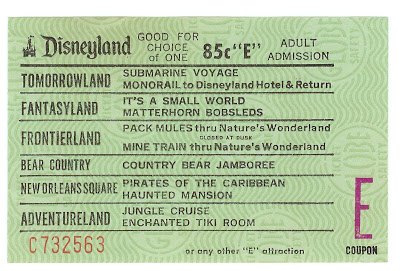
e-ticket
A reference only a select few will get. (85 cents?? Truly a bygone age)

While engaged in a very engaging conversation about screenwriting earlier this week, the person with whom I was conversing with asked the simplest and most straight-forward of questions:

“What do you like to write?”

Without a moment’s hesitation, I proudly stated, “Adventures.”

You can’t even say the word without implying the thrills and excitement it entails. Hands on hips, chest out, shoulders back, and a firmly-set jaw are automatically included.

I’ve enjoyed dabbling in other genres (such as drama and comedy), but nothing really grabs me like thinking up and writing out some sort of heart-pounding, edge-of-your-seat rollercoaster ride of a scene or sequence.

Those really never get old.

They say “Write what you know,” and although I’ve never actually fought monsters, manned a runaway train, or flown a space-faring vessel, years of reading and watching material of that type and nature has taught me an effective way of how to effectively inject adrenaline into what I’m writing.

More than a few readers have commented that my love and appreciation of the material and genre are boldly evident on the page, which is what I’m hoping  to accomplish every time.

My mantra has always been “Write something I would want to see”, and my list of future projects is jam-packed with numerous ideas and concepts that neatly fall into that category; each one a variation on the topic of discussion.

If these are the kinds of stories I was meant to write, you’ll get no complaints from me. I get a real kick out of cranking this stuff out. There’s no reason to think this can’t develop into what I build a career on and eventually become known for (he said, his fingers firmly crossed). My scripts. Rewriting someone else’s. Contributing to another. It’s all cool as far as I’m concerned.

Until then, all I can do is keep writing and making my readers feel their pulses quicken as they eagerly turn the page, absolutely spellbound to find out how the hero gets themselves out of this particular pickle, and, more importantly, what happens next.

Strap yourselves in, chums. This is going to be one helluva ride.

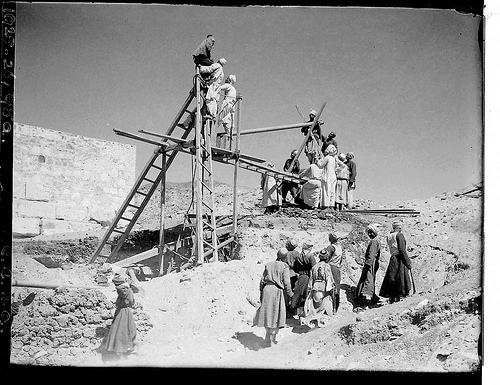
Digging towards the emotional core

big-dig
I don’t think you’ll need that much gear

Due to both of our busy schedules, my daughter and I go for some quality father-daughter time when we can. Sometimes that means we’ll watch something together.

It might be a movie or a TV show. We’re not picky. No shame in admitting she’s picked up my enjoyment of superhero- and fantasy-based (LOTR, Hobbit, etc) material.

Despite her occasionally sullen and blase teen exterior, V is, at heart, an empathetic and sensitive soul, so no matter what we’re watching, if there’s any kind of hint of emotional resonance in a particular scene, she will feel the full brunt of whatever emotion the film/program is conveying.

Almost any kind of a joke (the sillier the better), and she laughs her head off. Something scary and she hides under the blanket. Something sad and she immediately tears up. Even after years of me saying, “You do know this is just a movie/TV show, right?”, her emotional receptors remain cranked up to 11 (and the teenager reappears with the immediate response, “Will you stop saying that?”)

Looking at these from the writer’s perspective, I can’t help but examine how the writers were able to do that. How did they get to the emotional core of the scene? Jokes and scares aren’t hard to figure out, even though each is pretty subjective, but a good, solid tug at the heartstrings, when done effectively, can be some pretty intense stuff.

A key part is making it relatable. Love. Joy. Heartbreak. Loss. All are universal. Everyone’s experienced them in some form or another. As the writer, you want to convey that emotion so anybody reading or watching your story will not only immediately identify it, but also connect with it on a personal level.

Like this. One of the most effective emotional sequences ever. And not a single word spoken. If you don’t feel anything as a result of watching it, you have no soul.

Even though we may not have gone through the same things as Carl and Ellie, we can relate to a lot, if not all of it.

This isn’t saying that every scene has to be a major tearjerker, but you want to really let us know how the characters are feeling in that particular moment. They’re human, so they feel the exact same things we do. Make us feel how they’re feeling.

Each scene serves three purposes: to advance the story, the characters, and the theme. Let the emotions come through via the best way you envision them enhancing the scene (making sure not to overdo it). It might take a few tries, but the deeper you venture into the emotional level, the easier it’ll get for you to show it, and it’ll also be easier for us to identify it and relate to it.

Take us along for the ride

roller coaster.jpg
Hang on tight.

Here’s a two-part question for you. Pencils at the ready, please.

Up first – Are you enjoying the actual process of writing your script?

Sure, we all like “having written”, but what about getting there?

Do you get a thrill from figuring out your story? Mapping out the plot? Developing characters and crafting dialogue?

Do you get so engrossed and involved in your writing that when you check the time, you discover a lot more time has passed than you thought?

If you’re really excited and enthusiastic about your script, you’re going to feel that way even before you start writing it.

Now for the second part of the question:

Is all the aforementioned excitement and enthusiasm evident on the pages of your script? Could someone read it and think “Wow, they really like this stuff.”?

While it’s often said that you can gauge a writer’s grasp of the craft just by looking at the first page, you can also tell if they’re really into their story by how it reads.

Does it grab you from the get-go? Is the tone of the writing a solid match for the tone of the genre? This is not a case when “good enough” will cut it. What would you think if you read a horror that was “sort of” scary, or a comedy where all the jokes fall flat?

Exactly.

You want the reader to be as thoroughly entertained as you were in putting it together. You want them to be as compelled to keep turning the page as you’d be if you were reading it yourself.

A lot of the time you’ll hear a writer wrote something because “they had a story they had to tell”. That story was so strong and powerful inside them, they had no alternative but to write it out.

As creative types, that level of excitement and enthusiasm exists in all of us. We’re all eager to tap into it, but need to take the time to learn how to do it properly so it can be done in the most effective way possible.

Pencils down.

Ask a Penchant-for-Verbs* Script Consultant!

*Actually, he's skilled in all aspects of grammar, but his company is named for three very important verbs
*While Brad is skilled in all aspects of grammar, his company is named for three vital screenwriting-oriented verbs

The latest in a series of interviews with script readers and consultants who would be worth your while to work with if you want to get your script in shape. Today’s spotlight is on writer-reader-consultant Brad Johnson of ReadWriteWatch.com.

Brad is an experienced screenwriter, producer and script consultant who, in addition to operating his own script consultancy, has also read for the Nashville Film Festival and been a judge for the NYC Midnight Screenwriting Challenge. His scripts have reached the semi-finals in Final Draft’s Big Break Screenwriting Contest, and a second place finish for the Walt Disney Screenwriting Fellowship. Additionally, Brad has worked as a producer on the short film Tesla versus Cthulhu, and a production assistant on My Boring Zombie Apocalypse. Brad is also a regular contributor to Script Magazine where his Specs and the City column discusses methods for beginners and pros alike to improve their writing. You can learn more about Brad, his script services, and the 52 Script Challenge on his website, ReadWatchWrite.com. He can also be found on Facebook and on Twitter @RWWFilm.

1. What’s the last thing you read/watched that you thought was incredibly well-written?

Nightcrawler was a fantastic character study, and I recently rewatched the FX mini-series Fargo. That writing room did such an amazing job of telling a compelling story with interesting characters, and capturing a specific tone and voice while doing so; perfectly capturing the feel of the Coen Brothers movie. As for reading, I just finished Body Heat (again) and continue to be blown away by it. Lawrence Kasdan makes you feel the humidity in his words in that script. The heat becomes its own character. It’s palpable. Go read it right now if you haven’t had the chance yet.

2. How’d you get your start reading scripts?

On a personal level, I started reading scripts as part of a challenge I set for myself – to read one produced script a week for an entire year. It worked so well that I’ve continued the tradition (you can find the 2015 list of scripts I’ll be reading, along with downloadable PDFs for each screenplay on my website).

For my clients, I decided to start consulting after several people read the column I write for Script Magazine and contacted me, asking if I’d be willing to look over their screenplays. As I started doing more of that, I discovered I have a genuine love for helping other writers learn to tell their stories in the best way possible. There’s nothing more satisfying than helping a writer break their story, or realize how they can tell it more effectively. At its best, consulting is a truly rewarding experience for both sides.

3. Is recognizing good writing something you think can be taught or learned?

It’s definitely a learned skill. Sure, you can be taught the basic structure and formatting of screenwriting, but what makes a good script is something you learn by reading lots and lots of screenplays. The more you read, the better you’ll get at realizing what works – and what doesn’t.

4. What are the components of a good script?

Showing rather than telling – it’s a cliché for a reason. Remember that you aren’t writing a story, you’re writing a story that is going to be watched on a screen, so be visual. Don’t tell us that someone is disappointed by a piece of news – tell us their shoulders slump and the smile fades from the lips; paint the picture of what we will be seeing should your script be made into a film.

5. What are some of the most common mistakes you see?

Not knowing the story you want to tell – or a lack of narrative focus. I see scripts all the time where so much time is spent jumping back and forth between two different stories (which, to be fair, could each be worthy of their own film), that neither is ever developed enough to be truly compelling. Whose story you’re telling, and why it needs to be told, are the two things you should never start writing without knowing. If you keep that firmly in mind, it becomes easier during rewriting to identify and cut the things that aren’t serving that story.

6. What story tropes are you just tired of seeing?

Pretty much anything from the last 15 years worth of romantic comedies. There are outliers (Love, Actually, Crazy, Stupid, Love, and Bridget Jones’s Diary leap to mind), but the Hollywood romcom formula has gotten to point of being so generic and overused that it’s actually insulting to audiences.

7. What are the 3 most important rules every writer should know?

-Read, Watch, and Write. It’s my mantra and it’s invaluable advice. If you want to be a professional screenwriter you have to get better than good – you have to get great – and the way you’re going to do that is by Reading scripts, Watching movies, and Writing pages.

-Live your life. You need to be out in the world doing things, meeting people, taking in experiences to fuel your next story.

-Less is more. Your goal with your script should be to tell as little of your story as possible, while still keeping it engaging and narratively cohesive. After you write your first draft, go back and start cutting the fat away until what’s left is the leanest most effective and impactful version of your story.

8. Have you ever read a script that was an absolute, without-a-doubt “recommend”? If so, could you give the logline?

I haven’t, but to be fair, that’s like asking if I’ve ever found a four leaf clover. They’re real and they’re out there, I just haven’t seen one in person yet.

9. How do you feel about screenwriting contests? Worth it or not?

Like anything else related to screenwriting, it’s not exactly a question that has a black and white answer. A lot of it depends on what makes it worthwhile for you. If you’re looking to feel better about your writing and have bragging rights, you can submit to basically any contest out there. But if you’re looking for contests that can actually impact your life and help your career, it’s few and far between. The Nicholl, Austin Film Festival, the Sundance Screenwriting Lab (though technically not a contest per se), Big Break, and Scriptapalooza are all solid contests. Recently, the Tracking Board has also launched contests for both feature scripts and televisions scripts, and the word on that contest is great as well.

10. How can people get in touch with you to find out more about the services you provide?

I don’t do consulting anymore, but am happy to talk about screenwriting on Twitter – @RWWFilm.

11. Readers of this blog are more than familiar with my love/appreciation of pie. What’s your favorite kind?

That’s a surprisingly difficult question to answer. To eat, I don’t think it gets better than a slide of hot homemade apple pie. But I enjoy baking and, not to brag, but make a mean key lime pie. Everything from scratch. Hand squeezed lime juice, graham cracker crust, fresh-made whipped cream. The works.

Ask a Helping-You-Help-Yourself Script Consultant!

Greg Rodgers

The latest in a series of interviews with script readers and consultants who would be worth your while to work with if you want to get your script in shape. Today’s spotlight is on creative exec-turned-consultant Greg Rodgers of The Script Therapist.

A Southern California native, Greg Rodgers knew at an early age he wanted to work in the film industry, and he knew the best way to get there was through UCLA’s School of Theater, Film and Television. While completing his senior year at TFT, Rodgers was hired by award-winning director F. Gary Gray to assist him on the Paramount feature The Italian Job. Rodgers transitioned to the world of independent film, taking a job at Alcon Entertainment, working directly for co-presidents Andrew Kosove and Broderick Johnson. It was at Alcon that Rodgers discovered his passion for the development process. From there he became a Creative Executive at Mutual Film Company, where he was the Director of Development.

While at Mutual, Rodgers worked on such films as Snakes on a Plane, Jack Reacher, and the independently financed Deadfall. With the help of Rodgers, the company moved into the world of television, selling a pilot to Sony TV, and setting up miniseries at Entertainment One and HBO Asia. On the feature side, Rodgers played a major role in shaping the 2014 slate, including a contained action-thriller titled Dead Loss, an epic four-quadrant family film based on the Newberry Prize-winning novel King of the Wind, and the next entry in Paramount’s Jack Reacher series. He is the former operator of the now-defunct Script Therapist script consultancy.

1. What’s the last thing you read/watched that you thought was incredibly well-written?

WHIPLASH. I just can’t shake it from my head. There were a lot of things that came together to make it work so well – Chazelle’s direction, the tone, the performances, etc – but none of that would have made nearly as much impact without such a great script. The writing is just so tightly focused and a testament to how important character is in a screenplay. We care deeply about Andrew and what becomes of him, not because he’s a nice guy – he’s actually quite selfish and anti-social – but because the script gives us reasons to become invested in him. Right off the bat we learn what he wants, how badly he wants it, we see his relationship with his father, we meet a girl he likes – all these things that make him feel like a real person. There’s a lot going on in that script, but when you strip it down, it’s a really simple story about this kid and his relationship with a teacher who changes his life – it’s all character, not plot, and that’s refreshing.

2. How’d you get your start reading scripts?

My first job was working as an assistant for a director on a big studio movie. Right off the bat I could tell that production wasn’t for me, but after the movie wrapped and we started looking for the next project, I started reading more and more and being exposed to what was out there. My next job was at a production company, where I really learned the nuts and bolts of development: what to look for, how to work with writers, etc. From there I was hooked and I knew it was not only something I wanted to keep doing, but something I had a real knack for as well.

3. Is recognizing good writing something you think can be taught or learned?

Though there are things you can learn about screenwriting and what makes a good script – because it is such a specific medium – being able to evaluate the quality of creative writing is largely innate. When you come across good writing, sure, you could stop and dissect the technical reasons why it’s good and why it works. But if you have to stop and think about that kind of stuff when you’re reading, or if you find that you’re asking yourself those kinds of questions (is the character and his/her goal established clearly? is there an inciting incident? etc), then you’re not really “getting it.” Good writing is just good writing, and someone who can recognize it will do so right away without even thinking about it.

4. What are the components of a good script?

The #1 thing is character. You can have the most intricate, well-thought-out plot in the world, but if it doesn’t involve characters that people are going to care about, then it’s all for naught. And then does that character have an arc or clearly defined emotional journey – i.e. has the character we’re left with at the end of the script changed from the character we met in the beginning? Also, is there conflict? There needs to be some sort of clearly defined antagonistic force in the script that creates conflict.

5. What are some of the most common mistakes you see?

I feel like too many writers just starting out try and write a scrawling epic that spans decades and has three dozen speaking parts. I just can’t stress enough how much I advise writers to keep it simple. Better to tell a small story really well than to tell a big story poorly. It also seems like a lot of young writers try and write scripts in certain genres based on trends in the industry. You can tell when you read a script if it was written from a cynical place rather than being genuine, no matter how talented the writer is.

6. What story tropes are you just tired of seeing?

It feels like the world-weary detective/cop with the haunted past has been popping up more than ever. I’m also pretty tired of the entire modern rom-com formula – that’s a genre that’s just exhausted and needs to be reinvented.

7. What are the 3 most important rules every writer should know?

-“write what you know” doesn’t mean you should create a main character who is an aspiring writer and terribly misunderstood

-in every scene you should be thinking about how that scene is moving the story forward, not just in terms of plot, but the main character and his/her arc

-make sure that whatever you write is something that you yourself would want to see. i.e. don’t write what you think other people want to see.

8. Have you ever read a script that was an absolute, without-a-doubt “recommend”? If so, could you give the logline?

I’ve read quite a few over the years, some of which went on to become movies, others which didn’t for any number of reasons. If there’s one thing those loglines have in common, it’s that they describe a movie about a character(s) and not plot points. I always encourage writers to strip their logline down to what the script is really about – is it about a boy losing his innocence, a man overcoming his grief, a woman starting over? . . not just what happens in the plot.

9. How do you feel about screenwriting contests? Worth it or not?

They can absolutely be worth it, in that it’s always a good thing to get as many eyeballs on your script as possible. I encourage writers to not just blindly submit their script to every contest under the sun, but to do a little research and determine what one or two contests might be the best fit for their script and experience level. For instance, the Nicholl is known for being friendly to historical dramas and the like, so your horror script might not be terribly well-received there.

10. How can people get in touch with you to find out more about the services you provide?

Greg no longer does script consulting.

11. Readers of this blog are more than familiar with my love/appreciation of pie. What’s your favorite kind?

Oh man, do I have to pick just one? I’m gonna go seasonal on you: in the fall/winter, I’ll take pecan pie. In the spring, strawberry pie, and in the summer (or anytime, really), key lime. Mmmm, pie.