Q & A with Rick Ramage of The Screenplay Show

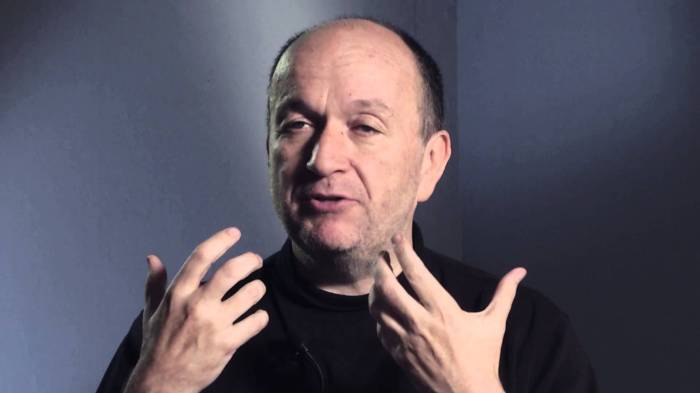
Rick Ramage

Rick Ramage is a writer, director and producer with numerous credits on major motion pictures and television shows. During his 25-year career as a screenwriter, he has set up or sold over 40 scripts in Hollywood.

Rick’s latest project is The Screenplay Show, a new 10-part online series to educate about the art, craft and business of screenwriting and storytelling.

What is The Screenplay Show, and what inspired you to do it?

The Screenplay Show is an actual show about writing, presented in a fun, narrative style. It’s a ten-part webseries that will focus on the trade secrets I’ve developed (and learned) from Hollywood’s most talented writers, directors and producers during my 25-year career.

As to what inspired it, a few years ago, a buddy of mine started a writer/actor group called, “Write to Act” and he asked me to put on a seminar for his people in Denver. I was reluctant to say the least. For the last 25 years, my only job has been writing and producing film and television. Speaking in public? Not so much. He kept twisting my arm and after about a year of hounding me, I finally gave in and promised him I would do a one-day seminar. Then reality hit me: What could I possibly say for six hours that would interest other writers and actors? In an effort to alleviate the poor souls who would be stuck looking at my ugly mug all day, I pulled in my editor and we put together a long list of writing samples and clips covering every element of screenwriting so they could actually SEE what I was talking about – instead of listening to me pontificate as I clumsily tried to explain it.

For instance, using stills from The Shining, I put every moment of Jack’s character arc into a still photo sequence. You can actually visually track his descent into madness. I then put the page number from the script beside each expression. The audience literally gasped, because it was the first time they had actually seen a character arc moment by moment. I did the same thing for all the other elements of storytelling. As screenwriters, we have to write visually – so I figured it would work for seminars, too. But one thing really surprised me: the audience had as many questions about the writing experience as they did about the nuts and bolts. Personally, I’ve always been fascinated by the methods of actors, athletes, and other writers, so I guess it’s fair that they wanted to know about my method – and how a life and career in the film business actually works.

What sets The Screenplay Show apart from other online seminars?

One look at the teasers we’re putting out there will let people know this isn’t your father’s seminar. I can’t honestly say I had an epiphany and The Screenplay Show was suddenly born. But doing the seminars over the next year or two, it definitely evolved into a rolling narrative; my personal Hollywood experience merged into describing actual methods that have worked for me and many of my colleagues. So far, I’ve set up or sold over 40 scripts. But I have to give credit where credit is due: I didn’t learn how to survive the biz, or sell scripts from books. I learned from working closely with tremendously gracious agents, managers, producers, directors, executives and actors who were generous enough to share their knowledge with me for one purpose – to get the story right.

My goal with The Screenplay Show is to share what they’ve taught me with other writers and storytellers. And when I say storytellers, I mean anybody involved in the film and television business. Directors, actors, producers, cinematographers, and even executives. They are storytellers because they impact the script and help bring it to life.

Tell us a little about your writing background. How did you get started?

I didn’t finish my degree. Instead I went into business with my dad, selling tractors. But I wanted to be well-read and well-spoken, so I sat down with 100 of the great novels and voraciously read them back-to-back. In the process, I began to see how the authors worked the elements. The storytelling process fascinated me. So when I was out covering my sales territory, I began to daydream about becoming a writer. Eventually, I tried to write a novel. Long story short – it sucked. But the person who told me it wasn’t very good also told me I was a good writer. That seemed like a contradiction, but it wasn’t. He told me I had a very visual style, and suggested I write a screenplay. So I turned my bad novel into a bad screenplay! (But that process lit a fuse in me, and I’ve never looked back.)

What have you recently read or watched that you thought was incredibly well-written?

When I’m deep into writing one of my own scripts, I don’t usually watch or read much. By the end of the day, more words and plot lines are the last thing I need to relax. But two shows I try not to miss are Game of Thrones and House of Cards. From their production values, to the great characters, to the tight, well structured scripts, I admire them both a great deal. In fact that’s how I can tell when I’m in the hands of great storytellers – they make me forget I’m a writer. I become a fan.

Is recognizing good writing something you think can be taught or learned?

Definitely. Recognizing good writing can and certainly should be taught and learned. I’ve known some executives who were by no means writers, yet they learned to identify good writing and write smart notes. Their jobs depend on it. I’ve learned to recognize good writing by the way it makes me disappear into it.

What do you consider the components of a good script?

For me, the single most important component of a good script is simply this: It must have soul. I need to feel what the writer is trying to say through his or her characters. If that happens, I know the other elements are working.

What are the three most important rules a writer should know?

-Dialogue:  When to shut up and let the subtext play.

-Action:  When not to overwrite. (more often than not, you’ll lose your reader.)

-Characters:  We write in search of ourselves. (makes them real.)

How can people find out more about The Screenplay Show?

We’re really encouraging people to go to their most comfortable social media site and follow us. Also, we’re really hoping they go to www.thescreenplayshow.com and sign our landing page. We won’t bombard you with trivial junk, but we do want to build a steady audience so we can let people know about events and new material.

Readers of this blog are more than familiar with my love/appreciation of pie. What’s your favorite kind?

My grandmother made the best pie I’ve ever had. Golden, flaky crust made from scratch, crisp green apples sliced thin, and lots of cinnamon! I do miss that woman.

Hey! Long time no (preferred form of communication)

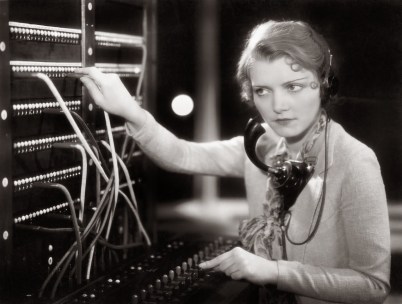
operator
A hard-at-work pre-Internet server keeping things up and running

There’ve been several previous posts here regarding the benefits and necessity of networking. It can’t be stressed enough how incredibly helpful and effective it can be, especially if you’re not in Los Angeles or somewhere you don’t have a lot of in-person access to other writers.

But it’s not enough to just make a connection. An effort needs to be made by at least one of you (most likely you) to maintain that connection and keep it healthy. And it’s not as hard as you might think.

While it can be extremely easy and tempting to get sucked into the never-ending rabbit hole of the internet, designate a portion of your non-writing time to be just as productive and try to get some networking stuff done.

Are you connected to another writer in your area, but you’ve never actually met in person? Ask them if they’re up for a get-to-know-you coffee or lunch chat.

If you’re limited to online communication, send them an email or tweet asking how they’re doing, and how their latest projects are coming along. Be helpful, or at least offer to help. They might just take you up on it.

*Important – if it’s been a while since you’ve been in touch, don’t start things off by straight-out asking for something. Would you want someone to do that to you? Didn’t think so.

If something good (career or otherwise) has happened for them, send a note of congratulations. Likewise, if something not-so-good has happened, express your sympathies accordingly.

Cliched as it may sound, keeping the lines of communication open really can help you out. I’ve been extremely fortunate to have established strong relationships with several local writers and filmmakers, and exchanged notes with writers scattered across the globe.

I reconnected with a consultant I hadn’t been in touch with for several months, and that conversation led to them offering up coverage (which I still paid for) that proved to be quite helpful.

A writer I know who works in TV and film emailed me, wanting to discuss her latest concept because she thought I was a good match for it.

None of these would have happened if I hadn’t taken the time to keep each relationship going. Rather than taking a “how can you help me?” approach, I go in with the mindset of “maybe I can help you?”

One of the things you hear so often when it comes to establishing a screenwriting career is “It’s not what you know, it’s who you know”. I’ve found both parts to be true. You definitely have to know what you’re doing in terms of craft and writing ability, but it’s equally important to establish and maintain solid, professional relationships with as many people as you can.

Because you never know who’s going to suddenly be a person of influence willing to help you out because you did the same for them.

So here’s your voluntary assignment:

1. Contact five of your connections.
2. Ask them how things are going.
3. Take it from there.

Good luck!

Ask a Million-Dollar* Script Consultant!

chris soth

*this number represents the estimated value of Mr. Soth’s advice, rather than the actual cost.

The latest in a series of interviews with script readers and consultants who would be worth your while to work with if you want to get your script in shape. Today’s spotlight is on writer-producer-script advisor Chris Soth of ScreenplayMentor.com.

Writer/Director-Producer Chris Soth has authored over 40 screenplays and is a frequent speaker on the topics of story structure and independent filmmaking, teaching screenwriters around the world how to write great screenplays AND pitch them for success. Chris is the writer of Firestorm, released by 20th Century Fox, and the independent hit Outrage: Born in Terror. He is currently developing a slate of independent films, the first of which, Don’t Fall Asleep, has just received distribution. His directorial debut SafeWord is presently in post-production. Chris has taught at USC and UCLA, and currently guides screenwriters from concept to FADE OUT using the “Mini-Movie Method” in his mentorship program at ScreenplayMentor.com. His ebook “Million-Dollar Screenwriting: The Mini-Movie Method” and DVD “SOLD! How I Set Up Three Pitches in Hollywood,” among other great screenwriting resources, are available at ScreenplayMentor.com.

1. What’s the last thing you read/watched that you thought was incredibly well-written?

Sustaining a story for an hour or more with brilliant writing at every turn is so difficult I find myself attracted to the short form, even w/my own writing these days. That, said, we ARE in a Golden Age of Television now, with some creators getting to not only decide a story that will take five or more years to tell and lay it out beforehand — occasionally with guarantees that all the episodes will air — and not only control a very complex and novelistic story, BUT also control the rate at which it’s consumed. No artist has ever had that before, even novelists…Tolstoy could be sure reading War and Peace would take you while, but not throttle your reading speed to piecemeal over 5-8 years, the way Weiner or Gilligan have. I really appreciated how all the Mad Men were…going mad. How all of them were continually pitching a product, themselves, and none more than Dick Whitman, whose greatest pitch was Don Draper…and living in that gap between the presentation of your self and the reality, or worse, what you FEAR you are…is the madness. I think if you’re in show business, you get that. So, as I said above, hard to sustain for an hour, let alone all those years, but some amazing brilliance every single episode.

Here’s one favorite in the episode from the penultimate (full) season, where all of Sterling Cooper’s taken acid and a Hippie Flower Child puts a stethoscope to Don’s chest to listen to his heart.

HIPPIE FLOWER CHILD
Let me listen to your heart…(re: stethoscope)…it’s broken.

DON
(re: his heart) You can HEAR that…?

How long has that double entendre been staring us in the face, and how GOOD are these writers to keep giving us insight into their brilliant central character even that late in the game? He’s broken-hearted. He hides it. He always will be. A tiny thing, but the last time I remember really thinking “Wow, good writing!”.

2. How’d you get your start reading scripts?

My first idea was to teach a seminar in my own screenwriting structure technique, “The-Mini-Movie Method”. I did that, and also offer the resulting videos and audio course. I found a real thirst after that for hands-on expert consulting developing screenplays with expert advice on this method. I don’t really do a classic “reading”, or that’s rare anyway. I consult and help writers build scripts, usually from FADE IN. I will work with clients thru my website ScreenplayMentor.com with works-in-progress. My usual procedure, whether starting fresh, or jumping in partway, is to outline a vision for the next draft and mentor and guide it, page by page (Mini-Movie by Mini-Movie) until Fade Out…then I’ll read the resulting, and much stronger, screenplay thereafter. I started my side business after some success as a writer myself, because I really like to work everyday, but like different work and different stories and continually changing ideas. Also, the steady work and income that my consulting provides lets a guy with a daughter in college sleep at night even between studio writing assignments.

3. Is recognizing good writing something you think can be taught or learned?

I absolutely think so. There are certainly rules, best practices, etc. Some so oft-repeated they become cliches: “Show, don’t tell”, etc. But developing an aesthetic for what good writing and what good storytelling is, should be vital to each and every writer. We all want to make THE BEST MOVIE EVER, right? Well, if we have no yardstick for measuring quality, how will we do that?

4. What are the components of a good script?

The list goes on and on. Most important and first: TENSION. A hope and fear for a viewer/read to root for and root against. So I’ll use this as another opportunity to say it: TENSION, specifically TENSION REDUCTION is the source of ALL pleasure we take in drama and in story. A good story will continually build tension, every beat, every scene, every sequence and release that tension in an explosive and gratifying climax…make sure YOURS does. I’ll leave it there.

5. What are some of the most common mistakes you see?

The lack of tension, of course. Unnecessary scenes, which I define above as scenes that don’t build or add to tension. It seems common to the point of epidemic that first acts run 45 pages in early drafts, and writers are often still setting up dominos as they break into the third act…dominoes that should have been set up WELL before, often in act one and should be falling with dramatic cataclysm and knocking over BIGGER dominoes now… A lacking “narrative drive” that makes each story event seem, in retrospect, inevitable, not arbitrary. It seems like many early drafts are written just to fill pages, but there IS a perfect twist for the end, the midpoint, the first act, that is dictated by the concept or idea…

6. What story tropes are you just tired of seeing?

References to other movies or TV shows. You have to be very clever and original to do this well, and it fails most of the time, Quentin Tarantino aside, and even HE blows it a lot of the time.

7. What are the 3 most important rules every writer should know?

-TENSION = Hope versus Fear  (T = H v. F is the E = MC squared of story) After that, I’ve never thought what might come second, let alone third, but I’ll put a few down here.

-Don’t get it write, get it written. The worst thing you write is better than the best thing you didn’t.

-Craft character to story and story to character by asking, over and over: Who’s THE WORST person for these events to happen to, and What’s THE WORST thing that could happen to THIS person?

8. Have you ever read a script that was an absolute, without-a-doubt “recommend”? If so, could you give the logline?

I don’t do a classic read, nor grade on that studio scale, nor should I probably divulge the scripts of my clients here, but MANY come to mind. I read a screenplay every day my first year at USC and the ones that really stood out are THE PRINCESS BRIDE and FIELD OF DREAMS. Both made me cry more than the movies made from them had, the first because it does actually exceed the movie in the sheer beauty of the writing, I like the movie fine, tho’ I’m not in the cult, but the SCRIPT…oh, that script…the second perhaps more for memories of seeing the movie itself.

9. How do you feel about screenwriting contests? Worth it or not?

I never had any luck with them. But I think they’re a real tool for getting your work read and getting exposure these days.

10. How can people get in touch with you to find out more about the services you provide?

Everyone’s welcome to contact me at chrissoth@aol.com, chrissoth@gmail.com or look at ScreenplayMentor.com

11. Readers of this blog are more than familiar with my love/appreciation of pie. What’s your favorite kind?

Easiest question. My mom’s chocolate chess pie. I grew up eating this at Thanksgiving instead of pumpkin pie and had to learn to make it myself when I struck out on my own. I’ll have it all through the holidays and Mom still makes it for us when we come home. I’ve only found one restaurant that serves it, but just developed a lead on another in Los Angeles, so stay tuned…
Ask a Truly Superlative Script Consultant!

Terri Zinner

The latest in a series of interviews with script readers and consultants who would be worth your while to work with if you want to get your script in shape. Today’s spotlight is on writer-producer-consultant-instructor Terri Zinner of afilmwriter.com.

Terri Zinner has been in story development for over 15 years. She began as a reader for Blue Cat competition and then a reader for Gallagher Literary, who eventually promoted her to SVP of Development.

Terri is also a produced writer and Producer of independent feature films such as EL CAMINOTHE BRIDE FROM OUTER SPACE and other independent projects. Terri worked on the award-winning film MONDAY MORNING.

Terri has provided story consultation on such films as AMERICAN SNIPER, ALBERT NOBBS, KILL YOUR DARLINGS, BREAK THE STAGE, THE HOWLING: REBORN, WHAT MAISIE KNEW, THE BRASS TEAPOT, LOUDER THAN WORDS and more….

Being named as one of the top story consultants in Creative Screenwriting Magazine, Terri is a sought-out story and screenplay analyst. Terri founded the website A FILM WRITER and developed the Screenplay Reader Training. She mentors and trains a team of screenplay readers.

1. What’s the last thing you read/watched that you thought was incredibly well-written?

I had the honor of reading the script AMERICAN SNIPER. It’s one of those rare occasions when you know that this script is something special from the very first page. The script was heart pounding and riveting from the opening through the ending. The story just came to life for me, as if I were actually watching the movie. The writer, Jason Hall, earned a well-deserved nomination for a harrowing script. I’m also always in awe of TV writers, who have a special gift with words. I admit I haven’t had much time for watching TV, but DAMAGES was one of my favorite shows because I thought the writers did a terrific job of creating a complex character in Patty Hewes. She was a fascinating, morally corrupt character to watch, and I found the dialogue to be very powerful. I try to watch a variety of films, but when I watch now, I tend to pay more attention to the structure. In fact, I forced my friend to go to a horror film, EVIL DEAD, just to analyze how the structure worked.

2. How’d you get your start reading scripts?

Like most readers, I began by writing screenplays. I optioned a few, but then I was provided the opportunity to become a reader for Gallagher Literary and a reader for Gordy Hoffman’s Blue Cat competition. I found that my real skills were in deconstructing a screenplay and guiding the writer in the development of their script. I read all I could on developing screenplays, structure, and what makes for a great character. I went from a reader to Sr. VP of Development. It just became a passion that I haven’t overcome. I created my own website AFILMWRITER.COM with the idea of helping writers at an affordable rate. Through word of mouth my business began to grow and expand. I also freelance for other agencies and have produced independent films. I developed a program to help teach and mentor others on how to become an effective professional screenplay reader. I enjoy nothing more than the creative process and mentoring writers in their craft.

3. Is recognizing good writing something you think can be taught or learned?

Like writing, I think being a screenplay reader or story analyst is a craft. It requires a fundamental understanding of the rudiments of structure, plot, tension, character, dialogue, and what makes for a great story.

I actually teach a course for potential readers. It’s an intensive course and the reader is given the opportunity to practice coverage. I’ve seen my readers grow as analysts, but like anything, it requires ongoing learning and understanding the craft, being open to visionary worlds, and having a passion for the craft. It’s not about being punitive or negative, but for me it’s about finding the strengths in the writer’s script and helping the writer build upon those strengths. I do become concerned about people who claim to be professional readers, but know little about the craft. A reader has to have the ability not only to deconstruct what’s on the page, but also to be able to deconstruct what’s not on the page.

4. What are the components of a good script?

There’s so much that goes into writing a great screenplay. It’s a skill to bring those elements together. You can have a terrific idea, but executing that idea is the major challenge. Creating an original concept, or taking a tried and true concept and telling it from a new point of view is one step in crafting good script.

Understanding structure, pace, and how tension and conflict works is pivotal to the craft. Creating deep and complex characters with not only a well-identified external goal, but with inner conflict and struggle is part of writing a great character. Giving characters strong moral choices to make and defining moments can create powerful storytelling. Powerful dialogue can propel a script. Incorporating an emotional theme that’s well assimilated into the script can make for a compelling script.

A writer should be asking questions like this: Is there a ticking clock tension and sufficient tension to sustain the story? Does this tension build? Is there a relationship component to the story? Is there a satisfying ending that involves a hero/foe conflict or confrontation?

A reader knows a great script when they can visualize it as a film in their mind vs. on the page.

For me, the most significant component of a great script is that the script provides an emotional experience, in which not only does the character learn something about life, but so do I.

5. What are some of the most common mistakes you see?

Normally, it’s the lack of the writer having the ability to convey a clear and compelling story. It can be challenging to read a script and not be able to visualize what the writer is attempting to convey. I honestly want to be able to provide constructive notes, but sometimes you run into a script and you’re simply bewildered by what the script is truly about. This commonly occurs when the writer doesn’t stay on task with the goal and the script isn’t goal-focused. The hero may not be proactive. Without a strong structure it’s going to be a long, difficult read for the reader.

For new writers, certainly professional presentation is a common mistake. First impressions are important, but these elements are easily correctable. Writing “ordinary” characters or on the nose dialogue is also more typical with new writers. Some writers tend to over write. They add dialogue when dialogue isn’t necessary and they forget the power of visual storytelling.

6. What story tropes are you just tired of seeing?

I recently wrote a blogpost on this topic. Several scripts involved slacker men playing video games. Script after script, all these immature men are obsessed with video games. Some of the other common tropes for me are lines of dialogue that make me cringe. My most feared line in a script has to be: “You’ll never get away with this.” If I read a comedy, most likely in the first act the character will lose their job, get evicted, and break-up with their significant other. If the character races to the airport at the end of the script to stop the person they love from leaving, it’s not original. I have to admit I’m not fond of the script in which the world is in jeopardy of being blown up. There’s always a way of taking the tried and true, and crafting it to be more refreshing.

7. What are the 3 most important rules every writer should know?

-Learn the craft. Study structure. Understand conflict and tension.

-Understand it’s a creative process. Feedback, coverage, and rewrites are part of the process. It’s not personal.

-Be passionate about what you write.

8. Have you ever read a script that was an absolute, without-a-doubt “recommend”? If so, could you give the logline?

I have been fortunate to read some great scripts ranging from American Sniper to Killing Your Darlings to Albert Nobbs. All were recommends. I’ve read other scripts that I have given a recommend to and they are in development. On the other hand, I have given “consider” to scripts that have also been produced. I’ve watched some of films I’ve recommended and haven’t enjoyed the film as much as the script. “Rating” a script can be somewhat subjective. I’ve given recommends on scripts that others have passed on, and I’ve passed on scripts others have given considers or recommends to. The lesson for writers is that every reader is not always going to love or like your script. That’s okay. You also shouldn’t just rely on one reader. I always encourage getting coverage from more than one professional reader to get a good idea of how readers are reacting to your script. Make sure they know their craft.

9. How do you feel about screenwriting contests? Worth it or not?

There are many screenwriting contests, so I think the writer has to be selective in which ones they enter. It can be an opportunity for writers to get their name out in the community and receive feedback, but it’s also a business and can be costly. A writer has to remember that placing in a contest doesn’t necessarily mean the script will receive a consider or recommend from a professional reader. On the other hand, a great script may not place. Contests are very dependent on the reader you get.

10. How can people get in touch with you to find out more about the services you provide?

I am always open to writers or potential readers. They can contact me at afilmwriter@aol.com or visit my website afilmwriter.com

11. Readers of this blog are more than familiar with my love/appreciation of pie. What’s your favorite kind?

Cinnamon Crumble Apple Pie.

Ask a Chock-full-of-Moxie-and-Gumption Script Consultant!

Amanda Nelligan

The latest in a series of interviews with script readers and consultants who would be worth your while to work with if you want to get your script in shape. Today’s spotlight is on Amanda Nelligan, aka Scriptgal.

Amanda was born and raised in Western Massachusetts. She attended Brown University and received a Bachelor of Science degree in biochemistry. While at Brown, Amanda became involved with the Brown film society and its weekly comedic film magazine – The Film Bulletin – which cemented her life-long love of movies. After working briefly at a medical research lab, Amanda moved to Los Angeles and embarked on her film career. Her first job was as an assistant to a literary agent. From there, she worked at Disney, then ran development for a number of production companies. Amanda went back to grad school in psychology and worked as a therapist and as a research project manager at UCLA before launching ScriptGal. Amanda enjoys baking, hiking and scuba diving and lives with her husband in Sherman Oaks, CA.

1. What’s the last thing you read/watched that you thought was incredibly well-written?

I can’t pick just one – different movies are great for different reasons. I really enjoyed NIGHTCRAWLER – whip-smart dialogue and a character I’ve never seen before. It also had a resolution that defied convention. EDGE OF TOMORROW is a meticulously plotted, fun, time-bending action film, which is so hard to do right. And WHIPLASH didn’t miss a beat (pardon the pun.) In terms of television, TRANSPARENT was terrific. JUSTIFIED and THE AMERICANS are two incredibly well-written series I never miss.

2. How’d you get your start reading scripts?

I moved to Los Angeles shortly after college. My first industry job was for a boutique literary agent who had an A-list roster, so my introduction to Hollywood was through writers. After that, I worked as a development exec – meaning my job was to find scripts and to work with the writers to develop those projects into viable features and television shows. I worked as a creative executive at Disney, then ran development for two production companies. I didn’t like all the politics/crap in the movie business, so I left and went to grad school and worked in another field for a while. But movies are my passion and I love working with writers, so ScriptGal started as an experiment, in a way, and three plus years later. here I am.

3. Is recognizing good writing something you think can be taught or learned?

I think recognizing good writing is a matter of natural instinct, which not everyone has, plus a lot of practice – a.k.a. reading. And reading everything – not just screenplays. Novels, essays, short stories, etc. As a script reader, you need to understand what makes a good story. I think a rule of thumb is that when you forget you’re reading, you know the writing is good – good writing transports you.

4. What are the components of a good script?

A compelling protagonist or anti-hero and a worthy antagonist. We should be able to relate to the protagonist in some way. The antagonist can be a classic villain, a disease, a monster or even the weather. But no matter what the story is, it’s essential that we care what happens. Also, a good script needs to make you feel something. Joy, sadness, fear… Bottom line, the script needs to tell a good story. It can be written in crayon and have a million typos, but if the story is compelling it will shine through.

5. What are some of the most common mistakes you see?

Too much description. It’s a real skill to write just enough to give you sense of what the audience will be seeing and hearing on screen. If the color of someone’s dress isn’t essential to the story, don’t include it. Another related mistake is describing things that would be impossible for an audience to know. Stuff like a character’s face shows the pain of the loss of his wife two years earlier. That’s cheating – essential information needs to be revealed the way the audience would discover it on screen.   Another mistake is not having enough conflict – which results in the story not being as dramatic as it needs to be.

A lot of people are hung up on so-called screenwriting “rules” — don’t use “we see” or any camera directions, etc. I think a) those rules aren’t true – good produced scripts do use them and b) no one working in the industry today cares about those rules one bit. Or even thinks about them. Bottom line – people want good stories.

6. What story tropes are you just tired of seeing?

I just read a script where a guy gets fired and comes home early to find his wife cheating on him. I’ve seen that a million times – so to me it signals a lack of imagination. I think a trope is fine if it is the best thing for your story – but you should always try to put some sort of fresh spin on it. Also, audiences love when a trope is turned on its ear – the best example is the fight scene in RAIDERS OF THE LOST ARK – when instead of getting into the expected hand-to-hand battle, Harrison Ford shoots the bad guy. So when writers find themselves contemplating a trope, they should always ask themselves whether or not they can surprise the audience instead.

7. What are the 3 most important rules every writer should know?

-Writers write. You have to be in this for the long haul. If a script doesn’t work or sell, move on to the next. No successful writer I know parachuted in with the coolest script ever and then sailed on to fame and fortune. The best of the best have a lot of failed scripts in their filing cabinets. Or, these days, in the cloud. This business is a grind.

-Writers rewrite. You need to be able to make changes to your initial drafts and ideas – you need to be able to “kill your darlings,” meaning abandoning things you may love in furtherance of the story. Also, this is a collaborative business – everyone who reads your script will have notes. That doesn’t mean every note will be a good note, but it’s your job to recognize the good ones when they come along and manage the bad ones.

-“Take Fountain.” – Bette Davis. Okay, the real rule is outline. Outline like crazy – especially right after the idea comes to you. A lot of newer writers seem to get bored with their own ideas after awhile and make changes that are destructive. You need to lock in the story that got you excited in the first place and don’t doubt that it will excite readers/viewers as well.

8. Have you ever read a script that was an absolute, without-a-doubt “recommend”? If so, could you give the logline?

No. To me “Recommend” means go shoot it, as is, tomorrow. I never say never, but I could probably write notes on every successful movie out there. The rewriting stops after the scene is shot. Actually, that’s not even true. A lot of rewriting happens in the editing room. For people who love the show THE AMERICANS, and even those who don’t, I highly recommend the Slate-produced TV Insider podcast about the show. It’s a conversation between the story editor and various writers on the show, often including the showrunners. They are rewriting until the last second.

9. How do you feel about screenwriting contests? Worth it or not?

I think a select few are meaningful to industry execs – The Nicholl FellowshipAustin Film Festival, and UCLA’s Samuel Goldwyn. I think the others may help a writer’s self-esteem, but I’m not sure how many actual doors they open in Hollywood.

10. How can people get in touch with you to find out more about the services you provide?

They can email me at Amanda@ScriptGal.com and check out my website www.scriptgal.com.

11. Readers of this blog are more than familiar with my love/appreciation of pie. What’s your favorite kind?

I love ALL pie – much better than cake, in my book – but if I have to pick one it’s strawberry rhubarb. The contrast between sweet and sour – that’s drama.