The appeal of appealing to a younger demographic

kids
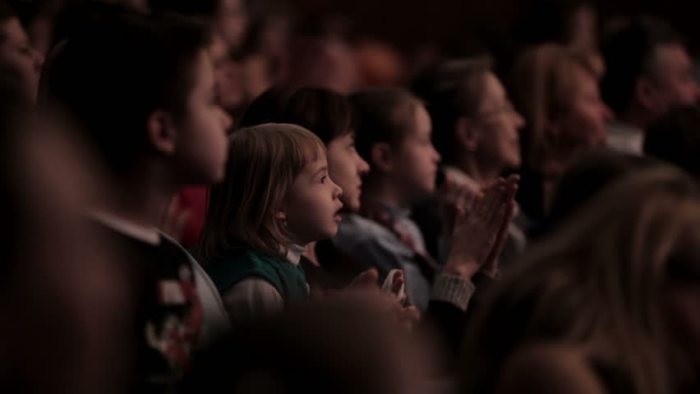
Multiple generations, engaged and enraptured. Fine by me.

During a recent phone conversation with another writer, I’d mentioned having wrapped up work on the pulp sci-fi spec.

“What’s it about?” they asked. I proceeded to give them my 10-second elevator pitch, plus the “THIS meets THAT” combo.

“Huh,” was the response. “It sounds cool, but it also sounds like it would be a kids’ movie.”

I suppose that’s one way to look at it. My preference is “a rollercoaster ride of a story, fun for anybody from 8 to 88”. That’s always been my approach when I set out to spin a ripping yarn.

Was I supposed to view their comment as some kind of insult? As if there’s something negative or shameful about writing material that appeals to kids? Because that hasn’t worked at all for Disney or Pixar.

PIxar especially has a reputation for producing films that appeal to all ages. There’s been a lot written about the immense amount of time they spend on making sure the story is rock-solid. One of the most-read articles for screenwriting is based on part of their process, and those don’t just apply to animation; they’re for ALL screenwriting.

Let me also throw a couple of “kids movies” out there. You might have heard of them.

Star Wars. Harry Potter.

One’s been around for 40 years, with no sign of letting up, while the other just celebrated 20 years of entertaining readers and moviegoers.

On the surface, both are solid, simplistic stories about the fight of good versus evil. But is that all they are? Heavens no! There’s universal appeal, engaging characters who grow and change, themes being explored, conflict like you wouldn’t believe – all told through a filter of imagination. Don’t let the presence of lightsabers, magic wands, or animated, talking animals distract you from what’s really going on.

And let’s be honest. Both of those series have done more than okay at the box office.

Not too shabby for “kids movies”.

Now, I’m not saying any of my scripts are in the same arena as those, but a good story is a good story, no matter who its target audience is. And if it appeals to a younger generation as well as my own, what’s wrong with that?

And you know what else works with kids movies? Kids grow up, and eventually have kids of their own. What do they watch? The movies the parents enjoyed as kids.

Who wouldn’t want to write something that leaves a lasting impression on a young mind, and then see them pass their love of that story to later generations?

For me, that’s what it all comes down to – writing a script that tells a fun and exciting story that anybody could enjoy. And if that includes kids, that’s fine by me.


That’s not the question you should be asking

classroom
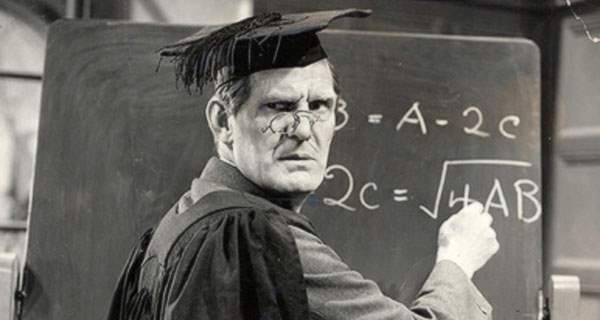
Class, who can tell me what “familiar, but different” means?

I see variations on this question a lot throughout many online forums:

What kind of script should I write?

Seriously?

And I say that in the least condescendingly way possible.

It amazes me that somebody who wants to write a script has to ask what they should write. Shouldn’t you already know? Isn’t that why you’re doing this in the first place?

Then again, I’ve always been a writer, so it was never a question of “What do I write?”, but more of “Which one do I write now?” and “How do I write this so it’s good?”

But back to the topic at hand…

My immediate response to the question in question is “Write something you would want to see.” But that’s my approach. Others may take a different stance.

One caveat – make sure whatever you write is as original a story as you can come up with that contains original characters and situations. Do whatever you can to make it your own. Readers will instantly recognize if you’ve “borrowed” something.

I recently read a script that was a blatant rip-off of a well-known franchise. Did the writer know this when they wrote it? I don’t know, but the actual concept behind their story seemed unique unto itself, with lots of possibilities, so it was actually kind of surprising and disappointing to see them follow that well-trod path instead of seeking out something new.

Something else to keep in mind – using well-known characters not created by you is a very, very bad idea. A writer friend has a connection at Marvel Studios who handles the non-stop influx of unsolicited spec scripts. No doubt your Spidey spec is brilliant, but you’re seriously fooling yourself and wasting your time.

Wouldn’t you rather your script be known for offering up something new and unique?

A lot of newer writers see what’s hot at the box office and think “I can crank out something like that in no time!” Also a waste of time. Trends come and go very quickly. What’s hot today could be ice-cold tomorrow. And you probably think you’re the only one to come up with some variation on that current big idea.

You’re not. It’s even money deals involving clones of that idea will be announced in the near future, all while you’re still churning out pages.

DON’T CHASE TRENDS. You’ll never catch up.

A writer I’ve exchanged notes with concluded our most recent email conversation with “Also wanted to pick your brain. I want to write a script about ____ . It’s an idea I’ve had for several years, but I don’t know if anyone would want to see it.”

Their concept seemed good with lots of potential, but also sounds very similar to a recent series on Netflix, which I thought increased the chances of inevitable comparisons between the two. But if it’s a story that’s been percolating for that long and they feel really passionate about it, then by all means, have at it.

As a spec writer, you have the freedom to write whatever you want. I suspect a lot of us are inspired by the films we grew up watching up to the ones we enjoy now.  Start there and see where it takes you.

Strive for originality, chums.

Your world. We’re just visiting.

tour group
Ooh! That looks like a vital piece of exposition!

Since you’re the one creating the world of your script, you know exactly what’s going on within it. Or at least you should. This doesn’t just refer to the events of the story. It’s a bit more extensive than that.

You know the world in which your story takes place. We don’t. It’s up to you to show us how things work in here. Some writers write under the impression that everything we need to know is right there on the page for us to see. They do, so how could we possibly not?

Sometimes the information we need to follow the story is presented gradually, or it might be thrown at us all at once in one big info dump (which runs the risk of too much too fast, resulting in something being skipped over). There are also times when we get nothing, so we and the protagonist experience everything firsthand as it happens.

Who hasn’t read a script and found themselves confused about “how things work here” because it wasn’t there, or only got a fraction of what they needed? Without that, your reader’s going to spend more time playing catch-up while trying to figure out what’s going on, which will take away from them being able to focus on the story itself.

You don’t want that.

This goes beyond genre. While stories of a more fantastical nature will require a little more explanation and/or exposition, even a story that takes place in the present day with normal, everyday people will require some kind of “get us up to speed”-type scenes.

One counterpoint to this – the lack of filling us in is intentional. Part of the enjoyment of the story comes from the gradual learning of information. An ideal setup for mysteries, but that’s all I can think of.

Personally, I find it more effective to fill us in as we go along rather than just dropping us in the middle of this new environment with the attitude of “You’re on your own. Good luck.”

Make it as easy for the reader to be able to follow along with what’s going on in your story as you do. Potentially difficult, but not impossible.

At least 11 choice “re-” words

teacher
No, class. “Relapse” is not one of them.

Progress on the latest draft of the comedy spec is coming along. Slowly, but still coming along.

Among the highlights:

repairing the script. Previous drafts had some notable and sizable problems on several fronts, so this is all about fixing them, or at least figuring stuff out to make it better overall. This is the main priority.

revising the story. Some of the scenes still work. The ones that don’t are out, with variations and totally new ones being developed and considered. A work in progress is a beautiful thing.

reviving older ideas. I keep all the notes and items jotted down over the course of working out the story, so there’s always a few items worthy of dusting off. This time around is no exception.

reorganizing the tone. Notes on a previous draft stated how uneven the story felt; like it was a few opposing ideas competing for attention. Currently working on streamlining things to make it all mesh better.

refurbishing characters and/or their traits. From the protagonist and antagonist to supporting characters to those appearing in one scene, everybody gets some kind of modification. Some big, some not-so-big.

reinvigorating the jokes. With comedy already being a subjective topic, I’m trying to come up with stuff I think is funny. Influences abound, and I want my sense of humor to be what runs that particular engine.

remaining calm. Finishing this draft won’t happen overnight, and trying to force creativeness or rush progress is the absolute wrong approach. Preferred method – taking it one step at a time.

resuscitating self-confidence. Writing a comedy’s tough enough to begin with. I’ve done it before, and despite a few missteps along the way, feel pretty solid about my chances this time around.

relinquishing the self-imposed pressure. Naturally, I want to have a good, solid script when I’m done (hopefully it won’t take many more drafts). Stressing about getting to that point won’t do me any good, which leads to the final point…

relaxing and recharging the writer. A good portion of my available time is spent writing or at least thinking about it. Working on it too much runs the risk of burnout, which would be completely counterproductive. Therefore, I allow myself time to simply step away and do something totally non-writing-oriented.

And when the time is right, I return to the rewrite.

Whew! Took me a while to refine this, but I don’t recall being so resplendently relieved to be done. Even better, none of it had to be redacted.

That special spark within

roald dahl
Why is this writer smiling? You would too if you came up with the term “Everlasting Gobstopper”.

This past weekend, I had the opportunity to meet with some fellow Bay Area writers. Among their number was a writer who had written some small stuff, and was in the middle of working on her first big project – a TV pilot.

Even though I don’t know much about writing for TV, I and another writer offered up what advice we could. The recipient was very appreciative, and one of the things she said later on in the conversation made a very strong impression on me.

“I know the first draft isn’t going to be perfect, but I’m just really loving writing this.”

Truer words could not have been spoken.

Like I told her, I write stuff I would want to see. It’s taken me a long time and many drafts of many scripts to feel like I’ve really come into my own. Each time, the end result is a script for a movie I think would be an absolute blast to see play out on the big screen.

It always astounds me when a writer complains about having to write (or rewrite). If you don’t like doing it, WHY ARE YOU DOING IT?

It was genuinely pleasing to hear this writer who, despite the challenges she knew awaited her, was still excited about working on this project. Sure, she was still nervous about doing a good job and hoped the end result didn’t suck too much. No matter how many scripts you’ve written, that feeling never goes away.

But to simply see her face light up while she described the story (which is a real doozy, believe you me) and hear her talk about what she’s experienced so far, including doing the research involved, and learning what to do and not to do regarding formatting, it was just really, really pleasant.

I’m sure a lot of us do this because the title “storyteller” really suits us to a tee. Are some better at it than others? Sure, but instead of being discouraged about what you perceive as a lack of progress, try seeing every time you write as a chance to learn and improve. Because it is. It’s certainly been that way for me, and I strongly suspect I’m not alone in that.

I got the impression our little chat gave this writer an extra little jolt of encouragement that she wasn’t expecting. She doesn’t know when the pilot script will be ready, but I told her not to worry about that and just keep enjoying writing it.

I suspect she will.

-Friend of the blog Andrew Hilton (aka The Screenplay Mechanic) is offering a special deal as part of his stellar screenplay analysis. (Editor’s note – his notes helped shape my western into what it is today)

If you use any of his services, refer a friend, or write a Facebook review of your experience using his services, you are automatically entered to win a free DVD of the motorcycle documentary WHY WE RIDE (of which Andrew was a co-executive producer).

The winner will be chosen on October 1st. The holidays will be here before you know it, and if you or somebody you know loves motorcycles, this would be an excellent gift (as would purchasing some of Andrew’s script services for that special screenwriter in your life).

All the details here.

-My time in the San Francisco Half-marathon the weekend before last – 2:02:56. Disappointing, but still glad I did it. I blame all those uphill stretches in the second half. And probably not training enough.

Next race is coming up in a few weeks in Oakland. Pleasantly flat Oakland. Training a little harder for it, with the intention once again of hoping to break the 2-hour mark.