Now it gets really interesting

desert
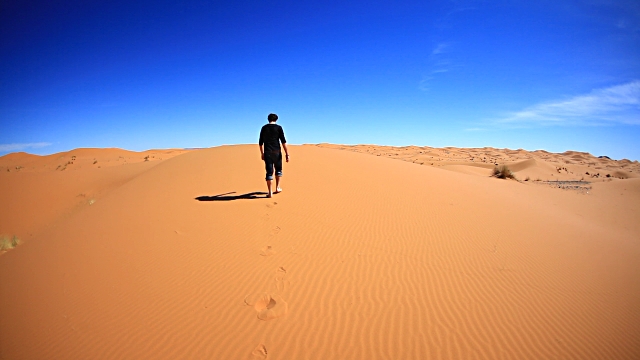
First few steps are always the toughest. Good thing I came prepared.

Let’s pause now for your humble blogger-in-residence to proudly proclaim that Act One of the first draft of the pulpy adventure spec is complete.

Whoopee.

But you know what that also means.

Yep. Time to buckle down even more, strap myself in, and jump feet-first into the intimidating arena commonly known as Act Two.

I’ll also admit it’s a little thrilling, too. There was a particular charge in working out the action sequences and story set-ups in Act One, so I’ve a strong suspicion the continuing build-ups for the former and the gradual development of the latter will be equally, if not more so, fun to write.

(and believe me when I say this is the kind of story that automatically requires a sense of fun)

Maybe it’s from continuously trying to improve as I go, but working on Act Two doesn’t seem as intimidating as it used to. Not to say that it comes easily; just slightly less insurmountable. I spent a lot of time on the outline, so confidence in that is pretty solid.

I read a lot about how a spec script might have a phenomenal Act One, but then things fall apart in Act Two for a myriad of possible reasons: the characters don’t do much/nothing really happens, or the overall story’s too thin, so a lot of Act Two is empty filler, and so on.

The only writing process I know is my own, and I always strive to make sure the story feels…complete? Full? It comes down to “I know what has to happen to tell this story,”, and while the first act is all about setting it all up, the second act is about fleshing everything out.

We get a closer look at the characters and how they’re progressing through the events of the story. We can see how they’re changing from when they were first introduced. Plot threads of all sizes get further developed. The central question is continuously asked (oh-so-subtly, of course).

It also involves steadily-mounting complications for your protagonist. They’ve got a goal, and it’s our job to throw all kinds of obstacles in their way that just keep making it harder for them to reach it. Again, a lot of it happens during our second act.

Act Two really is where the meat of the story takes place, so stuff needs to happen that not only holds our interest, but makes us want/need to know what happens next, and even that better be that much more intriguing.


As you’d expect, our work is cut out for us.

So off I go. Dispatches from this formidable excursion as they develop.

See you on the other side.

My enthusiasm, your enjoyment

rollercoaster
Offering up excitement and thrills for everybody

I admit it. I was weak. I couldn’t resist. The urge was just too overwhelming.

So I accepted the reality of the situation, and just went ahead and did it.

I went back and revised the pages I’d already written for the pulpy adventure spec.

No regrets.

The character that shouldn’t have been in there was cleanly removed, but in the process of doing so, a new idea emerged with a way to further weave some of the subplots together. Always nice when that happens.

Engaging in this mini-rewrite also provided me with the opportunity to take a step back and just read. Was it still working? Were my aspirations of producing a ripping yarn being achieved?

Seems that way so far. Then again, I’m slightly biased.

Some notes I got on an earlier draft of the western were along the lines of “it’s good, but the writing’s a little dry.” With this script, there’s more of an effort to avoid repeating that by really punching things up.

I’m getting a real kick out of seeing what I can do to make this an exciting read for anybody, including myself. Many’s the time I’ve heard that you should be able to see the writer’s love for the material on the page. That’s something I’ve always tried to do, and working on this script is no exception.

So after this temporary pause, things are back on track. Momentum will be regained, and progress shall continue.

Exciting times all around, chums.

-Friend of the blog/consultant Jim Mercurio is running a crowdfunding project for his latest film project American Neorealism. It’s VERY close to being funded, and there are just a few days left, so donate if you can to help him reach (or even surpass) that goal.

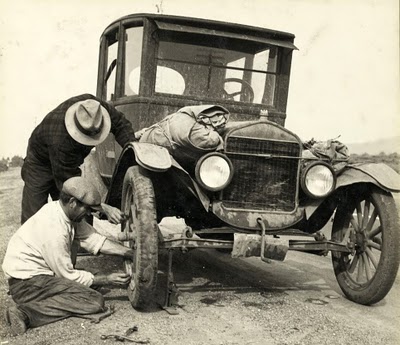
Tire, meet nail

flat-tire
You don’t expect it, but it’s good to prepared for when it happens

There I was, happily churning out pages for the pulpy adventure spec. The daily output was respectably above average.

(Gotta say, this new practice of writing out/establishing the beats of each scene has proven invaluable.)

If I could maintain this kind of pace, dare I even contemplate the possibility of having a completed draft, if not by month’s end, then maybe by mid-February?

But like the man who operates the guillotine might say, let’s not get too far ahead of ourselves.

Story-wise, things are still pretty solid, save for a previously unforeseen wrinkle: I need to do some emergency revision regarding exactly where and how a supporting character is introduced.

What was in the outline is completely different from what ended up on the page, so looks like I’ve given myself a few options:

  1. Leave it as is, but come up with how to tie everything together. A few possible solutions here. Not crazy about it.
  2. Go back and rewrite so it plays out as originally planned. It may lack some of the punch I was hoping to start with, but that sequence already has a significant amount of “attention-grabbing oomph” to begin with.

Some alternate approaches are currently under consideration, as are those of a drastically different nature. It’s also being discovered that implementing some of these changes could actually assist in reducing the number of pages, which was going to happen anyway. Only now it would be sooner. Not a bad result.

No matter which I choose, there’s some serious editing and rewriting in my immediate future.

This whole scenario definitely falls under the “kill your darlings” category because even though I really like what I’ve already written, as we all know, fixing the story takes precedence over placating the writer’s ego.

Keeping with the metaphor of this post’s title, what initially felt like a major problem is, after some careful analysis, evaluation, and plain old level-headedness, slowly developing into more of a bump in the road.


Crafting a tale to thrill, astonish, and exhilarate

mad-scientist
Those fools at the film academy dare call me mad? I’ll show ’em! Mwahaha!

2017’s writing got off to a pleasantly rousing start with the commencement of the first draft of my latest project: the pulpy adventure spec.

Yep. After years of working on the outline, I finally decided to take the plunge and write the damned thing.

Seeing as how this is a genre near and dear to my heart, I dove into the opening sequence headfirst and just had at it, surpassing the original goal of completing at least 2 pages a day by two and a half times that amount. Add to that the 4 pages for yesterday, and that places me further ahead than anticipated. It’s not expected to maintain this kind of output on a daily basis, but no complaints so far.

That being said, upon reflection, the latest scene still leaves a little to be desired, so an impromptu rewrite is already being planned out and will be implemented straightaway.

A few alterations have also been made in regards to the overall writing process.

First, even though the outline needs to be rock-solid before starting on pages, the scene descriptions are sometimes a little vague. “Big fight happens!”, that sort of thing.

When that happens, the focus shifts to plotting out the beats of that particular scene. How do things play out so it tells the story and moves things forward? Is it accomplishing what it needs to? It’s quite helpful, and helps prevent a lot of frustration in trying to think up stuff on the spot.

Another is fully embracing the whole “just get it done” attitude. Write it down and move on. There’ll be time for all that fancy-pants editing and polishing stuff later. It’s also been noticed that sometimes the first idea is still the best.

And in what may be the most important development, seeing as how this is at its core my interpretation of the old pulp novels, I’m doing what I can do to really make it read that way. One could even argue that writing the western was just a warm-up exercise. The writing in this script might be a little more over the top than usual, but that could be exactly what it needs.

Even though it’s a screenplay, I take a certain pleasure in coloring things a slightly stronger shade of purple.

There’s no specific target deadline for completing this draft, but hopefully it won’t take too long. For now, I’m just enjoying the ride.

Advice, suggestions, and everything in between

neil-gaiman
“When someone tells you it isn’t working – they’re almost always right. When they tell you how to fix it – they’re almost always wrong.” – Neil Gaiman

Many, many years ago, when I was just starting out in radio, I’d put together a demo tape of some of my on-air material and asked some of the veteran DJs at the station if they’d give it a listen.

One guy had several positive things to say, but also pointed out ways of how I was demonstrating my still-green abilities. He made some suggestions about how to fix that, which would, in theory, help me get better. They did.

The second guy started with “It’s good, but here’s how I would do it.” I honestly don’t remember anything he said after that because I simply didn’t care how he would do it.

There’s a very similar approach to how one gives notes on a screenplay.

When I give notes, I read what’s on the page and offer up my opinions of how it could be potentially be improved (from my perspective). A lot of the time it involves questions like “Why is this happening?” or “How do we know that?”

Or if something doesn’t work, but I understand what the writer’s trying to do, I’ll ask “What if you tried THIS (different approach) that yields the same results?” They may not take that suggestion, but it might trigger something new and unexpected.

I totally get that this is their story, and my only interest is in helping them make it better. By asking questions that only the writer can answer, the responsibility of coming up with and applying any fixes falls squarely on their shoulders.

I also make a point of trying to be objective. I may not be a fan of your story’s genre, but that doesn’t mean I’ll automatically be negative in my notes. What I will do is approach it from a “does it tell a good story populated with interesting characters and situations?” perspective.

And then there are the notes that want to take your story in an entirely new direction. The ones that take it upon themselves to change your story because “that’s not how they would do it.” I’ve gotten quite a few of those.

But what if how you would do it is different than how I would?

Sometimes it’s a suggestion that runs counter to the story you’re trying to tell, or it might have absolutely nothing do with the story at all. I’ve even received the always-appealing “This was great, except for this one small thing I disagree with/don’t like, which ruined the rest of it for me.”

Everybody’s going to have their own opinion, but the one that counts the most is yours. Even if it doesn’t feel that way now, only you know what the script really needs, and you’re going to get all kinds of responses when you seek out feedback.

Some of it will be very helpful and insightful, some definitely won’t be, and in the end it’s really up to you to decide which notes you think provide the most guidance to helping make your script better, which will in turn help you become a better writer.