Deliberately avoiding referencing that song

A great mantra, but a little tired of hearing it over and over
A great concept in terms of editing, but a little tired of hearing it over and over

As I work my way through the hack-n-slash editing phase of the western, it’s getting easier and easier to cut something and not worry about if I’ve made the right decision.

Whole scenes, parts of scenes and lines of dialogue are wiped from existence, all with a positive result. Tighter scene(s), better flow of story, all creating a stronger efficiency of words.

Added bonus – script is already 5 pages shorter, and still have Act 3 to go.

(Counter to all of this cutting, placeholders have been identified as potential chances to add in a few lines for some character development.)

Re-reading this script has also made me realize how much I overwrite, especially with dialogue. I try to avoid extra verbage, but don’t see that’s what’s happened until long afterward. By then, it seems more like padding, so out it goes.

A lot of writers are hesitant to cut material or make drastic edits. They just can’t bring themselves around to killing their darlings, because they figure everything is just right the way it is.

Nope.

As much as you like that scene or dialogue, you have to be as objective as possible about your own work. Is it absolutely vital to the story and advance it in the best way possible? If you took it out, would it make any difference whatsoever, or at least have some kind of impact on the story?

I’d venture probably not.

Don’t be afraid to put that red pen to work and cut away! The pain of having to do so is minimal at best and lasts all of a microsecond or two. It’s more than likely that the next time you read through what you’re working on now, you won’t even notice its absence, probably not remember it ever being there and hopefully think “Wow, this draft seems a lot better.”

Doth it suck? Yea, verily

Because "Dude. Yorick. Bummer." just doesn't have the same panache
Because “Dude. Yorick. Bummer.” just doesn’t have the same panache

Oh, first draft. You teasing vixen.

I go over the story ideas in my head, everything coalesces and plays out like a well-oiled machine.

But try to transfer them onto the page, and it all discombobulates into a tangled mess on par with the cord on a pair of earbuds carelessly tossed into a gym bag.

Experienced writers know what I mean.

Although it took a while, I finally reached the end of Act Two in the revamping of the outline of the pulpy adventure spec. On one hand, I’m thrilled to have gotten here. On the other, I want to shrug my shoulders and mutter “eh, good enough” about the scenes and sequences that led up to this point.

They’re definitely far from perfect, and without a doubt will be totally different as future drafts come into play.

Let’s pause to consider the phrase “future drafts.” As in “there will be more”, emphasis on “will”. Not “might”. “Will”.

I recently connected with another writer on a networking site, and they ended our introductory correspondence by letting me know they had first drafts of their scripts available to read.

I sincerely hope not.

Unless you’re looking for feedback, don’t show your first draft to anyone. Ever.

The first draft is the attempt to put all your ideas into some kind of order. Know going in that it won’t be pretty, and will most likely be a big mess requiring a ton of fixes. Not a bunch of little edits, but huge, drastic steps. The end result should look totally different from what you started with.

Don’t regard rewriting as a chore or a slog. It’s something you have to do on a regular basis. It makes the script better and helps you become a better writer.

Consider the last script you wrote. How many drafts did it require to get to the point where you finally said it was done? And wasn’t each successive draft a little better, until the final draft turned out significantly improved compared to the very first one?

That’s what you should be going for. Every single time.

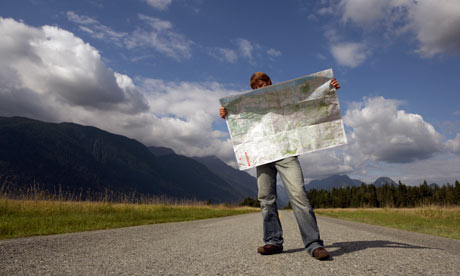
Know the route you need to take

There's something to be said for taking the scenic route
Which way now?

After having reached the midpoint of the pulpy adventure spec outline, I’d been struggling with getting to the next plot point.

Not helping was the almost total jettisoning of material from the previous draft. The story had since changed in a drastic way, so there was nothing to salvage.

While I knew where the story had to go, I couldn’t figure out how to get there.

The midpoint sequence ended the way it had to – hero fully committed to achieving his goal, but now on several levels, and the antagonist getting closer to achieving his.

But what happens next?

Exploring several options, something finally clicked and I remembered a very simple rule we all tend to sometimes forget:

It’s not what could happen, it’s what has to happen.

THIS is what the characters need to do to move things forward (with your protagonist being the primary mover), and the more challenging we can make their journey, the better.

There are plenty of options of how things can play out in your story, but it will take some effort (and a lot of rewriting) to find the one that it needs.