Class is in session

All I need now is the magnifying glass

When I start on a new project, I make a point of reading scripts and watching films that are similar to the kind of story I’m trying to tell.

This time around, it’s a rewrite of my mystery-comedy, so among the works being studied are CHINATOWN, L.A. CONFIDENTIAL and WHO FRAMED ROGER RABBIT (comedy, remember?). There are a lot more to consider (suggestions are always welcome), but I don’t want to overdo it. As much as I love submersing myself into these stories, I would like to eventually get around to actually working on the script.

Putting myself through this has a double benefit: I get to see solid examples of elements of the story and genre, which forces me to come up with different ways of how to tell a similar story but with my my own stamp on it. I’ll also be the first to admit that my skills at putting a mystery together aren’t exactly the best, so studying these will hopefully help me get a better sense of how to develop that part of the story.

Since this also happens to be a story I’ve worked on before, a lot of it is already in place, but there’s still a ton of work to do, with lots of ideas and changes being considered. Luckily, I have a few previous drafts to mine for material. Almost like starting anew, but with something very familiar.

My hope is that studying these scripts and films will help me get a better understanding of how all the puzzle pieces fit together in those stories, which will in turn will help me figure out how to do the same with mine.

This is the kind of homework I actually look forward to having.

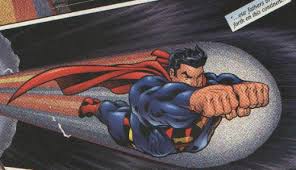
Not speeding-bullet-fast, but getting there

The cape helps.
The cape helps.

The edit/rewrite/polish of the western continues, and have to admit I’m actually surprised at how fast the process is moving.

Maybe it’s working with a pen and an actual hard copy of the script, which for some reason is always more productive than doing it on the computer.

Maybe it’s all the ideas stemming from the great notes and feedback I’ve received.

Or maybe it’s simply a culmination of the experience of having done this so many times before. Putting my money on this one.

I’d estimated the rewrite would take me maybe 5 to 6 weeks, schedule permitting. There are a few sequences that need some major work, some that need significant trimming, and plenty of minor tweaks and adjustments to be made. But just a few days in, and I’ve already passed the halfway point.

At this rate, there’s no reason I couldn’t be done within the next 2 weeks. After that, it goes out for one more round of professional feedback. I honestly didn’t think this would happen this fast.

I think maintaining a steady work schedule, a definite commitment to the craft and that internal drive/compulsion to succeed have all contributed to getting me to this point in my abilities. I’m more than willing (one might even say eager) to do the work, and the more I do it, the easier the whole process seems.

Of course there are days when I’m not productive, but even those are getting fewer and far between.

Hopefully you’re also able to devote some time each day to getting some writing done. Don’t be discouraged if it seems too hard or overwhelming right now. Keep at it. On top of that, get feedback and read scripts. Build up your knowledge and apply it to your work.

Before you know it, you’re done and ready to jump into whatever comes next (although it might take more than a single bound).

Something awfully familiar about this – OR – Already seen it

Not exactly the same, but mighty darn familiar
Whoa.

I was THIS CLOSE to being done with the latest version of the outline for the pulpy adventure spec when my writer’s sense starting tingling.

“Something’s still not right!” screamed out my internal editor.

What? That couldn’t be possible, could it? I’d spent the past few weeks being oh-so-meticulous in reorganizing sequences, working out subplots and connecting story points. How in the names of Walter Gibson and Lester Dent could there be a problem?

I looked at the outline with a more critical eye.

Opening sequence – check.
Intro of hero, establish his world – check.
Hero’s world drastically changes while raising central question of the story – check.
Complications ensue – check.
Midpoint where hero becomes fully committed to achieving his goal (accompanied by reminder of the central question) – check.

Wait. Back that up a little. To right between the “Complications” and “Midpoint” parts.

Hokey smokes, there it was. Cue the flashing red light bulb (with optional klaxon).

Two consecutive sequences just way too similar to each other. This is what’s been bothering me.

No doubt about it. One of ’em has to go. Probably the first one. You’d think it would be no big deal to just go in and change it.

And you’d be kinda/sorta wrong.

The events that happen during these two sequences are vital to the story, so the outcome needs to stay the same. The tough part now is figuring out how to change the “what happens” in that first one so not only is it unique enough unto itself, but also falls neatly into the overall structure of the story.

As always, a daunting task. For now. But potentially solvable given some time and exploration of possible alternatives.

I cannot stress enough the importance of why you should outline your story before even considering starting on pages, and being extremely thorough about it while you do. This is where you get all the heavy lifting done by figuring everything out. Where it’s a lot easier to identify the cracks in the foundation. Where it might take you a few passes to realize what works and what doesn’t.

Then again, this is how I do it, so your approach may be totally different. But speaking for myself, I prefer to go back in and fine-tune a couple of scene descriptions consisting of one to two sentences, rather than labor my way through several pages, then have to totally junk them because they’re not working.

So my focus for the time being is fixing this, then going through the whole outline a few more times, making adjustments where necessary, until I think it’s done/ready for conversion into pages.

-Got to see JURASSIC WORLD and INSIDE OUT last week. Both very enjoyable, but for very different reasons. Of the two, I’m more interested in seeing INSIDE OUT again, mostly for the writing and storytelling aspects.

Regrettably, still haven’t seen MAD MAX: FURY ROAD yet. Of all the summer releases, this feels like the one that must be seen on the big screen. Will do what I can to rectify that.

Ask a Decidedly Ingenious Script Consultant!

Ryan Dixon

The final installment in a series of interviews with script readers and consultants who would be worth your while to work with if you want to get your script in shape. Today’s spotlight is on Ryan Dixon.

Ryan Dixon is a writer, producer and the founder of Tartan Valley Ventures,  a Los Angeles-based creative development consulting firm that works with writers, producers and financiers. As a screenwriter, Dixon has written projects for studios including Disney, Amazon, Universal and WWE Films. Dixon has also worked in film/TV creative development at such companies as Paramount, MGM/UA, IMAX,  Good in a Room, The New York Times and Tribune Media.

1. What’s the last thing you read/watched that you thought was incredibly well-written?

EX MACHINA’s screenplay was masterful. It reminded me of a sci-fi version of those great meta-thriller plays of the 1970s, like DEATHTRAP and SLEUTH. P.T. Anderson did an extraordinary job with INHERENT VICE. His adaptation added a layer of depth and Los Angeles historicity that was missing in Pynchon’s fun, but flawed and rather juvenile novel.

2. How’d you get your start reading scripts?

As a movie-obsessed child, I used to buy shooting scripts at the late and belated Suncoast: The Movie Store. In college at Carnegie Mellon’s School of Drama, reading scripts was part of the curriculum. My first job in Hollywood was interning for Tom Cruise’s former company CW Productions, so from that point on, I’ve been reading and covering scripts professionally in one form or another.

3. Is recognizing good writing something you think can be taught or learned?

I think it’s a matter of taste. Of course, one must have a certain degree of training and skill in order to fully recognize and appreciate any craft. A classically trained musician or a fine arts scholar is better able to pinpoint the minutiae of Beethoven or Picasso. At the same time, taste is a separate sort of knowledge and instinct. A layman can find beauty if they’re a person who can digest and appreciates art for art’s sake. Nickelback’s members are studied musicians, Lisa Frank is a trained artist, and both are wildly successful in their fields. Study can hone and illuminate the elements of a craft but that can only take you so far.

4. What are the components of a good script?

The basic elements (structure, character, theme) must be superiorly executed. Next, there should be something special in the piece. Even if it’s basic genre fare, the script should include elements that make the reader sit up and say, “Wow! I haven’t seen that before.”

5. What are some of the most common mistakes you see?

From young writers it’s always basic mistakes: mechanics, too much dialogue and/or scene direction. Sadly, these mistakes are also the easiest to avoid. What they reveal is that that writer hasn’t bothered to learn the fundamentals. This is fascinating because I can’t think of any other vocation where a similar incident would occur. If one were serious about learning to cook, a cookbook would be the first purchase. If you wanted to scuba dive, you’d take lessons before jumping head first into the ocean. While all the fundamentals are usually outstanding in the work of veteran writers, there is often a lack of courage and conviction in terms of content, as if they’re afraid to try something different for fear of being tossed out of another development meeting. If you are going to make the huge time commitment needed to write a spec script, swing for the fences. The creative dilution process can come later, once the script’s been optioned.

6. What story tropes are you just tired of seeing?

One is when characters (particularly female characters) are described solely on their looks. It tells you nothing about who a character is and often times a bit too much about the writer’s psyche.

Another is the oversaturation of beautiful people playing everyday characters. Even if you look at a movie from as recently as the 90’s, a man could be a regular guy with full chest and back hair and a woman could do a nude scene with a soft, everyday body. In contemporary films, everyone is sculpted, plucked and dyed to perfection. In this renewed Golden Age of Television, character actors are able to once again shine and it really strengthens the storylines and characters (Breaking Bad and Mad Men are obvious examples).

My wife is a screenwriter as well (and very opinionated to boot), so for better or worse, this is a constant discussion and analysis in our household. A big one for her is that men can have high-risk jobs and a strong drive, but if it’s a woman is in the same position, she needs a tragedy or a backstory. GRAVITY most recently did this—George Clooney is an astronaut because of his skill but Sandra Bullock is an astronaut because her kid died.

7. What are the 3 most important rules every writer should know?

-The believability of characters is often more dependent upon the execution of other elements in the script (e.g., plot, theme, dialogue) than anything else. A trap writers (myself included) often fall into is to confuse “believable” with “realistic.” Thus the ever-present tendency to write characters who are mill workers, teachers, office drones, etc. While there’s nothing wrong with this if that’s what your script dictates, it’s also important to remember that some of the most believable characters in cinematic history were also some of the most unrealistic: E.T., Yoda, Kermit the Frog, Mickey Mouse, Bugs Bunny, etc. They’re believable not because you could see them walking down the street, but because the creators of those characters did an amazing job of creating the world in which they existed.

-Master the art of writing a “skimmable” script. We all dream of studio execs, producers, agents, etc sitting down in a quiet space and focusing fully on our script, but the truth is that they are often read in a rush during limited time frames. This is why it’s important to craft your script in a way that a decision maker can easily understand it if they are forced to skim it. You want your script to FEEL like a movie. That means, a reader should be able to zip through it in about 90 minutes. If a first time reader can’t do that, they won’t be able to envision you script as a movie no matter its other strengths.

-This is stolen but golden: “Amateurs sit and wait for inspiration, the rest of us just get up and go to work.” (Stephen King, a favorite author, from ON WRITING). Lightning doesn’t just strike and no one will just hand you anything in Hollywood. Nothing comes easy in writing and you have to work yourself to the bone to get success. I track my time using my iPhone timer and a writer’s log. I make sure to always get in 6 to 8 hours of writing a day. If I’m blocked, I take a brainstorming walk. I’m not perfect. I can procrastinate with the best of them and it took a few years to build to that point. But like any exercise, it works if you keep working at it and pushing yourself.

8. Have you ever read a script that was an absolute, without-a-doubt “recommend”? If so, could you give the logline?

Elizabethtown by Cameron Crowe. I read the script while it was in development and was never so moved or in awe of a piece of screenwriting. In the end however, the final lesson I gained from the experience was that great scripts don’t always make great movies. For whatever reason, the alchemy needed to successfully transform material from page to screen failed. This specific incident was doubly disappointing since the writer directed the piece himself and has shown time and again that he’s an immensely talented director.

9. How do you feel about screenwriting contests? Worth it or not?

There are only a handful of contests that will have an impact on your career if you are a top finisher. I’m hesitant to state that all the others aren’t worth it if only because placing high can be a great confidence boost to any young writer (if they have the money to spend). But if you are cash-strapped, go for the big guns and ignore the others.

10. How can people get in touch with you to find out more about the services you provide?

Go to my website for Tartan Valley Creative Ventures.

11. Readers of this blog are more than familiar with my love/appreciation of pie. What’s your favorite kind?

Boston Cream. As a writer and eater, I like synergy and mixing genres. There’s no pie that does this better.

Ask a Million-Dollar* Script Consultant!

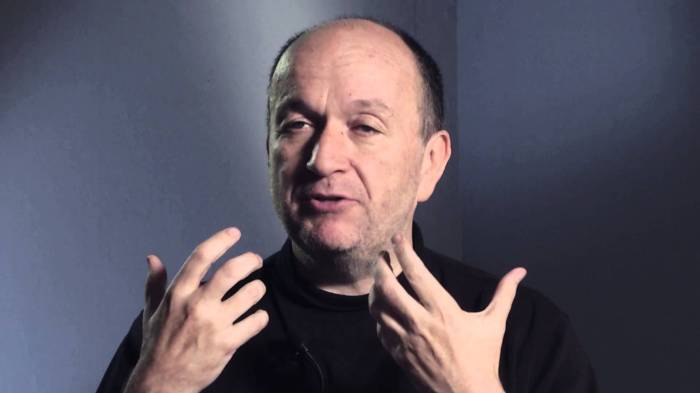
chris soth

*this number represents the estimated value of Mr. Soth’s advice, rather than the actual cost.

The latest in a series of interviews with script readers and consultants who would be worth your while to work with if you want to get your script in shape. Today’s spotlight is on writer-producer-script advisor Chris Soth of ScreenplayMentor.com.

Writer/Director-Producer Chris Soth has authored over 40 screenplays and is a frequent speaker on the topics of story structure and independent filmmaking, teaching screenwriters around the world how to write great screenplays AND pitch them for success. Chris is the writer of Firestorm, released by 20th Century Fox, and the independent hit Outrage: Born in Terror. He is currently developing a slate of independent films, the first of which, Don’t Fall Asleep, has just received distribution. His directorial debut SafeWord is presently in post-production. Chris has taught at USC and UCLA, and currently guides screenwriters from concept to FADE OUT using the “Mini-Movie Method” in his mentorship program at ScreenplayMentor.com. His ebook “Million-Dollar Screenwriting: The Mini-Movie Method” and DVD “SOLD! How I Set Up Three Pitches in Hollywood,” among other great screenwriting resources, are available at ScreenplayMentor.com.

1. What’s the last thing you read/watched that you thought was incredibly well-written?

Sustaining a story for an hour or more with brilliant writing at every turn is so difficult I find myself attracted to the short form, even w/my own writing these days. That, said, we ARE in a Golden Age of Television now, with some creators getting to not only decide a story that will take five or more years to tell and lay it out beforehand — occasionally with guarantees that all the episodes will air — and not only control a very complex and novelistic story, BUT also control the rate at which it’s consumed. No artist has ever had that before, even novelists…Tolstoy could be sure reading War and Peace would take you while, but not throttle your reading speed to piecemeal over 5-8 years, the way Weiner or Gilligan have. I really appreciated how all the Mad Men were…going mad. How all of them were continually pitching a product, themselves, and none more than Dick Whitman, whose greatest pitch was Don Draper…and living in that gap between the presentation of your self and the reality, or worse, what you FEAR you are…is the madness. I think if you’re in show business, you get that. So, as I said above, hard to sustain for an hour, let alone all those years, but some amazing brilliance every single episode.

Here’s one favorite in the episode from the penultimate (full) season, where all of Sterling Cooper’s taken acid and a Hippie Flower Child puts a stethoscope to Don’s chest to listen to his heart.

HIPPIE FLOWER CHILD
Let me listen to your heart…(re: stethoscope)…it’s broken.

DON
(re: his heart) You can HEAR that…?

How long has that double entendre been staring us in the face, and how GOOD are these writers to keep giving us insight into their brilliant central character even that late in the game? He’s broken-hearted. He hides it. He always will be. A tiny thing, but the last time I remember really thinking “Wow, good writing!”.

2. How’d you get your start reading scripts?

My first idea was to teach a seminar in my own screenwriting structure technique, “The-Mini-Movie Method”. I did that, and also offer the resulting videos and audio course. I found a real thirst after that for hands-on expert consulting developing screenplays with expert advice on this method. I don’t really do a classic “reading”, or that’s rare anyway. I consult and help writers build scripts, usually from FADE IN. I will work with clients thru my website ScreenplayMentor.com with works-in-progress. My usual procedure, whether starting fresh, or jumping in partway, is to outline a vision for the next draft and mentor and guide it, page by page (Mini-Movie by Mini-Movie) until Fade Out…then I’ll read the resulting, and much stronger, screenplay thereafter. I started my side business after some success as a writer myself, because I really like to work everyday, but like different work and different stories and continually changing ideas. Also, the steady work and income that my consulting provides lets a guy with a daughter in college sleep at night even between studio writing assignments.

3. Is recognizing good writing something you think can be taught or learned?

I absolutely think so. There are certainly rules, best practices, etc. Some so oft-repeated they become cliches: “Show, don’t tell”, etc. But developing an aesthetic for what good writing and what good storytelling is, should be vital to each and every writer. We all want to make THE BEST MOVIE EVER, right? Well, if we have no yardstick for measuring quality, how will we do that?

4. What are the components of a good script?

The list goes on and on. Most important and first: TENSION. A hope and fear for a viewer/read to root for and root against. So I’ll use this as another opportunity to say it: TENSION, specifically TENSION REDUCTION is the source of ALL pleasure we take in drama and in story. A good story will continually build tension, every beat, every scene, every sequence and release that tension in an explosive and gratifying climax…make sure YOURS does. I’ll leave it there.

5. What are some of the most common mistakes you see?

The lack of tension, of course. Unnecessary scenes, which I define above as scenes that don’t build or add to tension. It seems common to the point of epidemic that first acts run 45 pages in early drafts, and writers are often still setting up dominos as they break into the third act…dominoes that should have been set up WELL before, often in act one and should be falling with dramatic cataclysm and knocking over BIGGER dominoes now… A lacking “narrative drive” that makes each story event seem, in retrospect, inevitable, not arbitrary. It seems like many early drafts are written just to fill pages, but there IS a perfect twist for the end, the midpoint, the first act, that is dictated by the concept or idea…

6. What story tropes are you just tired of seeing?

References to other movies or TV shows. You have to be very clever and original to do this well, and it fails most of the time, Quentin Tarantino aside, and even HE blows it a lot of the time.

7. What are the 3 most important rules every writer should know?

-TENSION = Hope versus Fear  (T = H v. F is the E = MC squared of story) After that, I’ve never thought what might come second, let alone third, but I’ll put a few down here.

-Don’t get it write, get it written. The worst thing you write is better than the best thing you didn’t.

-Craft character to story and story to character by asking, over and over: Who’s THE WORST person for these events to happen to, and What’s THE WORST thing that could happen to THIS person?

8. Have you ever read a script that was an absolute, without-a-doubt “recommend”? If so, could you give the logline?

I don’t do a classic read, nor grade on that studio scale, nor should I probably divulge the scripts of my clients here, but MANY come to mind. I read a screenplay every day my first year at USC and the ones that really stood out are THE PRINCESS BRIDE and FIELD OF DREAMS. Both made me cry more than the movies made from them had, the first because it does actually exceed the movie in the sheer beauty of the writing, I like the movie fine, tho’ I’m not in the cult, but the SCRIPT…oh, that script…the second perhaps more for memories of seeing the movie itself.

9. How do you feel about screenwriting contests? Worth it or not?

I never had any luck with them. But I think they’re a real tool for getting your work read and getting exposure these days.

10. How can people get in touch with you to find out more about the services you provide?

Everyone’s welcome to contact me at chrissoth@aol.com, chrissoth@gmail.com or look at ScreenplayMentor.com

11. Readers of this blog are more than familiar with my love/appreciation of pie. What’s your favorite kind?

Easiest question. My mom’s chocolate chess pie. I grew up eating this at Thanksgiving instead of pumpkin pie and had to learn to make it myself when I struck out on my own. I’ll have it all through the holidays and Mom still makes it for us when we come home. I’ve only found one restaurant that serves it, but just developed a lead on another in Los Angeles, so stay tuned…