Looking back, glimpsing ahead, and a minor adjustment

new year's eve
Just one more glass of champagne, then it’s back to work. Promise.

As 2017 wraps up, it’s only natural to engage in a little self-evaluation.

How many of your writing goals were you able to check off this year? Most of them? Some? A small-but-decent fraction? Hopefully you don’t need to mark the box labeled “None”.

One of mine was to complete at least three scripts. I managed two drafts, a revised outline, and one and a half rewrite/polishes (one still a WIP). Pretty solid results. A very hearty thanks to everybody who devoted the time and effort to give me notes. I hope my notes for yours were just as helpful.

Using those notes and the results of a few conversations, I think I’ve been able to up the quality of my writing a few notches. It still has a few levels to go, but it definitely seems better than it was. The next round of drafts should be really interesting,  both in terms of working on them and how the end results turn out.

I wanted to read more scripts, which actually happened, but not entirely in the way I expected. I didn’t do as much reading of scripts for the purpose of entertainment or gleaning some helpful guidance because I ended up reading over 100 scripts for several contests. Don’t know if I’ll do it again, but still glad I did it.

On the gaining representation front, lots of query emails were sent. Maybe one response out of ten expressed interest in reading the script, with each ending with a “thanks but no thanks” or “just not what I’m looking for”. A bit disappointing, but not totally unexpected. Along the way, I also worked on being more strategic about the process, researching potential recipients and re-drafting the query to (in theory) really sell the concept of the script.

And what would an ambitious screenwriter’s year be without contests? My western made it to the seminfinals of a few smaller contests and the top 20 percent for the Nicholl (not too shabby), but once again whiffed it for PAGE. I’ve become somewhat disillusioned regarding contests, so will most likely really cut back on them. Maybe just stick to the big three.

There was the most pleasant experience of going to Los Angeles to attend a table read for one of my scripts. I like the idea of doing one or two of them locally, so looking into that for 2018.

I hosted two screenwriting networking events, which connected me with some very talented writers from right here in the Bay Area. Definitely plan on doing that again at least once this year. Highly recommended, especially if you’re not in Los Angeles and want to expand your own personal network.

On the half-marathon front, I ran five races this year – the most ever in one year for me. Still averaging about two hours, which isn’t bad – for me, but the quest for 1:55 continues. Already signed up for three next year, with maybe one or two more expected to be added into the mix. Like with screenwriting, improvement takes time, effort and dedication. A good pair of socks and strong knees also come in handy, and that applies to both.

Finally, this blog. As always, a great experience doing what I can to offer advice to help other writers, recounting my experiences and the lessons I got out of it, and presenting some interviews with some truly interesting and amazing creative folks. I am truly grateful to everybody who’s stopped by to take a look, like a post and make a comment.

But it’s also been exhausting. Producing posts twice a week on top of dedicating time to write and make a career out of it has simply gotten to be too much. I still enjoy doing the blog, but want to refocus my energies. So as of January 1st, I’ll be reducing my weekly output to Fridays only, and sometimes even that might be iffy. It’ll most likely be on a week-by-week basis.

I hope you had a most productive 2017 and wish you all the best for an even better 2018.

See you in seven.
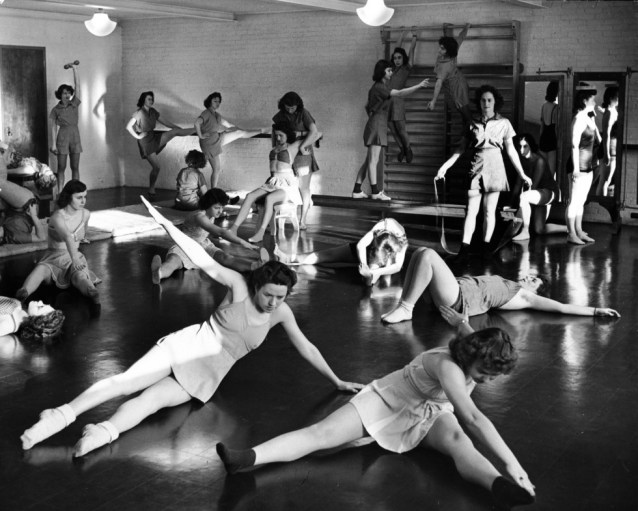
Work those writing muscles!

00748604.JPG
Feel the burn! C’mon! Just one more page!

Earlier this month, I hosted a networking event for screenwriters from the Bay Area and throughout northern California. It was fun and I got to make some new connections as well as reconnect with some already-established ones.

(Can’t recommend this sort of thing enough. Getting to know other writers in your area helps all involved.)

Part of the event involved introducing ourselves and offering up a little background info, including our individual screenwriting- or film-based experience (there were a few writer-directors) and a thumbnail description of our current works-in-progress.

When it was my turn, I mentioned the blog and how I was dividing my time between a few rewrites. At that point, one of the attendees raised his hand.

“A few rewrites? Like, all at the same time?”

I clarified that I’d work on one script for a few days, or at least until I thought I made some significant progress, take a day off, then dive into another one.

“But don’t you find it kind of difficult to stay focused?” He also added that he was relatively new to screenwriting, so the concept of working on a script and then suddenly shifting gears into one that’s totally different was a little mind-blowing.

I explained it this way:

I’ve been doing this a while, and all of these scripts are at least third, fourth, or higher drafts. I’ve gotten to know the stories and characters for each one pretty well, so I can jump right in, fully aware of what each rewrite requires. It might take a while (along with several more rewrites) to finally get there, but I’ve found that always working on something has really helped make the whole process easier.

It really is like exercising. It’s kind of tough and challenging when you’re starting out, and takes time to learn how to do it properly. Then you figure out a pace and/or system that works best for you (with everybody having their own methods and routine). You will indeed discover that the more you do it, the easier it gets.

I try to write every day, even if I only have 30 minutes to spare. You might think such a short amount of time isn’t worth the effort, but I’d disagree. Better to spend a little time writing than no time at all. Friend-of-the-blog Pilar Alessandra even wrote a book to help you do just that. (totally unsolicited plug. It came to mind while I was writing this.)

If you go into a writing session with an idea of what you want to accomplish, it’s a great use of your time. And if you sit down, not entirely sure what to do, you’re still giving yourself the opportunity to focus, which is always good.

That’s really what it all comes down to: Want to be a better writer? Find the time to write.

And reading helps a bit too.

It’s now second nature

grace-kelly-reading
Even Grace Kelly wouldn’t hesitate to take a look at a new script

This past weekend we attended a social event, and one of the other attendees knows that I write scripts, so I was asked the list of usual questions.

“Have I seen anything you’ve written?” “What sort of stuff do you write?” “How many drafts do you go through?” “Do you read a lot of scripts?”

The follow-up to that was “How do you know if a script is good or bad?”

I explained that you can usually tell by the end of the first page. The way the writing reads. The characters. The dialogue. Good or bad, chances are pretty high that’s how the rest of it is.

I’ve been reading scripts for a long time, which has had a major impact on my ability to effectively recognize the level of quality in a script.

When I occasionally go through some of the online forums, there’s always somebody asking how they can improve their craft, as if there’s some kind of trick or secret to it.

Well, there isn’t. The answer is extremely simple and straightforward, and a lot of experienced writers say it and repeat it on a regular basis.

Read more scripts.

There really is no better way to learn.

It’s astonishing that some writers don’t see it as helpful. Or necessary.

Too many newer writers might feel their work is either “just fine the way it is”, or aren’t sure if it’s up to snuff. The more scripts you read, the more it’ll help your analytical skills, which you can then turn around and direct at your own work. Many’s the time I’ve been able to either come up with a solution on the spot, or taken the time to really think my way through to it.

Would I be able to do either if I hadn’t been reading scripts and see how other writers put their story together? Probably not. Nor is this saying I’m copying what other writers are doing. Far from it. Their work is influencing how I do that; putting my own spin on it, if you will.

One of the definite benefits of living in the digital age is that there is an abundance of scripts available online, just waiting for you to come along and read to your heart’s content.

Websites that feature scripts for already-produced films. Members of online groups. Other writers with whom you connect (via networking and good manners).

While I try to devote at least part of my day to working on my own material, if time permits I’ll also spend some time reading a script. It’s usually that of another writer. Sometimes they’ll come to me, asking for notes, or I’ll read something about their script that really grabs me and makes me want to read it, so I’ll politely ask, provided I already know them.

If I don’t, I’ll introduce myself and explain how I found them and mention what intrigues me about their script, then ask if they’re open to me taking a look. Most of the time, they’re totally cool with it, and might even offer to read one of mine. Win-win.

I read a lot about writers who spend so much time writing and so little time reading, no matter how much it’s advised doing so will help further develop their screenwriting education and skills.

Their writing will get better – gradually. Maybe. Not being willing to learn more will only hinder their own development.

Don’t be that writer. Be the one who’s always writing, reading and learning.

That’s the one who gets better.

Happy reading.

Educate thyself

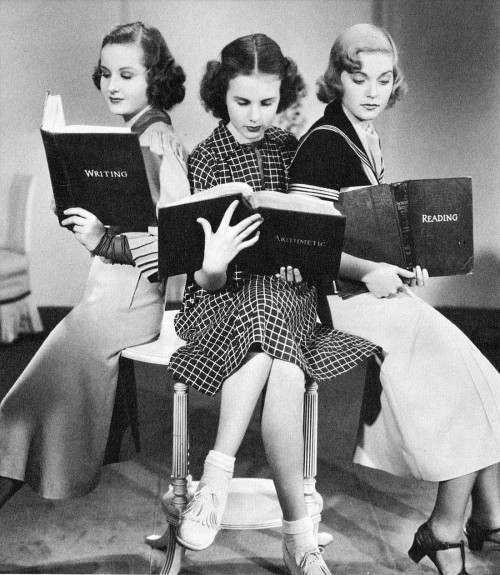
reading 2
Quiet, please. Writers at work.

Chances are you came to this blog/post via a link from an online screenwriting group or forum. (If you’re a first-timer – welcome! Feel free to subscribe.)

When time permits, I’ll browse through some of the groups to check out what kinds of subjects and topics are being discussed. There are also questions. A LOT of questions. Those can range from “How do I get an agent?” to “What’s the proper format for this?” to “How do these pages look?”, all of which will yield a wide variety of answers.

I don’t usually comment because most of the time I come into it late and somebody with just as much if not more experience than me has already said what I was going to say.

There was a recent post where somebody asked what the best screenwriting book was. Answers ranged from several well-known titles to “read scripts instead”.

To a certain extent, I think those are both good answers. The books that helped me the most were Dave Trottier’s The Screenwriting Bible, primarily in terms of getting a good handle on formatting and the basics of structure, and Paul Lucey’s Story Sense, which expanded on both (and appears to be out of print, but still worth tracking down a copy.)

While some books might help you get a grasp of the basics, the real learning comes from immersing yourself in reading scripts and working on your own. Another helpful practice is to watch a film with the script in hand, following along with the action onscreen while seeing how it’s written on the page.

Reading a script can really help show you what should and shouldn’t be there, which you can then apply to yours.

This doesn’t just apply if you’re just starting out. I still get a kick out of reading scripts, whether it’s from the Black List, or one somebody recommended, or even when someone asks me for notes. Bonus points if it’s somebody within my network of writing colleagues; I know they can deliver the goods, and that’ll be reflected in their script.

I’ve also seen my fair share of terrible scripts, usually identified as such by the content of the first page. If that’s not good, there’s little hope of improvement for the rest of it. The silver lining here is you will quickly see how NOT to do it, thereby ensuring you won’t duplicate it.

So while you should definitely devote time to writing your script, make sure you set some time aside to read scripts. You’ll be entertained AND learn at the same time.

-Filmmaker/script consultant/friend of the blog Jimmy George is offering a special limited-time discount for first-time clients – 50% off all script services. No matter what you’re working on, whether it’s a feature, a short, or TV, Jimmy’s ready to help you out. But better hurry – the offer’s only good until October 11th.

Good. Better. Getting there.

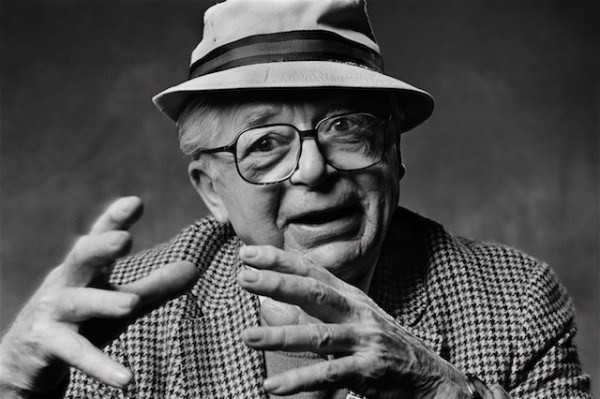
Billy Wilder
Never hurts to have a good role model*

Notes continue to come in for the pulp sci-fi spec, some contrary, many encouraging, and all chock-full of notable suggestions. With some coming from my trusted core of reliably savvy readers, there’s been one statement more than a few have included.

The gist of it is:

“This is the third script of yours I’ve read, and each one has shown a definite improvement over the previous one.”

It warms this writer’s soul to hear that sort of thing. And these are writers who pull no punches. They won’t hesitate to say something doesn’t work.

I’ve been working at this for a while, but it really feels like just the past few years have seen the most significant progress. Just goes to show what constant hard work can do, right?

Nor do I have any intention of slowing down. Doing my best to maintain a dedicated block of time and/or pages on a daily basis. The more you do it, the easier it gets (but is still tough).

The three scripts in question were all adventure-based, which enabled me to exercise a certain set of writing skills. With work now commencing on overhauling a comedy, an entirely new set will get the workout they deserve.

Crafting a sequence involving a train heist in the Old West, or a team of adventurers taking on a mad scientist? Piece of cake.

Writing a story involving everyday people in relatively normal (but funny) situations, peppered with smart (and funny) dialogue, all without the benefit of using special effects to enhance the story?

That is truly the next challenge to yours truly. It initially feels very daunting, but I’ve made it this far, and there’s no reason to think I can’t continue to push my way forward.

Should be a very interesting journey.

*Billy Wilder’s 10 Rules for Good Filmmaking (also applicable to screenwriting)
1: The audience is fickle.
2: Grab ’em by the throat and never let ’em go.
3: Develop a clean line of action for your leading character.
4: Know where you’re going.
5: The more subtle and elegant you are in hiding your plot points, the better you are as a writer.
6: If you have a problem with the third act, the real problem is in the first act.
7: A tip from Lubitsch: Let the audience add up two plus two. They’ll love you forever.
8: In doing voice-overs, be careful not to describe what the audience already sees. Add to what they’re seeing.
9: The event that occurs at the second act curtain triggers the end of the movie.
10: The third act must build, build, build in tempo and action until the last event, and then — that’s it. Don’t hang around.