
Ask a Nicholl-winning Script Reader!

1465249_10202485687454053_1139689699_n

The first in a series of interviews with some script readers who would be worth your while to work with if you want to get your script in shape.

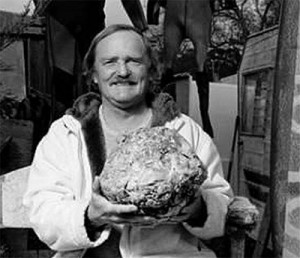
Today’s spotlight on: Doug Davidson!

Not only is Doug Davidson a Nicholl Fellow, but his script LETTER QUEST has the distinction of being the only animation script to ever achieve that honor.

1. What’s the last thing you read/watched that you thought was incredibly well-written?

DAWN OF THE PLANET OF THE APES. The most compelling character to hit the movies in a while is an ape. Caesar is a textbook protagonist. An extraordinary individual doing extraordinary things under extraordinary pressure. When you can end a movie by zooming in on the lead character’s face, and not have it feel cheesy, you know you’ve done something right.

2. How’d you get your start reading scripts?

I started in a screenwriting group, a large group that lasted several years. Early on, we agreed on always giving each other formal written feedback, because if you don’t have to write your feedback down, then you don’t think nearly as hard about it. When you put your feedback in paragraph form, you realize you have to make sense, you have to be consistent and you have to justify what you say. It gave me the discipline to write constructive, reasoned feedback instead of just tossing out opinions.

3. Is recognizing good writing something you think can be taught or learned?

Recognizing perfect writing is easy and intuitive. Anyone can do it. Recognizing the potential in a promising script that isn’t quite working yet, that takes more experience. And it takes a writer’s mentality. You need to study the craft for years. There are rules that are easy to memorize, but how to apply them, that’s much more difficult. Blindly applying the rules doesn’t lead to good writing, or good feedback.

4. What are the components of a good script?

The craft has to be there, and then there has to something else, a plus one. It could be funny comedy. It could be insight. It could be a new idea. That’s the “talent” part. You might think it’s this “plus one” that’s missing from most scripts, but I find the opposite to be true a lot of the time. Often a script has this amazing unique element, but the nuts and bolts of the story just aren’t in place yet. That’s when making the extra effort to put all the craft elements together really pays off.

5. What are some of the most common mistakes you see?

One of the most common mistakes I see is writers thinking a plot point (or character trait or thematic element) is clear on the page when in actuality it’s really not. At least not clear enough. It happens all the time, even to seasoned writers. That’s why feedback is so important. It’s not about saying your vision is wrong. It’s about saying your vision isn’t quite visible. Yet. The trick is to make sure everyone can see it.

6. What story tropes are you just tired of seeing?

Just about any story idea could work with the right execution. That said, I’ve come across a surprising number of scripts about screenwriters writing screenplays. Autobiography finds its way into most scripts, but it really helps to disguise it just a little.

7. What are the 3 most important rules every writer should know?

(1) Don’t (2) Give (3) Up.

8. Have you ever read a script that was an absolute, without-a-doubt “recommend”? If so, could you give the logline?

Nothing is absolute, but I’ve read more than a dozen really excellent unproduced scripts that I would recommend. I won’t go into the loglines here, but they’ve spanned just about every genre. I love to stay in the loop with the scripts I’ve read, especially the great ones. Several are optioned, several have placed very well in major contests and two have well known actors attached. Many of the writers of these scripts have secured representation as well. It requires some grit, but first-rate work will eventually get you places in this industry.

9. How do you feel about screenwriting contests? Worth it or not?

Screenwriting contests are absolutely worth it. It’s not the only path to success or a guarantee of success, but I know a fair amount of writers who have benefited greatly from contest placements. If you get an opportunity to read for a contest, I recommend that too. I’ve done it and learned a lot from the experience.

10. How can people get in touch with you to find out more about the services you provide?

My website is www.fourstarfeedback.com. I have a screenwriting blog there based on my experiences in the industry (and the numerous mistakes I’ve made). I’m also happy to answer specific questions via the email listed on my site.

11. Readers of this blog are more than familiar with my love/appreciation of pie. What’s your favorite kind?

I love pie too! I like to bake my own key lime pies. They’re pretty easy to do. I also love coconut custard, blueberry and anything with peanut butter. But my favorite would have to be . . . pecan. A great pecan pie has a sludgy quality – an intensely sweet sludge – balanced by a nutty crunch. Thanks for thinking of me, Paul! We’ll have to get together sometime for some coffee, and pie.

Why so hostile?

Angry voice!
Angry voice!

I’ve been making an effort over the past few weeks to build my network of writing acquaintances, which has involved connecting on assorted social media networks.

Several of these include groups of like-minded people that offer up the opportunity to ask questions, get feedback, etc.

One of them was about loglines.

Feeling fairly confident but open to suggestions about the one for my western, I typed it in, hoping somebody might have some helpful comments.

Within minutes, the response came in: “…or? What’s at stake? What are the consequences?”

Hmm. Well, her train’s been stolen, which…puts her livelihood at stake?  And it’s going to be used in a major heist, so the consequences are…widespread? I’ve always hated this part. Maybe I’m not giving enough information?

I wrote back: “open to suggestions.”

Past experience with logline feedback via online forums, while occasionally frustrating, has sometimes yielded positive results.

Sometimes.

A few minutes later: “I’m a producer and script consultant, not a psychic. If I knew what the story was about, knew the protagonist’s motives, knew what the antagonist was doing and why, and knew what was at stake and the consequences of certain actions, I would make a suggestion. However, with so little on offer, there’s little I can do other repeat what I’ve already said.

I’m not arguing anything after the word ‘psychic’. It’s not easy to get all of that across in a logline. It’s much harder than most writers realize.

(Side note – I love it when somebody backs up their comments with the proclamation of their qualifications. As expected, a quick internet search of this person’s “producer and script consultant” credentials yielded both jack and squat. It took a lot of effort to not ask them for more details.)

Desperately seeking resolution, I offered: “Would you be willing to take a look at the 1-page synopsis to get a better understanding of the story?

Soon afterward: “based on your logline, no”

And that was that.

While I didn’t have a problem with the actual advice, there just seemed to be this overall tone of angry condescension in their text. “Grr! I know what I’m talking about! My advice is infallible and you’re an idiot if you don’t listen to me! Grr! Argh!” Maybe I was just reading too much into it?

Honestly, it kind of nagged at me for the rest of the day. I always thought the point of these groups was to help each other. Sure, sometimes people just don’t get it, but I’m more likely to appreciate your comments if you seem willing/interested in actually helping me.

Later in the day, somebody with no connection to me whatsoever called this person out for being unnecessarily cruel (a bit harsh, but I understood where they were coming from). I made a point of staying totally out of what soon became a snippy back-and-forth of “I’m right, you’re wrong”.

So much for taking part in that group again.

Still seeking some kind of help, I tried again on a different forum, but approached it from a different angle.

I listed the logline plus some key story details that might help, adding how I was seeking some bolstering in terms of including stakes and consequences. (The original responder may have come across as an asshole, but I didn’t think their advice was wrong.)

There was a significant difference in the responses. A lot were not only helpful, but practical and encouraging, including this gem – “I love this logline. If I were a producer I’d want to read it. Hell, I still want to read it, just because it sounds like fun.”

I felt a little better, had what I felt was a stronger logline, and a few requests to read the script. Nice.

As part of that aforementioned back-and-forth, my original responder said they were just preparing new writers for the kinds of responses they should expect from the industry if they submit “subpar material”.

While I can understand that kind of thinking, it seems that people are more likely to heed your advice or suggestions if you actually come across as helpful, rather than sound like we’re wasting your time and the last thing you want to deal with right now.

But then again, I’m just a nice guy to begin with, so what do I know?

Building up to what it all comes down to

What he's holding represents what's at stake. Think about it.
What he’s holding represents what’s at stake. Hint: It’s not a rock

Time now for a very, very important question every writer needs to face:

Do you know how your story ends?

You come up with an idea, then proceeded to develop, shape, and organize all the stuff that happens in the middle, which eventually has led us to the where we find ourselves now: the big payoff. What the whole thing’s been about.

Everything your characters have been doing have been leading up to this. In theory, your first two acts have been about the protagonist’s world undergoing some drastic changes, how they dealt with it and now it looks like the bad guy’s going to win.

Which brings us to the grand finale that is Act Three, where our hero must somehow find a way to overcome these seemingly insurmountable odds, defeat the antagonist and hopefully come out of the experience a different person than the one they were way back when we first met them.

That being said, there’s still more to it.

-Your protagonist has a physical goal (what they want) and an emotional one (what they need). They can achieve both, just one or neither. Which applies to yours, and have you effectively steered the action to ensure that result? Can we see the changes they’ve undergone?

-Working with a subplot or three? If they haven’t wrapped up by now, better make sure to do it soon. Do you really want the reader to wonder “Hey! What happened to the part about ____?”

-Even a supporting character needs an arc to complete. Have you given each of them enough attention throughout the story to make this happen, and does their story wrap up in a convincingly believable way?

One of the most valuable lessons I’ve learned about putting a story together is that the central question (“Will the hero achieve their goal?”) is raised with the inciting incident around page 10, and each subsequent plot point raises it again, albeit with the stakes a little higher each time.

What happens in Act Three is where you show us how the central question is answered.

-And now, the much-heralded return of Movie of the Moment! This time, a way overdue look at GODZILLA (2014).

Wow. Everything PACIFIC RIM should have been. Instead of non-stop giant monster action, we get only glimpses as the focus is directed at the human aspect of the story. A much more effective approach.

While it’s not hard to suspend disbelief when it comes to a movie about giant monsters rampaging/duking it out in the downtown area of the city where I live, perhaps the most amazing piece of cinematic fiction (as observed by both K and myself) was in the background of one scene where a garage sign read “All-day parking $15”.

Now that’s make-believe.

Know the route you need to take

There's something to be said for taking the scenic route
Which way now?

After having reached the midpoint of the pulpy adventure spec outline, I’d been struggling with getting to the next plot point.

Not helping was the almost total jettisoning of material from the previous draft. The story had since changed in a drastic way, so there was nothing to salvage.

While I knew where the story had to go, I couldn’t figure out how to get there.

The midpoint sequence ended the way it had to – hero fully committed to achieving his goal, but now on several levels, and the antagonist getting closer to achieving his.

But what happens next?

Exploring several options, something finally clicked and I remembered a very simple rule we all tend to sometimes forget:

It’s not what could happen, it’s what has to happen.

THIS is what the characters need to do to move things forward (with your protagonist being the primary mover), and the more challenging we can make their journey, the better.

There are plenty of options of how things can play out in your story, but it will take some effort (and a lot of rewriting) to find the one that it needs.

Greetings from No Man’s Land!

Lost? Of course not. Just recalculating my position.

It took some doing, but I finally managed to get to the midpoint of the rewrite of the monster spec outline.

As is required for this particular plot point, my hero is now firmly committed to achieving his goal, plus not one, but two new conflicts thrown into the mix to make it that much harder for him.

There’s still a little setup-payoff work that needs to be applied to some earlier scenes, but I really like how it’s coming along.

But for now, my attention shifts forward – further into the vast wasteland that is the rest of Act Two.

To some, a staggering task of herculean proportions.  For me – not too much.

Well, maybe a little.

Act Two can be incredibly intimidating. Your script can have a killer opening and fantastic ending, but if what happens between them isn’t as good, if not better, than you’re in trouble.

What takes place in those 50-60 pages can really make or break your story. A reader or audience wants to see things happen as the characters grow (or at least change).

With such a vast canvas to work with, you might lose track of a lot of elements – supporting characters, subplots, etc. I remember reading a script that introduced what I thought was going to be an interesting subplot, but after that initial appearance, it never showed up again. It’s possible the writer just forgot about it, or maybe didn’t know how to develop it.

Take your time to plan things out. Yes, we all want to get done faster, but in this case, that’s the worst thing you could do.

Let’s assume you’ve got your plot points in place, so now it’s a matter of connecting them.  What has to happen in each scene to move things ahead to the next one?

Remember: each scene, no matter how big or small, should advance the plot, theme and character, as well as contain some kind of conflict.

It’s easy to get lost in all the details. Maybe there’s too much focus on this part, and not enough on that one. Again, take your time to figure it out.  Besides, you’ll be able to make the necessary fixes in the next batch of rewrites.

It’s okay if you don’t have all the answers right now, but there are lot of details you’re going to need to fill in as you move forward. And always keep asking “Is this the best way to have this happen?”

The journey through Act Two can definitely be a challenge, but it can be a little less daunting if you go into it prepared and knowing where you want to go.