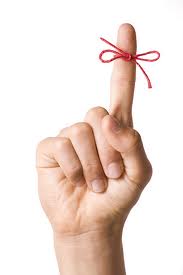
I knew I’d forget to remember

Hmm. I don't remember buying string, either
Hmm. I don’t remember buying string, either

Yesterday I came up with a great subject for today’s post. It was going to be fantastic. Poignant. Relatable. Very informative. You would have loved it.

I figured there was no way I could not remember something this incredible.

And of course, just a few hours later, I totally forgot what it was. I can rack my brains all I want, but it ain’t gonna work. Maybe it’ll pop up again someday, but for now, it’s gone forever.

Jump to last evening. I did a little more work on the first quarter of Act Two of the monster spec, so I’m still up to that page 45 twist.

With my next objective now getting to the all-important Point of No Return (where your protagonist becomes fully committed to achieving their goal), the ideas for scenes between those two plot points starting popping into my head.

And I had no intention of letting them get away.

Lesson learned from earlier in the day, I immediately wrote some down, with more likely to be added later.

I probably won’t even use that many of them, but it’s still better to be able to pick and choose from a wide variety of readily-available options than to curse my lack of foresightedness and have nothing to work with.

Since we’re all creative types around here, we know full well that inspiration can hit anytime and anyplace, which is great. But are we prepared to capture it when it does?

Bet you’ll think “Oh, I’ll definitely remember.”

Please don’t, especially if it’s an idea worth keeping.

Pen and notepad in your briefcase or backpack, an app for dictating on your phone, an extra line on that document on your computer, whatever method works for you.

Taking those extra seconds to save an idea now can potentially prevent you from seemingly endless frustration in the future.

This, rather than that


It's going to take a while to find the right path
It’s going to take a while to find the right path

The past several days have been all about revamping the story/outline of the monster spec. The percentage of what’s being eliminated from previous versions continues to grow on a daily basis.

A lot of what’s left still needs to be fixed, or at least changed. As much as I love the original ideas, they just weren’t working.

Part of the problem was my stubbornness to consider alternatives, and the frustration over trying to force the creativeness wasn’t helping either.

As has happened before, I had to ignore what I wanted, and concentrate on what worked for the story.  This had to be slow, calculated and meticulous, but I had one slight advantage this time around.

Remember that whole ‘previous draft’ thing? Turns out a lot of the contents are becoming just what I need by applying “What if…?” or “How about…?”

(Yet another example of why you should hold onto your previous drafts – they’re a treasure trove of of potential material)

These questions are proving to be more than adequate in creating foundations for developing new material. By taking a slightly different approach, new and previously unconsidered alternatives are making themselves known.

It has definitely yielded some positive results, including a drastic reconfiguring of the antagonist – originally conceived one way, but after finally accepting that changes were necessary and much tinkering, now fits into the story a lot better, and also provides for stronger conflict with the protagonist.

Don’t be afraid to consider new ways or different approaches to what you already have. While you may think it’s perfect the way it is, chances are it could probably use some reworking.


Out, damned trope! Out, I say!*

Do whatever you can to avoid falling into this perilous situation
Do whatever you can to avoid falling into a similar perilous situation

(*A slight variation on the actual line from MACBETH – Act V, Scene I. We’re all about accuracy around here.)

The more I work on the story of the monster spec, the more I realize how flimsy the villain’s plan is. I know what their objective is, but the biggest roadblock is figuring out HOW they’re going to accomplish it.

Part of the original story included a monster with shape-changing abilities taking the place of a high-ranking figure in world politics. At the time, it seemed good.

But now it just seems tired and stale. It really is something we’ve all seen before, which totally goes against what I’m trying to do. Coming up with a fresh, original story is one thing; telling it in a fresh, original way is another.

How often have you read a script or seen a movie or TV show and thought “Seen this before” or “Saw that coming a mile away”?

It’s easy to fall into the trap of using something that’s been used or done many times before. Cliches. Tropes. Clams. Call ’em what you will.  There’s nothing wrong with them, but it’s lazy writing.

Why would you go through the trouble of working so hard to create something new and exciting, but fill it with material that isn’t?

Read through what you have. Does anything come across as too familiar, or at least expected?

Look at that tired old chestnut as purely temporary, then go back and brainstorm a few alternatives which are totally opposite (or at least really different) but also accomplish the same thing.

Take a look at scripts and movies similar to yours. Can you see how they did it? Maybe it’ll inspire an approach you hadn’t thought of.

Feeling stuck? Ask for help. Twitter’s usually pretty good. You’ll soon discover that writers have the amazing ability to easily come up with ideas when it’s for somebody else’s project.

You’re a creative type, so get creative. You know there has to be a better way out of this. It may take a couple of tries, but you’ll get there.

In the meantime, I’ll be busy figuring out a new way for monsters to take over the world.

Caught in the ripple effect

It starts a chain reaction you just can't stop
A chain reaction you just can’t stop

When I work on pages, I make a point of adhering to the story as it’s written in the outline. There may be some slight alterations here and there, but that’s not an uncommon thing.

At the moment I’m in the middle of a sequence, that, according to the outline, was all planned out. No problems.

Little did I realize that over the course of the pages before this, all of those slight alterations would drastically change the circumstances surrounding my protagonist’s situation in that sequence.

Without knowing it, I had made things much harder not only for him, which is how it should be, but also for myself, which isn’t exactly the greatest of news.  Most of the details now had to be thrown away.

And because I’m such a glutton for punishment, this sequence was slowly becoming way too similar to one from about 20 pages before it. How I didn’t see this while outlining I’ll never know.

So it’s not necessarily back to square one, but I’ve got some work to do. Looking at this from the silver lining perspective, this is actually some pretty good stuff:

-My protagonist now faces bigger challenges, which still advance the story, theme and character development.
-I’m forced to come up with better, more creative ways of depicting how things play out.
-Recognizing and handling the domino effect those earlier changes have made and will make on the rest of the story.

Fortunately, we writers are a hearty lot and not easily deterred.  Time, experience and constant rewrites provide us with the determination and intestinal fortitude to work our way through this sort of thing.

Tying it all together

Nothing better than a solid connection of two loose ends
Nothing better than connecting those potential loose ends

Even though I just started this rewrite of the mystery spec, I’m firmly entrenched in the practice of always thinking “What’s the best way to tie this in?” for every scene. It’s something I strive for every time.

No matter how seemingly small or insignificant a part of a scene is, we as writers must be compelled to make sure it all fits not only within the context of the scene, but also within the story as a whole.

Everything should serve a purpose. If it doesn’t, why is it there in the first place?

Think of it as a slight variation on setup and payoff. While those usually apply to the plot (or at least should), tying things together is more of a way to support what happens around the plot. Anything that doesn’t belong is going to be even more noticeable.

It drives me crazy when something happens or is in a scene for no apparent reason. It’s easy to fall in love with your own writing, but don’t put something in because you think it should be there. Have it in there because it has to be.

Taking it in the opposite direction, I’m always impressed to realize after finishing a read (or viewing) how something tied in, but didn’t recognize it at the time. This can be tricky to get a handle on. You don’t want to be obvious about it, but also don’t want to make it too obscure.  It takes practice.

So the next time you’re writing, editing or proofreading, keep in mind to constantly ask yourself “Does this really belong here?”