Let’s get those brains stimulated, people!

You mean movies can be smart AND good?

One of my favorite things to do as a parent is go to the movies with my daughter. It’s a nice feeling knowing I’ve instilled in her the appreciation of the whole moviegoing experience. It also helps that there’s a fantastic two-screen (one of a handful of similar small neighborhood theatres in San Francisco) a few blocks from us.

And as she’s getting older, our choices are growing in number. Strictly kid-based animation has given way to PG-13 fare, so we try to see what we can when possible.

Earlier this summer, we caught JURASSIC WORLD and INSIDE OUT within a week’s time. She really enjoyed the dinosaur flick. I thought it was fun, but felt it relied more on the nostalgia factor rather than smart storytelling (“Remember when we helped Grandpa fix that old car?”). I found the latest offering from Pixar to be pure genius, while she found it to be simply “okay”. I asked why she liked the first movie more than the second.

“I think I like movies where you don’t have to think too much.”

Gasp.

I won’t go so far as to say it was a dagger in my heart, but you can probably understand my being taken somewhat aback.

I could easily chalk it up to that she’s still relatively young and hasn’t latched on to my love of the movies to the extent that I have. Like I said, the list of what she’s seen is somewhat limited. I’ve done what I can, and hopefully can continue to contribute to it.

But as a writer, what’s my biggest takeaway from this?

Obviously I want to write scripts for films that will be embraced by the general public, which means they’d have to be simple enough that anybody could follow along, but also written in a way that the reader/audience doesn’t feel insulted or talked down to.

All this talk about needing to appeal to the lowest common denominator has always bothered me. It makes it sound like there’s no point in trying to write something smart.

I beg to differ.

Getting the reader/audience to really think about the story gets them more involved. You hooked with them with the beginning, kept them intrigued throughout the middle, and now they’re compelled to find out how it all ends. Isn’t that what it all comes down to?

I love it when I read a script where it’s obvious a writer knows what they’re doing when it comes to telling a story. Setups and payoffs. Multi-dimensional characters. Plotlines where I know what the endpoint is, have no idea how we’re going to get there, and am getting a real kick out of taking the journey.

This is the kind of writing we should all strive to create.

It’s easy to write something that doesn’t try to challenge the reader/audience, and the reaction will probably be similar. “Boring.” “Unoriginal.” “Meh.”

Push yourself to write something that offers up something new, or at least a new twist on an old standard. Give us something we haven’t seen before, or totally weren’t expecting. Not just one part. THE WHOLE THING. There’s something exhilarating about venturing into new territory. Take us there.

We’re writers. It’s what we do.

Ask a Guy Who Takes Comedy Very Seriously!

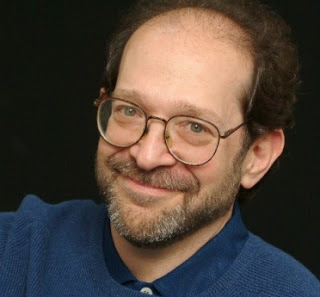
Steve Kaplan

The latest in a series of interviews with script readers and consultants who would be worth your while to work with if you want to get your script in shape. Today focuses on writing comedy, so the spotlight is on Steve Kaplan, who runs the Comedy Intensive course.

1. What would you call a good example of some great comedy writing in recent TV or film?

It’s sometimes difficult to separate great comic writing from great comic performances. That being said, I think the best comedy writing on television occurs, day in and day out, on THE DAILY SHOW and THE COLBERT REPORT. Both shows are able to combine sharp satire with great comic characters, and in the case of THE DAILY SHOW, much of the comedy benefits from the relationship between Jon Stewart’s somewhat befuddled and beleaguered news anchor and his crew of inspiringly loony correspondents.

Much has been written about the death of the sitcom, but Network TV still offers the great work from THE SIMPSONS (25 years, and still going strong) and MODERN FAMILY’s writing staff, while cable is a treasure trove of niche delights, from sketch shows like INSIDE AMY SCHUMER to episodics like LOUIE, VEEP, GETTING ON, and EPISODES. I’m also looking forward to the BREAKING BAD prequel, BETTER CALL SAUL.

The comedy feature record is spottier. Big hits like DUMB AND DUMBER TO and THE HANGOVER 3 may have made a lot of money, but for me, my favorite comedy of 2014 was THE GRAND BUDAPEST HOTEL — funny, lovely, odd, stylish, a little sad, touching and in the end, really about something. (As of this writing, I still haven’t seen THE INTERVIEW, but I’m really looking forward to it. The trailer made me laugh out loud, it provoked North Korea into a mammoth cyber-attack on Sony—what’s not to like?)

Film comedies I’ve enjoyed from the past few years include SILVER LININGS PLAYBOOK, AMERICAN HUSTLE, MOONRISE KINGDOM, THE TRIP and THE TRIP TO ITALY, THIS IS THE END, NEBRASKA, WARM BODIES, THE WAY WAY BACK, TED —exactly the way I like my comedies. Some were silly and looney, but looking over the list, most were funny, lovely, odd, stylish, a little sad, touching and in the end, really about something. What can I say. You might like vanilla; I like chocolate. In the end, it’s subjective.

2. What’s your comedy background?

As a kid, I was awkward and kind of odd—I was drawn to comedy because I noted that in comedy movies, the funny guys were awkward and kind of odd, but sometimes got the girl! That was good enough for me!

In college, I studied acting and directing. After college, I was given an opportunity to start an Off-Off Broadway theatre. I convinced my two partners that we should start a theatre that was completely devoted to comedy. Manhattan Punch Line helped launch the careers of actors like Nathan Lane and Oliver Platt, and writers like Michael Patrick King, Peter Tolan and David Crane. While at the Punch Line, I taught classes and worked with and directed sketch groups. I began to wonder why something that was incredibly funny on Thursday night would get no laughs on Sunday. Why sometimes the funniest performance of a play was at its very first table read? What was going on here? That’s when I started seriously exploring the art and the science—some would even call it the physics—of comedy.

At the time, I was teaching an improv class. Without telling the actors, I started experimenting with them—devising improv games to get at the core of comedy: how it works, why it works, what’s going on when it stops working, and what the hell can you do about it?

These experiments led to the discovery of a series of techniques, which in turn led to a forty-week Master Class in comedy. When I moved to LA, I it was suggested to me that I gear my course to writers. “You could be the Robert McKee of comedy!” was how Derek Christopher (who produces the annual Story Expo in LA) put it. That led to teaching comedy around the globe, and working with companies like DreamWorks Animation, Disney Animation, Screen Australia and Film Victoria, working as a consultant with writers and producers, publishing my book, The Hidden Tools of Comedy, and ultimately, being interviewed by you.

3. Who are some of your comedic inspirations/role models? What is it about them in particular that appeals to you?

That’s a hard question to answer. I’m a fan of great comedy, and the list of great comedy writers performers and creators could go on and on. There are parts of careers that inspired me—early to mid Woody Allen, late George Carlin, some Mel Brooks, Bob Hope in the ROAD movies, Steve Martin in ROXANNE and L.A. STORY and BOWFINGER, Monty Python, FAWLTY TOWERS, THE MARY TYLER MOORES SHOW, SEINFELD, Lily Tomlin, THE BOB NEWHART SHOW, ALL IN THE FAMILY, Richard Pryor, Chris Rock, Louie C.K., Lenny Bruce, Sarah Silverman, Tom Lehrer (okay, and Allan Sherman), George Burns, Bill Irwin, Judd Apatow, BROADCAST NEWS and AS GOOD AS IT GETS. I’m sure I’m leaving out twenty that after this is posted, I’ll hit myself on the forehead, shouting, “How could I forget _________?!!?”

What they all have in common, in some fashion, is an immediacy, honesty (in some cases, a ferocious honesty), an ability to see a slightly off-centered view of the world, and then share it so we see it as well. They all made me laugh, and most had the ability to touch the heart, to make you care and still be funny!

4. Do you think someone can be taught to be funny, or is it something that just comes naturally?

Groucho Marx once said “you can’t teach funny.” But the Marx Brothers were a terrible, just terrible, act when their mother Minnie first pushed them out on stage. But working eight shows a day in vaudeville, picking up hints and tips from the other performers, they honed their act into one of the greatest comedy teams of all time. But it wasn’t ‘natural’; it was through apprenticeship, observation, and yes, being taught by other performers.

While you can’t teach someone to be more talented, you can teach someone to act and write to the best of their ability.  And just like you can teach drama, you can certainly teach comedy. Yes, comedy can be taught.

5. What would you recommend for a writer who wants to develop or sharpen their comedy-writing skills?

What can writers do to sharpen their skills? Hang around with other funny people.

There are two great ways to do that. One would be to join an improv group or take improv classes. Since much of comedy is character-based, the best way to get inside a character’s head is to be one. Even if you’re not interested in being a performer or stand-up, the comic skills you’ll pick up are invaluable when writing material, whether it’s long form or short form, or just a set-up and punch line.

The second piece of advice would be to form or join a writers’ group. Once you’ve written your material, it’s imperative to hear the material read out loud in front of even a small group of friends and colleagues. It’s basic to comedy: the interaction between script/performer and audience. You’ve got to hear how those golden pearls play when read by humans to humans. You’re not looking for hours of rehearsal and polished performances, but just an intelligent read can tell you what’s alive and kicking in your script, and what’s dead as a doornail, only you don’t know it yet. So, in a nutshell: Funny people get funnier when in the company of other funny people.

6. Are there any comedy cliches you consider overused? Which ones are you just tired of seeing?

I’ve really tried to think of some that I hope never to see again, but I kept coming up with exceptions to the rule. Spit-takes are overdone, yet I still laugh when Desi or Danny does one. Getting kicked in the balls is another, yet there’s a beat in MONSTERS, INC. when Billy Crystal’s one-eyed character lands hard on his privates, and I’m sorry, it’s only a cartoon, but it’s funny. At least I thought so. I guess the difference is a meme or bit done by rote, and one enhanced by a great character or performance.

The things I am tired of seeing are scripts overloaded with weak, puerile jokes; scripts in which every character is a wise-cracker or failed stand-up comedian.

7. What’s the funniest joke you’ve ever read or heard from a non-professional ?

Hmmm. . . my six-year old niece once asked me, “Did you hear about the peanut walking alone in the park at night? It was a salted.” I thought that was pretty funny.

8. How can people contact you to find out more about your services?

My website is www.KaplanComedy.com, and my email address is Steve@KaplanComedy.com. In addition, you can follow me on Twitter at @skcomedy or on Facebook at Facebook.com/KaplanComedy. In addition to presenting one and two day workshops in the US and abroad, I’m also available for script consultations, whether on full-feature scripts, pilots, webisodes or treatments.

9. Readers of this blog are more than familiar with my love/appreciation of pie. What’s your favorite kind?

Man, that’s a tough question. I love Boston Cream Pie and apple pie a la mode, but if I’m on a desert island, and can only have one slice, I’ll go with pumpkin pie—ice cream on the side!

Ask an Ubiquitous* Script Consultant!

Danny Manus
*Seriously. The guy’s, like, everywhere. Podcasts, social media, online articles, you name it.

The latest in a series of interviews with script readers and consultants who would be worth your while to work with if you want to get your script in shape. Today’s spotlight is on Danny Manus of No Bullscript Consulting.

Danny Manus is the former Director of Development for Sandstorm Films (The Covenant, 8MM2) and Clifford Werber Productions (Cinderella Story, Just Add Water), where he sold “To Oz” to United Artists. He’s the author of “No B.S. for Screenwriters: Advice from the Executive Perspective” and was ranked one of the Top 15 “Cream of the Crop” script consultants in CS Magazine. He was also named one of Screencraft’s “25 People Screenwriters Should Follow on Twitter.”

1. What’s the last thing you read/watched that you thought was incredibly well-written?

The best written things I’ve watched lately have been on TV. There are movies I’ve really enjoyed – Chef, Planet of the Apes, Guardians of the Galaxy, Fault in our Stars, Bad Words, etc. – but none this year yet that I thought were OMG fantastic writing. To be fair, I haven’t seen Boyhood yet. But for me, TV is where the best material is these days. My favorite new comedy is You’re the Worst on FXX. I also really enjoyed The Last Ship on TNT and Masters of Sex on Showtime this summer. I’m sure there are wonderfully written books out there, but I don’t get to read them.

2. How’d you get your start reading scripts?

My first start was as an intern about 13 years ago at Columbia Tri-Star in TV Development and 20TH Century Fox Feature Casting. I was charged with reading everything that came in and doing coverage on them. But I used to go through their archive library and just read as many as I could, especially at Tri-Star. My coverage was liked by the VPs I worked under so much that they loaned me out to the SVP (Sarah Timberman at the time, who would not remember me if you paid her) and then the President at the time. Those gigs gave me enough coverage samples to land my first assistant job after I graduated.

3. Is recognizing good writing something you think can be taught or learned?

Recognizing bad writing is something anyone can do. Recognizing great writing is something that can be taught and learned with time and experience. As a first year assistant and intern, I could tell you what was written poorly. But it took a few years of reading hundreds and hundreds of scripts to TRULY understand good writing. And many thousands of scripts later, I’m still learning.

You can’t read a book on screenwriting and think you’re suddenly able to be a professional consultant or reader or writer. There is no checklist given to new readers, it’s learned on the job – that’s why it’s SO important for writers to READ. Though I actually did develop a checklist I used to give to my interns. It was 110 items long. But if you’re a great reader, they are all just in your head and you notice them naturally.

4. What are the components of a good script?

There are basic elements everyone agrees on – a concept and hook that sparks a reaction and has potential to lead somewhere intriguing; compelling, three-dimensional characters who make you want to follow them; dialogue that feels sharp and precise yet natural and flows; enough growing conflict and high enough stakes to keep ones interest; and a plot that progresses throughout the script in interesting ways. Every script should have strong setups, executions and payoffs. But to make it go from good to great, it’s about the X-factor. Some of that is voice, but some of it is just the right writer writing the right story in the right way at the right time. That’s when true brilliance strikes. And it doesn’t happen often.

5. What are some of the most common mistakes you see?

I see them all. I mean, the biggest mistakes are that writers are writing stories that aren’t MOVIES. They’re just not strong enough ideas or hooks to be movies in the current studio or indie marketplace. Or that the writer doesn’t know the hook of their idea. Or that the writer uses too many COINCIDENCES or serendipitous moments to create plot.

Actually, you know what the #1 mistake I see is? The use of YOU’RE and YOUR! I mean, WTF people – it’s not that hard to know the difference. Thinking that typos and grammar and format don’t matter – they do!

The biggest non-craft mistakes writers make is not doing their research and not knowing ANYTHING about the actual business. And secondly, submitting projects LONG before they’re ready to be submitted. Querying and pitching on a first draft or before a script is even written, entering contests with a first draft, posting their second drafts on websites. The biggest mistake I see is desperation and impatience outweighing common sense and good judgment.

6. What story tropes are you just tired of seeing?

I could go the rest of my life without seeing another Geek to Chic Teen story. Or the Christmas tale of someone losing their Xmas spirit until X happens. Or the story of the struggling writer trying to break into Hollywood and X happens. The Screenwriter protagonist CAN work – but 98% of the time it doesn’t and I like to play the odds. In terms of character, if I never have to read about another female rape victim or domestic abuse victim, I’d be okay with that too. Those are so common in scripts it’s lost its meaning. But in the end, what I always say is – Don’t run from the cliché, just make it seem NOT cliché. That’s a writer’s job.

7. What are the 3 most important rules every writer should know?

-It’s not called the artist colony, it’s called the Film Business. So treat it like one. And if you want this to be a career, treat it like one.

-Writing is rewriting and if you can’t take notes and really truly rewrite, you’ll never have a lasting career.

-Your first draft and first script is SUPPOSED to suck. If you think your first script is going to sell and make you rich, you’re living in a dream world. Just. Keep. Writing.

8. Have you ever read a script that was an absolute, without-a-doubt “recommend”? If so, could you give the logline?

Absolutely. But most were already projects in development written by top notch writers. I have had a number of clients whose projects were Recommends – but none were like that on the first draft. I can’t really divulge the loglines though.

9. How do you feel about screenwriting contests? Worth it or not?

There are about 15 contests out there that are completely worth it that I highly recommend, and about 250 contests out there that aren’t. If you win a major, prestigious contest it can definitely start your career and get you noticed. But if you’re continuously a quarterfinalist or not even making the quarters, then you’re not ready yet. Or your script isn’t. Contests are absolutely worthwhile IF your script and writing is at a level where you can be in the top 100 writers out of 8,000. If you can’t say that, then you’re probably wasting $40. Keep in mind – the Top 10 contests get about 45,000 submissions total. And they give out about 150 prizes to finalists and winners. So, those are your chances. Your script has to be REALLY fucking good. But as someone who has had multiple major contest winners and finalists as clients, that’s what I’m here for.

10. How can people get in touch with you to find out more about the services you provide?

You can always check out my website and services at www.nobullscript.net and follow me on Twitter @Dannymanus (I was named one of Screencraft’s 25 People Screenwriters Should Follow on Twitter).

And if interested, I’m running a 4-week online course “Creating More Compelling, Castable Characters” which starts Sept 26th and it’s going to be a great class. So, I encourage everyone to check out details at www.compellingcharacters.eventbrite.com

11. Readers of this blog are more than familiar with my love/appreciation of pie. What’s your favorite kind?

I’m an apple pie guy, though a good chocolate cream pie with the chocolate mousse and whipped cream…nom nom nom.

Ask a Script Consultant who’s also a Working Writer!

mark sanderson

The latest in a series of interviews with script readers and consultants who would be worth your while to work with if you want to get your script in shape.

Mark Sanderson (aka @scriptcat) is a Los Angeles based screenwriter, script consultant, and sometimes actor blessed to be living his childhood dream of making movies with a spec sale and a dozen screenplay assignments that have produced seven films. Mark’s long association with award winning Hollywood filmmakers dates back to his first produced screenplay and has since worked with Academy Award® winning producers, veteran directors, and Academy Award®, Emmy®, and Golden Globe® acting nominees. He offers script consultation services on his website at www.fiveoclockblue.net and also offers advice on his screenwriting blog MY BLANK PAGE. Look for his upcoming book A Screenwriter’s Journey to Success coming out later this year on Amazon.

1. What’s the last thing you read/watched that you thought was incredibly well-written?

I don’t have much time to spend watching a lot of TV or movies, but the best writing these days is on television in my opinion. I manage to catch an episode here and there of shows, but don’t really spend a lot of time watching many series. When I watch movies, I tend to be really picky and very few films out there today don’t really draw me in—so I go for the classics. On television, I really thought the limited series Sherlock was excellent writing, Mr. Selfridge too, and I got hooked into the The Following for a while and that was good serialized writing. I’m just getting into the old pulpy Doc Savage novels from the 1930s and the writing is great and so visually ahead of its time. I read that Hollywood is planning on making a Doc Savage movie and if done right, could spawn a series of new films.

2. How’d you get your start reading scripts?

Well, I’ve had a professional screenwriting career for the past fifteen years and during the last few years I decided to open my consulting business on the side.  I’m always reading scripts even if I’m not consulting on them. I have a small group of writer friends and we trade our scripts back and forth for feedback.

3. Is recognizing good writing something you think can be taught or learned?

I believe it comes from years of learning and studying the craft of screenwriting. When writers build a strong foundation of experience reading scripts, studying structure, character, writing scripts, executing notes and mastering their craft—this is when they can finally give experienced and critical feedback if a script is good writing or not. It also is vital to know the language of cinema. I’m aware that some consulting sites farm out the reads to “readers” and one never knows who is actually reading the script or their experience level when giving notes.

4. What are the components of a good script?

It starts with a compelling story and something that you can clearly see grew from the writer’s passion for the material. Too many times I read scripts that are trying to chase after Hollywood’s big budget blockbusters and they fall short because the writing is boring, clichéd and trying to emulate something that has already been created. The scripts read like a rehash and not something original. A good script showcases the writer’s unique voice and the best of their talents. It has interesting characters that we care about and written in a fluid, efficient way that includes only what is necessary to keep the story moving forward. A good script also has a rock solid structure and a series of reveals, surprises, setups and pay offs that keep us captivated to read until the end or sit through the film until the lights come up in the theater.

5. What are some of the most common mistakes you see?

I’m shocked that many screenwriters still have no respect for the professional format of a screenplay. They believe the reader will look past the format and typos issues to see their genius idea and buy it for that alone. A script lives or dies by a thousand small details and considering the volume of scripts that bounce around Hollywood every year, the industry has no patience for unprofessionalism. Other common mistakes I see happen when screenwriters do not work from a solid outline or treatment before they jump into pages. Approximately three quarters of your work usually goes into the story even before you type FADE IN. Other mistakes come from overwriting and micromanaging the scenes. Aspirants need to learn what to put in a script—and equally as important what to leave out. I tell writers: “Stay the hell out of the way of the story.” Many are so eager to put their fingerprints all over the pages and that’s just ego. The best writing is when the screenwriter is almost is invisible on the page and the script reads as if you’re watching the film. I also find too many mistakes with structure and the story happening too late or not enough story to facilitate 100 pages. The set up in the first act many times is way too long. Hopefully these writers learn from their mistakes and focus on becoming better screenwriters by creating stories they are passionate about rather than chasing fame and fortune.

6. What story tropes are you just tired of seeing?

One big one that I can’t stand is the use of “Deus ex Machinaor using a contrived way at the end where a character or action saves the day. It shows lazy writing and ends the story on a weak beat leaving the reader unfulfilled. Another one is the “fall” or “twisted ankle” of a character escaping that is usually followed by the line, “Go on without me!” Another one I’m tired of seeing is the “I hate my job, my boss and do nothing but complain” routine.

7. What are the 3 most important rules every writer should know?

1. Disrespect the craft at your own peril. You will never be bigger than your craft because screenwriting is an ongoing learning experience.

2. You must become a collaborator and ultimate team player because if you grimace at their notes, they will brand you as “difficult” and not work with you again.

3. You may have to write five, six or seven specs over a period of years to even get one optioned or maybe sold if you’re lucky. But if you’re impatient and looking for fame and fortune, you’re in the wrong business.

8. Have you ever read a script that was an absolute, without-a-doubt “recommend”? If so, could you give the logline?

Well, I don’t give “recommends” because I’m not reading for a producer, but I do tell writers if they were successful in the execution of their idea. Screenwriting is all about the execution. Good ideas are a dime a dozen in Hollywood—they’re everywhere and it’s the execution of a script that’s vital to its final success. Yes, I did read a few scripts during the last year that were superb and written by experienced filmmakers—so that helped. I can’t give out the loglines as I have a non-disclose agreement with my clients, so I’m not allowed to discuss the elements of their projects with anyone.

9. How do you feel about screenwriting contests? Worth it or not?

Yes, many of the top contests are worth entering as a chance to “make some noise” and get noticed. Back in the day, I entered a spec in the Nicholl Fellowship and it ended up in the top twenty scripts out of thousands worldwide. They picked the top eight that year for the fellowship, but since I had placed in the next dozen, agents and mangers were willing to give it a read. Eventually it found a producer who championed the script and it was produced, played in film festivals worldwide, premiered on TV and distributed globally. But, be careful and read the fine print of the contest you are entering as some stake claim to your script if you win. Do your homework on the various contests and make sure you are putting out your best material that will properly represent your talent and ability. If it’s not ready, go ahead and miss the deadline because there is always next year.

10. How can people get in touch with you to find out more about the services you provide?

Screenwriters can find more information about my consulting services on my website at: www.fiveoclockblue.net. I’m also on Twitter: @scriptcat

11. Readers of this blog are more than familiar with my love/appreciation of pie. What’s your favorite kind?

Oh that’s an easy one…definitely a tie between boysenberry and cherry. I could eat both with ice cream as a “last meal” and die a happy man. Apple pie comes in a close third, but all pie should be heated.

Building up to what it all comes down to

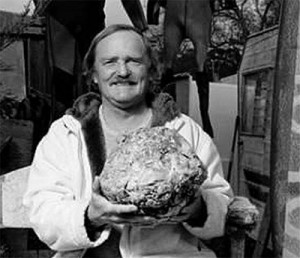
What he's holding represents what's at stake. Think about it.
What he’s holding represents what’s at stake. Hint: It’s not a rock

Time now for a very, very important question every writer needs to face:

Do you know how your story ends?

You come up with an idea, then proceeded to develop, shape, and organize all the stuff that happens in the middle, which eventually has led us to the where we find ourselves now: the big payoff. What the whole thing’s been about.

Everything your characters have been doing have been leading up to this. In theory, your first two acts have been about the protagonist’s world undergoing some drastic changes, how they dealt with it and now it looks like the bad guy’s going to win.

Which brings us to the grand finale that is Act Three, where our hero must somehow find a way to overcome these seemingly insurmountable odds, defeat the antagonist and hopefully come out of the experience a different person than the one they were way back when we first met them.

That being said, there’s still more to it.

-Your protagonist has a physical goal (what they want) and an emotional one (what they need). They can achieve both, just one or neither. Which applies to yours, and have you effectively steered the action to ensure that result? Can we see the changes they’ve undergone?

-Working with a subplot or three? If they haven’t wrapped up by now, better make sure to do it soon. Do you really want the reader to wonder “Hey! What happened to the part about ____?”

-Even a supporting character needs an arc to complete. Have you given each of them enough attention throughout the story to make this happen, and does their story wrap up in a convincingly believable way?

One of the most valuable lessons I’ve learned about putting a story together is that the central question (“Will the hero achieve their goal?”) is raised with the inciting incident around page 10, and each subsequent plot point raises it again, albeit with the stakes a little higher each time.

What happens in Act Three is where you show us how the central question is answered.

-And now, the much-heralded return of Movie of the Moment! This time, a way overdue look at GODZILLA (2014).

Wow. Everything PACIFIC RIM should have been. Instead of non-stop giant monster action, we get only glimpses as the focus is directed at the human aspect of the story. A much more effective approach.

While it’s not hard to suspend disbelief when it comes to a movie about giant monsters rampaging/duking it out in the downtown area of the city where I live, perhaps the most amazing piece of cinematic fiction (as observed by both K and myself) was in the background of one scene where a garage sign read “All-day parking $15”.

Now that’s make-believe.