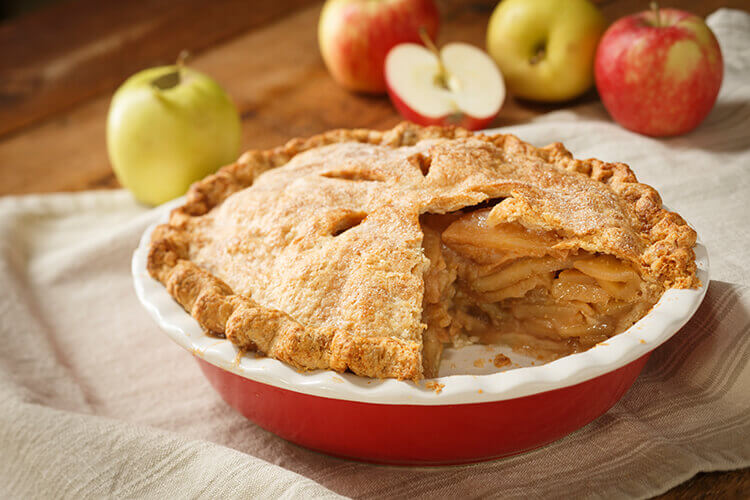
Past You would be really impressed

Ask any screenwriter how their most recent draft compares to, say, their very first one, by which I mean THEIR ABSOLUTE VERY FIRST ONE, it’s probably a sure thing they’ll say something along the lines of “It was awful!” or “An absolute mess!”, or maybe even “I don’t even want to think about it it was so bad.”

Taking a look at some of my first attempts, I can say the exact same thing. Scenes that drag on. Flat action lines, or ones that were way overwritten. Big chunks of text on the page. On-the-nose dialogue that’s pure exposition. Spoonfeeding story details to the reader to make sure they understand what’s going on.

Nothing to be ashamed of. There are vomit drafts, and “looks like my printer vomited words all over the pages” drafts. You gotta start somewhere, and the important part is YOU GOT IT WRITTEN.

Nowhere to go but up, right?

So you start working on getting better. You get feedback. You start to understand why things aren’t working and what you can do to fix them. You learn, and all this new knowledge helps shape the next draft to better than the one that came before it.

You put in the time and the effort and it becomes more noticeable how your writing is getting better. All of those newbie mistakes are a thing of the past. Your script seems more polished. There’s still room to improve, but it doesn’t seem as daunting now, does it?

Multiple drafts and seemingly neverending rewrites are par for the course. It happens to even the most experienced screenwriters. The hardest part is getting that first draft written. Accomplish that and you’re already ahead of the game.

There will most likely be a ridiculous amount of rewriting in your future, and the end result may be totally different from what you started with, but think about how far you’ve come. You probably had no idea when you were just starting out that you’d be so willing to put yourself through all of this, over and over again.

And that might even be for just one script.

Sure, you might be a little embarrassed when you look at your earliest scripts, but look at your most recent draft or the pages you wrote last weekend. As if they’d been written by two entirely different writers. Because that’s exactly what they are.

Past You was just starting out and made a lot of mistakes. Present You knows what’s needed and does it.

And just imagine the skills that Future You is going to have.

Q & A with Cody Smart of Next Level Screenwriting

Cody Smart is an L.A.-based Latina writer, script consultant and script doctor with degrees in English Literature & Linguistics, Screenwriting, Development, and Producing, who prides herself of helping writers take their work to the next level, in both English and Spanish. She moved from Santiago, Chile to L.A. to pursue her masters, fell in love, and now enjoys family hikes chasing her toddler around in the perfect L.A. weather.

She worked as a script analyst at Sony for three years, reading hundreds of scripts, and honing her craft and learning to appreciate the development of scripts and how to best guide writers to deliver the best script possible.

She also works as a judge for seven film and screenplay competitions, where she’s learned what makes scripts engage readers and attract the attention of managers, agents and producers. As a writer herself, Cody has placed in multiple competitions, and won some awards.

Cody is also the head of coverage of Story Data, a script-hosting site, where she does a bi-monthly vlog with tips for screenwriters.

She also currently teaches two courses about Screenwriting, Script Doctoring and Get Your Script Contest Ready, as a UCLA Extension instructor in the Writers’ Program, and is developing a new TV Workshop for the fall quarter.

Cody has worked with a wide variety of clients, helping to provide in-depth script analysis, and also rewriting/doctoring hundreds of scripts in order to get them ready for production. She loves working directly with her clients, understanding their needs, and staying true to the essence of the story the client is trying to tell, in order to elevate the story and characters.

What was the last thing you read or watched you considered exceptionally well-written?

THE QUEEN’S GAMBIT. I was a little bit late watching it, as it came out in 2020, but I was so legitimately impressed at the quality of the writing. They managed to take chess, a “boring” subject that doesn’t lend itself to be that visual or entertaining, and turned it into an exemplary work of character development.

How’d you get your start in the industry?

While I was in grad school, I started interning at Sony, and that’s were I fell in love with the development side of things. Before that, I always thought my path was to be a writer only. Then I discovered how interesting developing and consulting was, helping other writers improve their work, and getting scripts ready for production.

Is recognizing good writing something you think can be taught or learned?

Yes, definitely. I believe everyone can learn if they have the will and want to do so. If you study scripts and films, and study your craft, you can learn what good writing is. That’s also what makes any writer a better writer: studying the best in the craft, lots of practice, and lots of rewriting.

What do you consider the components of a good script?

A good script is a great mix of different things: amazing characters that are three-dimensional and realistic, with real wants and needs, and great arcs. A world that aligns with the tone and genre, and that hopefully is also new in some way. A premise that either feels fresh and new or that is a new take on old ideas, making it feel fresh and new. Writing that has a voice of its own, and that makes you want to keep turning pages.

What are some of the most common screenwriting mistakes you see?

As a consultant & doctor as well as a judge for multiple festivals, I’m constantly looking at issues in scripts. Doing that, I’ve found these to be the most common:

– A premise that doesn’t work from the start. Usually this means you just have an idea, but no plot. Or you have an unoriginal concept or one we’ve seen hundreds of times before.

– Not proofreading, which leads to bad formatting, typos, grammatical errors, etc.

– Not outlining first – then you don’t know where your story is going, and it shows in your draft, as the story loses aim. Part of this could be when the story/the protagonist has no clear goal.

– Dialogue that doesn’t feel natural or no use of subtext.

– Starting scenes too early and leaving them too late.

– Not killing your darlings – some scenes may be greatly written, but if they don’t advance the plot, then you don’t need them in your script.

– Directing in your script – this tends to take the reader out of the world of your story.

– Not grabbing your reader/audience in the first 10 pages (or even the first 3!)

– Overusing transitions.

– Use of flashbacks that don’t move the story forward or don’t reveal any new information.

– Zero character introduction/description. No memorable introductions, so we forget them. Also too many characters being introduced at the same time, so we forget who’s who.

– The world of your story isn’t clear.

– Long chunks of descriptions – Readers are known to skip past these. 

– Too much exposition.

– No subplots or interesting supporting characters.

– Antagonists that are two-dimensional or formulaic.

– Writing a formulaic script just with the intention of selling it, instead of writing a unique story you’re passionate about that’ll definitely get you noticed (even if just as a writing sample).

What story tropes are you just tired of seeing?

Tropes work for a reason—audiences expect certain things in certain movies, like a falling in love montage in romcoms. But just because people expect them, that doesn’t mean they don’t want to be surprised. The tropes I’m tired of seeing are those that just follow tropes to the letter. I love when a writer turns a trope upside down and surprises the audience. When they don’t and deliver the same old things, then that’s when they’re boring and I don’t want to see them anymore.

What are some key rules/guidelines every writer should know?

– Show your voice in your script. That’s what will set you apart from the thousands of scripts being written every year.

– Write the story you want to tell as a writing sample to impress people, and open doors for you, even if it doesn’t get bought or filmed.

– Formatting exists for a reason. Follow it and don’t play games, or your script won’t get read, even if it’s amazing.

– It’s hard to come up with new ideas that haven’t been told. But new takes on old ideas that make the ideas feel fresh can be a great way of creating something that feels new.

-The best antagonists are just as interesting as the protagonist, and they’re the hero of their own story. When we understand their reasoning, that makes them much more powerful.

Have you ever read a script where you thought “This writer really gets it”? If so, what were the reasons why?

I remember when I read the script for JUNO. It had such a unique voice and point of view. It had a protagonist that felt real, with flaws and dreams. It explored what felt like real teenagers. It had amazing supporting characters, and we could understand everyone’s POV in the story, as different as they all were. And it was pretty contained. It could be shot for cheap. But most importantly, it wasn’t something completely new: we’ve seen stories about teen pregnancy before but it turned the idea upside down, making it feel so fresh that it ended up winning so many writing awards.

How do you feel about screenwriting contests? Worth it or not?

Totally worth it. I even developed a course called “Get Your Script Contest Ready” for UCLA Extension that debuts in June 2021. That said, having a contest strategy, knowing what appeals to contests, identifying the best contests to propel your career forward, and understanding that you also need to network and take an active role in getting your scripts out there are key things every screenwriter needs to know.

How can people find out more about you and the services you provide?

For information about my script consulting & doctoring services, or my writer services, they can check out my Facebook page (@NextLevelScreenwriting), my Instagram page (nextlevelscreenwriting), or send me an email (nextlevelscreenwriting@gmail.com).

I can share more about my services and background information, and we can talk more in detail about what they need help with, as I offer very personalized services.

Readers of this blog are more than familiar with my love/appreciation of pie. What’s your favorite kind?

Wow, this is such a hard question, because I have such a sweet tooth. But if I had to pick just one, I’d have to say my grandma’s pecan pie recipe. It brings back so many amazing childhood memories by the smell and taste of it, especially living far away from my family, and missing them all the time.

Q & A with Aiko Hilkinger

Aiko Hilkinger is an award-winning, queer, German-Japanese screenwriter from Colombia. She primarily works in fantasy and animation, and her pilot “Kate and Ava” placed her in Network ISA’s “Top 25 Screenwriters to Watch in 2021”. Hilkinger creates magical worlds filled with diverse characters that children and teenagers can relate to and see themselves represented in. Not only does she strive for diversity and inclusion in her stories, but most importantly, she believes that through her animation work she can connect with kids and help teach healthy communication and to own up to their mistakes.

When she’s not writing, Hilkinger works as a script analyst for big screenwriting contests and has recently started her own script consulting business.

What was the last thing you read or watched you considered exceptionally well-written?

I feel like I’ve said this to the point where the people who know me have gotten tired of hearing it, but Kipo and the Age of Wonderbeasts on Netflix has to be my pick. I honestly think the show made my 2020 much more bearable while also blowing my mind with their imaginative storytelling. The show was planned as a three-season arc and you can tell when watching it that it was meticulously planned as the story is just so tight and has a clear message all the way throughout.

How’d you get your start in the industry?

I actually don’t feel like I’ve “made it” into the industry yet. I joke that I graduated from “baby writer” to “toddler writer” in 2020 since it was a learning year for me. After I graduated from film school, one of my teachers helped me get an internship with an agency where I perfected my coverage skills. After that I applied to work as a script analyst for a contest site while entering some contests here and there for the first time.

I won some pretty cool awards this year and was named one of the Top 25 Screenwriters to Watch in 2021 by Network ISA. I’m looking forward to new opportunities this year, like getting signed and hopefully selling my first script or getting staffed in a room.

Is recognizing good writing something you think can be taught or learned?

I think you can teach someone what to look out for (structure, format, clear goals, etc.) in a script but after a while it becomes a feeling. It sounds strange, and it definitely is, but after reading as many scripts as I have, you start to very easily pick up on things that make a script good or bad. At times it has everything to do with those “rules” we’re taught in film school, and it’s easy to technically say why something isn’t working, but it’s only through practice of your own craft and opening yourself up to criticism that you really learn what works or doesn’t for you, and how to break those rules.

What do you consider the components of a good script?

A good script has something to say. I’m a sucker for a good theme, and I always suggest looking at it as a “thematic statement” or “the lesson the protagonist or antagonist will learn”. When a writer knows what they want to say with their piece, it gives the story direction, and it is much more enjoyable to see them get there.

Oftentimes when a script doesn’t know where it’s going, you can feel it, it’s like you’re wandering around aimlessly through a world, surrounded by characters who don’t know what they want and thus you don’t know what they need. Definitely start your writing journey by knowing your why (why do you want to tell this story and why does it need to be told now?).

What are some of the most common screenwriting mistakes you see?

One of the most common mistakes I see is characters not having a clear goal. A goal is the driving force behind the protagonist accomplishing something by the end of the script and without it, the story can drag on and become repetitive. We don’t want to see someone live their life day to day because it’s not dramatic; not every action pushes the story forward. That’s why it’s important that not only the protagonist has a clear goal, but the antagonist does as well, since they’re the ones who will get in the way of the protagonist.

I also recommend giving other characters goals of their own so that they can be more rounded and have something going on that gives them more depth other than doing whatever the protagonist needs them to do.

What story tropes are you just tired of seeing?

I’m exhausted of seeing every queer story be about “coming out” and dealing with homophobic families, friends, etc. It’s the same annoyance I have about POC films, especially Asian-American stories, only being about the struggle of immigration. There are so many other beautiful stories that can be told outside of the constant struggle to be accepted by a straight, white society that need to be told in order to showcase the beauty of our cultures and communities.

I want to watch a film about queer love that has nothing to do with strife or struggle, and I’m so happy that we’re slowly starting to get there with shows like Schitt’s Creek and She-Ra. And I would love to take my family to watch a film with characters that look like us where they’re just living their lives unapologetically, like Crazy Rich Asians and One Day at a Time.

What are some key rules/guidelines every writer should know?

Write with a purpose. Know your why. Why are you writing this story? And why is it important to tell it now?

Fill out a bullet point list of your main structure in order to know your main emotional turns before you start writing.

Always outline, even if you don’t like it. Look at your outline as your first draft.

Make sure your characters have clear goals (wants) and clear needs (areas for growth).

Sneak exposition through conflict.

Make sure your characters are emotionally motivated.

Antagonists should have a clear driving force behind them.

Read as much as you can and make it a variety (both produced and peer scripts) in order to figure out what works for you in terms of storytelling, and to practice pinpointing why they don’t work for you.

You don’t have to take every note you get. Take the ones that resonate and throw away the ones that don’t.

Have you ever read a script where you thought “This writer gets it”? If so, what were the reasons why?

The main reason is that it’s clear the writer has something they want to say. I know I’ve mentioned this a lot, but it truly is the most important thing you can do. The second I get your voice and understand your point of view, I’m in. It’s our job to make that as clear as possible because our voice is what will set us aside from other writers. It’s what we bring to the table, what we’ll get hired based on, so it’s the most important thing to develop. And through a lot of practice, giving and receiving notes, you’ll get there.

How do you feel about screenwriting contests? Worth it or not?

Contests can be worth it if you have money to splurge. I know a lot of people who haven’t had a lot of success from them and it can definitely be frustrating. I’ve had a very 50/50 experience. I didn’t make it into a few contests that I was excited about, but then I made it into one that really, really worked for me.

You have to be very clear with yourself about what you want out of these contests (exposure, management, etc.) and make sure you know they’re not your only chance to get into the industry. Also, be sure to ask fellow writers about their experiences in order to find out which contests are the best for you and your goals.

How can people find out more about you and the services you provide?

I am super active on Twitter – @aikohwrites. That’s where you can find me saying things I probably shouldn’t. And if you’re interested in my coverage services, you can go to aikohilkinger.com/script-coverage to find more information.

Readers of this blog are more than familiar with my love/appreciation of pie. What’s your favorite kind?

This is such a good question! My favorite is apple. My mom has always had her own recipe and her apples for some reason always taste amazing. But if we’re being more specific, I love a good, warm and buttery strudel (maybe with some ice cream and caramel).

Q & A with Terry McFadden

TERRY Cool

Terry McFadden came up through the ranks as a playwright having been produced
throughout the United States, the UK and Australia and winning several awards. From there he worked as a script consultant for ARD Television, Radio and Films and Eternity Pictures before starting off on his own. He has had the good fortune of giving studio notes to producers on scripts that got made such as THE GOOD GIRL, CONFESSIONS OF A DANGEROUS MIND and THE TRUTH ABOUT CHARLIE.

As the founder of Story Builders Script Doctor & Writing Services, he has covered, analyzed, given notes and consulted on hundreds of screenplays, TV pilots and story ideas and is dedicated to helping writers find and hone their own unique voice.

What’s the last thing you read or watched you thought was incredibly well-written?

JOKER. Without question. The absolute best script of 2019. From the very first page I loved the writing. Now, a lot of it is because I so identify with the charm and depth, the way it was done, the thematic and stylistic elements hit me right off. Not only was the lead character great and unique but he starts out as a very human but weird guy who has issues—issues that are clearly foreshadowed and then evolved. The story makes clear and piece by piece layers in not only his mental and delusional maladjustments but the idea that the way things turn out, as a result of his upbringing and belief systems and how he sees himself and world, is the only way it can end. This is developed wonderfully.

Screenwriters are taught to look at story, the characters and their arc, the twists, the spins, the reversals, the progressive development and surprises; a solid and rising structure with the catalyst plot points, midpoint, and the rest. All of that was there in JOKER but what kept me turning pages was the way it all weaved back in—supporting and commenting on what is already going on adding dimension. A real fresh slant on how he becomes not only his own hero but also the hero of those in need of such a person. The metaphors, the allegories, the songs, the running symbolic commentary—all snaking back and endorsing what is going on or will be, was both unpredictable, cool, necessary yet not seen coming in that way. Very well done.

How’d you get your start in the industry?

I started as a musician. Eight years old, I’m taking guitar lessons and my Dad tosses me onstage with “Tommy Schaefer’s Country/Polka Band at Jim Thorpe Memorial Park”. Music is a big part of everything I do. Writing is music. I came to formal writing at Penn State, penning funny essays about people and teachers. But it took off in Los Angeles in 1993 or so, when I began to write short scenes and monologues for the theatre. I became a member of Actors Art Theatre in Hollywood and remained there for four and a half years—this is where I really developed my style of writing.

Writing scenes progressed to ten-minute plays, short plays and one acts. The director and founder of the theatre was a real mentor to me and a great means of support. From there I studied at UCLA and AFI, did coverage and analysis for several production companies for a while, continued to write, act and produce plays and scripts. I then went out on my own as a script doctor.

Is recognizing good writing something you think can be taught or learned?

Absolutely – for both. The “craft”, to me, comes first. Learning about story, character development and structure–how to turn an idea into 110 pages of course, is the gig here. So in order for me to recognize it, I had to learn it. I had to discover what structure does, why and how–what makes great story points and all of the rest. When you are reading tons of scripts and attending workshops and seminars by a lot of the great teachers like I have, the recognition of good writing becomes second nature because you’re also seeing bad writing and discovering why.

Writers who want to grow and become better intuitively know they need some help. My job is to provide that while showing them their promise as well. Their promise is what we develop. Writers who are open to and then apply good notes will see right off how it betters the work—this is “being taught”.

What do you consider the components of a good script?

A memorable story, clear and fresh characters and building structure as I mentioned above, but for most of us, that’s a given. Good scripts need to be engaging and surprising too.

Stories that emotionally move you as well as make you feel that you are there. The mark of great writing is a piece that has the reader or audience invested and rooting, one way or the other – eliciting an emotional response. Even though readers may not identify with the situation they will identify with the emotional life of what the character is going through, the actions and the way the characters behave, and this is because of the human experience.

What I consider the most important component of all of this is that the writer tell the story in a fashion that only her or she could—their own unique voice. This is who they are and how they see the world that nobody else does. The first thing I look at when reviewing a script is the description and I ask myself, “is this textbook or is this from a perspective that I’ve never seen before?” A script that has a unique and personal voice to it is already leagues ahead as the writer understands not just story, but “their” story and how to get that across.

What are some of the most common screenwriting mistakes you see?

Lack of prep and what’s worse, thinking that you don’t need it. Okay, great ideas make great stories but only if the idea is turned into a script that encompasses the story and structural elements to evolve, build, grow, sustain and resolve in 110 pages.

Another mistake is writing “pot-boilers”, that is, trying to copy what is out there without having a believably sustaining basis for the human aspect. Without a strong and personal character take, motivation, true want and need, you’re writing purely externals. Externals don’t get it for me. I need to know why.

Another mistake is that Act Two putters out and the scenes begin to get episodic and meandering. Biggest one is protagonist trade-offs: The protagonist, because of lack of drive, stakes, want and need is passive so the action is progressed by secondary characters thus confusing the lines and creating tangential sub-plots that do not correspond with the concept or original goal of the protagonist. I am a big proponent of using an outline. Sure, you could waver from it, but, do so in the context of the story that you are now familiar with—this is true and correct inspiration. Write an outline or treatment and get notes on that first. You’ll save yourself not only time but ego deflation and bouts of self-doubt. All comes down to execution on the page.

What story tropes are you just tired of seeing?

I’d have to say voice-over as it’s so overused. If you’re going to use a narrator, and this goes for all devices and conventions, ask how is this still serving the story yet different, adding, and, could it only come from me? Is the narrator a character? Do they know the ending? Are they commenting in a way that goes against the cliché? Are they oblivious, dumb, judgmental? Are they an active character? Also, mentors who are older and have it somewhat together.

Photos on the wall or mantle showing who the characters were and what they did before we see them. I feel that exposition should be meted out when essential and in story forwarding form in crucial times and scene beats.

Lastly, villains that are too dark and mean. My take is that antagonists and villains are the protagonist in their own story; they’re just at cross-purposes with the hero. If you can show why antagonists do what they do and their reasoning, it’ll be more interesting. Watch the original FRANKENSTEIN bopping and stumbling all over the place, and tell me you don’t feel for him.

What are some key rules/guidelines every writer should know?

Write dialogue that differentiates the character as per who they are, their world, POV and experiences. Dialogue that only they could say.

Make sure it’s your world; your voice; your take—only you could have written this. The hook, the take, the scenario and the point of view could have only come from you. Not just overall conflict but inner scene conflict between the characters needs to be present evolving and resolved in some fashion, especially if they’re on the same side. Individual stakes and progressive character function is vital.

Do not have a character if he or she does not only have a role but also a function. How are they influencing the story and the hero? What happens to turn the story because of them?

Keep us guessing. Great scripts set up surprises, twists and reversals that catch readers off-guard yet make sense as per the foreshowing early on. There is no such thing as “out of the blue” (some comedies and farce exempt) even if you think it is. Everything that happens in Act Three is foreshadowed in some way and credible to this story.

Be open to changes; be open to collaboration; be open to notes that are going to improve the vision overall. Screenwriters are subjective and we need another pair of eyes that are not our own. We need to understand that getting sold, published and produced demands active collaboration. Get notes, shut up or drive a bus. Keep writing. This is a process and you learn as you go. Will you get better at it as you go? Probably. Will you evolve as a writer? Absolutely.

Have you ever read a spec script that was an absolute, without-a-doubt “recommend”? If so, what were the reasons why?

Yes. I reviewed a coming of age drama, a TV pilot, that looks at one night in the lives of several late-teen/early 20’s pizza delivery-service workers, concurrently and from all of their points of view. So different were the characters yet all dealing with their own private teen angst. Phenomenal use of subtext; great devices and conventions that were imaginative, unseen before yet fell right in line with the voice and concept.

This slice of life story very convincingly depicted the trials of young adults searching for love but settling for sex and left me with the feeling of hope and the promise of their journeys to come. Because this pilot opened up so many possibilities for all four of the leads, I felt it could go for many episodes and progress uniquely as well. Great writing.

How do you feel about screenwriting contests? Worth it or not?

Only if you do well. Screenwriting contests can help leverage a career but again, you need to have a good script that is recognized by the contest. Bigger question is how are you going to get your script out there? Contests are simply one road and not for all of us.

How can people find out more about you and the services you provide?

You can check out my website at www.storybuilderswrite.com. I’m also on Twitter at @Storybuilderz and on LinkedIn at  https://www.linkedin.com/in/storybuilders/

I also have a new e-book entitled, “That Sounds Like Me’ – ‘Implementing your Own Unique Voice into Act I of your Screenplay or TV Script’. The book takes a comprehensive approach to the usual refrains on getting your life and slant on the page. By delving into how the writer’s natural voice need influence all aspects of the process, it demonstrates how story tools such as Opening Image; Character Construction; Backstory and Exposition; Hooks; Allegories, Metaphors and Themes work together, complement each other, are part of the same world and why. Go to my website and sign in and I’ll send you the book for free, as a gift to you.

Readers of this blog are more than familiar with my love/appreciation of pie. What’s your favorite kind?

Ha! I’m going to bend the genre here and go with New York Cheesecake – graham cracker crust and bottom.

new_york_cheesecake

Q & A with Victoria Lucas of Lucas Script Consulting

VML headshot #1

Victoria Lucas has more than 20 years of experience as a development and production executive at both major studios and independent film companies. She began her career with Ron Howard at Imagine Entertainment, working on films including Clean and Sober, Backdraft, and Far and Away.

She later joined with Academy Award-nominated producer Rudy Cohen to develop and produce the acclaimed coming-of-age film The Island On Bird Street (winner of three Emmys and two awards at the Berlin International Film Festival). As Director of
Development, Production Executive and Associate Producer at Signature Entertainment and April Productions, Lucas helped develop projects as diverse as The Black Dahlia, The I Inside, and The Body.

Lucas currently works as an independent producer and runs a professional screenplay development service for producers, production companies and screenwriters. She is also the on-air host for Arizona Public Media’s Saturday night feature film program, Hollywood at Home, providing historical background and an insider’s look at the making of classic films.

What was the last thing you read/watched that you considered to be extremely well-written?

Parasite. I was highly impressed by that script, especially the way the writers managed to switch plot directions – and even genres – so seamlessly. In fact, I feel that films, television and streaming shows are in something of a “Golden Age of Writing” at the moment. For instance, look at two other recent films: Joker and Knives Out. I’m in awe of how Todd Phillips and Scott Silver managed to make us sympathetic to the characters in Joker (helped, of course, by Joaquin Phoenix’ amazing performance). And Rian Johnson did a masterful job of updating and reinvigorating old Agatha Christie tropes in Knives Out.

How’d you get your start in the industry?

To be honest, it all started at birth. My mother, father and two grandparents were in the industry, with both my dad and grandma being successful screenwriters. I grew up in a house where writing was an everyday job, and it was taken very, very seriously. Unfortunately, their talent didn’t rub off on me, but I discovered through reading my dad’s work – and hearing about the process it went through before reaching the screen – that my real interest lay in working with writers to develop their scripts. From there, my career began as a reader, followed a pretty straightforward trajectory: producer’s assistant, story editor, creative executive, director of development, then into production.

Is recognizing good writing something you think can be taught or learned?

I learned to recognize good writing through years of reading and discussion at home growing up. But if you’re asking whether good writing can itself be taught or learned, the answer is “Yes, I think it can.”

Screenwriting is both an art and a craft. You might be born with a talent for telling stories, but that’s only half the equation. Putting those stories onto paper in a way that will appeal to producers and audiences is the other half, and that’s the hard part. You need to hone your technique; or, put another way, to “develop your writing muscles.” Screenwriting classes, writers’ groups, how-to-books, blogs and podcasts – all can help. One of my favorite podcasts is Scriptnotes with John August and Craig Mazin.

But the bottom line is this: You have to sit in your chair and write. And write. And write some more. No matter how naturally talented you are, you must practice your craft. It’s no different than becoming a master painter, concert musician or sports star. The more you do it, the better you become.

In the end, though, every writer is different; each with their own technique. Some like to outline their story so they know exactly how it will unfold before they begin to write. Others prefer to let the characters “tell” them what’s going to happen. Some are naturals at structure; others write great dialogue. The challenge for a writer is to identify the elements of screenwriting that don’t come naturally, then work hard to improve them.

What do you consider the components of a good script?

A script is the blueprint for a movie, and the drawing begins with the concept. A great premise is like having an engine that drives the plot and the characters. If it is strong enough, it acts as the spine of the movie so that the structural elements – a compelling story, memorable characters, exciting action and all the rest – will fit together and support each other to produce a successful on-screen result. It’s not enough to create a literary masterpiece that’s envisioned entirely in the reader’s head; if the script lacks cinematic elements, it’s unlikely to get produced.

What are some of the most common screenwriting mistakes you see?

I know writers are tired of hearing about it – and many will simply ignore the  advice — but the way you present your screenplay is more important than you think. That means formatting to industry standards and doing more than a cursory spellcheck. Now, I can guarantee you that no producer ever passed on a great script because of a few spelling mistakes, but the script had to get to her in the first place. You need to realize that the first person to read your screenplay is likely to be a junior development person, an assistant or even an intern. Most of those people have a dozen or more scripts to plow through every week before the company staff meeting. If your script looks unprofessional with too many formatting errors, it’s far too easy for it to be put down.

A common mistake among emerging screenwriters is to overload a script with plot. Cramming in too many plots and subplots doesn’t allow you to develop the characters within the story. So, while a lot might happen, it’s hard to care about the people involved. Conversely, you don’t want a story where nothing seems to happen or change. Films are about conflict and drama. Always think, “What’s at stake?”

Passive lead characters are problematic. Hamlet may be indecisive but he’s not passive. In a similar vein, try not to fall onto the trap of creating supporting roles that are vivid and cinematic, while your hero is bland and uninteresting.

And please, please avoid using dialogue as exposition. I cringe every time a line starts with, “As you know…” or “Do you remember when we…?” That’s designed to give information or back story to the audience; it’s not something real characters would say to one another. Incidentally, when I was a young development exec, my friends and I used to compete for the best (read: worst) lines of expository dialogue. I won with “Tell me again why we’re going to Grandma’s.”

What story tropes are you just tired of seeing?

It’s disheartening to me to find spec scripts that are pale imitations of the hot new movie or television show that just came out. Even experienced writers often forget that by the time a film is released or debuts as a series, the studio pipeline is already filled with similar projects. Rather than chase after what seems to be commercial at the time, write a great story that you feel passionate about – one that may change the direction of what’s commercial, just as George Lucas (no relation) did with sci-fi in 1977.

What are some key rules/guidelines every writer should know?

Read scripts. As many as you can. Then read some more. You can easily find Academy Award winning screenplays online, but don’t limit yourself to the greats. Mediocre or bad scripts can teach you a great deal… even if it’s “what not to do.” One often-overlooked element in screenwriting is structure. The classic three-act structure is the norm in a majority of American films, but there’s nothing magical about it: more and more scripts are written in five acts. However, every script needs a structure just as a building needs a foundation.

There’s a truism in films: writing is rewriting. You may feel that you’ve finished your work after you write Fade Out. But really, you’re just beginning. Most of the films I was involved with averaged 9 drafts before production started – and that’s on top of however many drafts the writer did before submitting the script! Learn how to take notes. Films are collaborative and, unless you write, produce, direct, finance and star in your movie, you will be getting notes. You might not agree with or accept all of them, but do be open to outside ideas that can help your script. Writers groan (often quite rightly) about “development hell,” but the reality is that most scripts can be improved.

Have you ever read a spec script that was an absolute, without-a-doubt “recommend”? If so, what were the reasons why?

I’ve probably read over ten thousand scripts in my career, and I remember giving four straight-up recommends. That doesn’t mean I haven’t read dozens or even hundreds of superb scripts, but a development executive’s job is to find projects for her production company. If the company I work with produces mainly action films and I read an outstanding character drama… well, no matter how brilliant it is, it’s not a script I can recommend to the producers. Mind you, if the script is that good, I’ll for sure find out more about that writer and, at the very least, see if they might have something else I can take in to the producer.

How do you feel about screenwriting contests? Worth it or not?

Absolutely worth it! But be selective. There are too many contests out there that only want to take your entry fee. Do your homework and find the reputable ones. Nothing about the film business is easy, but placing well in the most prestigious contests can be a great calling card for a new writer, helping you get representation or even producers asking to read your screenplay. Some of the top contests use industry professionals as judges, especially for the finalists. This can be a big plus: If they read your script and find it’s a good fit for their company or agency, you’ll be hearing from them after the contest even if you don’t win.

How can people find out more about you and the services you provide?

My company is Lucas Script Consulting.  All the information you need is on the website, including a link to contact me.

Readers of this blog are more than familiar with my love/appreciation of pie. What’s your favorite kind?

Cherry. Ideally made with tart (sometimes called sour) cherries. Bliss!

cherry pie