Plodding to the next finish line

VeneratedFlimsyCapeghostfrog-size_restricted

Well, one tough part’s out of the way. Got the latest draft of the sci-fi adventure done, clocking in at a respectable 118 pages. (And accomplished in just under a month, so – yay.)

Now it’s time to move on to the next tough part – the initial wave of cleaning it up, which will include cutting at least 7-10 pages.

It’s been a while since the last time I did this sort of editing, and it always seemed to be more problematic than expected. The best way I can describe it is “I couldn’t really see the forest for the trees”. The problems and their prospective fixes were there, but it would be difficult for me to identify them.

This time around, I’m taking a different approach.

I printed out a hard copy of the script, and went through it, scene by scene, and wrote down a very brief summary – a snippet or two of what was happening in each one. No frills. No dialogue. Just “here’s what happens here”.

Along the way, questions would constantly insert themselves into the discussion. Was there a way to still have this happen, but in a fraction as many words? Is this scene really necessary, or could it be combined with another? How can I describe what’s happening so it’s easier for a reader to “see” what’s happening? Everything geared towards telling a story in the most effective ways possible.

Additionally, new ideas and approaches would spring up when they were least expected. A scene or sequence I thought was just fine would suddenly feel totally out of place, or seem like it needed a drastic overhaul. With this still being a work in progress, any and all new ideas are welcome.

Another new development is how I’d initially type something like “MAYBE X DOES THIS” as a potential new part/development of a scene. Then while working on a later scene, see how that suggestion could be incorporated into it. This would then result in me going back and deleting “MAYBE” from the original. Sometimes your gut reaction really is the best one.

Didja also notice how those last-minute inserts are written in ALL CAPS? Just my little way of having a note stand out a little more so it’s easier to spot when I come back to it later on. Simple, but effective.

Even as this draft steadily grew, there were always sections of the story I knew would need some extra attention in the next draft. Rather than spend time going back and trying to fix things, it was just easier to leave it as it and keep pushing on.

Current focus is all about going through the pages and being as analytical as possible. A few minor story problems have been dealt with. Some unanswered questions are no longer unanswered. Opportunities to throw in a small dash of character and story development are opening up.

The strongest takeaway from this latest effort is that the overall process of putting a decent script together, while still quite challenging, is becoming slightly more manageable and somewhat less insurmountable.

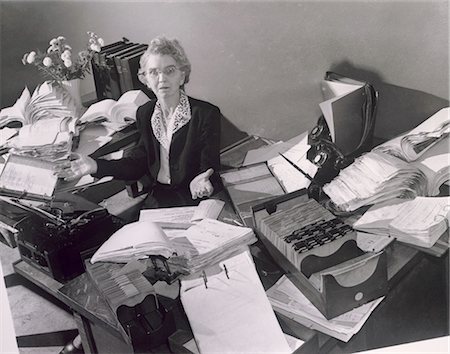
An overabundance of words

word pile
First on the agenda – get them in order. Second – get rid of the ones that don’t belong.

April has been a most productive month for working on the new draft of the pulpy sci-fi adventure spec. This week saw me reaching the midpoint – page 73, which is about 18 pages more than it should be. (Not to mention that a spec script of approximately 150 pages is just ludicrous to begin with.)

Part of me wants to put the writing on hold and go back to page 1 to start editing and clearing away the excess, but I sort of like the idea of just pushing forward, finishing it. and THEN going back armed with the Red Pen of Doom.

When it comes to a first draft, I always tend to put in too much. More “kitchen sink draft” than “vomit draft”. Even taking a look at some previous pages, it’s easy to see where I’ve written more than what’s needed – of practically everything.

The silver lining here is that when it comes to rewriting and editing, there’s a lot to work with. Stuff thought necessary during that initial phase might prove otherwise, and out it goes.

My storylines can be a bit complicated – too many moving parts, so to speak. A combination of “I really want to wow you with this” and “there needs to be more here”. While the first definitely rings true, the second runs the risk of overdoing it and bogging things down – something I don’t want.

It used to be a lot tougher for me to kill my darlings, but time and experience have shown me it’s all about doing what you need to to achieve the end result. As much as I might like a particular something, if it can be cut (or at least drastically shortened) without any significant impact to the rest of the story, that’s fine by me.

If I can maintain my current pace of page output, there’s no reason to think I couldn’t be done with this draft by the end of the month, or maybe the first week of May. While I usually take a little break after completing a latest draft, the always-developing ideas for potential fixes and such may cause me to forego that and just jump right back in.

In the meantime, I’m just having a good time spinning what I can only hope will be an entertainingly ripping yarn.

Working my way forward

billion_dollar_limited

The process of writing actual pages for my pulpy sci-fi adventure is fully underway, averaging about 3-4 pages a day, which is just a smidge above average for me. I’m making a real effort to stick to this kind of output, and am hoping to keep it up for the duration.

There’s a lot of setup in the first act, and I was really concerned things would somehow get drastically out of hand and go on for too long , resulting in a script running something like 150 pages, but so far I’ve managed to keep it all in check. It’s all going according to plan. Still feeling confident to be able to keep it in that ideal target range of 110-120 pages.

And this is before any of the real editing begins. That comes after FADE OUT.

Speaking of editing, even though I was trying not to fall back into my habit of “write, edit, write some more”, there’ve been a few times when a few impulse decisions had to be made regarding whether or not something should be included. Since I was already concerned about too much material, many of them were cut.

In retrospect, they weren’t as necessary as I initially thought, so after they were cut, their absence had barely an impact on the story – if at all. Turns out they were in there more for my own benefit. I saw them as building up the key scene to which they were connected. I tend to overwrite during the outlining process anyway, so no big loss.

Working on both the outline and the pages has also made me realize that my talents seem to be a lot more suitable for this kind of thing. As much as I’d love to be a solid comedy writer, I feel much more at ease producing thrilling tales of adventure with some comedic moments thrown in.

They say you can tell a writer enjoyed writing the script because of how it reads. Like with all of mine that came before, that’s exactly what I’m hoping for with this one as well.

Little time. Lots of results.

838-02519997
So many options. Where to start?

Bit of a shorty today, and the subject itself is the reason why.

Let’s talk time management.

As much as I’d like to devote a big portion of my day to writing, that just isn’t the case. I’ve got other responsibilities, so I do what I can to make that limited timeframe as productive as possible.

A key part of this – planning ahead. Making a list. Designating time specifically for certain activities.

Think “achievable objectives”. Things you know you can get done.

Research.

Reading scripts (both professional and writers within your circle)

Providing notes.

Queries (including verifying recipient’s info)

Networking.

And of course, writing (includes outlining, editing and polishing).

(Imagine how much more is involved with the actual production of a film. For today, it’s all about the script and the things connected to it.)

You could do all of these each day, but that would be exhausting. I find three to be a safe and productive number. Results will vary.

The important part to remember is how a steady repetition of all these little things can eventually add up to big results.

If you can only manage one or two, that’s okay. Do what works best for you. You’re the one in control, and this is definitely not the sort of thing you want to rush through.

Another helpful tip – avoid social media/wandering around the internet. Or at least severely limit your participation. Allow yourself a few minutes, then redirect that focus back to your project.

A writer wears a lot of hats, always having to switch them out because there’s always something that has to get done. But if you stay calm and try to be organized about it, the switching out of hats will get a little easier as you go along.

Wiping the slate clean

blackboard
There’s something appealing about clearing all that clutter away

One of my biggest and constant issues when I engage in a rewrite is HOW MUCH ACTUALLY GETS REWRITTEN?

As much as I love the previous draft, my ability to simply discard that which has come before always gets a solid and thorough workout. I usually start out thinking “I only need to change these few items”, which naturally quickly changes to “Keep this, this, and this, and get rid of everything else.”.

The more I work on the overhaul of the pulpy sci-fi spec, that latter thought is becoming more and more prevalent. Just a handful of parts are being kept, while others fall somewhere in the range between “totally discarded” to “hold onto that for later”.

I went into this knowing it wouldn’t be a light project, which it most definitely hasn’t. It’s very safe to say it’s rapidly become a major operation, both in the medical and organizational senses of the word.

And as far as I can tell, significantly for the better all around.

The more I work on this, the more it becomes noticeably different from its predecessor. This is probably an appropriate place to say that even with all of the changes, the key story elements and plot points have remained the same. As was my intention.

Quality notes from my circle of trusted colleagues have played a major factor throughout the whole process. Many enjoyed the story, and each person had valid comments that raised some important questions and comments: could the hero’s backstory be more original and less cliched? What if the antagonist’s motivation also involved _____? And the always popular “You do realize that’s not scientifically accurate, right?”.

(Full disclosure on that last one – yep. I did. But it works within the context of the story, and this definitely isn’t the kind of story to be nitpicky about.)

With so much of the previous draft being torn down and tossed away, the rebuilding process has been slow, but steadily productive. It’ll most likely take longer than expected, but I’d rather spend the time now figuring things out than find out later that they don’t work and have to go back and do it all over again.

One of the most encouraging comments from the notes was “Words to sum up the script – Big. Fun. Action.”

That’s been my mantra for this whole process; just amped up a bit.

Bigger. Funner. Actioner.

Even though “actioner” is technically a noun, in this scenario, I’ll assume you get the gist of what it’s implying.