A most informative Q & A with Andrew Zinnes

andrew zinnes

Andrew Zinnes is a UK-based screenwriter, screenwriting consultant and producer who’s worked for production companies, read for contests, and co-author of The Documentary Film Makers Handbook: The Ultimate Guide to Documentary Filmmaking and The Guerilla Film Makers Pocketbook: The Ultimate Guide to Digital Film Making. He currently holds the position of Teaching Fellow at the University of Portsmouth.

What’s the last thing you read/watched you thought was incredibly well-written?

I have small children so I don’t get to the theater as much as I’d like, but I recently saw I, TONYA and thought it was fantastic – a real pleasant surprise! I remember the Nancy Kerrigan incident vividly and, at the time, there wasn’t a bigger villain than Tonya. Yet Steve Rogers managed to make her sympathetic by focusing on her relationship with her mother and other aspects of her home life. Then you add breaking the fourth wall and other stylistic choices, and the characters became self-aware in a manner that added to their depth and relatability. BABY DRIVER was great, too. Loved the way they used music to tell the story. Very Edgar Wright.

How’d you get your start in the industry?

I became a script reader for a small production company based at Sony. I read for free as I wanted anyway into the machine. I would go in on off days or they would messenger me scripts, back when that was a thing, and I would write up coverage and fax it back to them, when that was a thing. I became friends with the assistants in the office and when I said I wanted to do development, they put me up for other assistant gigs.

Is recognizing good writing something you think can be taught or learned?

From my experience, recognizing good writing is innate. Many years ago, I went home for Thanksgiving and took my weekend read with me. My sister got curious and started reading some of them. She read one that was a spec from an unknown writer and she was surprised at its mediocrity. She stopped reading after 40 pages and picked up another. This time she started laughing straight away and continued through the whole 100 pages. That script turned out to be AMERICAN PIE. She knew the difference between the two scripts quality-wise with no training, but what she wasn’t able to do was tell me what was wrong with them via screenplay/story theory or how she would have fixed any issues. That part needs to be learned and practiced as one would with any craft.

What do you consider the components of a good script?

The biggest component revolves around making the story or premise personal to you, the writer. If it’s not something you’re passionate about then how are you going to put 100% effort into it? If you can’t connect to the premise, then how can the reader or the viewer? John Truby says this issue leads to generic, unoriginal work and I have seen this first hand with my college/university students. Just recently, one wanted to do a crime thriller that had an okay hook, but was otherwise unremarkable. I asked why he wanted to do this project and he said it was because he loved those kind of movies and this sounded cool. I told him my doubts and he got frustrated. He said that he has trouble making decisions about writing because he doesn’t want to make mistakes that can’t be undone easily. When I pressed, he said he felt that way about many things in life, not just writing. I told him he should write about that concept. His eyes lit up!

The other key component are the forces of antagonism. I don’t just mean the villain. I mean everything that holds back the protagonist(s) from their goals. The better they are, the better the tension, drama and comedy become.

What are some of the most common screenwriting mistakes you see?

Because I work with many writers in the development of stories from early in their conception, impatience reigns the king of mistakes. Often times writers want to rush into the actual writing before they’ve explored a premise fully. They don’t want to do enough research to make the story richer or come up with alternative character motivations and story points that might make their project surprising and original. They don’t want to take hard looks at their structure because they have something in their head and want to get it out. I get it. I’ve felt the rush of getting something down in Final Draft, too. However, whenever I’ve let a client or student get on with it despite my objections, it always goes wrong. They create a story and/or characters that are generic or derivative. They come to the point where the structure doesn’t work and either get stuck or plow forward anyway and there’s structure or story flaws. Now for some writers, this is the process they need to go through. This is how their brains process information. That’s fine, but whether that is the case or they are just steadfast, we end up going back to the drawing board to pull everything apart as we should have done originally.

Aside from that, overwriting tends to be an issue, especially with newer writers. Screenplays are meant to be quick reads and having a lot of black on the page slows that down. Learning economy of writing is essential. I realize that many people, myself included, like Wes Anderson or Quentin Tarantino’s style, which creates these dense, epic screenplays and, that further, feel they should follow suit. However, one, that’s being derivative; two, they’re directing the work so they probably doing it partially because they don’t want to forget anything; and three, they’ve earned it as they had to fund their first films in this style mostly themselves and became successful with it.

What story tropes are you just tired of seeing?

Tropes don’t bother me. It’s what is done with the tropes that matters. Whenever a superhero movie comes out social media garners a a lot of eye rolls and hate from various creative or general public communities and then WONDER WOMAN, DEADPOOL or BLACK PANTHER comes out and shakes things up. Teen horror films are another one that gets a lot of grief, and then HAPPY DEATH DAY hits the screens and all of a sudden cyberspace is hit with short memory syndrome. Take tropes and tell them in unique ways.

What are some important rules every writer should know?

-Observe people, places, things and ideas.
-Observe by asking questions and listening to what people say and don’ t cut them off to speak about yourself.
-Travel and observe what’s around you.
-Write down what you observe and think about what universal truths of the human condition emerge that matter to you.
-Read good scripts and watch good movies so you know what works.
-Read bad scripts and watch bad movies so you can recognize problems to avoid.
-Notes are opinions. They aren’t personal.

Have you ever read a script that was an absolute, without-a-doubt “recommend”? If so, what were the reasons why?

I haven’t read many. TRAINING DAY may have been one. THE SIXTH SENSE may have been one, too. The reasons are for the usual hallmarks: great voice, original take on a premise, explored some kind or large idea, writing that moved my emotions (tense, scary, etc) and structured well. Then the other side of the equation, the business side, it had great roles for movie stars to play, was something my company might do, and had general commercial appeal.

How do you feel about screenwriting contests? Worth it or not?

That’s a tricky one. On the one hand, if you can win one or at least become a finalist, it can get you noticed. The bigger the competition the better your chances, obviously. If you live outside of Los Angeles or don’t have a friend that works in the industry, it may be one of the only ways that you can garner attention. On the other hand, if you enter many of them, it can get expensive. Also there is a fundamental truth about screenplay competitions: there has to be a winner. It’s the best of what a competition gets that year, not necessarily the best written thing that would attract an agent or manager and that sometimes makes Hollywood impatient with competitions. But all in all, I say they are worth it. Especially if there’s some sort of networking attached to winning or placing.

How can people can get in touch with you to find out more about the services you provide?

I’m very easy to find: andrewzinnes.co.uk. You can message me from there. I live in the UK, but work with writers all over the world. Thank you FaceTime, Skype and WhatsApp!

Readers of this blog are more than familiar with my love/appreciation of pie. What’s your favorite kind?

Blueberry! I make a mean one, too.

blueberry pie

A slight course correction

XEaj

For the most part, my involvement with this year’s big contests is more or less over. Top 15 percent for Nicholl – not too bad. Total whiff for PAGE again, which makes me 0 for 4. Not expecting much out of Austin.

Results from some of the smaller contests are about the same. Semifinalist in one, quarterfinalist in another, and a few not-at-alls.

A bit on the disappointing side, but all is not lost. On the contrary. It’s actually helped force me into making a pretty important decision.

After much self-evaluating, I’ve opted to drastically cut back on contests for next year and ongoing. Most likely, I’ll keep it limited to just the big three mentioned above. And even entering those isn’t a certainty. They’re the ones that hold the most potential for getting the ball rolling on a career – not guaranteed, of course – but the most potential.

No delusions of grandeur. I’ll continue to take my chances and see how things go. If I do well, great. If not, no big deal.

And just for the hell of it, maybe one or two smaller ones every once in a while. Might as well have a little fun.

Moving forward, the focus now shifts to improving my writing skills and making my material better. Reading a lot of professional scripts, especially those in the same genres as the ones I’m writing, shows me my level of expertise isn’t where I need it to be.

If I want to make this work, I need to get better. No other way to put it.

It’ll be tough, but I’ve come this far and the final objective continues to feel a little bit closer with each new draft.

I’m fortunate enough to know a lot of savvy writers, along with more than a few quality consultants, so getting constructive feedback and guidance can only work to my advantage.

As a colleague once told me, “It’s not about contests. It’s about Hollywood.” Sure, contests are fun and all (especially when you win, or at least place highly), but I’d rather focus on writing quality material and getting them in the hands of people who can actually make something happen with them. Representation. Assignments. Rewrites. A sale. I’m not picky.

My long-term goal has always been to become a working writer, and I think I can still do it. It may not happen as soon as I’d like, but hopefully by really buckling down and pushing myself to keep at it, I’ll have a better shot at turning that goal from a dream into a reality.

Wish me luck.

A few important reminders (for me and anybody else)

high school classroom
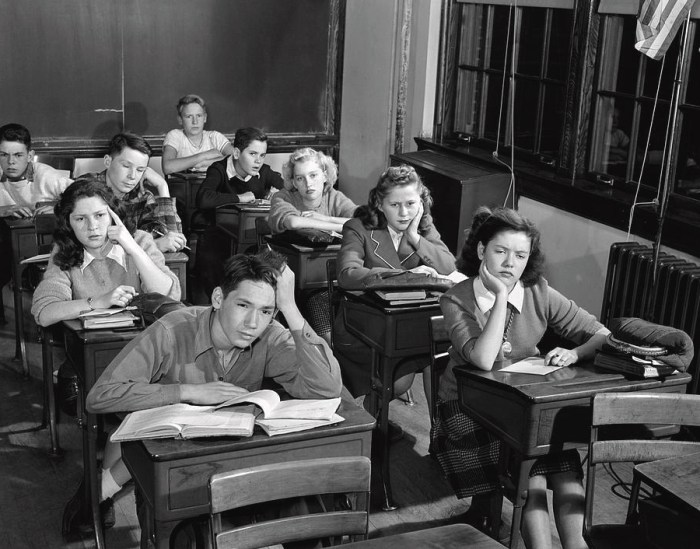
“I know you didn’t do as well as you’d hoped, so look at this as a learning experience.”

Yet another busy week around Maximum Z HQ, including quite a bit of doing script notes, polishing the latest draft of the comedy spec and punching forward on the horror-comedy outline.

Fun stuff all around.

It also included my western placing in the top 15 percent of this year’s Nicholl, which is the second time for this script, and third overall. Not bad, but still not enough to get to the quarterfinals. At first I was feeling kind of down about it, but realized (and was reminded by more than a few colleagues) that a much larger number of scripts didn’t even make it that far, so I should still regard this as a positive.

Suffice to say, it looks like there’s a little more tweaking in store so as to get this script and at least one other ready for next year (along with a few other top-tier contests).

Since this blog recently hit the 9-year mark, of course there are some previous posts of relevant content.

A screenwriter’s 5 stages of grief (contest edition)

A little-post comp analysis

My race, my pace

Fall back. Regroup. Hit ’em again.

In it for the long haul

To all of you who had a script advance in PAGE and/or the Nicholl, my heartiest of congratulations. Steps are already being taken to reinforce the notion of me being among that group next year.

That’s the hope, anyway.

Don’t let it get you down

introspection
A little introspection can do wonders

Results are slowly trickling out for some of the big writing contests, and while hopes were high for my revised western, it once again failed to make the quarterfinals for PAGE.

My immediate reaction – that’s it. I’m done. No longer will I subject myself to that kind of humiliation!

And of course, later the same day, I was figuring out whether or not I should look into  any further tweaking so as to get it ready for next year.

More than a few writing colleagues and connections voiced similar comments, ranging from the frustration of their lack of advancing in this contest, to the murkiness regarding the quality of contest readers overall, to the subjectiveness of it all, and whether contests are even worth it.

As you’d imagine, there’s a wide spectrum of opinions about all of these.

I dug up this post from last year which I believe sums things up quite nicely.

Contests aren’t the only way to break in, but a win or very high placement can help, or at least potentially open a door or two. It’s just one of the many routes a writer can take. Some writers are even fortunate enough to not even have to do them. I am not one of them.

A key component of all of this is persistence. There’ll be lots of disappointments, which can be…disappointing. And frustrating. Oh so frustrating. But learning to overcome those is just as important as learning how to tell a good story.

All you can do is send your script out there, hope for the best, and move on to whatever’s next. If things work out, great. If not, yeah, it sucks, but it’s not the end of the world. It might feel like it, but it’s not.

Try to look at it as a learning experience – “How can I make this better?” Also a question with no easy answer, but how willing are you to put in the time and effort necessary to accomplish that?

That’s what I’m doing. On several fronts.

See you next year, PAGE.

Results may vary

crystal ball

Over the past few weeks, I’ve been involved in a few online discussions about posting and pitching one’s material via script-hosting and pitching sites (The Black List, InkTip, Virtual PitchFest, etc). I even featured a Q&A about it last year with a trusted colleague who also happens to be a very savvy writer (and had some moderate success in this area).

The primary question: are any of them worth it?

As you’d expect, there’s no easy answer, and everybody’s experience is going to be different. I can only speak for what’s happened to me.

A few years ago, I posted my fantasy-swashbuckler on The Black List, and paid for a review. Based on their comments, I was convinced the reader got to around page 22 or so, had no interest in reading any further, and then skipped to the last page. Biggest clue – no mention at all about anything that happened in the second act.

I griped about it on Twitter, which somebody at the Black List then responded with “You can’t make those kinds of accusations without any evidence to back it up!” (I love the idea that it was Franklin Leonard himself, but doubt he would have been spending his Sunday morning checking the Black List Twitter feed). Skittish newb I was, I backed down.

However, it wasn’t all bad. Through a series of interesting events, the script did get some positive reviews, which actually got me a manager. That was nice, but it didn’t work out, and the relationship soon ended. Since the script wasn’t getting much traction (read: any) on the Black List anymore, that subscription also came to a close.

I’ve also heard from other writers who got a 2 on one review and a 9 on another, or who’ve paid for reviews and heard nothing back. Then after asking about it, managed to get a refund; sometimes they’ll also throw in a credit for a free review as a form of apology. Are these commonplace or rare occurrences? Beats me.

I also signed up for the batch of pitches from Virtual PitchFest, and have so far only pitched to two production companies. While I felt my script was a solid match for the criteria they were seeking, each yielded the same response – “Nothing personal. It just didn’t grab us.” No doubt this is the generic rejection everybody gets.

I still have something like 10 or 11 pitches remaining, and if I opt to actually use them, will probably still be very selective about it. But I also suspect I’ll get the same boilerplate response.

I’ve written before about my experiences with pitching to Stage 32, so I’ll just leave this link here. I believe a lot of the points I make still apply. And at the time, I wouldn’t mention them by name. Things change.

Finally, there’s InkTip. I signed up and posted three scripts. Each subscription period is four months, and I did it two consecutive times. During those eight months, the loglines got constant views, which really doesn’t mean much, one script got downloaded once, and another had the synopsis downloaded twice – amazingly, on the same day, which was also two days before the hosting would expire.

*Interesting side note – If your synopsis or script gets downloaded, InkTip doesn’t want you to follow up with the company until at least three weeks later, and then ONLY by regular mail. I’ve always found that a bit odd, but I guess it’s to discourage bombarding them with constant emails. A follow-up to the prodco that downloaded the script yielded no response at all. A little disheartening at the time, but I got over it pretty quickly.

I also subscribe to the InkTip newsletter because a lot of the time there’s at least one or two listings on it that I can send to. That’s yielded a few read requests, but each of those has ended with “Thanks, but it’s just not for us.”

Between the two, I think the newsletter is the better choice. More options, more possibilities; especially compareed to the extremely low return for just having your scripts hosted on the site. I’ve since let those expire, with no immediate plans to return.

I’m sure there are those who think posting or pitching this way is their way in, and for some it probably is, but it can get a bit exhausting to keep shelling out bucks on a monthly basis and getting nothing in return. I’ve had better results with contests and query letters, and you know what longshots those can be.

What if you did this for a few years and still got nothing? Would you still think it was worth it? Sometimes on the InkTip newsletter, they’ll list “success stories”, which mention how long the writer has been a member. Some of them go back 10 to 12 years. That’s A LOT of money invested.

There’s spending money to make money, and there’s reaching the conclusion you’re just throwing money away. Despite the controversy surrounding the practice, I’d rather spend that money on quality notes, which in the end helps me become a better writer.

Like I said, all of this is stuff that’s happened to me. Your experience might be the total opposite. For all I know, you’re one of those “WRITER SELLS SCRIPT THANKS TO OUR SERVICES!” people. If so, great. You beat the odds and I’m glad it worked out for you.

But for the rest of us, how’s it been for you? Good? Bad? Somewhere in that nebulous middle? Have you had similar experiences with any of these companies, or any who aren’t listed? Did you get a read request? A writing assignment? Connect with a filmmaker or production company? Get representation? Can you point to an actual completed film and say “I wrote that!”?

Like I said way back at the beginning, it’s different for everybody. Is subscribing to any of these sites something you’d recommend, or would you deliberately steer people away from them?

Inquiring minds want to know.