Exactly! -OR- The perfect fit

robot monster
Not as good as a gorilla suit and a retro space helmet, but mighty darned close

The new story has been in development for a few weeks now, and I can proudly say it’s coming along nicely. Plot points are in place, and the filling-in between them continues, albeit slowly. Still quite a ways to go, but any progress is good progress.

The more I work on it, the more excited I am to take this one on. I love the concept, think it’s got a lot of potential, and it just seems like it’ll be a lot of fun to write.

Full disclosure – it’s a horror-comedy, and that’s all I’m saying for now.

Part of my usual writing m.o. is seeking out feedback from other writers. Since the actual story is still under construction, I opted to start with the basics and asked a handful of savvy colleagues their thoughts on the logline.

Reactions were positive. Plus, some keen insight and suggestions as to what might make the story even more unique and original, and how to avoid “stuff we’ve seen in these kinds of stories before”. Those, in turn, triggered a new round of ideas, which then led to unearthing what may prove to be the most important idea of them all:

The thing that gets it all started.

Not the inciting incident, but a certain something that forms the foundation of the story itself – before the actual events of the story get underway. Without this, the story wouldn’t even be able to exist (or at least be a lot tougher to pull off).

It was perfect.

A feeling most satisfactory, to be sure.

But wait. It gets better.

A little more time (plus some invaluable real-life-based research) caused me to discover that not only does this new idea do a rock-solid job of tying the whole story together, but it creates constant, relevant, and increasing conflict for all the characters,  makes for a great ticking clock, and really lets me have fun with the whole concept.

Goosebumps, I tell ya!

As fun as it was to come up with that, the hard work’s just beginning. Second and third acts need a ton of work. Doing whatever I can to avoid cliches and tropes usually associated with this kind of story. And to address the comedic aspect, really trying to make it funny.

Won’t be easy, but as I’ve discovered with my most recent rewrites, might not be as totally insurmountable as expected.

Actually, I bet it’ll be a blast.
Let the ensuing commence!

mountain climber 2
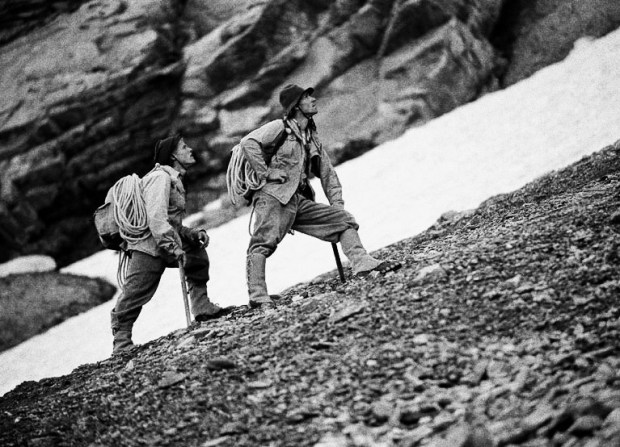
That was when our heroes realized things were about to get a lot tougher from here on in…

When I write out a scene, I have a pretty solid idea of what needs to happen in it; how to make it follow the one before it, and lead into the one after it.

Sometimes it ends up the way I intended, and sometimes it needs a little more punching-up.

And a lot of the time, that punching-up involves making things more complicated, which does a simultaneously effective job of upping the conflict, which was already a necessity.

This whole process most recently came into play while working on a scene in the pulp spec. I’d planned out what was supposed to happen, and on the surface, it seemed okay.

And then I wrote it, but it wasn’t the same as I’d envisioned. It was still missing a vital component, and I couldn’t determine exactly what.

Did it successfully connect the scenes before and after? Was there conflict? Did it advance the necessary elements?  Yes on all counts, but it still seemed off.

I read through it again. It was tight and efficient, and did what it was supposed to. But this second read also revealed the hidden problem that was nagging at me.

It was too tight and efficient. The protagonist accomplished what they were supposed to, but it needed to be tougher for them to do so.

So back I went to the planning-out stage, tossing in a few more wrinkles to make it that much harder for my hero. Although they still achieve their goal within the context of the scene, this time I made sure they really earned it.

Plus, the new complications really emphasized the overall nature of the story, which is always good.

This isn’t to say that every scene has to have some kind of monumental obstacle to your protagonist, but the journey towards their goal shouldn’t be an easy one. It might not even be a physical thing; maybe your hero has to overcome an internal or emotional problem.

It may be easier for you to keep things simple and straightforward, but unfortunately that makes for dull storytelling. Making things more complicated for your protagonist may complicate things for you in putting it all together, but it will definitely make for a better story while also improving your skills as a writer.

Don’t hold back. Put both yourself and your protagonist through the wringer. You’ll both be better for it.

Now it gets really interesting

desert
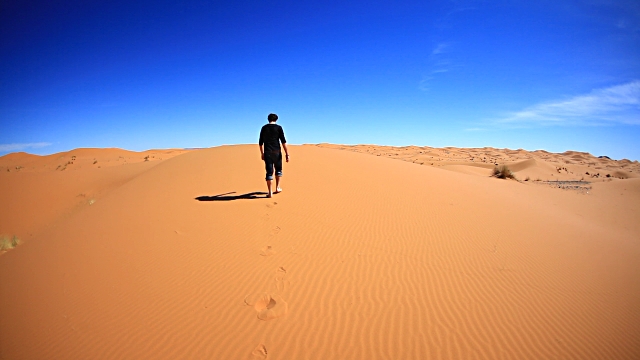
First few steps are always the toughest. Good thing I came prepared.

Let’s pause now for your humble blogger-in-residence to proudly proclaim that Act One of the first draft of the pulpy adventure spec is complete.

Whoopee.

But you know what that also means.

Yep. Time to buckle down even more, strap myself in, and jump feet-first into the intimidating arena commonly known as Act Two.

I’ll also admit it’s a little thrilling, too. There was a particular charge in working out the action sequences and story set-ups in Act One, so I’ve a strong suspicion the continuing build-ups for the former and the gradual development of the latter will be equally, if not more so, fun to write.

(and believe me when I say this is the kind of story that automatically requires a sense of fun)

Maybe it’s from continuously trying to improve as I go, but working on Act Two doesn’t seem as intimidating as it used to. Not to say that it comes easily; just slightly less insurmountable. I spent a lot of time on the outline, so confidence in that is pretty solid.

I read a lot about how a spec script might have a phenomenal Act One, but then things fall apart in Act Two for a myriad of possible reasons: the characters don’t do much/nothing really happens, or the overall story’s too thin, so a lot of Act Two is empty filler, and so on.

The only writing process I know is my own, and I always strive to make sure the story feels…complete? Full? It comes down to “I know what has to happen to tell this story,”, and while the first act is all about setting it all up, the second act is about fleshing everything out.

We get a closer look at the characters and how they’re progressing through the events of the story. We can see how they’re changing from when they were first introduced. Plot threads of all sizes get further developed. The central question is continuously asked (oh-so-subtly, of course).

It also involves steadily-mounting complications for your protagonist. They’ve got a goal, and it’s our job to throw all kinds of obstacles in their way that just keep making it harder for them to reach it. Again, a lot of it happens during our second act.

Act Two really is where the meat of the story takes place, so stuff needs to happen that not only holds our interest, but makes us want/need to know what happens next, and even that better be that much more intriguing.


As you’d expect, our work is cut out for us.

So off I go. Dispatches from this formidable excursion as they develop.

See you on the other side.

One question to rule them all


frodo
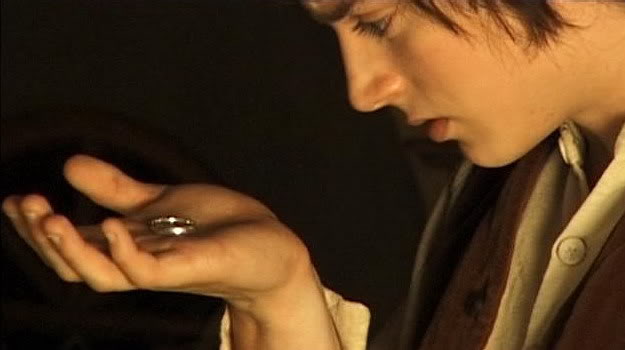
An epic adventure based on the fate of a piece of jewelry

I recently had the pleasure of giving a friend some notes on his script (a drama). It was a great take on a familiar subject, but I had some trouble determining what kind of story they were trying to tell.

One of my suggestions was to streamline the story so it was more focused on the primary storyline as indicated by the central question. He asked me to elaborate.

I put it this way:

The inciting incident raises the central question of the story, and everything after that revolves around answering it – which takes place in the climax/showdown part. Anything that’s not connected to the central question doesn’t need to be there and should therefore be cut.

This isn’t to say you can’t have subplots, but even those should be in some way tied to the central question.

What would you say are the inciting incident and central question in your story? We, the reader/audience, want to know; we’re constantly asking that central question and want to see how the answer comes to be.

To put it in perspective, albeit from an action-adventure approach, in THE LORD OF THE RINGS films, after some necessary exposition, we learn the central question as “Will Frodo get the Ring to Mt Doom?”

Notice how everything after that revolves around that question in some way. Each scene continues to ask the question and gets us a little closer to finding out the answer, even if it might seem like the scene isn’t connected to it and about something else entirely.

On top of all of that, since you need conflict, the hero’s journey to achieve their goal is going to be rife with obstacles that would otherwise prevent them from doing that. Every time they encounter one of those obstacles and the hero reaching their goal is put in jeopardy, the central question is once again raised.

Hope this helps.

Two evils. No waiting.

choices
Either way, things aren’t looking good

Good conflict makes for good story, right?

There’s the overall conflict of the story (hero vs antagonist), but there’s also the conflict that must be present in each scene. That metaphoric moment where the two opposing forces collide on some level.

And sometimes that conflict comes from choices your hero must make.

Given the choice between an easy solution and a difficult one, the easy one is…well, easier. You’ll see this in a lot of new-writer scripts.

But easy’s dull, no fun and makes for a boring story.

Conflict is key. Showing how your hero deals with it shows what kind of person they are. Without it, how can they end up different than when they started? We want to see how they deal with all of the conflicts they encounter over the course of the story.

How about if your hero didn’t have any alternative but to make the difficult choice? They could make the easy choice, but that would take them further away from their goal, whereas making the difficult choice gets them closer to it, albeit in a now-tougher set of circumstances.

You’ve created a bigger conflict, and made things more interesting.

Now let’s take it a step further. What if both choices were difficult? A is bad, but B is worse, and the only viable option is B. Don’t just make things tough for them. Take those circumstances to the edge of impossible.

You’ve just multiplied the level of interesting, not to mention grabbed your reader/viewer’s attention, with them guessing “what happens now?”

The best conflict comes from when a character has no choice but to choose the option that makes their situation worse.

Bonus points if you can organically tie those tough options into the whole story, rather than have them seem like isolated incidents.