
Ask a Chock-full-of-Moxie-and-Gumption Script Consultant!

Amanda Nelligan

The latest in a series of interviews with script readers and consultants who would be worth your while to work with if you want to get your script in shape. Today’s spotlight is on Amanda Nelligan, aka Scriptgal.

Amanda was born and raised in Western Massachusetts. She attended Brown University and received a Bachelor of Science degree in biochemistry. While at Brown, Amanda became involved with the Brown film society and its weekly comedic film magazine – The Film Bulletin – which cemented her life-long love of movies. After working briefly at a medical research lab, Amanda moved to Los Angeles and embarked on her film career. Her first job was as an assistant to a literary agent. From there, she worked at Disney, then ran development for a number of production companies. Amanda went back to grad school in psychology and worked as a therapist and as a research project manager at UCLA before launching ScriptGal. Amanda enjoys baking, hiking and scuba diving and lives with her husband in Sherman Oaks, CA.

1. What’s the last thing you read/watched that you thought was incredibly well-written?

I can’t pick just one – different movies are great for different reasons. I really enjoyed NIGHTCRAWLER – whip-smart dialogue and a character I’ve never seen before. It also had a resolution that defied convention. EDGE OF TOMORROW is a meticulously plotted, fun, time-bending action film, which is so hard to do right. And WHIPLASH didn’t miss a beat (pardon the pun.) In terms of television, TRANSPARENT was terrific. JUSTIFIED and THE AMERICANS are two incredibly well-written series I never miss.

2. How’d you get your start reading scripts?

I moved to Los Angeles shortly after college. My first industry job was for a boutique literary agent who had an A-list roster, so my introduction to Hollywood was through writers. After that, I worked as a development exec – meaning my job was to find scripts and to work with the writers to develop those projects into viable features and television shows. I worked as a creative executive at Disney, then ran development for two production companies. I didn’t like all the politics/crap in the movie business, so I left and went to grad school and worked in another field for a while. But movies are my passion and I love working with writers, so ScriptGal started as an experiment, in a way, and three plus years later. here I am.

3. Is recognizing good writing something you think can be taught or learned?

I think recognizing good writing is a matter of natural instinct, which not everyone has, plus a lot of practice – a.k.a. reading. And reading everything – not just screenplays. Novels, essays, short stories, etc. As a script reader, you need to understand what makes a good story. I think a rule of thumb is that when you forget you’re reading, you know the writing is good – good writing transports you.

4. What are the components of a good script?

A compelling protagonist or anti-hero and a worthy antagonist. We should be able to relate to the protagonist in some way. The antagonist can be a classic villain, a disease, a monster or even the weather. But no matter what the story is, it’s essential that we care what happens. Also, a good script needs to make you feel something. Joy, sadness, fear… Bottom line, the script needs to tell a good story. It can be written in crayon and have a million typos, but if the story is compelling it will shine through.

5. What are some of the most common mistakes you see?

Too much description. It’s a real skill to write just enough to give you sense of what the audience will be seeing and hearing on screen. If the color of someone’s dress isn’t essential to the story, don’t include it. Another related mistake is describing things that would be impossible for an audience to know. Stuff like a character’s face shows the pain of the loss of his wife two years earlier. That’s cheating – essential information needs to be revealed the way the audience would discover it on screen.   Another mistake is not having enough conflict – which results in the story not being as dramatic as it needs to be.

A lot of people are hung up on so-called screenwriting “rules” — don’t use “we see” or any camera directions, etc. I think a) those rules aren’t true – good produced scripts do use them and b) no one working in the industry today cares about those rules one bit. Or even thinks about them. Bottom line – people want good stories.

6. What story tropes are you just tired of seeing?

I just read a script where a guy gets fired and comes home early to find his wife cheating on him. I’ve seen that a million times – so to me it signals a lack of imagination. I think a trope is fine if it is the best thing for your story – but you should always try to put some sort of fresh spin on it. Also, audiences love when a trope is turned on its ear – the best example is the fight scene in RAIDERS OF THE LOST ARK – when instead of getting into the expected hand-to-hand battle, Harrison Ford shoots the bad guy. So when writers find themselves contemplating a trope, they should always ask themselves whether or not they can surprise the audience instead.

7. What are the 3 most important rules every writer should know?

-Writers write. You have to be in this for the long haul. If a script doesn’t work or sell, move on to the next. No successful writer I know parachuted in with the coolest script ever and then sailed on to fame and fortune. The best of the best have a lot of failed scripts in their filing cabinets. Or, these days, in the cloud. This business is a grind.

-Writers rewrite. You need to be able to make changes to your initial drafts and ideas – you need to be able to “kill your darlings,” meaning abandoning things you may love in furtherance of the story. Also, this is a collaborative business – everyone who reads your script will have notes. That doesn’t mean every note will be a good note, but it’s your job to recognize the good ones when they come along and manage the bad ones.

-“Take Fountain.” – Bette Davis. Okay, the real rule is outline. Outline like crazy – especially right after the idea comes to you. A lot of newer writers seem to get bored with their own ideas after awhile and make changes that are destructive. You need to lock in the story that got you excited in the first place and don’t doubt that it will excite readers/viewers as well.

8. Have you ever read a script that was an absolute, without-a-doubt “recommend”? If so, could you give the logline?

No. To me “Recommend” means go shoot it, as is, tomorrow. I never say never, but I could probably write notes on every successful movie out there. The rewriting stops after the scene is shot. Actually, that’s not even true. A lot of rewriting happens in the editing room. For people who love the show THE AMERICANS, and even those who don’t, I highly recommend the Slate-produced TV Insider podcast about the show. It’s a conversation between the story editor and various writers on the show, often including the showrunners. They are rewriting until the last second.

9. How do you feel about screenwriting contests? Worth it or not?

I think a select few are meaningful to industry execs – The Nicholl FellowshipAustin Film Festival, and UCLA’s Samuel Goldwyn. I think the others may help a writer’s self-esteem, but I’m not sure how many actual doors they open in Hollywood.

10. How can people get in touch with you to find out more about the services you provide?

They can email me at Amanda@ScriptGal.com and check out my website www.scriptgal.com.

11. Readers of this blog are more than familiar with my love/appreciation of pie. What’s your favorite kind?

I love ALL pie – much better than cake, in my book – but if I have to pick one it’s strawberry rhubarb. The contrast between sweet and sour – that’s drama.

Ask a No-Mincing-Words Script Consultant!

Glenn Benest

The latest in a series of interviews with script readers and consultants who would be worth your while to work with if you want to get your script in shape. Today’s spotlight is on Glenn Benest.

1. What’s the last thing you read/watched that you thought was incredibly well-written?

I loved Nightcrawler – an incredible script starring Jake Gyllenhaal.

2. How’d you get your start reading scripts?

I’ve been a professional screenwriter for many years as well as a teacher of screenwriting. I liked to teach because it got me out of my house and around people, sharing the thing that I loved.

3. Is recognizing good writing something you think can be taught or learned?

Yes, once you understand the craft of screenwriting, it becomes clear what constitutes a great script. You can learn this craft like any other. I teach many techniques for writing better dialogue, creating believable characters, scene development, etc.

4. What are the components of a good script?

First of all, a strong structure, then well developed characters who go through believable changes in a story, witty, terse dialogue and scenes that have strong conflict.

5. What are some of the most common mistakes you see?

Formatting that is incorrect, scenes that don’t end strongly, a poor sense of structure and protagonists that don’t engage us emotionally.

6. What story tropes are you just tired of seeing?

I don’t know what this means.

7. What are the 3 most important rules every writer should know?

The connection between the reader and the protagonist has to be deeply emotional, the story has to have a strong beginning, middle and end and the dialogue has to be witty and engaging.

8. Have you ever read a script that was an absolute, without-a-doubt “recommend”? If so, could you give the logline?

I’ve helped launch six films in my screenwriting workshops, including “Scream” and “Event Horizon.” They didn’t begin as “winners” but promising concepts that we developed until they were great. I don’t just read and recommend scripts, I help develop them from beginning to end and don’t let a script go out until it’s ready.

9. How do you feel about screenwriting contests? Worth it or not?

Worth it. Anything that can get you attention is beneficial.

10. How can people get in touch with you to find out more about the services you provide?

Go to my website at www.glennbenest.com or email me at gbenest@pacbell.net.

11. Readers of this blog are more than familiar with my love/appreciation of pie. What’s your favorite kind?

Pecan with vanilla ice cream on top.

Ask a Skilled-in-the-Art-of-Deduction Script Consultant!

Staton Rabin

The latest in a series of interviews with script readers and consultants who would be worth your while to work with if you want to get your script in shape. Today’s spotlight is on Staton Rabin of Jump Cut Script Analysis.

Staton Rabin is a screenplay analyst, script marketing consultant, and “pitch coach” for screenwriters at all levels of experience (www.statonrabin.com and www.screenplaymuse.com). A Senior Writer for Scriptmag.com, she’s been a freelance reader for Warner Bros. Pictures, the William Morris Agency, and New Line Cinema, and was a frequent guest lecturer for screenwriting classes at NYU. She’s a reader for the annual Big Break Screenwriting Contest. Staton is also an award-winning, optioned screenwriter and writes YA historical novels for Simon & Schuster (BETSY AND THE EMPEROR, etc.). She evaluates screenplays and books in all genres and can be reached at staton@statonrabin.com

Staton’s screenwriter clients include at least two whose scripts were produced as films, and a number who have won or done well in screenwriting contests.

1. What’s the last thing you read/watched that you thought was incredibly well-written?

Sherlock” from BBC-TV. I confess that recently I wolfed down the entire series in about two days, catching up on all the past episodes of this great show. Clever, witty, poignant when it should be, and visually inventive. As a huge fan of the original Conan Doyle stories (and of Basil Rathbone as Holmes in the old movies and radio shows), I assumed I’d hate any “update” of them, and that no modern version could possibly compare to Rathbone’s. But “Sherlock” is hugely respectful of the original stories, yet finds incredibly smart ways to update them. My January 2015 posting for my monthly blog at scriptmag.com is about what screenwriters can learn from watching it. I am much more of a film person in general than a TV fan– and as a script analyst, my expertise is really in evaluating spec scripts, books, and movie concepts, rather than series television. But I have to admit: some of the best work today is being done for TV, and “Sherlock” is a prime example of that.

2. How’d you get your start reading scripts?

I read many screenplays before I became a script analyst for a living. After graduating from NYU film school, I hunted for a job as a freelance reader for quite a while. In those days, there were a lot of film studio offices in New York but at the time there wasn’t much in the way of “job placement” available to film school graduates (NYU has a great Career Development office now). But one day, when I was still unemployed, I bumped into an old film school classmate on the street. He was working as a freelance reader for Warner Bros. Pictures at the time. He took me upstairs to meet his boss, and in about ten minutes I had my first job. I’ve been a script analyst for over 30 years now, and have worked for many film studios, agents, and writers, so I figure maybe it wasn’t just having “connections” that’s allowed me to stay in this business so long!

3. Is recognizing good writing something you think can be taught or learned?

On some intuitive level, all film audiences have the ability to recognize good writing when they see it. There’s a lot of wisdom in what “the average person” has to say about any movie, in terms of what they generally liked or disliked about it. Audiences also intuitively understand whether a story works from a structural standpoint, especially when seeing movies. But, at the risk of sounding elitist, I don’t think everyone has the capacity to read a screenplay or book, or see a movie, and be able to identify and articulate exactly where the problems are in the material, why, and precisely how to fix them. Certainly, a professional script analyst can get better at the job simply by evaluating thousands of movies and screenplays during the course of a career and helping writers to improve their work. I know that over the years I’ve gotten much faster at “taking the watch apart” and spotting problems in a concept or story– and can do this quickly and accurately even when I’m just hearing a brief pitch instead of reading the script. I also advise them on possible solutions to those problems. So while I think that the ability to recognize good writing– or a good story– is universal, the ability to analyze what makes the watch tick (or “clunk”), and know how to take it apart and fix it, I believe is mostly inborn.

To be a script analyst, one has to have a certain kind of analytical mind– the ability to enjoy the material as entertainment, and at the same time look at it as a mechanical device that may or may not be in need of repair, and know how to find where the problem is and what the right tools are to fix it. And perhaps this analytical, detective-like, detail-oriented, problem-solving approach I take to looking at stories explains why I wanted to grow up to be Sherlock Holmes– and ended up being a script analyst!

One’s innate abilities to analyze a story can certainly be honed and improved through education and experience, but one can only build on what one was born with. You raise an interesting question, because more often I am asked whether writers are born or “made”. And to that question I’d give pretty much the same answer: Education and experience can enhance one’s talents, but talent can’t be taught.

4. What are the components of a good script?

More important than the components– which vary– is how a great script makes a professional reader feel. It’s a writer’s job to make the audience (or reader) feel what he wants them to feel. I think the first job of a script analyst is to look at a script as entertainment and be an audience. Which means that if it’s a great script, with all the right components for that particular story and genre, I will simply enjoy it just as anyone else would, and nothing important goes awry from a writing standpoint that will remind me that I’m a script analyst doing a job. The story will be clear and compelling, with high stakes for the hero. I’ll like the hero, despite his human flaws (and partly because of them). I’ll be rooting for the hero to succeed in his goal but fearful that he will fail, as the story holds me in suspense. I’ll feel strong emotions and identify with the hero. And if I feel all these things, all the way through, I’ll be excited about telling the writer about my findings. If I’m reading the script for a contest or a movie producer, I’ll be excited about handing a report to my boss giving it a “recommend”.

But if a script isn’t working, I will notice this and stop to make mental and actual notes of any problems along the way. If it’s a great script (which is very rare), I’ll note the little problems but will be inclined to “forgive” them, and start rooting for the screenplay– just as audiences root for the hero when watching a movie.

A screenplay should feel like the experience of watching a great movie. In terms of what the components of a great script are, screenplay gurus talk about all the different factors that go into it. And these days, every aspiring screenwriter is already familiar with them. Of course they involve three-act structure, and everything else you’ve read about. So instead of re-stating the obvious, I would tell screenwriters to learn what a workable movie concept is (not necessarily the same as a “logline”, though people often use them interchangeably), to practice by coming up with the concepts for classic films of the past, and to make sure you don’t even think about starting to write your script until you’re certain the concept is working as blueprint for a great movie that can sustain the story conflict for 2 hours. You should spend 80% of your time planning a script, and only about 20% writing it. If you have to rewrite the same script over and over again, something is not working, and it probably goes back to the concept. One should stop the madness and get outside professional advice.

Keeping the plot very simple can help when writing any screenplay—and generally makes for better scripts. Especially if you haven’t broken in yet, don’t try to write a really tricky, complicated plot like “Memento”. Keep your story and your main character’s goal, motive, and conflict very simple, and your characters rich and complex. Make sure your hero has a tangible, external goal (and internal and external obstacles to achieving it) right from the start. Also, read lots and lots of screenplays from financially and critically successful, produced films.

5. What are some of the most common mistakes you see?

The most common problems include a lack of clarity in what’s going on in the story, and withholding too much information from the film audience for much too long. I think many aspiring screenwriters assume that being “subtle” is desirable, and that they should hold back as much information as possible from the audience, and reveal or surprise them with it later. But actually, nothing could be further from the truth. The goal of a screenplay is to get the crucial information out as quickly, clearly, and efficiently as possible, not to be “mysterious”. Audiences should be in doubt (till near the end of the story) about the outcome for the hero, not be kept in the dark about the basic facts of what’s going on in the plot. Even in a murder mystery, there should be one big mystery at a time, not ten. Clarity is the screenwriter’s first mission. Don’t be subtle, fuzzy, or secretive when it comes to what the audience knows. “Surprise endings” are way overrated and few aspiring writers do them correctly anyway.

A lot of writers don’t understand that film is a visual medium, and how to present exposition in the language of movies. The script is often way too subtle in the way information is transmitted to the audience, and we are too often required to read the characters’ minds and “guess” what they’re thinking about. For example, the film audience is probably not going to notice signs or pictures on the wall, or how “neat” an apartment looks (many writers do this to communicate that the apartment’s owner has OCD, or the like). If a character is simply staring into space, we may not know what he’s thinking. Unless a character is actually doing something or interacting with objects in a meaningful way, the audience will not notice anything in a movie. They are not paying attention to the setting or what’s hanging on the wall (unless it’s someone’s head!), nor should the writer rely on the setting to do exposition.

In terms of visual information, only significant plot-advancing, character-illuminating action should be in a movie. Sipping coffee is not action– unless one character spits coffee in the other’s face. Eating “a hearty breakfast” is not action. And if any character in a movie MUST use a cell phone, computer, or other electronic device, the writer is going to have to find a way to make this visual and interesting (“Sherlock” does this very well).

Another problem I see in a lot in scripts lately is the misuse of dreams, flashbacks, and visions as a means of conveying exposition. Avoid them.

6. What story tropes are you just tired of seeing?

There’s no cliché so tired that it can’t be turned into something fresh and new in the right hands. Actually, screenwriters don’t rely nearly enough on tried-and-true dramatic formulas and techniques. You’re not going to come up with an original plot, so don’t even try. Following the proper dramatic twists and turns for your genre is exactly what you should be doing– with some new and original twists on what works. Writers should never make the mistake of thinking that following a formula is the same as formulaic or sloppy, ham-handed writing. Your goal should be to take a familiar and conventional story structure and give it a few new twists and surprises, and great characters of real depth and complexity.

All that said, you can’t go wrong if you avoid the following clichés:

-Blatant references to other movies or famous songs in your own screenplays.

-Flashbacks, dreams, and visions (as stated above).

-Giving characters a disability of some sort as a substitute for finding something unique and quirky about them derived from the pure skill of your writing.

-Trying to show us a character is afraid by indicating in your script that he is peeing in his pants.

-Any script about a writer. If you write about an author whose goal is to pen the Great American Novel or write an Oscar-winning screenplay and strike it rich, it is very difficult to make an audience care about goals like these and the nature of his profession provides few obvious opportunities for visual action unless he’s a reporter in a war zone. For most stories about writers, we are going to have to absolutely love your main character, and know what success means to him beyond the obvious, in order to care about his struggles. And, yes, I saw “Adaptation”, and it was okay.

7. What are the 3 most important rules every writer should know?

-Work harder than anyone else, and work smart.

-Plan your concept and your story before you write your script. Don’t go ahead till you are certain it’s going to work.

-Follow the rules, but know when to break them, keep the plot simple, and write with passion. Be yourself. Don’t try to write “that junk” or “that great movie”. Write something emotionally honest that comes from your gut (even if it’s a comedy). There is no “magic formula” for writing a great script. Each one is unique.

8. Have you ever read a script that was an absolute, without-a-doubt “recommend”? If so, could you give the logline?

I could tell you, but then I’d have to kill you (great example of a cliché never to use in any script!). Kidding aside, it is hardly ever the concept or the logline that makes a great script. A logline (or concept) should and in fact must be dramatically viable: a properly structured formulation that has all the elements of drama (a main character with an urgent and compelling external goal, the character’s action in pursuit of that goal, and the main conflict or obstacle to achieving that goal) and that can sustain the conflict over a two-hour movie. And although it’s great if you have a slam-dunk “high concept” idea, and ideally your concept should have an element of originality, the execution is far more important. You need a reasonably fresh and interesting idea that works as drama or comedy over the course of a 2-hour movie. It does not have to be “really catchy” (though of course that helps), it just has to be interesting enough and workable. Your script, however, has to be truly great, not just “good”.

9. How do you feel about screenwriting contests? Worth it or not?

It depends on the writer’s goals and which contest. These days, there are only a handful of contests for which having been a winner or finalist is really going to impress a film producer. So if that’s your goal, enter Nicholl, Big Break, Austin, Sundance, or one of the other top, prestigious screenwriting contests. If your goal is to get the attention of the industry, then seek out contests that give you “access” and very major publicity in the trades as the prize, instead of ones that only offer money. Of course, many screenwriting contests have entry fees, and this can add up for many writers who have low incomes. So choose your contests wisely.

10. How can people get in touch with you to find out more about the services you provide?

Ah, my favorite question! They can write to me at Cutebunion@aol.com. They can also find some information about my services at my website. I read and evaluate screenplays and books, but also advise writers as a consultant at any stage of their process, from concept to finished script. I can provide advice on pitching and marketing their material, what to put in a query letter, and can suggest some creative and smart ways to approach the process of trying to get a particular movie star “attached” for the lead role—without being a stalker!

I also have a monthly screenwriting column, “Breaking In“, for Script Magazine, which consists of “how to” articles about the craft of screenwriting (mostly for those who already know the basics), and the business of marketing a script.

11. Readers of this blog are more than familiar with my love/appreciation of pie. What’s your favorite kind?

Oops. Spoke too soon. This is my favorite question. Depends on the season. Pumpkin in the fall, key lime and banana cream at other times.
Ask an Agent-turned-Script Consultant!

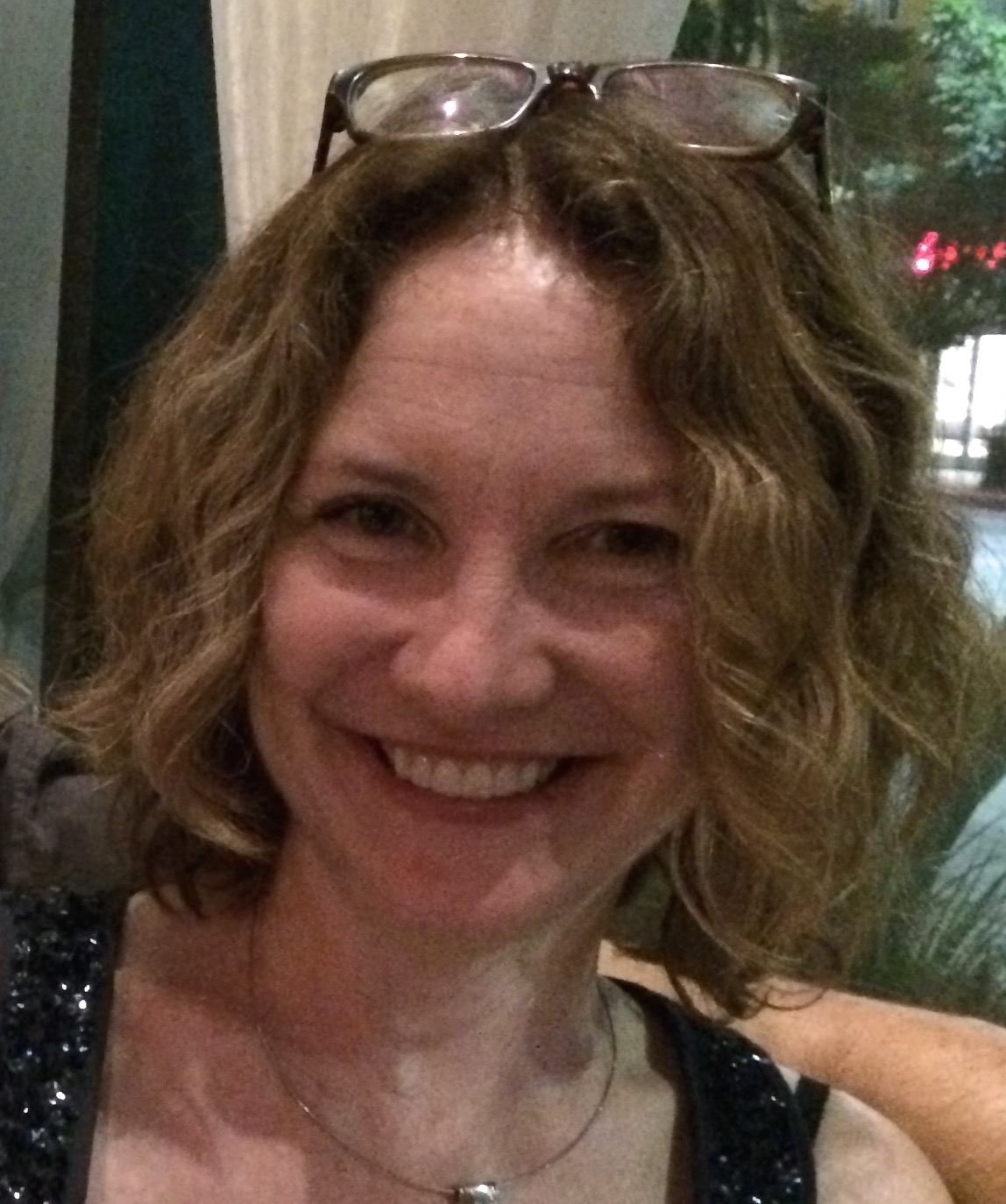
Michele Wallerstein

The latest in a series of interviews with script readers and consultants who would be worth your while to work with if you want to get your script in shape. Today’s spotlight is on Michele Wallerstein.

Screenplay, Novel and Career Consultant, Michele works with writers to help get their work into shape so that it is marketable for the Hollywood community and/or the publishing world. Michele’s career consulting consists of critiquing your projects and/or having personal career conferences to answer questions that writers have about their creative work as well as questions about the business side of their creative life. Michele is the author of: “MIND YOUR BUSINESS: A Hollywood Literary Agent’s Guide To Your Writing Career”.

Prior to becoming a Consultant, Michele was a Hollywood literary agent where she represented Writers, Directors and Producers in Motion Pictures, Movies for Television and Television Series and has sold $1 Million spec scripts. Michele served as Executive Vice-President of Women In Film and was on the Board of Directors for many years. She owned The Wallerstein Company and guided the careers of writers such as Larry Hertzog (Tin Man, La Femme Nikita, 24), Christopher Lofton (Robinson Crusoe, Call of the Wild, Scarlett, True Women), Peter Bellwood (Highlander, La Femme Nikita), Bootsie Parker (Booty Call, Married, With Children, The Hughley’s), and many others.

Michele has been a Guest Speaker at numerous Film Festivals, Pitch Fests and Writer’s Groups all across the country. She teaches the ins and outs of the business of your writing career as well as how to get the most out of your material.

1. What’s the last thing you read/watched that you thought was incredibly well-written?

I adore the writing on “Downton Abbey” on PBS. Their character delineations are superb. The dialogue makes the stories come alive. Unfortunately, I rarely go to theaters for movies because most of them don’t seem to be made for grown-ups.

2. How’d you get your start reading scripts?

I began reading scripts about 100 years ago when I was an assistant to a literary agent. After becoming an agent, I continued to read everything I could get my hands on. These experiences gave me a world of knowledge and have been a great help to me as a screenplay consultant.

3. Is recognizing good writing something you think can be taught or learned?

I’m not so sure it can be taught or learned. Anyone can learn the basics of screenwriting by taking classes and reading some of the many books available. However, understanding human nature and the psychology behind people’s actions and reactions comes with life experiences. If one doesn’t understand these things they will never get the importance of great dialogue.

4. What are the components of a good script?

In my experiences as an agent and as a consultant I find that adhering to the basic 3-act structure is invaluable. Along with that a writer must be able to write characters with heart, feelings, emotions and individual personalities. Grammar, spelling and syntax are also keys to good writing.

5. What are some of the most common mistakes you see?

I often find that the characters are uninteresting and I don’t care about any of them. It’s also common to find people who try very hard to write something unusual and it comes across as too complicated, far-fetched or dull. If written well, a thriller, mystery, love story or romantic comedy can be a standout showpiece for a good writer.

6. What story tropes are you just tired of seeing?

I’m quite tired of action films and films with an abundance of blood and guts. Too many people have become dulled to violence and those scripts are written without decent stories or characters.

7. What are the 3 most important rules every writer should know?

-Follow the accepted 3-act structure.

-When writing spec scripts it is a good idea to do at least 3 in the same genre.

-Have your scripts read by vetted professionals prior to trying to land an agent.

8. Have you ever read a script that was an absolute, without-a-doubt “recommend”? If so, could you give the logline?

When I was an agent I read a spec by a new, young writer that knocked me out. It was a love story with lots of fantastical action about the discovery of the Garden of Eden. It was gloriously written and I sold it for close to $1 million within 2 weeks of reading it.

9. How do you feel about screenwriting contests? Worth it or not?

Contests, pitch fests, seminars etc., can all be very worthwhile if one knows how to make contacts and to follow up with those people. It is a great place to meet executives who can help move your writing career forward. I explain this in detail in my book “MIND YOUR BUSINESS”.

10. How can people get in touch with you to find out more about the services you provide?

I am always happy to help writers and they can email me at: writerconsultant67@gmail.com. I have a monthly blog for writers: www.wwwconsulting.blogspot.com. Writers can also check out my online course Moving Your Writing Career Forward via Screenwriters University.

11. Readers of this blog are more than familiar with my love/appreciation of pie. What’s your favorite kind?

I do love warm peach pie with a dollop of vanilla ice cream.

Ask a More-Than-Ready-for-Prime-Time Script Consultant!

Jen Grisanti

The latest in a series of interviews with script readers and consultants who would be worth your while to work with if you want to get your script in shape. Today is about writing for television, with the spotlight on Jen Grisanti of Jen Grisanti Consultancy, Inc.

International speaker Jen Grisanti is an acclaimed story and career consultant with her own firm, Jen Grisanti Consultancy, Inc., and a writing instructor for Writers on the Verge at NBC. She spent 12 years as a studio executive, including working as VP of Current Programming at CBS/Paramount. Jen also blogs for The Huffington Post and is the author of Story Line: Finding Gold In Your Life Story, TV Writing Tool Kit: How To Write a Script That Sells, and Change Your Story, Change Your Life: A Path To Your Success. She teaches classes for TV Writers’ Summit (LA, NYC, London and Israel) and Story Expo. She has taught at the TV Writers’ Studio (Australia), Scriptwriters’ Network, The Screenwriting Expo, and The Great American Pitchfest. Jen has also served on panels for the WGA, Scriptwriters’ Network, Final Draft/The Writer’s Bootcamp, and ScreenCraft. Her company hosts online Storywise Seminars.

1. What’s the last thing you read/watched that you thought was incredibly well-written?

The best movies I’ve seen recently include: The Imitation GameGuardians of the GalaxyLocke, and Chef.

Some of my other favorite movies from the past I think are incredibly well-written include: The Lives of Others, The King’s SpeechThe Untouchables and Argo.

2. How’d you get your start reading scripts?

After studying Communications with TV & Cinema at USC, the first job that paved my way to where I am today was working as an assistant to Aaron Spelling. While working in his office I began to voraciously read scripts. Spelling was my mentor. We had a routine where I’d read all of the scripts for the current shows he had on the air and he’d review my notes and tell me what worked and what didn’t. I learned so much about what makes story work by watching him in the edit bay during rough cuts. I got my Bachelor’s at USC, but I always say I got my Master’s degree in TV in the Spelling office. It was the best place to learn.

I climbed the ladder while I was at Spelling and eventually ran Current Programming covering shows including Beverly Hills 90210, Melrose Place and 7th Heaven. I went on to become Vice President at CBS/Paramount where I covered shows including: Numb3rs, Medium, NCIS, The 4400 and Girlfriends.

3. Is recognizing good writing something you think can be taught or learned?

I believe that for some, writing comes naturally. They have a sense of their voice from the start. They may need help with structure, but the voice is there.

With others, I do believe it can be taught or learned. I’ve definitely seen this happen many times in my career. There is no greater reward than to see the growth of a writer, to help guide them in finding their voice and to help them understand how to use story structure in the best way possible to bring their voice to life.

4. What are the components of a good script?

The components of a good script are a strong trigger incident that leads the central character into a dilemma. This creates empathy. Then, the choice that they make as a result of the dilemma defines the goal. We should be clear on what the central character wants and why they want it. Another thing that really adds to a good script is when the personal dilemma is connected to the professional pursuit. With this, when the writer comes from a place of emotional truth, it really helps to connect what they are trying to say.

A strong script should have a concept we can feel and a story with a clear message.

5. What are some of the most common mistakes you see?

We don’t know what the central character wants, or we don’t know why they want it. If you don’t know what the central character wants or why they want it, then there’s no rooting factor. The central character reacts to things that happen to them versus taking action toward the goal, giving you a reactive hero instead of an active one. The obstacles happen to the central character versus being a result of an action that the character took. There is no external stakes arc. We don’t know what the worst thing is that can happen if the central character does not achieve their goal.

6. What story tropes are you just tired of seeing?

I wouldn’t say there’s a specific story trope  I’m tired of seeing. I’m just tired of seeing films being made where the story wasn’t ready. I feel like TV is in a much stronger place than film with regards to writing.

7. What are the 3 most important rules every writer should know?

-Make us empathize with your central character from the start.

-Have a clear goal.

-Establish the internal and external stakes.

8. Have you ever read a script that was an absolute, without-a-doubt “recommend”? If so, could you give the logline?

I’m not a reader. I analyze story from the studio executive perspective, so I don’t give “recommend” or “pass,” which is what readers do. I give development notes that help the writer to know how to elevate their script to the best place possible.

That being said, ninety-two of the writers I’ve worked with have sold pilots. Four of them went to series. So I do have lots of projects that I work with people on that go on to sell and be produced.

9. How do you feel about screenwriting contests? Worth it or not?

Some are very worth it. I like ScreenCraft, Final Draft, the Austin Film Festival and the Nicholl to name a few.

Competitions allow writers to put something on their bio that shows their writing has been recognized. This is a town that loves heat. If someone else thinks you’re great, everyone wants to know you. So the competitions do serve a purpose in building heat and creating possibility.

10. How can people can get in touch with you to find out more about the services you provide?

Through my website – www.jengrisanticonsultancy.com, or they can email me at jen@jengrisanti.com.

If you want to see how I work with writers one-on-one, I recommend reviewing my Writer Proposals Page – http://jengrisanticonsultancy.com/services/proposals/

Plus, if you mention this interview, I’ll give you 10% off of your first consult.

11. Readers of this blog are more than familiar with my love/appreciation of pie. What’s your favorite kind?

I love it. I’m big on baking, and my favorite is cherry pie.