Ask a Produced-and-In-pre-production Script Consultant!

rob tobin

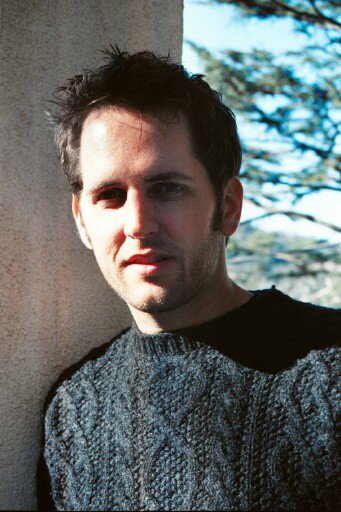
The latest in a series of interviews with script readers and consultants who would be worth your while to work with if you want to get your script in shape. Today’s spotlight is on writer-author-lecturer Rob Tobin. 

Rob is a produced, award-winning screenwriter, published novelist, former motion picture development executive, author of the screenwriting books “The Screenwriting Formula” and “How to Write High Structure, High Concept Movies,” as well as several screenwriting CDs. He’s been a frequent guest lecturer on screenwriting at film festivals and writing conferences around the world.

*April 2015 update – Rob is currently working on a multi-book adaptation project and is not available for story notes, but can fit in one additional script polish or rewrite assignment.

1. What’s the last thing you read/watched that you thought was incredibly well written?

My wife and I just saw “The Normal Heart,” which blew me away. Brilliantly written, acted and directed. Most importantly, the title wasn’t the only thing that had heart, something most films no longer have. Even a film like “The Fault in Our Stars,” a film with tremendous heart, that I loved. I’d much rather see a film or read a script like that than a brilliantly written script with no heart.

2. How’d you get your start reading scripts?

I’m originally Canadian, and came to USC in L.A. to get my M.A. in screenwriting and become a working screenwriter. My background was as a novelist. Everyone at USC told me I should intern at a film company. I did, and started reading scripts as part of my internship. Lots of them. Years later as a development exec, I stopped counting at 5,000 script scripts read and covered. In that process, I wrote two screenwriting books, starred in a couple of screenwriting DVDs, then people started flying me around to lecture on screenwriting – Canada, New England, the South of France.

3. Is recognizing good writing something you think can be taught or learned?

Definitely something you can be taught. Screenwriting has structure, elements, rules, all of which you can learn. Of course some people are going to be better at it than others. In addition, there is the other part of being a script consultant, and that’s helping the writer find ways to improve her or his script. That can also be taught, but there’s a much bigger talent component to that.

4. What are the components of a good script?

I actually wrote a book about the seven essential elements of a well-written screenplay, but to be honest, as I mentioned, one of the biggest aspects of a well-written script is heart. Yes, you can write a brilliant script about crime, sex, war, and so on. Bond movies are great, but I still think that heart is what makes a script special. Something like “The Normal Heart” or “Good Will Hunting”, or even comedies like “Big” or “Tootsie” have heart. High concept is also important but as I said in another recent interview, a high concept piece of crap is still a piece of crap. A low concept work of brilliance is still a work of brilliance. There are techniques and elements, of course, but I love that old saying about not writing because you want to say something, but because you have something to say. Say something worth saying, and say it with heart. If I had only one piece of advice to give, that would be it.

5. What are some of the most common mistakes you see?

Mistakes in a script are almost always structural, because almost everything emerges from structure. Dialogue, characterization, theme, it all emerges from structure. If you don’t understand structure, you’re in trouble. When I work with clients, the first thing I do with problem scripts is talk to the writer about structure. The mistakes and solutions are almost always located there.

6. What story tropes are you just tired of seeing?

Easy killing. Doesn’t matter whether it’s a cop who easily kills a bad guy, or an action star killing hordes of bad guys, easily, without remorse, and without ever getting shot him or herself. Killing as a relatively trivial thing is the worst trope of all in my opinion, and it can’t go away fast enough.

7. What are the 3 most important rules every writer should know?

-Write only if you enjoy writing, because the chances of making a living at it are extremely remote.

-Learn your craft.

-Never submit a first draft of anything.

8. Have you ever read a script that was an absolute, without a doubt “recommend”? If so, could you give the logline?

Thank You for Smoking.” It came to me when I was a director of development. Out of thousands and thousands of scripts I read, I recommended 34, despite the fact that I worked for major producers who were getting the best scripts from the best agencies, but that was it: 34 out of over 5,000 scripts, all from the best agencies in the business. “Wag the Dog” and “Dangerous Minds” are some of the scripts I recommended. Every other script, the ones I didn’t recommend, had structural problems.

9. How do you feel about screenwriting contests? Worth it or not?

Yes, if they’re the right ones. I always tell beginning writers to never submit their first, second, third or even fourth scripts to the industry itself – producers, agents, etc., but rather to contests, especially contests that give feedback. That way if their first few scripts are subpar, they’re not going to be branded by industry people as subpar writers. And the feedback from the contests can help them figure out what their weaknesses are.

10. How can people get in touch with you to find out more about the services you provide?

Email me at scripts90@gmail.com. I don’t do coverage anymore, but I do story notes, polishes, rewrites, and adaptations.

11. Readers of this blog are more than familiar with my love/appreciation of pie. What’s your favorite kind?

Apple pie with ice cream.

Ask an Up-through-the-ranks Script Consultant!

Bill Pace

The latest in a series of interviews with script readers and consultants who would be worth your while to work with if you want to get your script in shape. Today’s spotlight is on William Pace.

William Pace received a Masters of Fine Arts in Film Production from New York University’s acclaimed Graduate Film & TV program where he wrote and directed “Echo Canyon,” an award-winning short film that was televised nationally on the USA Network.

His script CHARMING BILLY was a finalist for the Sundance Institute’s prestigious Screenwriting Lab. William also directed the award-winning feature film of the script, which premiered at the AFI/Los Angeles International Film Festival, whereupon a lead VARIETY review proclaimed his “notable cinematic and storytelling craft.” CHARMING BILLY was then distributed by a division of Miramax and broadcast on the Independent Film Channel.

William teaches filmmaking and screenwriting at The New School in New York City, where he serves as its Screenwriting Certificate Director. He is also a screenplay consultant who’s worked with such authors as Douglas Blackmon in adapting his Pulitzer Prize-winning book SLAVERY BY ANOTHER NAME, and many others whose scripts have gone on to success, from making the influential Black List, winning competitions at Slamdance, obtaining mangers & agents and being produced & distributed.

William’s current position is Faculty Associate of Digital Media Production at Seton Hall University.

And — believe it or not — he’s actually listed in Warren Allen Smith‘s book CELEBRITIES IN HELL.

1. What’s the last thing you read/watched that you thought was incredibly well-written?

There are a lot of good movies that are out right now, but I’m going to go to left field and say THE GOOD WIFE.

It’s TV, and not even one of the “hot” shows that’s popular to tout, but this is a damn well-written show with rich characters who the writers aren’t afraid to have do the wrong thing, and sometimes for the wrong reasons. The journey Julianna Margulies’s character has gone on is almost as transformative as Walter White’s in BREAKING BAD. Different arena, different stakes, but almost every bit as cynical and sometimes almost as dark.

That’s what leaps out at me first thing, but to include a film…

BIRDMAN. But it’s really hard to separate the filming of that movie from its script, as they are seamlessly enmeshed and were designed that way from the start – even though it’s supposed to look like there are no cuts in the film, the editors were actually brought in before shooting begin to help design where the cuts could most effectively be digitally “erased”. That kind of “writing” and planning, along with the audaciousness of the film’s story & thematic concepts, really spoke to me as something on a higher level.

2. How’d you get your start reading scripts?

When I was a film student at NYU’s Grad program (during the — cough-cough — Paleolithic period), the only scripts around to read were hardcopies, and you had to either know someone in the business to get a hold of one or buy one of the badly Xeroxed copies from the guy in Union Square selling them from his folding card table. It wasn’t until I started teaching and the internet came into wide existence that I began to really read a lot of scripts. Once I could download them, I started devouring them. I especially loved reading early drafts of produced scripts because you could see more of the process that went into crafting the final film by noticing what had changed from its initial drafts. I mean, how else would you know that the scene in INDIANA JONES & THE KINGDOM OF THE CRYSTAL SKULL (ugh) where Indy seals himself in a refrigerator to escape a nuclear blast was originally the concept for how Marty McFly traveled in time!?

3. Is recognizing good writing something you think can be taught or learned?

Absolutely it can be taught. And teaching how to recognize good writing is a hell of a lot easier than teaching how to write “good”.

4. What are the components of a good script?

Oh man… how many pages can I go on here? Okay, I’ll try to be a good screenwriter and shorten it into a condensed version: As much as we teachers and analysts can go on about strong characters, good technique, use of genre, theme, etc. – and they are really, really important — I think that if you have a bad story idea, the rest doesn’t matter.

Not one… little… bit.

Now, what makes a good story? For that I would need lots of writing room to expound upon, but for now let me say that I’ve become a big believer in the logline, the one sentence “pitch” for your script – if you can’t create a compelling logline about your script’s story idea, then nothing else is really going to matter. If you can’t, people might read the script and you say, “Oh, I really like the protagonist,” or its imagery or nuance or its tone/mood/feel, blah-blah-blah…” But they won’t spend money and buy it if the story isn’t there.

I’m not saying you have to write what used to be call high-concept scripts – even if you’re writing a kitchen sink kind of realistic drama, the story should still have sufficient and clear conflict and stakes and that can create an interesting logline.

Once you have the story, then everything has to be in the right balance and proportion and wrap up with a resonating theme to be a really good script. But start with a compelling good story and we can work on all of the rest.

5. What are some of the most common mistakes you see?

• The “I’ve seen other movies get away with this kind of crap so I can too” kind of approach. To stand out in a highly competitive field, your script needs to be better than what you see in the movies. It needs to be fresh and cliché-free.

• Protagonists who are not active, whose goals and actions do not make the story happen. Instead, the story happens to them, not because of them, which significantly lowers our interest in both them and what happens to them.

• “It’s just a script, so the writing don’t have to be good.” Just because it’s going to be a movie does not free you from the work of knowing your writing craft and presenting a grammatically correct and enticing read.

6. What story tropes are you just tired of seeing?

Hmmm… can I put superhero stories here? Growing up I loved comic books and I still enjoy a great superhero movie now and then, but really, do we need the entire Marvel universe brought to life and each one getting its own movie? And zombies. Getting tired of them. Love THE WALKING DEAD to death (although it constantly breaks my heart) and I thought that both ZOMBIELAND and WARM BODIES were fun takes on the genre, but enough now. Let TWD ride it for as long as that show works, but that should be it. But those are genres more than tropes. When I think of tropes, I think of clichés, and any screenwriter using a tired old cliché is just shooting themself in the foot. If you feel you simply can’t avoid one, then you have to put a fresh, unique spin on it. SCREAM still stands as one of the best scripts ever to take clichés and use them while at the same time standing them on their head. Great, smart writing.

7. What are the 3 most important rules every writer should know?

Instead of rules, I’ll state qualities: Passion, Dedication & Persistence.

You need all three or you can forget it. If you’re in screenwriting just so you can “cash in on all that big money,” you’re doomed for the start. Most writers never see anything happen with their first half-dozen — and often even more — screenplays. If you can’t look at that fact and honestly say, “I can deal with that,” then you will fail. It takes time to get better at your craft, develop your writing voice and find avenues to get your work seen and appreciated.

“What about talent?,” you ask. Yes, that is required, but too many writers value talent above the three qualities I stated because they want to believe that if they have true talent they’ll write something so great they can skip all the hard work it takes to succeed. If you think that, then you might as well play the PowerBall — your odds might even be better.

8. Have you ever read a script that was an absolute, without-a-doubt “recommend”? If so, could you give the logline?

I’ve read a couple, but the one I’m happiest about was JUG FACE, written by Chad Kinkle, an alumnus of The New School (where I teach). Before JUG FACE, Chad had written several very good, interesting and highly intriguing scripts, but with this one everything just came together in that special way that makes the story, characters and words leap off the page. And it wasn’t just me that that thought so, as he not only won the Grand Prize at Slamdance’s Screenwriting Contest, he was able to parlay that into getting the film produced with him directing it. It came out in 2013 and was named by many critics as one of the best indie horror films of the year.

Now, the logline – but first, you have to understand that it is a horror film and a particularly disturbing one at that… which should be quickly evident: “A young woman, pregnant with her brother’s child, fights to not be sacrificed by her clan to the entity they worship lurking within in a backwoods pit.” Yeah… I warned you. But despite such a potentially off-putting premise, the writing was so strong that it won several awards and got made.

9. How do you feel about screenwriting contests? Worth it or not?

Absolutely worth it, as Chad’s story directly above should make abundantly clear. And even if you don’t win the grand prize and get to make your film, if you place well in a contest you get to use that as a calling card to help bring attention to your work. Another student of mine made the Black List and had her script sold, moved to LA, now has an agent and a manager, and is working in the industry.

10. How can people can get in touch with you to find out more about the services you provide?

Because of my position at Seton Hall University, I don’t have as much time for consulting – especially during the school year. Writers are still welcome to contact me during the summer at bill@wmrpace.com.

11. Readers of this blog are more than familiar with my love/appreciation of pie. What’s your favorite kind?

My lifetime favorite is pumpkin pie. I don’t care what time of year it is – it can be stifling hot in the dead of summer, and I will still want a slice of pumpkin pie. The vanilla bean ice cream melting on top will help deal with the heat. And to be even more specific, I have to admit that both my wife and I have developed an incredible love for Whole Foods’ pumpkin pies. There’s something about the combo of spices and the “heft” of their pie’s consistency that I have not found anywhere else. I know it is probably heretical to proclaim a love for a store-made pie, but forbidden loves are often the strongest.

Ask an In-the-Director’s-Chair Script Consultant!

Jeff Richards

The latest in a series of interviews with script readers and consultants who would be worth your while to work with if you want to get your script in shape. Today’s spotlight is on writer-producer-filmmaker Jeff Richards.

Jeff Richards is a story consultant, filmmaker, and writer with over twenty projects either optioned, produced, or sold. His clients range from award-winning novelists to creative writing professors to screenwriters working for major studios. His own writing includes feature films, TV series, graphic novels, and short stories, as well as writing for children’s animation and computer games. His background includes information technology, a decade as an opera singer, and he is an honorary member of the Takaya Wolf Clan of the Tsleil-Waututh First Nation.

1. What’s the last thing you read/watched that you thought was incredibly well-written?

The Karla trilogy by John Le Carré, and if you ever need a lesson that character is king, look to those. The books are often very low on action; they largely consist of dialogue (most of which is people recounting events, as you’d expect in a book about counter-intelligence) and the characters are so magnificent you don’t care that you’ve just spent hundreds of pages essentially listening to people talk. The protagonist for two of the books, Smiley, often isn’t even doing the talking; he’s merely listening. Yet it works.

As for watching, I’ve been re-watching Doctor Who, and “Blink” is possibly the best hour of television I’ve ever seen. Stunningly imaginative and original, incredibly atmospheric, and one of the very best examples of burying exposition I have ever seen in any medium. If I write something that good, I’ll die happy.

2. How’d you get your start reading scripts?

I spent several years as an independent filmmaker and although I did write most of the projects we were developing, I’d occasionally work with an outside writer and help them. That made me realize that I could apply what I’d learned as a writer to helping others with their scripts.

3. Is recognizing good writing something you think can be taught or learned?

Absolutely. The love of words is probably pretty difficult to instill in an adult, but if someone is already interested in it, then it is definitely possible to learn to recognize good writing. The secret is to read widely and actively, both good and bad material; once you’ve read and analyzed enough writing, and worked out why it works or doesn’t, you start to see the patterns very clearly, particularly in screenplays. Objectivity about our own writing? That’s trickier…

4. What are the components of a good script?

What’s most important, and what I don’t see enough of, is a unity of character, plot, and theme. People talk about “character-driven scripts” or “plot-driven scripts” when, in reality, they should driven by the same engine.

As for the rest, it’s about what you’d expect; an active protagonist, strong pacing, dialogue with subtext, an original concept, rising stakes, good conflict, a surprising but inevitable ending… all that sort of thing. However, the only absolute must-have is that it is interesting. For every other must-have you’ll see on a checklist, you can usually think of a great script that didn’t have it. Passive protagonists are death… unless you are talking about The Graduate. Or Being There. But these are scripts by master writers; you need to be very sure why you are going against the grain, and how it makes your story better. (And, as you can tell by the age of the examples, rule breaking isn’t that popular anymore in Hollywood.)

5. What are some of the most common mistakes you see?

Going back to the previous point, a disconnect between character, plot, and theme is common. This usually causes protagonists with unclear goals and flat second acts. However, the most common thing I see is on-the-nose dialogue. Characters who say exactly what they feel and think, or who sum up the central conflict in a speech. If you ever read “You know what your problem is?”, then that’s probably a bad sign.

6. What story tropes are you just tired of seeing?

I think I’m almost unique in that my answer is “none”. Every trope is ready for a great script to make it fresh. Amnesia is the most tired device in writing, yet The Bourne Identity comes along and is fantastic. There’s always room for a great script.

The thing that tires me isn’t story tropes, but clichéd dialogue. Don’t have lines from other movies in your movie. Be original.

7. What are the 3 most important rules every writer should know?

-Read widely; lessons are everywhere, and most of them are outside your genre and format. So if you’re a sci-fi feature film writer, read historical fiction. Read detective comics, manga, sitcom scripts. Expand your brain.

-Writing is rewriting; every first draft is a huge bundle of problems waiting to be solved. So solve it. And not by editing, but by rewriting. Changing words in action or dialogue is just editing. Changing characters, plot points, deleting or adding scenes, that’s rewriting. Do multiple passes, focusing on a different thing each time. One pass (or several, more often) for plot, one for each major character’s dialogue, one for action lines… if you’re building a shelf, you don’t sand and paint at the same time.

-Don’t get hung up on systems. Read how-to books, sure, but pick and choose your advice. Being a slave to a particular checklist is usually indicative of poor writing. If I can tell that you’ve read Save the Cat by reading your draft, then there’s probably too much Snyder and not enough you in your script.

8. Have you ever read a script that was an absolute, without-a-doubt “recommend”? If so, could you give the logline?

Unfortunately, I can’t share loglines due to confidentiality. But for me, “recommend” can’t focus too much on the logline. Concept is important, sure, but the writing is what matters, what makes it a “recommend”. I’ve had writers with straightforward concepts come to me and, after we hone the execution, they get jobs at major studios or get 10 on The Black List. That doesn’t come from the logline, but the execution, how they wrote (and, as per rule 2 up there, rewrote!) Chinatown’s logline doesn’t set the world afire, yet it is generally regarded as one of the great scripts. So a logline wouldn’t really illuminate why I feel a particular script is great. Loglines only show whether something is the type of script an exec should read (e.g. it’s high concept sci-fi and that’s what they’re looking for). The logline gets you the look; the writing gets you the job.

9. How do you feel about screenwriting contests? Worth it or not?

I personally don’t do them very often. I have in the past and placed well, but I never found the contest actually led to a job; what worked for me was my personal networking. However, every path is different and obviously you hear success stories. What is important is that you put in the time, both into the writing (mostly) and into building your career, whether that’s contests, pitchfests, networking… Whatever seems to be working for you, do that. If nothing’s working (and the writing is genuinely where it needs to be!), then change things up.

10. How can people get in touch with you to find out more about the services you provide?

Jeff is no longer actively seeking clients, but is still open to receiving requests via his website at strangeborders.com. He also suggests connecting with him on Twitter.

11. Readers of this blog are more than familiar with my love/appreciation of pie. What’s your favorite kind?

Pumpkin, no question. With fresh whipped cream. A great pumpkin pie will turn me into the seven-year old kid who eats so much he feels sick. It is inevitable.

I probably need help.

Ask a Multi-Award-Winning Script Consultant!

Erik Bork

The latest in a series of interviews with script readers and consultants who would be worth your while to work with if you want to get your script in shape. Today’s spotlight is on Erik Bork, who also runs the website Flying Wrestler.

Erik Bork is best known for his work as a writer-producer on the HBO miniseries Band of Brothers and From the Earth to the Moon – for which he won two Emmy and two Golden Globe Awards. He’s also worked on the writing staff of two primetime dramas, sold multiple original series pitches, and written pilots and features for such companies as Universal, Sony, NBC, Fox, Imagine, Original Film and The Playtone Company. He teaches screenwriting for UCLA Extension and National University’s MFA Program, and has been called one of the Top 10 Most Influential Screenwriting Bloggers.

His book The Idea: The Seven Elements of a Viable Story for Screen, Stage or Fiction is now available.

1. What’s the last thing you read/watched that you thought was incredibly well-written?

I’m continually impressed with how DOWNTON ABBEY tells interesting, emotional, heartfelt stories that are grounded in the realities of its setting, for the various kinds of people who populate it. I’ve been re-watching the first three seasons lately – and think it’s great model for what makes characters and stories compelling, and easy to invest in.

2. How’d you get your start reading scripts?

I’d been a professional screenwriter for about a decade and was being asked to speak to writers groups, teach classes, and give feedback on scripts.

3. Is recognizing good writing something you think can be taught or learned?

Absolutely!

4. What are the components of a good script?

An intriguing and original concept about a compelling and high stakes problem for a character most people can relate to (either the character, and/or the problem) – which focuses on that character as they actively try to solve it, which is complicated and difficult for them, and entertaining for us to watch. I think working with the ten genres in the SAVE THE CAT books are a great tool for working on achieving this.

5. What are some of the most common mistakes you see?

Writers jump to script too quickly, without really developing a concept that has the ingredients necessary to have a chance at success. Stories often don’t have a main character that readers understand and have reason to care enough about, and sometimes it’s not told subjectively through that one person’s point-of-view. The main story problem is often not high stakes enough to the main character’s external life situation (as opposed to their internal life of thoughts, emotions and attitudes). It might not be an active enough challenge where they are pushing the story forward, or a problem that is big enough and hard enough, with enough twists and turns to it. Ultimately, it comes down to achieving the audience’s strong caring, and holding onto that – which is not easy to do.

6. What story tropes are you just tired of seeing?

I get tired of violent adventure stories with life-and-death stakes and a simplistic good vs. evil approach. It’s easiest to grab an audience with that, but it tends to leave me cold – especially when it’s just about visual spectacle, as opposed to realistic characters going through something relatable.

7. What are the three most important rules every writer should know?

-Basic story concept is the most important thing, and hardest to get right.

-The audience must emotionally become one with your main character, which isn’t easy to achieve.

-It’s hard and rare to write something that REALLY works, even for professionals – so stay open to feedback, lots of rewriting, and a long-term process that requires a lot of persistence and ongoing belief.

8. Have you ever read a script that was an absolute, without-a-doubt “recommend”? If so, could you give the logline?

I don’t really provide coverage-style “recommend”/”consider”/”pass” ratings, and don’t exactly think in those terms. I’m more about helping the writer better their craft and project(s), and never look for or expect a script that comes to me to be something they could instantly do something with in the marketplace.

9. How do you feel about screenwriting contests? Worth it or not?

They’re in no way a panacea or golden ticket, and most of them probably won’t do much to advance one’s career – unless you finish really highly in one of the top contests. But it can be a good way to see how you’re doing, and get quality feedback, if you find the price reasonable.

10. How can people can get in touch with you to find out more about the services you provide?

You’ll find my script consulting page on my “Flying Wrestler” blog. You can also e-mail me directly at erik@flyingwrestler.com.

11. Readers of this blog are more than familiar with my love/appreciation of pie. What’s your favorite kind?

Cherry, hands down.

Ask a PAGE Silver-Winning Script Consultant!

Derek Ladd

The latest in a series of interviews with script readers and consultants who would be worth your while to work with if you want to get your script in shape. Today’s spotlight is on consultant Derek Ladd. His script Nina NANO was a Silver Prize Winner in the 2013 Page International Screenwriting Competition.

Award-winning screenwriter Derek Ladd started telling stories as a kid and never stopped. He lives in Portland, Oregon where he spends as much time writing as he does shaking off the rain (which is pretty much all the time).

1. What’s the last thing you read/watched that you thought was incredibly well-written?

The last exceptional script I read belongs to Matt Tolbert, a client of mine. I can’t go into specifics but it’s an historical screenplay about the Nordic Vikings. It’s refreshing to work on a script that pulls me in on page one and doesn’t let go. All of the elements (pacing, plot, characters) came together to create an immersive reading experience. As for movies, the last one I saw that featured great writing was DALLAS BUYER’S CLUB. This is a movie that nails the writing on all levels: the visuals, the dialogue, the subtext, all of it. Another surprisingly good movie I loved is an indie foreign film (horror comedy genre) set in Ireland called GRABBERS.

2. How’d you get your start reading scripts?

When I started my script consulting service, one of my early clients wanted to produce a movie. I’d written a couple dozen short stories and a few novels by this time and this client had read some of my work. And since a screenplay is the first element one needs to make a movie, she recruited me to write one. The only obstacle was that I had no idea how to write a script. So I bought two books on the subject and they didn’t help: each book contradicted the other. Then I bought one of those fancy bound scripts at Barnes & Noble – ADAPTATION (Charlie Kaufman, based on Susan Orlean’s book). Of course, it was more of a transcript so it didn’t help much either. I finally gave in to the fact that I would need to attend a class, and in Portland, Oregon the master of screenwriting was Cynthia Whitcomb. I took both of her classes, read her books and picked it up pretty quickly. My first script was an adaptation of my novel WITHOUT WINGS. From there I started reading scripts written by my classmates so I could give them feedback. The writers I worked with were so pleased I started doing it professionally. To date, over a dozen of my clients have won or placed in a variety of screenwriting contests.

3. Is recognizing good writing something you think can be taught or learned?

I would say ‘Yes’ to both questions simply because one has to know how to recognize good writing in order write good material. While writing novels I found inspiration in everyone from Heinrich Boll, Truman Capote, Norman Mailer, Kurt Vonnegut and David Sedaris to William F. Nolan, Anne Rice and Stephen King. If an aspiring screenwriter thinks GIGLI or SHOWGIRLS is a great screenplay, trying to write a great script will be damn near impossible. If, however, the same screenwriter dives into work by Michael Mann, the Coen brothers, Joss Whedon, or Luc Besson (to name a few), or any brilliantly written script (JAWS, FARGO, THE MATRIX, HAROLD AND MAUDE, SERENITY, THE SILENCE OF THE LAMBS), that writer will strive to achieve the same level of success in their own work. Excellent writing that makes you laugh and cry and get goosebumps has more power to teach aspiring writers than any classroom instruction ever could.

4. What are the components of a good script?

The Seduction Element: I watched a good DVD lecture featuring Michael Hauge a while back called ‘Grabbing The Reader In The First 10 Pages’. Mr. Hauge opened the lecture by explaining that part of the title is a misnomer: he said that ‘grabbing’ is too forceful a word and that what a writer should aim to do is seduce the reader. That’s at the top of my list. Seduce me with your words. Make it impossible for me to put it down: make me laugh, make me anxious and/or make me curious in the first five to ten pages. If you can evoke a strong emotion in the reader as soon as possible and keep it flowing that reader will be yours to the end. A famous writer (don’t ask me who) once said, “The first sentence should make you want to read the second. The second sentence should make you want to read the third…”

Strong characterization: A fleshed-out, intriguing character has the power to lead the reader anywhere. If a script starts out with three pages that describe the inside of a barn or a ton of details to set up what’s to come, I’ll put it down, or throw it at you if you’re close enough. The writer may have created the most awesome outpost on an alien planet anyone has ever dreamed up, or constructed the greatest plot ever conceived in the history of the written word, but without a solid character to invest in it won’t matter. For me, strong characterization is the whole shebang: a memorable introduction, sharp, believable dialogue, behavior that’s consistent with how the character would act in a given situation, etc. If the character has an arc (not required in some genres, but strongly recommended) it should be begin and end at the proper times – no rushing and no shuffling. Steady as she goes…

Originality: Is this a script I’ve read a hundred times before, or will it surprise me? I’m not saying it has to be about a group of purple, basketball-shaped alien opera singers from the planet Snergle. When I say ‘original,’ I’m referring to the unique spin a writer puts on the material. As an example, a good detective story populated with adults is okay, while a detective story populated with high school kids (like the film BRICK) is original and stands out. No need to reinvent the wheel; popular genres are popular for a reason. Just find a way to spin them and surprise the reader.

5. What are some of the most common mistakes you see?

Everyone’s guilty of typos and grammatical errors (myself included), so it’s a given that any editor/consultant will find them. Aside from that, one common technical mistake I see involves scenes that spill over into other locations without new scene headings. Drives me crazy. I also see a lot of scene headings written improperly, missing words, character name inconsistencies and factual errors (names of objects, cities, states, countries or famous people misspelled). To a lesser degree, I see action lines that are jumbled: a character enters, pulls a gun, fires. Then it’s noted that the light is flickering overhead. Oh, and the guy in plain sight by the pool table (who was never mentioned before) fires back. It’s like when someone tells a joke and stops in the middle to say, “I forgot to mention, the guy riding the donkey is a priest.” It’s distracting. Unless you’re writing a narrow-to-wide shot, set the scene: describe who’s there and what they’re doing then describe the action. Otherwise it feels clunky and awkward.

6. What story tropes are you just tired of seeing?

The expression “I get it” is everywhere now. I don’t know where it came from. Maybe it’s like the cicadas that surface every 17 years or whatever and it’ll disappear soon. Here’s an example: “Hey, getting hit in the crotch with an umbrella ticked you off. I get it.” The biggest users of “I get it” are the writers for SUPERNATURAL, CRIMINAL MINDS, and SONS OF ANARCHY, all great shows that would be even greater if they’d stop using “I get it” six times per episode. It’s superfluous. Think about it: if one character describes what another is feeling, is it necessary to cap it off with “I get it.”? No. It isn’t. So please stop it. A visual trope, as it were, is the weird technique where the action goes into slow motion then speeds up again. I think the movie 300 started that whole thing. Hopefully a better movie will come along to put an end to it soon.

7. What are the 3 most important rules every writer should know?

The following answers are based on the assumption that the writer has developed a unique concept and story that he/she is passionate about. My answers further assume that the fundamentals of story, characterization, plot, dialogue, writer’s voice, pacing, style and overall balance (60% action, 40% dialogue) have been carefully considered throughout the writing process.

-The first 5-10 pages are life and death for a writer. As an editor/consultant, I get paid to analyze a writer’s work. Studio script readers, on the other hand, get paid to say ‘No’ to conserve a producer’s valuable time and an investor’s money. So unless you give the reader a solid reason to say ‘Yes’, your script is headed for the recycling bin. Set the hook as soon as possible and set it deep. Make that studio reader take your script into the bathroom (to read).

-Unless you’ve written a character-based indie script, structure is critical. Do your own structure analysis to see where you land: inciting incident by around page 12, plot point one by the 1/4 mark, strong midpoint by the 1/2 mark, plot point two by the 3/4 mark and the climax in the last 10-15 pages. You’re allowed a brief end-cap/denouement of 1-3 pages and then FADE OUT.

-Formatting DOES matter, especially for a spec script. Know the average length for comedies, thrillers, horrors, dramas, etc. Turning in anything under 90 pages or anything over 120 is a longshot. Know that formatting varies between different genres and how to use these varied techniques to your advantage. Barb Doyon’s book Extreme Screenwriting has an excellent chapter on formatting and how to use it to enhance a spec script.

8. Have you ever read a script that was an absolute, without-a-doubt “recommend”? If so, could you give the logline?

I’ve read a few scripts over the years I would strongly recommend, which is probably right in line with the industry percentage of one half of one percent. I don’t have loglines to share, but the clients whose scripts I would recommend include Chanrithy Him (WHEN BROKEN GLASS FLOATS), Santa Sierra (spec episode of THE GOOD WIFE), Bill Johnston (REQUITED), Erin McNamara (BORU), Mike McGeever (SMILERS) and Dorothy St. Louis (EL CUBANO). Others can be found at ProofEdge.com on the Testimonials page.

9. How do you feel about screenwriting contests? Worth it or not?

It really depends on the contest. My advice is to do some research, comb the web and read message boards. Moviebytes has a lot of info on contests and how contestants rate them. Find a contest that’s a good fit for your work. Some contests aren’t as open to traditional Hollywood blockbuster-type scripts (Zoetrope), while others offer a range of categories to accommodate all writers (PAGE Awards). If it’s a sizeable, reputable contest (PAGE Awards, StoryPros, Nicholl, among many others) I strongly recommend using it as a measuring stick to see where you stand as a writer. A writer shouldn’t get too bummed if his/her script doesn’t make it past the first round – a script can do poorly in one contest and win another, it happens all the time. Many contests offer notes for an additional fee, which can be quite helpful if done by a professional. Keep in mind that, while winning is the goal, simply making the Finals can attract studio attention, and doing so looks good on a resume when querying agents and producers. Winning or even placing in a contest can make the difference between an exceptional, unknown writer and an exceptional, discovered writer.

10. How can people get in touch with you to find out more about the services you provide?

Check out my website www.deladd.com, or email me at derek@deladd.com.

11. Readers of this blog are more than familiar with my love/appreciation of pie. What’s your favorite kind?

Apple, hands down. My mom always made the best apple pie when I was growing up. The way she makes it, the apples aren’t too sweet and they’re not overcooked and mushy. A couple of years ago I made a butter crust from a simple recipe I acquired as a sous chef. The combination of her perfect filling and my crust (which melts in your mouth) is pretty spectacular.