I’m neck-deep in catching up with reads owed on scripts and pilots, as well as trying to finish up the outline for the low-budget comedy, so time is quite a precious commodity at the moment.
But since this blog is all about offering up high-quality material, here are two links definitely worth checking out:
-A cover story from the Nov 1 Los Angeles Times about MARLOWE, a great script written by Louise Ransil. If you like film noir, true crime and hard-boiled detective stories, then take a look here. The script was also a semifinalist in the 2013 Tracking Board Launchpad competition.
-If you’re trying to break into the TV industry, take the time to explore Fighting Broke, a new website that offers up some very helpful advice and insight in doing just that.
The latest in a series of interviews with script readers and consultants who would be worth your while to work with if you want to get your script in shape. Today’s spotlight is on Barri Evins of Big Ideas.
1. What’s the last thing you read/watched that you thought was incredibly well-written?
A few contest scripts impress me each year. I wrote about one that swept me off my feet in my ScriptMag.com Column: Breaking & Entering – Great Writing – A Love Story. A good rewrite from a writer I was consulting with who made a huge leap between drafts. In terms of what I’ve watched, it’s TV that’s knocked my socks off of late.
2. How’d you get your start reading scripts?
In kindergarten. Well, practically. Grew up reading plays and studying theatre. Convinced that background would be an albatross around my neck in the film business. I was trying to get my first industry job after moving to Los Angeles, and a lit agent my brother was friends with from a fraternity connection set me up on interviews. He gave me a script that was on its way to becoming a major movie with an A-list actor and told me to do story notes on it as a sample. I did a pretty good job of it, and impressed some folks in meetings, but wound up working at the agency. It was grueling in terms of amount of work and amount of hours, but I read a ton in features and in TV, and I learned a ton. In eight months (that’s pretty fast) I moved on to a Development Associate job and then Story Editor for writer/producers Bruce Evans and Raynold Gideon where I learned a ton and read so much my distance vision deteriorated! Ironically, it was the theatre degree that helped win me the job.
3. Is recognizing good writing something you think can be taught or learned?
I always believed that it could be taught, as I’ve taught coverage to literally jillions of interns, many of whom have gone on to be very successful in the industry, as well as part of a course I taught at the UCLA Graduate Producing Program. However, I had one very lovely intern who simply could not tell good writing from, well, dreck. It was like being colorblind. She got a little encouragement from me to look into other areas of the industry and became a successful publicist.
4. What are the components of a good script?
A great concept, that delivers on the promise of the premise, with strong storytelling. Yum.
5. What are some of the most common mistakes you see?
Oy. Here’s my current bone to pick – I call it “Too Much Tinsel On Your Tree.” The overcomplicated story where the writer has crammed in so much that we simply don’t know what’s going on. Diagnosis of that syndrome can be found here in a guest blog by my dear friend, Dr. Paige Turner, who steps in and answers writers’ sticky questions in a column she likes to call, “S-E-X Tips for Screenwriters.”
6. What story tropes are you just tired of seeing?
If I never, ever, ever read another story where something happens to make the main character revisit their small hometown after 20 years absence, I would be thrilled. That said, I will probably come across a terrific one now that I’ve gone on record with this. But I somehow doubt it.
7. What are the 3 most important rules every writer should know?
Outline, outline, and get an outside opinion, preferably from a professional because you’re just too close to your own work and your mom thinks everything you do is “just terrific, honey.”
8. Have you ever read a script that was an absolute, without-a-doubt “recommend”? If so, could you give the logline?
Yup, but the execution was horrid, I mean terrible on almost every count, and my company couldn’t get our studio to buy it based on the great concept. Another studio wound up doing it, but took it in the complete wrong direction. So I’d rather not share the logline. Sorry.
9. How do you feel about screenwriting contests? Worth it or not?
Depends on the contest and what the writer is looking to achieve. I used to write a column on screenwriting contests for MovieBytes.com – a terrific, free online source of info on contests by writers. I’d ask questions of judges I think writers would want to ask, so I know a bit about contests from different angles.
10. How can people get in touch with you to find out more about the services you provide?
I consult on everything from loglines to screenplays to queries, as well as offer custom packages and mentorship. My website is www.bigBIGideas.com, which includes my consulting page, where you have the opportunity to “Pitch Me For Free” and get a thumbs up or down on a concept.
11. Readers of this blog are more than familiar with my love/appreciation of pie. What’s your favorite kind?
Allowing myself the luxury of a 5-minute nap between projects
What an exhausting week this has been.
-My “Ask a Script Reader/Consultant” series is going strong, with no signs of letting up. What I originally planned as a handful of interviews is now poised to run until at least the end of the year, possibly into January. There are a lot of quality readers and consultants to choose from out there, all of whom really know their stuff. If you think your script is good enough as it is right now, you should seriously consider getting some professional feedback from any of these folks to help make it even better.
-Had a great face-to-face meeting with another writer in which we talked shop, exchanged feedback on each other’s scripts and just had a nice time. It’s one thing to connect with somebody on social media or an online forum, but when you factor in the human element, it just makes it that much more a pleasurable experience.
-The feedback this writer gave me was about my western. He used to do coverage, so his notes were significantly better than mine. He had some very nice things to say about the script, and some great suggestions about how to improve it. Luckily for me, a lot of them were relatively easy fixes.
Working with these notes, I just completed a major edit, which resulted in shortening it by 4 pages to 122. That’s 4 pages less than the previous draft, and 10 pages less than the draft that went out to all those contests earlier this year. There will be at least 1-2 more edits, in which I’m hoping to cut even more.
-Because of all this other stuff, progress on the low-budget comedy has slowed a bit. The latest obstacle is the fleshing out of some of the subplots. While the main storyline is kinda/sorta solid, it’s those supporting ones that still need some work.
The next step may be focusing on developing each one subplot individually, then work out how it connects/relates to the others. This puzzle keeps getting more complicated all the time. I was hoping to have a first draft done by the end of the year, which is still possible, but it’s more important to me to have a nice, solid outline first.
-Got some great notes from a few people about the mystery-comedy. Still needs work, but just about everybody raved about its potential and how much they like the concept, which is always nice to hear.
-Looking for help with loglines? Check out this book from Doug King.
-A friend gave K some Meyer lemons, which naturally resulted in making a lemon meringue pie. I considered sharing some with my co-workers, but decided it was just too tasty to leave the house. When your child asks if the last piece can be saved so it can be part of her breakfast the next day, you must be doing something right.
-I haven’t been able to do any half-marathons since last year, but we got a dog a few months ago, so 2-3 times a week, I run the 3 miles to pick her up, then both of us do the run back. Doing these along with my occasional longer weekend runs has resulted in about 10 pounds dropped since Labor Day. Hoping to get back into doing some races next year, but the dog stays home.
-Oh, and there was this. 5 years in the making and no sign of letting up. Thanks for all the support, and I hope you’ve enjoyed the ride as much as I have.
If you’re new around here, welcome! Feel free to take a look around, ask questions, comment on something, what have you.
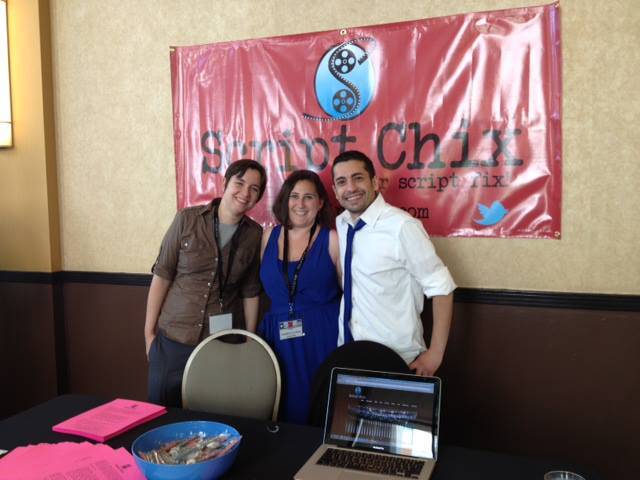
(L-R) Miranda, Sandra & budgeter/scheduler extraordinaire Hosam, who is not part of this interview
*And considering this doesn’t cost you anything to begin with, that’s the best deal you’ll get today.
The latest in a series of interviews with script readers and consultants who would be worth your while to work with if you want to get your script in shape. Today’s spotlight is on Miranda Sajdak and Sandra Leviton of Script Chix.
1. What’s the last thing you read/watched that you thought was incredibly well-written?
WINTER’S BONE
BUTCHER HOLLER by Daniel Shea
2. How’d you get your start reading scripts?
M – Started off as an intern in Hollywood doing the typical script-reading duties. Moved on to being an assistant and continued to do coverage there. Eventually found myself reading for friends and family on the side, and realized (around the same time as Sandra did) that it was a good idea to monetize some of this so as not to just be doing it in my free time. Ended up simultaneously being asked to read for various studios/companies, and turned all that experience around into Script Chix!
S – I believe I read my first script in college, though as a kid, I liked to watch movies and transcribe them. It took hours, but I loved it. The internet wasn’t really a thing yet, so there was no easy access to them. However, professionally, I started reading as an intern doing short coverages for executives during staffing season. My subsequent jobs at an agency and a cable network had me reading all of the time – for potential clients, development, and show staffing. Giving notes to clients, friends, and others who needed feedback was part of my daily life. When I decided to leave my network gig and go out on my own, doing it professionally seemed like a natural transition. As soon as friends at another cable network heard my news, they offered me a spot as one of their book readers. Around the same time, Miranda and I teamed up, and the rest is Script Chix history.
3. Is recognizing good writing something you think can be taught or learned?
M – Somewhat. The biggest thing here is to read as much as possible. We see scripts from writers who clearly don’t read screenplays regularly. The more you read, the more you’re able to recognize. Some of it is likely innate – and it should start early, before you get to Hollywood and decide you want to make movies – but, sure, recognizing what works just comes from reading more.
S – Reading is both objective and subjective. When we give notes, we try to focus on the objective. Even if we personally don’t like a character, a plotline, or concept, we can recognize that it written well, and it’s just not our personal taste. So yes, being able to recognize good writing can be taught; some things are obvious like formatting. However, it takes years of learning and practice to be able to both identify what is good and to be able to separate your own opinions/ taste from it.
4. What are the components of a good script?
S & M – There’s a number of things, but most importantly, a compelling story with multi-dimensional characters. Believable moments that still feel fresh. Strong narrative voice. Imagination and marketability. We would also include formatting in this list. It’s not a sexy component, but it is an important one. The story can be amazing, but if the formatting is off, it’s distracting, and most readers won’t be able to pay attention to greatness of the script.
5. What are some of the most common mistakes you see?
S & M – The biggest one we see, by far, is lack of formatting and proofreading. Bad character introductions. Lazy concept. Writing from experience, but instead of dramatizing the “true story that really happened” to the writer, it’s a regurgitation. Not understanding the difference between edgy and outright offensive or mean. One-dimensional or non-existent women and minorities. Some of these are not necessarily mistakes, but they’re all definitely problems we encounter often.
6. What story tropes are you just tired of seeing?
M – Refrigerator women. Lack of women and minorities. One-dimensional women.
S – Stories about Hollywood, writers, and nights out with the boys. Every writer at some point writes a script about being a struggling writer in Hollywood or their lead male protagonist is a sensitive writer that gets their heart broken. Also behind the scenes of reality TV – this is starting to become a thing. People tend to write what they know and unfortunately, all they know is trying to make it in Hollywood. Unfortunately for them, no executive wants to read this and no audience wants to see it. So if a writer must write this story, do it, get it out of your system, and move on to something more original. Draw from life experience – get out there and enjoy the world, feel heartbreak, and get into trouble (but not too much). The “night out/ retail job with the boys picking up women” is also the most common one we see in fledgling comedy writers. It’s another case of writing what you know. These stories don’t work because they are usually re-tellings of actual experiences that are not particularly dramatic or funny to anyone outside of the people who experienced it. Additionally, the humor only comes from insulting women. Just because making fun of a woman was hysterical to you and your boys in the moment doesn’t make it funny or appealing to anyone else.
7. What are the 3 most important rules every writer should know?
M – Write. Read. Revise.
S – Persistence, practice, and patience.
8. Have you ever read a script that was an absolute, without-a-doubt “recommend”? If so, could you give the logline?
M – Yes! And it just finished shooting! “A teenage con artist tricks a desperate mother into hiring her as a live-in companion for her autistic daughter.”
S – I agree with M. That script is amazing. Honestly, it’s tough to give a blanket “recommend” because each company and client we work with has their own specific mandates of what they are looking for, so it needs to be tailored to their needs. A script that I loved recently, like goosebump-inducing loved is “With the help of a crotchety old neighbor and his garden, a young woman’s world comes alive.” It sounds a bit generic, but it was beautifully written and full of magic with a hint of surrealism.
9. How do you feel about screenwriting contests? Worth it or not?
S & M – Absolutely worth it, but not all of them. Do your research. See which contests have a track record of success for the writers who’ve won. Look at what the prizes are. If the only prize is that you won the contest, it’s probably not that worthwhile (unless it’s a big name like Nicholl or Page). And look at things like fellowships, as well. If they want you to pay but aren’t giving you anything WORTHWHILE in return, it’s not worth it.
That said… if you’re starting out and still sending out queries and you haven’t won anything or been published or produced – enter contests. Get some prestige next to your name, even if it is just “winner of miscellaneous contest.” It helps in general, but it mostly helps if the contest is considered reputable.
10. How can people can get in touch with you to find out more about the services you provide?
The latest in a series of interviews with script readers and consultants who would be worth your while to work with if you want to get your script in shape.
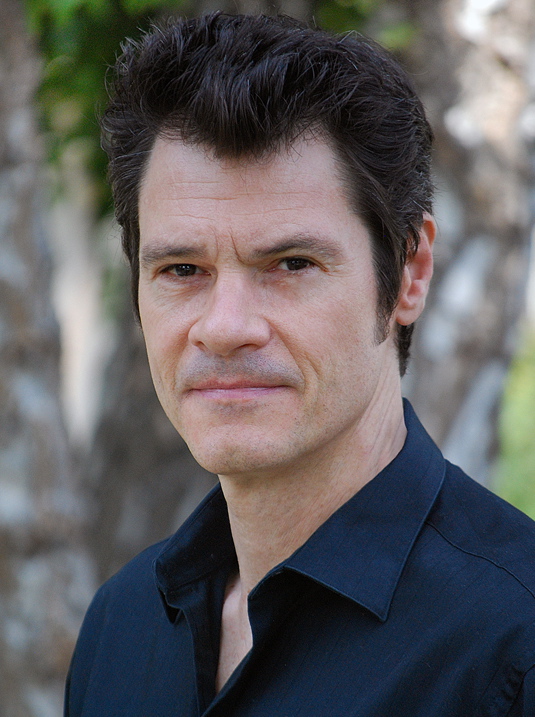
Mark Sanderson (aka @scriptcat) is a Los Angeles based screenwriter, script consultant, and sometimes actor blessed to be living his childhood dream of making movies with a spec sale and a dozen screenplay assignments that have produced seven films. Mark’s long association with award winning Hollywood filmmakers dates back to his first produced screenplay and has since worked with Academy Award® winning producers, veteran directors, and Academy Award®, Emmy®, and Golden Globe® acting nominees. He offers script consultation services on his website at www.fiveoclockblue.net and also offers advice on his screenwriting blog MY BLANK PAGE. Look for his upcoming book A Screenwriter’s Journey to Success coming out later this year on Amazon.
1. What’s the last thing you read/watched that you thought was incredibly well-written?
I don’t have much time to spend watching a lot of TV or movies, but the best writing these days is on television in my opinion. I manage to catch an episode here and there of shows, but don’t really spend a lot of time watching many series. When I watch movies, I tend to be really picky and very few films out there today don’t really draw me in—so I go for the classics. On television, I really thought the limited series Sherlock was excellent writing, Mr. Selfridge too, and I got hooked into the The Following for a while and that was good serialized writing. I’m just getting into the old pulpy Doc Savage novels from the 1930s and the writing is great and so visually ahead of its time. I read that Hollywood is planning on making a Doc Savage movie and if done right, could spawn a series of new films.
2. How’d you get your start reading scripts?
Well, I’ve had a professional screenwriting career for the past fifteen years and during the last few years I decided to open my consulting business on the side. I’m always reading scripts even if I’m not consulting on them. I have a small group of writer friends and we trade our scripts back and forth for feedback.
3. Is recognizing good writing something you think can be taught or learned?
I believe it comes from years of learning and studying the craft of screenwriting. When writers build a strong foundation of experience reading scripts, studying structure, character, writing scripts, executing notes and mastering their craft—this is when they can finally give experienced and critical feedback if a script is good writing or not. It also is vital to know the language of cinema. I’m aware that some consulting sites farm out the reads to “readers” and one never knows who is actually reading the script or their experience level when giving notes.
4. What are the components of a good script?
It starts with a compelling story and something that you can clearly see grew from the writer’s passion for the material. Too many times I read scripts that are trying to chase after Hollywood’s big budget blockbusters and they fall short because the writing is boring, clichéd and trying to emulate something that has already been created. The scripts read like a rehash and not something original. A good script showcases the writer’s unique voice and the best of their talents. It has interesting characters that we care about and written in a fluid, efficient way that includes only what is necessary to keep the story moving forward. A good script also has a rock solid structure and a series of reveals, surprises, setups and pay offs that keep us captivated to read until the end or sit through the film until the lights come up in the theater.
5. What are some of the most common mistakes you see?
I’m shocked that many screenwriters still have no respect for the professional format of a screenplay. They believe the reader will look past the format and typos issues to see their genius idea and buy it for that alone. A script lives or dies by a thousand small details and considering the volume of scripts that bounce around Hollywood every year, the industry has no patience for unprofessionalism. Other common mistakes I see happen when screenwriters do not work from a solid outline or treatment before they jump into pages. Approximately three quarters of your work usually goes into the story even before you type FADE IN. Other mistakes come from overwriting and micromanaging the scenes. Aspirants need to learn what to put in a script—and equally as important what to leave out. I tell writers: “Stay the hell out of the way of the story.” Many are so eager to put their fingerprints all over the pages and that’s just ego. The best writing is when the screenwriter is almost is invisible on the page and the script reads as if you’re watching the film. I also find too many mistakes with structure and the story happening too late or not enough story to facilitate 100 pages. The set up in the first act many times is way too long. Hopefully these writers learn from their mistakes and focus on becoming better screenwriters by creating stories they are passionate about rather than chasing fame and fortune.
6. What story tropes are you just tired of seeing?
One big one that I can’t stand is the use of “Deus ex Machina” or using a contrived way at the end where a character or action saves the day. It shows lazy writing and ends the story on a weak beat leaving the reader unfulfilled. Another one is the “fall” or “twisted ankle” of a character escaping that is usually followed by the line, “Go on without me!” Another one I’m tired of seeing is the “I hate my job, my boss and do nothing but complain” routine.
7. What are the 3 most important rules every writer should know?
1. Disrespect the craft at your own peril. You will never be bigger than your craft because screenwriting is an ongoing learning experience.
2. You must become a collaborator and ultimate team player because if you grimace at their notes, they will brand you as “difficult” and not work with you again.
3. You may have to write five, six or seven specs over a period of years to even get one optioned or maybe sold if you’re lucky. But if you’re impatient and looking for fame and fortune, you’re in the wrong business.
8. Have you ever read a script that was an absolute, without-a-doubt “recommend”? If so, could you give the logline?
Well, I don’t give “recommends” because I’m not reading for a producer, but I do tell writers if they were successful in the execution of their idea. Screenwriting is all about the execution. Good ideas are a dime a dozen in Hollywood—they’re everywhere and it’s the execution of a script that’s vital to its final success. Yes, I did read a few scripts during the last year that were superb and written by experienced filmmakers—so that helped. I can’t give out the loglines as I have a non-disclose agreement with my clients, so I’m not allowed to discuss the elements of their projects with anyone.
9. How do you feel about screenwriting contests? Worth it or not?
Yes, many of the top contests are worth entering as a chance to “make some noise” and get noticed. Back in the day, I entered a spec in the Nicholl Fellowship and it ended up in the top twenty scripts out of thousands worldwide. They picked the top eight that year for the fellowship, but since I had placed in the next dozen, agents and mangers were willing to give it a read. Eventually it found a producer who championed the script and it was produced, played in film festivals worldwide, premiered on TV and distributed globally. But, be careful and read the fine print of the contest you are entering as some stake claim to your script if you win. Do your homework on the various contests and make sure you are putting out your best material that will properly represent your talent and ability. If it’s not ready, go ahead and miss the deadline because there is always next year.
10. How can people get in touch with you to find out more about the services you provide?
Screenwriters can find more information about my consulting services on my website at: www.fiveoclockblue.net. I’m also on Twitter: @scriptcat
11. Readers of this blog are more than familiar with my love/appreciation of pie. What’s your favorite kind?
Oh that’s an easy one…definitely a tie between boysenberry and cherry. I could eat both with ice cream as a “last meal” and die a happy man. Apple pie comes in a close third, but all pie should be heated.



 Maximum Z