From the archives: Writing in your own voice

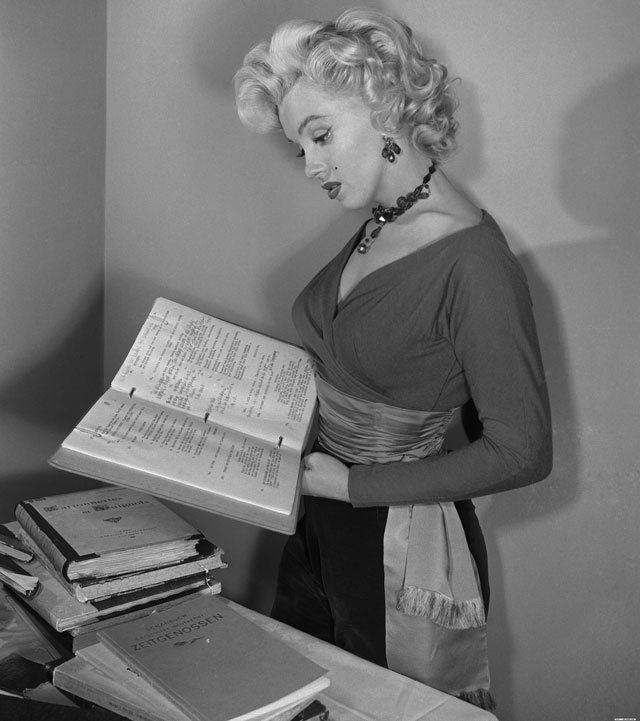
“Hmm. Billy’s new script. Something about men dressing up as women to hide from gangsters? Hope it’s funny.”

I’ve seen a good number of articles and online comments recently about how a script should convey the writer’s “voice”. That prompted this blast from the past from June 8, 2018.

Enjoy.

“When I’ve done script notes for writing colleagues, no matter what the genre is, I can usually tell who wrote it – because of the way it reads. Each writer has their own particular style, so each of their scripts has its own corresponding “sound”. Or I’ll get notes back on my material which often includes a comment along the lines of “this sounds like something you’d write”.

This isn’t just about dialogue. It’s about a writer’s overall style, or how they tell the story of their script. You don’t just want the reader to read your story; you want them to experience it. Which can be accomplished by adding that extra layer.

Everybody develops their own individual style, and it takes time to find it. The more you write, the more you’ll be able to hone your writing to reflect your own individuality.

Just a few things to think about:

-How does your script read? Is the writing crisp and efficient, or are you wasting valuable page real estate with too many lines of  your loquacious verbosity? Taking it one step further, do you use the same words over and over, or do you relish any opportunity to give your thesaurus a solid workout?

-How is your story set up and how does it play out? Is it simple and straightforward, or complex and full of deliciously tantalizing twists and turns? Are you working that creativeness to show us things we haven’t seen before, or is just page after page of the same ol’, same ol’?

-Is it a story somebody besides you would want to see? Just because you find the subject matter interesting doesn’t mean it has universal appeal. However, there is the counter-argument to that in which you could attempt to have your story include elements that would satisfy fans of the genre while also appealing to newcomers.

-Can’t ignore the population within the pages. Are your characters well-developed and complex, or do they come up lacking? Do we care about them, or what happens to them? Can we relate to them?

-What are your characters saying, or not saying (subtext!)? How are they saying it? Do they sound interesting or dull as dishwater? Very important – do they sound like actual people, or like “characters in a movie”?

Remember – the script is a reflection of you. A solid piece of writing shows you know what you’re doing. Offering up something sloppy is simply just sabotaging yourself.

Who hasn’t heard a variation on the line about a script being a cheap knockoff of a more established writer? While I can understand admiring a pro writer’s style, why would you attempt to copy it? It probably took them a long time to find their own voice, and by trying to write like they do, you’re denying yourself the opportunity to do the same thing for yourself.

Or to put it another way: they didn’t take any shortcuts to become the writer they are today, so why should you?”

Knowing your nails and how to use them

Savvy and experienced consumer of literature I’m sure you are, no doubt you’re more than somewhat familiar with the classic piece For Want Of A Nail:

For want of a nail the shoe was lost.
For want of a shoe the horse was lost.
For want of a horse the rider was lost.
For want of a rider the message was lost.
For want of a message the battle was lost.
For want of a battle the kingdom was lost.
And all for the want of a horseshoe nail.

Sometimes we don’t realize how important something is that at first glance might seem completely insignificant.

The same concept could apply to screenwriting and the details of your story. A reader could see something and wonder “I don’t get it. Why is this in here?”

If you do the work and plan accordingly, the answer/reason will soon be obvious. That little detail is there for a reason, probably an important one, and without it, the rest of the story won’t work.

This is important on several levels.

It shows you put a lot of thought into putting the story together.

It shows you understand the concept of effective setups and payoffs.

It shows you respect the intelligence of your reader/audience and don’t feel the need to deliberately draw our attention to this sort of thing.

It always bothers me when a story sets something up and doesn’t pay it off, or has something later on in the story that comes out of nowhere.

Some writers go into it with a solid idea of how everything is set up and know how it’s going to play out, some come up with the bare bones of a foundation and fill in the blanks, and there are even those who sit down with a blank page, start writing, and see how it goes.

I tend to waver between the first two.

Sometimes you might even go back over what you’ve already written and discover an opportune moment to put in a small detail that can further enhance something later on in the story. It’s as if your subconscious was working in conjunction with your creativity and giving you an unexpected helping hand.

Are parts of your story set up that they start with a “nail” and escalate from there? Or does something happen later that could use a stronger setup?

You’d be surprised at seeing the ripple effect one little change can have on the rest of your script. Hopefully for the better.

Q & A with Scott McConnell

Scott McConnell is a writer/story consultant who has worked as a producer in Los Angeles and in fiction development. Scott edits stories from inside them as a writer. He finds solutions to story problems and can especially focus on improving a story’s premise. Scott believes this is where most films/scripts succeed or fail. He also finds that many good writers don’t focus enough on theme. It is through theme that a writer moves an audience emotionally. Scott can edit low budget features as well as big budget blockbusters. He fixes scripts for individual writers and production companies around the world.

Scott started in the business as a story analyst in Los Angeles; analyzing scripts for Roger and Julie Corman, Samuel Goldwyn and the Sundance Institute, among others. He was later the showrunner (writer/producer/director) of the U.S. nationally syndicated LIVE LIFE AND WIN! and he co-wrote the reality series HOLLYWOOD BOOT CAMP. He has found the story by studying footage, reading scripts/books, pre-interviewing talents, and writing or editing the script. Scott is a member of the Producer’s Guild of America and of the Australian Film Institute (AACTA.)

What was the last thing you read or watched you considered to be exceptionally well-written?

Regarding television, I’m a big fan of the English series VICTORIA, about Queen Victoria. The writing is often excellent, especially in season one, which dramatized a young girl developing herself in high stakes circumstances to become queen of an empire and the loving wife of a man she admires but who often has different ideas to her and is at times in romantic conflict with her because she is also his queen and leader.

Regarding film, I think SAVING MR. BANKS is brilliantly written, especially its dramatization of a profound theme and the integration of its two main plot lines from different time periods. The characters were intelligently written and layered, while the arc of the protagonist is beautifully climaxed.

How’d you get your start in the industry?

My first start in the business came after I graduated from UCLA Extension (scriptwriting) and did some interning work at industry places in town and started my own script analysis business. The study and volunteer work allowed me to get experience so I was skilled and employable.

Is recognizing good writing something you think can be taught or learned?

It is something that is learned. But there are great individual differences in how much someone might actually know about what makes a good story. And it’s hard for readers to see a story objectively as it really is and not be prejudiced by their own values and tastes.

What do you consider the components of a good script?

There are two basics to any script. First there is the mechanics of how well it is written: its structure, clarity of its theme, use of dramatic devises, the development of its character and relationship arcs, the nature of its climax, and so forth. That is, the storytelling skill.

And then there is the values side of the story, the actual nature of the specific content. For example, its theme and sensibility, the values and goals of the characters, the nature of the conflicts and the theme resolution. That is, the values the story is dramatizing.

A good script has skilled storytelling and universal, important and personal values that the audience cares about. It is the nature of these values that especially makes a story or film an enduring classic.

What are some of the most common screenwriting mistakes you see?

The biggest mistake I often see is that writers do not give their characters agency (free will). That is, more specifically, the writer does not create a protagonist who has a big main goal that drives the story and underpins its structure. One of the negative consequences of this lack of agency in characters is that it becomes the writer who drives the story by dropping contrived and coincidental problems onto the heads of the characters. Such a story lacks logic, believability and suspense.

Another common writing mistake I see all the time is that the concept of the story was not developed properly. Many scripts, for example, have unoriginal, uninteresting or one-layer premises. Creating a strong premise is the hardest and most important part of writing a story.

A mistake I see in good writers is that they often haven’t mastered theme, so they don’t know how to use it to give depth to their story and to induce deep emotion in their audiences.

What story tropes are you just tired of seeing?

Some writers want to throw in the latest political fad or fashion.

Other writers think that chases, fights and explosions are what make an action script great. They aren’t. Look at two of the great actioners, DIE HARD and GLADIATOR: both of these stories have layered and driven characters enduring terrible personal problems.

What are some key rules/guidelines every writer should know?

The first rule of all writing is to have something interesting to say or show. If your story – its premise, characters, plot, climax – are not interesting then it doesn’t matter how well you structure your story, for example, no one will care.

I think every creator of a script should have a story expert outside of their story bubble vet and edit their script, and the closer to the front end of the story creation this is done the better.

Have a writing process. Many writers who don’t have a writing process never finish their story or don’t know how to. A writing process can be learned and should be. A good writing coach can teach you one.

Have you ever read a script where you thought “This writer really gets it.”? If so, what were the reasons why?

That’s pretty rare. Most scripts, produced and unproduced, have issues. But I remember a script I edited about two years ago where I was impressed that these two writers were really in charge of the story and the writing. That is, that with some fixes this script would make a good movie. These writers had a layered, intriguing concept, an escalating plot line and characters who I cared about and I was anxious to see who among the leads won. (The three leads in conflict were all good guys but in a big conflict.)

How do you feel about screenwriting contests? Worth it or not?

That’s a good but difficult question. At best I’m mixed on contests. Yes, there are some good ones that can help a writer get doors opened or be noticed, but for other contests you have to worry about who is reading these piles of scripts. My concern is that too many contest readers seem to be straight out of college where they haven’t studied the great classic plays/novels nor analysed the
truly well written films. They tend, I also worry, to be naturalistic and PC in their reaction to story content. I hope I’m wrong but….

My suggestion to those considering entering contests is to vet carefully. For example, look to see if the contest has some clout, that being a winner or a placing near the top will truly open doors, etc. Also try to see the loglines of previous winners. If they’re rubbish, be wary, as you should be if any samples of coverage by the contest’s graders indicates a focus not on story essentials. Also try to determine if that contest prefers a certain genre over others. Good luck. Caveat emptor.

How can people find out more about you and the services you provide?

I edit scripts of many genres and forms, have a mentorship program to teach writers a writing process while they actually write a script, and other writing and development services. People can learn more about me on LinkedIn at this page: https://www.linkedin.com/in/scottamcconnell/

Or write to me via email: scottm100@gmail.com

People can also find my articles on screenwriting on Script, Creative Screenwriting and MovieMaker.

Readers of this blog are more than familiar with my love/appreciation of pie. What’s your favorite kind?

American Pie! (the song, not the movie)

Q & A with Tim Schildberger of Write LA

Tim Schildberger is an experienced writer, script coach, and co-founder/Head Judge of Write LA – an annual screenwriting competition that gives writers a chance to get read by managers, and hear their winning script read by professional actors in LA (and posted on YouTube). He cares far too much about helping writers improve their craft and get access to the industry. Tim is an expat Australian, a former TV journalist, writer on the globally popular soap opera NEIGHBOURS, newspaper columnist, creator of a comedy/reality series for the Travel Channel called LAWRENCE OF AMERICA, and one of the key members of the original BORAT team. He has stories.

In his spare time, Tim is a husband, parent, tennis player, road tripper, and he and his family foster kittens. Seriously. Twitter: @write_la Instagram: @writela

What was the last thing you read or watched you considered exceptionally well-written?

I hate to be a cliche, but THE CROWN – sets the bar very high. Peter Morgan is a genius. His ability to tell story with and without words, and build tension in scenes that on the page might appear boring, is remarkable. THE QUEEN’S GAMBIT had similar skill, attaching us to an unconventional character quickly and effectively.  Feature films – I loved PALM SPRINGS – structurally, and characters/dialogue, and who doesn’t love a woman solving the problems using education and intellect!

How’d you get your start in the industry?

I was 22, living in Australia (where I’m from), working as a trainee TV News Producer. I had applied to newsrooms, and I’d called up various TV series, asking if they needed a writer. It was a simpler time. A nightly soap opera, NEIGHBOURS, let me do a writing submission, which they liked – and said they’d get back to me. In the meantime I got the job in TV news.

One day, six months later,  I got a call in the newsroom, it was NEIGHBOURS, asking if I’d like to write an episode. I said yes, obviously. They mailed me the scene breakdowns, I typed my script on a typewriter, and ten days later mailed it back. All after working a full day in the newsroom. I did that 5 more times before it all got far too overwhelming. I was the youngest writer they’d ever had, and that experience made it clear to me that writing, in all its forms, was my future.

What was the inspiration for creating the Write LA competition?

We wanted to create a competition we’d want to enter. I’ve been writing for a long time – and I’ve entered competitions large and small. I’ve won a few, placed in a bunch, and it became clear that many of the writing comps out there don’t really do much when it comes to attracting attention, gaining industry access, or launching careers. And pretty much none put any kind of focus on helping writers improve their command of craft. So our goal was to build a competition that somehow combined both goals – to help with the craft, and to help with the access.

What makes Write LA unique compared to other screenwriting competitions?

Two things I think separate us. First, we are a competition run by actual writers. So we are able to deliver a certain degree of respect and admiration for the act of actually finishing a script and entering it – that many competitions lack. We know how it all feels.

Second, we stand proudly in front of the competition. Everyone knows I’m the co-founder and Head Judge. When you email a question, it comes to me. I do an enormous amount of reading, and I’m supervising every aspect of the competition. We try hard not to be a faceless comp where sometimes it can feel like you’re sending your script into a void, and then hoping something emerges. It matters to us that the entrants feel ’seen’.

A big concern for writers entering a screenwriting competition is the quality/experience level of its readers. How does Write LA address that?

I hear that. And I’ve experienced it first hand. A script will make the Nicholl semifinals, and won’t make it out of the first round somewhere else. And then you get ‘feedback’ that feels like it was written by someone who never actually read the script, they just strung a few buzzwords together.

So to address that – I’m heavily involved in the reading process. I’ve handpicked our small team, I do a ton of reading personally, and I set pretty clear parameters when it comes to what I’m looking for when it comes to command of craft. Every script that makes it into our top 15 semi finalists will have been read by at least three different people, including me.

We give every script, whatever the genre, or whether it’s a TV pilot or feature, full respect and attention. And all the additional feedback (offered at an extra fee), is done by me personally. So there is a consistency of the feedback, and a name attached to it (mine). I’m not interested in telling anyone what I would do, I’m focused entirely on maximizing the opportunities presented by the writer and doing my best to empower them to bring the most out of their idea, and their skills. 

What do you consider the components of a good script?

Gosh – this isn’t easy to answer quickly, but I’ll try. For me, a good script needs fleshed out characters, who face clear challenges – no matter how big or small. Because no matter how detailed the world, or ‘big’ the story, if we don’t care about the characters, it’s all a waste of time.

Also, an understanding of the audience experience is awesome. A writer who is aware of audience expectations, and is able to manipulate those expectations is exciting. And finally, a clear sense of where the story is heading. Not a lot of extra clutter. Just a solid story, competently and confidently told.

What are some of the most common screenwriting mistakes you see?

Misuse of Scene Description is HUGE. Using it to reveal character details an audience couldn’t possibly know. Using it to show off a writer’s literary command – with all sorts of flowery descriptions that waste time, rather than establish ‘mood’.

Not writing an outline. I’m confident I can pick within 5 pages if a writer has an outline, and a firm idea of who this story is about, and where it is going. And taking too long to dive into story. Spending page after page building a complicated world, and then finally starting some sort of story – is a big mistake. Even STAR WARS had a brief title explanation, and then we were into Darth Vader storming Leia’s ship. The rest we figure out as we go.

Lastly, I have to add too many spelling errors. A sloppy script does not inspire confidence.

What story tropes are you just tired of seeing?

A character waking up, turning off their alarm, and getting into the shower as the first thing we see. Happens WAY more often than you would expect, and is not only dull, but unwise. What viewer who sits in a darkened movie theatre wants to see a feature film start that way?

I’m also not a fan of drawn out action sequences. It’s great that you see the car chase in your head, but all a reader cares about is ‘does someone important die?’

Oh, and a shot of ‘overdue bills’ on the kitchen table. Anything but that please. I see a lot of stereotypes with the characters too – which usually tells me a writer is basing a character on another character they’ve seen in a movie or on TV – rather than an actual, flawed, complex human being.

What are some key rules/guidelines every writer should know?

What you are doing is more about hard work than flashes of inspiration. It’s less about talent than it is about grind.

Accept that re-writing is inevitable. Your first draft will not be a work of art. It’s a starting point.

Learn to receive notes as comments on the words on a page, not a personal attack, or a statement on your writing ability.

Characters are more important than story nowadays. Put the extra effort into figuring out who they are, and their emotional journey through your story.

What you are doing is brave, and awesome, and you should feel very proud of yourself every time you finish anything. Every time. Plenty of people talk about writing something. You went and did it. That’s huge and should never be ignored.

There is no work of art in the history of human beings that has ever been loved by 100% of the people. Accept that your work will not be universally loved – because humans are humans.

Details matter. Every scene matters. Every line of dialogue matters. Everything you do is conveying a message to an audience. Understand and embrace that.

Have you ever read a script where you thought “This writer really gets it”? If so, what were the reasons why?

I read many scripts like that! I read hundreds of scripts a year, so I regularly find writers who are very skilled. As for reasons, I would say the absolute, clear number one is making me feel something. I’m not alone in this. I tell anyone who’ll listen if you can make a reader feel a genuine human emotion, that is FAR more important and impactful than any set piece, world, intricate story or cute scene description. It isn’t even close.

Also, it’s fun to read scripts by writers who think about the audience, and work hard to provide us with a rich, enjoyable experience. I know the expression “write what you know” is popular. My version is “write what you know, but make it accessible to strangers.”

And while I’m here, let me add that writing what you know really refers to your emotional experience and authenticity. Not your time in middle school. If you can dig into your emotional space, which is uniquely yours, and share that on the page – that authenticity connects you with a reader/audience, and goes a long way to establishing what the industry likes to call your “voice”. I’d like to say it was easy to do. It’s not. But it’s important.

Readers of this blog are more than familiar with my love/appreciation of pie. What’s your favorite kind?

I have to say I’m a big fan of custard. There’s a custard tart in my homeland Australia – a mini pie – which is very much my favorite. But as that doesn’t really exist here – I’m going to say I like banana cream, apple, peach, and I’m a big fan of all the cobblers and crumbles too. I don’t think I’d refuse any pie that came my way.

Q & A with Jeff Kitchen of Scriptwriting Mastery

Jeff Kitchen has taught thousands of students from Broadway to Hollywood. He was classically trained as a playwright, worked as a dramaturg in New York theater and taught playwriting on Broadway. A top-rated teacher, he taught for thirty years and wrote the book, Writing a Great Movie: Key Tools for Successful Screenwriting. For the past three years Jeff adapted his training program into a comprehensive digital apprenticeship. Scriptwriting Mastery is the result.

What was your inspiration behind putting this together?

I taught people for many years in these intensive 30-hour seminars, and worked hard to give them genuine know-how, limiting the groups to six people, with each person bringing their own script idea to work on. I explained each tool, illustrated it with classic films, and then got each student applying that tool to their story so they got experience using it properly and their scripts improved quite a lot, so the word of mouth was huge. But it was essentially firehose teaching, hammering them with a complex array of information about the tools and principles, and I always felt like I could do more.

After teaching non-stop for eighteen years, from Broadway to Hollywood, I took a break from teaching, focusing on script consultations. Then as I moved back toward teaching again, I didn’t want to do it the same way because it didn’t transfer expertise at the level I intended. Don’t get me wrong, they learned a lot, and many went on to successful careers as writers, directors, producers, and creative executives, including multiple Oscar and Emmy nominations. But I wanted to do much better as a teacher.

So I spent time circling the problem, trying to find a way to transfer deep expertise much more effectively and how to teach much larger groups. Finally I hit upon the question: If I could wave a magic wand and teach writers in any way that I desired, what would that be? The answer was to take as long as needed, and I decided I could do it in about two years. I studied the science of how people learn, how to train people to expertise, and Cognitive Apprenticeship, which not only conveys deep skills to an apprentice, but also the subtle thinking processes that underlie expertise. Then I built a new training program that incorporates all these instructional technologies into a rigorous and demanding process in the craft of the dramatist.

What makes this course different from other online screenwriting education programs?

Some of the tools are entirely unique, coming out of my intense study of a legendary Broadway script doctor from around the early 1900’s. William Thompson Price helped revise every script that producer David Belasco staged on Broadway and created several brand-new tools to help make stories work dramatically. So many playwrights wanted to learn from him that he founded the first school of playwriting ever, and of his twenty-eight students, twenty-four had hits on Broadway.

A prominent playwriting teacher, Bernard Grebanier, said of Price’s groundbreaking work, “If we ourselves were asked to whom we were indebted for the basis of our ideas about playwriting, we should have to answer, ‘Aristotle and Price.’” One tool, the Proposition, which uses the power of logic to pull all the components of a story together into a coherent whole, is known to some, but Price’s three-step tool Sequence, Proposition, Plot lay completely undiscovered until I found it in one of his books. This tool is a remarkably powerful way to tighten and dramatize the parts of a script. It uses reverse cause and effect to create a tight chain of events, rigorously separating that which is Necessary to the forward action of the story from that which is Unnecessary, as well as creating compelling conflict that helps keep the audience on the edge of their seats.

You apply these three steps first to the overall story, making it tight and dramatic. If the big picture doesn’t work, then the details don’t matter. Then you divide the overall story into acts, and you do the same three steps to each, making them tight and dramatic. Next you divide the acts into sequences (there are two-to-five sequences in an act, and two-to-five scenes in a sequence) and you do the same three steps to each sequence.

You’re gradually developing the details as they become necessary and dramatizing it as you go. This is a lot of work, but so is twenty-five rewrites. Then you break the sequences into scenes. You apply Sequence, Proposition, Plot to the first scene, making it tight and dramatic, and then you write that scene. Then you structure the next scene and write it, and you keep going until you have a working draft. And because you’re constantly excluding the Unnecessary in a ruthless fashion, that draft consists of only the Necessary, so it’s a lean and mean draft, not some bloated mess. Sure the script needs work, but it’s clean and functional, and much easier to work with.

I teach Dilemma as the dramatic engine of your story, building in intensity throughout Act Two to become a Crisis, forcing Decision & Action, with the protagonist actively resolving his or her dilemma. The way in which the protagonist resolves the dilemma expresses the Theme that’s emerging organically from the story. I use the story-creation resource, the 36 Dramatic Situations as a volcanic brainstorming tool, and the personality-profiling system, the Enneagram to deepen, dimensionalize, and flaw your characters. Research and Brainstorming help you explode your idea and violate its perceived limits, think it through, amplify its strengths, and get it up to speed. The Central Proposition uses the power of logic to pull all the clever story elements together, fusing them into one coherent plot that grips the audience. And Sequence, Proposition, Plot helps you construct and write the script.

People constantly say they’ve never seen anything like the powerful tools I use to build and dramatize a story, but it’s straight out of classic dramaturgic principle and technique. I’m mostly self-trained in an obscure school of thought in playwriting, but I’ve trained development execs at all the Hollywood studios and they consistently say I teach the most advanced development tools in the industry. So my tools are distinct and now my training methods are unusual, too.

Science has proven that the harder it is to learn something the deeper you retain it, so I work my students hard, constantly changing gears and switching topics, keeping them off balance, and staying unpredictable. I call it Disruptive Teaching. It forces them to dig deep and apply themselves, to be aggressive independent thinkers, and to stand up to a serious challenge. It’s good professional training because the real world doesn’t bring you neat arrays of predictable problems. They learn how to take a punch and fight their way out of a corner. Trying to make a living as a professional writer is notoriously difficult and they need grit, serious skills, and a rough-and-tumble capability. I’m constantly challenging them to think through complex new ideas before I instruct them in it, making them work hard, think straight, and apply their mind. They are not allowed to ask stupid questions. They learn to generate ideas and also to evaluate them critically, with a professional eye, and to articulate their reasoning aloud to the class.

One main difference between this program and others that I know of is that the center of the training is that we’re constantly working on multiple scripts of different genres and in different stages of completion. I train the students by ranging from one project to the next, and we function as a team to make each one work, with teaching moments thrown in as they arise. Students also have daily exercises, writing assignments, learning games, story creation, collaborative competitions, movie nights, and assigned reading. Plus we read one classic script each week because it attunes them to great writing and story ideas.

This training workshop runs for eighteen months and each student gradually acquires the skills and knowledge of a trained dramatist, plus the subtle cognitive skills that underlie substantial mastery. Because this program is constantly ongoing and requires some training before they jump in, each student starts with a three-month video course, working as my virtual apprentice as I create, develop, and construct a complete original script from scratch. They hand-copy all the notes I generate in creating the story, handling all the tools as I build it with them. Then, based on the detailed dramatic outline we’ve created, each student writes their own version of this script in order to graduate to the main program. So there’s a three-month course to start them off, and then there’s another separate three-month program after they’ve trained for eighteen months in which they pick an idea from our group Story Bin and build the script on their own in our open workshop, periodically demonstrating their mastery, their progress, and their challenges to myself and the group. This consolidates all their training into a fully integrated set of skills and professional knowledge.

There are lots of uses of the label “dramatist” in addition to “scriptwriter.” Are there similarities and/or differences between the two?

What I teach is plot construction and dramatic principle—the craft of the dramatist, the ancient art of adapting a story for a theatrical presentation, whether in film, on TV, or onstage. It’s about making the story actable so that it can be performed and will grip an audience. Consistent coherent compelling Dramatic Action is the name of the game. Dramatic Action is not car chases and shootouts, it’s a state of action you put the audience in, where they’re up on the edge of their seats—and you keep them there because they must know how things turn out. If you have sections that are flat dramatically then you lose the audience there, which contributes to the script not working.

It’s all about the audience. A movie playing to an empty theater has no power—it’s just shadows on the wall. The power of the film or TV show or play resides in the response of the audience. Anyone who’s done live performance knows intimately that it’s all about the audience, but amateurs often forget they’re writing for a performance medium. So a dramatist is one who crafts a gripping performance. Whether it’s a bone crunching thriller or a wacko comedy, the story must work dramatically.

Dramatic writing is generally considered the most elusive of all the literary disciplines. It’s tricky, it’s slippery, and it’s unforgiving. An extremely stripped-down literary form, it demands complete economy with no room for the Unnecessary. I’m training people in the craft of the dramatist, which covers screenwriting, TV writing, playwriting, and any form of dramatic content. Once you have substantial technique, you can tackle any medium because you know how to make scripts work.

What are the benefits of the course for the screenwriter just starting out, and where would be a good place for them to start?

It gives a beginner comprehensive training in a method that really works. Apprenticeship is how we naturally learn best, working beside a master craftsman to absorb all the skills and thinking processes. If someone is a novice and knows they are, then they’re much easier to teach because they’re not brimming over with their “knowledge.” They also have no bad habits to overcome and, while they’ll need a lot of working experience to polish their craft after they’ve completed the training, they will know how to make scripts work. But everyone needs years of work, even after mastering the craft of the dramatist, to achieve true greatness as a writer, polishing and refining their voice, attack, smoothness, clarity, and many other subtle aspects of excellence. A good place for them to start is to take this program. It’s designed to be quite doable for raw beginners while also being challenging to experienced writers.

You reference on the website that there are varying lengths for the courses. Why does one take three months and another eighteen?

It’s actually all one course, divided up into three components. The first three months, Course 1: Tools & Fundamentals is the video training program in which, as I said, the students work as my virtual apprentice as we create a thriller from a one-sentence idea, develop it, and construct it, and then they write the actual script based on our detailed outline. This gives them enough training to jump into the eighteen-month main program, Course 2: Techniques & Principles, which is continuously ongoing. They might walk in on us spending the whole week figuring out the ending to a romantic comedy, and because they’ve worked with all the tools in Course 1, they can join right in.

Now their training begins in earnest, working with the group as we build multiple scripts at the same time, ranging from one to the next making each one work, tackling an action-comedy TV series one day and a psychological thriller screenplay the next. It’s heavy-duty learn-by-doing in an apprenticeship format, so they get serious experience and training as their skills coalesce. They’re being highly trained in seven tools over two years, spending months on each one, so they gradually acquire more and more expertise as they integrate all the tools. It’s like learning how to juggle while riding a unicycle on a tightrope—separate skills that must be learned independently, and then are integrated into one fluid capability.

Once they’ve achieved that level of mastery at the end of the eighteen-month Course 2, they’re ready to build a script on their own, which is Course 3: Solo Script Project. As I mentioned, this is the last three months, and they choose a story idea from our group Story Bin, develop structure, and write it, all in our open-workshop format, so their work is open to the group. I stop by regularly with students in tow like a teaching hospital, and the writer articulates their progress, their mastery, and their current challenges. When they finish the script, they graduate, now a seasoned versatile dramatist who can make scripts work in any genre, and who can tackle any medium.

What about a screenwriter with a few scripts under their belt? How would this course benefit them?

It’s a way to improve their craft and take their abilities to a higher level. One thing a writer quickly learns is that it’s hard to be consistent. Sometimes a script works and they’re not sure why it did, and sometimes it won’t, and they don’t know why it wouldn’t. As I said, scriptwriting is notoriously tricky and slippery. But with substantial craft, they can pin down a tricky script, get a good grip on it, and make that part work. If they have a sense of what their strengths and weaknesses are, then it makes them open to learning more to correct their weaknesses and reinforce their strengths. The tools create certain distinctions, and if they utilize those distinctions properly, they get the full power of the tools. If they muddy those distinctions every time they become inconvenient then they lose their power. So this adds a few more powerful tools to their process, and then trains them to a high degree of expertise in them. Good is the enemy of great and I train them long and hard in a sophisticated set of tools. They’ll emerge like a Navy Seal, able to reassemble their rifle in the dark, under fire.

You offer three courses of study. What are they, and how would somebody determine which one was the right fit for them?

There is only one course, the two-year program. The three courses originated because with such a long training period, it’s not practical for someone to wait a year for the next class to start. To allow people to jump in at any time, I created the initial three-month video training. If you’re a scientist going to live in the International Space Station to do experiments, you’d do a three-month training to prep you in how to travel to space and operate in the space station. As I said, the eighteen-month section is the bulk of the training, focused on constantly building scripts and the three-month period at the end build a script on their own to consolidate all their skills and demonstrate their mastery before graduating.

You use the film Training Day as an extensive part of your teaching process. Why this film in particular?

In the first three-month course the script we build is a thriller, so it’s a useful example. Jake, the Ethan Hawke character, has a good strong Dilemma, trapped between his ambition and his moral compass, so it’s a great model for our protagonist’s Dilemma. Training Day has dynamic conflict, deep and complex characters, great storytelling, phenomenal writing, and Denzel Washington’s Oscar-winning performance, with Ethan Hawke nominated for Best Supporting Actor. We’ll be reading one great script a week in the main program and using other classic scripts as teaching examples and research as we develop and write scripts of different genres.

It looks like this is a course with set deadlines, rather than a “work on your own schedule”-type one. What’s the reasoning behind that?

Scriptwriting Mastery has rigorous deadlines but is also relaxed in other ways. It is a highly-focused, demanding course that puts students through substantial training. The use of the tools is precise because the difference between a reasonably skilled practitioner and highly-trained expert can be razor thin, with hundreds of subtle differences that add up to mastery. But it’s also designed to be fun and relaxed because creativity is so central to story creation. We have contests of who can come up with the stupidest story idea, the most wacked-out title, and the craziest solution for a story problem.

But we’re working five days a week for two years, two-to-three hours a day, constantly creating, developing, constructing, and writing original scripts so it’s a heavy workload. It prepares you for the real world of turning out quality material with real deadlines. It’s a mix of live and recorded sessions, and the live sessions are recorded so you can watch when you can, but it’s a serious professional training program.

This is similar in many ways to on-the-job apprenticing to a plumber. You’re being trained in substantial skills, all of which relate directly to what must be done for each job. You learn the materials, the techniques, the underlying principles that guide your process, the thinking involved, and the critical distinctions that make all the difference. You’re gradually acquiring mastery in joining pipes, fixing plugged drains, and plumbing a house, but you’re also being trained to install hot water heaters, devices that can explode and kill people if you install them incorrectly. Because scripts are more constructed than written, it’s very much a blue-collar job rather than an ivory tower one. It’s not esoteric, it’s nuts-and-bolts, wrestling stories into shape that can be performed, and which will grip an audience.

You said you’re utilizing techniques for expert training and Cognitive Apprenticeship?

Yes, and it’s quite fascinating that these two distinct specialties capped off several years of studying the science of how the brain learns. The entirely new science of training experts was created in 1983 by Anders Ericsson, who studied elite training facilities around the world that were turning out disproportionate numbers of chess champions or Olympic ski racers or world-class violinists. He collected the innovative and counterintuitive methods that these top coaches and trainers utilized and studied them scientifically, then improved them to a high degree. His book, Peak: The New Science of Expertise is widely considered the high-water mark for how to train people to expert performance and is in fact course material for my program. Part of its science is that the trainee becomes part of the coaching team.

If for instance, you are an Olympic runner, you very quickly know as much as your coach and trainer about your exercise routines, diet, rest, and stretching as they do. You would in fact be part of the coaching team, actively helping to train yourself. My students study the book, Peak, and I turn them into active participants in the training and coaching process.

The science of how we learn has made incredible breakthroughs in the last fifty years, to the point where they know how your brain’s wiring grows and changes as you develop a particular skill. Through a process of myelination, secreting an insulating fat around the neural network which the brain assembles to perform that skill, continuous deliberate practice gradually makes that neural wiring thicker and broader and faster, upgrading it into an information superhighway, and that skill remains permanent in that person.

I found an amazing essay on Cognitive Apprenticeship just as I was pulling together the final shape of this program, and it was a total game changer. It’s about thirty pages was and written by several top PhDs in the field of how we learn. I devoured it ravenously because it fit so precisely with what I was doing, advanced training in sophisticated tools, and it changed everything. I read the article, then read it again with a yellow highlighter, and then yet again with a pink one, highlighting the best of what I’d marked in yellow. Next I typed up all the highlighted material and cooked that down even further, absorbing and digesting it so deeply that I ended up with key components of it on 3×5 cards spread out on my desk. I used them to create highly specific methods of training apprentices in the rigors of my craft, and also training them in the subtle and hidden cognitive processes that underlie my own expertise.

Cognitive Apprenticeship is focused on the cognitive skills of the expert. In a field like law or medicine, the thinking process is central, and to achieve professional-level expertise in those fields, how and what you think is paramount. And it’s not only cognition, but meta-cognition, your own awareness of your knowledge, so that you can evaluate your professional process and adapt it as needed. It’s a mastery over your own mastery, and it’s key to true expertise. So Cognitive Apprenticeship had a huge formative influence in how I designed the program. I literally swallowed it whole, spending an entire month studying these thirty pages, and I built much of my program with it. And integrating that with what I learned about teaching in a disruptive fashion, plus the science of expertise, I rebuilt my entire training process from stem to stern, and it’s been quite exciting.

Last time you said your pie of choice was cherry. Still the case?

I’m going with lemon meringue this time even though I haven’t had it in years. But since you’re a pie aficionado and I’m a Vermonter (now living in LA), I thought I’d share this slice of pie lore.

To the European, a Yankee is an American.

To an American, a Yankee is a New Englander.

To a New Englander, a Yankee is a Vermonter.

To a Vermonter, a Yankee is someone who eats apple pie for breakfast.

And to a Vermonter who eats apple pie for breakfast

a Yankee is someone who eats it with a knife.