Ask an Astonishingly Productive Script Consultant!

Bill Boyle

The latest in a series of interviews with script readers and consultants who would be worth your while to work with if you want to get your script in shape. Today’s spotlight is on writer-educator-consultant Bill Boyle of www.billboyle.net.

*editor’s note – Bill passed away in July 2018

Veteran screenwriter Bill Boyle has been involved in the film industry in both Canada and the U.S. for over 25 years as a writer, director, agent, producer, story editor, and mentor. Mr. Boyle has the rare honor that every screenplay and television series he has written has been produced or optioned. He currently has four screenplays produced and a fifth scheduled for production. Two others are presently under option. Additional information on the films can be found at www.billboyle.net or at www.imdb.com

In addition to screenwriting, Mr. Boyle devotes a significant amount of his time sharing his experience mentoring younger screenwriters. He teaches screenwriting at UCLA and has lectured throughout Canada and the United States.

Mr. Boyle is one of the most popular script consultants in the industry. He has consulted on over 1,000 screenplays worldwide. Creative Screenwriting Magazine rated him among the top 10% of screenwriting consultants. He is the lead proponent of a visual style of screenwriting called “The Visual Mindscape of Screenplay” that focuses on the visual and visceral aspects of screenwriting. His book of the same name was released in 2012.

1. What’s the last thing you read/watched that you thought was incredibly well written?

I am a huge fan of Jo Nesbo’s novels. His visual exploration of the environments he creates are so visceral that once read it is impossible to ever forget them. As for screenplays, I recently read Nightcrawler and found it exceptionally well-written.

2. How’d you get your start reading scripts?

If you mean reading scripts as a job, I was never actually a script reader. I was a manager in Canada and read many scripts that my actors were up for, as well as reading the work of my own screenwriters and playwright clients.

3. Is recognizing good writing something you think can be taught or learned?

It needs to be taught, but not taught as in learned; taught as in establishing the ability to connect fully with the writing and to remain focused. That ability and willingness to be fully immersed in the screenplay allows the reader the conduit into the rhythm, pacing and flow of the narrative. Sounds obvious, but it is my experience that the vast majority of writers ‘skim write’, which is to say they focus all of their attention on what they want the scene to say and little on the atmosphere and pacing of their scenes.

4. What are the components of a good script?

A good script is one that captures the visual and visceral imaginations of the reader. Actually, it’s a misnomer to say we’re writing for the reader, when actually we’re writing for the viewer within the writer. Besides being a visual expression of the story, a good script also expresses the proper pacing and atmosphere within each scene. These are the two elements most often missing in a screenplay.

5. What are some of the most common mistakes you see?

-Detailed Action

-Skim writing

-Blueprint Narrative lacking pace, atmosphere and visual expression

-Overwritten dialogue that lacks a pulse.

6. What story tropes are you just tired of seeing?

The two things that disturb me the most are how fundamentalist screenplay instructors and gurus have poisoned the creative minds of so many young writers.  This attitude of “my way or the highway”, or the ever-growing list of things a screenwriter must not do (Voiceovers, Camera Angles and Directions, Character Descriptives, Flashbacks, etc) is absurd.

For me the big one is the white on the page dictum. Of course, part of the art of screenwriting is the ability to tell the story in a succinct, near-haiku style. This form of brevity allows the story to flow and remain in the Absolute Present Tense. But this should never go beyond the point where it strips the narrative of its creative purpose.

I actually believe that white on the page is a way of devaluing the writer’s role in the filmmaking process. I seriously question when and why white on the page become more important that what is on the page.

7. What are the 3 most important rules every writer should know?

-Screenwriting is first and foremost a visual expression. Whether you choose to ignore it or not there is always and image on the screen.

-Establish pacing and atmosphere in your scenes so as to create a visceral experience within the reader/viewer

-Every action, element and scene of a screenplay exists in the Absolute Present Tense

8. Have you ever read a script that was an absolute, without-a-doubt “recommend”? If so, could you give the logline?

A script by Canadian screenwriter Laura Beard called ‘A Quiet and Distinguished Gentleman’. It was about a French Catholic detective who must overcome the bigotry of an English Protestant city and police force to solve a brutal axe murder in 1930. There are things she does with that script that to this day I still use in my lectures. A brilliant and very clever piece of work.

9. How do you feel about screenwriting contests? Worth it or not?

I am not a fan of screenwriting contests. Before I explain why, let me make the distinction between contests and fellowships. I think the fellowships (Nicholl, Praxis, Disney, etc.) are excellent programs.

I swear to god I have never heard a ‘true’ story of someone having a script produced based on a contest, which, considering how many there are out there, is rather shocking.

This idea of letting the writers know that they have moved to the next tier and then the quarterfinals, semifinals, etc., is their rendition of Three Card Monte. They let you think you win for a while so that you come back for more. What other reason is there?

10. How can people get in touch with you to find out more about the services you provide?

Check out my web site www.billboyle.net. You can also sign up for my newsletter, blog notices, online course dates and when spaces open up for my Unlimited Script Mentoring Program.

11. Readers of this blog are more than familiar with my love/appreciation of pie. What’s your favorite kind?

I will go for pretty much anything except the pie in The Help.
My 52 hours in the Southland

Just like being there!
This is exactly what it looks like!

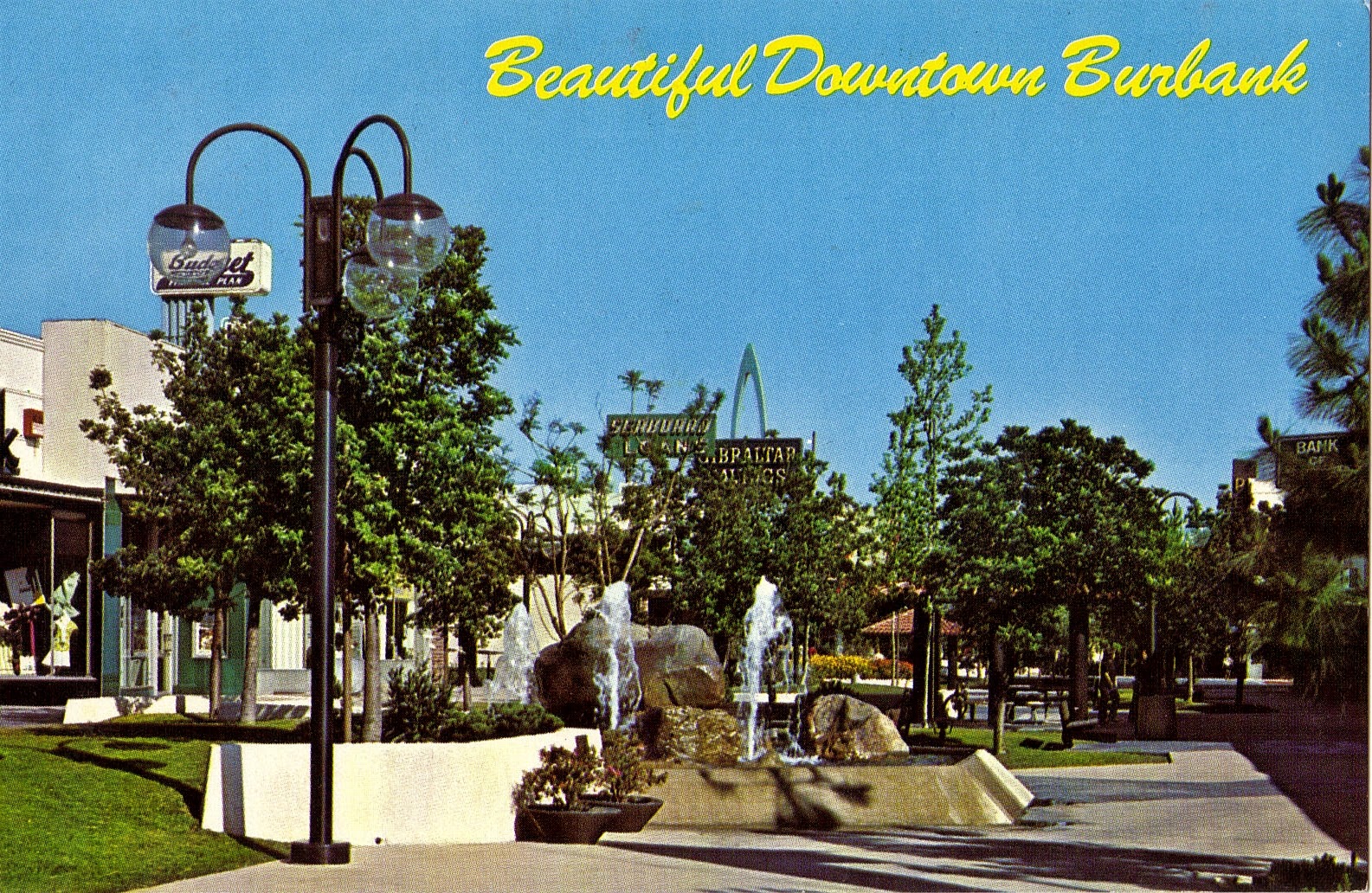
As all you phenomenal readers/followers out there may be aware, I was in Burbank last weekend for the Great American Pitch Fest.

Simply put, attending was one of the best screenwriting-oriented decisions I’ve ever made. I’ll get to the vaguely specific details about that in just a moment, but first, allow me to go over some of the supporting topics, starting with…

Networking

I came armed with a new batch of business cards and the attitude of “Dammit, I’m gonna meet people!”

And I did. At the Friday night mixer. At the numerous classes/panels/workshops on Saturday. Even just stopping to introduce myself to folks sitting around a table in the hotel lobby.

Many are first-timers, nervous at attending one of these kinds of events. Certain that everybody else is a seasoned pro just brimming with confidence, whereas you’re feeling hesitant to even open your mouth and say something.

You know what? Almost everybody feels that way and is a little nervous on some level. Sure, others are a little more extroverted than some, but as I can personally attest, it’s a lot more fun when you get to know people. Besides, why pass up the opportunity to expand your personal network? That writer you just met from halfway across the country could turn out to be a vital asset somewhere down the line.

On a more personal note, I have to mention that the weekend was also a golden opportunity for me to actually meet several of my “Ask a Script Consultant!” interview subjects, including Pilar, Lee, JG, Signe, Tracee, and Steve. The interactions weren’t long, but each proved to be just as charming in person as they are in print.

Pitching

The whole point of the weekend, and why I was here. First, the prep.

As I mentioned, there were panels aplenty where a lot of advice was given out (and sometimes contradicting something else you just heard). I had the benefit of having signed up for the pitch boot camp, where you and another writer would give your pitch, then exchange suggestions on how to potentially improve it.

I polished and honed the pitch for my western over the course of about six or seven run-throughs to the point where I had it down perfectly, then used that as a template for the fantasy-adventure.

As intimidating as doing this is, it all comes down to you being comfortable while having a pleasant conversation with somebody else about your story. The objective is to get them so interested that they really want to read your script. It’s not easy. Listening to other pitches, some writers would give vague story details, while others might go into too much detail.

As was pointed out, you’re also pitching yourself. You’re showing that you’re passionate about the work, hopefully have a pleasant personality, and are someone people would enjoy working with.

Now, a rundown of the results from the actual pitches:

(side note – As I would sit down with each person/pair, I’d ask how they were doing/how their day was going/etc. I’d rather start things off pleasantly rather than just launch straight into the pitch. Everybody was in good spirits throughout the day and seemed to be enjoying themselves. Many added that the quality of the material being pitched was very impressive.)

-13 total (although it felt like more)

-Two said “Thanks, but it’s not for us”

-The rest asked for a one-pager. More than a few asked “What else have you got?” (followed by handing over the other one-pager)

-Just about everybody said, “Wow! That was a great pitch!”

-One script request

-Two asked for follow-up emails

-“This sounds perfect for us!”

-“This is exactly what MAJOR PRODCO is looking for!”

-“We have to continue this conversation offline. Here’s our card. Call us.”

To say confidence levels were running high at the end of the day would be an understatement.

Epilogue

-All of my follow-ups have been taken care of. Since each one of them is also dealing with a lot of the pitches they heard, as well as working on their current projects, I expect it’ll be a while before I hear back from anybody. As always, fingers firmly crossed, hoping for the best while I bide my time and return to working on my assorted projects.

-Turns out I’m actually really good at pitching in person, or at least in a face-to-face scenario. Too nervous to do previous pitches via Skype, I’d always submitted a written one, which yielded zero results. This new confidence and willingness to be seen makes me feel that I’d have a much better chance of success in the future.

Conclusion

I’d started the weekend feeling very nervous and anxious about whether or not I’d do a good job. As time passed, I was able to relax and enjoy myself, which probably played a big part in how it all turned out. I had a great time, and left feeling closer than ever before to getting a professional writing career going.

If you’ve never been to a pitch weekend, I highly recommend it. You’ll meet lots of great people, make fantastic connections, learn how to get the most out of your pitch, and just have an awesome time.

-My only complaint was that since time was very limited, and I didn’t have a car, the enjoyment of pie did not take place. Maybe next time.

Networking: more than just a group thing

“Working on the rewrite while I wait to hear from that manager. How about you guys?”

Despite the fact that writing, for the most part, is a solitary activity, a lot of us take great pleasure in being connected with other writers.

They can be the invaluable support, guidance and motivation we sometimes need to give us that little extra boost. Having a problem and being able to tap into this kind of resource in order to find a solution is priceless.

We get access to all the goings-on, good and bad, that happen among us and our peers.

While I’ve seen my fair share of both, I’m glad to say that a majority have been of a positive nature. This person got a manager. That person finished their latest draft. That other person began working with another writer on a new project. I’m thrilled for all of these developments, and offer up congratulations and words of encouragement. Each and every one of these people has worked hard to reach this particular milestone.

I’d be lying if I said I wasn’t jealous. That sense of longing and wondering “Will I eventually/ever get to announce some good news of my own?” keeps nagging at me, so I continue to buckle down and redouble my efforts in the hopes of making it happen a little sooner. Some days it’s really tough to be patient.

On the other side of the coin are the not-so-great things. This person’s script got a pass from a high-profile agent. That person is suffering from a severe case of writer’s block (or worse – depression). That other person is going through some tough things in their personal life. These also happen to a lot of us, resulting in messages of sympathy, understanding and moral support.

I’ve experienced this too. When times are tough, you find out who’s really in your corner, and are glad to know it.

But I wouldn’t have any of this kind of support if I hadn’t sought it out. There’s a reason it’s called “social” media. I’ve been able to connect with so many awesome people because of what I’ve read or seen about them online.

Is there a writer (professional or peer) whose work you enjoy? Someone whose tweets always make you chuckle? Send ’em a note telling them that.

Even better – are they in your area? When I learn about a local writer, I’ll offer up the opportunity for a face-to-face chat over coffee or lunch. I’ve also done this with folks just visiting the Bay Area. This has resulted in some great ongoing working relationships.

Everybody’s career advances at its own pace, and all the fantastic help and support we get on days good and bad are major pluses. Many writers are introverts at heart, but you have to make the effort to put yourself out there and get to know somebody.

It gets easier the more you do it, and you’ll be glad you did.

Ask a Master of the Ultimate Editing Tool Script Consultant!

Erin Whittemore

The latest in a series of interviews with script readers and consultants who would be worth your while to work with if you want to get your script in shape. Today’s spotlight is on agency reader-turned-consultant Erin Whittemore of Red Pen Script Consulting.

“I have a B.A. in film and screenwriting from the University of Michigan, and am also the proud recipient of the Hopwood Award in screenwriting that boasts such alumni as Arthur Miller and Lawrence Kasdan. After graduating, I relocated to Los Angeles, where I worked for United Talent Agency as a freelance script reader. Two of my own scripts have been produced as short films and premiered at film festivals.”

1. What was the last thing that you read/watched that you thought was incredibly well‐written?

I loved Nightcrawler and The Lego Movie as scripts. Nightcrawler’s story was really lean and mean and practically seamless, and The Lego Movie was not only a great narrative in itself, but was also incredibly cheeky and self‐aware at the same time. In terms of TV, Marvel’s Agent Carter put other network shows to shame. In my humble opinion, of course.

2. How did you get started reading scripts?

After spending two arduous years as a pre‐med undergraduate, I finally became so miserable that I switched to film and never looked back. I learned to do coverage through screenwriting courses, and was lucky enough that UTA was hiring part-timers after I graduated. Full disclosure: I did know somebody in the story department, but even then I almost didn’t get the job due to the amount of competition for the position. It all comes down to your “test coverage.” (When an agency gives you a sample script to cover.) If you’re aiming for reading professionally, make sure you have your own sample coverage ready to go as well, preferably showcasing two different genres.

Eventually, though, I needed a better‐paying and more stable job, but I wanted to continue reading scripts as well. Having been a part of “the system” I knew it could take up to three months for writers to get any feedback on their submissions, which is kind of agonizing, especially if the writer ends up getting rejected. I figured, why not give writers a chance to see what a professional script reader would say about their material before sending it out to agencies and production companies? Thus, Red Pen was born!

3. Is recognizing good writing something you think can be taught or learned?

I believe if you’re willing to be taught, you can learn. You have to watch a lot of movies and read a lot of scripts, and you have to learn to think critically about what you ingest. It’s not enough to say “I like this” or “I don’t like this,” you have to think about why. If it doesn’t come naturally to you, you have to ask questions like “why does this work” or “why doesn’t this work?” and “how could I make it work?” Some people naturally think this way, others have to train themselves to make it a habit.

4. What are the components of a good script?

A good script generally has an intriguing premise, strong characters, and an original and compelling execution. As a script reader, I look at character, story, theme, dialogue, visuals, and tone to determine what areas need work. In general, a great script knows exactly what it is and what it’s trying to achieve

5. What are some of the most common mistakes you see?

-Unlikable, uninteresting characters that do uninteresting things. This doesn’t mean your protagonist can’t be an unlikable character, but they must be at least be interesting and do interesting things. (See There Will Be Blood, Nightcrawler.)

-Exposition in dialogue. The golden rule of screenwriting is “SHOW, DON’T TELL.” A little exposition is usually necessary, but too often I see writers trying to cram entire backstories or plot elaborations into a talking scene. Firstly, we only need to know what’s relevant at the time, part of the fun of watching a story unfold is piecing things together. Secondly, remember, it’s a movie. It’s much more dramatic and emotionally immediate to watch a sequence about something important than to hear a character talk about it.

-Inconsistent tone. Is your script Silence of the Lambs or Fargo? Guardians of the Galaxy or Interstellar? 12 Years A Slave or Django Unchained? When a script yo‐yo’s back and forth between tones, or spends the first half of the movie a comedy only to turn serious drama it can be very confusing for the audience and takes us out of the story. Know what tone you want your script to have and stick with it.

-No structure. A story is more than just a series of events, it’s a series of events that influence each other. If you’ve ever had a friend who is terrible at telling stories, they most likely sound something like this: “So Jack and Jill fall down this hill. No, wait, sorry, first they go up this hill. Then Jack falls down. And then Jill falls down. And then they get married.” As opposed to someone who might say, “Jack and Jill grew up together as next door neighbors and they hated each other. They were mean and played pranks on one another until Jill left for school. Jill married an orthodontist, but got divorced soon afterward because life became too predictable for her. Jack had a string of girlfriends but nothing ever seemed to stick, especially since none of them seemed to appreciate his sense of humor. Having both moved back to their hometown at a low ebb in life, one day Jack spotted Jill on top of a hill while walking his dog in the park. Jack smacked Jill in the back of the head with a snowball. Jill yelped, slipped, and tumbled headfirst down the hill. Alarmed, Jack rushed to her aid only to slip and fall, himself. The two ended up in adjacent hospital beds and wouldn’t speak to each other, until they both started laughing. Soon after, they fell in love, and have been married for 35 years.” In other words, remember that each beat of your story should make sense and be relevant in the larger context.

-It’s a movie not a book. Give us just enough flavor text so we get the atmosphere and the characters, but don’t go overboard. I should be able to read your script in the same amount of time it would take to watch the movie, if not less. Don’t bog the reader down in unnecessary description. That doesn’t mean what you write can’t be poetic and evocative, but just remember to keep it lean and mean. If you’re lucky, the type of person reading your material will give it their full attention, but this is not often the case.

6. What story tropes are you just tired of seeing?

Okay, first a disclaimer: most stories are tropes in one way or another. There’s an adage in Hollywood that goes “give me the same thing, only different!” What that basically boils down to is, “give me something I can latch onto, but surprise me!” It’s okay if you have an “everyman protagonist” (The Lego Movie) or if your story is about a rag‐tag bunch of people in space (Guardians of the Galaxy, or alternatively, Star Wars) – what really matters is the execution, or what you do with those characters and set‐ups. That’s where the originality comes in. That being said, here are a few that leap to mind:

-Women with no agency! Or alternatively, women who are portrayed with agency only to have it stripped from them at important points in the story by male counterparts.

– Actually, on that note: stereotyping certain genders, races, or sexual orientations into negative tropes like “the magical ethnic minority” or “token black person” or “exceptionally shallow and flamboyant gay best friend” at all. For a comprehensive list, Google “gender/racial/ethic/gay/transgender/bisexual tropes in media.”

-“You were really working for the bad guys all along.”

-Gritty for the sake of gritty, not because it actually works or makes sense.

-Teen love triangles.

-The ex (Marine, Army, Navy, etc.) whose family or significant other is kidnapped or killed, and must rescue them/seek vengeance. (Sorry, but I’ve read this script a hundred times)

-Scripts that are mostly music‐video segments strung together without much story.

-Manic Pixie Dream Girls

-Inexplicably bloodthirsty military males

-The scientist who knows everything. Ever.

-The brooding, emotionally unavailable romantic interest with no reason to be brooding or emotionally unavailable.

-The hacker who can hack into anything. Ever. Also, it’s probably a guy who lives in his parents’ basement.

-The magical cure‐all that can bring everybody back to life if they die, so there are no consequences or stakes!

-The love interest because there needs to be a love interest.

-The unnecessary cliffhanger, because it’s an unnecessary trilogy!

7. What are the 3 most important rules every writer should know? 

-Write.

-Rewrite. One of the most common things I hear is “I hate rewriting my material.” Nobody likes taking a chainsaw to their baby, but more often than not it’s a vital part of the creative process. Let’s face it, we’d all like to believe we’re capable of writing a perfect first draft, but in reality turning out something great takes a lot of work and usually a good number of drafts. As a script reader, I see that squeamishness about rewriting get in the way of some good scripts, and that’s a real shame when they could be great scripts. Just “polishing” your material is sort of like watering around a sick plant and expecting it to improve.

-For screenwriters: make every scene worth watching. Almost every scene should a) have some sort of conflict, be it internal or external, b) move the story forward, and c) tell us more about the characters involved.

8. Have you ever read a script that was an absolute, without‐a‐doubt, “recommend?” If so, could you give the logline?

I have actually read several, but most of them were under an NDA, so unfortunately I can’t share any loglines. Sorry.

9. How do you feel about screenwriting contests? Worth it or not?

The Nicholl is definitely worth submitting to, as there is some fairly significant exposure in the industry the farther you make it into the competition. I would also recommend submitting a polished script to the Black List.

10. How can people get in touch with you to find out more about the services you provide?

You can get more information at www.redpenscriptconsulting.com or send me an email at redpenscriptconsulting@gmail.com. I also have LinkedIn, Facebook, and Twitter accounts. If you’re just looking to get your script proofed, though, I would check out my friend’s fantastic service at www.scriptproofed.com

11. Readers of this blog are more than familiar with my love/appreciation of pie. What’s your favorite kind?

Strawberry‐rhubarb is always an instant win with me, but sometimes I like a good old-fashioned apple topped with vanilla ice cream. Am I allowed to have two favorites?

Ask a Chock-full-of-Moxie-and-Gumption Script Consultant!

Amanda Nelligan

The latest in a series of interviews with script readers and consultants who would be worth your while to work with if you want to get your script in shape. Today’s spotlight is on Amanda Nelligan, aka Scriptgal.

Amanda was born and raised in Western Massachusetts. She attended Brown University and received a Bachelor of Science degree in biochemistry. While at Brown, Amanda became involved with the Brown film society and its weekly comedic film magazine – The Film Bulletin – which cemented her life-long love of movies. After working briefly at a medical research lab, Amanda moved to Los Angeles and embarked on her film career. Her first job was as an assistant to a literary agent. From there, she worked at Disney, then ran development for a number of production companies. Amanda went back to grad school in psychology and worked as a therapist and as a research project manager at UCLA before launching ScriptGal. Amanda enjoys baking, hiking and scuba diving and lives with her husband in Sherman Oaks, CA.

1. What’s the last thing you read/watched that you thought was incredibly well-written?

I can’t pick just one – different movies are great for different reasons. I really enjoyed NIGHTCRAWLER – whip-smart dialogue and a character I’ve never seen before. It also had a resolution that defied convention. EDGE OF TOMORROW is a meticulously plotted, fun, time-bending action film, which is so hard to do right. And WHIPLASH didn’t miss a beat (pardon the pun.) In terms of television, TRANSPARENT was terrific. JUSTIFIED and THE AMERICANS are two incredibly well-written series I never miss.

2. How’d you get your start reading scripts?

I moved to Los Angeles shortly after college. My first industry job was for a boutique literary agent who had an A-list roster, so my introduction to Hollywood was through writers. After that, I worked as a development exec – meaning my job was to find scripts and to work with the writers to develop those projects into viable features and television shows. I worked as a creative executive at Disney, then ran development for two production companies. I didn’t like all the politics/crap in the movie business, so I left and went to grad school and worked in another field for a while. But movies are my passion and I love working with writers, so ScriptGal started as an experiment, in a way, and three plus years later. here I am.

3. Is recognizing good writing something you think can be taught or learned?

I think recognizing good writing is a matter of natural instinct, which not everyone has, plus a lot of practice – a.k.a. reading. And reading everything – not just screenplays. Novels, essays, short stories, etc. As a script reader, you need to understand what makes a good story. I think a rule of thumb is that when you forget you’re reading, you know the writing is good – good writing transports you.

4. What are the components of a good script?

A compelling protagonist or anti-hero and a worthy antagonist. We should be able to relate to the protagonist in some way. The antagonist can be a classic villain, a disease, a monster or even the weather. But no matter what the story is, it’s essential that we care what happens. Also, a good script needs to make you feel something. Joy, sadness, fear… Bottom line, the script needs to tell a good story. It can be written in crayon and have a million typos, but if the story is compelling it will shine through.

5. What are some of the most common mistakes you see?

Too much description. It’s a real skill to write just enough to give you sense of what the audience will be seeing and hearing on screen. If the color of someone’s dress isn’t essential to the story, don’t include it. Another related mistake is describing things that would be impossible for an audience to know. Stuff like a character’s face shows the pain of the loss of his wife two years earlier. That’s cheating – essential information needs to be revealed the way the audience would discover it on screen.   Another mistake is not having enough conflict – which results in the story not being as dramatic as it needs to be.

A lot of people are hung up on so-called screenwriting “rules” — don’t use “we see” or any camera directions, etc. I think a) those rules aren’t true – good produced scripts do use them and b) no one working in the industry today cares about those rules one bit. Or even thinks about them. Bottom line – people want good stories.

6. What story tropes are you just tired of seeing?

I just read a script where a guy gets fired and comes home early to find his wife cheating on him. I’ve seen that a million times – so to me it signals a lack of imagination. I think a trope is fine if it is the best thing for your story – but you should always try to put some sort of fresh spin on it. Also, audiences love when a trope is turned on its ear – the best example is the fight scene in RAIDERS OF THE LOST ARK – when instead of getting into the expected hand-to-hand battle, Harrison Ford shoots the bad guy. So when writers find themselves contemplating a trope, they should always ask themselves whether or not they can surprise the audience instead.

7. What are the 3 most important rules every writer should know?

-Writers write. You have to be in this for the long haul. If a script doesn’t work or sell, move on to the next. No successful writer I know parachuted in with the coolest script ever and then sailed on to fame and fortune. The best of the best have a lot of failed scripts in their filing cabinets. Or, these days, in the cloud. This business is a grind.

-Writers rewrite. You need to be able to make changes to your initial drafts and ideas – you need to be able to “kill your darlings,” meaning abandoning things you may love in furtherance of the story. Also, this is a collaborative business – everyone who reads your script will have notes. That doesn’t mean every note will be a good note, but it’s your job to recognize the good ones when they come along and manage the bad ones.

-“Take Fountain.” – Bette Davis. Okay, the real rule is outline. Outline like crazy – especially right after the idea comes to you. A lot of newer writers seem to get bored with their own ideas after awhile and make changes that are destructive. You need to lock in the story that got you excited in the first place and don’t doubt that it will excite readers/viewers as well.

8. Have you ever read a script that was an absolute, without-a-doubt “recommend”? If so, could you give the logline?

No. To me “Recommend” means go shoot it, as is, tomorrow. I never say never, but I could probably write notes on every successful movie out there. The rewriting stops after the scene is shot. Actually, that’s not even true. A lot of rewriting happens in the editing room. For people who love the show THE AMERICANS, and even those who don’t, I highly recommend the Slate-produced TV Insider podcast about the show. It’s a conversation between the story editor and various writers on the show, often including the showrunners. They are rewriting until the last second.

9. How do you feel about screenwriting contests? Worth it or not?

I think a select few are meaningful to industry execs – The Nicholl FellowshipAustin Film Festival, and UCLA’s Samuel Goldwyn. I think the others may help a writer’s self-esteem, but I’m not sure how many actual doors they open in Hollywood.

10. How can people get in touch with you to find out more about the services you provide?

They can email me at Amanda@ScriptGal.com and check out my website www.scriptgal.com.

11. Readers of this blog are more than familiar with my love/appreciation of pie. What’s your favorite kind?

I love ALL pie – much better than cake, in my book – but if I have to pick one it’s strawberry rhubarb. The contrast between sweet and sour – that’s drama.