Q & A with Christine Conradt

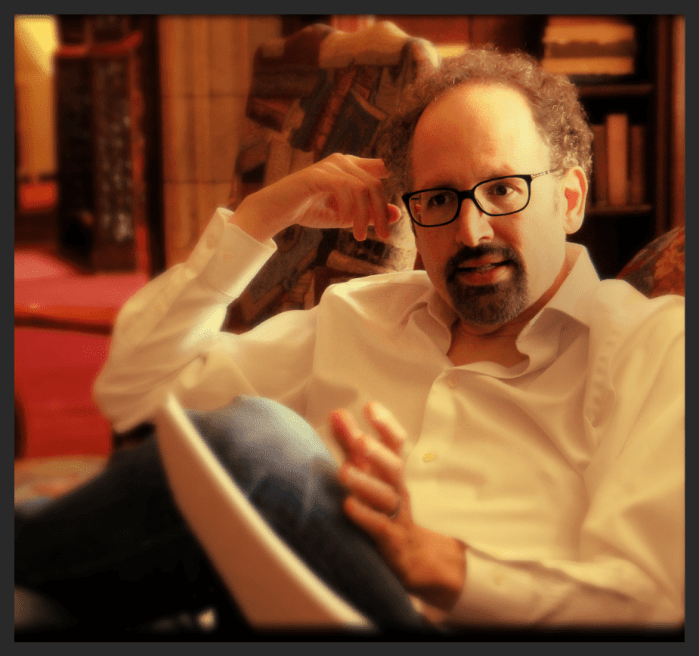
_T3X1129

With more than 70 produced credits, screenwriter/producer/director/author Christine Conradt received her Bachelor’s degree in Screenwriting from the esteemed University of Southern California’s School of Cinematic Arts and then worked briefly in development and as a reader before launching herself as a successful writer. Christine naturally gravitated to crime dramas and thrillers, and eventually went back to grad school to receive a master’s degree in Criminal Justice from Boston University.

Christine’s films have aired on Lifetime, LMN, Fox, Showtime, UPtv, Hallmark, and USA.  She is the writer behind some of Lifetime’s most successful franchises including the “at 17” series, which she turned into a three-book series, published by HarperCollins. She has directed four TV movies and is attached to direct two more this year.

Christine also acts as a script consultant. More information about her services, books, and bio can be found at ChristineConradt.com. She frequently posts tips for writers on her Facebook page.  She lives in Los Angeles with her husband and two rescued cats, and in her spare time, loves to travel.

What’s the last thing you read or watched that you thought was incredibly well-written?

Does a documentary count? Probably not, but I’ll mention it anyway because I found it to be very thought-provoking — Three Identical Strangers. It’s about triplets who were separated at birth and later found each other. I haven’t seen a lot of movies this past year because I’ve been so busy but I did think Bird Box was well done for an adaptation. Sometimes adaptations feel stilted, especially those that take place over a long period of time, but Bird Box didn’t feel that way to me. I found myself getting lost in the story which means it was well-written. One of my favorite movies was Vince Gallo’s first film– Buffalo ’66. The story is simple and the characters are really well-drawn. I can watch that movie over and over.

Were you always a writer, or was it something you eventually discovered you had a knack for?

I can honestly say it was what I was born to do. I love writing and telling stories. As soon as I could hold a pen, I was writing short stories. I won my first writing award– the Young Author’s Award– when I was in the third grade. I grew up in the Midwest in the late 80s/early 90s and at that time, there was no film industry there at all. No film schools, nothing. I didn’t know screenwriting existed as a career until I received a brochure from the University of Southern California my junior year of high school and it listed it as a major. If I’ve ever had an epiphany, it was in that moment. I knew that’s what I wanted to do. So I abandoned my plans to go to law school and applied to USC.

How’d you get your start in the industry?

After graduating with a BFA in Screenwriting from USC, I worked briefly in development but didn’t like it. I was constantly reading and giving notes on other people’s scripts and had to constantly sit with a jealousy that they were doing what I wanted to be doing. I did a rewrite on a USA movie, got fired off that, and didn’t get any more writing work for about four years. During that time, I was working at a YMCA as a lifeguard and fitness instructor and they promoted me to Director. Soon after, they promoted me to Senior Director. I was managing million dollars in budgets and supervising about 45 employees. The hours were long and I stopped writing for the most part.

One day, my Executive Director brought me into her office and told me they wanted to promote me to Executive Director of a branch in the neighboring city. The money they were offering was enticing but because of all the training I’d be sent to, they wanted me to give them a five-year commitment. I went home that night and realized I wasn’t living the life I was supposed to be living – I was supposed to be a writer. So the next day, I went back and told her that I couldn’t accept the job and I was giving my 30-day notice. I took out a loan to live on for six months and decided to spend every day of that period writing. If I couldn’t make it happen in six months, I’d go back and get another job at the YMCA, but at least I had given it a shot. Fortunately, during that time, I wrote two screenplays. Neither sold but both got me rewrite work, which turned into more rewrite work, and so on and so on.

At the end of the six months, I was on my way, but I wasn’t there yet. So I took a job as an editor for an international publishing company while I continued to intermittently do these rewrites. It was hard to go to script meetings because I had this day job. One day the producer asked me what it would take for me to give up my day job. He was annoyed that I could never come to meetings until 5pm. I told him I needed to make the same amount that the publishing company was paying me and he agreed to give me enough work to cover my lost income. That was the day I started to ‘make a living’ as writer. 

A large percentage of your credits are for TV movies. How much of a difference is there writing for TV (and TV movies) compared to features?

There’s a big difference between TV movies and feature films. First, the content can’t be as edgy as in a feature and it’s much more formulaic. Every network has a brand and when you write for that network, whatever you deliver has to fit within that scope, so in that way, it’s more difficult. You have to be creative and original despite all the limitations. The structure is also different. In TV movies, we use an eight or nine act structure (which basically fits into the traditional three act structure) but has three times as many cliffhangers. You have to end on a tension point before a commercial break to keep the audience from flipping the channel. In a theatrical feature, you have a captive audience so the story can unravel more slowly. Theatrical features also tend to be more high concept than TV movies. A lot of people think that a TV movie is just a movie that airs on television. There’s a lot more to it than that.

What do you consider the components of a good script?

Probably the same things that most people do. For me, characters are what define a story. Not plot. The best scripts are emotional, not cerebral. They make us think but more importantly, make us feel. The way to accomplish that is with well-defined characters who have plot goals and thematic goals and who choose to struggle for what they want rather than let life simply happen to them. Those are the characters, and consequently, the stories that stay with you long after you leave the theater or turn off the TV

What are some of the most common screenwriting mistakes you see?

Passive characters. The most annoying thing to hear when I ask a writer what her character wants is “He just wants to keep his life the way it is.” That’s not a goal. A character adverse to change isn’t fascinating. I also see a lot of redundancy in scripts. In a screenplay, real estate is precious. You have to write clearly, economically, and infuse that writing with style without being verbose. Over-explaining in both dialogue and action pulls the reader out of the story.

In addition to your TV work, you’ve also branched out into print with your “at 17” book series. How’d that come about, and how does it compare to writing for a visual medium?

The “at 17” series is a successful franchise on Lifetime Network. It was the brainchild of one of the producers I work with and I’ve been the primary writer behind those movies for about a decade now. In 2014, I pitched him the idea that we should turn those movies into a YA book series and he championed the idea. Neither of us knew much about the publishing industry so he handed it off to me to figure out. I took the script from ‘Missing at 17’ which had already aired and wrote it as a manuscript. I went to the Greater Los Angeles Writers Conference and pitched it to an agent there. He read the manuscript and loved it. He ended up partnering with another agent in NYC and they secured a three-book deal with HarperCollins. Harper wanted each book to come out one month apart in the summer and for the last book to align with the premiere of the Lifetime movie with the same title. So in May, June, and July of 2018, ‘Missing at 17,’ ‘Pregnant at 17,’ and ‘Murdered at 17’ were released.

For me, writing prose is much harder than writing a screenplay. Even though I started out writing prose, I hadn’t done it in years. When you’re writing a screenplay, you have to ‘show’ instead of ‘tell.’ That means you can’t write what the characters are thinking or feeling or pondering. In a novel, that’s mostly what you do. So I had to retrain myself to move in and out of the characters’ thoughts instead of just giving them actions and I had to switch from the omniscient perspective of a screenplay to first person. The books follow multiple characters in first person so that was fun to write. Picking up where one character leaves off and continuing the story with a different character. But it was definitely a challenge.

Follow-up – when can we expect to see the publication of Zombie at 17?

Ha! The movie Zombie at 17 premiered on Halloween weekend in 2018 and was a fun take on the “at 17” series. It’s about a girl who, after getting bit by a cat, contracts the zombie virus. As she teams up with an alienated guy in her high school who has an obsession with zombies to figure out how to stop the progression of the disease, she witnesses a semi-confession to a murder by one of her boyfriend’s friends. When her boyfriend refuses to rat out his friend, she involves herself in the investigation while trying to hide her zombie symptoms from the rest of the world. I don’t know if it will ever become a book because it’s a bit off-genre, but I think it would make a great one.

What are some key rules/guidelines every writer should know?

1. Give your characters goals

2. Create obstacles for your characters. Achieving their goals shouldn’t be easy.

3. Don’t obsess on formatting. Focus on writing a good story. 

4. Read scripts. Lots of scripts. Not just books on how to write screenplays.

5. Subplots (or B-stories) need to have some effect on the A-story. If you can cut out the subplot and nothing changes in the A story, you failed.

6. Don’t judge your characters. Every person feels justified in their actions. Your characters are the same way. To write them, you must believe they’re justified as well, even when they do really bad things.

7. Write every day. Even if it’s only for a half hour. And even if you have writer’s block. Professional writers write every day. Train yourself to do the same and pretty soon, you’ll stop having writer’s block and you’ll be surprised at how easily the writing comes.

What kind of impact or influence has your experience as a writer had on your work as a director or producer?

Some directors come up as cinematographers, some as actors. Coming up as a former writer, I think I pay more attention to how the visuals support the content of the story. I hate stylistic shots for the sake of being stylistic. The best shots are the ones that you don’t even realize are shots– because you’re so wrapped up in the visual storytelling. I think as a writer, I’m good at letting the moments that need to breathe, breathe. Story is always first. There are lots of visual ways to tell a story. As a director, it’s your job to choose the best one.

You’ve also spoken at a lot of conference and workshops about screenwriting. Are there any particular points or lessons you make sure to include as part of those?

One thing I mention at every conference is not to compare your journey as a writer to anyone else’s. Everyone always wants to know how professional writers broke into the industry, yet they can’t emulate it even if they know. It’s not like becoming a doctor where you go to med school and do your residency and become a doctor. There are infinite ways to become successful as a writer. And it depends on your goal. If your goal is to simply make a living writing, you’ll make different choices than if your goal is to sell a TV pilot and become a showrunner. Be laser-focused on your goal, but also be flexible enough to take advantage of opportunities even if you aren’t sure how they’re going to get you there. Sometimes those opportunities turn out to be much better than anything you had planned.

How can people find out more about you and the services you provide?

People can contact me directly through the contact page at christineconradt.com. I’m available to speak and give workshops, and I offer screenplay consulting services as well which are outlined on my website. They can also follow me on Twitter at @CConradt or like my page on Facebook.  I post a lot of contests and other opportunities and tips for screenwriters on my FB page.

Readers of this blog are more than familiar with my love/appreciation of pie. What’s your favorite kind?

It’s a dead heat between blueberry and sour cream raisin.

blueberry pie

sour cream raisin pie

A little logline help

lumberjacks
In retrospect, we should have clarified to the art department what a logline actually is

As part of my latest effort to get organized regarding self-marketing, I went through my loglines and tweaked them accordingly. Compared to their predecessors, they now seem to pack a bit more of a punch, which was my intent.

You never know the difference it makes when you add a word, take one out, or switch it out with a word you didn’t realize was stronger until after the actual switching.

The logline is what makes the first true impression on a reader. Does yours do the job you need it to?

Does the logline for your comedy offer up a funny premise?

Got a thriller or horror? Then that logline should jumpstart the goosebumps.

Do we eagerly anticipiate the pending rollercoaster ride for your action-adventure?

To utilize a somewhat clunky food metaphor, the logline gives us a sample taste for the exquisite meal we expect from the script.

That’s if the logline works. But what if you think it’s lacking the necessary ‘oomph’ it needs?

Worry no more. Friend-of-the-blog Angela Bourassa of LA Screenwriter has written 10 Steps to a Compelling Logline, which offers up some exceptionally helpful advice and guidelines. And if you’re still feeling stuck, here’s a link to her high-quality logline service.

Making it not what it was before

spiderverse
Well-known material, executed in an entirely new and original way

The key word for this overhaul of the pulpy sci-fi spec is exactly that: an overhaul.

And a really big one at that.

One of the notes I got on the previous draft was “It’s a fun story, but there’s still a feeling of ‘we’ve seen this before'”.

What a powerful motivator to really shake things up. The last thing a writer wants to hear is that their work is predictable or just filling in the blanks for a template with this kind of story. Readers and audiences want originality, so that’s what we need to give them.

Regarding this story, while the overall concept and primary plotline are still the same, a good majority of the rest of the details have changed in some way or another, with no doubt more to come.

Even though I’ll jot down ideas for particular moments, scenes or sequences occurring throughout the story, I gather them up and then write/develop them in a linear manner – working my way through the story from start to finish. A leads to B, which leads to C, and so on and so on. Not everybody’s style, but it work for me.

It’s probably safe to say I worked my way through at least four or five versions of Act One before arriving at its current version – the one I felt was the strongest. And even that’s been tweaked here and there since then.

Despite having a hard copy of the previous draft readily available – more as reference material than anything, a key part of this process has been for me to NOT look at it – especially when I was feeling stuck. My objective is to keep trying something really different, and sneaking a peek at what I’m trying to avoid won’t help. If anything, it would probably point me in a wrong direction.

I’ve written before about a writer should do what they can to avoid having the reader/audience know what’s going to come next. Such is the case for this rewrite.

As I work my way through, it’s with a mindset that looks at a scene or sequence as a whole, along with “what’s the most likely thing to happen here?”

That’s followed immediately by “what would be the total opposite of that?” or “what would be completely and totally unexpected here, but still works within the context of the story?” Really striving towards taking a new approach is yielding some positive results. It’s quite a thrill when an idea pops out of nowhere, and it works even better than expected.

Added bonus – by forcing myself to come up with new ideas, there’s less need for me to keep the hard copy of the previous draft nearby. The more I avoid looking at it along with figuring things out for this draft, the more changes it produces. All that being said, I’ll still hold onto it, since there’s always a chance I might need something in there, but with the story constantly changing, even that’s becoming less likely.

The whole point of overhauling this story is to take what I had before and put an entirely new spin on the initial concept. I have a pretty good idea of what needs to happen, what I’d like to happen, and that big nebulous category of what could potentially happen (still working out the kinks on that one).

The road between what I started with and what the end result will be is without a doubt one that’s going to be very long, very twisted, fraught with hazards of numerous kinds, and might, at times, seem to go on forever.

Sounds like quite a hellish journey. And I’m loving every step of the way.

When a writer meets a writer…

vintage bar
Adult beverages not necessary, but also not a totally bad idea

Super-busy times around Maximum Z HQ these days, so rather than bore you with tedious details about my current slate of projects, I thought it would be better to offer up a few classic posts dealing with the idea of writers connecting and interacting with other writers.

Enjoy.

Lattes, lunches & kindred spirits

Networking: more than just a group thing

Getting to know you

Try the direct approach

Make Emily Post proud

You don’t know me, but can you help me?

Potentially entertaining side note – Feb 9th marks 10 years since I started this blog. Like with my scripts, it’s been a labor of love, and I appreciate every single one of you taking the time to give it a look. I hope you’ve enjoyed reading it and have found it helpful in one form or another.

Ten years. Gosh. That’s a lot of posts about screenwriting, and the occasional mention of pie. Hope you’ll join me in celebrating by indulging in a little bit of both.

birthday pie

Q & A with Jim Mercurio

img_7574_edited_paul-option-e1548902704525.png

Jim Mercurio is a writer, author, screenwriter, and filmmaker. His book The Craft of Scene Writing is the first-ever screenwriting book that focuses solely on scenes. He has directed and produced five feature films, and helped countless writers as a teacher, story analyst, and script doctor. He directed more than 40 DVDs on screenwriting, including his own 6-disc set, Complete Screenwriting. One of the country’s top story consultants, Jim works with Oscar-nominated and A-List writers as well as beginners.

Editor’s note 1 – a q&a with Jim was featured in a series of interviews with script consultants that ran on this blog between 2014 and 2015.

Editor’s note 2 – full disclosure: Jim played the role of adviser/sounding board for the rewrite of my dramedy spec.

What was the inspiration/motivation for this book?

I was prepping my webinar on February 7th for The Writers Store on Personal Voice, (FYI – Feb 1 is the last day to save $20 on registering) and I stumbled upon the idea that a writer must figure out what is special about what he does and then focus on that. I feel like it is the same way with me and the book.

I have always focused on the nitty-gritty of craft. Probably because I worked so hard trying to figure it out for myself as a writer. When I directed the 40ish DVDs in the Expo Series, I did my own class concentrating only on theme.

Years ago, I happened to be prepping for a feature I was directing. In a week, I saw the same scene performed more than 200 times by a hundred different actresses. I was trying to figure out what I could do that hadn’t been done before as far as a screenwriting book. My experience as a filmmaker has always informed my approach to understanding and teaching screenwriting. I’m not sure why it didn’t come to me sooner. I had an “A-ha!” or better yet a “Duh!” moment — SCENE WRITING!

There are a lot of screenwriting books out there. What makes this one unique?

The obvious distinction is that it focuses solely on scene writing… the first screenwriting book to do so.

I was fortunate enough to have story gurus Richard Walter and Michael Hauge review the book. Something Michael said really touched me. He said that there were a lot of ideas in the book he hadn’t even thought of. I wanted to cover new ideas or at least some seldom taught concepts in a novel way.

Having been in the screenwriting education niche writing for Creative Screenwriting, directing, creating 50 hours of educational DVDs and working as a consultant, I know what’s out there. I believe this book will carry the torch and be among the next go-to books for all screenwriters entering the field.

As I mentioned, my filmmaking experience and the fact that I am actively writing screenplays and making projects impacts my perspective. I try to be very specific in my examples. For a given topic, I may start with theory but I always try to end with concrete principles and tools that you can apply to your writing on the spot.

Some books are geared more towards covering the screenwriting basics, while others “go beyond (or way beyond) the basics”. Is this a book that both new and experienced writers could use?

I feel very strongly that this book will appeal to writers across a wide spectrum of skill levels. A friend of mine said I teach the last hundred pages of “the screenwriting book” more than I do the first hundred. So, if anything, I would be more concerned about whether this would serve beginners.

I even asked my editor if it did and she gave me a great response. But then out of the blue, the universe gave me a better answer. My 23-year-old stepson who is a computer engineer texted me. He said he was halfway through the book and said “It’s very accessible… nothing’s confusing.”

The only research I did while writing this book was to watch movies and think about them. Each chapter is like a stand-alone piece on topics such as exposition, concept, theme, and rewriting. I tried to begin with my, at least somewhat, original and basic take on a topic to ease the reader in and to orient them. A new writer can jump right in.

More advanced writers might recognize my approach as somewhat novel. I then try to go as deep as I can with the material, so that even professional writers might benefit. A writer who read the book said that 70-80% of it was stuff he had never heard before. He might be overstating it, but I’m proud that the book feels that way. I wanted to offer new insight into the nitty-gritty challenge of craft.

Even though the book’s title is THE CRAFT OF SCENE WRITING, what else does it cover besides writing scenes?

At its essence, scene writing is storytelling and the same principles apply. You are poring over characters, characterization, idiosyncrasies of the world, setups – to create reversals. You’ve heard of turning points, right? Writers have to turn a story. They also have to learn how to turn a scene. Or a line of dialogue.

However, I wanted this to complement all of the other screenwriting books that cover story structure. I am looking at screenplays at the molecular level. In the final section of the book, I cover rewriting in a parallel way to how I discuss scene structure. And then I explore how to discover and use your personal voice in your screenplays.

One of the phrases you really emphasized during the process with my script was “write to concept.” Can you elaborate on what you mean by that?

Whew, no softballs here. Making me earn my pie.

There are 7500 words in my chapter on concept, which have been through the wringer with my 18 copyeditors, but I will try to summarize with insightful pithiness.

Like I mentioned, as a writer you should use what’s special about yourself and your writing. Writing to concept means that you are using what’s special about your story as the main inspiration for its surprises. For fun, consider a 3-D horror movie where an axe flies across the screen left to right. Do you see how on some level that’s just wrong? It should be flying toward the camera. Otherwise, it’s ignoring the most prominent element of its medium.

Of course, I’m not that rigid, but writers have to narrow down the handful of elements that are essential to their concept because not only do their surprises spin out of them, but, for the most part, they spin out only from them. I don’t know if I can teach that here. Hopefully, I can intrigue you to go to the source.

Writing to concept allows you to find a unique way to express what otherwise might be a familiar story beat. Based on their concept, the moments will look very different. In Memento, Natalie hurts Leonard by hiding pencils. In Her, Samantha, an operating system, hurts her lover by telling him she’s in love with 641 other people.

Another of your favorite phrases during the writing process was “go deeper.” What should that mean to a writer?

It refers to a missed opportunity to get at more emotion with a character or to complicate a relationship, which would hopefully do the same. While we were working on your script, there’s a scene I pointed out featuring a moment where you were on the verge of discovering a powerful and transcendent moment, but then it was all over too soon. Sometimes writers hit a beat (in the broader sense), and maybe they are worried about a looming expansive page count or don’t appreciate what they have stumbled upon, so they move on too quickly. They might be better off — pick your metaphor — milking or massaging a moment for a bit longer and letting it play out.

Take a look at the long and emotional monologue in Good Will Hunting where Will’s best friend Chuckie tells him that he should “cash the winning lottery ticket” and get out of town to find a better life. He even tells him that the best part of the day is in the morning when he comes to pick him up, he has a moment of hope that Will has left — without even leaving a note. Imagine, if we cut that down to a sentence: “I will miss you but you gotta get the hell out of here.” We lose Chuckie’s voice, the suspense of it, the emotional heft and importance. It goes from a set-piece scene to a bland, merely functional one.

In addition to the book, Jim also provides a script consulting service. How can people get in touch to find out more?

Easy. Go to my site at www.jamespmercurio.com. I discuss why coaching is my preferred mode of working with writers. You can check out my DVD set and sign up for my free e-newsletter Craft & Career, which will also let you stay informed about classes and workshops I’m offering later in the year.

Last time around, you said your favorite kind of pie was the metaphoric “gross points from my last film”. Still the same today, or something different?

A pie in the hand is worth two gross points in a bush. Or 20 for that matter. So, hand me some Dutch Apple, please.

dutchapplepie