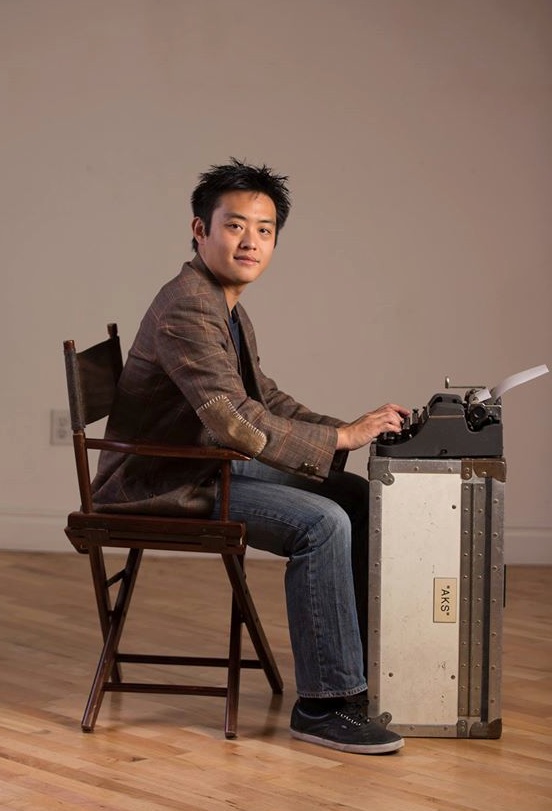
Ask a Fount-of-Knowledge Script Consultant!

Matt Lazarus

*note – Matt passed away in July 2020

The latest in a series of interviews with script readers and consultants who would be worth your while to work with if you want to get your script in shape. Today’s spotlight is on Matt Lazarus of The Story Coach.

Matt Lazarus has worked in the industry since 2003. He started in development with jobs at Untitled Entertainment, CAA, and Platinum Studios (Cowboys and Aliens). He joined the WGA in 2007 by selling a horror script to RKO, and he sold a movie to Cartoon Network in 2011. Matt’s story coaching was designed to be affordable, regular, and useful, and he excels at breaking advanced concepts into simpler processes and exercises.

1. What’s the last thing you read/watched that you thought was incredibly well-written?

SHORT TERM 12, a thoughtful, sad drama about a foster home for displaced youth and the human condition. I saw the trailer and it hooked me. The world, performances and characters are all on point. It’s a great example of a drama, and of wringing the most entertainment and potential out of a simple concept.

2. How’d you get your start reading scripts?

I moved to Los Angeles in 2003, and I got my first assistant job after working really hard at an unpaid internship. I wanted to be a writer, and I talked about it way too much. Anyway, I got good at reading scripts and it always provided me an entry to meeting lit agents and executives who wanted to ask follow up questions on material. I’ve been a freelance reader for some studios for years, and there was a time I was even unironically working on a book on how to cover (most of it made it onto my blog). I’ve been a sporadically working WGA writer since 2007, but the financial security of coverage has always given me something to fall back on.

3. Is recognizing good writing something you think can be taught or learned?

Good writing is hard to define. You want it to be accessible: a mediocre scifi appeals to scifi fans, a great one appeals to everyone. You want it to be engaging: no one goes to the movies to not be affected. You want it to help your career. It’s great to sell a script, but if a script doesn’t sell but gets me in a room with someone who can hire me for my next job, I’ll take it.

Anything can be learned. Not everyone who studies piano will become Glen Gould, but they will get somewhat better at piano. I was pretty cineliterate when I moved to LA, and my years in the development trenches helped me marry my base of knowledge to a working understanding of how the industry works and what the powers that be tend to look for.

4. What are the components of a good script?

“Good” is a hard term to define, a semantic minefield. The components of a good script are the same as the bad ones: they both have the same main four (character names, dialogue, sluglines,descriptions), they both take up the same amount of space.

The difference is harder to measure. We see a thousand faces a day, but only a few make us stop and say wow. We hear new songs on the radio every day, few of them will become our favorite. Most would agree that a good writer can do more in the same space than a bad writer, but the ways in which they are better will always and should always be argued over.

5. What are some of the most common mistakes you see?

The most common is writing a script without a premise. I use something called the premise test. It breaks things down to what’s simple. It’s not the only way to look at scripts, but it’s as good as any, better than most:

“An <ADJECTIVE> <ARCHETYPE> must <GOAL> or else <STAKES>. He does this by <DOING> and (optionally) learns <THEME>.

This seems simple, but the doing is the real meat of the movie. If a naive accountant must raise 100k or his daughter dies, different doings give you very different movies (for example, he could win a surf contest, kill a vampire lord, or invent a time machine and go back to 1979). If you can’t explain what’s interesting about your script in 50 words, you’re unlikely to improve things by writing out 100 boring pages.

Writing is a lot like being a chef. Both are creative forms that have structural limits and immense room for interpretation. Tastes are subjective, but a good chef can anticipate the audience and when he serves something he should have a rough sense of why the average patron might find it delicious.

Most writers write without a real sense of the audience. We’re writing to entertain, to deliver a satisfying emotional experience to the audience. If a writer isn’t writing with a sense of empathy for the audience, the end result is likely to be disappointing.

6. What story tropes are you just tired of seeing?

-Scripts about Hollywood power brokers written by people who haven’t met Hollywood power brokers.

-TV pilots that spend their entire length explaining how we got to the premise without every showing what’s fun or interesting about the premise (see #5). There won’t be a second episode. What are you saving it for?

-Comedies that aren’t funny. I recommend taking an improv class and reading the UCB Handbook.

7. What are the 3 most important rules every writer should know?

The word “rules” needs to die. It always starts a fight. People have an unending appettite for hearing that they can write, but any suggestion of how one might approach writing is generally taken as a suggestion of how one ought to write, and then an unproductive argument ensues. Here are three general principals:

-Entertain. You should know exactly what feeling you want to create in your audience.

-Use unity. Once you’ve set up your script, you want everything to feel connected, organic, and like a ramification of what’s come before. Bad scripts keep inventing random stuff throughout the second act, and it leads to a script that feels arbitrary.

-Be specific. A lot of writers will write in variables, keeping things loose (my character is either an architect or a deli owner… I haven’t decided which) because they think it will prevent them from getting lost or stuck in the later stages. This never works. Imagination thrives on immediacy and specifics. It’s better to commit to an idea and follow it to its conclusion. Even if you went in a wrong direction, the specifics you generate add value to your story. If you keep things vague, you’re building on sand and it’s hard to move the story forward when things exist in a vacuum.

8. Have you ever read a script that was an absolute, without-a-doubt “recommend”? If so, could you give the logline?

In 2003 I read a really funny script called Underdogs. I couldn’t stop reading it or quoting the dialogue. It ended up turning into DODGEBALL starring Vince Vaughan. The movie is really funny, the script is funnier.

9. How do you feel about screenwriting contests? Worth it or not?

It depends on the contest. When I was at big companies, execs would usually read the top Nicholl scripts out of a morbid curiosity, but other big script contests (Scriptapalooza comes to mind) would try to get executives to read their top three, and the execs were lukewarm. For instance, a lot of people are selling off the Black List right now. It’s useful now, but might not be in three years.

10. How can people get in touch with you to find out more about the services you provide?

Matt passed away in July 2020, and his site thestorycoach.net has since been taken down.

11. Readers of this blog are more than familiar with my love/appreciation of pie. What’s your favorite kind?

Humble pie. If you’re serious about writing, you’ll be served it more times can be counted. Alternately, strawberry rhubarb. I’m from Vermont, and it reminds me of a childhood garden.


Ask a Thoroughly Meticulous Script Consultant!

Jim Mercurio

The latest in a series of interviews with script readers and consultants who would be worth your while to work with if you want to get your script in shape. Today’s spotlight is on Jim Mercurio of A-List Screenwriting.

Jim Mercurio is a filmmaker, writer and teacher. The high-concept horror-thriller he directed, Last Girl, won best feature in the 2012 DOA Bloodbath Film Festival (as #12). The Washington Post called his Making Hard Scrambled Movies (production tutorials) “a must for would-be filmmakers.” His workshops and instructional DVDs, including his recent 10-hour set Complete Screenwriting: From A to Z to A-List, have inspired tens of thousands of screenwriters. One of the country’s top story analysts, Jim works with Oscar-nominated and A-List writers. He is finishing up the first screenwriting book that focuses solely on scene writing, The Craft of Scene Writing, for Linden Publishing. To find out about working with Jim, visit his website at http://www.jamespmercurio.com.

1. What’s the last thing you read/watched that you thought was incredibly well-written?

I used to try to see almost every film that was released in a year. Lately, for better or worse, I have had less time to be a viewer. Although I only watch 3-4 TV series at any given time, I really liked True Detective. I like Girls. Lena has a great voice and the show, as well as You’re the Worst, for me, fills in for the quirky little indies that seem to be on the decline. I thought Her was exciting because it was high-concept but indie in spirit. And it could have been made for almost any price. It was one of those films where I can say, “I wish I had made it,” or “I could have or should have written that.” I also look for gems of craft in surprising places. Who can’t love – capital L-O-V-E — the moment in The Avengers when Bruce Banner reveals the secret to the Hulk: “I’m always angry”?

2. How’d you get your start reading scripts?

After grad school, I wanted to figure out screenwriting inside-and-out because I loved screenwriting but I also thought it would be a means to be able to direct. I read probably every screenwriting book and resource available in the 90s. I worked as a development exec for an indie company owned by one of the producers of Gas-Food-Lodging. And then I attended 120 hours of classes from the so-called “gurus” including, McKee, Hauge, Truby, etc. for a review article in Creative Screenwriting. That experience expanded my perspective and spurred my ability to be able to identify and clearly articulate issues in a script. I would do notes for friends and, by word of mouth, I eventually got more people who wanted feedback, so that’s how I started working as a story analyst. With my development background, my private story analysis and contests I have run, I have read more than 5,000 feature screenplays.

3. Is recognizing good screenwriting something you think can be taught or learned?

For the most part, yes, assuming that a reader has some affinity for screenwriting and storytelling. Recognizing a good or very good script that is a good read is a common developable skill. A rarer skill is when a reader can accurately determine whether a script will play as a film. Some scripts deliver a smooth and emotionally satisfying read but would not translate as well to film as would some scripts that may be a less satisfying read.

4. What are the components of a good script?

I like to see solid execution: great dialogue, exploiting concept, unity of theme… all the craft elements that I preach. No longer in the acquisition side of development, I have a more solipsistic approach to material. I want to find scripts I can direct or produce: High-concept scripts with modest budget a la Her or Buried. Or a script with such awesome characters and dialogue that it is imminently castable or packageable. In general, with shrinking or nonexistent development budgets, I encourage all writers to nail the execution, so their scripts are as ready as possible to being shot.

5. What are some of the most common mistakes you see?

6. What story tropes are you just tired of seeing?

My development for outside companies consists of intensive feedback on a few scripts or rough cuts per year. I no longer read 20 scripts per week, so that’s why I combined these two questions. And I will deal with craft issues below.

Impatience. Writers want to rush material to market that isn’t ready. In general, scripts usually aren’t done. The execution isn’t there. It’s several drafts away from being ready to be a movie. For my clients who aren’t already successful writers, the best thing they can do for their career is to go from good to great and write an amazing script.

Clarity. Writers often don’t have a clear picture of how their material relates to the marketplace. I have made several low-concept feature films, so you can learn from my, ah, pain and experience. If you are writing low-concept dramas, unless the script is a masterpiece or can be cast with name actors, you have to accept that the script will only be valuable as a writing sample. If your goal is to sell your next script, you are going to have to say “no” to a lot of your story ideas based solely on their concepts.

7. What are the 3 most important rules every writer should know?

There are no rules and break them at your peril.

I spent a few years and tens of thousands of dollars creating a 10-hour DVD set where I tried to cover the dozens of craft elements writers need to know including story structure, theme, character orchestration, dialogue, writing cinematically, concept, handling exposition and scene writing. I am not sure I can narrow it down to just three from a craft perspective.

I work with Oscar-nominated and Emmy-winning talent whose material is always good, yet they aren’t satisfied. If successful professionals are still fighting to make their scripts better and improve their craft, so should beginners. Regardless of your genre, aim to transcend it. Rewrite it until it sings. Along with concept, one of the most important factors in giving your script a chance is nailing the execution.

8. Have you ever read a script that was an absolute, without-a-doubt “recommend”? If so, could you give the logline?

If you are giving a recommend that means you are reading for someone else and evaluating the material relative to their tastes. There have been scripts that I have loved that weren’t right for the company I was reading for. I get more excited about writers who are a recommend. I want to know what else they have or what they are considering working on next.

There were writers I championed while running the Screenwriting Expo Competition whose scripts would be almost impossible to produce – a $200-million biopic of Michelangelo; a magical realist masterpiece for which there is literally not a young actress in the world whose box office value could carry the movie; a chamber-play western; a devastatingly bleak low-concept drama. But more than a decade later, I keep in touch with those writers: Bill, Nathan, Naida and Lorelei.

I have even helped a few of them to get some non-guild writing work. Not life-changing money but the chance for valuable experience. A reminder that a great writing sample, even if it doesn’t sell, has tremendous value.

9. How do you feel about screenwriting contests? Worth it or not?

See above.

Of course, they are worth it. But be practical about what you hope to achieve from them. Only a miniscule percentage of writers should look at contests as a money-making endeavor.

But contests can pay off in other ways. They can inspire you creatively, encourage you to make your deadlines and help to promote your work. There is also a social aspect. They can lead to you meeting other people.

They can also be a tool to evaluate your writing. There is always subjectivity in reading scripts, but if your script hasn’t advanced in 9 out of 10 (appropriate) contests, then I would suggest not spending more money on contests. Work on making the script better and maybe even consider spending your contest budget on feedback.

10. How can people get in touch with you to find out more about the services you provide?

They can look in to working with me at my story analysis site, www.jamespmercurio.com, or check out my DVD set Complete Screenwriting: From A to Z to A-List at www.a-listscreenwriting.com. My coaching and mentoring approach creates a relationship with clients where I can push and challenge them throughout several drafts of a script until it’s where we want it to be.

11. Readers of this blog are more than familiar with my love/appreciation of pie. What’s your favorite kind?

I have gross points in my last film, so if it ever makes money, that will be my favorite piece of the pie.

The value of face-to-face time

Coffee makes for a good 3rd part of this equation

A few weeks ago, I’d read a post on Done Deal Pro from a writer who’d gone to Los Angeles to attend a Writers Guild function, but was now back home in the Bay Area.

Since I’m always looking to expand my network of fellow writers, especially ones that could be considered local, I contacted him and asked if he’d be interested in meeting.

Fortunately, he was. Coffee at the Ferry Building.

Since most of this summer has involved V being at work with me, she and I worked our way from my office to our designated meeting place.

I handed her my phone so she could play video games while Justin Sloan and I sat down to talk.

We exchanged backgrounds and career developments. He was especially intrigued about my results using the Black List.

Unfortunately, Justin had to get back to work so we had to cut things short, but he asked if he could read my script, and I offered to give feedback on his.  He also asked if he could send me some questions for his blog Bay Area Screenwriters. You can read those here, and I’ve added a link to it over on the blogroll.

It was great not only talking about writing, but also discussing the assorted experiences we’ve each had in relation to writing. Contests, writing groups, etc.

This is one of those experiences that can’t be duplicated via an online forum or instant messaging. Having an actual conversation with someone will hopefully be fulfilling for both parties.

So send those emails, set up those coffee chats, get out there and talk to people.

-Movie of the Moment: PACIFIC RIM (2013). What happened? This was supposed to be the big hit of the summer. No such luck. Instead, we got great special effects weighed down with forgettable characters and horrible dialogue. (Can’t people come up with something better than “Let’s do this!”?)

I will give del Toro and Beacham credit for coming up with an original story, but feel bad it was so poorly executed. There was no way this could lived up to all the hype. Scott Pilgrim, anyone?

Some notable disappointments: the Russian and Chinese pilots/robots were treated as throwaway characters, and were dispatched with way too quickly.
-the Australian guy with a huge chip on his shoulder seemed straight out of a studio note. “This guy should be a real asshole, but give him a dog so he’s semi-likeable.”
-the trailers featured most of the robot-monster action, leaving little to surprise us during the actual movie.

-THE LAST STARFIGHTER (1984). Hadn’t seen this in years.  Also watched it with V because I thought she might like it – she did. There are elements similar to DREAMSHIP. Not exactly the same, but definitely there.

The story by itself still holds up, even though the rest feels a little clunky, and Robert Preston’s fast-talking Harold Hill-type character always brightens up whatever scene he’s in.

Watching this on an HD screen makes it that much more obvious you’re looking at a film set, and the special effects, cutting-edge at the time, seem quaintly dated.

How to REALLY get an agent

Probably the most frequent question asked by screenwriters is “How do I get an agent?”

I’ll skip the usual advice like ‘have a bulletproof script.’  That goes without saying.

But one thing I keep hearing over and over again is contact the Writers Guild; they have a directory of agencies that accept unsolicited material.

Whoever tells you that hasn’t seen this directory in quite some time.

When I hear ‘directory,’ I think ‘phone book’.  This is a double-sided piece of paper.

I contacted each agency to find out their submission policy.  And then the fun began.

Some don’t accept unsolicited material anymore. Okay, that’s acceptable.

Some want you to send your query by fax.  Wouldn’t you expect an agent to use email?

Some places don’t represent writers.  WHAT?  Then why are they on the list in the first place?

Some of them want you to send your letter with a SASE, which is still okay (see email question above).  Of the 15 or so I sent out, I got 3 back.  Keep in mind agencies get literally hundreds, if not thousands of queries a week.  What, no interns to handle this sort of thing?  I also got 1 or 2 about 6 months after I sent the query. I’m guessing they were cleaning out the closets.

If the Writers Guild wants to be a good resource for writers trying to break in, they really need to get on the ball and maintain a solid database of agencies.  True, the list of those that accept unsolicited material is constantly shrinking, but they’re still out there.

If you think your script is really ready and you have a killer query letter, you’re much better off with the Hollywood Representation Directory.  You can get a hard copy or subscribe to it online.  Most big libraries should have it, so be prepared to work the copy machine.

My former writing group chipped in and we bought a recent edition on sale.  I went through the agent and manager sections with a highlighter, marking down who accepted unsolicited queries.

Of the 200-plus query emails I sent out, I got about 30 responses, including 10 asking to read the script.  Most of them passed, but one guy optioned it.  Nothing ever came of it, but it was closer than I’d ever gotten before, and once I have another script ready to go, I’ll do it all over again.

-Brief LUCY update:  Closing in on the midpoint, including finishing a much-needed action sequence.  Thrillsville, baby!