Q & A with Rick Ramage of The Screenplay Show

Rick Ramage

Rick Ramage is a writer, director and producer with numerous credits on major motion pictures and television shows. During his 25-year career as a screenwriter, he has set up or sold over 40 scripts in Hollywood.

Rick’s latest project is The Screenplay Show, a new 10-part online series to educate about the art, craft and business of screenwriting and storytelling.

What is The Screenplay Show, and what inspired you to do it?

The Screenplay Show is an actual show about writing, presented in a fun, narrative style. It’s a ten-part webseries that will focus on the trade secrets I’ve developed (and learned) from Hollywood’s most talented writers, directors and producers during my 25-year career.

As to what inspired it, a few years ago, a buddy of mine started a writer/actor group called, “Write to Act” and he asked me to put on a seminar for his people in Denver. I was reluctant to say the least. For the last 25 years, my only job has been writing and producing film and television. Speaking in public? Not so much. He kept twisting my arm and after about a year of hounding me, I finally gave in and promised him I would do a one-day seminar. Then reality hit me: What could I possibly say for six hours that would interest other writers and actors? In an effort to alleviate the poor souls who would be stuck looking at my ugly mug all day, I pulled in my editor and we put together a long list of writing samples and clips covering every element of screenwriting so they could actually SEE what I was talking about – instead of listening to me pontificate as I clumsily tried to explain it.

For instance, using stills from The Shining, I put every moment of Jack’s character arc into a still photo sequence. You can actually visually track his descent into madness. I then put the page number from the script beside each expression. The audience literally gasped, because it was the first time they had actually seen a character arc moment by moment. I did the same thing for all the other elements of storytelling. As screenwriters, we have to write visually – so I figured it would work for seminars, too. But one thing really surprised me: the audience had as many questions about the writing experience as they did about the nuts and bolts. Personally, I’ve always been fascinated by the methods of actors, athletes, and other writers, so I guess it’s fair that they wanted to know about my method – and how a life and career in the film business actually works.

What sets The Screenplay Show apart from other online seminars?

One look at the teasers we’re putting out there will let people know this isn’t your father’s seminar. I can’t honestly say I had an epiphany and The Screenplay Show was suddenly born. But doing the seminars over the next year or two, it definitely evolved into a rolling narrative; my personal Hollywood experience merged into describing actual methods that have worked for me and many of my colleagues. So far, I’ve set up or sold over 40 scripts. But I have to give credit where credit is due: I didn’t learn how to survive the biz, or sell scripts from books. I learned from working closely with tremendously gracious agents, managers, producers, directors, executives and actors who were generous enough to share their knowledge with me for one purpose – to get the story right.

My goal with The Screenplay Show is to share what they’ve taught me with other writers and storytellers. And when I say storytellers, I mean anybody involved in the film and television business. Directors, actors, producers, cinematographers, and even executives. They are storytellers because they impact the script and help bring it to life.

Tell us a little about your writing background. How did you get started?

I didn’t finish my degree. Instead I went into business with my dad, selling tractors. But I wanted to be well-read and well-spoken, so I sat down with 100 of the great novels and voraciously read them back-to-back. In the process, I began to see how the authors worked the elements. The storytelling process fascinated me. So when I was out covering my sales territory, I began to daydream about becoming a writer. Eventually, I tried to write a novel. Long story short – it sucked. But the person who told me it wasn’t very good also told me I was a good writer. That seemed like a contradiction, but it wasn’t. He told me I had a very visual style, and suggested I write a screenplay. So I turned my bad novel into a bad screenplay! (But that process lit a fuse in me, and I’ve never looked back.)

What have you recently read or watched that you thought was incredibly well-written?

When I’m deep into writing one of my own scripts, I don’t usually watch or read much. By the end of the day, more words and plot lines are the last thing I need to relax. But two shows I try not to miss are Game of Thrones and House of Cards. From their production values, to the great characters, to the tight, well structured scripts, I admire them both a great deal. In fact that’s how I can tell when I’m in the hands of great storytellers – they make me forget I’m a writer. I become a fan.

Is recognizing good writing something you think can be taught or learned?

Definitely. Recognizing good writing can and certainly should be taught and learned. I’ve known some executives who were by no means writers, yet they learned to identify good writing and write smart notes. Their jobs depend on it. I’ve learned to recognize good writing by the way it makes me disappear into it.

What do you consider the components of a good script?

For me, the single most important component of a good script is simply this: It must have soul. I need to feel what the writer is trying to say through his or her characters. If that happens, I know the other elements are working.

What are the three most important rules a writer should know?

-Dialogue:  When to shut up and let the subtext play.

-Action:  When not to overwrite. (more often than not, you’ll lose your reader.)

-Characters:  We write in search of ourselves. (makes them real.)

How can people find out more about The Screenplay Show?

We’re really encouraging people to go to their most comfortable social media site and follow us. Also, we’re really hoping they go to www.thescreenplayshow.com and sign our landing page. We won’t bombard you with trivial junk, but we do want to build a steady audience so we can let people know about events and new material.

Readers of this blog are more than familiar with my love/appreciation of pie. What’s your favorite kind?

My grandmother made the best pie I’ve ever had. Golden, flaky crust made from scratch, crisp green apples sliced thin, and lots of cinnamon! I do miss that woman.


A multi-pronged approach

freeway
Lots of different ways to go, as long as you know where you’re going

Had another great lunchtime chat with a fellow writer yesterday. Among the many topics of conversation: the necessity of how a writer trying to break in must work towards achieving success from as many angles as they can.

Got a good script? How many others have you got that are ready to go? How many are you currently developing so as to increase that number? Are you sticking with one genre or trying several?

Are you actively seeking writing projects? There are a lot of smaller, not-as-prestigious projects out there in need of writers. You may not get a big paycheck, but you’ll gain experience (and maybe an onscreen credit). It could also help educate you about what goes on during production.

Think your script is good enough for one of the high-profile contests? What’s more important to you – the prize money, the prestige of winning (or at least placing), or how this could help get your career going?

Are you connecting with other writers? As introverted as a lot of writers are, social contact is a necessary factor of doing it professionally. It’s one thing to communicate electronically, so make a point of going to a social event in your area (you could even go so far as to arrange one!), or attend a conference where you actually talk to people. This will also come in handy when you reach that next level and start taking meetings.

You’ve done everything you can with this current script and are ready to start looking for representation. How much research have you done into who would be the most receptive to it? Does your script seem like a good match for them? Have you worked on that query letter to the point that it would be impossible for them to not want to read your script?

Naturally, these questions and situations are just the tip of the proverbial iceberg. Everybody’s path is going to be different from yours, but there will be similarities. Fortunately, you have time and a wide array of resources at your disposal to start preparing in your own way for all of them.

Good luck, and get to it.

Looking back (and a peek ahead)

sleeping
Me around 10:30 on New Year’s Eve

As the end of the year gets closer, one can’t help but be a little reflective of how the past 12 months have gone, and in this context, it’s all about the screenwriting and its related subjects.

-My western. A labor of love finally put to bed once and for all. This script has gone through A LOT of changes, and both I and it could not have gotten to this point without the sage feedback received from many of my trusted colleagues.

-Other scripts. Over the course of this year, I completed a first draft and two outlines (with a third in its final stages), all for separate scripts. I may not be as productive as I’d like, but think this is still pretty good. I’m hoping that at least two of these will be completed scripts by this time next year.

-Establishing a career. I’ve always said that each draft of every script gets me a little closer to accomplishing that dream of being a working writer. 2015 saw some strong progress on that front. My writing’s getting better, I discovered I’m pretty good at pitching, and found out the hard way what should and shouldn’t go into a query letter. It’s an ongoing learning process, but I’m getting there. Hopes are high of moving to the next level or two in 2016.

-Networking. The number of writers I’ve connected and interacted with has definitely grown by leaps and bounds. Some have been in person, while most have been via social media, but the benefits have been tremendous all around. From exchanging script notes to being a sounding board for ideas to plain old moral support, you couldn’t ask for a more helpful bunch of folks. Hopefully they got as much out of it as I did. Highly recommended.

-Running. After involuntarily taking a year off, I got back into the habit of going for runs and took part in four half-marathons this year. Didn’t set any new records, but stayed within my realm of expectatins. Really glad I did them and already looking forward to the ones next year. How does this relate to screenwriting? Well, apart from the standard quote of “It’s not a sprint, it’s a marathon (or half-marathon, in my case)”, it’s about determination, endurance, perseverance, and setting a goal and working towards achieving it. All necessary elements involved in writing a script.

-The blog. This year saw the wrap-up of my series of interviews with scripts readers and consultants. I still keep in touch with a lot of them, and happy to say that a lot of those posts continue to get hits. Thanks to all of you for that. In the meantime, no big changes planned for what you read around here, but I’ve got a few ideas.

Thanks for reading, happy new year, and may we all get some kickass writing done in 2016.


Shouldn’t you already be doing this every day?

"Hmm. How about Mrs Bates kills Marian while she's running through the sprinklers? Nah."
“Hmm. How about Mrs Bates kills Marion while she’s running through the sprinklers? Nah.”

Based on what I’m seeing on various social media outlets and assorted online forums, a lot of screenwriters, including myself, are taking part in the self-imposed project of cranking out an entire script by the end of November.

I think it’s great that so many writers are taking it upon themselves to accomplish this. It definitely helps you establish a kind of rhythm or pattern or whatever you want to call it that you can incorporate into your writing process the other eleven months of the year.

A few months ago, I’d originally set a personal goal of having this draft of the low-budget comedy done by the end of the year, so that’s what I’m shooting for. At the rate of approximately 2 pages a day, there’s no reason it couldn’t done by or at least around Thanksgiving, which would be nice.

What’s also proving to be very helpful is that because this is a first draft, which means it will most likely suck (as first drafts often do), and require the requisite inevitable extensive rewriting, I’m not constantly fretting over whether a scene or a line is perfect. I might spend a minute or two on it, trying alternate takes, but I get it out of my system and move on to the next scene. For right now, whatever I write down works.

It’s a very liberating sensation, and removes a lot of that “I have to get it done!” pressure.

Also good – setting a realistic goal. A lot of writers post updates like “Only 12 pages today. Will try to do better tomorrow.” My at-least-2-pages-a-day quota seems kind of dinky in comparison, and while I wish my output were higher, you gotta do what works for you. My schedule also plays a factor. I only have so much time to write, especially during the week, so I figure I can only produce so much in this timeframe, and take it from there.

What it all boils down to is that no matter how much or how often you’re writing, the important thing is that YOU ARE WRITING. Don’t stop, and definitely try to keep up the pace once the calendar changes to December 1st.

Hey kids! Time for a fun & easy experiment!

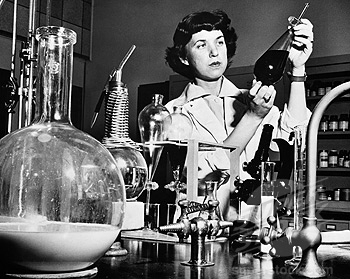
No lab coats or bunsen burners necessary
No lab coats or bunsen burners necessary!
  1. Go onto your social media network(s) of choice.
  2. Find 5-10 people whose work you enjoy, admire or just think is plain awesome.
  3. Connect to or follow them (if you haven’t already)
  4. Send them a brief note saying exactly what it is you like about their work. Nothing too gushy.
  5. Enjoy the rest of your day knowing that you were very likely a bright spot in theirs.
  6. (optional) Enjoy a piece of pie for having accomplished step 5.