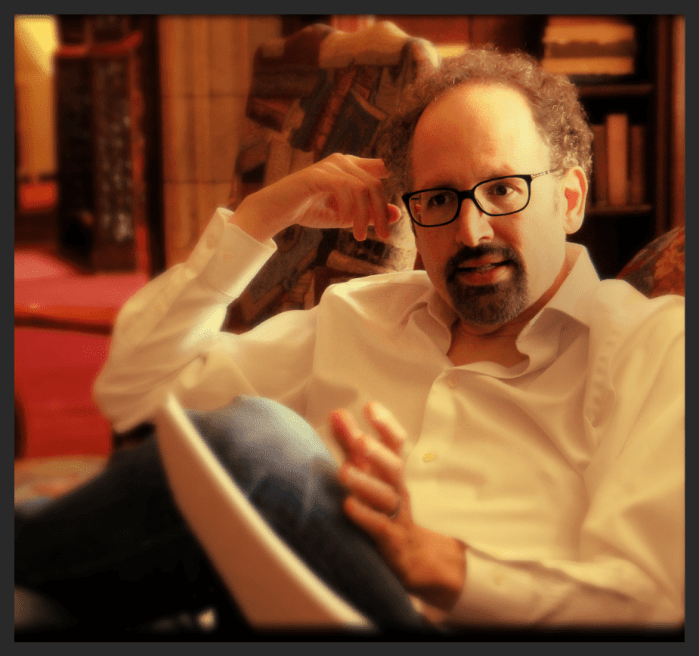
Q & A with Jim Mercurio

img_7574_edited_paul-option-e1548902704525.png

Jim Mercurio is a writer, author, screenwriter, and filmmaker. His book The Craft of Scene Writing is the first-ever screenwriting book that focuses solely on scenes. He has directed and produced five feature films, and helped countless writers as a teacher, story analyst, and script doctor. He directed more than 40 DVDs on screenwriting, including his own 6-disc set, Complete Screenwriting. One of the country’s top story consultants, Jim works with Oscar-nominated and A-List writers as well as beginners.

Editor’s note 1 – a q&a with Jim was featured in a series of interviews with script consultants that ran on this blog between 2014 and 2015.

Editor’s note 2 – full disclosure: Jim played the role of adviser/sounding board for the rewrite of my dramedy spec.

What was the inspiration/motivation for this book?

I was prepping my webinar on February 7th for The Writers Store on Personal Voice, (FYI – Feb 1 is the last day to save $20 on registering) and I stumbled upon the idea that a writer must figure out what is special about what he does and then focus on that. I feel like it is the same way with me and the book.

I have always focused on the nitty-gritty of craft. Probably because I worked so hard trying to figure it out for myself as a writer. When I directed the 40ish DVDs in the Expo Series, I did my own class concentrating only on theme.

Years ago, I happened to be prepping for a feature I was directing. In a week, I saw the same scene performed more than 200 times by a hundred different actresses. I was trying to figure out what I could do that hadn’t been done before as far as a screenwriting book. My experience as a filmmaker has always informed my approach to understanding and teaching screenwriting. I’m not sure why it didn’t come to me sooner. I had an “A-ha!” or better yet a “Duh!” moment — SCENE WRITING!

There are a lot of screenwriting books out there. What makes this one unique?

The obvious distinction is that it focuses solely on scene writing… the first screenwriting book to do so.

I was fortunate enough to have story gurus Richard Walter and Michael Hauge review the book. Something Michael said really touched me. He said that there were a lot of ideas in the book he hadn’t even thought of. I wanted to cover new ideas or at least some seldom taught concepts in a novel way.

Having been in the screenwriting education niche writing for Creative Screenwriting, directing, creating 50 hours of educational DVDs and working as a consultant, I know what’s out there. I believe this book will carry the torch and be among the next go-to books for all screenwriters entering the field.

As I mentioned, my filmmaking experience and the fact that I am actively writing screenplays and making projects impacts my perspective. I try to be very specific in my examples. For a given topic, I may start with theory but I always try to end with concrete principles and tools that you can apply to your writing on the spot.

Some books are geared more towards covering the screenwriting basics, while others “go beyond (or way beyond) the basics”. Is this a book that both new and experienced writers could use?

I feel very strongly that this book will appeal to writers across a wide spectrum of skill levels. A friend of mine said I teach the last hundred pages of “the screenwriting book” more than I do the first hundred. So, if anything, I would be more concerned about whether this would serve beginners.

I even asked my editor if it did and she gave me a great response. But then out of the blue, the universe gave me a better answer. My 23-year-old stepson who is a computer engineer texted me. He said he was halfway through the book and said “It’s very accessible… nothing’s confusing.”

The only research I did while writing this book was to watch movies and think about them. Each chapter is like a stand-alone piece on topics such as exposition, concept, theme, and rewriting. I tried to begin with my, at least somewhat, original and basic take on a topic to ease the reader in and to orient them. A new writer can jump right in.

More advanced writers might recognize my approach as somewhat novel. I then try to go as deep as I can with the material, so that even professional writers might benefit. A writer who read the book said that 70-80% of it was stuff he had never heard before. He might be overstating it, but I’m proud that the book feels that way. I wanted to offer new insight into the nitty-gritty challenge of craft.

Even though the book’s title is THE CRAFT OF SCENE WRITING, what else does it cover besides writing scenes?

At its essence, scene writing is storytelling and the same principles apply. You are poring over characters, characterization, idiosyncrasies of the world, setups – to create reversals. You’ve heard of turning points, right? Writers have to turn a story. They also have to learn how to turn a scene. Or a line of dialogue.

However, I wanted this to complement all of the other screenwriting books that cover story structure. I am looking at screenplays at the molecular level. In the final section of the book, I cover rewriting in a parallel way to how I discuss scene structure. And then I explore how to discover and use your personal voice in your screenplays.

One of the phrases you really emphasized during the process with my script was “write to concept.” Can you elaborate on what you mean by that?

Whew, no softballs here. Making me earn my pie.

There are 7500 words in my chapter on concept, which have been through the wringer with my 18 copyeditors, but I will try to summarize with insightful pithiness.

Like I mentioned, as a writer you should use what’s special about yourself and your writing. Writing to concept means that you are using what’s special about your story as the main inspiration for its surprises. For fun, consider a 3-D horror movie where an axe flies across the screen left to right. Do you see how on some level that’s just wrong? It should be flying toward the camera. Otherwise, it’s ignoring the most prominent element of its medium.

Of course, I’m not that rigid, but writers have to narrow down the handful of elements that are essential to their concept because not only do their surprises spin out of them, but, for the most part, they spin out only from them. I don’t know if I can teach that here. Hopefully, I can intrigue you to go to the source.

Writing to concept allows you to find a unique way to express what otherwise might be a familiar story beat. Based on their concept, the moments will look very different. In Memento, Natalie hurts Leonard by hiding pencils. In Her, Samantha, an operating system, hurts her lover by telling him she’s in love with 641 other people.

Another of your favorite phrases during the writing process was “go deeper.” What should that mean to a writer?

It refers to a missed opportunity to get at more emotion with a character or to complicate a relationship, which would hopefully do the same. While we were working on your script, there’s a scene I pointed out featuring a moment where you were on the verge of discovering a powerful and transcendent moment, but then it was all over too soon. Sometimes writers hit a beat (in the broader sense), and maybe they are worried about a looming expansive page count or don’t appreciate what they have stumbled upon, so they move on too quickly. They might be better off — pick your metaphor — milking or massaging a moment for a bit longer and letting it play out.

Take a look at the long and emotional monologue in Good Will Hunting where Will’s best friend Chuckie tells him that he should “cash the winning lottery ticket” and get out of town to find a better life. He even tells him that the best part of the day is in the morning when he comes to pick him up, he has a moment of hope that Will has left — without even leaving a note. Imagine, if we cut that down to a sentence: “I will miss you but you gotta get the hell out of here.” We lose Chuckie’s voice, the suspense of it, the emotional heft and importance. It goes from a set-piece scene to a bland, merely functional one.

In addition to the book, Jim also provides a script consulting service. How can people get in touch to find out more?

Easy. Go to my site at www.jamespmercurio.com. I discuss why coaching is my preferred mode of working with writers. You can check out my DVD set and sign up for my free e-newsletter Craft & Career, which will also let you stay informed about classes and workshops I’m offering later in the year.

Last time around, you said your favorite kind of pie was the metaphoric “gross points from my last film”. Still the same today, or something different?

A pie in the hand is worth two gross points in a bush. Or 20 for that matter. So, hand me some Dutch Apple, please.

dutchapplepie

Little time. Lots of results.

838-02519997
So many options. Where to start?

Bit of a shorty today, and the subject itself is the reason why.

Let’s talk time management.

As much as I’d like to devote a big portion of my day to writing, that just isn’t the case. I’ve got other responsibilities, so I do what I can to make that limited timeframe as productive as possible.

A key part of this – planning ahead. Making a list. Designating time specifically for certain activities.

Think “achievable objectives”. Things you know you can get done.

Research.

Reading scripts (both professional and writers within your circle)

Providing notes.

Queries (including verifying recipient’s info)

Networking.

And of course, writing (includes outlining, editing and polishing).

(Imagine how much more is involved with the actual production of a film. For today, it’s all about the script and the things connected to it.)

You could do all of these each day, but that would be exhausting. I find three to be a safe and productive number. Results will vary.

The important part to remember is how a steady repetition of all these little things can eventually add up to big results.

If you can only manage one or two, that’s okay. Do what works best for you. You’re the one in control, and this is definitely not the sort of thing you want to rush through.

Another helpful tip – avoid social media/wandering around the internet. Or at least severely limit your participation. Allow yourself a few minutes, then redirect that focus back to your project.

A writer wears a lot of hats, always having to switch them out because there’s always something that has to get done. But if you stay calm and try to be organized about it, the switching out of hats will get a little easier as you go along.

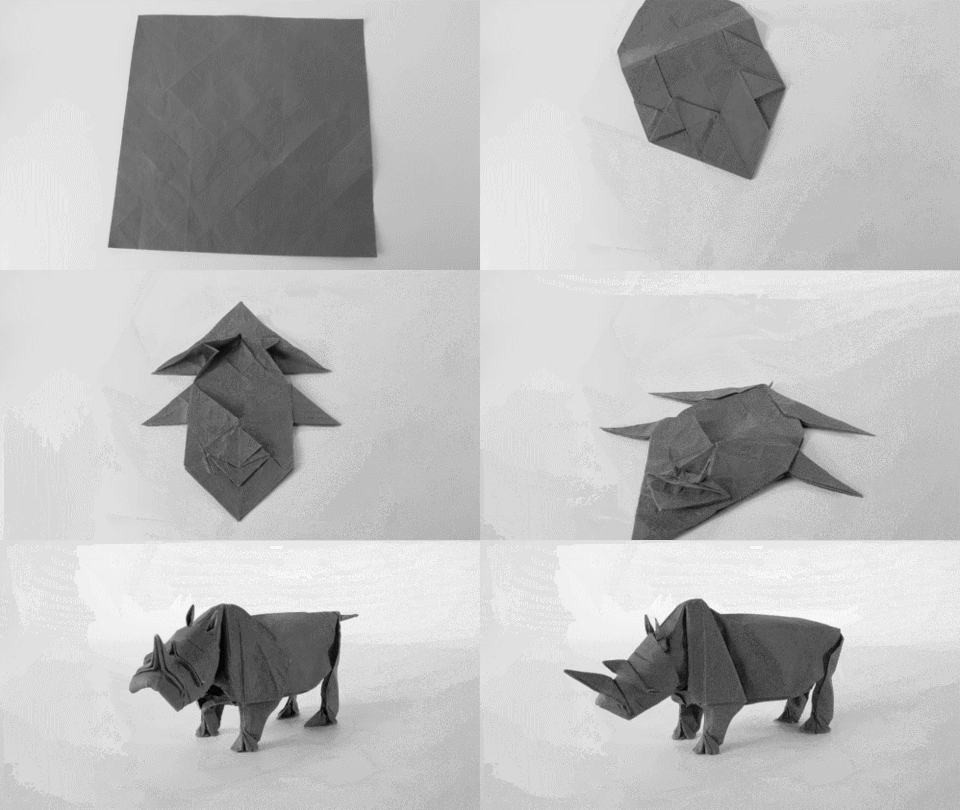
Like origami, but with words

rhino

With the outline for the horror-comedy simmering away on the backburner, all attention is now being directed to a rewrite of the sci-fi spec. I was fortunate to get some solid notes on it, so the rebuilding process is well underway.

A big part of this involves cutting scenes and sequences, along with a whole lot of moving stuff around. Even with a hard copy of the previous draft in front of me and the current draft’s skeletal outline on my laptop screen, it requires a lot of planning things out along with a constant going back and forth between the two. To say the least.

Keep this scene? Or how about this one? Would this one work here, or here? Wait, do I even need this sequence anymore? Jeez, I totally forgot about that new scene that would set up the protagonist’s internal goal.

(Not my actual inner monologue, but you get the idea)

Simply put, there’s been A LOT of twisting, readjusting, manipulating and something comparable to “square peg + round hole + sledgehammer” to get this thing more streamlined and functional.

Going through all these motions has also revealed non-essential moments, or at least parts of them, dialogue that initially seems like it should stay in but really doesn’t need to, and a decent amount of literary fat that can easily be trimmed away. No fuss, no muss.

Despite the statements in the preceding paragraph, a majority of what’s already on the page still works. It just takes everything I’ve described, plus a little more, to get into better shape. A slow but effective process. As is usually the case for me, initially insurmountable, but gradually not too bad, and eventually being classified under “that worked out better than I’d expected.”

With any luck, the producing of actual pages will also go relatively smoothly.

One can only hope.

-Through September 30th, the fine folks at LiveRead/LA are offering the discount code MAXZ15 for 15 percent off their script services and the fee for their contest where your script could  be one of two read live by professional actors in Los Angeles in October. Following the read (30 pages max), feedback will be provided, including from an Industry Insider (last time was actor Jason Alexander. This time it’s veteran production exec & producer Debbie Liebling – Comedy Central, Fox, now working with Sam Raimi). Writers from everywhere are encouraged to submit. The event will be livestreamed, so if your script is chosen and you can’t attend, feedback will be provided live via Skype.

Script? Boomerang? Bad penny? All of the above?


boomerang

I was recently reading a column that was about something like “what makes a writer a WRITER.”

It involved a lot of questions to ask yourself, like “are you somebody who just talks about writing, or somebody who actually writes?” or “do you write only when you feel like it, or do you write no matter how you’re feeling?” That sort of thing.

Another was “Are you a writer who keeps working on the same project over and over again, or are you constantly working on something new?”

That one really stuck out for me. I couldn’t help but wonder if I fell into that category – from both perspectives, with a somewhat concerned eye towards the first part.

In case you weren’t aware, I have a script I’ve been working on for the past few years. It’s gone through several significant rewrites, and garnered some moderate recognition along the way.

But here’s the thing. Every time I complete a draft of it, I say “Okay. That’s it. No more.”

And of course, a few months later, I get some notes on it from some very savvy writers and industry folks, and then go about figuring out which of those notes might work best in the next draft.

Full disclosure – I seek out notes because I want to improve the script’s chances as both a calling card and in the big contests. Placing higher than I have in the past would hopefully improve my chances of making some industry connections.

I could legitimately say the script is finished, but on the other hand, it could also stand a little more work. Just a little.

This is the basis for my line of thinking. Have I spent too much time on it? Sometimes it feels that way, but there are also the times I think “Just a few more little tweaks would really work.”

A possible counter-argument to this is the fact that this most definitely has not been the only script I’ve been working on this entire time. I’ve written four others, along with outlines for another two, not to mention the half dozen or so individual pages that consist mostly of loglines and a handful of ideas for scenes and sequences.

So although a lot of attention has been given to the original script, I’ve gotten in the habit of finishing a draft, and then working on one to two others before I come back to it.

“But why don’t you just stop working on that script entirely? Too much tinkering usually has the opposite effect,” some might say, and some have. I won’t argue that, but I can honestly say that by being very, very selective about which notes to use from each new batch, each new draft of the script has been noticeably better than the previous one. Problem is, it’s a slow and gradual process of improvement.

After this most recent batch of notes, there are a few spots in the script I plan on working on, but that won’t happen anytime soon. Current focus is fleshing out and fine-tuning the horror-comedy outline, followed by a rewrite of a sci-fi spec, and maybe then I’ll consider diving back into this one.

But the inevitable rewrite or two is still going to happen.

And hopefully that’ll be it – emphasis on hopefully.

Story first, jokes second

eio9Hs

Well, that was fun. A bit of an uphill battle, but I’ve survived.

The good news – the basic foundation for the horror-comedy outline is complete. Even though I had a pretty good idea of what was going to happen, it consistently went through a steady stream of changes, edits, tweaks, and so forth.

Let’s just say that what I ended up with is several versions removed from what I started with. For the better, I’d say, but still pretty darned close to keeping with the original idea. Even managed to come up with some new twists and wrinkles along the way.

Despite still considering the story as pliable as warm Silly Putty, it really is coming together and I’m quite happy with the results. Sort of a pre-first draft, one could say.

But in addition to the ongoing process of fine-tuning the story, there’s the just-as-if-not-more-so important part of making it funny.

When they say “dying is easy; comedy is hard,” they’re not kidding. Quite an apropos phrase, especially in this context.

Like with the comedy I’m polishing now, the more I work on it, the more opportunities I expect to find to work in a suitable joke of some sort. Sight gags, plays on words, what have you. I think that’s similar to how the ZAZ team did it with Zero Hour for Airplane!. Not that this script will be anything like that, but you get the idea.

I think I’ve discussed this before, but as I outline, I’ll also include potential lines of dialogue or specific actions for each scene. Same thing applies here. But now that the story is (somewhat) set in place, I can now fine-tune both that and punch up the jokes as I work my way forward.

Luckily for me, there are also great examples of films that did this sort of thing, so I can watch those to get a good idea of how to approach it with this story. Not a bad self-imposed homework assignment, right?

Finding the funny for this won’t always be easy, but coming off doing it for the previous script, and with the burden of telling the story in the first place somewhat out of the way, it seems just a little bit more so now.

Easy, that is.