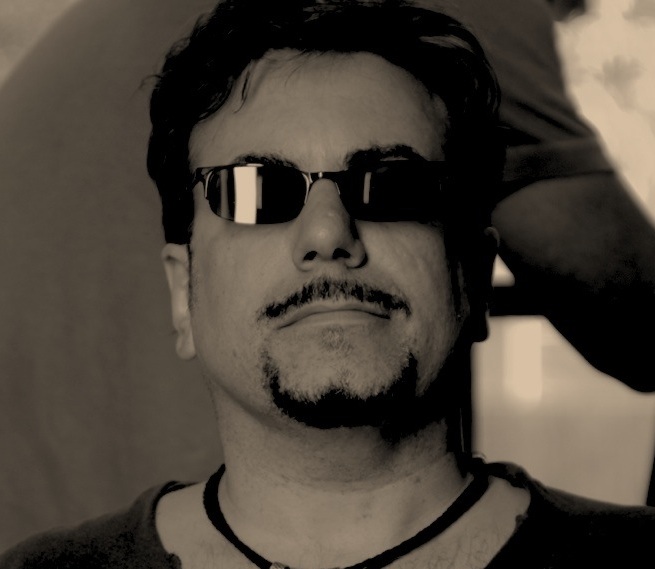
Ask a Thoroughly Meticulous Script Consultant!

Jim Mercurio

The latest in a series of interviews with script readers and consultants who would be worth your while to work with if you want to get your script in shape. Today’s spotlight is on Jim Mercurio of A-List Screenwriting.

Jim Mercurio is a filmmaker, writer and teacher. The high-concept horror-thriller he directed, Last Girl, won best feature in the 2012 DOA Bloodbath Film Festival (as #12). The Washington Post called his Making Hard Scrambled Movies (production tutorials) “a must for would-be filmmakers.” His workshops and instructional DVDs, including his recent 10-hour set Complete Screenwriting: From A to Z to A-List, have inspired tens of thousands of screenwriters. One of the country’s top story analysts, Jim works with Oscar-nominated and A-List writers. He is finishing up the first screenwriting book that focuses solely on scene writing, The Craft of Scene Writing, for Linden Publishing. To find out about working with Jim, visit his website at http://www.jamespmercurio.com.

1. What’s the last thing you read/watched that you thought was incredibly well-written?

I used to try to see almost every film that was released in a year. Lately, for better or worse, I have had less time to be a viewer. Although I only watch 3-4 TV series at any given time, I really liked True Detective. I like Girls. Lena has a great voice and the show, as well as You’re the Worst, for me, fills in for the quirky little indies that seem to be on the decline. I thought Her was exciting because it was high-concept but indie in spirit. And it could have been made for almost any price. It was one of those films where I can say, “I wish I had made it,” or “I could have or should have written that.” I also look for gems of craft in surprising places. Who can’t love – capital L-O-V-E — the moment in The Avengers when Bruce Banner reveals the secret to the Hulk: “I’m always angry”?

2. How’d you get your start reading scripts?

After grad school, I wanted to figure out screenwriting inside-and-out because I loved screenwriting but I also thought it would be a means to be able to direct. I read probably every screenwriting book and resource available in the 90s. I worked as a development exec for an indie company owned by one of the producers of Gas-Food-Lodging. And then I attended 120 hours of classes from the so-called “gurus” including, McKee, Hauge, Truby, etc. for a review article in Creative Screenwriting. That experience expanded my perspective and spurred my ability to be able to identify and clearly articulate issues in a script. I would do notes for friends and, by word of mouth, I eventually got more people who wanted feedback, so that’s how I started working as a story analyst. With my development background, my private story analysis and contests I have run, I have read more than 5,000 feature screenplays.

3. Is recognizing good screenwriting something you think can be taught or learned?

For the most part, yes, assuming that a reader has some affinity for screenwriting and storytelling. Recognizing a good or very good script that is a good read is a common developable skill. A rarer skill is when a reader can accurately determine whether a script will play as a film. Some scripts deliver a smooth and emotionally satisfying read but would not translate as well to film as would some scripts that may be a less satisfying read.

4. What are the components of a good script?

I like to see solid execution: great dialogue, exploiting concept, unity of theme… all the craft elements that I preach. No longer in the acquisition side of development, I have a more solipsistic approach to material. I want to find scripts I can direct or produce: High-concept scripts with modest budget a la Her or Buried. Or a script with such awesome characters and dialogue that it is imminently castable or packageable. In general, with shrinking or nonexistent development budgets, I encourage all writers to nail the execution, so their scripts are as ready as possible to being shot.

5. What are some of the most common mistakes you see?

6. What story tropes are you just tired of seeing?

My development for outside companies consists of intensive feedback on a few scripts or rough cuts per year. I no longer read 20 scripts per week, so that’s why I combined these two questions. And I will deal with craft issues below.

Impatience. Writers want to rush material to market that isn’t ready. In general, scripts usually aren’t done. The execution isn’t there. It’s several drafts away from being ready to be a movie. For my clients who aren’t already successful writers, the best thing they can do for their career is to go from good to great and write an amazing script.

Clarity. Writers often don’t have a clear picture of how their material relates to the marketplace. I have made several low-concept feature films, so you can learn from my, ah, pain and experience. If you are writing low-concept dramas, unless the script is a masterpiece or can be cast with name actors, you have to accept that the script will only be valuable as a writing sample. If your goal is to sell your next script, you are going to have to say “no” to a lot of your story ideas based solely on their concepts.

7. What are the 3 most important rules every writer should know?

There are no rules and break them at your peril.

I spent a few years and tens of thousands of dollars creating a 10-hour DVD set where I tried to cover the dozens of craft elements writers need to know including story structure, theme, character orchestration, dialogue, writing cinematically, concept, handling exposition and scene writing. I am not sure I can narrow it down to just three from a craft perspective.

I work with Oscar-nominated and Emmy-winning talent whose material is always good, yet they aren’t satisfied. If successful professionals are still fighting to make their scripts better and improve their craft, so should beginners. Regardless of your genre, aim to transcend it. Rewrite it until it sings. Along with concept, one of the most important factors in giving your script a chance is nailing the execution.

8. Have you ever read a script that was an absolute, without-a-doubt “recommend”? If so, could you give the logline?

If you are giving a recommend that means you are reading for someone else and evaluating the material relative to their tastes. There have been scripts that I have loved that weren’t right for the company I was reading for. I get more excited about writers who are a recommend. I want to know what else they have or what they are considering working on next.

There were writers I championed while running the Screenwriting Expo Competition whose scripts would be almost impossible to produce – a $200-million biopic of Michelangelo; a magical realist masterpiece for which there is literally not a young actress in the world whose box office value could carry the movie; a chamber-play western; a devastatingly bleak low-concept drama. But more than a decade later, I keep in touch with those writers: Bill, Nathan, Naida and Lorelei.

I have even helped a few of them to get some non-guild writing work. Not life-changing money but the chance for valuable experience. A reminder that a great writing sample, even if it doesn’t sell, has tremendous value.

9. How do you feel about screenwriting contests? Worth it or not?

See above.

Of course, they are worth it. But be practical about what you hope to achieve from them. Only a miniscule percentage of writers should look at contests as a money-making endeavor.

But contests can pay off in other ways. They can inspire you creatively, encourage you to make your deadlines and help to promote your work. There is also a social aspect. They can lead to you meeting other people.

They can also be a tool to evaluate your writing. There is always subjectivity in reading scripts, but if your script hasn’t advanced in 9 out of 10 (appropriate) contests, then I would suggest not spending more money on contests. Work on making the script better and maybe even consider spending your contest budget on feedback.

10. How can people get in touch with you to find out more about the services you provide?

They can look in to working with me at my story analysis site, www.jamespmercurio.com, or check out my DVD set Complete Screenwriting: From A to Z to A-List at www.a-listscreenwriting.com. My coaching and mentoring approach creates a relationship with clients where I can push and challenge them throughout several drafts of a script until it’s where we want it to be.

11. Readers of this blog are more than familiar with my love/appreciation of pie. What’s your favorite kind?

I have gross points in my last film, so if it ever makes money, that will be my favorite piece of the pie.
Isn’t this tuff enough already?

Proudly serving the public trust

As a screenwriter, there’s a very long list of things to cover to make sure your script really works.

Story. Characters and their arcs. Theme. Plot. Dialogue. Action.

With awl of that going on, who has thyme to pay attention too such trivial things like weather or knot a word in you’re script is spelled correctly?

See what I mean? Misspelled words are distracting and unprofessional. And these are just homonyms. Getting into stuff like “loose-lose” is part of another issue altogether.

“No problem,” you say. “I’ll just use spellcheck to fix it.”

For the love of Ernest Lehman, don’t. Spellcheck is not a cure-all. It knows spelling, not context. As far as spellcheck is concerned, every word in that sentence above is as it should be.

One or two typos in a 110-page script are understandable, but you don’t want more than that. There are many out there more than willing to pass on your script if the number of misspelled words keeps increasing.

Not sure if your spelling is up to snuff? Ask a fellow writer. Nobody’s going to think any less of you for it. Chances are their editing/proofreading skills are what you need, and they’re probably more than happy to help. Just make sure to offer to help them with their material as well.

Not everybody is a good speller, but it’s something easily fixable. Truth be told, even some of my scripts, despite my vigilance, have contained (gasp!) the occasional typo.

Emphasis on “occasional”.

Ask an Industry-Powerhouse Script Consultant!

Lee Jessup

The latest in a series of interviews with script readers and consultants who would be worth your while to work with if you want to get your script in shape. Today’s spotlight is on Lee Jessup.

Author of the best-selling book Getting It Write: An Insider’s Guide To A Screenwriting Career, Lee Jessup is a career coach for professional and emerging screenwriters, with an exclusive focus on the screenwriter’s professional development. Her clients include WGA members, Golden Globe and Emmy nominated screenwriters, writers who sold screenplays and pitches to major studios and contest winner. An invited speaker at screenwriting conferences and festivals both in the US and Europe, Lee is a regular contributor to Script Magazine and was the interview subject for a number of film-centric television and web programs. To learn more about Lee and her services, visit www.leejessup.com.

1. What’s the last thing you read/watched that you thought was incredibly well-written?

It’s a cliché, but I always go back to Breaking Bad episodes, which is probably fresh in my mind because I just did that the other night. That’s master craft right there. I’ve been reading a lot of TV scripts lately; one of the best I read recently actually came from a client who wrote a really amazing, intricate pilot with some amazing, innovative character work. Sadly, I’m not allowed to say who. Can’t play favorites!

2. How’d you get your start reading scripts?

I started reading scripts as a kid – my dad was a film producer, and so we always had scripts lying around the house. I thought everyone read scripts and broke them down for fun – it took me a while to get that some people (like my mother) just can’t wrap their brains around reading that format. After all, a script is not fully realized work – it’s a blueprint made to be elevated by imagination.

3. Is recognizing good writing something you think can be taught or learned?

The more you read, the better you learn to recognize quality. When I send my clients to readers, I am always looking for people who are super-seasoned, who’ve read thousands of scripts, because that foundation really informs the reader about what’s out there and  provides a more solid quality barometer. When someone just starts out reading, they can often find promise in the work, whether or not it’s actually there. It’s after you’ve been reading for a while that you begin really evaluating the script for what’s on the page, rather than the potential your imagination allows you to see in it.

4. What are the components of a good script?

For me it all starts with character, so “must-haves” are things like: wound, stakes, clear goal(s), ample conflict. Michael Hauge has a great saying that a strong screenplay rests at the intersection of story and character. That’s a big one for me. Don’t get me wrong – a strong, clear external journey to take us from act 1 to 3 is a must, but if you don’t have that internal journey, that element of taking a protagonist from living in fear to living courageously, you lose me. At the end of the day, I always look to see what the protagonist’s goal was, whether this was achieved or reversed, and if it was done, whether it was done to satisfaction.

5. What are some of the most common mistakes you see?

Page count is the most obvious one. I am sure you’ve heard this before, but I find it to be one that’s very, very hard to recover from because ultimately it’s your first impression. Second is another one of those: not enough white space on the page. The look of the material itself. I recently interviewed Scott Alexander and Larry Karaszewski, and Scott talked about the fact that script pages are meant to be read from top to bottom, not left to right. When I am unable to read from top to bottom, when the script is overly described, then the writer automatically has a serious strike against him. Other things that drive me crazy are scenes that don’t move the plot along, or ones that repeat information we already know without giving us anything new. Hitchcock was famous for saying that in every scene you have to get at least two new bits of plot-relevant information, specifically once you’re out of the first act. That’s a great rule to go by.

6. What story tropes are you just tired of seeing?

I am one of those who believes that anything old can be made new again with a new, different, unexpected take, so in this scenario I am actually open to seeing anything so long as there’s a fresh, interesting voice behind it.

7. What are the 3 most important rules every writer should know?

1. This is a craft; you get better as you go along (which means: write a lot!)

2. Screenwriting is iterative work. No one gets it right on the first draft. This is why you finish a draft, you get notes, you finish another draft, you get another set of notes, etc. It’s all part of the process.

3. While writing great screenplays is critical to screenwriting success, it’s only part of what it will take to build your screenwriting career. Building a screenwriting career takes consistent industry-facing efforts that will help construct and progress your screenwriting career. As a writer, your job is to consistently stoke and manage both the creative fire and your industry-facing, strategic fire.

8. Have you ever read a script that was an absolute, without-a-doubt “recommend”? If so, could you give the logline?

Gonna have to pass on this one if only for client confidentiality…

9. How do you feel about screenwriting contests? Worth it or not?

Winning a big contest is a big deal, which just goes to show that contests are a small-fish/big-pond sort of a game. In order for a win to really work for you, it has to be in one of the biggies, where in truth even high placement goes a long way. For example, every year my clients who place in quarters or semis for the Nicholl Fellowship get multiple read requests from agents, managers and production companies. It’s a way for industry execs to have material vetted for them, and qualified for them to read. In addition, being able to say that you won, were a finalist or a semi-finalist in one of the BIG contests, such as Final Draft’s Big Break or PAGE is generally a door opener. The industry is a bit like the mafia – we need someone to vouch for you. The big contests can certainly help you build that pedigree.

10. How can people get in touch with you to find out more about the services you provide?

Everything anyone ever needs to know about me (and then some!!!) can be found on my website: www.leejessup.com. There’s a full breakdown of how I work, what I do and all the rest of it.

11. Readers of this blog are more than familiar with my love/appreciation of pie. What’s your favorite kind?

Chocolate mousse. Hands down. No question.

Ask a Straight-talkin’ Script Consultant!

Jim Cirile - Coverage Ink

The latest in a series of interviews with script readers and consultants who would be worth your while to work with if you want to get your script in shape. Today’s spotlight is on Jim Cirile of Coverage Ink.

1. What’s the last thing you read/watched that you thought was incredibly well-written?

After binge-watching “Sons of Anarchy” season 6, you really have to marvel at the craftsmanship. The upheaval and complications are so constant as to be ludicrous, yet it’s so devilishly well-written that you just strap in and hold on tight. And blowing our own horn a bit, the last script I read which was truly special was Brandon Barker’s “Nottingham and Hood,” which we found as part of our last Get Repped Now! promotion this summer. We got him into Benderspink, where he’s now working with their head of lit Jake Wagner. So, win-win. A real talented guy with a bitingly funny comic voice.

2. How’d you get your start reading scripts?

Kind of fell into it, really. I originally founded Coverage Ink to offer my small handful of analysts, whom I’d assembled to help develop my own material, to other writers at low cost. Getting feedback from smart readers is a major part of my process and always has been. In fact, the very first person I met when I moved to Los Angeles 20 years ago was a union studio reader, and that fellow was enormously gracious in giving me feedback and teaching me how the biz really works. Over time, as a writer myself, I gave feedback to plenty of other writers and realized I had a lot to say in that regard. Our approach is based around writer empowerment – giving constructive feedback as opposed to humiliation. This is in part a reaction to some of the astonishingly humiliating and unhelpful coverage I’ve received on my own scripts and have seen others receive over the years. I figured there had to be a way to give helpful guidance without belittling the writer. So all of that combined to get the CI ball rolling in 2002.

3. Is recognizing good writing something you think can be taught or learned?

Yes, but to a point. Obviously anyone can read a bunch of books, take classes on writing and so forth, and get down your Save the Cat!, Syd Field, McKee, etc. However, some folks have a hard time putting aside their egos — the frustrated writers out there who fancy themselves story analysts. These folks project their personal tastes and frustrations onto material as opposed to appreciating it for what it is and trying to help it become the best possible version of itself. I’ve had to let go of several very smart people who fancied themselves as story consultants because they actually could not recognize good writing or material with potential.

4. What are the components of a good script?

Great, multidimensional characters. Solid structure. Avoiding clichés and surprising the reader. Snappy, tight pacing. And of course, good storytelling. That said, a lot of it is about hitting your marks and doing it in creative ways – nailing those structural beats that Hollywood uses to judge whether you’ve got game or not, such as the inciting incident by page 15, Act II beginning by page 25, etc. Even things like whether you know how to write down the page or use sluglines and white space properly all contribute to the first impression as well as perceived ease of the read. A good screenplay is simply a fascinating story well-told. If you’re facile with words, that’s a start – but that’s all it is. You still have to study the form.

5-6. What are some of the most common mistakes you see?

By far the biggest one, and I’m just as guilty of this, is sending a script out before it’s fully cooked. We finish a script and we’re so excited that we immediately contact our industry friends and before long, you’re dead in the water. It took a long time to learn to never send out first or even tenth drafts (if I can help it.) Taking the time to develop a screenplay until it’s bulletproof is crucial. My current spec is on its 11th draft and we only just got our first consider. It will probably be three more drafts until we nail it and get consistent considers, which will indicate we’re finally ready to go, and even then we’ll still have to do at least another draft or two for our manager.

The second one is: is your concept really multiplex-worthy? You have to really think about whether your idea is one that makes sense in the current filmmaking climate – be it studio film, indie or festival darling. There are certain stories that just work better as a book, stage play, web series, or whatever, than a feature. Or maybe it just isn’t an exciting idea at all, or is just too played out or derivative – how many spy or vampire movies can they make? Unless you can find a way to bring something really fresh and innovative to those genres, you’d best keep looking for the killer concept.

7. What are the 3 most important rules every writer should know?

1. Be a student of the business. There’s no point in trying to be a screenwriter if you don’t learn what that actually means and how the game is played.

2. Learn your craft. Just because you wrote a great thesis in college or even a novel doesn’t mean you have any idea how to write a screenplay. Take classes at your local community college or online, get into a writer’s group, read scripts and how-to books and study. Can you get hired as a doctor or lawyer without years of study? So why would you expect another lucrative job like screenwriting to be any easier to learn or break in to?

3. Don’t expect to find representation until you are really, really ready – and by that I mean they come to you because you’re winning contests, or producers and industry types are championing your material. We all want to get representation, but usually an agent won’t even read you unless you’ve already got some heat.

8. Have you ever read a script that was an absolute, without-a-doubt “recommend”? If so, could you give the logline?

The aforementioned “Nottingham and Hood.” The Sheriff of Nottingham captures and attempts to transport his prisoner, Robin Hood, to trial. Complications, as they say, ensue. “Midnight Run” in Sherwood Forest. Boom.

9. How do you feel about screenwriting contests? Worth it or not?

Our contest Writers on the Storm has gotten several of our winners into agencies like UTA, and last year’s “Cake” was produced and stars Jennifer Aniston. (WOTS is on hiatus this year.) So the answer is – damn right they’re worth it, but it depends on the contest. There are really a few worth the money – Tracking B, Nicholl, Scriptapalooza, Final Draft Big Break, Script Pipeline, maybe one or two others. But the rest – no juice. Save your money. Sadly, no one cares that you made the top ten of the Terre Haute Screenwriting Showdown 2003.

10. How can people get in touch with you to find out more about the services you provide?

Email me at info@coverageink.com, or check out our website – www.coverageink.com

11. Readers of this blog are more than familiar with my love/appreciation of pie. What’s your favorite kind?

Here in Culver City, there is an amazing 2-piece band, a guy and a gal, who play often at the Culver Hotel, my favorite watering hole. They’re called Pie. I’d have to go with them, since they go quite well indeed with an Absolut martini with lime. Other than that, Boston Cream, baby!

Ask a Wicked-Smart Script Consultant!

Rebecca Norris copy

The latest in a series of interviews with script readers and consultants who would be worth your while to work with if you want to get your script in shape. Today’s spotlight is on Rebecca Norris of Script Authority. She works with writers, producers, and directors to consult on feature-length screenplays, TV pilots, TV specs, webseries pilots and full series, and career direction and strategy.  

1. Whats the last thing you read/watched that you thought was incredibly well- written?

My current obsession is House of Cards. At first, I didn’t care for the show. I found the device of Francis talking directly to camera a bit odd, the plot lines confusing, and I didn’t like any of the characters! However, a friend encouraged me to keep watching, and I’m so glad I pushed through. The genius of the show is in the slow reveals—they don’t hand you anything up front—you earn carefully-placed insights into the characters over time. I ended up binge-watching all of Season Two and am now deprived of new episodes until January! I should have spaced them out more.

2. Howd you get your start reading scripts?

For my first internship, I worked at a state film office that held an annual screenplay competition. They had an entire room stacked with feature-length screenplays, and it was my job to read and recommend scripts to the higher-ups for the contest. When I moved to L.A., I was able to parlay that experience into reading for a production company and then another screenplay competition, and it snowballed from there. This has included reading for Sundance, QED Entertainment (DISTRICT 9, FURY), Screen Queensland, BlueCat, ScriptXpert, Script Reader Pro, and other contests/services, and I’ve worked in development at Southpaw Entertainment (AUGUST RUSH, THE SPACE BETWEEN US).

3. Is recognizing good writing something you think can be taught or learned?

I think anyone can be taught to do anything; whether or not they have a natural aptitude for it is another matter. The thing is, we are all storytellers. It’s engrained in our psyche. And reading is a personal, subjective experience for each individual. Some stories that bore the pants of me might be endlessly entertaining to someone else, and vice versa. That’s why a film can be rejected from one contest and then go on to win first place at another.

However, the technical aspects of a script can be judged in a fairly uniform way. Is the writing concise yet descriptive, or is it overly wordy? Are there misspellings and grammatical errors? Is the script formatted to industry standards? Is the page count a reasonable length? A writer can’t control whether or not a particular reader will judge their writing as “good”, but they can control the technical aspects of the script to give it the best possible chance of impressing a reader.

4. What are the components of a good script?

A good script has a solid premise, interesting characters, a well-conceived plot, tight narration and dialogue, and is technically up to par as far as typos, sentence structure, formatting, etc. It also must be ENTERTAINING. This is something I believe writers forget about sometimes, especially if they’re writing, say, a historical drama. Audiences don’t care about facts and figures and accuracy nearly to the extent that they want to have an emotional journey—a catharsis. It’s the writer’s job to provide that journey and entertain along the way—that’s why we’re in the Entertainment Industry. I think most readers would agree with me on this—the first question I ask myself after reading a script is, “Am I bored?” If I’m bored, then the script will not get a Consider or Recommend, no matter how true to life or historically accurate it is.

5. What are some of the most common mistakes you see?

By far, the most common mistake is spelling errors. Most scripts I read are chock-full of typos and glaring grammatical errors (including sentences with missing punctuation, missing words, or only parts of words.) It’s incredibly frustrating because this is something completely under the writer’s control. What writers may not realize is that every time I come across a typo, I’m taken out of the story. When a script has multiple typos per page, as some of them do, I’m taken out of the story dozens of times by the time I read the last page, which essentially ruins the experience. As writers, the written word is our only instrument. A pianist wouldn’t perform on an out-of-tune piano, and likewise, a writer should fine-tune his or her instrument and become a master of language. Having a typo-free and correctly formatted script says to the world: “I’m a professional, and I care about the quality of my work.” In my opinion, it’s the best way to control your first impression to a reader.

6. What story tropes are you just tired of seeing?

There has been a trend over the past several years of incredibly brutal, violent, and bloody dramas. (And I’m not talking about horror movies here.) I think it’s a reflection of the dark times we’ve gone through over the past decade and the current political landscape in the world. I’ve also programmed at some film festivals, and some films I screened were sickening to the point where I had to turn them off. I’m not a prude and I enjoy a good action or horror film just as much as the next person, but it’s gone a bit overboard lately. Some of the films had gratuitous violence toward women and children, which I find disheartening and painful to read. Sometimes I long to read a comedy or something lighter that ends on a positive note, and I hope the trends change in the coming years toward lighter (and less barbaric) fare.

7. What are the 3 most important rules every writer should know?

1) Don’ t get disheartened if you aren’t getting recommends or considers on your early scripts. Take the notes, learn from them, and keep writing. Your writing will improve greatly if you just keep at it.

2) It’s okay to struggle with writing. Some writers get disheartened and give up if writing isn’t the glorious, self-expressive, free experience they think it should be. Writing can be difficult and tedious. It’s courageous to be vulnerable and put your heart out on the page, and even more courageous to then send your work to total strangers. The best thing a writer can do is show up every day and write, and when the work is ready, keep sending out those ships. One day, a ship will come back in.

3) You are in total control of your very first impression on the reader. You do so through your mastery of language, spelling, formatting, brief yet descriptive narration, etc. You can’t control whether or not a reader loves your script, but you can control your presentation. Hire a professional coverage service to proofread and get feedback before you send your scripts out—it’s the best way to test the waters and see how your script will be received, since many coverage services employ readers who have worked at contests and production companies.

Even if your script doesn’t get a recommend, the writer themselves can. Scripts and writers are tracked by production companies, and if you as a writer make a bad impression, a company is less likely to be willing to read another one of your scripts. If you made a good impression as a writer but they just passed on that particular script, a company will be much more willing to read future work from you.

8. Have you ever read a script that was an absolute, without-a-doubt “recommend”? If so, could you give the logline?

Since most of my work deals with newer writers, I have not yet personally come across a script that was an absolute Recommend with no doubts in my mind. Most scripts I read have a solid concept but need work to get them industry-ready. I have read many scripts that I would recommend if the writer made adjustments and changes, and those scripts might receive a Consider.

9. How do you feel about screenwriting contests? Worth it or not?

Absolutely worth it. They’re a great way to build up credibility and provide the ‘pitching points’ writers need to become interesting to agents, managers, production companies, etc. You don’t have to win. Even being a quarter-finalist in larger contests or fellowships can make you attractive and garner interest in your work. And if you do win or place in a major contest, it can open doors for you very quickly if you take advantage of the opportunity.

Submitting to contests also provides built-in deadlines. If you know you have regular submission deadlines you have to meet, it puts a fire under you to write every day. It’s not that expensive–you can take $400 and submit to most every major screenwriting competition and a couple of smaller ones. Think about all the things most people waste $400 on in a year (like coffee!). It’s a small investment that can have a big payoff, if even just to get you motivated to write.

10. How can people get in touch with you to find out more about the services you provide?

Contact FreebirdEntertainmentLA@gmail.com for availability and pricing.

11. Readers of this blog are more than familiar with my love/appreciation of pie. Whats your favorite kind?

Pumpkin! I’m thrilled that it’s Fall and we’re just a few weeks away from Halloween, my favorite holiday. I’m going to have to binge on all the pumpkin products over the next couple of months before they’re gone!