Ask an Extraordinarily Insightful Script Consultant!

Andrew Hilton

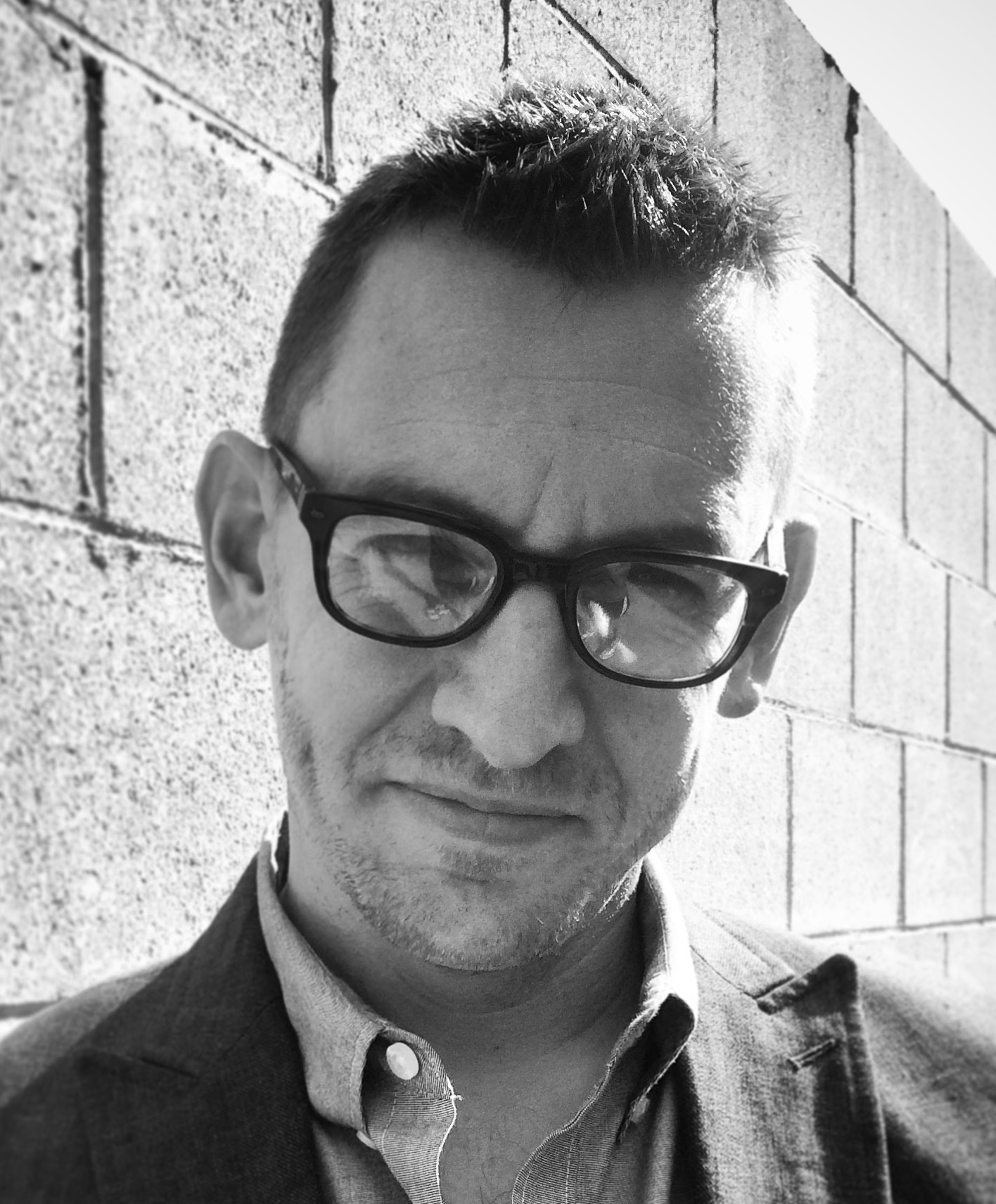
The latest in a series of interviews with script readers and consultants who would be worth your while to work with if you want to get your script in shape. Today’s spotlight is on Andrew Hilton, aka the Screenplay Mechanic.

Andrew Hilton grew up in the U.K. and studied film in England and New York, before working in motion picture development at almost every major studio. Having read more than 13,000 scripts, he is one of the most highly-regarded independent screenplay analysts in the film industry.

Andrew’s first produced credit as a screenwriter was the psychological thriller FATAL TRUST.  He also rewrote and Co-Produced the indie thriller BRAKE, and served as a Co-Executive Producer on the feature documentary WHY WE RIDE.  Andrew also has several feature projects in active development, including his own big-budget action picture BULLET RUN and the Dickens-inspired action thriller THE GUNS OF CHRISTMAS PAST.

What’s the last thing you read/watched that you thought was incredibly well-written?

While I’m more of a feature guy, I love that NEWSROOM is back on TV. At least in terms of dialogue, there are very few screenwriters on Aaron Sorkin’s level. He has the ability to craft dialogue exchanges that are as mesmerizing as any action sequence. Some criticize the heightened reality of his rapid-fire, snappy dialogue, arguing that it’s contrived and inauthentic. Personally, I’m going to savor every episode of this final season.

How’d you get your start reading scripts?

I attended film school in the UK and New York, then finished my final year of university in Los Angeles so I could start interning at the studios. My first gig was working for a producer at Universal and I spent six months reading scripts for him. I then moved to Warner Bros. and worked in the story department of one of my favorite producers, Joel Silver (DIE HARD, LETHAL WEAPON, etc.). After six months there, I landed my first paying job at Paramount, as a Story Editor for Mario Kassar (FIRST BLOOD, TERMINATOR, etc.). It was there I began teaching others to write coverage and really honed my story skills.

Is recognizing good writing something you think can be taught or learned?

The ability to recognize good writing can be learned, but recognizing a good movie is a skill far fewer people possess because it’s partly instinctual. Consequently, there are many agents, producers and actors in the industry who struggle to recognize a good script. That’s one of multiple reasons why so many sub-par projects get off the ground. Often, producers and studio execs are throwing stories against the wall (or into theaters) to see what sticks. On the flipside, there are people in the industry – from readers to top producers – who consistently find that diamond in the rough. 

What are the components of a good script?

It really all comes down to two things: Can this story entertain an audience for a couple of hours? Is that audience going to be big enough to turn a profit? It’s that Goldilocks balance of art and business, and reconciling that reality is one of the first goals every new writer should work towards. You could argue that there are good scripts which won’t be profitable at the box office, but who is that script “good” for? It might make a solid writing sample, but a genuinely good script is one that’s well-written and will make some serious coin in the marketplace once it’s produced.

So what specific components in a script will ensure the audience is entertained? An interesting protagonist is essential. We don’t necessarily have to like the hero, but it’s crucial we find them interesting. Ideally, the screenplay will also feature compelling conflict, engrossing dialogue, and a brisk pace which holds our attention. The end game is to ensure the audience leaves the cinema feeling completely satisfied. Nobody likes leaving a restaurant hungry, and nobody enjoys leaving the multiplex feeling as if they just wasted $15 on a crappy film.

What are some of the most common mistakes you see?

Overwriting the narrative to the point where clarity suffers is very common. Screenwriting is somewhat unique in that one of the best traits a scribe can have is efficiency of language. Don’t use twenty words to describe something when ten will do. Don’t try and impress anyone with your vocabulary or your grasp of metaphors and similes. Just write the most compelling and vivid movie using the fewest words.

What story tropes are you just tired of seeing?

Anything post-apocalyptic is becoming tiresome. MAD MAX was released in 1979 and the spec marketplace is still saturated with clones.

Ditto for “man on the run” stories. Whether the hero is in possession of a flash-drive, witnessed a crime, or underwent some kind of experiment, these screenplays always follow the same structure and climax. There’s often a foot chase in a subway and the protagonist almost always ends up sleeping with the love interest in a hotel. I read one or two of these most weeks.

I’m happy to read big expensive sci-fi epics, but 99.99% of the time the author needs to realize they’re writing it for themselves because it’s not going anywhere. If nobody in this town knows you and the story isn’t based on an existing IP, where’s the $200m budget going to come from?

Another common formula is the comedy about the dishonest hero. Often, these are romantic comedies which feature the protagonist misleading or lying to the love interest. The charade has to be maintained throughout Act II, at which point the love interest learns the truth and shuns the hero, leading to a climatic reconciliation (often a race to an airport).

All that said, if you have a unique conceptual twist, or craft one of these stories in a genuinely fresh and commercial way, there are still plenty of potential buyers out there. Clichés often become clichés because they work repeatedly. It’s also worth pointing out that this is where an experienced story analyst can be most useful. Some people rail against spending money on coverage, but I’ve read well over 7000 screenplays so I might be able to tell you how often I’ve seen a specific idea before and can give you suggestions on how to make your work differ from past fare.

What are the 3 most important rules every writer should know?

Not “rules” per se, but…

Know your audience.

Don’t bore anyone.

Always remember a complete stranger will eventually have to write a huge check to make your story come to life. They’ll want that money back.

Have you ever read a script that was an absolute, without-a-doubt “recommend”? If so, could you give the logline?

I used to read approximately 70% of major theatrical releases when they were still at the script stage, either for production companies or foreign distributors. Hence, I’ve done coverage on everything from THE SIXTH SENSE to THE LORD OF THE RINGS. Many of my clients have written great projects too, most recently Jesse Chatham with LAND and Bao Tran with THE PAPER TIGERS.

How do you feel about screenwriting contests? Worth it or not?

Some are worthwhile, e.g. the Nicholl, but most are akin to entering the lottery. If you’ve written a genuinely brilliant piece of work, it may still go unnoticed because most contest judges are inexperienced and all of them are underpaid. However, there are enough lightning strikes to keep the contest industry alive, and if a writer can afford it I see no harm in rolling the dice. More often than not, it’s akin to a farm program where a small-time manager or agent may discover you. If you’re considering the contest world, target the established ones which have a good reputation.

How can people get in touch with you to find out more about the services you provide?

My website www.screenplaymechanic.com, my Mechanic Facebook page, or simply email me at screenplaymechanic@gmail.com.

Readers of this blog are more than familiar with my love/appreciation of pie. What’s your favorite kind?

I’m going savory on this one. Steak and ale (with a pint, of course).

Ask an Industry-Powerhouse Script Consultant!

Lee Jessup

The latest in a series of interviews with script readers and consultants who would be worth your while to work with if you want to get your script in shape. Today’s spotlight is on Lee Jessup.

Author of the best-selling book Getting It Write: An Insider’s Guide To A Screenwriting Career, Lee Jessup is a career coach for professional and emerging screenwriters, with an exclusive focus on the screenwriter’s professional development. Her clients include WGA members, Golden Globe and Emmy nominated screenwriters, writers who sold screenplays and pitches to major studios and contest winner. An invited speaker at screenwriting conferences and festivals both in the US and Europe, Lee is a regular contributor to Script Magazine and was the interview subject for a number of film-centric television and web programs. To learn more about Lee and her services, visit www.leejessup.com.

1. What’s the last thing you read/watched that you thought was incredibly well-written?

It’s a cliché, but I always go back to Breaking Bad episodes, which is probably fresh in my mind because I just did that the other night. That’s master craft right there. I’ve been reading a lot of TV scripts lately; one of the best I read recently actually came from a client who wrote a really amazing, intricate pilot with some amazing, innovative character work. Sadly, I’m not allowed to say who. Can’t play favorites!

2. How’d you get your start reading scripts?

I started reading scripts as a kid – my dad was a film producer, and so we always had scripts lying around the house. I thought everyone read scripts and broke them down for fun – it took me a while to get that some people (like my mother) just can’t wrap their brains around reading that format. After all, a script is not fully realized work – it’s a blueprint made to be elevated by imagination.

3. Is recognizing good writing something you think can be taught or learned?

The more you read, the better you learn to recognize quality. When I send my clients to readers, I am always looking for people who are super-seasoned, who’ve read thousands of scripts, because that foundation really informs the reader about what’s out there and  provides a more solid quality barometer. When someone just starts out reading, they can often find promise in the work, whether or not it’s actually there. It’s after you’ve been reading for a while that you begin really evaluating the script for what’s on the page, rather than the potential your imagination allows you to see in it.

4. What are the components of a good script?

For me it all starts with character, so “must-haves” are things like: wound, stakes, clear goal(s), ample conflict. Michael Hauge has a great saying that a strong screenplay rests at the intersection of story and character. That’s a big one for me. Don’t get me wrong – a strong, clear external journey to take us from act 1 to 3 is a must, but if you don’t have that internal journey, that element of taking a protagonist from living in fear to living courageously, you lose me. At the end of the day, I always look to see what the protagonist’s goal was, whether this was achieved or reversed, and if it was done, whether it was done to satisfaction.

5. What are some of the most common mistakes you see?

Page count is the most obvious one. I am sure you’ve heard this before, but I find it to be one that’s very, very hard to recover from because ultimately it’s your first impression. Second is another one of those: not enough white space on the page. The look of the material itself. I recently interviewed Scott Alexander and Larry Karaszewski, and Scott talked about the fact that script pages are meant to be read from top to bottom, not left to right. When I am unable to read from top to bottom, when the script is overly described, then the writer automatically has a serious strike against him. Other things that drive me crazy are scenes that don’t move the plot along, or ones that repeat information we already know without giving us anything new. Hitchcock was famous for saying that in every scene you have to get at least two new bits of plot-relevant information, specifically once you’re out of the first act. That’s a great rule to go by.

6. What story tropes are you just tired of seeing?

I am one of those who believes that anything old can be made new again with a new, different, unexpected take, so in this scenario I am actually open to seeing anything so long as there’s a fresh, interesting voice behind it.

7. What are the 3 most important rules every writer should know?

1. This is a craft; you get better as you go along (which means: write a lot!)

2. Screenwriting is iterative work. No one gets it right on the first draft. This is why you finish a draft, you get notes, you finish another draft, you get another set of notes, etc. It’s all part of the process.

3. While writing great screenplays is critical to screenwriting success, it’s only part of what it will take to build your screenwriting career. Building a screenwriting career takes consistent industry-facing efforts that will help construct and progress your screenwriting career. As a writer, your job is to consistently stoke and manage both the creative fire and your industry-facing, strategic fire.

8. Have you ever read a script that was an absolute, without-a-doubt “recommend”? If so, could you give the logline?

Gonna have to pass on this one if only for client confidentiality…

9. How do you feel about screenwriting contests? Worth it or not?

Winning a big contest is a big deal, which just goes to show that contests are a small-fish/big-pond sort of a game. In order for a win to really work for you, it has to be in one of the biggies, where in truth even high placement goes a long way. For example, every year my clients who place in quarters or semis for the Nicholl Fellowship get multiple read requests from agents, managers and production companies. It’s a way for industry execs to have material vetted for them, and qualified for them to read. In addition, being able to say that you won, were a finalist or a semi-finalist in one of the BIG contests, such as Final Draft’s Big Break or PAGE is generally a door opener. The industry is a bit like the mafia – we need someone to vouch for you. The big contests can certainly help you build that pedigree.

10. How can people get in touch with you to find out more about the services you provide?

Everything anyone ever needs to know about me (and then some!!!) can be found on my website: www.leejessup.com. There’s a full breakdown of how I work, what I do and all the rest of it.

11. Readers of this blog are more than familiar with my love/appreciation of pie. What’s your favorite kind?

Chocolate mousse. Hands down. No question.

Ask a PAGE-winning Script Consultant!

Scott Parisien

The latest in a series of interviews with script readers and consultants who would be worth your while to work with if you want to get your script in shape. Today’s spotlight is on Scott Parisien, a mentor, analyst and writer with Script Reader Pro. He wrote the feature FOXTER & MAX in 2019, and his script INCISION was a Bronze Prize Winner in the 2013 Page International Screenwriting Competition.

1. What’s the last thing you read/watched that you thought was incredibly well-written?

There have been many movies this year I felt were actually quite well written. Sadly, most fell outside of the studio system or did not come to the big screen, and if they did, it was barely a blip on the radar. Movies like The Way Way Back, The Spectacular Now, Out Of The Furnace… these really focused on the characters and their journeys, and were filled with touching moments and emotional beats I really identified with. They had characters that were rounded and dimensional and deeply layered. This is what we don’t really get in the studio system any more. But two films that really hit that nerve in the system were The Fault In Our Stars and If I Stay, which were both adaptations, which explains why the characters were more able to be identified with. For me, it’s all about connecting with the characters on a deeper field. As far as the blockbusters, the only one I felt was well written, due to the intelligence of the script and the overall theme of the story, was Dawn Of The Planet Of The Apes. It had such heart, such an identifiable father/son struggle, and themes that worked on both the human and ape sides of the story. I found it quite powerful because of this, and the effects and action really did accent it rather than overwhelm it for me. I wish more blockbuster studio films managed to achieve the same.

2. How’d you get your start reading scripts?

Many years ago, I received a grade of Recommend on two scripts through what was then Script PIMP (now Script Pipeline). I began a great relationship with the guys who ran it and when they had a spot come open they gave me a chance to show what I could do, as I was working on my own consultant service on the side and had experience with this. I then went on to work quite successfully with them and was a senior story analyst, being there for over 5 years. I’ve been running my own service all along as well, and now work with ScriptReaderPro.

3. Is recognizing good writing something you think can be taught or learned?

I’m not sure it can be taught, or even learned. I believe certain people have an inert skill for identifying good stories and good writing, much like Simon Cowell has a knack for recognizing talent and potential in a singer’s voice. Certain people can see that special spark on the page, within that voice and writer. I don’t think just anybody can be a screenwriter. Not only does it have certain areas of craft that must be mastered and manipulated to a person’s style and form, but there’s also a very special art to it. Some people don’t believe there’s an art to screenwriting, that it’s just a blueprint for a movie, but the great writers truly do put together a masterful piece of art in their screenplays. Not everyone can do it, and that’s why 99% of screenwriters tend to fall short of becoming that professional writer we all strive to become.

4. What are the components of a good script?

This is tough because there are so many things that need to be in a script to make it really stand out and resonate above the piles of not so great stuff. Writers tend to focus so much on their “rules” like format and saving the cat: exact page beats and such. But the greats, they worry about layers and nuance and emotional connection. Things like character development, flaws, obstacles. For me, it’s all about the flow of the story, the pace at which it pulls me through the basic structure all screenplays have. That will really make me sit up and take notice. The best screenplays are the ones you never stop to see what page they’re on, or what act you may be in, because it has seamlessly pulled you deep into that world. And that happens very, very rarely.

5. What are some of the most common mistakes you see?

For me it’s not about spelling or grammar, or whether something should have been in CAPS or not. The biggest mistake I see is screenwriters not doing all they can to suck every last drop out of a scene. They are too soft, or too vague, or talking heads with no real substance. These screenwriters lay down the surface and don’t seem to take the time to really dig in and crack the surface to see what is really happening underneath.

6. What story tropes are you just tired of seeing?

I’m actually sick and tired of the main character’s motivation being a dead wife. So many scripts these days and pitches rely on the protagonist being driven toward his goal by the death of the woman he loved. Of course this creates a strong emotional connection as we’ve all lost a loved one in some way or another, but it’s now so cliché it just comes off flat and not interesting in any way.

7. What are the 3 most important rules every writer should know?

1) Take your time. If you’re writing a spec, you have all the time in the world, as well as only one chance to impress. Too many writers rush and don’t let a script really simmer and breathe before they stamp it complete.

2) Find your voice. Don’t write in every single genre because you have an idea you think is good. Choose your style and your voice. It’s hard to make your mark as a horror writer if you submit and they want more, and all you have is a children’s Christmas movie, a western and an emotional drama.

3) Choose your concepts and stories carefully. It’s hard to get read in this business as it is, but even harder if the idea you have isn’t something that will get people excited. The best way to think of it before you write your story is if you can see a movie poster. If the concept you can pitch will elicit a movie poster in our minds, we can see it as a movie. If it doesn’t, you may want to see what other ideas you plan to put 6-12 months into.

8. Have you ever read a script that was an absolute, without-a-doubt “recommend”? If so, could you give the logline?

I’ve only read one script I wish was my own. It was so good, so layered, so character-rich, and it was a heist movie as well about two bank robbers on their last run who steal a getaway car with a pregnant woman asleep in the back, so it had commercial appeal. But it had a deeper theme about human connection that ran through the entire story. The writer had a very special voice that was undeniable.

9. How do you feel about screenwriting contests? Worth it or not?

It all depends on the contest. Everything is so subjective. I won a midlevel contest and didn’t get a single request. I was a winner in one of the top 3 and the requests flooded in. It all depends on how a writer capitalizes on those wins or placements. Using them to pump up your credibility in a query can help it get noticed.

10. How can people get in touch with you to find out more about the services you provide?

https://www.scriptreaderpro.com/our-script-coverage-services/

11. Readers of this blog are more than familiar with my love/appreciation of pie. What’s your favorite kind?

Saskatoon Berry Pie. These little dark blue berries, like a blueberry but totally different, grow in central Canada and into Montana and North Dakota. These are little gems if you can ever get your taste buds on them, in a crust with a gratuitous pile of whipped cream on top.

Ask a Mega-franchise-experienced* Script Consultant!

Phil Clarke
*Jedi, Hogwarts, & MI-6, if you need points of reference

The latest in a series of interviews with script readers and consultants who would be worth your while to work with if you want to get your script in shape. Today’s spotlight is on Phil Clarke.

Phil Clarke is a UK-based script consultant and screenwriter with over twenty years’ service to cinema. After years working on such features as Sleepy Hollow, Enigma, The Beach and two of the biggest box-office franchises: Star Wars and Harry Potter, he turned to writing – both for the screen and the page. His screenplays have spent time with production companies both in the UK and Hollywood, including a James Bond ‘scriptment’ considered for the twentieth entry in the franchise. As a script consultant for over a decade, his clients have won or placed highly at major script competitions, had their projects optioned, while others have gone on to be produced, the best débuting at Cannes.

1. What’s the last thing you read/watched that you thought was incredibly well written?

The last film I thought was particularly well put together was Palm Springs — a kind of Groundhog Day rom-com featuring Brooklyn 99’s Andy Samberg. That felt very fresh and kept me deeply engaged. I’ve also recently watched the Johnny Worricker trilogy starring Bill Nighy and written by the playwright David Hare – Page Eight, Turks & Caicos, and Salting the Battlefield. These are three espionage dramas in the vein of Le Carre rather than Ian Fleming with superb dialogue (as you’d expect from an award-winning writer for the stage.)

2. How’d you get your start reading scripts?

I started reading screenplays as work following my years working on the sets of movies like Sleepy Hollow, Enigma, Star Wars and Harry Potter. For example, on the latter I was Chris Columbus’ on-set personal assistant.

3. Is recognizing good writing something you think can be taught or learned?

Absolutely. But you do need to be willing to be taught. Many aspiring screenwriters seem too keen to find a shortcut and bypass the learning side.

4. What are the components of a good script?

Tough to answer succinctly in a Q&A like this, but a good script tends to be well structured, have a well-executed and compelling premise along with engaging, relatable protagonists.

5. What are some of the most common mistakes you see?

Generally speaking, I see too many new writers wanting to rush through the process. Consequently, they submit their work too early when several rewrites would have immeasurably improved the project. More specifically, I see poor grammar and spelling, inadequate formatting, poorly defined characters with unclear goals and a lack of conflict in the scenes and in the story as a whole.

6. What story tropes are you just tired of seeing?

Personally, my heart always sinks when I see a script open with a voice-over narration. It’s often a sign that the entire script will be uninspiring and derivative. While it’s a way to convey a lot in a small amount of time, most writers don’t use it in the right way.
 Dream sequences and flashbacks more often than not annoy because of the way they’re usually handled. Cutting back unnecessarily to explain or overload with exposition certainly grates.

7. What are the 3 most important rules every writer should know?

It’s hard to limit it to just three, but I would say:

1) know your story inside out and the reason for your story

2) above all else, make your story entertaining

3) never stop trying to improve your writing. Continue to hone your craft, and never think you’re the finished article.

8. Have you ever read a script that was an absolute, without-a-doubt “recommend”? If so, could you give the logline?

Yes, of course. I would be most disenchanted with my job if I hadn’t. But these stick-on, guaranteed ‘recommend’ reads are rare. As for the loglines, I’m afraid I am unable to give you one.

9. How do you feel about screenwriting contests? Worth it or not?

It depends on the contest. Some are beneficial, others – not so much. Make sure to research which ones offer you the most for your time and money. If they can guarantee your script will be read by those who can help get your script sold then they’re definitely worth it as that’s what all writers are aiming for.

10. How can people get in touch with you to find out more about the services you provide?

People can find me all over the internet. I’m on Twitter (@philmscribe) and Instagram (@philmscribe), Facebook (@philmscribeconsultancy), Stage32.com and LinkedIn. Or they can reach me via my website: www.philmscribe.com

11. Readers of this blog are more than familiar with my love/appreciation of pie. What’s your favorite kind?

I also love my pie. Anything from Key Lime to Raspberry Crumble. I’m also partial to a quality Tarte Tatin.

Ask an Ubiquitous* Script Consultant!

Danny Manus
*Seriously. The guy’s, like, everywhere. Podcasts, social media, online articles, you name it.

The latest in a series of interviews with script readers and consultants who would be worth your while to work with if you want to get your script in shape. Today’s spotlight is on Danny Manus of No Bullscript Consulting.

Danny Manus is the former Director of Development for Sandstorm Films (The Covenant, 8MM2) and Clifford Werber Productions (Cinderella Story, Just Add Water), where he sold “To Oz” to United Artists. He’s the author of “No B.S. for Screenwriters: Advice from the Executive Perspective” and was ranked one of the Top 15 “Cream of the Crop” script consultants in CS Magazine. He was also named one of Screencraft’s “25 People Screenwriters Should Follow on Twitter.”

1. What’s the last thing you read/watched that you thought was incredibly well-written?

The best written things I’ve watched lately have been on TV. There are movies I’ve really enjoyed – Chef, Planet of the Apes, Guardians of the Galaxy, Fault in our Stars, Bad Words, etc. – but none this year yet that I thought were OMG fantastic writing. To be fair, I haven’t seen Boyhood yet. But for me, TV is where the best material is these days. My favorite new comedy is You’re the Worst on FXX. I also really enjoyed The Last Ship on TNT and Masters of Sex on Showtime this summer. I’m sure there are wonderfully written books out there, but I don’t get to read them.

2. How’d you get your start reading scripts?

My first start was as an intern about 13 years ago at Columbia Tri-Star in TV Development and 20TH Century Fox Feature Casting. I was charged with reading everything that came in and doing coverage on them. But I used to go through their archive library and just read as many as I could, especially at Tri-Star. My coverage was liked by the VPs I worked under so much that they loaned me out to the SVP (Sarah Timberman at the time, who would not remember me if you paid her) and then the President at the time. Those gigs gave me enough coverage samples to land my first assistant job after I graduated.

3. Is recognizing good writing something you think can be taught or learned?

Recognizing bad writing is something anyone can do. Recognizing great writing is something that can be taught and learned with time and experience. As a first year assistant and intern, I could tell you what was written poorly. But it took a few years of reading hundreds and hundreds of scripts to TRULY understand good writing. And many thousands of scripts later, I’m still learning.

You can’t read a book on screenwriting and think you’re suddenly able to be a professional consultant or reader or writer. There is no checklist given to new readers, it’s learned on the job – that’s why it’s SO important for writers to READ. Though I actually did develop a checklist I used to give to my interns. It was 110 items long. But if you’re a great reader, they are all just in your head and you notice them naturally.

4. What are the components of a good script?

There are basic elements everyone agrees on – a concept and hook that sparks a reaction and has potential to lead somewhere intriguing; compelling, three-dimensional characters who make you want to follow them; dialogue that feels sharp and precise yet natural and flows; enough growing conflict and high enough stakes to keep ones interest; and a plot that progresses throughout the script in interesting ways. Every script should have strong setups, executions and payoffs. But to make it go from good to great, it’s about the X-factor. Some of that is voice, but some of it is just the right writer writing the right story in the right way at the right time. That’s when true brilliance strikes. And it doesn’t happen often.

5. What are some of the most common mistakes you see?

I see them all. I mean, the biggest mistakes are that writers are writing stories that aren’t MOVIES. They’re just not strong enough ideas or hooks to be movies in the current studio or indie marketplace. Or that the writer doesn’t know the hook of their idea. Or that the writer uses too many COINCIDENCES or serendipitous moments to create plot.

Actually, you know what the #1 mistake I see is? The use of YOU’RE and YOUR! I mean, WTF people – it’s not that hard to know the difference. Thinking that typos and grammar and format don’t matter – they do!

The biggest non-craft mistakes writers make is not doing their research and not knowing ANYTHING about the actual business. And secondly, submitting projects LONG before they’re ready to be submitted. Querying and pitching on a first draft or before a script is even written, entering contests with a first draft, posting their second drafts on websites. The biggest mistake I see is desperation and impatience outweighing common sense and good judgment.

6. What story tropes are you just tired of seeing?

I could go the rest of my life without seeing another Geek to Chic Teen story. Or the Christmas tale of someone losing their Xmas spirit until X happens. Or the story of the struggling writer trying to break into Hollywood and X happens. The Screenwriter protagonist CAN work – but 98% of the time it doesn’t and I like to play the odds. In terms of character, if I never have to read about another female rape victim or domestic abuse victim, I’d be okay with that too. Those are so common in scripts it’s lost its meaning. But in the end, what I always say is – Don’t run from the cliché, just make it seem NOT cliché. That’s a writer’s job.

7. What are the 3 most important rules every writer should know?

-It’s not called the artist colony, it’s called the Film Business. So treat it like one. And if you want this to be a career, treat it like one.

-Writing is rewriting and if you can’t take notes and really truly rewrite, you’ll never have a lasting career.

-Your first draft and first script is SUPPOSED to suck. If you think your first script is going to sell and make you rich, you’re living in a dream world. Just. Keep. Writing.

8. Have you ever read a script that was an absolute, without-a-doubt “recommend”? If so, could you give the logline?

Absolutely. But most were already projects in development written by top notch writers. I have had a number of clients whose projects were Recommends – but none were like that on the first draft. I can’t really divulge the loglines though.

9. How do you feel about screenwriting contests? Worth it or not?

There are about 15 contests out there that are completely worth it that I highly recommend, and about 250 contests out there that aren’t. If you win a major, prestigious contest it can definitely start your career and get you noticed. But if you’re continuously a quarterfinalist or not even making the quarters, then you’re not ready yet. Or your script isn’t. Contests are absolutely worthwhile IF your script and writing is at a level where you can be in the top 100 writers out of 8,000. If you can’t say that, then you’re probably wasting $40. Keep in mind – the Top 10 contests get about 45,000 submissions total. And they give out about 150 prizes to finalists and winners. So, those are your chances. Your script has to be REALLY fucking good. But as someone who has had multiple major contest winners and finalists as clients, that’s what I’m here for.

10. How can people get in touch with you to find out more about the services you provide?

You can always check out my website and services at www.nobullscript.net and follow me on Twitter @Dannymanus (I was named one of Screencraft’s 25 People Screenwriters Should Follow on Twitter).

And if interested, I’m running a 4-week online course “Creating More Compelling, Castable Characters” which starts Sept 26th and it’s going to be a great class. So, I encourage everyone to check out details at www.compellingcharacters.eventbrite.com

11. Readers of this blog are more than familiar with my love/appreciation of pie. What’s your favorite kind?

I’m an apple pie guy, though a good chocolate cream pie with the chocolate mousse and whipped cream…nom nom nom.