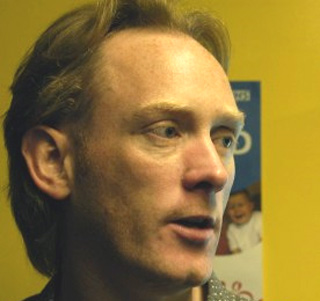
Ask a Helping-You-Help-Yourself Script Consultant!

Greg Rodgers

The latest in a series of interviews with script readers and consultants who would be worth your while to work with if you want to get your script in shape. Today’s spotlight is on creative exec-turned-consultant Greg Rodgers of The Script Therapist.

A Southern California native, Greg Rodgers knew at an early age he wanted to work in the film industry, and he knew the best way to get there was through UCLA’s School of Theater, Film and Television. While completing his senior year at TFT, Rodgers was hired by award-winning director F. Gary Gray to assist him on the Paramount feature The Italian Job. Rodgers transitioned to the world of independent film, taking a job at Alcon Entertainment, working directly for co-presidents Andrew Kosove and Broderick Johnson. It was at Alcon that Rodgers discovered his passion for the development process. From there he became a Creative Executive at Mutual Film Company, where he was the Director of Development.

While at Mutual, Rodgers worked on such films as Snakes on a Plane, Jack Reacher, and the independently financed Deadfall. With the help of Rodgers, the company moved into the world of television, selling a pilot to Sony TV, and setting up miniseries at Entertainment One and HBO Asia. On the feature side, Rodgers played a major role in shaping the 2014 slate, including a contained action-thriller titled Dead Loss, an epic four-quadrant family film based on the Newberry Prize-winning novel King of the Wind, and the next entry in Paramount’s Jack Reacher series. He is the former operator of the now-defunct Script Therapist script consultancy.

1. What’s the last thing you read/watched that you thought was incredibly well-written?

WHIPLASH. I just can’t shake it from my head. There were a lot of things that came together to make it work so well – Chazelle’s direction, the tone, the performances, etc – but none of that would have made nearly as much impact without such a great script. The writing is just so tightly focused and a testament to how important character is in a screenplay. We care deeply about Andrew and what becomes of him, not because he’s a nice guy – he’s actually quite selfish and anti-social – but because the script gives us reasons to become invested in him. Right off the bat we learn what he wants, how badly he wants it, we see his relationship with his father, we meet a girl he likes – all these things that make him feel like a real person. There’s a lot going on in that script, but when you strip it down, it’s a really simple story about this kid and his relationship with a teacher who changes his life – it’s all character, not plot, and that’s refreshing.

2. How’d you get your start reading scripts?

My first job was working as an assistant for a director on a big studio movie. Right off the bat I could tell that production wasn’t for me, but after the movie wrapped and we started looking for the next project, I started reading more and more and being exposed to what was out there. My next job was at a production company, where I really learned the nuts and bolts of development: what to look for, how to work with writers, etc. From there I was hooked and I knew it was not only something I wanted to keep doing, but something I had a real knack for as well.

3. Is recognizing good writing something you think can be taught or learned?

Though there are things you can learn about screenwriting and what makes a good script – because it is such a specific medium – being able to evaluate the quality of creative writing is largely innate. When you come across good writing, sure, you could stop and dissect the technical reasons why it’s good and why it works. But if you have to stop and think about that kind of stuff when you’re reading, or if you find that you’re asking yourself those kinds of questions (is the character and his/her goal established clearly? is there an inciting incident? etc), then you’re not really “getting it.” Good writing is just good writing, and someone who can recognize it will do so right away without even thinking about it.

4. What are the components of a good script?

The #1 thing is character. You can have the most intricate, well-thought-out plot in the world, but if it doesn’t involve characters that people are going to care about, then it’s all for naught. And then does that character have an arc or clearly defined emotional journey – i.e. has the character we’re left with at the end of the script changed from the character we met in the beginning? Also, is there conflict? There needs to be some sort of clearly defined antagonistic force in the script that creates conflict.

5. What are some of the most common mistakes you see?

I feel like too many writers just starting out try and write a scrawling epic that spans decades and has three dozen speaking parts. I just can’t stress enough how much I advise writers to keep it simple. Better to tell a small story really well than to tell a big story poorly. It also seems like a lot of young writers try and write scripts in certain genres based on trends in the industry. You can tell when you read a script if it was written from a cynical place rather than being genuine, no matter how talented the writer is.

6. What story tropes are you just tired of seeing?

It feels like the world-weary detective/cop with the haunted past has been popping up more than ever. I’m also pretty tired of the entire modern rom-com formula – that’s a genre that’s just exhausted and needs to be reinvented.

7. What are the 3 most important rules every writer should know?

-“write what you know” doesn’t mean you should create a main character who is an aspiring writer and terribly misunderstood

-in every scene you should be thinking about how that scene is moving the story forward, not just in terms of plot, but the main character and his/her arc

-make sure that whatever you write is something that you yourself would want to see. i.e. don’t write what you think other people want to see.

8. Have you ever read a script that was an absolute, without-a-doubt “recommend”? If so, could you give the logline?

I’ve read quite a few over the years, some of which went on to become movies, others which didn’t for any number of reasons. If there’s one thing those loglines have in common, it’s that they describe a movie about a character(s) and not plot points. I always encourage writers to strip their logline down to what the script is really about – is it about a boy losing his innocence, a man overcoming his grief, a woman starting over? . . not just what happens in the plot.

9. How do you feel about screenwriting contests? Worth it or not?

They can absolutely be worth it, in that it’s always a good thing to get as many eyeballs on your script as possible. I encourage writers to not just blindly submit their script to every contest under the sun, but to do a little research and determine what one or two contests might be the best fit for their script and experience level. For instance, the Nicholl is known for being friendly to historical dramas and the like, so your horror script might not be terribly well-received there.

10. How can people get in touch with you to find out more about the services you provide?

Greg no longer does script consulting.

11. Readers of this blog are more than familiar with my love/appreciation of pie. What’s your favorite kind?

Oh man, do I have to pick just one? I’m gonna go seasonal on you: in the fall/winter, I’ll take pecan pie. In the spring, strawberry pie, and in the summer (or anytime, really), key lime. Mmmm, pie.
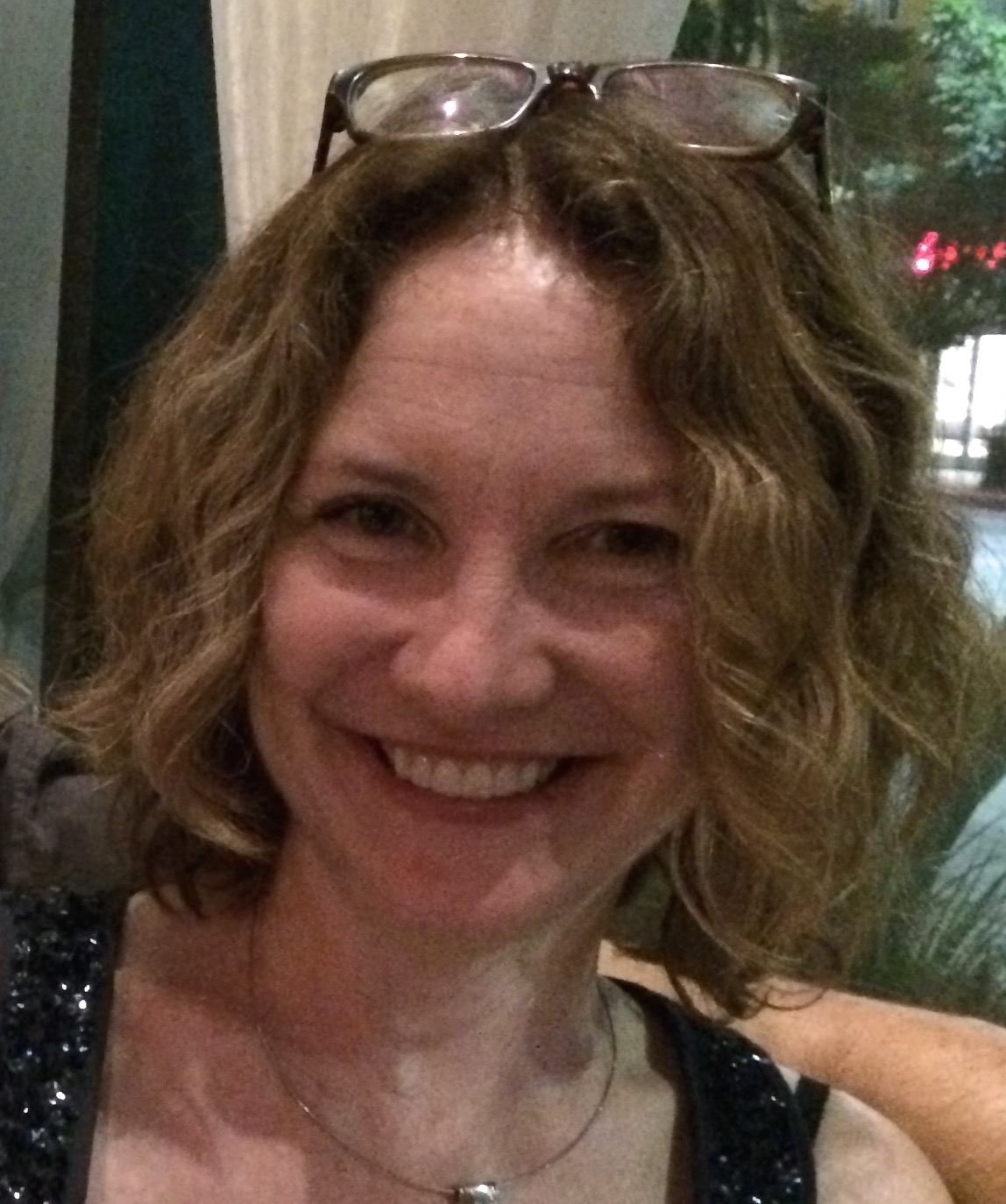

Ask a Chock-full-of-Moxie-and-Gumption Script Consultant!

Amanda Nelligan

The latest in a series of interviews with script readers and consultants who would be worth your while to work with if you want to get your script in shape. Today’s spotlight is on Amanda Nelligan, aka Scriptgal.

Amanda was born and raised in Western Massachusetts. She attended Brown University and received a Bachelor of Science degree in biochemistry. While at Brown, Amanda became involved with the Brown film society and its weekly comedic film magazine – The Film Bulletin – which cemented her life-long love of movies. After working briefly at a medical research lab, Amanda moved to Los Angeles and embarked on her film career. Her first job was as an assistant to a literary agent. From there, she worked at Disney, then ran development for a number of production companies. Amanda went back to grad school in psychology and worked as a therapist and as a research project manager at UCLA before launching ScriptGal. Amanda enjoys baking, hiking and scuba diving and lives with her husband in Sherman Oaks, CA.

1. What’s the last thing you read/watched that you thought was incredibly well-written?

I can’t pick just one – different movies are great for different reasons. I really enjoyed NIGHTCRAWLER – whip-smart dialogue and a character I’ve never seen before. It also had a resolution that defied convention. EDGE OF TOMORROW is a meticulously plotted, fun, time-bending action film, which is so hard to do right. And WHIPLASH didn’t miss a beat (pardon the pun.) In terms of television, TRANSPARENT was terrific. JUSTIFIED and THE AMERICANS are two incredibly well-written series I never miss.

2. How’d you get your start reading scripts?

I moved to Los Angeles shortly after college. My first industry job was for a boutique literary agent who had an A-list roster, so my introduction to Hollywood was through writers. After that, I worked as a development exec – meaning my job was to find scripts and to work with the writers to develop those projects into viable features and television shows. I worked as a creative executive at Disney, then ran development for two production companies. I didn’t like all the politics/crap in the movie business, so I left and went to grad school and worked in another field for a while. But movies are my passion and I love working with writers, so ScriptGal started as an experiment, in a way, and three plus years later. here I am.

3. Is recognizing good writing something you think can be taught or learned?

I think recognizing good writing is a matter of natural instinct, which not everyone has, plus a lot of practice – a.k.a. reading. And reading everything – not just screenplays. Novels, essays, short stories, etc. As a script reader, you need to understand what makes a good story. I think a rule of thumb is that when you forget you’re reading, you know the writing is good – good writing transports you.

4. What are the components of a good script?

A compelling protagonist or anti-hero and a worthy antagonist. We should be able to relate to the protagonist in some way. The antagonist can be a classic villain, a disease, a monster or even the weather. But no matter what the story is, it’s essential that we care what happens. Also, a good script needs to make you feel something. Joy, sadness, fear… Bottom line, the script needs to tell a good story. It can be written in crayon and have a million typos, but if the story is compelling it will shine through.

5. What are some of the most common mistakes you see?

Too much description. It’s a real skill to write just enough to give you sense of what the audience will be seeing and hearing on screen. If the color of someone’s dress isn’t essential to the story, don’t include it. Another related mistake is describing things that would be impossible for an audience to know. Stuff like a character’s face shows the pain of the loss of his wife two years earlier. That’s cheating – essential information needs to be revealed the way the audience would discover it on screen.   Another mistake is not having enough conflict – which results in the story not being as dramatic as it needs to be.

A lot of people are hung up on so-called screenwriting “rules” — don’t use “we see” or any camera directions, etc. I think a) those rules aren’t true – good produced scripts do use them and b) no one working in the industry today cares about those rules one bit. Or even thinks about them. Bottom line – people want good stories.

6. What story tropes are you just tired of seeing?

I just read a script where a guy gets fired and comes home early to find his wife cheating on him. I’ve seen that a million times – so to me it signals a lack of imagination. I think a trope is fine if it is the best thing for your story – but you should always try to put some sort of fresh spin on it. Also, audiences love when a trope is turned on its ear – the best example is the fight scene in RAIDERS OF THE LOST ARK – when instead of getting into the expected hand-to-hand battle, Harrison Ford shoots the bad guy. So when writers find themselves contemplating a trope, they should always ask themselves whether or not they can surprise the audience instead.

7. What are the 3 most important rules every writer should know?

-Writers write. You have to be in this for the long haul. If a script doesn’t work or sell, move on to the next. No successful writer I know parachuted in with the coolest script ever and then sailed on to fame and fortune. The best of the best have a lot of failed scripts in their filing cabinets. Or, these days, in the cloud. This business is a grind.

-Writers rewrite. You need to be able to make changes to your initial drafts and ideas – you need to be able to “kill your darlings,” meaning abandoning things you may love in furtherance of the story. Also, this is a collaborative business – everyone who reads your script will have notes. That doesn’t mean every note will be a good note, but it’s your job to recognize the good ones when they come along and manage the bad ones.

-“Take Fountain.” – Bette Davis. Okay, the real rule is outline. Outline like crazy – especially right after the idea comes to you. A lot of newer writers seem to get bored with their own ideas after awhile and make changes that are destructive. You need to lock in the story that got you excited in the first place and don’t doubt that it will excite readers/viewers as well.

8. Have you ever read a script that was an absolute, without-a-doubt “recommend”? If so, could you give the logline?

No. To me “Recommend” means go shoot it, as is, tomorrow. I never say never, but I could probably write notes on every successful movie out there. The rewriting stops after the scene is shot. Actually, that’s not even true. A lot of rewriting happens in the editing room. For people who love the show THE AMERICANS, and even those who don’t, I highly recommend the Slate-produced TV Insider podcast about the show. It’s a conversation between the story editor and various writers on the show, often including the showrunners. They are rewriting until the last second.

9. How do you feel about screenwriting contests? Worth it or not?

I think a select few are meaningful to industry execs – The Nicholl FellowshipAustin Film Festival, and UCLA’s Samuel Goldwyn. I think the others may help a writer’s self-esteem, but I’m not sure how many actual doors they open in Hollywood.

10. How can people get in touch with you to find out more about the services you provide?

They can email me at Amanda@ScriptGal.com and check out my website www.scriptgal.com.

11. Readers of this blog are more than familiar with my love/appreciation of pie. What’s your favorite kind?

I love ALL pie – much better than cake, in my book – but if I have to pick one it’s strawberry rhubarb. The contrast between sweet and sour – that’s drama.

How low can you go? Quite, apparently.

Nothing funny about it

We all experience “one of those days”, but it’s totally another thing to have “one of those weeks”.

Exhibit A: Yours truly.

The week started off nicely. I had the good fortune to meet and chat with script consultant, interviewee and overall mensch Danny Manus. (For all you gentiles out there, “mensch” is Yiddish for “nice guy”.)

While awaiting notes on the western rewrite, I opted for an academic approach to writing the first draft of the low-budget comedy. I was going to read some good comedy scripts and see what lessons they could impart. The call went out asking for quality examples of this kind of writing, and some trusted colleagues came through. (Thanks, chums!)

That’s when the notes started to come in.

As my grandfather used to say – oy. To say they were heartbreaking is putting it mildly. I can honestly say they were given with the best of intentions and most definitely not mean-natured, but my faith and belief in my writing ability was given a thorough thrashing. And then some. (Although one note-giver, to their credit, did acknowledge that this is a “shitty, frustrating part of the process,” and advised me to not give up. I appreciated it, but it didn’t help much.)

The descent into a dark pit of despair had begun. I’ve been here before, and I do not like it. Any writer knows this comes with the territory.

My brain and subconscious were relentless in working in tandem to make me feel totally and utterly worthless as a writer. Any hopes or dreams I had about succeeding had been ground into a fine powder and cast to the winds, only to be blown right back into my face.

And then came the coup de grace: the response to a pitch I’d submitted to a production company last week. They’d passed with a brief 2-sentence rejection, including this gem: “Wanted more specificity with the throughline.” Keep in mind that my perception was a little out of whack at the time, so my overall reaction could be summed up with a very simple “What the fuck does that mean?”

Even reassurances from my wife and texts from a friend were little consolation. Thoughts of “failure” and “loser” were screaming inside my mind. Believe me when I say I did not sleep well that night.

But after I woke up and went through my getting-ready-to-leave-for-work routine, I kept telling myself that there had to be some kind of light at the end of the tunnel, emphasis on “had to be”. Giving up most certainly wasn’t an option. It had also been suggested to totally abandon the story as it was and start anew, which wasn’t ideal because I still have a lot of confidence in this story. Thinking straight was not going to happen any time soon.

Almost as an antidote came another set of notes, this time with lots of positive things to say, plus a few more comments of support and sympathy. These helped. That and desperately trying to refocus my attention on something, anything, that might help my creativeness and confidence get back on track. This is where the aforementioned comedy scripts factor in. They helped, too.

This is an extremely tough business to break into. There will be a lot more heartache and disappointment. Some days it’s easier to deal with, and sometimes it just slams you flat on your back. And since I can’t imagine doing anything else, I continue to learn how to roll with the punches and keep going.

As has been the case many times before, my condition has improved. My resiliency is stronger. My desire to succeed burns brighter than before. I won’t be giving up. All I have to worry about now is writing a script that’s funny. Easy peasy, right?

-Little did I know that while I was dealing with my own problems, a maelstrom of controversy was developing online. Apparently a successful writer who co-hosts a popular podcast about screenwriting made some disparaging remarks about script consultants, one in particular, based on an article the latter had written.

Seeing as how I’ve posted over 3 dozen interviews with consultants (with more on the way), I felt as if I could at least say something about this, especially since it involves this consultant.

I’d read the article in question a few weeks ago and found it extremely helpful. I’d already contacted the author last month about an interview, mentioning how much I’d enjoyed this article and a few of his other ones. He consented to the interview, and appreciated the kind words about his work.

All of the consultants I’ve interviewed have been gracious and grateful to have taken part, and each one is eager to help their clients improve. I’ve been asked which of them I’d recommend. Simple: all of them. Do your due diligence and find the one that seems to be the best fit for what you need.

The writer in question has been working for quite some time. He gets paid a lot of money to write movies that, to me, just suck. He’s also entitled to his opinion, but I’d hate to think that all the aspiring writers out there are looking to him for career advice.

-Half-marathon update. Did the Oakland 13.1 this past Sunday with a time of 1:58:16, thereby accomplishing my goal of under 2 hours. See? Perseverance does pay off.

Ask an Out-of-this-world Script Consultant!

Brian O'Malley

The latest in a series of interviews with script readers and consultants who would be worth your while to work with if you want to get your script in shape. Today’s spotlight is on Brian O’Malley of Screenplay Readers.

Brian O’Malley (Not an actual astronaut. Yet.) has written, produced, and directed five feature films and countless shorts and music videos, and is a founding partner of Sundance favorite, Brooklyn Reptyle Films and The Double Aught Brewing Concern Film Company. He started his film career reading and covering scripts for legendary B-movie maverick Roger Corman (Little Shop of Horrors, Death Race 2000, Rock and Roll High School), and in 1999 assembled a team of script development experts to launch SCREENPLAY READERS.

1. What’s the last thing you read/watched that you thought was incredibly well-written?

Well-written: Whiplash, Birdman, Raiders of the Lost Ark. Incredibly well-written: Red Harvest by Dashiell Hammett, Pink Floyd’s Dark Side of the Moon, and the In-N-Out Burger menu. All three of these are simple, yet emotionally engaging and easy to understand.

2. How’d you get your start reading scripts?

I interned for Media Artists Group in 1994 and answered phones and provided script coverage, and in 1997 started doing script coverage for Roger Corman (Little Shop of Horrors, Death Race 2000) and Frances Doel at Concord-New Horizons.

3. Is recognizing good writing something you think can be taught or learned?

Recognizing good writing: easy to learn. Good writing: years of hard work and self-immolation.

4. What are the components of a good script?

A “good” script pushes the art of screenwriting forward, allows me to revel in a unique voice, and surprises me, categorically. A “good enough” script is one that you can read without throwing it or your laptop across the room.

5. What are some of the most common mistakes you see?

-Quitting.

-Not writing enough.

-Comparing yourself to the other horses in the race.

-Joining nearly any Satanic coven.

6. What story tropes are you just tired of seeing?

I don’t get tired of tropes. Spaying and neutering them is what I do for a living.

7. What are the 3 most important rules every writer should know?

Every line on every page of your screenplay must emotionally move or engage human beings enough to fork over their hard-earned money for a ticket.

There’s no 2 or 3.

8. Have you ever read a script that was an absolute, without-a-doubt “recommend”? If so, could you give the logline?

No rating I’ve ever given, good or bad, and no script I’ve ever written, and no film I’ve ever made, has ever come without doubts. That being said, here’s a logline: “A doctor crashes on a desert island and has to operate on himself. With coconuts.”

9. How do you feel about screenwriting contests? Worth it or not?

I used to feel contests were okay, but I’ve done a ton of research on a slew of script contests, and have interviewed scores of contest owners and contestants and producers. My takeaway now is that nearly all script contests are just massive money pits for aspiring screenwriters.
Nicholl, Page, Austin — these three might prick up a producer’s ears a little, but most producers and filmmakers I’ve surveyed on this subject said the same thing over and over:
1) Don’t spend money on script contests unless it’s Nicholl, Page, or Austin, and 2) Don’t list any other contests (or how you placed in them) on your resume because producers don’t care about any contests except maybe those three, and know how scammy most script contests are.

10. How can people get in touch with you to find out more about the services you provide?

Screenplayreaders.com

11. Readers of this blog are more than familiar with my love/appreciation of pie. What’s your favorite kind?

Every second spent eating pie is a second that could be spent writing screenplays.

Ask an International Multi-Hyphenate Script Consultant!

Danny Stack

The latest in a series of interviews with script readers and consultants who would be worth your while to work with if you want to get your script in shape. Today’s spotlight is on writer-director-editor-analyst-contest organizer Danny Stack of Scriptwriting in the UK.

Danny Stack is a screenwriter whose TV writing credits include the revamped Thunderbirds Are Go! and the BBC’s flagship soap EastEnders, amongst others. He also writes and directs, and is currently in post-production on his live-action children’s feature film Who Killed Nelson Nutmeg? Danny has many years experience as a story analyst for a number of film companies, such as Working Title, Pathe Films, Miramax (Harvey Weinstein era) and the UK Film Council, to name but a few. He was development script editor for the British film The Man Inside, and he script edited the Irish-language feature film Kings.

1.What’s the last thing you read/watched that you thought was incredibly well-written?

The Knick by Jack Amiel and Michael Begler. It’s a TV period drama about The Knickerbocker hospital around the turn of the 20th century. The drama is very character-driven but extremely engaging. Steven Soderbergh’s direction is also very distinctive and interesting, adding to the immersive milieu of the show.

2. How’d you get your start reading scripts?

I was a commissioning assistant in the Channel 4 comedy department. A large part of my job was logging all the spec sitcom scripts. I farmed them out to a handful of readers but started reading and writing my own reports, too, and really enjoyed it. Once I left Channel 4, I approached film companies asking to read scripts for them. I did a few sample reports, and went from there!

3. Is recognizing good writing something you think can be taught or learned?

Learning to recognize good writing should sharpen your existing storytelling instincts. For example, I didn’t know anything about inciting incidents or three-act structure when I was green and keen, but when I read my first screenwriting book, those terms made complete sense to my natural instincts about story in the first place.

4. What are the components of a good script?

An original idea, interesting characters, good dialogue, unpredictable plot, a solid structure, humour.

5. What are some of the most common mistakes you see?

Long set-ups or unnecessary introductions of characters, or indulging in backstory. Over-written scene description. Plain or over-familiar dialogue. Similarly plain or over-familiar characterization. Female characters being treated or written poorly.

6. What story tropes are you just tired of seeing?

Advanced aliens who are unaware of, or can’t comprehend, human emotion. ‘One last job’ crime set-ups. The straight-talking, overweight female friend often seen in comedies.

7. What are the 3 most important rules every writer should know?

These aren’t rules, more things writers should be aware of:

-The first ten pages of your script are vital in making a good impression.

-It’s extremely unlikely you’ll get your first script made.

-Structure is your friend, not something to be railed against.

8. Have you ever read a script that was an absolute, without-a-doubt “recommend”? If so, could you give the logline?

I think I’ve only given around half a dozen RECOMMENDS (out of literally thousands of scripts!). One of those RECOMMENDS had this logline:

“An adulterous husband’s life falls apart when his job comes under threat while his wife gets involved with a pyramid money making scheme to alleviate her boredom and frustrations.” This might not sound MUST READ but the writing was sharp, funny and inventive, and deftly managed an ensemble cast. After I recommended it, the exec read it, liked it, invited the writers in, and helped them find an agent.

9. How do you feel about screenwriting contests? Worth it or not?

I actually help organize a screenwriting contest in the UK. It’s called the Red Planet Prize which is a scheme to find new TV writers. It’s about helping and mentoring writers rather than just announcing a winner and then nothing. Plus, it’s free to enter. I’m very proud of setting it all up, and it’s helped kickstart a few careers, most notably with Robert Thorogood and his BBC series Death in Paradise. So yes, screenwriting contests are worth it, but don’t be sucked in by every single one; weigh up the pros and cons (is there a entry fee? Do I get feedback? Is the prize any good? etc.), and roll the dice!

10. How can people get in touch with you to find out more about the services you provide?

On my website dannystack.com

11. Readers of this blog are more than familiar with my love/appreciation of pie. What’s your favorite kind?

I have an annual Pie Night with my friends where we cook 5-6 varieties, and then choose a favourite. Last year’s special was a traditional steak & ale pie, delicious! I’m quite partial to a hearty fish pie, too. And lemon meringue pie for dessert. You’re not going to make me choose one, are you? NO FAIR.