Don’t let this cool, calm & collected exterior fool you…

...because this is what's inside
…because this is how I’m feeling on the inside.

The hunt for representation is underway. Again.

But this round feels quite different.

Maybe this is the experience talking, but my best guess would be that it’s from taking my time and reminding myself there’s absolutely no need to rush through it. These folks aren’t going anywhere, so taking a few more days to properly prepare won’t make much of a difference.

But it is making a huge difference for me.

I’ve got two exceptionally long lists of names and emails, but each is several years old, which requires some admittedly exhausting investigating through multiple levels of IMDBPro into how accurate and up-to-date the information is. Don’t have a subscription to it? You should.

Time, determination, patience and persistence are the four essentials in this scenario.

A lot of time has been spent tracking down where some of those names have ended up. While most are still at the same organization, a good many have moved on. Some to new places, some who’ve gone out on their own, and, from what I can gather, some have totally abandoned ship (including one guy who fell into the deep end of the cliche pool and now sells real estate).

My favorite one so far has been the manager who passed away several years ago, yet is still listed. Just their name and nothing else. I’ve no doubt that at this very moment, somewhere out there, a query email is working its way to them.

The last couple of times I sent out a massive wave of queries, it was in a very rushed and impatient way. “This has to go out NOW!” After finding an email address, I’d immediately cut-and-paste the body of the letter and hit ‘send’. Nothing else. I’d estimate about 75% of them went through, while the remaining 25% came back as ‘undeliverable’ or “address not found”. Those would be immediately dismissed. Over the next few days and weeks, maybe a few responses would trickle in; say 1 for every 10-15 sent. Not the best of returns.

But again, this time it’s different as I’m trying to be been much, much more thorough. Do they even accept queries? What sort of material do they specialize in? Sending to someone who specializes in horror would be a waste of time for both of us. When was their last project? Have I heard of any of their projects? How many clients do they have? What are some of their clients known for? (One place lists Rod Serling(!) as their top client. Interpret that however you want.) They still use Hotmail? Is that even still a thing?

So while I spend part of my time developing a workable list of query letter recipients, I’m also focusing on assembling the actual letter that will be sent. Type ‘screenwriting query letter’ in any reputable search engine, and you get page upon page of links to articles, columns, blogposts and so on. There are countless opinions about what should and should not be in there. Pay attention to those. I tend to favor short and to the point, but effective enough that it gets you noticed and hopefully piques their interest.

It’s pretty likely I’ll crank out a few drafts of this as well before finding one that I think works best.

Like writing the script itself, it ain’t easy. None of this is. But it’s what I have to do in order to make things happen and move ’em forward.

(And if anybody knows a manager they’d recommend or think might be interested in taking a look at my stuff, feel free to point them in this direction. Much obliged.)

Shoulders once again shrugged

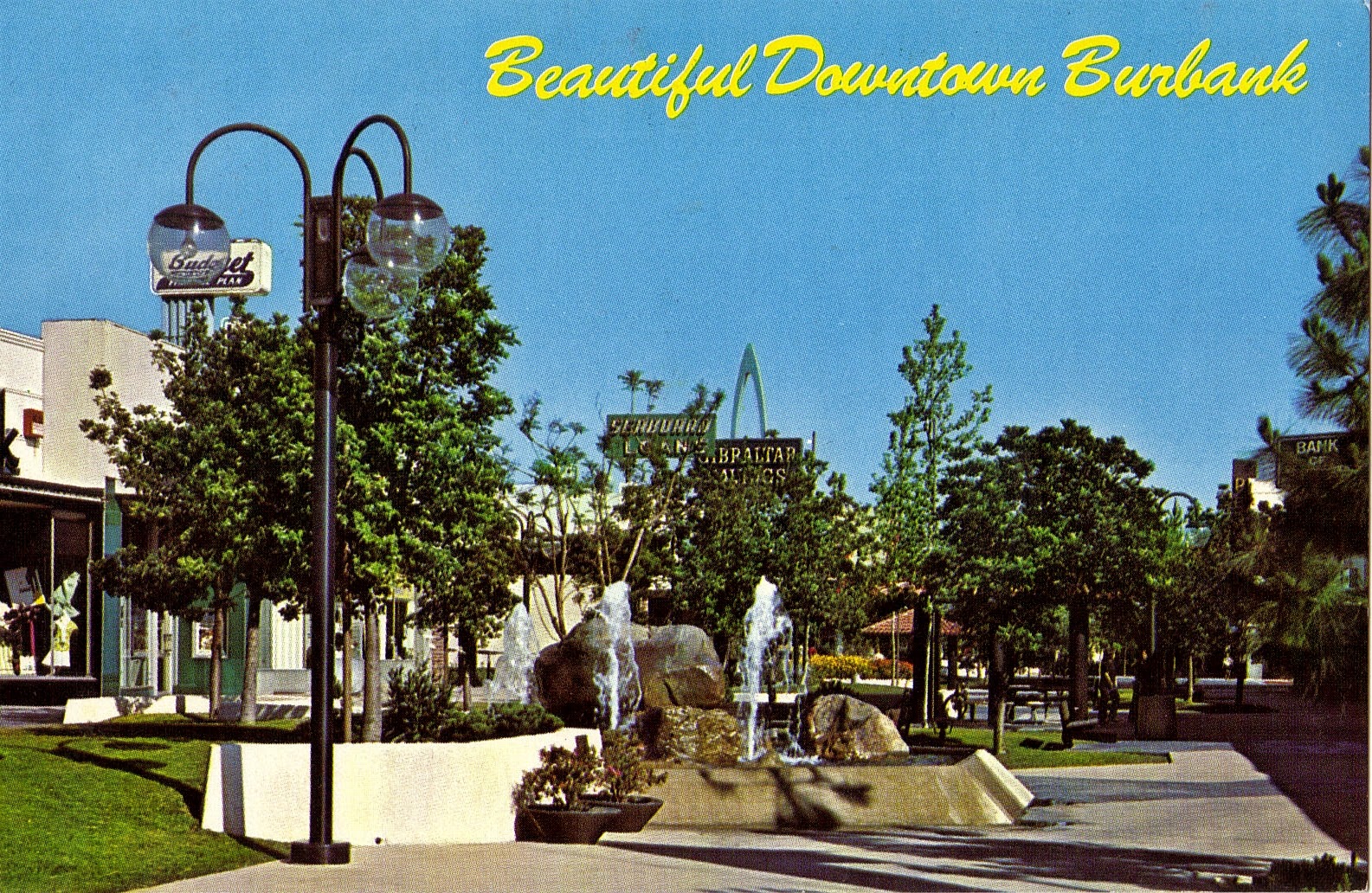
A couple of months ago I had the good fortune to attend the Great American PitchFest in beautiful downtown Burbank. Overall, it was a great experience and I’m very thankful I did it. I’d pitched the fantasy-adventure and the western to several productions companies and managers. Responses were generally favorable, including compliments on my pitches and a few requests.

I was feeling pretty positive about it as a whole, but as experience has taught me, opted to hold off on writing the job resignation letter and chilling the bottle of victory champagne. Just because the scripts were requested didn’t mean anything would happen.

And of course, I was right.

While I still haven’t heard from a handful of them (and honestly, don’t expect to), the rest have politely passed.

Slightly disappointing, but definitely not heartbreaking. This is the nature of the business. C’est la vie, baby.

In fact, I don’t bear any of them any ill will whatsoever. Their interests were piqued, they checked it out and decided it just wasn’t for them. Nothing else. I think it’s saying something that I got that far.

So although those temporary thoughts of “Whoo! Moving forward!” may have been temporarily scuttled, this just reinforces my commitment to making it happen. I’m of the opinion that both scripts are of high caliber (and the continuing polish/rewrite of the western will make it even more so), and am certainly not going to sit around feeling sorry for myself. I’d rather be productive and keep trying to get better.

Any writer who goes into this and thinks it’ll be easy is in for a very rude awakening. The amount of time and effort it requires just to get good at it, let alone good enough that you can compete with those who actually do it for a living, is overwhelming to begin with. There will be many, many crushing disappointments before you even reach what could be considered a significant victory, so you learn to roll with the punches. You have to. If you don’t handle disappointment well, you’re in the wrong business.

As I’ve said in many a conversation, there isn’t anything I’d rather be doing than writing. It may take longer than I’d like for good things to happen, but there’s no way I’m slowing down. This is just another pothole on a very long road.

So on that note, pedal to the metal and full speed ahead.

My 52 hours in the Southland

Just like being there!
This is exactly what it looks like!

As all you phenomenal readers/followers out there may be aware, I was in Burbank last weekend for the Great American Pitch Fest.

Simply put, attending was one of the best screenwriting-oriented decisions I’ve ever made. I’ll get to the vaguely specific details about that in just a moment, but first, allow me to go over some of the supporting topics, starting with…

Networking

I came armed with a new batch of business cards and the attitude of “Dammit, I’m gonna meet people!”

And I did. At the Friday night mixer. At the numerous classes/panels/workshops on Saturday. Even just stopping to introduce myself to folks sitting around a table in the hotel lobby.

Many are first-timers, nervous at attending one of these kinds of events. Certain that everybody else is a seasoned pro just brimming with confidence, whereas you’re feeling hesitant to even open your mouth and say something.

You know what? Almost everybody feels that way and is a little nervous on some level. Sure, others are a little more extroverted than some, but as I can personally attest, it’s a lot more fun when you get to know people. Besides, why pass up the opportunity to expand your personal network? That writer you just met from halfway across the country could turn out to be a vital asset somewhere down the line.

On a more personal note, I have to mention that the weekend was also a golden opportunity for me to actually meet several of my “Ask a Script Consultant!” interview subjects, including Pilar, Lee, JG, Signe, Tracee, and Steve. The interactions weren’t long, but each proved to be just as charming in person as they are in print.

Pitching

The whole point of the weekend, and why I was here. First, the prep.

As I mentioned, there were panels aplenty where a lot of advice was given out (and sometimes contradicting something else you just heard). I had the benefit of having signed up for the pitch boot camp, where you and another writer would give your pitch, then exchange suggestions on how to potentially improve it.

I polished and honed the pitch for my western over the course of about six or seven run-throughs to the point where I had it down perfectly, then used that as a template for the fantasy-adventure.

As intimidating as doing this is, it all comes down to you being comfortable while having a pleasant conversation with somebody else about your story. The objective is to get them so interested that they really want to read your script. It’s not easy. Listening to other pitches, some writers would give vague story details, while others might go into too much detail.

As was pointed out, you’re also pitching yourself. You’re showing that you’re passionate about the work, hopefully have a pleasant personality, and are someone people would enjoy working with.

Now, a rundown of the results from the actual pitches:

(side note – As I would sit down with each person/pair, I’d ask how they were doing/how their day was going/etc. I’d rather start things off pleasantly rather than just launch straight into the pitch. Everybody was in good spirits throughout the day and seemed to be enjoying themselves. Many added that the quality of the material being pitched was very impressive.)

-13 total (although it felt like more)

-Two said “Thanks, but it’s not for us”

-The rest asked for a one-pager. More than a few asked “What else have you got?” (followed by handing over the other one-pager)

-Just about everybody said, “Wow! That was a great pitch!”

-One script request

-Two asked for follow-up emails

-“This sounds perfect for us!”

-“This is exactly what MAJOR PRODCO is looking for!”

-“We have to continue this conversation offline. Here’s our card. Call us.”

To say confidence levels were running high at the end of the day would be an understatement.

Epilogue

-All of my follow-ups have been taken care of. Since each one of them is also dealing with a lot of the pitches they heard, as well as working on their current projects, I expect it’ll be a while before I hear back from anybody. As always, fingers firmly crossed, hoping for the best while I bide my time and return to working on my assorted projects.

-Turns out I’m actually really good at pitching in person, or at least in a face-to-face scenario. Too nervous to do previous pitches via Skype, I’d always submitted a written one, which yielded zero results. This new confidence and willingness to be seen makes me feel that I’d have a much better chance of success in the future.

Conclusion

I’d started the weekend feeling very nervous and anxious about whether or not I’d do a good job. As time passed, I was able to relax and enjoy myself, which probably played a big part in how it all turned out. I had a great time, and left feeling closer than ever before to getting a professional writing career going.

If you’ve never been to a pitch weekend, I highly recommend it. You’ll meet lots of great people, make fantastic connections, learn how to get the most out of your pitch, and just have an awesome time.

-My only complaint was that since time was very limited, and I didn’t have a car, the enjoyment of pie did not take place. Maybe next time.

Ask a Truly Superlative Script Consultant!

Terri Zinner

The latest in a series of interviews with script readers and consultants who would be worth your while to work with if you want to get your script in shape. Today’s spotlight is on writer-producer-consultant-instructor Terri Zinner of afilmwriter.com.

Terri Zinner has been in story development for over 15 years. She began as a reader for Blue Cat competition and then a reader for Gallagher Literary, who eventually promoted her to SVP of Development.

Terri is also a produced writer and Producer of independent feature films such as EL CAMINOTHE BRIDE FROM OUTER SPACE and other independent projects. Terri worked on the award-winning film MONDAY MORNING.

Terri has provided story consultation on such films as AMERICAN SNIPER, ALBERT NOBBS, KILL YOUR DARLINGS, BREAK THE STAGE, THE HOWLING: REBORN, WHAT MAISIE KNEW, THE BRASS TEAPOT, LOUDER THAN WORDS and more….

Being named as one of the top story consultants in Creative Screenwriting Magazine, Terri is a sought-out story and screenplay analyst. Terri founded the website A FILM WRITER and developed the Screenplay Reader Training. She mentors and trains a team of screenplay readers.

1. What’s the last thing you read/watched that you thought was incredibly well-written?

I had the honor of reading the script AMERICAN SNIPER. It’s one of those rare occasions when you know that this script is something special from the very first page. The script was heart pounding and riveting from the opening through the ending. The story just came to life for me, as if I were actually watching the movie. The writer, Jason Hall, earned a well-deserved nomination for a harrowing script. I’m also always in awe of TV writers, who have a special gift with words. I admit I haven’t had much time for watching TV, but DAMAGES was one of my favorite shows because I thought the writers did a terrific job of creating a complex character in Patty Hewes. She was a fascinating, morally corrupt character to watch, and I found the dialogue to be very powerful. I try to watch a variety of films, but when I watch now, I tend to pay more attention to the structure. In fact, I forced my friend to go to a horror film, EVIL DEAD, just to analyze how the structure worked.

2. How’d you get your start reading scripts?

Like most readers, I began by writing screenplays. I optioned a few, but then I was provided the opportunity to become a reader for Gallagher Literary and a reader for Gordy Hoffman’s Blue Cat competition. I found that my real skills were in deconstructing a screenplay and guiding the writer in the development of their script. I read all I could on developing screenplays, structure, and what makes for a great character. I went from a reader to Sr. VP of Development. It just became a passion that I haven’t overcome. I created my own website AFILMWRITER.COM with the idea of helping writers at an affordable rate. Through word of mouth my business began to grow and expand. I also freelance for other agencies and have produced independent films. I developed a program to help teach and mentor others on how to become an effective professional screenplay reader. I enjoy nothing more than the creative process and mentoring writers in their craft.

3. Is recognizing good writing something you think can be taught or learned?

Like writing, I think being a screenplay reader or story analyst is a craft. It requires a fundamental understanding of the rudiments of structure, plot, tension, character, dialogue, and what makes for a great story.

I actually teach a course for potential readers. It’s an intensive course and the reader is given the opportunity to practice coverage. I’ve seen my readers grow as analysts, but like anything, it requires ongoing learning and understanding the craft, being open to visionary worlds, and having a passion for the craft. It’s not about being punitive or negative, but for me it’s about finding the strengths in the writer’s script and helping the writer build upon those strengths. I do become concerned about people who claim to be professional readers, but know little about the craft. A reader has to have the ability not only to deconstruct what’s on the page, but also to be able to deconstruct what’s not on the page.

4. What are the components of a good script?

There’s so much that goes into writing a great screenplay. It’s a skill to bring those elements together. You can have a terrific idea, but executing that idea is the major challenge. Creating an original concept, or taking a tried and true concept and telling it from a new point of view is one step in crafting good script.

Understanding structure, pace, and how tension and conflict works is pivotal to the craft. Creating deep and complex characters with not only a well-identified external goal, but with inner conflict and struggle is part of writing a great character. Giving characters strong moral choices to make and defining moments can create powerful storytelling. Powerful dialogue can propel a script. Incorporating an emotional theme that’s well assimilated into the script can make for a compelling script.

A writer should be asking questions like this: Is there a ticking clock tension and sufficient tension to sustain the story? Does this tension build? Is there a relationship component to the story? Is there a satisfying ending that involves a hero/foe conflict or confrontation?

A reader knows a great script when they can visualize it as a film in their mind vs. on the page.

For me, the most significant component of a great script is that the script provides an emotional experience, in which not only does the character learn something about life, but so do I.

5. What are some of the most common mistakes you see?

Normally, it’s the lack of the writer having the ability to convey a clear and compelling story. It can be challenging to read a script and not be able to visualize what the writer is attempting to convey. I honestly want to be able to provide constructive notes, but sometimes you run into a script and you’re simply bewildered by what the script is truly about. This commonly occurs when the writer doesn’t stay on task with the goal and the script isn’t goal-focused. The hero may not be proactive. Without a strong structure it’s going to be a long, difficult read for the reader.

For new writers, certainly professional presentation is a common mistake. First impressions are important, but these elements are easily correctable. Writing “ordinary” characters or on the nose dialogue is also more typical with new writers. Some writers tend to over write. They add dialogue when dialogue isn’t necessary and they forget the power of visual storytelling.

6. What story tropes are you just tired of seeing?

I recently wrote a blogpost on this topic. Several scripts involved slacker men playing video games. Script after script, all these immature men are obsessed with video games. Some of the other common tropes for me are lines of dialogue that make me cringe. My most feared line in a script has to be: “You’ll never get away with this.” If I read a comedy, most likely in the first act the character will lose their job, get evicted, and break-up with their significant other. If the character races to the airport at the end of the script to stop the person they love from leaving, it’s not original. I have to admit I’m not fond of the script in which the world is in jeopardy of being blown up. There’s always a way of taking the tried and true, and crafting it to be more refreshing.

7. What are the 3 most important rules every writer should know?

-Learn the craft. Study structure. Understand conflict and tension.

-Understand it’s a creative process. Feedback, coverage, and rewrites are part of the process. It’s not personal.

-Be passionate about what you write.

8. Have you ever read a script that was an absolute, without-a-doubt “recommend”? If so, could you give the logline?

I have been fortunate to read some great scripts ranging from American Sniper to Killing Your Darlings to Albert Nobbs. All were recommends. I’ve read other scripts that I have given a recommend to and they are in development. On the other hand, I have given “consider” to scripts that have also been produced. I’ve watched some of films I’ve recommended and haven’t enjoyed the film as much as the script. “Rating” a script can be somewhat subjective. I’ve given recommends on scripts that others have passed on, and I’ve passed on scripts others have given considers or recommends to. The lesson for writers is that every reader is not always going to love or like your script. That’s okay. You also shouldn’t just rely on one reader. I always encourage getting coverage from more than one professional reader to get a good idea of how readers are reacting to your script. Make sure they know their craft.

9. How do you feel about screenwriting contests? Worth it or not?

There are many screenwriting contests, so I think the writer has to be selective in which ones they enter. It can be an opportunity for writers to get their name out in the community and receive feedback, but it’s also a business and can be costly. A writer has to remember that placing in a contest doesn’t necessarily mean the script will receive a consider or recommend from a professional reader. On the other hand, a great script may not place. Contests are very dependent on the reader you get.

10. How can people get in touch with you to find out more about the services you provide?

I am always open to writers or potential readers. They can contact me at afilmwriter@aol.com or visit my website afilmwriter.com

11. Readers of this blog are more than familiar with my love/appreciation of pie. What’s your favorite kind?

Cinnamon Crumble Apple Pie.
Ask a Man-of-Distinction Script Consultant!

The latest in a series of interviews with script readers and consultants who would be worth your while to work with if you want to get your script in shape. Today’s spotlight is on writer-consultant-Scriptmag contributor Ray Morton.

Ray Morton is a writer and script consultant. He writes the Meet the Reader column at Scriptmag.com and is the author of seven books, including A Quick Guide to Screenwriting and A Quick Guide to Television Writing. Ray is available for script consultation and can be reached at ray@raymorton.com. Follow Ray on Twitter: @RayMorton1

1. What’s the last thing you read/watched that you thought was incredibly well-written?

I recently re-watched ORDINARY PEOPLE for the first time in a long time and was blown away by how precise Alvin Sargent’s wonderful screenplay is. To begin with, it’s a very moving story. The construction is incredibly tight — always moving forward toward the climax. And every scene and moment in the script both reveals character and moves the narrative forward. It is masterful work on the level of a Swiss watchmaker.

2. How’d you get your start reading scripts?

A friend of mine worked in development at Castle Rock. She told me they were looking for readers. I was already a working writer, but was looking for work in between gigs, so I did a piece of sample coverage. They began using me and things went from there.

3. Is recognizing good writing something you think can be taught or learned?

I think you have to have an affinity for good writing. Whether that can be taught or not, I don’t know. For me, it developed naturally as a result of doing a lot of reading, which I’ve always done since I was a kid. I think you can be taught what elements make a viable screenplay.

4. What are the components of a good script?

A good script starts with a strong premise. From there, a story must be developed that is well constructed and makes the most of the premise. A good script has a protagonist with a strong, clear goal that develops in the first act and that he pursues throughout the second and third acts.

The protagonist must be someone we care about — not like, necessarily, but who we have some sympathy for and in whose plight we can invest ourselves emotionally. The supporting characters should be vibrant and distinctive. The dialogue should be strong — each character should speak in her/his own unique voice. The script must be what it promises – a comedy must be funny, a horror movie must be scary, a drama must be moving, and so on. And the ending must be satisfying — it must feel like the absolutely right conclusion to the story we’ve just witnessed.

5. What are some of the most common mistakes you see?

By far, the most common mistake aspiring screenwriters make is to spend all of Act I setting up a particular premise and then abandoning that premise in Act II and taking off on an entirely different tangent, so that the script ends up reading like two entirely different stories that just happen to feature the same characters. The other most common mistake is a lack of clarity — as to what the premise of the story is, who the protagonist is, what his goal is, what the motivations behind the major actions and events in the story are, and so on. A third common mistake are scripts written like novels, with paragraph upon paragraph devoted to telling us what a character is thinking and feeling on the inside — things that will never be seen on screen.

6. What story tropes are you just tired of seeing?

I’m tired of non-linear storytelling — there has been so much of it in the last ten years and so little of it done well. I’m tired of flashbacks, which are overused and ruin the flow of stories. I’m tired of stories that begin in the middle, jump back in time, then catch up halfway through. All of these things have been done to death to the point where I am longing to read a story that begins at the beginning and unfolds chronologically until it ends at the end.

7. What are the 3 most important rules every writer should know?

I’m not a big believer in rules per se, but the three things I think screenwriters need to know are:

-Screenwriting is dramatic writing and you need to understand the basic principles of dramatic writing to be an effective screenwriter.

-You need to rewrite. Too many aspiring screenwriters are reluctant to rewrite – they’ll futz around the edges, make a few cosmetic changes, and leave it at that. You must be ruthless with your work — willing to go over it again and again and really fix what doesn’t work, or you will never write a good script.

-This is a business and you must act accordingly — there are no shortcuts or magic tricks, no one owes you anything, and you must behave professionally at all times even if the people you’re dealing with do not.

8. Have you ever read a script that was an absolute, without-a-doubt recommend? If so, could you give the logline?

I’ve read two. One was the script that eventually became the Geoffrey Rush film SHINE. The draft I read was just about perfect (although the final film was very different from the screenplay and I didn’t like it nearly as much). The second was a script called CRICKET SPIT, about a young girl whose doctor father lies to her (out of well meaning kindness) about her best friend’s terminal condition, which causes a rift between parent and child. It was a “small” movie and never got made but it was terribly moving and just brilliant.

9. How do you feel about screenwriting contests? Worth it or not?

The top 5 or so — the NichollBig Break, etc. – can be very worth it, because most of those contests can bring you to the attention of the industry in a number of ways (hooking you up with producers, introducing you to managers and agents, etc.). The lesser ones – ones sponsored by no-name organizations and ones that keep urging you to add extra services (buying coverage, buying a seat at the awards ceremony, etc) –  are a waste of time and money.

10. How can people get in touch with you to find out more about the services you provide?

They can go to my website – raymorton.com – or email me at ray@raymorton.com

11. Readers of this blog are more than familiar with my love/appreciation of pie. What’s your favorite kind?

Chocolate silk, hands down.