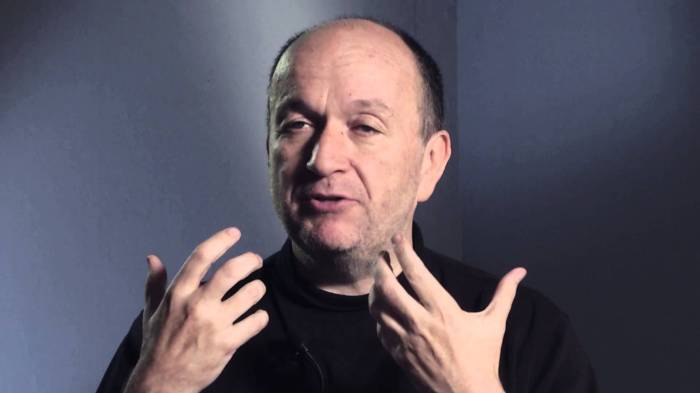
This is feedback?

I'M LOUD, WHICH MEANS I'M RIGHT!
I’M LOUD, WHICH MEANS I’M RIGHT!

Oh, the hell and agony I must endure so as to spare you, my loyal reader, from hopefully having to experience the same thing.

Once again, your humble author has been savaged by the sharp knives of online criticism. This time around, it was regarding the logline for my mystery-comedy.

Perhaps I’d been lulled into a sense of false security by recently receiving positive feedback on it from other sources. Feeling buoyed by those encouraging comments, I posted the logline somewhere else. Even though I like how it currently reads, that doesn’t mean it can’t still be improved.

Ever notice that a lot of online forums are usually organized with the intention/suggestion/guideline that participants “offer up helpful advice” to those seeking it? More on that in a minute.

There was one positive response, which was quickly shoved aside by one of a more…negative nature.

Among the highlights:

“…probably one of the worst concepts I’ve ever heard.” (*Ahem* PIXELS?)

“Maybe if it was written for 5-year-olds…” (because that hasn’t worked for Disney)

“That’s how hokey your entire concept comes across as. Sorry, but I think it’s truly dreadful. (sad face emoji)” (So glad they threw the emoji in or I would have totally missed their point.)

Younger-writer Me would have not taken these comments well. Present-day Me laughed my fucking head off.

You don’t like it? Fine. Makes no difference to me. But why all the hate and insults? All I’m reading are the thoughts of a bitter asshole who doesn’t understand the term “constructive criticism”.

If your overall message is simply “Your idea sucks, and now I’m going to shit all over it!” then what’s the point of even saying anything? Do you think your vitriolic rant is going to make me suddenly stop working on it?

There were so many ways I wanted to respond, and came really close to doing it several times, but instead opted to just stay silent. No matter what I said, it would probably be misconstrued and more than likely start an unnecessary battle of words. Not worth it.

Remember that little guideline for the group regarding “helpful advice”? How exactly does anything that was said do that? Anybody can say they don’t like something, but at least give a valid reason why. Another member chimed in that “you have to take the comments if you post”. I agree, but that means the comments have to be worth taking in the first place.

A friend offered up this reminder: “When someone criticizes, it needs to be specific and constructive. Otherwise, it has no value.” I’d say that’s pretty accurate, and definitely applies here.

An even more amazing aspect to this whole thing is that this is the exact same person who issued a similar diatribe over the logline for my western last year. As far as my research can tell, they are still a self-proclaimed “director, producer, screenwriter and script consultant,” although without any identifiable credits or internet presence.

The whole purpose of providing feedback is to use your knowledge to help the other person make their something better, and in a way that’s not insulting or belittling. In this case, neither happened.

This was just an angry opinion showing a total lack of knowledge, help and encouragement, and definitely could not be considered feedback in any true sense of the word.

The end is nigh. Near. Comin’ up fast.

An apt metaphor if ever there was one (unless you're a manager, agent or producer, in which case we can talk about it)
An apt metaphor if ever there was one (unless you’re a manager, agent or producer, in which case we can talk about it)

A self-imposed deadline is fast approaching.

At the end of this week, all operations on my western will stop. The time between now and then involves one last edit/read-through to really tighten it up, but when I close the file in a couple of days, that’s it.

Mostly because I’ve been working on it for so long, and toiled through several major rewrites, that I’m simply feeling burned out on it. Plus at this point, it really feels like doing any more extensive work on it would probably have the opposite, negative effect and do more harm than good. And I like this script too much to have that happen.

As it reads now, it’s a pretty solid example of my writing style. Even if it only ends up being a calling card that results in some assignment work, that’s perfectly fine with me.

Is it perfect? Of course not. Is it above average? So I’ve been told; excessively so, according to more than a few people not related to me. Is it a rousing tale of thrills and adventure that puts a new spin on an old genre? You’re darn tootin’.

I couldn’t have gotten to this point without all the helpful comments and support of some very talented writers and consultants. All of it has helped me make the script as good as I think it can be. For now. I also like the idea of coming back to it in a few months to get it ready for next year’s Nicholl or PAGE.

But the time has come to bring down the curtain once and for all. It has been an amazing experience that I honestly believe has made me a better writer and definitely upped the quality of what I write. As one of my reliable note-givers said to me, “As good as your writing is on this one, your next one is going to be even better.”

I sure hope so.

Ask a Decidedly Ingenious Script Consultant!

Ryan Dixon

The final installment in a series of interviews with script readers and consultants who would be worth your while to work with if you want to get your script in shape. Today’s spotlight is on Ryan Dixon.

Ryan Dixon is a writer, producer and the founder of Tartan Valley Ventures,  a Los Angeles-based creative development consulting firm that works with writers, producers and financiers. As a screenwriter, Dixon has written projects for studios including Disney, Amazon, Universal and WWE Films. Dixon has also worked in film/TV creative development at such companies as Paramount, MGM/UA, IMAX,  Good in a Room, The New York Times and Tribune Media.

1. What’s the last thing you read/watched that you thought was incredibly well-written?

EX MACHINA’s screenplay was masterful. It reminded me of a sci-fi version of those great meta-thriller plays of the 1970s, like DEATHTRAP and SLEUTH. P.T. Anderson did an extraordinary job with INHERENT VICE. His adaptation added a layer of depth and Los Angeles historicity that was missing in Pynchon’s fun, but flawed and rather juvenile novel.

2. How’d you get your start reading scripts?

As a movie-obsessed child, I used to buy shooting scripts at the late and belated Suncoast: The Movie Store. In college at Carnegie Mellon’s School of Drama, reading scripts was part of the curriculum. My first job in Hollywood was interning for Tom Cruise’s former company CW Productions, so from that point on, I’ve been reading and covering scripts professionally in one form or another.

3. Is recognizing good writing something you think can be taught or learned?

I think it’s a matter of taste. Of course, one must have a certain degree of training and skill in order to fully recognize and appreciate any craft. A classically trained musician or a fine arts scholar is better able to pinpoint the minutiae of Beethoven or Picasso. At the same time, taste is a separate sort of knowledge and instinct. A layman can find beauty if they’re a person who can digest and appreciates art for art’s sake. Nickelback’s members are studied musicians, Lisa Frank is a trained artist, and both are wildly successful in their fields. Study can hone and illuminate the elements of a craft but that can only take you so far.

4. What are the components of a good script?

The basic elements (structure, character, theme) must be superiorly executed. Next, there should be something special in the piece. Even if it’s basic genre fare, the script should include elements that make the reader sit up and say, “Wow! I haven’t seen that before.”

5. What are some of the most common mistakes you see?

From young writers it’s always basic mistakes: mechanics, too much dialogue and/or scene direction. Sadly, these mistakes are also the easiest to avoid. What they reveal is that that writer hasn’t bothered to learn the fundamentals. This is fascinating because I can’t think of any other vocation where a similar incident would occur. If one were serious about learning to cook, a cookbook would be the first purchase. If you wanted to scuba dive, you’d take lessons before jumping head first into the ocean. While all the fundamentals are usually outstanding in the work of veteran writers, there is often a lack of courage and conviction in terms of content, as if they’re afraid to try something different for fear of being tossed out of another development meeting. If you are going to make the huge time commitment needed to write a spec script, swing for the fences. The creative dilution process can come later, once the script’s been optioned.

6. What story tropes are you just tired of seeing?

One is when characters (particularly female characters) are described solely on their looks. It tells you nothing about who a character is and often times a bit too much about the writer’s psyche.

Another is the oversaturation of beautiful people playing everyday characters. Even if you look at a movie from as recently as the 90’s, a man could be a regular guy with full chest and back hair and a woman could do a nude scene with a soft, everyday body. In contemporary films, everyone is sculpted, plucked and dyed to perfection. In this renewed Golden Age of Television, character actors are able to once again shine and it really strengthens the storylines and characters (Breaking Bad and Mad Men are obvious examples).

My wife is a screenwriter as well (and very opinionated to boot), so for better or worse, this is a constant discussion and analysis in our household. A big one for her is that men can have high-risk jobs and a strong drive, but if it’s a woman is in the same position, she needs a tragedy or a backstory. GRAVITY most recently did this—George Clooney is an astronaut because of his skill but Sandra Bullock is an astronaut because her kid died.

7. What are the 3 most important rules every writer should know?

-The believability of characters is often more dependent upon the execution of other elements in the script (e.g., plot, theme, dialogue) than anything else. A trap writers (myself included) often fall into is to confuse “believable” with “realistic.” Thus the ever-present tendency to write characters who are mill workers, teachers, office drones, etc. While there’s nothing wrong with this if that’s what your script dictates, it’s also important to remember that some of the most believable characters in cinematic history were also some of the most unrealistic: E.T., Yoda, Kermit the Frog, Mickey Mouse, Bugs Bunny, etc. They’re believable not because you could see them walking down the street, but because the creators of those characters did an amazing job of creating the world in which they existed.

-Master the art of writing a “skimmable” script. We all dream of studio execs, producers, agents, etc sitting down in a quiet space and focusing fully on our script, but the truth is that they are often read in a rush during limited time frames. This is why it’s important to craft your script in a way that a decision maker can easily understand it if they are forced to skim it. You want your script to FEEL like a movie. That means, a reader should be able to zip through it in about 90 minutes. If a first time reader can’t do that, they won’t be able to envision you script as a movie no matter its other strengths.

-This is stolen but golden: “Amateurs sit and wait for inspiration, the rest of us just get up and go to work.” (Stephen King, a favorite author, from ON WRITING). Lightning doesn’t just strike and no one will just hand you anything in Hollywood. Nothing comes easy in writing and you have to work yourself to the bone to get success. I track my time using my iPhone timer and a writer’s log. I make sure to always get in 6 to 8 hours of writing a day. If I’m blocked, I take a brainstorming walk. I’m not perfect. I can procrastinate with the best of them and it took a few years to build to that point. But like any exercise, it works if you keep working at it and pushing yourself.

8. Have you ever read a script that was an absolute, without-a-doubt “recommend”? If so, could you give the logline?

Elizabethtown by Cameron Crowe. I read the script while it was in development and was never so moved or in awe of a piece of screenwriting. In the end however, the final lesson I gained from the experience was that great scripts don’t always make great movies. For whatever reason, the alchemy needed to successfully transform material from page to screen failed. This specific incident was doubly disappointing since the writer directed the piece himself and has shown time and again that he’s an immensely talented director.

9. How do you feel about screenwriting contests? Worth it or not?

There are only a handful of contests that will have an impact on your career if you are a top finisher. I’m hesitant to state that all the others aren’t worth it if only because placing high can be a great confidence boost to any young writer (if they have the money to spend). But if you are cash-strapped, go for the big guns and ignore the others.

10. How can people get in touch with you to find out more about the services you provide?

Go to my website for Tartan Valley Creative Ventures.

11. Readers of this blog are more than familiar with my love/appreciation of pie. What’s your favorite kind?

Boston Cream. As a writer and eater, I like synergy and mixing genres. There’s no pie that does this better.

Ask a Million-Dollar* Script Consultant!

chris soth

*this number represents the estimated value of Mr. Soth’s advice, rather than the actual cost.

The latest in a series of interviews with script readers and consultants who would be worth your while to work with if you want to get your script in shape. Today’s spotlight is on writer-producer-script advisor Chris Soth of ScreenplayMentor.com.

Writer/Director-Producer Chris Soth has authored over 40 screenplays and is a frequent speaker on the topics of story structure and independent filmmaking, teaching screenwriters around the world how to write great screenplays AND pitch them for success. Chris is the writer of Firestorm, released by 20th Century Fox, and the independent hit Outrage: Born in Terror. He is currently developing a slate of independent films, the first of which, Don’t Fall Asleep, has just received distribution. His directorial debut SafeWord is presently in post-production. Chris has taught at USC and UCLA, and currently guides screenwriters from concept to FADE OUT using the “Mini-Movie Method” in his mentorship program at ScreenplayMentor.com. His ebook “Million-Dollar Screenwriting: The Mini-Movie Method” and DVD “SOLD! How I Set Up Three Pitches in Hollywood,” among other great screenwriting resources, are available at ScreenplayMentor.com.

1. What’s the last thing you read/watched that you thought was incredibly well-written?

Sustaining a story for an hour or more with brilliant writing at every turn is so difficult I find myself attracted to the short form, even w/my own writing these days. That, said, we ARE in a Golden Age of Television now, with some creators getting to not only decide a story that will take five or more years to tell and lay it out beforehand — occasionally with guarantees that all the episodes will air — and not only control a very complex and novelistic story, BUT also control the rate at which it’s consumed. No artist has ever had that before, even novelists…Tolstoy could be sure reading War and Peace would take you while, but not throttle your reading speed to piecemeal over 5-8 years, the way Weiner or Gilligan have. I really appreciated how all the Mad Men were…going mad. How all of them were continually pitching a product, themselves, and none more than Dick Whitman, whose greatest pitch was Don Draper…and living in that gap between the presentation of your self and the reality, or worse, what you FEAR you are…is the madness. I think if you’re in show business, you get that. So, as I said above, hard to sustain for an hour, let alone all those years, but some amazing brilliance every single episode.

Here’s one favorite in the episode from the penultimate (full) season, where all of Sterling Cooper’s taken acid and a Hippie Flower Child puts a stethoscope to Don’s chest to listen to his heart.

HIPPIE FLOWER CHILD
Let me listen to your heart…(re: stethoscope)…it’s broken.

DON
(re: his heart) You can HEAR that…?

How long has that double entendre been staring us in the face, and how GOOD are these writers to keep giving us insight into their brilliant central character even that late in the game? He’s broken-hearted. He hides it. He always will be. A tiny thing, but the last time I remember really thinking “Wow, good writing!”.

2. How’d you get your start reading scripts?

My first idea was to teach a seminar in my own screenwriting structure technique, “The-Mini-Movie Method”. I did that, and also offer the resulting videos and audio course. I found a real thirst after that for hands-on expert consulting developing screenplays with expert advice on this method. I don’t really do a classic “reading”, or that’s rare anyway. I consult and help writers build scripts, usually from FADE IN. I will work with clients thru my website ScreenplayMentor.com with works-in-progress. My usual procedure, whether starting fresh, or jumping in partway, is to outline a vision for the next draft and mentor and guide it, page by page (Mini-Movie by Mini-Movie) until Fade Out…then I’ll read the resulting, and much stronger, screenplay thereafter. I started my side business after some success as a writer myself, because I really like to work everyday, but like different work and different stories and continually changing ideas. Also, the steady work and income that my consulting provides lets a guy with a daughter in college sleep at night even between studio writing assignments.

3. Is recognizing good writing something you think can be taught or learned?

I absolutely think so. There are certainly rules, best practices, etc. Some so oft-repeated they become cliches: “Show, don’t tell”, etc. But developing an aesthetic for what good writing and what good storytelling is, should be vital to each and every writer. We all want to make THE BEST MOVIE EVER, right? Well, if we have no yardstick for measuring quality, how will we do that?

4. What are the components of a good script?

The list goes on and on. Most important and first: TENSION. A hope and fear for a viewer/read to root for and root against. So I’ll use this as another opportunity to say it: TENSION, specifically TENSION REDUCTION is the source of ALL pleasure we take in drama and in story. A good story will continually build tension, every beat, every scene, every sequence and release that tension in an explosive and gratifying climax…make sure YOURS does. I’ll leave it there.

5. What are some of the most common mistakes you see?

The lack of tension, of course. Unnecessary scenes, which I define above as scenes that don’t build or add to tension. It seems common to the point of epidemic that first acts run 45 pages in early drafts, and writers are often still setting up dominos as they break into the third act…dominoes that should have been set up WELL before, often in act one and should be falling with dramatic cataclysm and knocking over BIGGER dominoes now… A lacking “narrative drive” that makes each story event seem, in retrospect, inevitable, not arbitrary. It seems like many early drafts are written just to fill pages, but there IS a perfect twist for the end, the midpoint, the first act, that is dictated by the concept or idea…

6. What story tropes are you just tired of seeing?

References to other movies or TV shows. You have to be very clever and original to do this well, and it fails most of the time, Quentin Tarantino aside, and even HE blows it a lot of the time.

7. What are the 3 most important rules every writer should know?

-TENSION = Hope versus Fear  (T = H v. F is the E = MC squared of story) After that, I’ve never thought what might come second, let alone third, but I’ll put a few down here.

-Don’t get it write, get it written. The worst thing you write is better than the best thing you didn’t.

-Craft character to story and story to character by asking, over and over: Who’s THE WORST person for these events to happen to, and What’s THE WORST thing that could happen to THIS person?

8. Have you ever read a script that was an absolute, without-a-doubt “recommend”? If so, could you give the logline?

I don’t do a classic read, nor grade on that studio scale, nor should I probably divulge the scripts of my clients here, but MANY come to mind. I read a screenplay every day my first year at USC and the ones that really stood out are THE PRINCESS BRIDE and FIELD OF DREAMS. Both made me cry more than the movies made from them had, the first because it does actually exceed the movie in the sheer beauty of the writing, I like the movie fine, tho’ I’m not in the cult, but the SCRIPT…oh, that script…the second perhaps more for memories of seeing the movie itself.

9. How do you feel about screenwriting contests? Worth it or not?

I never had any luck with them. But I think they’re a real tool for getting your work read and getting exposure these days.

10. How can people get in touch with you to find out more about the services you provide?

Everyone’s welcome to contact me at chrissoth@aol.com, chrissoth@gmail.com or look at ScreenplayMentor.com

11. Readers of this blog are more than familiar with my love/appreciation of pie. What’s your favorite kind?

Easiest question. My mom’s chocolate chess pie. I grew up eating this at Thanksgiving instead of pumpkin pie and had to learn to make it myself when I struck out on my own. I’ll have it all through the holidays and Mom still makes it for us when we come home. I’ve only found one restaurant that serves it, but just developed a lead on another in Los Angeles, so stay tuned…

Ask an Astonishingly Productive Script Consultant!

Bill Boyle

The latest in a series of interviews with script readers and consultants who would be worth your while to work with if you want to get your script in shape. Today’s spotlight is on writer-educator-consultant Bill Boyle of www.billboyle.net.

*editor’s note – Bill passed away in July 2018

Veteran screenwriter Bill Boyle has been involved in the film industry in both Canada and the U.S. for over 25 years as a writer, director, agent, producer, story editor, and mentor. Mr. Boyle has the rare honor that every screenplay and television series he has written has been produced or optioned. He currently has four screenplays produced and a fifth scheduled for production. Two others are presently under option. Additional information on the films can be found at www.billboyle.net or at www.imdb.com

In addition to screenwriting, Mr. Boyle devotes a significant amount of his time sharing his experience mentoring younger screenwriters. He teaches screenwriting at UCLA and has lectured throughout Canada and the United States.

Mr. Boyle is one of the most popular script consultants in the industry. He has consulted on over 1,000 screenplays worldwide. Creative Screenwriting Magazine rated him among the top 10% of screenwriting consultants. He is the lead proponent of a visual style of screenwriting called “The Visual Mindscape of Screenplay” that focuses on the visual and visceral aspects of screenwriting. His book of the same name was released in 2012.

1. What’s the last thing you read/watched that you thought was incredibly well written?

I am a huge fan of Jo Nesbo’s novels. His visual exploration of the environments he creates are so visceral that once read it is impossible to ever forget them. As for screenplays, I recently read Nightcrawler and found it exceptionally well-written.

2. How’d you get your start reading scripts?

If you mean reading scripts as a job, I was never actually a script reader. I was a manager in Canada and read many scripts that my actors were up for, as well as reading the work of my own screenwriters and playwright clients.

3. Is recognizing good writing something you think can be taught or learned?

It needs to be taught, but not taught as in learned; taught as in establishing the ability to connect fully with the writing and to remain focused. That ability and willingness to be fully immersed in the screenplay allows the reader the conduit into the rhythm, pacing and flow of the narrative. Sounds obvious, but it is my experience that the vast majority of writers ‘skim write’, which is to say they focus all of their attention on what they want the scene to say and little on the atmosphere and pacing of their scenes.

4. What are the components of a good script?

A good script is one that captures the visual and visceral imaginations of the reader. Actually, it’s a misnomer to say we’re writing for the reader, when actually we’re writing for the viewer within the writer. Besides being a visual expression of the story, a good script also expresses the proper pacing and atmosphere within each scene. These are the two elements most often missing in a screenplay.

5. What are some of the most common mistakes you see?

-Detailed Action

-Skim writing

-Blueprint Narrative lacking pace, atmosphere and visual expression

-Overwritten dialogue that lacks a pulse.

6. What story tropes are you just tired of seeing?

The two things that disturb me the most are how fundamentalist screenplay instructors and gurus have poisoned the creative minds of so many young writers.  This attitude of “my way or the highway”, or the ever-growing list of things a screenwriter must not do (Voiceovers, Camera Angles and Directions, Character Descriptives, Flashbacks, etc) is absurd.

For me the big one is the white on the page dictum. Of course, part of the art of screenwriting is the ability to tell the story in a succinct, near-haiku style. This form of brevity allows the story to flow and remain in the Absolute Present Tense. But this should never go beyond the point where it strips the narrative of its creative purpose.

I actually believe that white on the page is a way of devaluing the writer’s role in the filmmaking process. I seriously question when and why white on the page become more important that what is on the page.

7. What are the 3 most important rules every writer should know?

-Screenwriting is first and foremost a visual expression. Whether you choose to ignore it or not there is always and image on the screen.

-Establish pacing and atmosphere in your scenes so as to create a visceral experience within the reader/viewer

-Every action, element and scene of a screenplay exists in the Absolute Present Tense

8. Have you ever read a script that was an absolute, without-a-doubt “recommend”? If so, could you give the logline?

A script by Canadian screenwriter Laura Beard called ‘A Quiet and Distinguished Gentleman’. It was about a French Catholic detective who must overcome the bigotry of an English Protestant city and police force to solve a brutal axe murder in 1930. There are things she does with that script that to this day I still use in my lectures. A brilliant and very clever piece of work.

9. How do you feel about screenwriting contests? Worth it or not?

I am not a fan of screenwriting contests. Before I explain why, let me make the distinction between contests and fellowships. I think the fellowships (Nicholl, Praxis, Disney, etc.) are excellent programs.

I swear to god I have never heard a ‘true’ story of someone having a script produced based on a contest, which, considering how many there are out there, is rather shocking.

This idea of letting the writers know that they have moved to the next tier and then the quarterfinals, semifinals, etc., is their rendition of Three Card Monte. They let you think you win for a while so that you come back for more. What other reason is there?

10. How can people get in touch with you to find out more about the services you provide?

Check out my web site www.billboyle.net. You can also sign up for my newsletter, blog notices, online course dates and when spaces open up for my Unlimited Script Mentoring Program.

11. Readers of this blog are more than familiar with my love/appreciation of pie. What’s your favorite kind?

I will go for pretty much anything except the pie in The Help.