Building up to what it all comes down to

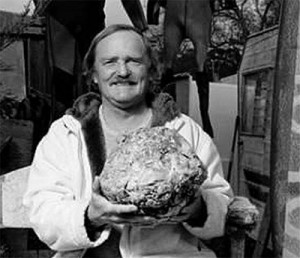
What he's holding represents what's at stake. Think about it.
What he’s holding represents what’s at stake. Hint: It’s not a rock

Time now for a very, very important question every writer needs to face:

Do you know how your story ends?

You come up with an idea, then proceeded to develop, shape, and organize all the stuff that happens in the middle, which eventually has led us to the where we find ourselves now: the big payoff. What the whole thing’s been about.

Everything your characters have been doing have been leading up to this. In theory, your first two acts have been about the protagonist’s world undergoing some drastic changes, how they dealt with it and now it looks like the bad guy’s going to win.

Which brings us to the grand finale that is Act Three, where our hero must somehow find a way to overcome these seemingly insurmountable odds, defeat the antagonist and hopefully come out of the experience a different person than the one they were way back when we first met them.

That being said, there’s still more to it.

-Your protagonist has a physical goal (what they want) and an emotional one (what they need). They can achieve both, just one or neither. Which applies to yours, and have you effectively steered the action to ensure that result? Can we see the changes they’ve undergone?

-Working with a subplot or three? If they haven’t wrapped up by now, better make sure to do it soon. Do you really want the reader to wonder “Hey! What happened to the part about ____?”

-Even a supporting character needs an arc to complete. Have you given each of them enough attention throughout the story to make this happen, and does their story wrap up in a convincingly believable way?

One of the most valuable lessons I’ve learned about putting a story together is that the central question (“Will the hero achieve their goal?”) is raised with the inciting incident around page 10, and each subsequent plot point raises it again, albeit with the stakes a little higher each time.

What happens in Act Three is where you show us how the central question is answered.

-And now, the much-heralded return of Movie of the Moment! This time, a way overdue look at GODZILLA (2014).

Wow. Everything PACIFIC RIM should have been. Instead of non-stop giant monster action, we get only glimpses as the focus is directed at the human aspect of the story. A much more effective approach.

While it’s not hard to suspend disbelief when it comes to a movie about giant monsters rampaging/duking it out in the downtown area of the city where I live, perhaps the most amazing piece of cinematic fiction (as observed by both K and myself) was in the background of one scene where a garage sign read “All-day parking $15”.

Now that’s make-believe.

Casting a wider net

Always trying to catch a little more

As you work your way through the various stages of assembling your story, how much do you take the audience’s needs and wants into account?

You’re obviously writing something you would want to see, but do you ever consider the viewing tastes of someone who’s not like you whatsoever?

While I may write high-concept tales of adventure that would definitely appeal to 12-year-old me, it’s also my objective to try to craft those stories in such a way so they could entertain anybody of any age.

(Strong examples of this kind of storytelling? Most of the Pixar catalog.)

Here are just a few things to take into consideration:

-Are you treating the reader/audience the way they should be treated? Which means with intelligence. I’ve always hated when a story feels dumbed down, and suspect most other moviegoers do as well.

-That being said, is your story simple enough to the point that anybody could understand what’s going on, or at least have a general understanding of it?

-Regardless of what genre your story falls into, how much are you taking advantage of the elements of that genre? Since you’re most likely already a fan and probably have a good idea of what’s expected, this is your golden opportunity to show the rest of us what’s so appealing about it. Play on those strengths.

-With modern audiences more knowledgeable and movie-savvy than most writers realize, it’s more important than ever to come up with material that’s really new and original. What is it about your story that really sets it apart? What can you offer that we haven’t seen before?

As we start with an idea, develop it into a story that will eventually end up as a script, a lot of us daydream about the resulting movie, and how totally awesome it would be for it to be a big hit.

We can just picture the tremendous box office, rave reviews, non-stop awards, a king’s ransom of a paycheck, being begged to pick from a smorgasbord of new projects, all stemming from this story we cranked out with our own little hands, now practically guaranteed a place in the pantheon of pop culture.

“Everybody’s going to love it!” you imagine.

The reality is – they’re not, and a lot of that stuff won’t happen. But don’t let that stop you from trying.

The best we can do is write a solid, entertaining story populated with interesting characters who find themselves in unique situations, and hope people like it.

They don’t call it a climax for nothing

Couldn't make this any more Freudian without going NSFW
Couldn’t make this any more Freudian without going NSFW

As the events of Act Three of the pulpy adventure spec outline slowly develop, it’s becoming more clear that retroactive edits/fixes/tweaks will be necessary for parts of Acts One and Two.

Act Three goes beyond making sure each of the main characters has something to do.  The actions they take should be tied directly into the main story, represents them overcoming their own personal obstacles and wraps up their individual storyline, all in the most satisfying way possible.

Hence the need to go back and make those changes. The more I can set up and effectively reinforce each character’s storyline, the better the payoff will be, both for them and the overall story.

I’ve always stressed the importance of setups and payoffs throughout a script. Everything we’ve seen in Acts One and Two should come to its appropriate conclusion in Act Three.

I’ve read a lot of amateur specs where something is set up early on and ends up either totally forgotten, treated as an afterthought or pays off with less of an impact than it should.

This is what you’ve been building up to for the past 90-plus pages.

Don’t let us down.

Roll up for the My Writing Process Tour!

Sorry, no walruses involved
Step right this way! Sorry, no walruses involved

I’ve been invited to take part in The My Writing Process Tour, which is kind of a blog/chain letter thing. One blogger asks another to take part and answer some insightful questions, then link to writers/bloggers we’d recommend.

I was nominated by Henry Sheppard, aka Adelaide Screenwriter, from the Australian metropolis of Adelaide. He’s always offering up some fantastic material, including articles, interviews and shorts. Definitely worth checking out.

As for me…

1. What am I working on?

Three items currently hold my attention: revamping the outline of a pulpy adventure spec, the rewrite/polish of a Christmas-themed mystery-comedy and resuming the hunt for representation.

2. How does my work differ from all others of its genre?

Even though I’ve written in several genres, the one thing I always try to convey is a sense of fun and excitement. It takes a lot more effort than people realize to really engage a reader that way.

I want you to enjoy the story beyond just “this is good writing” and more like that amusement park thrill ride you rush to get back in line for as soon you get off.

3. Why do I write what I do?

My formative years were the late 70s/early 80s, so I had the benefit of being heavily influenced by the likes of STAR WARS, RAIDERS OF THE LOST ARK and BACK TO THE FUTURE. To me, those are textbook examples of what smart storytelling should be, and it’s what I strive for in my own work.

I’ve stated before about being a fan of the genres I write, so not only am I trying to write something I’d want to see, but I try to create something I haven’t seen before.

4. How does your writing process work?

It all starts with an idea. Is there a story behind it? If so, what happens over the course of that story? How could I tell it in an original way?

Once I have a general idea about that story, including knowing how it starts and ends, I set up the plot points (statement of theme on page 3, inciting incident on page 10, etc), then fill in the gaps between them.

If it’s a genre-specific film, I try to incorporate elements that are part of that genre while trying to avoid tropes, or at least approach them from a different perspective.

I do a majority of my work in developing the outline, and it makes a huge difference. It gives me a better overview of the whole thing so it’s easier to keep track of character development, storylines, subplots, setups and payoffs. I won’t even consider starting on pages until I think the outline is solid.

Because of my schedule, I write when I can. When it comes to pages, I try to produce at least 3 a day. Sometimes it’s more. It’s gets easier the more you do it. They add up fast, and before you know it, you’ve got a completed draft to go back, edit and rewrite.

I’m also extremely fortunate to have several friends and trusted colleagues I can turn to for feedback. They pull no punches in telling me if something doesn’t work.

Lastly, I’ll rewrite and polish the script until I think it’s good to go.

Over there on your right is a list of blogs I think make for some excellent reading and advice. I’ve added three definitely worth checking out:

The Single Screenwriter by Christie LeBlanc

Writer of Fine Things by Evan Porter

The Screenwriting Process from James (don’t know his last name) in the UK

Bonus! If you’re looking for some reasonably-priced professional analysis for your script, you might want to consider:

-Doug Davidson’s Four Star Feedback. Doug is the only writer to win a Nicholl Fellowship with an animation script (2004), but he happily covers all genres.

-Andrew Hilton aka the Screenplay Mechanic. His services have garnered extremely high praise on the Done Deal Pro forums.

Thanks for reading!

Know the route you need to take

There's something to be said for taking the scenic route
Which way now?

After having reached the midpoint of the pulpy adventure spec outline, I’d been struggling with getting to the next plot point.

Not helping was the almost total jettisoning of material from the previous draft. The story had since changed in a drastic way, so there was nothing to salvage.

While I knew where the story had to go, I couldn’t figure out how to get there.

The midpoint sequence ended the way it had to – hero fully committed to achieving his goal, but now on several levels, and the antagonist getting closer to achieving his.

But what happens next?

Exploring several options, something finally clicked and I remembered a very simple rule we all tend to sometimes forget:

It’s not what could happen, it’s what has to happen.

THIS is what the characters need to do to move things forward (with your protagonist being the primary mover), and the more challenging we can make their journey, the better.

There are plenty of options of how things can play out in your story, but it will take some effort (and a lot of rewriting) to find the one that it needs.