Wanted: wonder, fun & excitement

Seeking this kind of vibe

This was parent-teacher conference week, so my after-school parenting schedule was shaken up a bit. As a result, not as much time to work on the mystery spec rewrite.

So in an attempt to make the most of my limited time, and without my laptop with me, I opted to tinker with the outline for the monster spec.

Like any good writer, I had my ever-present notebook and story notes with me. Seriously.  I keep them in my bag for just such a situation.

The first act is really coming together, with most of the focus now on working out the details of the gaps between the plot points of Act Two. And as happened before, I’m having a blast.

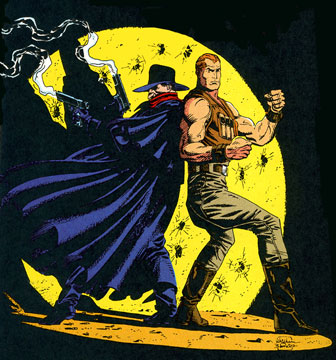
At its heart, this story is a pure pulp adventure, which is exactly the mood I’m going for. Grab you from page one and not let go as it gains momentum from there on, building and building until finally culminating in a jaw-droppingly amazing, can’t-believe-I-just-saw-that finale.

Simply put, my objective is to create a simple-yet-solid story with three-dimensional characters, using the spectacle aspect as support that keeps things interesting.

Similar to how it was with the western, I’m a huge fan of the genre and know what I as a member of the audience would want to see. I’m not looking to reinvent the wheel here; just tell a fun story. Hopefully my appreciation and knowledge of this kind of material will come through on the page.

What it really boils down to is the more I can make this a smart and exciting thrill ride, the better.

As I work out the story details, I’m keeping this in mind: If there was a free-of-plot-details trailer for this, you’d be overwhelmingly compelled to want to see it.  (Sort of what they’ve done for GODZILLA and GUARDIANS OF THE GALAXY.)

What it’s about, not what happens

bttf theme

A usual part of my daily routine is helping V with her homework. This week, they’re learning about how to identify the theme of a story.

Nothing like starting with the basics.

After reading the one-page story together, I asked her what she thought the theme was. Her response was more focused on one part of the story, rather than the whole thing, so I tried another approach.

“What’s the message of the story? What is it trying to teach us?”

That made things clearer to her, which made finding the theme of the next day’s story a little easier (with a little guidance from me).

This of course made me think about finding, or at least knowing, the theme of the story of your script.

Some writers start writing and figure out the theme later. I’m the total opposite of that. I don’t think I could even start on the outline if I didn’t at least have an idea of what the theme was.

A lot of the time it’s just a single word or a short phrase, but it still plays a key part in putting my story together.

Knowing the theme of your story is vital; it influences how the story’s told and what it’s about. If you don’t know what your story’s really about, how can you put the rest of it together? That would be like doing a jigsaw puzzle without knowing what the final picture is.

A great example of a theme on display is BACK TO THE FUTURE. Look at the dialogue exchange in the picture up top, which takes place just a few minutes in. Jump forward to Act Two, where, after all the setup in Act One, we get to see how history does indeed change, all thanks to Marty. (Just another reason why this is a phenomenally bulletproof script)

So as you work on your latest draft, take a look at each scene, even if it’s just a few lines long. Does it advance the story, the characters and the theme?

If so, great and keep up the good work. If not, take a moment to figure out what could be changed so it does.

Once you learn how to do this, hopefully your writing process will be just a little bit easier.

Caught in the ripple effect

It starts a chain reaction you just can't stop
A chain reaction you just can’t stop

When I work on pages, I make a point of adhering to the story as it’s written in the outline. There may be some slight alterations here and there, but that’s not an uncommon thing.

At the moment I’m in the middle of a sequence, that, according to the outline, was all planned out. No problems.

Little did I realize that over the course of the pages before this, all of those slight alterations would drastically change the circumstances surrounding my protagonist’s situation in that sequence.

Without knowing it, I had made things much harder not only for him, which is how it should be, but also for myself, which isn’t exactly the greatest of news.  Most of the details now had to be thrown away.

And because I’m such a glutton for punishment, this sequence was slowly becoming way too similar to one from about 20 pages before it. How I didn’t see this while outlining I’ll never know.

So it’s not necessarily back to square one, but I’ve got some work to do. Looking at this from the silver lining perspective, this is actually some pretty good stuff:

-My protagonist now faces bigger challenges, which still advance the story, theme and character development.
-I’m forced to come up with better, more creative ways of depicting how things play out.
-Recognizing and handling the domino effect those earlier changes have made and will make on the rest of the story.

Fortunately, we writers are a hearty lot and not easily deterred.  Time, experience and constant rewrites provide us with the determination and intestinal fortitude to work our way through this sort of thing.

Saving now for future use

Behold! Filing cabinets of the 21st century

When was the last time you looked through your idea file?

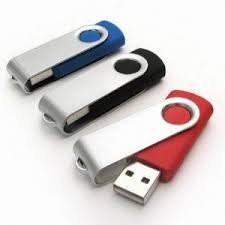
You know the one. That desktop folder or flashdrive where you keep all those random thoughts and story ideas you’ve jotted down over the years.

You do have one, right? If not, you really should start one.  It’s easy. Just write stuff down, hold on to it and never get rid of it. Never.

Chances are a majority of these ideas probably won’t make it past the logline/story concept stage, and it’s even more likely you’ll have forgotten about them after a relatively short time. But don’t let that stop you from constantly adding to the file.

Each idea is a good reminder of the potential you saw within that story. Why else would you have written it down?

It’s also a nice little ego boost/confidence-builder to be reminded of your own creativeness. “I don’t remember coming up with that.”

I’ve mentioned many times about being ready when someone asks you “What else have you got?”. This guarantees you’ll have something ready to go, even if it’s just a couple of sentences that take all of ten to fifteen seconds to pitch.

You never know what’s going to work. That throwaway concept you came up with years ago could end up being your next project.

So the next time you take a break from whatever it is you’re working on right now, open up that file and see what’s in there. You might be surprised, intrigued, pleased or even thrilled.

The possibilities really are limitless.

The story behind the story

Figure out how it works before you start, or things could get messy
Step 1: Figure out how it all works

A slightly altered holiday work schedule has resulted in more hours on the air, which is always nice, but less time cranking out pages, which isn’t.

So I make the most of the handful of minutes between reports with the always-reliable working on an outline. This time – the monster script.

Despite knowing the general playing-out of the story, there was something that wasn’t clicking. Most of the items on my mental checklist had been checked off.

Most. Not all.  What was missing?

It took the constant back-and-forth between the opening sequences of the two previous outlines to make me realize what it was: I’d never fully established what happened before the story started.

Not knowing how everything came about was preventing me from moving forward. I had to create this world before I could write about it.

Think of the opening crawl in STAR WARS (“It is a period of civil war. Rebel spaceships, etc. etc…”). It establishes what we need to know. Without it, we’d be too busy trying to figure things out.

Using that as an example, I worked out my own version of the opening crawl. It won’t be in the actual script, but it’s a pretty solid foundation for setting things up – a better realization of how this world works, what the antagonist wants and how that can be accomplished, the challenges the protagonist faces, just to name a few.

The work on this is far from being over, but developing this really helped. Some important blanks have been filled in and I’ve got a firmer grasp of how the story works.

Time now to start the latest version of the outline and see how it goes.

-Regarding the recent release of this year’s Black List. There appear to be a handful that sound pretty good, but the rest don’t really do much for me.

No doubt they’re all extremely well-written (why else would they be on the list?), but a majority don’t have that “Read me!” vibe. It probably doesn’t help that the writers are not the ones providing the loglines. I suspect that would make quite a difference.