
Seeking the feng shui-ness of your script

A place for everything, and everything in its place

Got some great notes for my western spec. Some of the suggestions involve significant moments I hadn’t considered – now I have to figure out where these should take place. A daunting task indeed, but also not too challenging.

It’s one thing to plot out a story, but knowing how to do it effectively is a little more complicated.

You can’t just throw stuff in there and hope it sticks. Information has to be doled out appropriately so it not only fleshes out the characters, strengthens and advances the story and the plot, and most importantly, keeps the reader/audience interested.

If you’ve put together a solid outline (as you should before moving on to pages), all the help you need is right there in front of you. Take a look at how your story develops. Do things happen the way you want them to, and do they happen when you want them to?

As you work your way forward, are you seeing potential opportunities for where something could be added or possibly changed? Would that scene from way back near the beginning work better somewhere later on?

Once you find somewhere that scene could go, is it a good fit within the flow of how the story’s developing? Does it keep that forward momentum going while providing us with some kind of necessary information?

Take the time to figure these kinds of things out. It may be frustrating now, but once you work your way through it, you’ll have a better script and wonder what it was you were so worried about.
Being realistic in a work of fiction

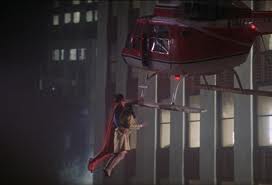
You're upset about the scientific inaccuracies in a comic book movie about an alien who can fly?
Some people were actually upset about the scientific inaccuracies in a comic book movie about an alien who can fly

“The monsters attack.”

This simple line in my action spec outline was the catalyst for a major thought process that continues to grow by leaps and bounds.  Questions are being raised that demand answers.

In creating this world, not only do I have to develop the story you’ll be following, but also fill in a lot of details about the world itself – which just happens to have monsters in it, which leads to more questions.  It never occurred to me to consider subjects such as biology, geology and the laws of physics as they apply to monsters (all of which play a part in the story).

“But it’s just a story,” some might say. “Don’t worry about stuff like that.” But it’s exactly the stuff like that that makes the story better, plus it shows I’m taking this seriously – even if it does involve monsters.

I’ve always had an intense dislike for writing that takes the easy way out in explaining something, or does it in a very half-assed way.  It makes it seem like the writer didn’t care enough to do a little more work.

It’s very important to me that not only are the events of the story based in reality, but the setting is as well.  This is something I strive for in everything I write – no matter what the genre.

The more detailed you can make the world of your story, the more believable it’ll be. But be careful not to overdo it – too much detail creates confusion. Just give enough to make ’em say “Yeah, that makes sense.” or “I can totally see that happening.”

Now it’s back to my research on which metallic alloy would be the most effective for killing monsters. So far, tungsten carbide seems to be the frontrunner.

Find a tone and stick with it

Something in this seems a little out of place

I used to dread getting feedback. It always meant having to go back and rewrite something.

Fortunately, I’m well past that and now appreciate how necessary both feedback and rewriting are.

Feedback makes you learn to value the necessity of hearing how somebody else interprets your work, and more importantly, how to be objective when it comes to really understanding what they have to say.

While working on the outline of my mystery rewrite, I looked for opportunities to put in an occasional joke (read: cheap laugh).

The problem, according to my top feedback-provider, was that the jokes, while understandable for their intent, were totally wrong for this kind of story. They make my protagonist come across as an idiot and the action comes to a screeching halt each time. And since this is more mystery than comedy, they shouldn’t be drawing attention to themselves like that.

There were other notes besides this one, but this one really struck a nerve – in a good way. I’ve been working on rewriting the jokes to make them a better fit within the context of the story, rather than have them be glaringly obvious and out of place.

As you create the world of your story, you have to make sure all the elements combine to make a believable scenario. This goes way beyond the story and the characters – take everything into account.  If something seems out of place, fix it or get rid of it.

And if you’re not sure, that’s what feedback is for.

The health benefits of writing organically

I'm a much better writer than a gardener
Not necessarily THAT kind of organic

Getting closer to the end of the outline rewrite. I like how the story’s developing, and it definitely feels stronger than it did before. There are still some tweaks and adjustments to be made, but overall, it’s really coming together.

The last two words of the previous sentence are especially poignant, because as I modify the previous draft, it exposes some problems that need immediate fixing.

Occasionally, something would happen in an “all of a sudden”-type of way, mostly because I hadn’t set it up properly.  So I’ll go back to earlier in the story to see where it can.

If I can make it work, great. If not, what has to be changed so it still works on all the levels it’s supposed to?

You want your story to flow smoothly and not feel forced. Throwing something in out of left field not only disrupts the story, but is just lazy writing.

Each scene should continue what happened in the one before it, and lead into the one after it. One of the basic tenets that tends to get lost in the shuffle, especially among beginner writers.

Take the time to plan things out, and don’t be afraid to cut where necessary.

You also want to make sure the details of your story all mesh together. This applies not only to what happens in the story itself, but the world in which your story takes place.  Make it feel as authentic as possible. Part of our job as the writer is to convince the audience this kind of world could actually exist.

You have to do everything you can to ensure the story is fresh and original, stays interesting and keeps things moving. You may not think all those little details matter, but people will notice them (or lack of them).

The fat that must be trimmed

Personally, I prefer a red pen and the 'delete' key
Personally, I prefer a red pen and the ‘delete’ key

Steadily working my way through the coveted territory of Act 3, although the wrapping-up of some subplots still needs some work. Nothing I can’t handle.

Throughout this whole process has been an ongoing tinkering with what was there before. Some items have been cut (necessarily so) while some have been expanded (also necessarily so).

Among what had been cut were a trio of characters who only existed in a handful of scenes in the third act. The only reason they were originally around was to provide conflict with the main character, but didn’t really serve much else of a purpose.

So they’ve been cut, with another character’s part slightly modified and expanded to take their place.

This goes way beyond killing one’s darlings. It’s about making the story as lean and streamlined as possible, and if that means cutting characters, scenes or even sequences, so be it.  You do what’s necessary.

But this is also where it can get tricky. How do you know what should stay and what should go?

Unfortunately, there’s no easy answer. But you can learn by constantly writing, rewriting and getting feedback. It’s a skill that takes time to develop, so don’t rush it.

(You could read scripts, but those are often the finished product. You won’t know what it looked like before.)

A good rule of thumb: ask yourself as you write and edit – “How much of a difference will it make to the story if I take this out?”

Chances are once you make those cuts, you won’t even miss what’s been taken out, which means it probably shouldn’t have been there in the first place.

-A total self-indulgent announcement: I ran the San Jose Rock & Roll Half Marathon on Sunday, thinking there was no way I could beat my previous best time ever of 1:53:07, set back in August.

But somehow, despite warm weather and the occasional feeling of “Jeez, when is this going to end?”, I shaved almost 2 minutes off and finished at 1:51:11. Totally didn’t see that coming.

With no races scheduled in the near future, I don’t want to get ahead of myself and even consider the possibility of hitting 1:50.

Although I’ll admit the thought does occasionally cross my mind.