Ask a Fount-of-Knowledge Script Consultant!

Matt Lazarus

*note – Matt passed away in July 2020

The latest in a series of interviews with script readers and consultants who would be worth your while to work with if you want to get your script in shape. Today’s spotlight is on Matt Lazarus of The Story Coach.

Matt Lazarus has worked in the industry since 2003. He started in development with jobs at Untitled Entertainment, CAA, and Platinum Studios (Cowboys and Aliens). He joined the WGA in 2007 by selling a horror script to RKO, and he sold a movie to Cartoon Network in 2011. Matt’s story coaching was designed to be affordable, regular, and useful, and he excels at breaking advanced concepts into simpler processes and exercises.

1. What’s the last thing you read/watched that you thought was incredibly well-written?

SHORT TERM 12, a thoughtful, sad drama about a foster home for displaced youth and the human condition. I saw the trailer and it hooked me. The world, performances and characters are all on point. It’s a great example of a drama, and of wringing the most entertainment and potential out of a simple concept.

2. How’d you get your start reading scripts?

I moved to Los Angeles in 2003, and I got my first assistant job after working really hard at an unpaid internship. I wanted to be a writer, and I talked about it way too much. Anyway, I got good at reading scripts and it always provided me an entry to meeting lit agents and executives who wanted to ask follow up questions on material. I’ve been a freelance reader for some studios for years, and there was a time I was even unironically working on a book on how to cover (most of it made it onto my blog). I’ve been a sporadically working WGA writer since 2007, but the financial security of coverage has always given me something to fall back on.

3. Is recognizing good writing something you think can be taught or learned?

Good writing is hard to define. You want it to be accessible: a mediocre scifi appeals to scifi fans, a great one appeals to everyone. You want it to be engaging: no one goes to the movies to not be affected. You want it to help your career. It’s great to sell a script, but if a script doesn’t sell but gets me in a room with someone who can hire me for my next job, I’ll take it.

Anything can be learned. Not everyone who studies piano will become Glen Gould, but they will get somewhat better at piano. I was pretty cineliterate when I moved to LA, and my years in the development trenches helped me marry my base of knowledge to a working understanding of how the industry works and what the powers that be tend to look for.

4. What are the components of a good script?

“Good” is a hard term to define, a semantic minefield. The components of a good script are the same as the bad ones: they both have the same main four (character names, dialogue, sluglines,descriptions), they both take up the same amount of space.

The difference is harder to measure. We see a thousand faces a day, but only a few make us stop and say wow. We hear new songs on the radio every day, few of them will become our favorite. Most would agree that a good writer can do more in the same space than a bad writer, but the ways in which they are better will always and should always be argued over.

5. What are some of the most common mistakes you see?

The most common is writing a script without a premise. I use something called the premise test. It breaks things down to what’s simple. It’s not the only way to look at scripts, but it’s as good as any, better than most:

“An <ADJECTIVE> <ARCHETYPE> must <GOAL> or else <STAKES>. He does this by <DOING> and (optionally) learns <THEME>.

This seems simple, but the doing is the real meat of the movie. If a naive accountant must raise 100k or his daughter dies, different doings give you very different movies (for example, he could win a surf contest, kill a vampire lord, or invent a time machine and go back to 1979). If you can’t explain what’s interesting about your script in 50 words, you’re unlikely to improve things by writing out 100 boring pages.

Writing is a lot like being a chef. Both are creative forms that have structural limits and immense room for interpretation. Tastes are subjective, but a good chef can anticipate the audience and when he serves something he should have a rough sense of why the average patron might find it delicious.

Most writers write without a real sense of the audience. We’re writing to entertain, to deliver a satisfying emotional experience to the audience. If a writer isn’t writing with a sense of empathy for the audience, the end result is likely to be disappointing.

6. What story tropes are you just tired of seeing?

-Scripts about Hollywood power brokers written by people who haven’t met Hollywood power brokers.

-TV pilots that spend their entire length explaining how we got to the premise without every showing what’s fun or interesting about the premise (see #5). There won’t be a second episode. What are you saving it for?

-Comedies that aren’t funny. I recommend taking an improv class and reading the UCB Handbook.

7. What are the 3 most important rules every writer should know?

The word “rules” needs to die. It always starts a fight. People have an unending appettite for hearing that they can write, but any suggestion of how one might approach writing is generally taken as a suggestion of how one ought to write, and then an unproductive argument ensues. Here are three general principals:

-Entertain. You should know exactly what feeling you want to create in your audience.

-Use unity. Once you’ve set up your script, you want everything to feel connected, organic, and like a ramification of what’s come before. Bad scripts keep inventing random stuff throughout the second act, and it leads to a script that feels arbitrary.

-Be specific. A lot of writers will write in variables, keeping things loose (my character is either an architect or a deli owner… I haven’t decided which) because they think it will prevent them from getting lost or stuck in the later stages. This never works. Imagination thrives on immediacy and specifics. It’s better to commit to an idea and follow it to its conclusion. Even if you went in a wrong direction, the specifics you generate add value to your story. If you keep things vague, you’re building on sand and it’s hard to move the story forward when things exist in a vacuum.

8. Have you ever read a script that was an absolute, without-a-doubt “recommend”? If so, could you give the logline?

In 2003 I read a really funny script called Underdogs. I couldn’t stop reading it or quoting the dialogue. It ended up turning into DODGEBALL starring Vince Vaughan. The movie is really funny, the script is funnier.

9. How do you feel about screenwriting contests? Worth it or not?

It depends on the contest. When I was at big companies, execs would usually read the top Nicholl scripts out of a morbid curiosity, but other big script contests (Scriptapalooza comes to mind) would try to get executives to read their top three, and the execs were lukewarm. For instance, a lot of people are selling off the Black List right now. It’s useful now, but might not be in three years.

10. How can people get in touch with you to find out more about the services you provide?

Matt passed away in July 2020, and his site thestorycoach.net has since been taken down.

11. Readers of this blog are more than familiar with my love/appreciation of pie. What’s your favorite kind?

Humble pie. If you’re serious about writing, you’ll be served it more times can be counted. Alternately, strawberry rhubarb. I’m from Vermont, and it reminds me of a childhood garden.

Ask an Industry-Powerhouse Script Consultant!

Lee Jessup

The latest in a series of interviews with script readers and consultants who would be worth your while to work with if you want to get your script in shape. Today’s spotlight is on Lee Jessup.

Author of the best-selling book Getting It Write: An Insider’s Guide To A Screenwriting Career, Lee Jessup is a career coach for professional and emerging screenwriters, with an exclusive focus on the screenwriter’s professional development. Her clients include WGA members, Golden Globe and Emmy nominated screenwriters, writers who sold screenplays and pitches to major studios and contest winner. An invited speaker at screenwriting conferences and festivals both in the US and Europe, Lee is a regular contributor to Script Magazine and was the interview subject for a number of film-centric television and web programs. To learn more about Lee and her services, visit www.leejessup.com.

1. What’s the last thing you read/watched that you thought was incredibly well-written?

It’s a cliché, but I always go back to Breaking Bad episodes, which is probably fresh in my mind because I just did that the other night. That’s master craft right there. I’ve been reading a lot of TV scripts lately; one of the best I read recently actually came from a client who wrote a really amazing, intricate pilot with some amazing, innovative character work. Sadly, I’m not allowed to say who. Can’t play favorites!

2. How’d you get your start reading scripts?

I started reading scripts as a kid – my dad was a film producer, and so we always had scripts lying around the house. I thought everyone read scripts and broke them down for fun – it took me a while to get that some people (like my mother) just can’t wrap their brains around reading that format. After all, a script is not fully realized work – it’s a blueprint made to be elevated by imagination.

3. Is recognizing good writing something you think can be taught or learned?

The more you read, the better you learn to recognize quality. When I send my clients to readers, I am always looking for people who are super-seasoned, who’ve read thousands of scripts, because that foundation really informs the reader about what’s out there and  provides a more solid quality barometer. When someone just starts out reading, they can often find promise in the work, whether or not it’s actually there. It’s after you’ve been reading for a while that you begin really evaluating the script for what’s on the page, rather than the potential your imagination allows you to see in it.

4. What are the components of a good script?

For me it all starts with character, so “must-haves” are things like: wound, stakes, clear goal(s), ample conflict. Michael Hauge has a great saying that a strong screenplay rests at the intersection of story and character. That’s a big one for me. Don’t get me wrong – a strong, clear external journey to take us from act 1 to 3 is a must, but if you don’t have that internal journey, that element of taking a protagonist from living in fear to living courageously, you lose me. At the end of the day, I always look to see what the protagonist’s goal was, whether this was achieved or reversed, and if it was done, whether it was done to satisfaction.

5. What are some of the most common mistakes you see?

Page count is the most obvious one. I am sure you’ve heard this before, but I find it to be one that’s very, very hard to recover from because ultimately it’s your first impression. Second is another one of those: not enough white space on the page. The look of the material itself. I recently interviewed Scott Alexander and Larry Karaszewski, and Scott talked about the fact that script pages are meant to be read from top to bottom, not left to right. When I am unable to read from top to bottom, when the script is overly described, then the writer automatically has a serious strike against him. Other things that drive me crazy are scenes that don’t move the plot along, or ones that repeat information we already know without giving us anything new. Hitchcock was famous for saying that in every scene you have to get at least two new bits of plot-relevant information, specifically once you’re out of the first act. That’s a great rule to go by.

6. What story tropes are you just tired of seeing?

I am one of those who believes that anything old can be made new again with a new, different, unexpected take, so in this scenario I am actually open to seeing anything so long as there’s a fresh, interesting voice behind it.

7. What are the 3 most important rules every writer should know?

1. This is a craft; you get better as you go along (which means: write a lot!)

2. Screenwriting is iterative work. No one gets it right on the first draft. This is why you finish a draft, you get notes, you finish another draft, you get another set of notes, etc. It’s all part of the process.

3. While writing great screenplays is critical to screenwriting success, it’s only part of what it will take to build your screenwriting career. Building a screenwriting career takes consistent industry-facing efforts that will help construct and progress your screenwriting career. As a writer, your job is to consistently stoke and manage both the creative fire and your industry-facing, strategic fire.

8. Have you ever read a script that was an absolute, without-a-doubt “recommend”? If so, could you give the logline?

Gonna have to pass on this one if only for client confidentiality…

9. How do you feel about screenwriting contests? Worth it or not?

Winning a big contest is a big deal, which just goes to show that contests are a small-fish/big-pond sort of a game. In order for a win to really work for you, it has to be in one of the biggies, where in truth even high placement goes a long way. For example, every year my clients who place in quarters or semis for the Nicholl Fellowship get multiple read requests from agents, managers and production companies. It’s a way for industry execs to have material vetted for them, and qualified for them to read. In addition, being able to say that you won, were a finalist or a semi-finalist in one of the BIG contests, such as Final Draft’s Big Break or PAGE is generally a door opener. The industry is a bit like the mafia – we need someone to vouch for you. The big contests can certainly help you build that pedigree.

10. How can people get in touch with you to find out more about the services you provide?

Everything anyone ever needs to know about me (and then some!!!) can be found on my website: www.leejessup.com. There’s a full breakdown of how I work, what I do and all the rest of it.

11. Readers of this blog are more than familiar with my love/appreciation of pie. What’s your favorite kind?

Chocolate mousse. Hands down. No question.

Have you no imagination?

"You'd have turned down Gone With The Wind." "No, that was me. I said, "Who wants to see a Civil War picture?""
“You’d have turned down Gone With The Wind.” “No, that was me. I said, “Who wants to see a Civil War picture?””

It’s still an uphill climb with a few gaps here and there, but the overall story for the low-budget comedy is coming together.

I’m making a point of not rushing through it and being extra careful – almost to the point of meticulous – about how all the pieces interconnect.  The more I work on it, the more the phrase “French farce” comes to mind, so lots of interweaving storylines, the intersecting of character paths, and the ramifications of each character’s actions on the others. At least that’s my interpretation.

A challenge, to say the least, but it’s been a fun ride so far.

A last-minute surprise factor was this response to the logline on an online forum:  “It’s so straightforward now it’s hard to believe you could sustain interest through 100 pages.”

I’d like to thank that person for throwing down the gauntlet in making me work even harder than I already was. Never underestimate the motivational power of “Oh yeah? Just you wait and see what I can do.”

But back to the bigger issue. Statements like these always make me wonder about the person who says/writes them.

I never cared for the “I don’t see how this could be a story” line of reasoning.  That tells me you lack vision and creativity. Just because you think it won’t work doesn’t mean it won’t. Nobody thought GUARDIANS OF THE GALAXY would do well and look what happened.

Side note – My western received a handful of reader responses along the lines of “This isn’t factually or historically accurate, so I just couldn’t get into it.” They’re entitled to their opinions, but I feel bad about their inability to just sit back and enjoy an old-fashioned ripping yarn. Although one person was gracious enough to admit at the end of their comments “It would be better if you just ignore everything I’ve just said.” Consider it done.

Always remember the sage advice of William Goldman: Nobody knows anything.

I’m all for encouraging other writers. If your idea interests or excites me, I’ll tell you. If it doesn’t, I’ll explain why not and make suggestions of potential fixes. The last thing I want to do is discourage you or give you a lecture, and you sure as hell don’t want to hear one.

My criteria is pretty simple: If I read somebody’s logline or hear their story pitch and can instantly imagine the potential within that story, and more importantly, if it sounds like something I would want to see, then they’ve succeeded and gotten over the first hurdle.

Of course, having the actual script live up to or possibly even surpass expectations is another thing.


Ask Two Savvy Script Consultants For the Price of One!*

ScriptChix_Logo copy

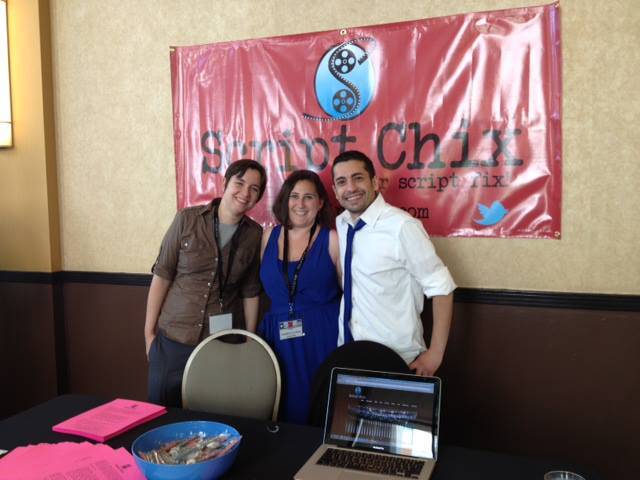
(L-R) Miranda, Sandra & budgeter/scheduler extraordinaire, Hosam, who is not part of this interview
(L-R) Miranda, Sandra & budgeter/scheduler extraordinaire Hosam, who is not part of this interview

*And considering this doesn’t cost you anything to begin with, that’s the best deal you’ll get today.

The latest in a series of interviews with script readers and consultants who would be worth your while to work with if you want to get your script in shape. Today’s spotlight is on Miranda Sajdak and Sandra Leviton of Script Chix.

1. What’s the last thing you read/watched that you thought was incredibly well-written?

WINTER’S BONE

BUTCHER HOLLER by Daniel Shea

2. How’d you get your start reading scripts?

M – Started off as an intern in Hollywood doing the typical script-reading duties. Moved on to being an assistant and continued to do coverage there. Eventually found myself reading for friends and family on the side, and realized (around the same time as Sandra did) that it was a good idea to monetize some of this so as not to just be doing it in my free time. Ended up simultaneously being asked to read for various studios/companies, and turned all that experience around into Script Chix!

S – I believe I read my first script in college, though as a kid, I liked to watch movies and transcribe them. It took hours, but I loved it. The internet wasn’t really a thing yet, so there was no easy access to them. However, professionally, I started reading as an intern doing short coverages for executives during staffing season. My subsequent jobs at an agency and a cable network had me reading all of the time – for potential clients, development, and show staffing. Giving notes to clients, friends, and others who needed feedback was part of my daily life. When I decided to leave my network gig and go out on my own, doing it professionally seemed like a natural transition. As soon as friends at another cable network heard my news, they offered me a spot as one of their book readers. Around the same time, Miranda and I teamed up, and the rest is Script Chix history.

3. Is recognizing good writing something you think can be taught or learned?

M – Somewhat. The biggest thing here is to read as much as possible. We see scripts from writers who clearly don’t read screenplays regularly. The more you read, the more you’re able to recognize. Some of it is likely innate – and it should start early, before you get to Hollywood and decide you want to make movies – but, sure, recognizing what works just comes from reading more.

S – Reading is both objective and subjective. When we give notes, we try to focus on the objective. Even if we personally don’t like a character, a plotline, or concept, we can recognize that it written well, and it’s just not our personal taste. So yes, being able to recognize good writing can be taught; some things are obvious like formatting. However, it takes years of learning and practice to be able to both identify what is good and to be able to separate your own opinions/ taste from it.

4. What are the components of a good script?

S & M – There’s a number of things, but most importantly, a compelling story with multi-dimensional characters. Believable moments that still feel fresh. Strong narrative voice. Imagination and marketability. We would also include formatting in this list. It’s not a sexy component, but it is an important one. The story can be amazing, but if the formatting is off, it’s distracting, and most readers won’t be able to pay attention to greatness of the script.

5. What are some of the most common mistakes you see?

S & M – The biggest one we see, by far, is lack of formatting and proofreading. Bad character introductions. Lazy concept. Writing from experience, but instead of dramatizing the “true story that really happened” to the writer, it’s a regurgitation. Not understanding the difference between edgy and outright offensive or mean. One-dimensional or non-existent women and minorities. Some of these are not necessarily mistakes, but they’re all definitely problems we encounter often.

6. What story tropes are you just tired of seeing?

M – Refrigerator women. Lack of women and minorities. One-dimensional women.

S – Stories about Hollywood, writers, and nights out with the boys. Every writer at some point writes a script about being a struggling writer in Hollywood or their lead male protagonist is a sensitive writer that gets their heart broken. Also behind the scenes of reality TV – this is starting to become a thing. People tend to write what they know and unfortunately, all they know is trying to make it in Hollywood. Unfortunately for them, no executive wants to read this and no audience wants to see it. So if a writer must write this story, do it, get it out of your system, and move on to something more original. Draw from life experience – get out there and enjoy the world, feel heartbreak, and get into trouble (but not too much). The “night out/ retail job with the boys picking up women” is also the most common one we see in fledgling comedy writers. It’s another case of writing what you know. These stories don’t work because they are usually re-tellings of actual experiences that are not particularly dramatic or funny to anyone outside of the people who experienced it. Additionally, the humor only comes from insulting women. Just because making fun of a woman was hysterical to you and your boys in the moment doesn’t make it funny or appealing to anyone else.

7. What are the 3 most important rules every writer should know?

M – Write. Read. Revise.

S – Persistence, practice, and patience.

8. Have you ever read a script that was an absolute, without-a-doubt “recommend”? If so, could you give the logline?

M – Yes! And it just finished shooting! “A teenage con artist tricks a desperate mother into hiring her as a live-in companion for her autistic daughter.”

S – I agree with M. That script is amazing. Honestly, it’s tough to give a blanket “recommend” because each company and client we work with has their own specific mandates of what they are looking for, so it needs to be tailored to their needs. A script that I loved recently, like goosebump-inducing loved is “With the help of a crotchety old neighbor and his garden, a young woman’s world comes alive.” It sounds a bit generic, but it was beautifully written and full of magic with a hint of surrealism.

9. How do you feel about screenwriting contests? Worth it or not?

S & M – Absolutely worth it, but not all of them. Do your research. See which contests have a track record of success for the writers who’ve won. Look at what the prizes are. If the only prize is that you won the contest, it’s probably not that worthwhile (unless it’s a big name like Nicholl or Page). And look at things like fellowships, as well. If they want you to pay but aren’t giving you anything WORTHWHILE in return, it’s not worth it.

That said… if you’re starting out and still sending out queries and you haven’t won anything or been published or produced – enter contests. Get some prestige next to your name, even if it is just “winner of miscellaneous contest.” It helps in general, but it mostly helps if the contest is considered reputable.

10. How can people can get in touch with you to find out more about the services you provide?

www.scriptchix.com/services or drop us a line at info@scriptchix.com

We also blog about writing, life in Hollywood, and host networking events, so be sure to poke around a little: www.ScriptChix.com.

11. Readers of this blog are more than familiar with my love/appreciation of pie. What’s your favorite kind?

A man after our own hearts!

M – Boston cream

S – Apple or chocolate cream