What makes the muskrat guard his musk?

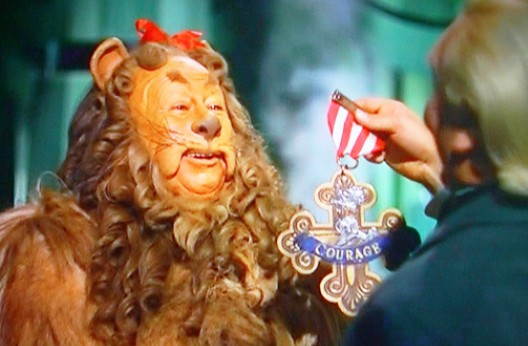
My medal is metaphorical
My medal is metaphorical, yet still bulky

The rewrite’s done, and all of a sudden, I’m nervous. Like, ridiculously so.

I’ve sent scripts out before, but this time something is making it a lot different.

A fear of failure.  Of rejection.

What if nobody likes it?

What writer hasn’t gone through this?

But as I tell K every once in a while – the only way I could fail is if I stopped trying, and I don’t plan on doing that either.

It may be that after all this time, the idea of possibly being that much closer to actually achieving my goal is kind of overwhelming.  This is where that internal voice kicks in.

Do I have what it takes? Is the script just about ready to be sent out?

Damn straight. I’ve got a lot of confidence in this script and my writing ability.

I can and will do what it takes to make this work.

I wrote this a little over 3 years ago after finishing the final draft of my fantasy-adventure. That script went on to some moderate contest success and got me a manager.

Now I’m getting ready to repeat the whole thing with the western. I like to think my writing’s improved since then, but every word still applies today.

The fear never really goes away. I’ll always be nervous when I send out a script, but I’d be rather be nervous sending out a script than not even trying.

I’ve been doing this for quite a while, and each draft gets me a little bit closer to reaching that goal. Is this the time that it finally happens? I certainly hope so, and if not, I’ll just keep trying.

For all the fear and trepidation I feel during this part of the process, it’s my drive to want to succeed that always wins out and keeps me going.

And a very hearty thanks to everybody who’s helped me along the way to tell this story about a girl and her train.

Can’t wait to show you what comes next.

Ask a Penchant-for-Verbs* Script Consultant!

*Actually, he's skilled in all aspects of grammar, but his company is named for three very important verbs
*While Brad is skilled in all aspects of grammar, his company is named for three vital screenwriting-oriented verbs

The latest in a series of interviews with script readers and consultants who would be worth your while to work with if you want to get your script in shape. Today’s spotlight is on writer-reader-consultant Brad Johnson of ReadWriteWatch.com.

Brad is an experienced screenwriter, producer and script consultant who, in addition to operating his own script consultancy, has also read for the Nashville Film Festival and been a judge for the NYC Midnight Screenwriting Challenge. His scripts have reached the semi-finals in Final Draft’s Big Break Screenwriting Contest, and a second place finish for the Walt Disney Screenwriting Fellowship. Additionally, Brad has worked as a producer on the short film Tesla versus Cthulhu, and a production assistant on My Boring Zombie Apocalypse. Brad is also a regular contributor to Script Magazine where his Specs and the City column discusses methods for beginners and pros alike to improve their writing. You can learn more about Brad, his script services, and the 52 Script Challenge on his website, ReadWatchWrite.com. He can also be found on Facebook and on Twitter @RWWFilm.

1. What’s the last thing you read/watched that you thought was incredibly well-written?

Nightcrawler was a fantastic character study, and I recently rewatched the FX mini-series Fargo. That writing room did such an amazing job of telling a compelling story with interesting characters, and capturing a specific tone and voice while doing so; perfectly capturing the feel of the Coen Brothers movie. As for reading, I just finished Body Heat (again) and continue to be blown away by it. Lawrence Kasdan makes you feel the humidity in his words in that script. The heat becomes its own character. It’s palpable. Go read it right now if you haven’t had the chance yet.

2. How’d you get your start reading scripts?

On a personal level, I started reading scripts as part of a challenge I set for myself – to read one produced script a week for an entire year. It worked so well that I’ve continued the tradition (you can find the 2015 list of scripts I’ll be reading, along with downloadable PDFs for each screenplay on my website).

For my clients, I decided to start consulting after several people read the column I write for Script Magazine and contacted me, asking if I’d be willing to look over their screenplays. As I started doing more of that, I discovered I have a genuine love for helping other writers learn to tell their stories in the best way possible. There’s nothing more satisfying than helping a writer break their story, or realize how they can tell it more effectively. At its best, consulting is a truly rewarding experience for both sides.

3. Is recognizing good writing something you think can be taught or learned?

It’s definitely a learned skill. Sure, you can be taught the basic structure and formatting of screenwriting, but what makes a good script is something you learn by reading lots and lots of screenplays. The more you read, the better you’ll get at realizing what works – and what doesn’t.

4. What are the components of a good script?

Showing rather than telling – it’s a cliché for a reason. Remember that you aren’t writing a story, you’re writing a story that is going to be watched on a screen, so be visual. Don’t tell us that someone is disappointed by a piece of news – tell us their shoulders slump and the smile fades from the lips; paint the picture of what we will be seeing should your script be made into a film.

5. What are some of the most common mistakes you see?

Not knowing the story you want to tell – or a lack of narrative focus. I see scripts all the time where so much time is spent jumping back and forth between two different stories (which, to be fair, could each be worthy of their own film), that neither is ever developed enough to be truly compelling. Whose story you’re telling, and why it needs to be told, are the two things you should never start writing without knowing. If you keep that firmly in mind, it becomes easier during rewriting to identify and cut the things that aren’t serving that story.

6. What story tropes are you just tired of seeing?

Pretty much anything from the last 15 years worth of romantic comedies. There are outliers (Love, Actually, Crazy, Stupid, Love, and Bridget Jones’s Diary leap to mind), but the Hollywood romcom formula has gotten to point of being so generic and overused that it’s actually insulting to audiences.

7. What are the 3 most important rules every writer should know?

-Read, Watch, and Write. It’s my mantra and it’s invaluable advice. If you want to be a professional screenwriter you have to get better than good – you have to get great – and the way you’re going to do that is by Reading scripts, Watching movies, and Writing pages.

-Live your life. You need to be out in the world doing things, meeting people, taking in experiences to fuel your next story.

-Less is more. Your goal with your script should be to tell as little of your story as possible, while still keeping it engaging and narratively cohesive. After you write your first draft, go back and start cutting the fat away until what’s left is the leanest most effective and impactful version of your story.

8. Have you ever read a script that was an absolute, without-a-doubt “recommend”? If so, could you give the logline?

I haven’t, but to be fair, that’s like asking if I’ve ever found a four leaf clover. They’re real and they’re out there, I just haven’t seen one in person yet.

9. How do you feel about screenwriting contests? Worth it or not?

Like anything else related to screenwriting, it’s not exactly a question that has a black and white answer. A lot of it depends on what makes it worthwhile for you. If you’re looking to feel better about your writing and have bragging rights, you can submit to basically any contest out there. But if you’re looking for contests that can actually impact your life and help your career, it’s few and far between. The Nicholl, Austin Film Festival, the Sundance Screenwriting Lab (though technically not a contest per se), Big Break, and Scriptapalooza are all solid contests. Recently, the Tracking Board has also launched contests for both feature scripts and televisions scripts, and the word on that contest is great as well.

10. How can people get in touch with you to find out more about the services you provide?

I don’t do consulting anymore, but am happy to talk about screenwriting on Twitter – @RWWFilm.

11. Readers of this blog are more than familiar with my love/appreciation of pie. What’s your favorite kind?

That’s a surprisingly difficult question to answer. To eat, I don’t think it gets better than a slide of hot homemade apple pie. But I enjoy baking and, not to brag, but make a mean key lime pie. Everything from scratch. Hand squeezed lime juice, graham cracker crust, fresh-made whipped cream. The works.

Ask a Truly Superlative Script Consultant!

Terri Zinner

The latest in a series of interviews with script readers and consultants who would be worth your while to work with if you want to get your script in shape. Today’s spotlight is on writer-producer-consultant-instructor Terri Zinner of afilmwriter.com.

Terri Zinner has been in story development for over 15 years. She began as a reader for Blue Cat competition and then a reader for Gallagher Literary, who eventually promoted her to SVP of Development.

Terri is also a produced writer and Producer of independent feature films such as EL CAMINOTHE BRIDE FROM OUTER SPACE and other independent projects. Terri worked on the award-winning film MONDAY MORNING.

Terri has provided story consultation on such films as AMERICAN SNIPER, ALBERT NOBBS, KILL YOUR DARLINGS, BREAK THE STAGE, THE HOWLING: REBORN, WHAT MAISIE KNEW, THE BRASS TEAPOT, LOUDER THAN WORDS and more….

Being named as one of the top story consultants in Creative Screenwriting Magazine, Terri is a sought-out story and screenplay analyst. Terri founded the website A FILM WRITER and developed the Screenplay Reader Training. She mentors and trains a team of screenplay readers.

1. What’s the last thing you read/watched that you thought was incredibly well-written?

I had the honor of reading the script AMERICAN SNIPER. It’s one of those rare occasions when you know that this script is something special from the very first page. The script was heart pounding and riveting from the opening through the ending. The story just came to life for me, as if I were actually watching the movie. The writer, Jason Hall, earned a well-deserved nomination for a harrowing script. I’m also always in awe of TV writers, who have a special gift with words. I admit I haven’t had much time for watching TV, but DAMAGES was one of my favorite shows because I thought the writers did a terrific job of creating a complex character in Patty Hewes. She was a fascinating, morally corrupt character to watch, and I found the dialogue to be very powerful. I try to watch a variety of films, but when I watch now, I tend to pay more attention to the structure. In fact, I forced my friend to go to a horror film, EVIL DEAD, just to analyze how the structure worked.

2. How’d you get your start reading scripts?

Like most readers, I began by writing screenplays. I optioned a few, but then I was provided the opportunity to become a reader for Gallagher Literary and a reader for Gordy Hoffman’s Blue Cat competition. I found that my real skills were in deconstructing a screenplay and guiding the writer in the development of their script. I read all I could on developing screenplays, structure, and what makes for a great character. I went from a reader to Sr. VP of Development. It just became a passion that I haven’t overcome. I created my own website AFILMWRITER.COM with the idea of helping writers at an affordable rate. Through word of mouth my business began to grow and expand. I also freelance for other agencies and have produced independent films. I developed a program to help teach and mentor others on how to become an effective professional screenplay reader. I enjoy nothing more than the creative process and mentoring writers in their craft.

3. Is recognizing good writing something you think can be taught or learned?

Like writing, I think being a screenplay reader or story analyst is a craft. It requires a fundamental understanding of the rudiments of structure, plot, tension, character, dialogue, and what makes for a great story.

I actually teach a course for potential readers. It’s an intensive course and the reader is given the opportunity to practice coverage. I’ve seen my readers grow as analysts, but like anything, it requires ongoing learning and understanding the craft, being open to visionary worlds, and having a passion for the craft. It’s not about being punitive or negative, but for me it’s about finding the strengths in the writer’s script and helping the writer build upon those strengths. I do become concerned about people who claim to be professional readers, but know little about the craft. A reader has to have the ability not only to deconstruct what’s on the page, but also to be able to deconstruct what’s not on the page.

4. What are the components of a good script?

There’s so much that goes into writing a great screenplay. It’s a skill to bring those elements together. You can have a terrific idea, but executing that idea is the major challenge. Creating an original concept, or taking a tried and true concept and telling it from a new point of view is one step in crafting good script.

Understanding structure, pace, and how tension and conflict works is pivotal to the craft. Creating deep and complex characters with not only a well-identified external goal, but with inner conflict and struggle is part of writing a great character. Giving characters strong moral choices to make and defining moments can create powerful storytelling. Powerful dialogue can propel a script. Incorporating an emotional theme that’s well assimilated into the script can make for a compelling script.

A writer should be asking questions like this: Is there a ticking clock tension and sufficient tension to sustain the story? Does this tension build? Is there a relationship component to the story? Is there a satisfying ending that involves a hero/foe conflict or confrontation?

A reader knows a great script when they can visualize it as a film in their mind vs. on the page.

For me, the most significant component of a great script is that the script provides an emotional experience, in which not only does the character learn something about life, but so do I.

5. What are some of the most common mistakes you see?

Normally, it’s the lack of the writer having the ability to convey a clear and compelling story. It can be challenging to read a script and not be able to visualize what the writer is attempting to convey. I honestly want to be able to provide constructive notes, but sometimes you run into a script and you’re simply bewildered by what the script is truly about. This commonly occurs when the writer doesn’t stay on task with the goal and the script isn’t goal-focused. The hero may not be proactive. Without a strong structure it’s going to be a long, difficult read for the reader.

For new writers, certainly professional presentation is a common mistake. First impressions are important, but these elements are easily correctable. Writing “ordinary” characters or on the nose dialogue is also more typical with new writers. Some writers tend to over write. They add dialogue when dialogue isn’t necessary and they forget the power of visual storytelling.

6. What story tropes are you just tired of seeing?

I recently wrote a blogpost on this topic. Several scripts involved slacker men playing video games. Script after script, all these immature men are obsessed with video games. Some of the other common tropes for me are lines of dialogue that make me cringe. My most feared line in a script has to be: “You’ll never get away with this.” If I read a comedy, most likely in the first act the character will lose their job, get evicted, and break-up with their significant other. If the character races to the airport at the end of the script to stop the person they love from leaving, it’s not original. I have to admit I’m not fond of the script in which the world is in jeopardy of being blown up. There’s always a way of taking the tried and true, and crafting it to be more refreshing.

7. What are the 3 most important rules every writer should know?

-Learn the craft. Study structure. Understand conflict and tension.

-Understand it’s a creative process. Feedback, coverage, and rewrites are part of the process. It’s not personal.

-Be passionate about what you write.

8. Have you ever read a script that was an absolute, without-a-doubt “recommend”? If so, could you give the logline?

I have been fortunate to read some great scripts ranging from American Sniper to Killing Your Darlings to Albert Nobbs. All were recommends. I’ve read other scripts that I have given a recommend to and they are in development. On the other hand, I have given “consider” to scripts that have also been produced. I’ve watched some of films I’ve recommended and haven’t enjoyed the film as much as the script. “Rating” a script can be somewhat subjective. I’ve given recommends on scripts that others have passed on, and I’ve passed on scripts others have given considers or recommends to. The lesson for writers is that every reader is not always going to love or like your script. That’s okay. You also shouldn’t just rely on one reader. I always encourage getting coverage from more than one professional reader to get a good idea of how readers are reacting to your script. Make sure they know their craft.

9. How do you feel about screenwriting contests? Worth it or not?

There are many screenwriting contests, so I think the writer has to be selective in which ones they enter. It can be an opportunity for writers to get their name out in the community and receive feedback, but it’s also a business and can be costly. A writer has to remember that placing in a contest doesn’t necessarily mean the script will receive a consider or recommend from a professional reader. On the other hand, a great script may not place. Contests are very dependent on the reader you get.

10. How can people get in touch with you to find out more about the services you provide?

I am always open to writers or potential readers. They can contact me at afilmwriter@aol.com or visit my website afilmwriter.com

11. Readers of this blog are more than familiar with my love/appreciation of pie. What’s your favorite kind?

Cinnamon Crumble Apple Pie.

Ask One of the Great Brains Behind the GAPF!

Signe Olynyk

The latest in a series of interviews with script readers and consultants who would be worth your while to work with if you want to get your script in shape. Today’s spotlight is especially significant for writers ready to pitch their material, as it features an interview with ScriptFest/Pitchfest co-founder Signe Olynyk.

Signe Olynyk is a writer/producer, as well as the co-founder of ScriptFest and www.pitchfest.com, which includes the Great American PitchFest, the Great British PitchFest, and the Great Canadian PitchFest.  She is also the co-founder of the Ultimate Logline Contest, and Your Career In A Day industry workshops. She lives in Canada, and runs the highly regarded Sooke Writers Retreat from a secluded, oceanfront home, where dozens of select writers join her each year for their personal writing retreats. In addition, Signe has written and produced a number of television pilots, series, documentaries, and feature films, and works in the industry. She has professional credits on more than 120 productions, including her two latest feature films, Below Zero and Breakdown Lane. Her work has been seen around the world on the CBC, Discovery Channel, Scream Channel, Fox, the BBC, and various others.

1. What’s the last thing you read/watched that you thought was incredibly well-written?

Great first question. There are so many. The ‘smartest’ movies I can think of right now include Christopher Nolan’s The Prestige, and The Disappearance of Alice Creed, which was incredibly smart and well written. These two films were dramatic thrillers, but I actually feel that comedy is some of the most difficult to write – it has to be smart and well-written, and generally, a brilliant mind must be behind a comedy to successfully pull it off. Creating original characters, situations, and dialogue that makes us laugh, and that we haven’t seen before, is an incredible feat.

2. How’d you get your start reading scripts?

I got my start reading scripts by writing scripts. For years, I was writing and sharing my work with others in my writing groups. At the time, I didn’t understand the value in reading, but the group I joined took turns reading a screenplay each week for a film that had been recently produced. Reluctantly, I started to read other screenplays. I just wanted to create new material and share script notes by reading each other’s screenplays, not spend my time reading the screenplays for movies that had already been produced. I thought it was going to be a waste of time when I could just watch the films. But that was when my world changed.

When you read scripts, you learn a rhythm and start to see the style in which a writer puts their words on the page. You see how evocative language and onomatopoetic words like ‘sizzle’ and ‘slap’, make your script come alive visually on the page, and in your mind’s eye. When you read other scripts, you discover and absorb lessons that you automatically start applying to your own work. And you are a better writer because of it, thanks to the work of other writers. It’s invaluable to your own development as a writer.

3. Is recognizing good writing something you think can be taught or learned?

Physical limitations are an interesting thing. I love to play soccer, but I know I’m not the best player on the field. My coach can make me run drills, and practice for hours, but my skill level is only going to get me so far compared to others, because there are others who are simply more skilled and talented than I am.

Writing is the same way. Same with math, with physics, with music, art, or sports, or anything really. Someone’s physical brain or body has developed in such a way that they are stronger at a certain skill than someone else.

What really matters is attitude and perseverance. Good writing can be taught or learned, but there has to be a certain level of natural ability and talent in the first place. And then there has to be a passion behind whatever skill you have to really drive success at anything.

As an aside, I have been very frustrated by some of the ramblings of some who like to criticize consultants and say that ‘those who can’t, teach’. What a hugely unfair, offensive and dismissive thing to say. I am the founder of the annual screenwriting conference ScriptFest, which is held each year in Los Angeles. We have had hundreds of speakers teach at the conference, and they are educated, brilliant, and generous people who give back to the community and help writers become better at what they do. Since when did we decide it was okay to criticize teachers? It is not an easy task, and great teachers are a huge gift to those of us who are still learning – which is all of us, isn’t it?

Yes, teaching can be taught. I’m incredibly grateful to all of those who have mentored me in my life. It is the moral obligation of each and every single one of us to share what we have learned with others, so that we can all learn from one another.

4. What are the components of a good script?

I want to see characters I care about in situations I haven’t seen before overcoming outrageous obstacles in the singular pursuit of their goals. I want to feel something, and root for them to achieve their goals. I want to go on a ride with them, and experience an emotional journey as they give everything they have towards reaching their goals, being beaten down and nearly defeated as they pursue an eventual triumph. That doesn’t mean a character must always reach their goal – and by triumph, I mean they’ve learned something meaningful that has changed them forever, for better or worse.

5. What are some of the most common mistakes you see?

Many writers write characters and stories they think people want to see, hear, or read. They cling to stereotypes, which does nothing to create originality or anything of interest to an audience. Finding your own voice as a writer is something that develops the more you write, because your confidence grows as you do.

I also see many writers fall in love with their first script or book, then spend years and years rewriting and tweaking it, and doing rewrite after rewrite. If you want to be a professional writer, you must generate new work. This is important not only because you are creating a body of work, but because you get better with everything you write.

6. What story tropes are you just tired of seeing?

Cats leaping out at people in horror stories. The guy who develops a cough, dying part-way through the story. Girlfriends who go after the girl their boyfriend cheated on them with – how stupid is that? Go after the ass who cheated on you! I want to see characters pushed as far as they can in directions and towards goals I haven’t seen before, and making decisions that are real for that character and that people can relate to. I want to see characters overcome their obstacles by making choices that only they would make. Story comes from your characters. Make your character’s reactions realistic for who they are, and have them respond in ways that only they would. Just as each of us has our own backstories, and these experiences shape who we are, our characters need to be developed the same way. Then you create characters and situations that are as real as each of us.

7. What are the 3 most important rules every writer should know?

-First, don’t miss out on your life because you feel a need to be writing or working all of the time to create success. You must have a life in order to be a great writer. Every experience you have helps to shape you, and you need those experiences to shape your characters and their worlds.

-Second, take care of your health. Watch your posture and get a good chair to support your back. Go on long walks so your characters can speak to you, and you’ll be amazed how ideas will come to you when you’re least expecting it.

-Third, go to every event you can and constantly educate yourself on your craft. You never know who you will meet, or what you will learn that will inspire you, enlighten your work, and help you to create your best work.

8. Have you ever read a script that was an absolute, without-a-doubt “recommend”? If so, could you give the logline?

I’m still seeking that script. I find lots of screenplays that are ‘recommends’, sure. But even then, rarely do you find any script that doesn’t need work, or still has tweaking or ideas, characters, or dialogue that need to be finessed a bit more. There are tons of loglines I read that make me smile and that I get super excited about, and keep visualizing the various scenes, and putting my producer hat on to think about logistics. Although I can’t give a logline exactly, what I can tell you is that they all have certain things in common:

  *TITLE: The title of the script captures the full essence of the story. We know what it is about, just from the title, and the theme of the story is also hinted at. JAWS. UNBROKEN. WILD. UP.

  *CHARACTER: They have a protagonist who is interesting to me, relatable, but who is someone I haven’t seen before. They pursue goals in a way that only they can do, and their backstories make their actions real and believable.

  *PURSUIT OF A CLEAR, IMPOSSIBLE GOAL: They have a goal that seems impossible, and the journey of following this character as they pursue that goal becomes irresistible to me. I must watch them pursue their goal.

  *OBSTACLES: They overcome increasingly serious obstacles in pursuit of their goal. The stakes get more serious as the story progresses.

  *NEMESIS: they have a formidable foe. A Goliath for every David. Goliath keeps putting obstacles in David’s way

  *LESSON LEARNED: the character is different by the end of the story than who they were at the beginning. By going on this journey with them, I am also changed in some way. It is the magical, emotional moment in a movie when your character becomes who they were meant to be, regardless of whether their goal is achieved or not.

9. How do you feel about screenwriting contests? Worth it or not?

Anytime you have an opportunity to get your work in front of someone who can make a difference to your career is worthwhile. It’s always a bit of a crapshoot whether your work will resonate with a particular judge. However, a lot of industry people find scripts by judging contests, and really, it’s a matter of the right script finding the right producer at the right time. If that’s the situation, then it behooves any writer – especially without an agent – to get their work out there and in front of as many eyeballs as possible.

Writers may also want to really examine the prizes. What is the real opportunity? Is it just to win a cash prize? Or is it industry exposure? What is more meaningful?

10. How can people get in touch with you to find out more about the services you provide?

I would encourage writers to check out ScriptFest and the Great American PitchFest. It’s an annual, 3-day conference with more than 40 classes, panels, and workshops offered. Writers who’ve written a book or screenplay can pitch it to more than 120 agents, managers and production companies. Visit www.scriptfest.com to learn more.

11. Readers of this blog are more than familiar with my love/appreciation of pie. What’s your favorite kind?

That’s like asking my favorite ice cream! So many kinds, so many flavors! Lemon meringue, pumpkin, butter pecan, coconut cream, banana cream, apple with cheddar…If I have to choose only one kind, I would probably say blueberry-rhubarb. I like the sweet with the tart (kind of like my favorite movies).

Ask a Helping-You-Help-Yourself Script Consultant!

Greg Rodgers

The latest in a series of interviews with script readers and consultants who would be worth your while to work with if you want to get your script in shape. Today’s spotlight is on creative exec-turned-consultant Greg Rodgers of The Script Therapist.

A Southern California native, Greg Rodgers knew at an early age he wanted to work in the film industry, and he knew the best way to get there was through UCLA’s School of Theater, Film and Television. While completing his senior year at TFT, Rodgers was hired by award-winning director F. Gary Gray to assist him on the Paramount feature The Italian Job. Rodgers transitioned to the world of independent film, taking a job at Alcon Entertainment, working directly for co-presidents Andrew Kosove and Broderick Johnson. It was at Alcon that Rodgers discovered his passion for the development process. From there he became a Creative Executive at Mutual Film Company, where he was the Director of Development.

While at Mutual, Rodgers worked on such films as Snakes on a Plane, Jack Reacher, and the independently financed Deadfall. With the help of Rodgers, the company moved into the world of television, selling a pilot to Sony TV, and setting up miniseries at Entertainment One and HBO Asia. On the feature side, Rodgers played a major role in shaping the 2014 slate, including a contained action-thriller titled Dead Loss, an epic four-quadrant family film based on the Newberry Prize-winning novel King of the Wind, and the next entry in Paramount’s Jack Reacher series. He is the former operator of the now-defunct Script Therapist script consultancy.

1. What’s the last thing you read/watched that you thought was incredibly well-written?

WHIPLASH. I just can’t shake it from my head. There were a lot of things that came together to make it work so well – Chazelle’s direction, the tone, the performances, etc – but none of that would have made nearly as much impact without such a great script. The writing is just so tightly focused and a testament to how important character is in a screenplay. We care deeply about Andrew and what becomes of him, not because he’s a nice guy – he’s actually quite selfish and anti-social – but because the script gives us reasons to become invested in him. Right off the bat we learn what he wants, how badly he wants it, we see his relationship with his father, we meet a girl he likes – all these things that make him feel like a real person. There’s a lot going on in that script, but when you strip it down, it’s a really simple story about this kid and his relationship with a teacher who changes his life – it’s all character, not plot, and that’s refreshing.

2. How’d you get your start reading scripts?

My first job was working as an assistant for a director on a big studio movie. Right off the bat I could tell that production wasn’t for me, but after the movie wrapped and we started looking for the next project, I started reading more and more and being exposed to what was out there. My next job was at a production company, where I really learned the nuts and bolts of development: what to look for, how to work with writers, etc. From there I was hooked and I knew it was not only something I wanted to keep doing, but something I had a real knack for as well.

3. Is recognizing good writing something you think can be taught or learned?

Though there are things you can learn about screenwriting and what makes a good script – because it is such a specific medium – being able to evaluate the quality of creative writing is largely innate. When you come across good writing, sure, you could stop and dissect the technical reasons why it’s good and why it works. But if you have to stop and think about that kind of stuff when you’re reading, or if you find that you’re asking yourself those kinds of questions (is the character and his/her goal established clearly? is there an inciting incident? etc), then you’re not really “getting it.” Good writing is just good writing, and someone who can recognize it will do so right away without even thinking about it.

4. What are the components of a good script?

The #1 thing is character. You can have the most intricate, well-thought-out plot in the world, but if it doesn’t involve characters that people are going to care about, then it’s all for naught. And then does that character have an arc or clearly defined emotional journey – i.e. has the character we’re left with at the end of the script changed from the character we met in the beginning? Also, is there conflict? There needs to be some sort of clearly defined antagonistic force in the script that creates conflict.

5. What are some of the most common mistakes you see?

I feel like too many writers just starting out try and write a scrawling epic that spans decades and has three dozen speaking parts. I just can’t stress enough how much I advise writers to keep it simple. Better to tell a small story really well than to tell a big story poorly. It also seems like a lot of young writers try and write scripts in certain genres based on trends in the industry. You can tell when you read a script if it was written from a cynical place rather than being genuine, no matter how talented the writer is.

6. What story tropes are you just tired of seeing?

It feels like the world-weary detective/cop with the haunted past has been popping up more than ever. I’m also pretty tired of the entire modern rom-com formula – that’s a genre that’s just exhausted and needs to be reinvented.

7. What are the 3 most important rules every writer should know?

-“write what you know” doesn’t mean you should create a main character who is an aspiring writer and terribly misunderstood

-in every scene you should be thinking about how that scene is moving the story forward, not just in terms of plot, but the main character and his/her arc

-make sure that whatever you write is something that you yourself would want to see. i.e. don’t write what you think other people want to see.

8. Have you ever read a script that was an absolute, without-a-doubt “recommend”? If so, could you give the logline?

I’ve read quite a few over the years, some of which went on to become movies, others which didn’t for any number of reasons. If there’s one thing those loglines have in common, it’s that they describe a movie about a character(s) and not plot points. I always encourage writers to strip their logline down to what the script is really about – is it about a boy losing his innocence, a man overcoming his grief, a woman starting over? . . not just what happens in the plot.

9. How do you feel about screenwriting contests? Worth it or not?

They can absolutely be worth it, in that it’s always a good thing to get as many eyeballs on your script as possible. I encourage writers to not just blindly submit their script to every contest under the sun, but to do a little research and determine what one or two contests might be the best fit for their script and experience level. For instance, the Nicholl is known for being friendly to historical dramas and the like, so your horror script might not be terribly well-received there.

10. How can people get in touch with you to find out more about the services you provide?

Greg no longer does script consulting.

11. Readers of this blog are more than familiar with my love/appreciation of pie. What’s your favorite kind?

Oh man, do I have to pick just one? I’m gonna go seasonal on you: in the fall/winter, I’ll take pecan pie. In the spring, strawberry pie, and in the summer (or anytime, really), key lime. Mmmm, pie.