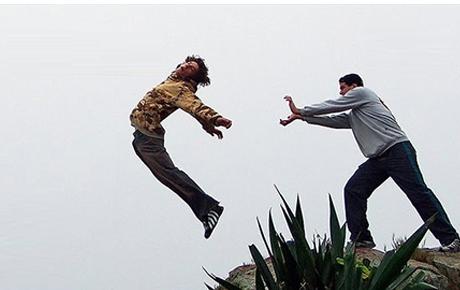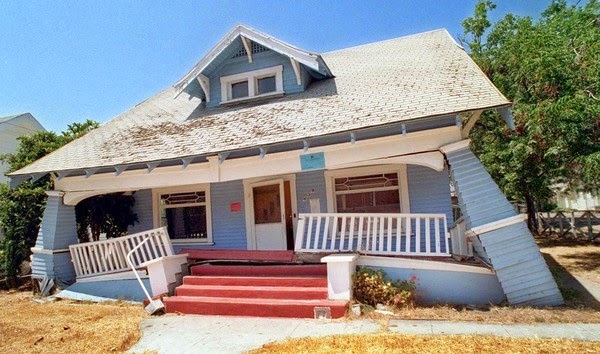
First, you build a solid foundation…

foundation
And this is what could happen if it isn’t

As the daily churning-out of pages continues for my November writing project, I’ve found it extremely helpful that so much time was spent working on the outline.

Only through trial-and-error did I eventually discover that making sure the outline is rock-solid before starting on pages makes a huge difference.

Keep in mind that this is what works for me. You may have an entirely different approach, and that’s totally cool. Actually, I’m curious to hear about some of them. Feel free to discuss in the comments section.

And now, back to the subject at hand…

I see putting together the outline as a gradual building-up process. I start with establishing the main plot points. What are the pivotal moments in this story? Does each one properly fulfill its purpose in the overall context of the story?

Then I fill in the blanks between those plot points. Does it make sense how we get from, say, the inciting incident to the end of the first act? Does each scene do its job in moving the story and characters forward? Are you presenting information we need to know, or setting things up so as to adequately pay them off later? Does each scene appropriately follow the one before and lead into the one after it?

Something important to keep in mind during this part: eliminating unnecessary scenes. You may have a scene you really, really like, but may not be absolutely vital to the story. My recommendation is to either make it vital or get rid of it entirely. The last thing you want is to interrupt the flow of your story for a scene that really doesn’t have to be in there.

Once you’ve got all those blanks filled in, then you move on to expanding each scene – mostly just putting in the necessary elements that reinforce the purpose of the scene. Sometimes I’ll add in a snippet or two of dialogue.

Another very important detail about each scene: get to the point, then get out and into the next one. Once the scene fulfills its purpose, anything after that just slams on the brakes.

Hang in there. You’re almost done. The outline is pretty sturdy, but it could probably use a little more editing, fine-tuning and polishing. When you think it’s honest-and-truly ready, that’s when you make the big jump to pages.

This isn’t to say there won’t be more changes in store once you’re into pages mode, but by putting so much time and effort into your outline, you’ve eliminated a lot of the heavy lifting for when you get there.

A few words about dialogue

So when your characters speak, does what they say SOUND like something people would actually say, or does it come across as “too movie-like”?

Do they say EXACTLY what they mean?

Dialogue is a very tricky part of screenwriting that takes a lot of practice to make the words being spoken sound totally natural. When we listen to what the characters are saying, you don’t want to make us aware we’re watching a movie.

Too many times we’ll read the characters’ dialogue, and it leaves us totally flat. Maybe it’s pure exposition. Or nothing but cliches. Or exactly what you think they’ll say. There’s no subtext. No implying. Just straight-out “this is what I want to say”.

All of this makes for some boring and, in all honesty, awful reading. And if the dialogue isn’t good, it’s pretty likely the rest of the script isn’t that good either.

(And the less said about parentheticals, the better. In short – DON’T!)

A lot of writers will jot down lines of dialogue because they think that’s what the characters should be saying. But it goes a lot deeper than that. The dialogue is just one way for the character to express themselves. In fact, sometimes the most effective dialogue is where the character doesn’t say a word.

Do the lines read like the writer put a lot of thought into the content or intent of what’s being said? Audiences and readers are smarter than you give them credit for. They will get nuance and innuendo, which are both more effective than just saying the actual words.

How many writers say the lines out loud to see how it sounds? You may think that monologue is nothing short of genius, but in reality it probably makes the reader’s eyes glaze over for how much it rambles. There’s a lot to be said for organizing a table read of your script (where you will quickly learn to identify most problems, let alone having them pointed out to you by the actors).

Going back to one of the earlier questions, does what the characters are saying sound like not only something they would say, but something you would say? There’s a little bit of you/the writer in every character, so you know them better than anybody, which therefore makes you the most likely to know what they would say and how they would say it.

Like with the scene itself, you want the dialogue to deal only with the point of the scene, or at least be integrated into the context of the story. Anything extra is just going to slow things down, and the more unnecessary dialogue you have, the more it’s going to drag. Cut what you don’t need so you’re not wasting anybody’s time. Get in late, get to the point as soon as possible, get out.

There’s no secret formula for writing good dialogue. It just takes time to learn how. Read scripts and watch movies similar to yours. See how they did it, and work on applying the same principles to your material. Use what the characters are saying (and aren’t saying) to help tell the story of your script, with the challenge being keeping the words spoken and unspoken true to both characters and story.

And again – stay away from parentheticals. Please.

What’s stopping you?

handyman
The ultimate DIY project (film division)

I had the recent pleasure of connecting with a screenwriter who’s working on a feature script, but is also investigating the logistics of developing a short out of it, which includes them having begun connecting with other writers and filmmakers in their area.

I thought that was a great idea, and tossed out the suggestion that maybe they try to make it themselves, as in “just you”. Especially now that most smartphones can double as camera equipment, and film editing software is easily accessible (if not already installed on your computer).

They’d considered this, adding “But I’m just not tech-savvy”.

But you can learn.

If you’re reading this, you’re more than likely interested in screenwriting and/or filmmaking. When you first started out, it’s probably a dead-on certainty that your early works were awful, right?  Looking at some of my first scripts makes me cringe from how bad they are.

But we kept at it, learning and improving along the way. How does your most recent effort compare to that first one? Worlds apart, I’d imagine. You try something, you make mistakes, you learn from those mistakes, and try again.

There’s no reason you couldn’t apply the same logic to making your own short. Sure, there’s a lot more to it than simply pointing your phone and hitting ‘record’, but you gotta start somewhere.

Give it a go and write yourself a short script. Nothing fancy (but do try to make it a good sample of the genre). Anywhere from one to five minutes, spread out over one, possibly two scenes. Two characters, three at best. Try to keep it limited to one location.

Now look at it from the filmmaker’s perspective. Could you feasibly make this yourself? Like how a first draft of a script reads, the end result will not be pretty. At first, you’ll be thrilled at having done it. Then reality sets in and the flaws become that much more obvious.

But you will have done it. A short film, written and produced by YOU.

What you do with it now is up to you. Hopefully, you’ll embrace the learning experience and know what not to do the next time around.

My friend mentioned that once the short got made, which it sounds like they are very intent on making happen one way or another, plans are already being discussed about next steps, which included posting it on YouTube and/or submitting it to some film festivals.

Even though our conversation was solely via email, there was a certain tone to their words that indicated they were quite psyched about jumping into this new venture. I wished them the best of luck and asked to be kept updated as to their progress.

I think they’re off to a pretty good start.

Bulletin board back in action!

times square
It’s not your name in lights, but pretty darned close

Reinvigorated from their summer vacation, the hard-working staff at Maximum Z HQ has assembled the latest batch of projects from savvy creatives well worth your time and attention.

-Writer/director/producer Aaron Mendelsohn is offering a special 20% discount for his new ebook The 11 Fundamental Questions: A Guide to a Better Screenplay. Aaron is the co-creator and co-writer of the AIR BUD franchise (12 films and counting), has served as Secretary-Treasurer for the Writers Guild of America, and is currently a Professor of Screenwriting at Loyola Marymount University.

-Writing coach and author EJ Runyon runs the online writing service Bridge to Story. She’s launched the Little by Little crowdfunding project to help her build a vehicle that with your help will bring her services to those without internet access “anywhere in the lower 48”. You don’t “donate” to her Kickstarter; you book a coaching or story editing session and your funds go to the build!

-Screenwriter Phillip Hardy has launched his own script consulting company The Script Gymnasium. Phillip’s scripts have placed or won at over 30 film festivals and script contests, including Austin and Screencraft, and he also serves as a judge in the New York City Midnight Screenwriting Challenge. Seeking help to get your script in shape? He’s your guy.

-Writer-director Josh Mitchell runs Wicked Pissa Publicity, but has also worked on a lot of short films and is now running a crowdfunding campaign for his feature-length family film project HARRY HEAD, an original story about loyalty, family, unity and differences. Donate if you can!

-Screenwriters Chris and Jay Thornton have been busy the past couple of years with some script sales and developing a TV show with The Weinstein Company, but they’re now working on their debut feature CACTUS JACK, “an ultra-contained, thematically supercharged and extremely relevant gonzo micro-budget film.” A crowdfunding project is up, and you can view the NSFW proof-of-concept trailer here. Donate if you can! And as an added bonus, an interview with the Thorntons will post in the very near future.

Have a project of your own for which you’d like a little help getting the word out? Our email inbox is always open.

Just the push I needed

push
What are friends for?

Notes are coming in for the comedy spec, and reactions are pleasantly positive. My always-reliable readers have provided some extremely helpful notes, including an across-the-board opinion about a key plot point.

A lot of what they had to say made some good sense and are really helping solidify the script into something more-than-decent.

While they had nice things to say about the script, each reader threw in an extra little tidbit in the form of comments directed at the script’s writer.

AKA me.

“These two lines of dialogue are an anomaly compared to the rest of it. I know you can do better.”

“Great story, but I’d like to see you dig deeper.”

And these are comments from experienced writers who’ve read some of my other scripts, so they know what I’m capable of. They’re not just saying these things in a casual, generic feedback kind of way, or because they’re trying to be nice. They really mean it, and I take what they say to heart.

I thought the script was okay to begin with, but after getting comments like these, it makes me want to try even harder.

When you’re in the process of putting a script together, you really dedicate yourself to doing a good job, and then try to do better with each subsequent rewrite. It’s how we improve.

But it’s also kind of tough to be able to get yourself past a certain point. You think you’ve done everything you can, but then you get a bit of a supportive nudge and your journey resumes.

It’s quite the confidence booster to know there’s somebody out there rooting for you (especially somebody without a vested interest in you). They want to see you succeed just as much as you do. So you buckle down and throw yourself into making that next draft even better.

End result – you have a stronger script and their belief in you and your abilities is confirmed. Wins all around.

And when the time comes and they ask me for notes on their script, I have a strong suspicion I’ll be able to do the same for them.