Change is inevitable. Embrace it.

edited page
All that red is a really good thing

A few more sets of script notes have come in. Comments in general are favorable (Thanks, everybody!), along with lots of suggestions about potential fixes. Nothing too drastic, but just enough to slightly alter things and still achieve the same results. Nevertheless, it’ll require a fair amount of rewriting.

Which is totally fine by me.

As much as I like what I’ve written, as do a lot of my readers, both sides know it can always be improved – especially my side. As the writer, it’s not as easy for me to recognize what those improvements could be and where they should go, which is why I ask for feedback. The readers start with only what’s on the page and use their knowledge and experience to deduce what works and what doesn’t, and then pass it all back to me for analysis and selective implementation.

A less experienced writer might be hesitant or even reluctant to do anything drastic that could change anything about their script.

Me, not so much. I know what the story is, and if somebody points out something that doesn’t work or suggests a different way to present it, I’m not going to say no. In fact, I’d probably be grateful for it. I might not always agree with what somebody says or suggests, but I still appreciate it and can totally see why they said it. Sometimes it might even inspire a totally new approach. Whatever works.

Used to be I would dread having to rewrite, but due to an effort of trying to write on as regular a basis as I can, which also involves rewriting, I’ve gotten to the point where I now actually look forward to it. (Helpful tip – the more you write, the easier it gets – albeit to a certain degree. Overall, it’s still tough.)

Will later drafts of my scripts be exactly the same as the first? Of course not. That’s the whole point of rewriting: to make it better than it was before. And that requires making whatever changes are necessary.

I recently got to sit in on a friend’s script review group where a new writer received some pretty brutal notes about their script (which I believe was also the first draft). If they wanted it to be better, they had a lot of work to do. They had this somewhat annoyed look and said “Guess that means I’ll have to rewrite most of the script.”

Well, yeah. This is no “one-and-done” kind of operation.

If you think the first or second draft of your script is perfect as is and doesn’t need any more work, then good for you, but I sincerely hope you never, ever show it to a writer with more experience because you will be severely disappointed with what they have to say.

As for me, I’ll be keeping busy with the usual hacking, slashing, and overall rehashing of my scripts. And enjoying every second of it.

-If you’re a fan of sci-fi adventure, then please consider contributing to writer/producer Marc Zicree’s crowdfunding project Space Command: Redemption. Among the cast of sci-fi luminaries are Doug Jones (HELLBOY), Robert Picardo (STAR TREK: VOYAGER), Bruce Boxleitner (TRON, BABYLON 5) and Bill Mumy (LOST IN SPACE), Space Command: Redemption is “a bold, new sci-fi adventure with a retro feel and an optimistic view of the future.” Donate if you can!

99 44/100%, or somewhere thereabouts

838-02487048
Gotta be really careful when seeking the exact formula

It was quite an undertaking, involving lots of rewriting, editing and reorganizing, including plenty of self-imposed stress, but the latest draft of the pulp sci-fi is complete.

It could definitely benefit from a little more work – another draft or two would make it that much better, but it’s exactly the kind of fun thrill ride I set out to write, and I really like how it turned out. One of my guidelines has always been “Write something you would want to see.” Man oh man, would I want to see this. And based on some of the notes I received from my squadron of trusted colleagues, so would they. Such an encouraging thing to hear.

Quick side note – I absolutely could not have gotten this script to this point of development without those exceptionally helpful notes. Thanks, chums! Each and every one of you has once again proven yourselves invaluable!

Networking. Worth it like you wouldn’t believe.

So for now, I’ll be taking a little break to let that script simmer for a bit as my focus is redirected towards revamping the outline of the comedy spec. Thrilled to say that even that seems to be coming along nicely, including a most productive writing sprint that got me to the next plot point. Always a good thing.

As much as I hate setting up deadlines for myself, I’m really hoping to have a decent first draft done by the end of the year – at the very latest. If I can maintain a pace like I have over the past few days, no reason I wouldn’t be able to type FADE OUT by Thanksgiving.

Totally doable.

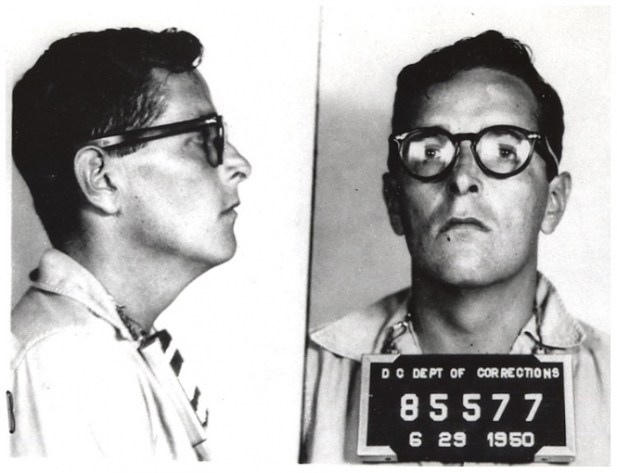
Guilty as charged

lardner mugshot
I did it. I’m glad I did it. And I’ll do it again. As many times as necessary.

The clock’s ticking down to the final deadline for an upcoming contest, so almost all of my energies are being directed at getting the pulp sci-fi in as tip-top shape as possible. Overall, I’d say it’s coming along nicely.

As you’d expect, there have already been some big changes made, with more than a few more on the way.

A major part of some of these changes has involved cutting material that I previously considered untouchable, or at least to do so would have constituted a crime against all that is good and wholesome.

Otherwise known as “killing one’s darlings”.

As you edit/polish/rewrite your scripts, changes will (and should) occur within the context of the story, so you have to deal with the consequences and ramifications of making those changes. And that means gettin’ rid of the stuff you love.

Did I really, really like this line of dialogue or that scene? Most definitely.

Did I cut it without a moment’s hesitation because it just didn’t work anymore? Yep.

Any regrets? Not really. Why should I? It’s all about making the script better, right?

A lot of writers won’t cut something because they hold it too close. To them, their ego takes precedence over the material. If a producer or director says something doesn’t work, and says it’ll have to be cut, what are they going to do? Say no?

It’s very rare that the final draft of a screenplay is exactly like the first draft. Changes will always be necessary, whether you want to make them or not. Much as you might hate it at the moment, make those changes. Chances are you’ll barely remember what was there before anyway.

A screenplay-in-progress is the raw material, and your job as the writer is to continuously work with it and shape it in order to get it to the final version – the one that tells your story in the best way possible.

If that means discarding something for something new, so be it. Even more so if the new something is even more effective.

Setting out in a new direction

hikers
Aha! Just the path we’ve been seeking!

As part of the overhaul of the comedy spec outline, I’ve been trying to come up with ways to make this draft significantly different from previous ones.

I’d managed to work my way through one of the subplots, and was now focusing on another one. But something felt very…off about it. It felt too preditable, in a tropey, tired cliche kind of way.

So of course, it had to be changed. But to what? That required a little more thought.

I tinkered around with a few ideas. Since this IS a comedy, what would be funny? That inspired some new trains of thought, with ongoing emphasis on “different”, “unique” and “original”. Finally, totally out of left field, one popped and stuck.

Boy, did it.

The more I thought about it and considered the possibilities, along with determining if it fit into the subplot and the overall storyline, the more it seemed to work. I honestly couldn’t recall seeing this idea in a script before.

Okay. This new idea creates a new objective for the storyline, so now it’s all about the “how things develop/how we get there”, PLUS figuring out how to present it in a way that’s original, unique, and funny.

Some more tinkering occurred, and it was all slowly coming together. There’s still some more work to do on this part and the rest of the script, and that’s totally cool.

The finished product will be significantly different from what it was before, and that’s really what this overhaul is all about.

Sometimes it can be tough for me to discard ideas and elements from previous drafts, but have found that totally wiping the slate clean and starting anew, or at least really pushing myself to come up with new ideas, is paying off much, much more than anticipated.

-Can’t let today go without acknowledging the ongoing and unwavering support I’ve received from the woman I’ve been extremely fortunate to be married to for the past 23 years as of this Sunday.

Writers – never, ever underestimate the importance of a partner who’s there for you through good times and bad. They are one of, if not your most valuable resource, and make sure they know how much you appreciate them.

Happy anniversary to my wonderful K. Love ya, baby.

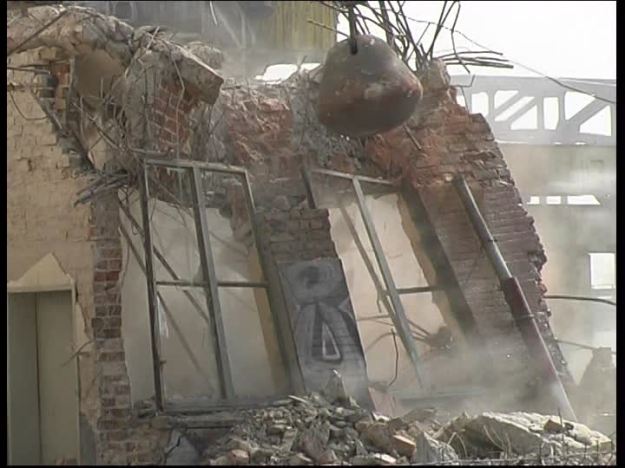
Out with the old…

wrecking ball
Just clearing away some stuff I don’t need anymore…
Seeing as how I’ve designated this latest go-round with the comedy spec as an “overhaul”, it’s only fitting that that’s what actually happens.

I’d decided I was absolutely not going to use the previous draft as reference material. This approach was going to be more than just the slapping on a new coat of paint and rearranging the furniture.

Granted, there were some select parts that survived the trip from the previous draft to the new one, but only because they’re vital components of the story, which makes them still relevant. Everything else, however, would be fresh and new.

And as you’d expect, that’s been slightly tougher. Tough, but not impossible.

Developing changes in a rewrite can really test one’s mettle and determination. Sometimes I’ll feel stuck and think “How’d I do it before?”, but then I fight the temptation to dig up the previous outline, reminding myself I’m in overhaul mode. Looking at the previous draft would counteract what I’m working towards now – to try something new.

There’s always a different path to where you’re trying to go.

I suppose part of it is the occasional lazy writer approach of considering what’s come before as “good enough” and not really changing it that much, but if it were “good enough” to begin with, I wouldn’t be working so hard on changing it this time, right?

Some days I’ll produce a wonderfully long sequence in no time flat, while some will yield a meager handful of bullet points of important moments that need to happen within the context of that scene or sequence, and took a dreadfully slow hour just to come up with.

Despite all of this, the results so far have proven encouraging, with work about to begin on a totally-from-scratch sequence. Forward progress is slow, but steady – as it should be.

I suspect the end result will be significantly and pleasingly different from its previous incarnation. And I wouldn’t have it any other way.

-two new items posted to the Maximum Z Bulletin Board!

-Screenwriter Kay Tuxford, director Prathana Mohan, and producer Edward Timpe have launched the crowdfunding project for The MisEducation of Bindu, a new and original take on the typical high school film. The script was a Nicholl semifinalist, so you know it must be some high-quality stuff. Donate if you can!

-Starting today and running until September 30th, screenwriter Max Adams is offering up a limited time half-off special on script consultations. Go to the contact link on the website to email her for details.