My 52 hours in the Southland

Just like being there!
This is exactly what it looks like!

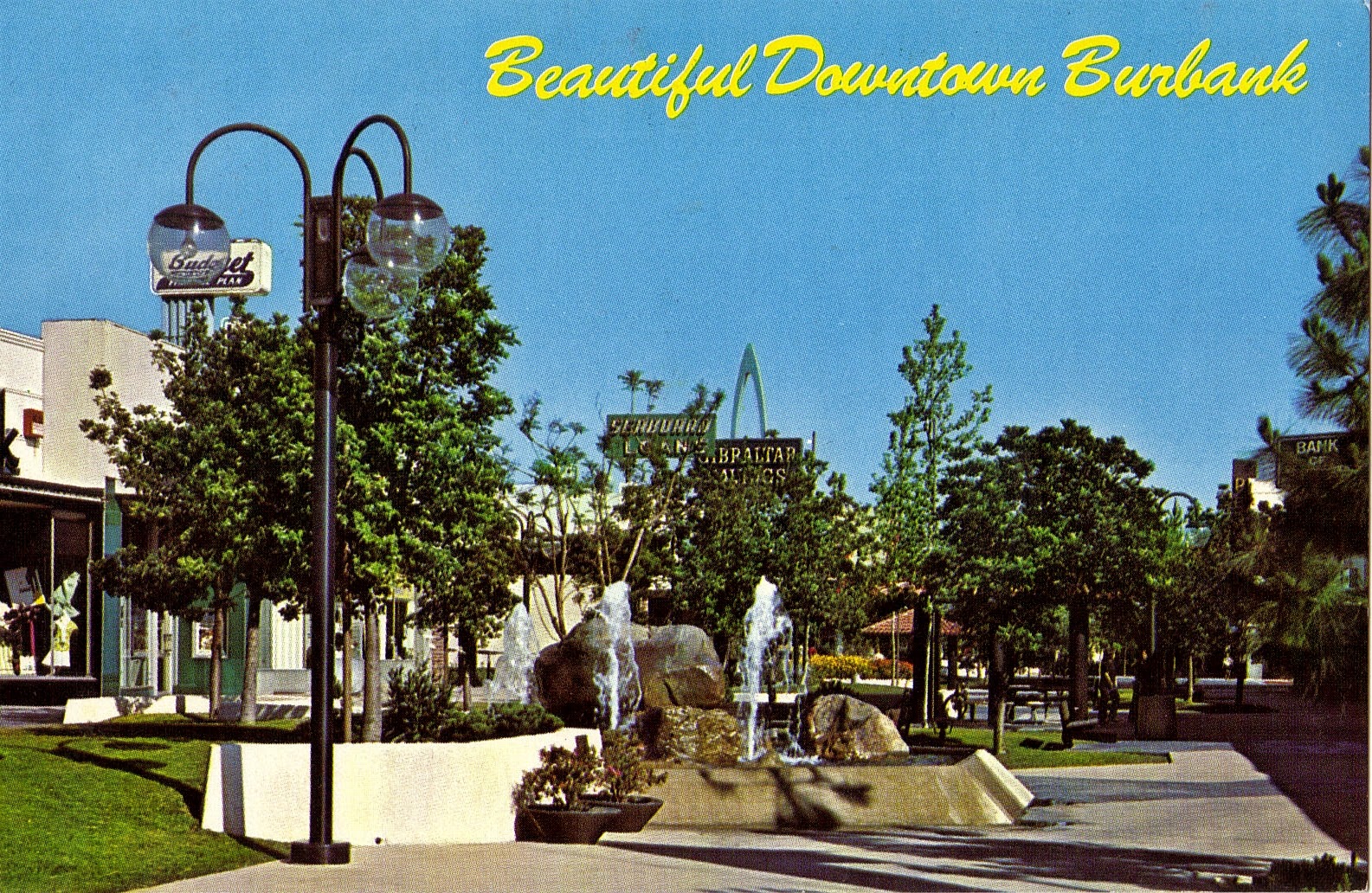
As all you phenomenal readers/followers out there may be aware, I was in Burbank last weekend for the Great American Pitch Fest.

Simply put, attending was one of the best screenwriting-oriented decisions I’ve ever made. I’ll get to the vaguely specific details about that in just a moment, but first, allow me to go over some of the supporting topics, starting with…

Networking

I came armed with a new batch of business cards and the attitude of “Dammit, I’m gonna meet people!”

And I did. At the Friday night mixer. At the numerous classes/panels/workshops on Saturday. Even just stopping to introduce myself to folks sitting around a table in the hotel lobby.

Many are first-timers, nervous at attending one of these kinds of events. Certain that everybody else is a seasoned pro just brimming with confidence, whereas you’re feeling hesitant to even open your mouth and say something.

You know what? Almost everybody feels that way and is a little nervous on some level. Sure, others are a little more extroverted than some, but as I can personally attest, it’s a lot more fun when you get to know people. Besides, why pass up the opportunity to expand your personal network? That writer you just met from halfway across the country could turn out to be a vital asset somewhere down the line.

On a more personal note, I have to mention that the weekend was also a golden opportunity for me to actually meet several of my “Ask a Script Consultant!” interview subjects, including Pilar, Lee, JG, Signe, Tracee, and Steve. The interactions weren’t long, but each proved to be just as charming in person as they are in print.

Pitching

The whole point of the weekend, and why I was here. First, the prep.

As I mentioned, there were panels aplenty where a lot of advice was given out (and sometimes contradicting something else you just heard). I had the benefit of having signed up for the pitch boot camp, where you and another writer would give your pitch, then exchange suggestions on how to potentially improve it.

I polished and honed the pitch for my western over the course of about six or seven run-throughs to the point where I had it down perfectly, then used that as a template for the fantasy-adventure.

As intimidating as doing this is, it all comes down to you being comfortable while having a pleasant conversation with somebody else about your story. The objective is to get them so interested that they really want to read your script. It’s not easy. Listening to other pitches, some writers would give vague story details, while others might go into too much detail.

As was pointed out, you’re also pitching yourself. You’re showing that you’re passionate about the work, hopefully have a pleasant personality, and are someone people would enjoy working with.

Now, a rundown of the results from the actual pitches:

(side note – As I would sit down with each person/pair, I’d ask how they were doing/how their day was going/etc. I’d rather start things off pleasantly rather than just launch straight into the pitch. Everybody was in good spirits throughout the day and seemed to be enjoying themselves. Many added that the quality of the material being pitched was very impressive.)

-13 total (although it felt like more)

-Two said “Thanks, but it’s not for us”

-The rest asked for a one-pager. More than a few asked “What else have you got?” (followed by handing over the other one-pager)

-Just about everybody said, “Wow! That was a great pitch!”

-One script request

-Two asked for follow-up emails

-“This sounds perfect for us!”

-“This is exactly what MAJOR PRODCO is looking for!”

-“We have to continue this conversation offline. Here’s our card. Call us.”

To say confidence levels were running high at the end of the day would be an understatement.

Epilogue

-All of my follow-ups have been taken care of. Since each one of them is also dealing with a lot of the pitches they heard, as well as working on their current projects, I expect it’ll be a while before I hear back from anybody. As always, fingers firmly crossed, hoping for the best while I bide my time and return to working on my assorted projects.

-Turns out I’m actually really good at pitching in person, or at least in a face-to-face scenario. Too nervous to do previous pitches via Skype, I’d always submitted a written one, which yielded zero results. This new confidence and willingness to be seen makes me feel that I’d have a much better chance of success in the future.

Conclusion

I’d started the weekend feeling very nervous and anxious about whether or not I’d do a good job. As time passed, I was able to relax and enjoy myself, which probably played a big part in how it all turned out. I had a great time, and left feeling closer than ever before to getting a professional writing career going.

If you’ve never been to a pitch weekend, I highly recommend it. You’ll meet lots of great people, make fantastic connections, learn how to get the most out of your pitch, and just have an awesome time.

-My only complaint was that since time was very limited, and I didn’t have a car, the enjoyment of pie did not take place. Maybe next time.

From asking to being asked

Nothing like a receptive ear (and the person connected to it)

Compare the most recent thing you wrote to the very first thing you wrote. How much of a difference is there?

One thing’s for certain: it no doubt took a lot of hard work and learning to get you from your skill level then to what it is now.

But you didn’t do it alone, or in a vacuum. You had help along the way from countless resources. It might have come from a book, a class, a writing group, or the occasional someone with more experience willing to help out.

When I started out, that was me. I got my hands on as many books as I could (the one I still recommend – Story Sense by Paul Lucey). Classes weren’t really an option, so I read a lot of scripts and attended a few seminars and expos when I could. I also had the good fortune to be involved with a few writing groups. A lot of this was also in the early days of the internet, so online resources and networking were nowhere near the levels they are now.

But what definitely helped the most was getting notes and feedback. The more fresh eyes you can get to take a look at your work, the better the end result will be. One stipulation: it depends on who you ask. Specifically, someone who really knows what they’re talking about, and whose knowledge and opinion you trust.

This has made a significant difference for me, such to the point that I now have a core group of trusted colleagues I can rely on for quality notes, and I’ve done my best to return the favor to many of them when possible.

And in recent months, as my network has grown and I connect with more writers, I’ll occasionally get an email asking along the lines of “If it’s not too much trouble, would you take a look at this and let me know what you think?” A script. Some pages. A logline. What have you.

I honestly never expected to be on the receiving end of that question, but, schedule permitting, am always happy to help out when I can. It’s the least I can do. Hopefully my notes will give them the help they need.

I don’t claim to have all the answers, but it’s kind of nice to think that I might be able to help somebody in the same way others did for me in the past.

That moment of clarity

Don't you love when these show up?
Don’t you love when these show up?

I’ve always said that with each draft of every script I work on, my writing gets a little bit better. Definitely a “learn as you go” scenario.

If you looked at my earlier work, you’d probably say it was pretty basic. Very straightforward. Average. With the later stuff, you’d see improvement. Better, but still some room to grow.

Among the helpful comments I received regarding the previous draft of my western was “give us more flair in the prose…make the details a bit more colorful.”

This can be a trap a lot of writers fall into. You want your writing to be vivid and descriptive, but it’s easy to overdo it and before you know it, the storytelling overshadows your actual story.

Since I started the rewrite, I’ve been doing my best to maintain an equal balance of both so the story is told in an entertaining way and easy for a reader to visualize what’s happening. If they feel like they’re actually there, experiencing it along with the characters, then I’m doing a good job.

Working on an action sequence earlier this week, I was struggling to come up with the best way to describe the events as they played out. Ordinary words weren’t cutting it, and the ever-present thesaurus wasn’t offering much help either. I knew what I wanted to say, but couldn’t come up with the right way to say it.

You can describe how something happens, but is it strong enough to hold somebody’s attention? Is there a “more colorful” way to say it? How could you add “more flair”?

If I were reading this, what would make me want to keep going? What would compel me to want to know what happens next?

Since this is, at its heart, my take on a pulp story, I decided to embrace that aspect and run with it. I mean really run. Let loose and color those words in the perfect shade of purple.

To say it made a difference is putting it mildly.

Words and descriptions that refused to make themselves known before were sprouting up left and right. This was exactly how I imagined the sequence and exactly how it should be written.

A key point to remember in all of this is that this is what works for me. Your writing and your style are totally your own, and only you can find the best way to do it.

I won’t say that everything from here on in for me will be as easy or productive, but it’s definitely a change for the better, and I for one am looking forward to seeing the end result.


Trying times, indeed

an apt metaphor if ever there was one
An apt metaphor if ever there was one

You know how they say you’ve got to endure a whole lot of ‘no’s until you get that single magical ‘yes’?

Well, another ‘no’ was added to the pile this week in the form of a “Pass” rating from an industry professional regarding my western spec. And to make it that much better, the “Pass” was applied to both script and writer. Apparently my skills didn’t pass muster, either.

They didn’t have many positive things to say, and I’m not going to say their comments were right or wrong. There may be a lot of helpful info in their coverage, but in the end it’s just their opinion.

A few people offered up a similar reaction:  This is ONE PERSON’s opinion. People will always find fault with your work. The next person may think it’s great. Keep trying. Don’t give up.

Point is: you never become completely immune to criticism.

Was I being a little delusional in my hopes that they’d really like it? I knew they wouldn’t claim it was the best script ever, but even a “Hey, this has potential” would have been nice.

Was I laboring under some false sense of optimism? Was I letting my excitement and enthusiasm get in the way of being totally objective?

Even more so, despite reassurances from friends and trusted colleagues, have I been fooling myself all this time in thinking I actually have talent?

How could anyone in this situation not think along these lines?

Let’s consider my confidence shaken and definitely weakened, but not totally gone. It still stings a bit, but I’ll survive.

And almost as if exactly on cue, later in the day came these two totally unsolicited comments from online connections:

“With the credibility you have with contest wins and that fabulous blog, I’m astonished you’re unproduced.”

“I wanted to say a big fat THANK YOU for your comments on my script! I couldn’t have done it without you. THANKS AGAIN!”

Maybe there’s hope for me yet.

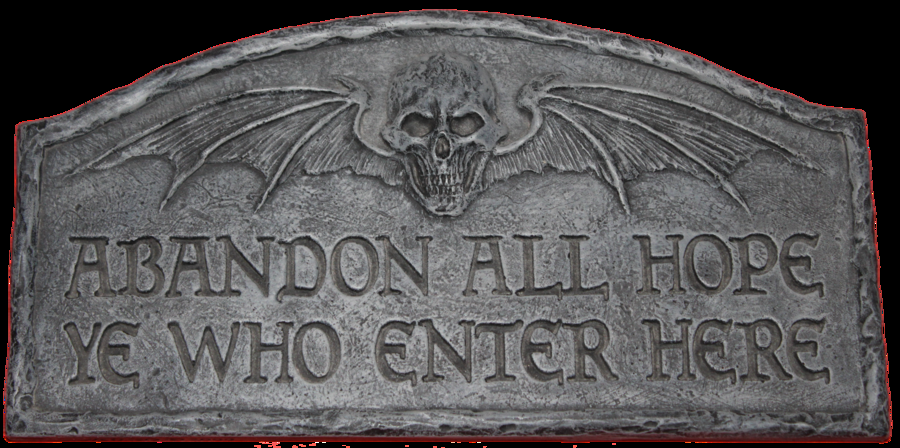
Just call me Dante, because this sure feels hellish

Seems pretty appropriate at times

I wanted to rework the logline for my mystery-comedy spec, so, never one to totally learn from previous experience and hoping for best possible results, I took the plunge and posted it on a few forums, seeking potentially helpful feedback.

Thus did the floodgates open.

It’s me and my story out there in the open, waiting for the world to let itself be heard.

And it did. Oh boy, did it.

One response was a literal interpretation of the words, and why it didn’t work. My assumption that certain details were implied was apparently incorrect.

Several focused on presenting the story in a way I repeatedly explained just didn’t apply. No matter how much I emphasized it was THIS kind of story, they just could not get away from thinking it was THAT kind of story.

Then there’s the omnipresent “I can’t see this being a story” and “It doesn’t sound solid enough.”

Well, I can and think it does.

My words, meet deaf ears. I got similar responses when I was starting the western, and that turned out pretty well.

It’s my sincere belief that everybody’s intentions are good, and they probably don’t mean for their comments to come across in such a “why don’t you know better?” and “THIS is the right (read: only) way to do it” manner.

Even if I totally disagree with somebody, I still appreciate the fact they made the effort to read it, analyze it and create what both of us hope is a helpful response. That doesn’t mean I have to take their word as gospel.

And unless I’ve actually met the person, I have no idea how much legitimate experience or expertise they have. For all I know, everything they say stems from reading SAVE THE CAT a couple of times.

Putting together a logline is an exhausting process. Some people are better at it than others.

As it so happens, I’m not one of them.